2027 Best Online Disaster Management Doctorate Programs for Research Careers

Co-Founder and Chief Data Scientist
Choosing an online disaster management doctorate is a research-career decision, not just a degree-format decision. NOAA reported 27 separate U.S. weather and climate disasters exceeding $1 billion in losses in 2024, underscoring the need for stronger disaster research, policy analysis, and emergency preparedness leadership.
This guide is for students comparing doctoral programs that can support academic, government, nonprofit, consulting, or applied research careers. You will learn how to evaluate PhD and professional doctorate options, faculty expertise, dissertation support, online requirements, costs, and career fit before enrolling.
Key Things You Should Know
- The strongest online disaster management doctorate for a research career is usually a dissertation-based PhD or research-oriented doctorate with institutional accreditation, active faculty scholarship, methods training, and documented dissertation support.
- Fully online, disaster-specific research doctorates are limited, so many students compare emergency management, homeland security, public safety, public policy, environmental risk, and criminal justice doctoral pathways before choosing a specialization.
- The BLS reported a May 2024 median wage of $86,130 for emergency management directors, but academic and research roles depend heavily on publications, methods skills, grants, and faculty mentorship.
What Are the Best Online Disaster Management Doctorate Programs for Research Careers?
The best online disaster management doctorate for a research career is the program that gives you enough methodological depth, faculty access, dissertation structure, and subject specialization to produce publishable research.
Because disaster management is interdisciplinary, strong options may sit inside emergency management, public safety, homeland security, public policy, environmental health, public administration, or criminal justice departments.
The table below compares the most relevant online or distance-friendly doctoral pathways for research-focused students. Availability, delivery format, and residency rules can change, so verify current catalog language before applying.
| Program or pathway type | Best research-career fit | What to verify before applying |
| Research-focused doctorate in emergency management or disaster management | Students who want to study preparedness, response systems, recovery, resilience, risk communication, or disaster policy as their main research area | Whether the program requires a dissertation, whether faculty publish in disaster studies, and whether online students receive structured research supervision |
| PhD in public safety, homeland security, or security studies with disaster-related faculty | Students interested in critical infrastructure, crisis governance, terrorism-disaster overlap, national preparedness, or interagency coordination | Whether disaster management is a real faculty research area rather than only a course topic |
| PhD in public policy, public administration, or leadership with emergency management focus | Students aiming for policy research, government analysis, university teaching, or think tank roles | Whether quantitative, qualitative, and mixed-methods coursework is strong enough for your intended research methods |
| PhD in criminal justice with homeland security or emergency preparedness emphasis | Students studying disaster security, community risk, emergency law enforcement coordination, or justice-system continuity | Whether the program supports disaster-related dissertations and not only traditional policing or corrections topics |
| Doctor of Public Administration, Doctor of Public Safety, or similar professional doctorate | Experienced practitioners who want to conduct applied research for agencies, nonprofits, or consulting settings | Whether the capstone or dissertation is rigorous enough for your target research role |
When comparing specific schools, do not rank them by online convenience alone. A lower-cost or more flexible program may be a poor research fit if no faculty member studies your intended topic, while a more demanding program may be worth the trade-off if it offers stronger methods training and dissertation mentorship.
Students who are still building a foundation in law enforcement, public safety, or emergency services may also compare an online criminal justice degree before committing to a doctoral path that connects disaster management with homeland security, public safety, or justice-system resilience.
Should You Choose a PhD or Professional Doctorate in Disaster Management for a Research Career?
A PhD is usually the stronger choice if your main goal is a research career. It is designed around theory, research methods, original scholarship, and a dissertation that contributes new knowledge.
A professional doctorate can still support research-informed leadership, but it often emphasizes applied problem-solving for practitioners rather than academic research production.
The comparison below shows how the degree type affects your long-term research options.
| Degree type | Primary purpose | Best for | Research-career limitation |
| PhD in disaster management, emergency management, public policy, public safety, or related field | Original research and scholarly contribution | Future faculty, research scientists, policy researchers, government analysts, and think tank researchers | May require more intensive methods training, longer completion time, and stronger dissertation expectations |
| Professional doctorate in public safety, emergency management, leadership, or public administration | Applied research and executive problem-solving | Agency leaders, consultants, emergency management executives, and practitioners studying real-world systems | May be less competitive for tenure-track academic roles if it lacks a traditional dissertation or strong publication support |
| On-campus research PhD | Full immersion in faculty research, grants, seminars, and teaching | Students seeking academic research careers and funded assistantships | Less flexible for working professionals and may require relocation |
Choose a PhD if you want to publish, teach, compete for research grants, or move into policy research. Choose a professional doctorate if you already work in emergency management and want to design evidence-based interventions, evaluate agency systems, or lead applied research projects within your organization.
If your interests overlap with policing, homeland security, courts, corrections, or public safety operations, reviewing the criminal justice degree price landscape can help you understand how related online programs structure tuition, fees, and long-term education costs.
What Accreditation and Quality Indicators Should You Look for in an Online Disaster Management Doctorate Program?
Institutional accreditation is the first quality screen. In the U.S., doctoral students should look for institutions accredited by agencies recognized by the U.S. Department of Education or the Council for Higher Education Accreditation.
Programmatic accreditation is less common for disaster management doctorates, so the larger quality indicators are faculty research strength, dissertation infrastructure, research methods depth, library access, and doctoral student support.
Use the following checks before you treat an online doctorate as research-ready. These indicators help separate rigorous doctoral programs from programs that are merely convenient.
- Confirm institutional accreditation directly through the school and the accreditor, not only through marketing pages.
- Review faculty CVs for recent publications, grants, conference activity, and dissertation-chair experience in disaster studies, emergency management, public safety, risk, resilience, or policy.
- Check whether the curriculum includes advanced qualitative, quantitative, and mixed-methods coursework rather than only leadership or management classes.
- Ask how online doctoral students access research databases, statistical software, human-subjects review support, writing support, and dissertation milestone advising.
- Look for transparent dissertation policies, committee expectations, residency requirements, candidacy exams, and maximum time-to-degree rules.
One red flag is a program that advertises disaster management broadly but cannot identify faculty who actively research disasters. Another is a doctorate that allows a very broad applied project but does not clearly explain how students learn research design, data analysis, ethics, and scholarly writing.
Students whose interests focus on environmental hazards, workplace safety, climate adaptation, or public health preparedness may also compare the best online environmental health and safety programs to understand adjacent pathways that can support disaster-risk research.
Admission requirements vary by university, but online disaster management doctorate programs usually expect evidence that you can succeed in advanced research, write at a scholarly level, and connect your professional or academic background to a viable dissertation topic.
Many applicants come from emergency management, public administration, public safety, homeland security, military, public health, environmental safety, social science, or nonprofit backgrounds.
The table below summarizes common requirements and why they matter for research-career preparation.
| Requirement | What schools commonly evaluate | Why it matters for research careers |
| Master's degree | Graduate-level preparation in a related discipline; some programs accept closely related fields | Shows readiness for doctoral theory, methods, and independent research |
| Graduate GPA | Academic consistency and ability to handle advanced coursework | Competitive programs may use GPA as an early screen for research readiness |
| Statement of purpose | Research interests, career goals, and fit with faculty expertise | Helps admissions committees determine whether your topic can be supported |
| Writing sample | Analytical writing, citation practice, argument quality, and research awareness | Strong writing is essential for literature reviews, proposals, publications, and dissertations |
| Professional experience | Emergency management, public safety, public service, military, healthcare, nonprofit, or policy experience | Can strengthen applied research questions and access to field data |
| Recommendations | Academic promise, research potential, leadership, and persistence | Doctoral study requires long-term independent work and faculty trust |
Before applying, contact potential faculty mentors with a concise research-interest email. Explain your topic, the population or system you want to study, your possible methods, and why their work fits your goals. A strong faculty fit can matter more than a school's general reputation.
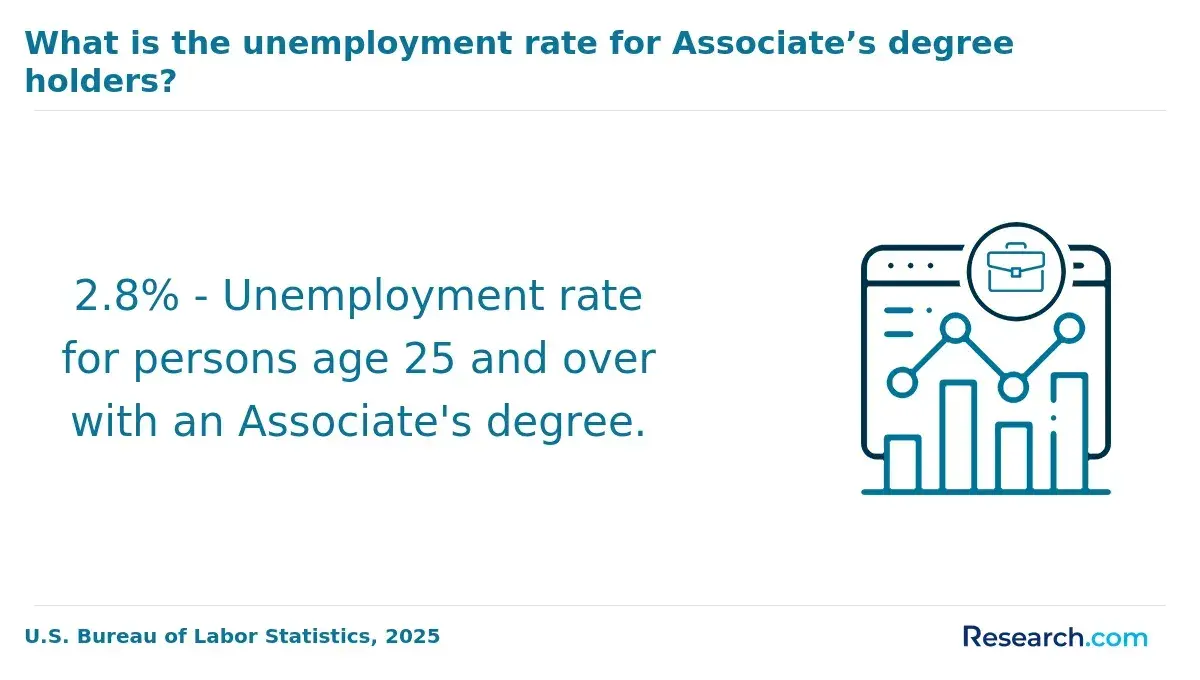
If you are earlier in your academic pathway and still exploring public safety foundations, the best online associate degree programs in criminal justice can provide context on entry-level routes into emergency services, public safety, and justice-related disaster response careers.
Research training is the core difference between a doctorate that can support a research career and a doctorate that is mainly a leadership credential. A strong program should teach you how to frame disaster problems as researchable questions, evaluate evidence, select appropriate methods, collect or analyze data ethically, and communicate findings to scholarly and practitioner audiences.
Most research-ready online doctoral programs include several linked components. Review them together, because a dissertation is only as strong as the training and mentorship that support it.
- Core theory coursework in disaster management, emergency management systems, risk, resilience, vulnerability, public policy, organizational response, or crisis leadership.
- Advanced research methods coursework covering qualitative interviews, surveys, case studies, program evaluation, statistical analysis, GIS or spatial analysis when relevant, and mixed-methods design.
- Scholarly literature training that helps students identify gaps in disaster research instead of simply describing past disasters.
- Human-subjects and ethics preparation, especially for research involving survivors, vulnerable communities, emergency personnel, or sensitive agency data.
- Dissertation milestones such as concept paper, prospectus, proposal defense, institutional review board approval, data collection, analysis, final defense, and manuscript revision.
For research careers, the best dissertation is not just a graduation requirement. It can become your first major research platform, leading to conference presentations, journal submissions, policy briefs, agency reports, or future grant proposals. Ask whether students are encouraged to publish during the program and whether faculty co-author with doctoral students.
Disaster management research is broad, so specialization matters. A program can be high quality overall and still be a weak fit if no faculty member studies your intended topic. The best online doctoral programs help students narrow broad interests into researchable, fundable, and publishable questions.
The table below connects common specialization areas with the types of faculty mentorship and dissertation topics that can support a research career.
| Specialization area | Typical research questions | Faculty expertise to look for |
| Disaster preparedness and emergency planning | How communities, agencies, schools, hospitals, or businesses prepare for high-impact events | Emergency management systems, planning, training, exercises, interagency coordination |
| Climate resilience and environmental hazards | How climate-related hazards affect infrastructure, health, housing, migration, or local governance | Environmental risk, hazard mitigation, resilience planning, public health, environmental policy |
| Risk communication and public behavior | How warnings, misinformation, trust, language access, or social media influence protective action | Communication, behavioral science, public administration, sociology, data analytics |
| Social vulnerability and equity | Why some populations experience higher disaster exposure, slower recovery, or unequal aid access | Sociology, public policy, community resilience, health disparities, housing, nonprofit response |
| Critical infrastructure and homeland security | How disasters disrupt transportation, energy, cyber systems, healthcare, supply chains, or public safety | Homeland security, public safety, infrastructure protection, systems risk, security policy |
| Recovery, mitigation, and program evaluation | Which policies, grants, interventions, or recovery models produce measurable improvements | Program evaluation, public finance, policy analysis, statistics, qualitative evaluation |
Faculty mentorship should be specific, not symbolic. Before enrolling, ask whether a faculty member is willing and eligible to chair your dissertation, how often doctoral students meet with chairs, and whether online students can join research groups, seminars, conference panels, or grant-funded projects.
Most online disaster management doctorates take about three to seven years, depending on degree type, transfer credit, enrollment pace, dissertation progress, and whether the student is working full time.
Coursework is often more predictable than the dissertation stage; delays usually occur when students change topics, lose faculty fit, struggle with data access, or underestimate the time needed for analysis and writing.
The table below shows how format and pace affect the student experience.
| Format or pace | Best for | Main trade-off |
| Fully online asynchronous coursework | Working professionals in emergency management, public safety, military, healthcare, or government roles | More flexibility, but students must be proactive about research relationships |
| Online coursework with virtual live sessions | Students who want structure, discussion, and regular faculty interaction | Less schedule freedom, especially across time zones or shift-work schedules |
| Hybrid program with short residencies | Students who want online access plus face-to-face research intensives | Travel costs and time away from work may add to the total cost |
| Full-time enrollment | Students prioritizing faster progress or academic career preparation | Harder to maintain alongside demanding emergency management roles |
| Part-time enrollment | Practitioners who need to keep working while studying | Longer time-to-degree and greater risk of losing momentum during the dissertation |
Fully online completion is possible in some programs, but do not assume it. Ask whether comprehensive exams, proposal defenses, residencies, research intensives, internships, or final defenses require travel.
Also ask whether dissertation data collection can be completed locally or remotely, especially if your topic requires agency access, field interviews, or community-based research.
The cost of an online disaster management doctorate depends on credit requirements, tuition rate, technology fees, dissertation-continuation fees, residencies, books, research software, conference travel, and the number of terms spent after coursework. The most important cost question is not only "What is tuition per credit?" but "What is the realistic total cost through dissertation completion?"
Federal borrowing limits also affect planning. For the 2024-25 award year, Federal Student Aid lists the annual Direct Unsubsidized Loan limit for eligible graduate and professional students at $20,500, meaning students with higher annual costs may need savings, employer support, scholarships, assistantships, or Grad PLUS loans to cover the gap.
When schools provide tuition and fee information, compare the following cost categories side by side. This prevents a low advertised rate from hiding a higher total price.
- Per-credit tuition multiplied by the total credits required for the doctorate.
- Mandatory technology, online learning, student services, graduation, and dissertation fees.
- Residency, travel, lodging, and meal costs if any in-person sessions are required.
- Dissertation extension or continuation tuition if research takes longer than planned.
- Software, transcription, survey tools, statistical packages, GIS tools, books, and conference participation.
- Lost income or reduced work hours if the program requires intensive research periods.
Funding is more limited for online doctoral students than for many residential PhD students, but it is still worth asking about.
Strong options may include employer tuition assistance, military or veteran benefits, university scholarships, doctoral fellowships, research assistantships that can be completed remotely, teaching assistantships, professional association awards, and agency-sponsored research support.
A doctorate in disaster management can support research careers across universities, government agencies, consulting firms, nonprofits, emergency management organizations, healthcare systems, public safety agencies, and policy organizations. It is most valuable when paired with strong research methods, subject expertise, field credibility, and evidence of scholarly output.
Salary outcomes vary because disaster research is not a single occupation. As one benchmark, the BLS reported a May 2024 median annual wage of $86,130 for emergency management directors.
That figure is useful for understanding the leadership labor market, but research-heavy roles may fall under different occupational categories, such as postsecondary teaching, social science research, policy analysis, public administration, or consulting.
The table below summarizes common research-oriented pathways and what doctoral training contributes to each.
| Career path | Typical responsibilities | How the doctorate helps |
| University faculty member or lecturer | Teach emergency management or public safety courses, publish research, mentor students, serve on committees | Provides dissertation experience, theory grounding, methods training, and academic credentialing |
| Government policy researcher or analyst | Evaluate preparedness programs, analyze mitigation policy, assess recovery outcomes, brief decision-makers | Builds skills in evidence review, policy analysis, evaluation design, and applied reporting |
| Emergency management research director | Lead agency research, develop metrics, evaluate exercises, manage data, translate findings into practice | Supports advanced evaluation, leadership credibility, and research design expertise |
| Nonprofit or NGO resilience researcher | Study community vulnerability, recovery barriers, social services, housing, equity, and long-term resilience | Strengthens community-based research, qualitative methods, and grant-aligned analysis |
| Consultant or applied research specialist | Conduct risk assessments, after-action evaluations, training evaluations, continuity planning, or resilience studies | Signals advanced expertise and supports rigorous client-facing research products |
| Think tank or policy institute researcher | Publish reports, analyze national preparedness, study infrastructure risk, brief agencies or lawmakers | Helps with scholarly credibility, methods fluency, and policy-focused communication |
An online doctorate does not guarantee an academic or research job. To improve competitiveness, build a portfolio while enrolled: submit conference abstracts, seek publication opportunities, learn statistical or qualitative software, join professional associations, and choose a dissertation topic that connects to a real policy or practice problem.
How Should You Choose the Best Online Disaster Management Doctorate Program for Your Research Goals?
Choosing the best online disaster management doctorate starts with your intended research identity. A student who wants to study climate resilience may need different faculty, methods, and datasets than a student studying emergency operations, public warning behavior, infrastructure security, or recovery equity.
Use this step-by-step process to compare programs before you apply or enroll. It is designed to help you move beyond marketing language and evaluate actual research fit.
- Define your target research area in one sentence, including the disaster problem, population, system, or policy you want to study.
- Identify faculty who have published in that area within the last few years and confirm they can supervise online doctoral students.
- Compare required methods courses and make sure they match your likely dissertation design, such as qualitative interviews, survey research, statistical modeling, GIS, or program evaluation.
- Ask for the exact dissertation sequence, including proposal expectations, review timelines, committee structure, and support for students who need topic revisions.
- Calculate total cost through a realistic completion timeline, including dissertation terms and any travel requirements.
- Ask admissions advisors about online student access to research groups, library databases, software, conferences, assistantships, and publication mentoring.
- Compare alumni outcomes carefully, looking for evidence of research, teaching, policy, or leadership roles rather than relying only on general testimonials.
Common mistakes include choosing the cheapest program without checking faculty fit, assuming "online" means "fully online," enrolling in a professional doctorate when you need PhD-level research preparation, and selecting a dissertation topic before confirming data access. The better approach is to choose the program where your research question, faculty mentor, methods training, and career goal all align.
You should consider an on-campus PhD instead if you want a tenure-track academic career, need full funding, want daily involvement in grant-funded research, or need intensive methodological training that is not available online.
You should consider a professional doctorate if you are primarily an experienced practitioner seeking applied leadership impact rather than a traditional academic research role.
Other Things You Should Know About Disaster Management Programs
It is possible, but the degree format is only one factor. Colleges typically look for a relevant doctorate, teaching experience, publications, research agenda, strong references, and fit with departmental needs. A dissertation-based PhD generally offers stronger preparation for tenure-track roles than a mainly applied professional doctorate.
Not always, but relevant experience can strengthen your application and dissertation planning. Applicants from public administration, public health, environmental safety, military service, nonprofit disaster response, public safety, social science, or policy backgrounds may also be competitive if they can explain a clear research direction.
No. Some doctoral programs require a traditional dissertation, while others use an applied doctoral project, capstone, or practice-based study. For research careers, a traditional dissertation or highly rigorous applied research project is usually the safer choice.
Ask whether your topic fits their expertise, how often they meet with doctoral students, what methods they can supervise, whether they support publication, how they handle stalled dissertations, and whether they currently have capacity to chair another student.
- Scholarships - Aspiring Emergency Managers Online https://www.aemo.us/scholarships
- 25 Most Affordable Disaster Management MPH Degrees - MPH Online https://www.mphonline.org/best-disaster-management-mph/
- Emergency Management Degree Program Graduate Job Outcomes: A Potential Theoretical Framework for Future Research https://jsire.org/emergency-management-degree-program-graduate-job-outcomes-a-potential-theoretical-framework-for-future-research/
- Online MPA Programs with a Specialization in Emergency Management & Disaster Management https://www.onlinempaprograms.com/specializations/emergency-disaster-management