
2027 Best Online Cybersecurity Management Doctorate Programs for Private Sector and Corporate Careers

Co-Founder and Chief Data Scientist
Corporate cybersecurity now requires leaders who can govern risk, translate technical threats into business decisions, and direct security strategy across cloud, AI, data, and compliance environments. The U. S. Bureau of Labor Statistics reported a $124,910 median salary for information security analysts in May 2024, signaling strong private-sector value for advanced cyber expertise.
This guide is for experienced security, IT, risk, and compliance professionals comparing online cybersecurity management doctorates. You will learn which program types fit corporate goals, what roles they can support, and how to choose with less guesswork.
Key Things to Know About Online Cybersecurity Management Doctorate Programs for Corporate Careers
- An online cybersecurity management doctorate is usually most valuable for experienced professionals targeting senior leadership, consulting, governance, research, or executive-track roles rather than entry-level analyst jobs.
- BLS May 2024 data places information security analysts at a $124,910 median salary and computer and information systems managers at $171,200, making role alignment more important than the degree title alone.
- Applied doctorates generally fit corporate problem-solving, while research-focused PhD programs fit professionals who want to publish, teach, lead labs, or build evidence-based security frameworks.
Will Cybersecurity Management doctorate programs benefit corporate professionals?
A cybersecurity management doctorate can benefit corporate professionals when the degree solves a specific career problem: moving from technical execution to enterprise strategy, building credibility for executive communication, or developing original expertise in risk, governance, cyber resilience, or security operations. It is less useful if the immediate goal is to enter cybersecurity for the first time, because employers often prioritize hands-on experience, certifications, and demonstrable technical skill for early-career roles.
Professionals who are still building the foundation may get a better short-term return from a master's pathway, certification training, or a cybersecurity degree online before committing to doctoral study. A doctorate becomes more compelling after the learner has enough workplace exposure to turn real corporate problems into dissertation or capstone research.
The table below summarizes when the credential tends to help and when another option may be more practical. Use it to test whether the degree matches your next career move rather than your general interest in cybersecurity.
| Professional profile | Doctorate fit | Why it may or may not pay off |
| Security manager or director | Strong fit | Supports enterprise risk leadership, board-level reporting, policy design, and executive-track advancement. |
| GRC, audit, or compliance leader | Strong fit | Useful for building defensible governance frameworks, regulatory strategy, and cross-functional cyber risk programs. |
| Technical architect or senior engineer | Conditional fit | Valuable if the goal is strategy, research, or leadership; less necessary for purely technical promotion paths. |
| Consultant or practice leader | Strong fit | Can strengthen credibility when advising enterprise clients, writing frameworks, or leading transformation engagements. |
| Career changer with little cyber experience | Weak short-term fit | Foundational experience, labs, certifications, and employer-recognized technical skills usually matter first. |
What makes online Cybersecurity Management doctorate programs ideal for private sector or corporate careers?
The best online cybersecurity management doctorate programs for corporate careers are not simply "online PhDs with cyber in the title." They combine doctoral rigor with practical relevance: enterprise risk, security governance, leadership, privacy, incident response, cloud security, AI risk, and measurable business outcomes.
Corporate-focused programs usually have several features in common. The list below can help you separate programs built for working professionals from programs that are academically strong but less aligned with private-sector advancement.
- Flexible online delivery with asynchronous coursework, limited residency requirements, and realistic pacing for full-time professionals.
- Curriculum that covers governance, risk management, compliance, cyber strategy, privacy, threat intelligence, security architecture, and executive communication.
- Doctoral projects, dissertations, or applied research options that allow students to investigate real organizational problems.
- Faculty with both academic credentials and private-sector, government, or security leadership experience.
- Regional accreditation and, when relevant, cybersecurity recognition such as NSA Center of Academic Excellence designation.
- Career evidence such as alumni in senior security roles, employer-connected projects, executive mentoring, or industry advisory boards.
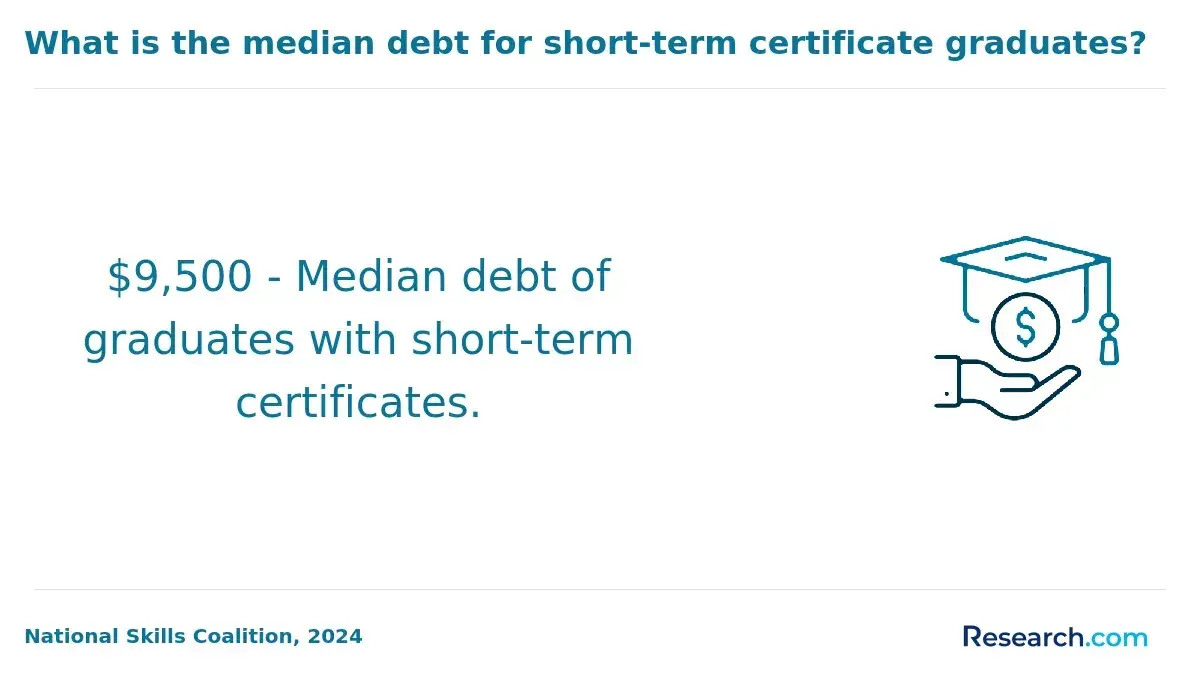
Shorter training can also complement doctoral study. For example, a targeted cyber security course may help a doctoral student refresh technical skills in cloud security, penetration testing, or incident response while the doctorate develops leadership and research depth.
What are the best online Cybersecurity Management doctorate programs for private sector careers?
The best program is the one whose research model, faculty expertise, delivery format, and corporate outcomes match your target role. The programs below are strong options to evaluate because they offer online or online-friendly doctoral study in cybersecurity, cyber defense, information assurance, information technology security, or closely related management fields.
This table is a decision tool, not a universal ranking. Program names, delivery formats, tuition, and residency requirements can change, so confirm current details directly with each university before applying.
| University | Relevant online doctorate | Best corporate fit | What to verify before applying |
| Capitol Technology University | PhD or DSc options in cybersecurity-related fields | Senior cybersecurity leadership, applied research, technical strategy, and consulting | Whether the PhD or DSc format better fits your research, publication, or executive goals. |
| Dakota State University | PhD in Cyber Defense | Cyber defense research, security architecture, advanced technical leadership, and academic-industry roles | Residency expectations, research advisor availability, and fit with your technical specialization. |
| Colorado Technical University | Doctor of Computer Science in Cybersecurity and Information Assurance | Applied corporate leadership, information assurance strategy, and senior IT security management | Dissertation or project requirements, pacing, and how the curriculum maps to enterprise governance roles. |
| University of the Cumberlands | PhD in Information Technology with information security-related study | IT security leadership, policy, risk management, and technology management | Track structure, research topic flexibility, and residency or synchronous participation expectations. |
| University of Fairfax | Doctorate in Information Assurance or related doctoral pathways | Information assurance leadership, risk governance, federal-contractor environments, and consulting | Program accreditation status, current degree titles, and alignment with private-sector governance roles. |
| National University | PhD in Cybersecurity or related information assurance fields | Working professionals seeking flexible doctoral research in cyber leadership and security management | Faculty specialization, dissertation support, and whether the program emphasizes management, technical research, or both. |
| Marymount University | Doctor of Science in Cybersecurity or related doctoral study | Cybersecurity leadership, policy, applied research, and security program management | Online availability, residency structure, cohort expectations, and current curriculum focus. |
When comparing these options, look beyond the label "cybersecurity." A program in information assurance, cyber defense, or IT with a security concentration may be more useful than a generic cybersecurity doctorate if its faculty and dissertation model fit your corporate problem area.
Research-focused and applied cybersecurity management doctorates can both support private-sector careers, but they serve different professional strategies. The better choice depends on whether you want to create generalizable knowledge, solve an organizational problem, or build an executive portfolio around measurable business impact.
The comparison below shows how each format typically fits corporate goals. Use it to match the program's doctoral output with the type of credibility you need in the market.
| Doctorate type | Typical final output | Best for corporate professionals who want to | Possible trade-off |
| Research-focused PhD | Dissertation designed to contribute original research | Publish, teach, lead research teams, influence frameworks, or move between industry and academia | May be less directly tied to one employer's immediate operational problem. |
| Applied doctorate such as DSc, DBA, or professional doctorate | Applied dissertation, practice-based research, or organizational problem study | Improve cyber governance, lead transformation, support executive advancement, or strengthen consulting credibility | May offer less preparation for tenure-track academic roles than a research-intensive PhD. |
| Hybrid research-practice model | Research dissertation with applied organizational relevance | Balance scholarly credibility with corporate relevance | Requires careful advisor selection to avoid a topic that is too broad or too narrowly internal. |
A strong cybersecurity management doctorate should help professionals move from "knowing security" to leading security decisions under uncertainty. That means developing not only technical literacy but also research design, risk communication, financial reasoning, governance, and change-management skills.
The table below connects common doctoral learning areas with corporate use cases. This matters because a doctorate should improve the quality of your decisions at work, not simply add letters after your name.
| Skill area | How it appears in doctoral study | Corporate value |
| Enterprise cyber risk | Risk modeling, governance frameworks, regulatory analysis, and resilience planning | Helps leaders prioritize investments and explain cyber exposure to executives and boards. |
| Research and evidence evaluation | Quantitative, qualitative, or mixed-methods research courses | Supports defensible decision-making when vendors, audits, or internal stakeholders disagree. |
| Security strategy | Policy design, architecture alignment, and program evaluation | Connects technical controls to business goals, customer trust, and operational continuity. |
| Executive communication | Presentations, dissertation defense, policy briefs, and leadership analysis | Improves the ability to communicate risk without overwhelming nontechnical audiences. |
| AI and automation governance | Emerging technology risk, analytics, privacy, and adversarial threat analysis | Prepares leaders to evaluate automated tools, AI-enabled attacks, and responsible security operations. |
Professionals who want deeper AI fluency can also compare cybersecurity study with an artificial intelligence major or AI-focused graduate pathway, especially if their organization is adopting machine learning, automated detection, or generative AI security tools.
A cybersecurity management doctorate can support movement into senior and specialized roles, but it does not automatically unlock them. Employers still evaluate leadership history, industry experience, certifications, communication ability, and results. The doctorate is strongest when it reinforces an already credible career narrative.
The table below shows private-sector roles where doctoral-level cybersecurity management training may be relevant. Salary figures use BLS May 2024 medians for the closest broad occupational categories, so treat them as labor-market context rather than role-specific compensation promises.
| Corporate role | Closest BLS salary context | How the doctorate may help |
| Director of cybersecurity or security operations | Computer and information systems managers: $171,200 median | Supports enterprise strategy, team leadership, governance, and cross-functional risk decisions. |
| Chief information security officer track | Computer and information systems managers: $171,200 median | Can strengthen board communication, policy authority, and executive credibility, though CISO compensation varies widely. |
| Cyber risk or GRC executive | Management analysts and IT management roles vary by scope | Helps connect regulatory expectations, risk appetite, metrics, and business continuity. |
| Principal cybersecurity consultant | Information security analysts: $124,910 median | May improve client trust when advising on complex risk, architecture, or transformation projects. |
| Security research or innovation lead | Computer and information research scientists: $140,910 median | Fits professionals designing new methods, evaluating emerging threats, or leading applied cyber research. |
| Cybersecurity faculty-practitioner or corporate trainer | Education and corporate training salaries vary by employer | Supports curriculum design, executive education, and practitioner-oriented teaching. |
The most realistic path is usually incremental: senior analyst or architect, then manager, director, and executive or consulting leadership. A doctorate can accelerate credibility in the later stages, but early promotions still depend heavily on performance and organizational opportunity.
Corporate partnerships can offer an advantage when they create real access to industry problems, mentors, projects, data, or employer networks. They are less valuable when the partnership is mostly a logo on a webpage with no clear student benefit.
For cybersecurity management doctorates, useful partnership signals include the following. These indicators matter because corporate relevance often depends on the problems students can study and the professionals they can learn from.
- Industry advisory boards that shape curriculum around current security leadership needs.
- Faculty or mentors who hold senior cybersecurity, risk, privacy, or technology leadership roles.
- Applied research opportunities involving anonymized organizational risk, incident, governance, or compliance challenges.
- Employer tuition partnerships or cohort models that make the program practical for working professionals.
- Career events, guest lectures, or capstone feedback from CISOs, security architects, auditors, and consultants.
The trade-off is that highly industry-connected programs may emphasize practice over traditional academic publishing. That is not a weakness if your goal is corporate leadership, but it may matter if you want a future tenure-track academic role.
Corporate employers generally evaluate online cybersecurity management doctorates through the same practical lens they use for other advanced credentials: institution quality, accreditation, relevance to the role, the candidate's experience, and proof of impact. The word "online" is rarely the deciding factor when the university is properly accredited and the candidate can explain how the program improved their work.
BLS occupational data does not separate online and campus degrees in salary or employment reporting, which is important for interpretation. It means professionals should not assume an online doctorate is discounted automatically, but they also should not assume the format alone creates a premium.
Employers are more likely to respond favorably when the credential is presented as evidence of usable capability. In interviews and promotion discussions, connect the degree to outcomes such as improved risk reporting, better incident-response governance, stronger compliance readiness, measurable security maturity, or an executive-ready research project.
Red flags that can weaken employer perception include unclear accreditation, a dissertation topic unrelated to business needs, limited faculty expertise in cybersecurity, and a resume that lists the degree without showing leadership results. The safest approach is to choose a respected program and build a portfolio of workplace impact while enrolled.
Salary expectations for cybersecurity management doctorate holders vary because the degree can lead to several different private-sector paths: executive leadership, consulting, research, governance, architecture, or education-adjacent corporate training. The most useful benchmark is the salary range of the roles you are targeting, not the average income of degree holders as a group.
BLS May 2024 medians provide a grounded salary context for common target roles. These figures do not isolate doctorate holders, but they help professionals estimate whether the roles they want have enough upside to justify tuition, time, and opportunity cost.
| Role category | BLS May 2024 median salary context | How to use the number |
| Information security analyst roles | $124,910 | Useful baseline for experienced technical and security operations roles, though a doctorate may be more than required. |
| Computer and information systems management roles | $171,200 | Relevant for security directors, IT security leaders, and CISO-track professionals. |
| Computer and information research scientist roles | $140,910 | Relevant for cyber research, security innovation, and advanced technical strategy roles. |
ROI depends on more than salary. Consider tuition, employer reimbursement, time to completion, whether you can keep working, the promotion path at your company, and whether the program helps you produce visible business value before graduation.
How do you narrow down online Cybersecurity Management doctorate programs for corporate goals?
Narrowing down online cybersecurity management doctorate programs should start with your target role, not with rankings alone. A strong program for a future CISO may not be the best program for a cyber defense researcher, and a strong research PhD may not be the fastest route for a corporate governance leader.
Use the following sequence to make the decision more concrete. Each step forces you to connect the program to career evidence, not just marketing language.
- Define your target outcome in one sentence, such as "move from security director to CISO-track leadership" or "build a consulting practice in cyber risk governance."
- Choose the doctorate type that fits that outcome: research-focused PhD for scholarship and research leadership, or applied doctorate for workplace transformation and executive practice.
- Verify regional accreditation and cybersecurity-specific credibility signals, including faculty expertise, research centers, NSA CAE recognition, or industry advisory involvement.
- Review dissertation or capstone requirements and confirm that you can study a problem relevant to private-sector security management.
- Compare total cost, employer tuition assistance, expected completion time, residency requirements, and workload against your current job and family constraints.
- Ask admissions advisors for examples of recent dissertation topics, alumni roles, faculty-student matching, and support for working professionals.
- Estimate ROI using the salary range of your target role, not a generic "doctorate premium."
Common selection mistakes are avoidable if you know what to watch for. The red flags below should prompt deeper questions before you apply.
- Choosing a program because it is called "cybersecurity" without checking whether it teaches management, governance, and executive decision-making.
- Assuming the doctorate will automatically create a promotion instead of confirming how your employer values doctoral credentials.
- Ignoring dissertation fit and later discovering that no faculty member supports your intended research area.
- Comparing tuition without calculating fees, travel, residency costs, books, and the opportunity cost of extended study.
- Relying only on rankings instead of checking alumni outcomes, faculty expertise, and curriculum relevance to your target corporate role.
Other Things You Should Know About Cybersecurity Management
Many programs take about three to five years, depending on transfer credit, course load, dissertation progress, and whether the student studies part time while working. Dissertation delays are common, so ask schools for completion support and typical time-to-degree ranges.
Most cybersecurity management doctorates prefer or require a master's degree in cybersecurity, information technology, computer science, business, or a related field. Some programs may consider applicants with strong professional experience, but requirements vary by university.
Often, yes. Certifications such as CISSP, CISM, CISA, or cloud security credentials can complement a doctorate by proving current professional competency. The doctorate supports research and leadership depth, while certifications often validate specific industry skills.
Possibly, but it requires approval from the university, your employer, and often an institutional review board. Sensitive security data may need anonymization, legal review, or a different research design to protect confidentiality.
- National Centers of Academic Excellence https://www.nsa.gov/Academics/Centers-of-Academic-Excellence/
- Doctoral Degrees in Cybersecurity | ComputerScience.org https://www.computerscience.org/degrees/doctorate/cybersecurity/
- Doctoral Degrees in Cybersecurity | CyberDegrees.org https://www.cyberdegrees.org/listings/doctoral-degrees/
- Accredited Online Doctorate in Cybersecurity Programs https://zoclearnings.com/blogs/accredited-online-doctorate-in-cybersecurity-programs/
- Top 25 Cybersecurity PhD Programs In 2026 - Programs.com https://programs.com/programs/cybersecurity-phd-programs/
- online DBA in Cybersecurity UK | imetworldwide - 2026 https://imetworldwide.com/online-doctorate-dba-in-cybersecurity-uk/
- Exploring Current Cybersecurity PhD Options: A Comprehensive Guide https://www.cm-alliance.com/cybersecurity-blog/exploring-current-cybersecurity-phd-options-a-comprehensive-guide
- Getting a Ph.D. in Cyber Security – Everything You Need to Know | Cyber Security Jobs https://www.cybersecurityjobs.com/phd-cyber-security/
- Government vs Private Sector: Salary Comparison - Cleared Cyber Security Jobs | CyberSecJobs.com https://cybersecjobs.com/government-vs-private-sector-salary-comparison/
- Master's in cybersecurity degree essentials https://cybersecurityguide.org/programs/masters-in-cybersecurity/


