2027 Best Online Artificial Intelligence Doctorate Programs for Senior-Level Roles: Careers, Salaries, and Advancement Paths

Co-Founder and Chief Data Scientist
Choosing an online artificial intelligence doctorate is really a leadership decision: Will the degree help you move from building AI systems to directing strategy, research, governance, or enterprise transformation? The timing matters because the U.S. Bureau of Labor Statistics projects data scientist employment to grow 34% from 2024 to 2034, far faster than the average for all occupations.
This guide is for experienced technologists, researchers, faculty candidates, and executives comparing doctoral paths. You will learn which programs fit senior roles, what careers pay, and how to judge whether the investment supports your advancement goals.
Key Things You Should Know
- For senior AI leadership, the strongest online doctorate is usually the one aligned with your end goal: a PhD for research-intensive, academic, or lab leadership roles. An applied doctorate for enterprise AI, analytics leadership, and technology strategy roles.
- Salary upside depends more on role, industry, and leadership scope than the degree alone. BLS May 2024 data reports median pay of $171,200 for computer and information systems managers and $140,910 for computer and information research scientists.
- ROI is strongest when students already have significant AI, data, software, engineering, cybersecurity, healthcare, finance, or product leadership experience and use the doctorate to solve a market-relevant problem through a dissertation or applied capstone.
Which Online Artificial Intelligence Doctorate Programs Best Prepare Graduates for Senior-Level Leadership Roles?
The best online artificial intelligence doctorate program for senior-level roles is not always the most famous program. It is the program whose curriculum, research model, faculty expertise, employer recognition, and delivery format match the kind of leadership you want: executive, technical, academic, entrepreneurial, or policy-oriented.
At the doctoral level, "artificial intelligence" may appear as a dedicated AI doctorate, a computer science doctorate with AI research, a data science doctorate, an information technology doctorate, an engineering doctorate, or a business/technology management doctorate with AI strategy coursework.
Students still comparing earlier pathways may find it useful to review AI degrees online before committing to a doctoral track.
The table below compares common online doctoral pathways and the senior-level outcomes they tend to support. Use it to identify the degree type that matches your career target before evaluating individual schools.
| Doctoral pathway | Best fit | Typical senior-level outcomes | Research or project focus |
| PhD in Artificial Intelligence or Computer Science | Students seeking original research, academic roles, advanced R&D, or research lab leadership | AI research scientist, principal scientist, professor, research director, machine learning lab lead | Dissertation based on original theory, algorithms, models, systems, or empirical research |
| Doctor of Computer Science | Experienced technologists who want applied technical leadership without necessarily pursuing tenure-track academia | Principal AI architect, chief technology officer, director of machine learning engineering | Applied research, enterprise systems, technical architecture, scalable AI implementation |
| Doctor of Information Technology | IT leaders managing AI adoption, infrastructure, cybersecurity, governance, or digital transformation | Chief information officer, vice president of technology, AI governance director | Organizational technology problems, implementation strategy, risk management, governance |
| DBA with AI, analytics, or technology management concentration | Business leaders using AI for strategy, operations, finance, marketing, or innovation | Chief analytics officer, AI transformation executive, strategy consultant, product innovation leader | Applied business research, decision intelligence, operational impact, organizational change |
| PhD or Doctorate in Data Science | Professionals focused on predictive modeling, analytics strategy, and data-driven decision-making | Director of data science, principal data scientist, analytics executive, quantitative research lead | Advanced modeling, machine learning, statistical inference, data systems, decision support |
A strong online AI doctorate for leadership should include more than advanced algorithms. Look for evidence that the program develops executive judgment, research credibility, and the ability to lead complex AI initiatives in regulated, high-stakes, or fast-scaling environments.
When comparing programs, prioritize the following signals because they affect how well the doctorate translates into senior-level opportunity:
- Regional accreditation: This is the baseline credential standard most employers, universities, and licensing-adjacent institutions expect in the U.S.
- Relevant faculty expertise: Faculty should publish or work in areas connected to your goals, such as generative AI, robotics, machine learning operations, AI ethics, healthcare AI, cybersecurity, or decision intelligence.
- Doctoral research fit: A dissertation or capstone should let you investigate a problem that matters to your target industry or employer.
- Executive-compatible format: Online programs for working professionals should offer asynchronous coursework, predictable residencies, part-time pacing, and strong research advising.
- Leadership outcomes: Ask for examples of graduates moving into research leadership, executive technology roles, faculty positions, consulting, or senior product roles.
The major trade-off is depth versus applicability. A PhD may carry more weight for academic hiring and research scientist roles, while an applied doctorate may be more efficient for professionals who want to lead enterprise AI adoption, governance, and digital transformation.
Which Senior-Level Careers Can You Pursue With an Online Artificial Intelligence Doctorate?
An online AI doctorate can support several senior-level career paths, but it should be viewed as an accelerant rather than a stand-alone ticket to leadership. Employers typically combine the degree with evidence of technical depth, management experience, published or applied research, business impact, and the ability to translate AI into measurable outcomes.
Professionals still exploring the broader career landscape may want to compare options connected to an artificial intelligence major, since doctoral careers often build on many of the same foundations at a more advanced level.
The table below summarizes senior-level roles that commonly value doctoral-level AI expertise. The "doctorate value" column explains where the credential can matter most.
| Senior-level role | Core responsibilities | Where a doctorate adds value | Common hiring sectors |
| Chief AI Officer or AI Strategy Executive | Sets enterprise AI strategy, oversees adoption, manages risk, aligns AI investments with business goals | Signals high-level expertise in AI systems, governance, research evaluation, and responsible deployment | Finance, healthcare, technology, consulting, retail, manufacturing |
| Director of Machine Learning Engineering | Leads teams building, deploying, monitoring, and scaling AI models in production | Supports credibility in model architecture, experimentation, MLOps, and technical roadmap decisions | Technology, cloud computing, cybersecurity, logistics, SaaS |
| Principal AI Scientist or Research Scientist | Conducts original research, develops new models, publishes findings, guides R&D strategy | Often essential or strongly preferred, especially for advanced research roles | Research labs, universities, big tech, defense contractors, biotech |
| Director of Data Science or Analytics | Leads data science teams, prioritizes modeling projects, communicates insights to executives | Strengthens authority in advanced analytics, causal inference, machine learning, and decision systems | Insurance, healthcare, banking, government, e-commerce |
| AI Governance or Responsible AI Director | Builds policies for model risk, privacy, bias evaluation, auditability, and compliance | Helps connect technical AI knowledge with ethics, regulation, security, and organizational accountability | Financial services, healthcare, public sector, enterprise technology |
| Professor or Doctoral Faculty Member | Teaches, researches, mentors students, publishes scholarship, serves on academic committees | A research doctorate is commonly required for tenure-track and doctoral-level teaching roles | Colleges, universities, research institutes |
The strongest job outlook is often found where AI expertise intersects with leadership and business value. BLS projects computer and information research scientist employment to grow 20% from 2024 to 2034, which reflects continued demand for advanced computing research and AI-related innovation.
Day-to-day work varies by role. A chief AI officer may spend more time on investment priorities, model governance, and board-level communication, while a principal scientist may focus on experiments, papers, patents, and technical breakthroughs. A doctoral program is most useful when its projects mirror the kind of problems you want to own professionally.
How Much Can You Earn in Senior-Level Roles With an Online Artificial Intelligence Doctorate?
Senior-level AI salaries vary widely because job title, sector, region, equity compensation, security clearance, research specialization, and management scope all affect pay. A doctorate can help qualify candidates for roles with higher responsibility, but it does not guarantee an executive title or a specific salary.
The table below uses BLS May 2024 U.S. median wage data for occupations closely related to senior AI, data, computing, and academic pathways. These are occupational medians, not doctorate-only salaries, so use them as labor-market context rather than a promise of individual earnings.
| Occupation | Relevant senior AI pathway | Median annual wage, May 2024 | How to interpret the figure |
| Computer and information systems managers | CIO, CTO, AI transformation executive, technology director | $171,200 | Reflects management responsibility; compensation can rise with enterprise scope and profit-and-loss accountability |
| Computer and information research scientists | AI research scientist, principal scientist, research lab leader | $140,910 | Most relevant for research-intensive roles where doctoral training may be expected |
| Software developers | Machine learning engineering leader, AI platform architect | $133,080 | Useful benchmark for technical leadership paths, though managers and principal engineers may be compensated differently |
| Data scientists | Director of data science, principal data scientist, decision intelligence lead | $112,590 | Represents the broader data science occupation; senior-level specialists may exceed the median depending on sector |
| Computer science postsecondary teachers | Professor, doctoral faculty member, academic researcher | $100,090 | Academic compensation depends heavily on institution type, rank, tenure status, discipline, and research funding |
The practical takeaway is that leadership-oriented roles often pay more than purely academic roles, while research scientist roles may offer strong compensation when tied to high-demand AI domains. If salary growth is your primary reason for enrolling, compare the cost of the doctorate against realistic target roles rather than against broad AI salary headlines.
Also consider non-salary value. Some professionals pursue the doctorate for research authority, consulting credibility, promotion eligibility, faculty opportunities, or the ability to lead AI governance in regulated industries. Those outcomes can be valuable even when the immediate salary change is modest.
Executive AI roles require a wider skill set than model development. Senior leaders must evaluate technical feasibility, manage teams, explain risk to nontechnical stakeholders, select vendors, build governance systems, and connect AI investment to measurable value.
For professionals who need to strengthen analytics leadership before doctoral study, a data analytics master's degree can provide a useful bridge into advanced research, data strategy, and evidence-based management.
The most competitive doctoral graduates can combine deep AI knowledge with organizational leadership. The skills below are especially important because they determine whether an AI leader can move from technical excellence to executive influence:
- AI research literacy: Senior leaders must read, critique, and apply emerging research without overreacting to hype or vendor claims.
- Machine learning and deep learning expertise: Doctoral graduates should understand model design, evaluation, limitations, and failure modes well enough to guide advanced teams.
- Data strategy: AI leadership depends on data quality, governance, interoperability, security, and responsible access, not only algorithms.
- MLOps and AI infrastructure: Executives need enough production knowledge to budget for deployment, monitoring, retraining, cloud costs, and reliability.
- Responsible AI and governance: Bias, privacy, explainability, auditability, and accountability have become central leadership issues as organizations scale AI.
- Business translation: The best AI leaders can explain how a model changes revenue, risk, efficiency, customer experience, or mission performance.
- Change management: AI adoption often affects workflows, staffing, training, and employee trust, so leadership skill is critical.
- Executive communication: Senior roles require clear communication with boards, regulators, customers, investors, clinicians, engineers, and legal teams.
One common mistake is assuming the most mathematically rigorous program automatically offers the best executive preparation. For a chief AI officer or technology vice president role, a program that integrates research methods, governance, organizational strategy, and applied implementation may be more valuable than a narrowly theoretical curriculum.
The best specialization depends on the leadership arena you want to enter. A healthcare executive, defense researcher, fintech governance leader, and machine learning platform director all need AI expertise, but they solve different problems and are evaluated by different employers.
If your long-term goal is advanced analytics or principal data science leadership, comparing a data scientist degree pathway can help you decide whether a data science doctorate, AI doctorate, or computer science doctorate is the better fit.
The table below maps common AI doctoral specializations to leadership opportunities. This can help you avoid choosing a concentration that sounds impressive but does not match your target role.
| Specialization | Best leadership opportunities | Why employers value it | Best-fit professionals |
| Machine Learning and Deep Learning | Principal scientist, ML engineering director, AI platform leader | Supports advanced model development, evaluation, optimization, and innovation | Software engineers, data scientists, AI researchers |
| Generative AI and Natural Language Processing | Product AI leader, conversational AI director, enterprise automation strategist | Connects AI to content systems, customer support, knowledge management, and productivity tools | Product managers, NLP engineers, enterprise architects |
| Responsible AI, Ethics, and Governance | AI governance director, model risk executive, compliance-focused AI leader | Helps organizations manage bias, explainability, privacy, auditability, and regulatory risk | Risk leaders, legal-tech professionals, cybersecurity managers, healthcare administrators |
| Robotics and Autonomous Systems | Robotics R&D director, automation executive, defense or manufacturing innovation lead | Combines AI with sensing, controls, physical systems, and safety requirements | Engineers, manufacturing leaders, defense technologists |
| Healthcare AI and Biomedical Informatics | Clinical AI director, health analytics executive, biomedical research leader | Applies AI to diagnosis support, workflow optimization, population health, and medical research | Clinicians, informaticists, health IT leaders, biostatisticians |
| Cybersecurity and AI | AI security director, threat intelligence leader, security automation executive | Addresses adversarial AI, automated detection, model security, and cyber risk | Security engineers, CISOs, threat analysts |
A specialization leads to stronger leadership opportunities when it produces a portfolio of doctoral work that employers can understand. For example, a dissertation on explainable AI for healthcare risk prediction may be more useful for a hospital AI governance role than a broad concentration title with no applied evidence.
An online AI doctorate supports executive advancement by helping experienced professionals demonstrate advanced judgment: the ability to ask better research questions, evaluate emerging technologies, lead evidence-based strategy, and make responsible decisions under uncertainty. The degree is most powerful when it builds on a strong professional track record.
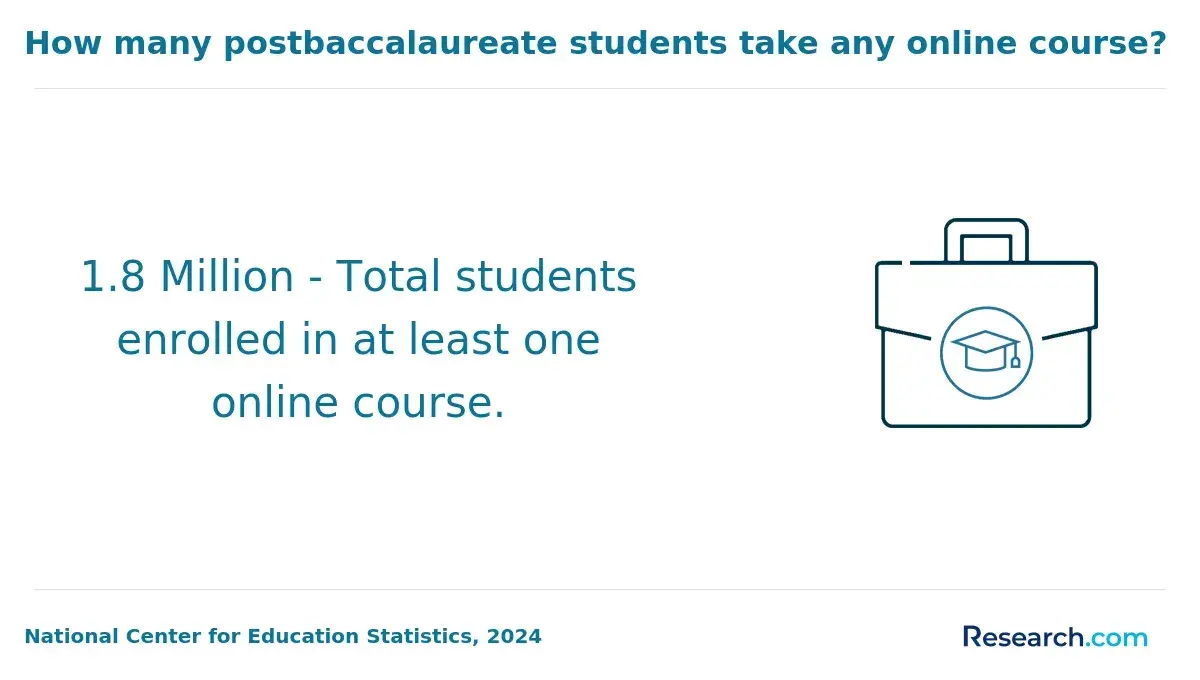
For many working professionals, the online format is not a compromise; it is the only realistic way to keep progressing in a full-time role while completing doctoral research. The National Center for Education Statistics reported in its latest distance education data that graduate students continue to enroll in online coursework at substantial levels, which reflects how common flexible formats have become in advanced education.
The career advancement process is usually gradual. Students should plan the doctorate as a multi-year leadership platform, not just a credential earned at the end. The most effective approach includes the following steps:
- Define the target role before enrolling: Decide whether you are aiming for executive leadership, research leadership, academic work, consulting, entrepreneurship, or governance.
- Choose a research problem with market value: Your dissertation or capstone should address a real AI challenge in your industry, such as model risk, clinical workflow adoption, fraud detection, generative AI governance, or MLOps scalability.
- Build visibility while studying: Present at conferences, publish practitioner articles, contribute to standards work, speak internally, or lead cross-functional AI initiatives.
- Use coursework to fill leadership gaps: Select electives in strategy, ethics, security, systems architecture, or analytics management based on your target role.
- Convert research into career assets: Turn doctoral work into executive briefings, case studies, patents, publications, open-source contributions, or consulting frameworks.
The biggest mistake is waiting until graduation to think about advancement. Students who get the most value usually align their doctoral research, employer projects, professional network, and leadership narrative from the beginning.
Employers generally care less about whether a doctorate was completed online and more about whether the institution is credible, the program is rigorous, and the candidate can apply doctoral-level expertise to high-value problems. For senior roles, the degree is evaluated alongside leadership record, technical achievements, industry experience, communication skill, and strategic impact.
Employer evaluation often differs by role. A university hiring committee may focus on publications, dissertation quality, teaching experience, and research agenda. A technology company may focus on patents, model deployment experience, team leadership, and technical interviews. A healthcare or financial services employer may focus on governance, privacy, auditability, and risk controls.
Before enrolling, ask programs for evidence that employers recognize and respect the degree. These questions help you separate strong online doctoral programs from programs that may not support senior-level goals:
- Is the university regionally accredited, and is the program housed in a recognized school of computer science, engineering, data science, business, or information technology?
- Do faculty members have current AI research, industry, grant, publication, or applied consulting experience?
- What kinds of roles do recent doctoral graduates hold, and how many were already senior professionals before enrolling?
- Does the program require a dissertation, applied dissertation, or capstone that can be evaluated by employers?
- Are residencies, research seminars, or doctoral intensives designed to build professional networks?
- How does the program support publication, conference presentation, patent development, or industry collaboration?
- Will the transcript and diploma clearly identify the doctoral credential and field of study?
Red flags include unclear accreditation, vague faculty profiles, little research supervision, no transparent dissertation process, weak student support, and aggressive claims about guaranteed promotions or executive salaries. A credible program should be willing to discuss outcomes carefully without promising results it cannot control.
An online AI doctorate tends to benefit professionals who already have a strong base of experience and need doctoral-level credibility to move into more influential roles. It is usually less useful for early-career students who still need fundamental technical experience, unless they are pursuing a traditional research trajectory.
The professionals most likely to benefit are those who can connect doctoral study to an existing career platform. That often includes:
- Senior data scientists and machine learning engineers who want to become principal scientists, research leads, or directors of AI engineering.
- Technology managers and enterprise architects who need deeper AI expertise to lead transformation, infrastructure, platform strategy, or vendor evaluation.
- Healthcare, finance, insurance, and public-sector leaders who manage high-risk AI systems and need credibility in governance, ethics, compliance, and analytics.
- Faculty candidates and academic professionals who need a doctorate for teaching, tenure-track eligibility, research leadership, or doctoral supervision.
- Consultants and entrepreneurs who want to build authority in AI strategy, product innovation, analytics transformation, or responsible AI implementation.
- Cybersecurity and risk professionals who want to specialize in adversarial AI, automated detection, AI governance, or model risk management.
Some professionals should be cautious. If your goal is an entry-level AI job, a master's degree, graduate certificate, portfolio, or employer-based project experience may provide a faster and less expensive path. If your goal is general management without a technical AI focus, an MBA, executive education, or technology management master's may be more directly aligned.
Earning a doctorate later in your career can still be worthwhile when it supports a clear move: from manager to executive, practitioner to researcher, consultant to thought leader, or faculty member to doctoral-level scholar. Without that goal, the time and cost can outweigh the benefit.
The ROI of an online AI doctorate depends on total cost, time to completion, opportunity cost, employer support, career stage, and whether the program leads to a role where doctoral expertise is valued. The strongest ROI usually comes from combining the degree with existing senior experience, not from using it as a first step into AI.
Tuition varies widely by institution, residency requirements, and program length. Students should also budget for technology fees, research software, travel for residencies, conference participation, books, dissertation editing, and reduced work capacity during intensive research periods.
Federal student aid rules allow eligible graduate students to borrow up to $20,500 per academic year in Direct Unsubsidized Loans, with Graduate PLUS Loans potentially covering remaining school-certified costs after other aid; this makes financing available but can also increase long-term repayment pressure.
The table below summarizes the main ROI factors to compare before enrolling. It is designed to help you look beyond tuition and evaluate whether the doctorate supports a financially and professionally sound plan.
| ROI factor | Why it matters | What to look for |
| Total program cost | High tuition can reduce financial return even when career outcomes are strong | Published tuition, fees, residency costs, research costs, and expected completion time |
| Time to completion | Longer timelines may delay career benefits and increase opportunity cost | Part-time pacing, dissertation support, course availability, and completion benchmarks |
| Employer tuition assistance | Employer funding can sharply improve ROI and signal that the degree aligns with workplace needs | Annual reimbursement limits, service commitments, eligible programs, and grade requirements |
| Career alignment | A doctorate has more value when target roles actually reward doctoral expertise | Job postings, promotion criteria, faculty requirements, consulting market demand, and internal leadership needs |
| Research portability | Doctoral work should become a professional asset beyond graduation | Publishable research, applied capstone value, patents, case studies, frameworks, or conference presentations |
To estimate your personal ROI, compare the full cost of attendance with realistic career scenarios. A careful estimate should include your current compensation, expected role changes, employer funding, debt repayment, and nonfinancial benefits such as research authority or academic eligibility.
A common mistake is calculating ROI only from salary. For senior professionals, the doctorate may produce value through promotion eligibility, board-level credibility, consulting fees, research funding, or access to roles that require a terminal degree. Those benefits are real but should still be tied to a specific career plan.
How Should Students Choose the Best Online Artificial Intelligence Doctorate Program for Executive Career Goals?
Students should choose an online AI doctorate by working backward from the role they want, then testing each program against that goal. A program that is excellent for academic research may not be ideal for corporate AI transformation, and a program built for applied technology leaders may not meet expectations for tenure-track hiring.
Use the following decision process before applying. It can help you avoid expensive mismatches between degree type, research model, and career outcome:
- Name your target role: Write down the exact roles you want within five to ten years, such as chief AI officer, principal scientist, professor, AI governance director, or analytics executive.
- Identify the required credential: Review job postings, faculty listings, promotion policies, and industry expectations to see whether a PhD, applied doctorate, master's degree, or professional experience is most valued.
- Compare dissertation and capstone models: Choose a traditional dissertation if you need research credibility; choose an applied model if your goal is solving organizational AI problems.
- Audit the curriculum: Look for advanced AI, research methods, statistics, governance, systems design, ethics, security, leadership, and domain-specific electives.
- Evaluate faculty fit: Confirm that at least two or three faculty members can supervise your intended research area.
- Check flexibility honestly: Ask about synchronous meetings, residency requirements, dissertation timelines, leave policies, and weekly workload expectations.
- Verify employer recognition: Speak with mentors, hiring managers, alumni, and industry peers about how the school and degree are perceived.
- Calculate total cost: Include tuition, fees, travel, lost time, loan interest, and the possibility of taking longer than the advertised timeline.
- Ask about career support: Strong doctoral programs should offer research mentoring, networking, presentation opportunities, alumni access, and guidance for academic or executive pathways.
- Avoid pressure-based enrollment: Be cautious if admissions staff emphasize urgency, guaranteed outcomes, or prestige without providing concrete details about curriculum and doctoral support.
The smartest choice is the program that gives you the right kind of credibility for your target market. For a future professor, that may mean research output and faculty mentorship. For a future AI executive, it may mean applied research, governance expertise, and the ability to lead enterprise-scale change.
Before committing, ask one final question: "If I completed this doctorate and produced a strong dissertation or capstone, would it clearly make me a stronger candidate for my intended senior role?" If the answer is unclear, keep comparing options.
Other Things You Should Know About Artificial Intelligence Programs
Some do, and some do not. Many online doctoral programs include short residencies, research intensives, dissertation seminars, or in-person orientations. Always confirm the number, location, timing, and cost of required visits before enrolling.
Yes, many online programs are designed for working professionals, but the workload is still demanding. Students should expect sustained weekly study time, major research milestones, and periods when dissertation work may compete with job and family responsibilities.
Not always. Applied doctorate programs may value professional projects and leadership experience, while PhD programs may place more weight on research preparation. A strong statement of purpose, relevant technical background, and clear research interests can matter significantly.
They can be useful when they fill a practical gap, such as cloud AI platforms, cybersecurity, data engineering, or model deployment tools. A doctorate signals advanced expertise, while certifications can show current proficiency with specific technologies employers use.
- Careers in AI: Opportunities and Pathways - ACS https://www.acs-college.com/careers-in-ai-opportunities-and-pathways
- DBA in Artificial Intelligence USA | IMET Worldwide https://imetworldwide.com/online-doctorate-dba-artificial-intelligence-ml-usa/
- 16 Artificial Intelligence Career Paths https://www.calmu.edu/news/artificial-intelligence-career-paths
- Best Postgraduate Courses in AI for Careers - MIA Digital University https://miauniversity.com/best-postgraduate-courses-in-ai-for-careers/
- AI and Future Careers: The Most In-Demand Careers in the Age of AI https://www.ccsuniversitycdoe.com/blog/ai-and-future-careers.html
- How Online AI Master's Degrees Affect Salary in 2026 https://www.nexford.edu/insights/how-online-ai-masters-degrees-affect-salary
- Career Paths in the AI Era: What Roles Are Growing and How to Position Yourself https://www.businessplusai.com/blog/career-paths-in-the-ai-era-what-roles-are-growing-and-how-to-position-yourself
- Top 26 Careers in AI and Machine Learning: Roles, Salaries, Skills, and 2026 Outlook - AscendurePro https://ascendurepro.com/careers-in-ai-and-machine-learning/