2027 Best Bachelor's Completion Programs With Self-Paced Courses

Co-Founder and Chief Data Scientist
Finishing a bachelor's degree can change promotion eligibility, salary range, and long-term mobility, but many adults cannot pause work or family responsibilities for fixed class schedules. Federal labor data shows workers with a bachelor's degree had median weekly earnings of $1,543 in 2024, compared with $930 for workers with only a high school diploma. This guide explains how self-paced bachelor's completion programs work, which majors fit different goals, and how to compare cost, credits, accreditation, speed, and career value before enrolling.
Key Things You Should Know
- Self-paced bachelor's completion programs are best for students who already have college credits and can study independently; the fastest paths usually depend more on transfer policy than advertised program length.
- Cost varies widely, but College Board data lists average 2024-25 tuition and fees at $11,610 for in-state public four-year colleges and $43,350 for private nonprofit four-year colleges, making tuition model and transfer acceptance central ROI factors.
- Accreditation, licensure alignment, and employer relevance matter more than "accelerated" branding, especially in nursing, education, cybersecurity, engineering, and healthcare management.
Top 10 Best Bachelor's Completion Programs With Self-Paced Courses
Business Degrees
Business completion programs are often the most flexible self-paced option because courses usually use case studies, projects, exams, and simulations rather than labs or clinical hours. Good fits include adults aiming for management, operations, HR, marketing, accounting support, or entrepreneurship. Look for concentrations aligned with your goal, such as supply chain, finance, project management, or business analytics. The BLS reported a May 2024 median annual wage of $122,090 for management occupations, but outcomes depend heavily on experience, industry, and leadership responsibility.
Healthcare Degrees
Healthcare completion degrees work well for medical assistants, billing specialists, respiratory therapy associates, and allied health workers moving toward administration or care coordination. Self-paced healthcare programs usually emphasize healthcare law, informatics, quality improvement, reimbursement, ethics, and organizational leadership. They are less suitable for students seeking direct clinical licensure unless the program explicitly includes required supervised experiences. Medical and health services managers had a May 2024 median wage of $117,960, according to BLS data, making this path attractive for experienced healthcare workers pursuing supervisory roles.
Information Technology Degrees
Information technology completion programs are practical for adults with help desk, systems, networking, cloud, or technical support experience. Self-paced IT courses commonly use labs, certification-aligned modules, troubleshooting assignments, and portfolio projects. This degree can support roles in systems administration, network operations, database support, cloud services, and IT project coordination. BLS data placed the May 2024 median annual wage for computer and IT occupations at $105,990, but candidates still need demonstrable skills, current tools experience, and often vendor certifications.
Computer Science Degrees
Computer science completion programs are more technical than general IT degrees and usually require programming, algorithms, databases, software engineering, and discrete math. They fit students who want software development, application engineering, data engineering, or graduate study options. Self-paced formats can work well if you already code regularly; they can be difficult if you need frequent live instruction. Software developers had a May 2024 median wage of $133,080, according to the BLS, but hiring often depends on portfolios, internships, GitHub work, and technical interviews.
Cybersecurity Degrees
Cybersecurity completion programs serve students moving from IT support, military technology roles, networking, or compliance into security operations. Strong programs cover risk management, incident response, cloud security, digital forensics, governance, and hands-on labs. Self-paced study is useful because students can spend extra time on difficult tools, but career changers may still need certifications and entry-level experience. Information security analysts had a May 2024 median wage of $124,910, and the field remains strongly shaped by cloud adoption, ransomware risk, and regulatory pressure.
Psychology Degrees
Psychology completion programs are a good fit for students interested in human services, HR, case management, research support, behavioral health administration, or graduate school preparation. Courses often cover lifespan development, abnormal psychology, statistics, research methods, counseling theories, and social psychology. A bachelor's alone typically does not qualify graduates to become licensed psychologists or counselors, so check state licensing rules early. This degree is strongest when paired with internships, research experience, or a clear plan for graduate education.
Nursing Degrees
Self-paced nursing completion programs usually refer to RN-to-BSN pathways for licensed registered nurses, not pre-licensure nursing degrees. They often include leadership, evidence-based practice, community health, informatics, and quality improvement rather than first-time clinical training. These programs suit working RNs who need a bachelor's for advancement, magnet hospital expectations, public health roles, or graduate nursing pathways. Registered nurses had a May 2024 median wage of $93,600, but pay varies by state, setting, union coverage, shift differentials, and specialty.
Education Degrees
Education completion programs can help paraprofessionals, childcare workers, substitute teachers, and training specialists finish a bachelor's degree. However, teaching licensure is state-specific, so self-paced coursework alone may not satisfy student-teaching, testing, or supervised fieldwork requirements. Good programs clearly separate licensure and non-licensure tracks. Students seeking classroom teaching roles should verify approval with their state education agency before enrolling. Those interested in adult training, instructional coordination support, or early childhood administration may have more flexible options.
Criminal Justice Degrees
Criminal justice completion programs are often designed for police officers, corrections staff, military personnel, security professionals, and public safety workers. Courses may cover criminology, ethics, courts, corrections, policing, homeland security, juvenile justice, and emergency management. A bachelor's can support advancement into supervision, federal applications, victim services, investigations support, or administrative roles. It is not a substitute for academy training, background checks, physical standards, or agency-specific requirements, so compare the degree against your target employer's promotion rules.
Engineering Degrees
Engineering completion programs are less common in fully self-paced formats because many engineering fields require labs, design studios, ABET alignment, and sequential math-intensive coursework. Stronger options may include engineering technology, industrial technology, quality systems, or technical management for adults with associate-level technical credits. Students seeking professional engineer licensure should be especially careful about accreditation and state board rules. Engineering occupations had a May 2024 median wage near the six-figure range in BLS reporting, but discipline and licensure status matter.
What is a bachelor's completion program with self-paced courses and who are these degrees for?
A bachelor's completion program is designed for students who have already earned college credit and want to finish the upper-division coursework needed for a four-year degree. "Self-paced" means students can move through at least some courses faster or slower than a standard weekly schedule, usually within term, subscription, or competency-based limits.
These degrees are best for working adults, military learners, parents, transfer students, returning students, and career changers who need flexibility. They can also work well for older learners comparing college degrees for seniors, especially when programs offer strong advising, accessible technology, and generous transfer credit review.
They may not be ideal for students who need frequent live lectures, structured weekly deadlines, campus labs, or intensive peer interaction. Before choosing one, be honest about your study habits: self-paced does not mean easy, and flexibility can become a problem if the program lacks clear milestones.
How do self-paced bachelor's completion programs work compared with traditional online degrees?
Traditional online bachelor's programs usually follow weekly modules, scheduled discussion boards, due dates, and fixed semester pacing. Self-paced completion programs give students more control over when they study, how quickly they complete assessments, and sometimes how many courses they finish during a subscription period.
The comparison below shows the practical trade-offs. Use it to decide whether flexibility, structure, speed, or support matters most for your situation.
| Feature | Self-paced completion program | Traditional online bachelor's program |
| Best fit | Independent adults with prior credits and steady motivation | Students who want predictable weekly structure |
| Course timing | Flexible within school-defined limits | Usually follows semester or term deadlines |
| Speed | Can be faster if transfer credits are accepted and assessments are completed quickly | Usually tied to the academic calendar |
| Support style | Often coaching, faculty feedback, tutoring, and online resources on demand | Often instructor-led weekly interaction and cohort-based discussion |
| Main risk | Falling behind without external deadlines | Less flexibility for work shifts, caregiving, or travel |
Competency-based education is one common self-paced model. Instead of earning credit mainly by sitting through scheduled weeks of class, students demonstrate mastery through projects, exams, papers, labs, or performance assessments. This can reward adults who already know part of the material from work, military training, certifications, or prior coursework.
How can you tell if a self-paced bachelor's completion program is properly accredited and reputable?
Accreditation is the first filter for any bachelor's completion program. In the U.S., a reputable institution should hold recognized institutional accreditation, and some majors also need programmatic accreditation or state approval.
Use this checklist before applying. It focuses on the issues that most often affect credit transfer, financial aid, licensure, and employer recognition.
- Confirm the college's institutional accreditation through the U.S. Department of Education or the Council for Higher Education Accreditation database.
- For nursing, education, engineering, social work, counseling-related pathways, and some business programs, check whether the specific program has the accreditation or state approval your goal requires.
- Ask whether the word "self-paced" applies to all courses, only general education courses, or only competency-based assessments.
- Review graduation rates, transfer policies, student complaint history, faculty access, tutoring, and career support rather than relying only on marketing language.
- Verify whether credits will transfer to graduate programs or licensing pathways if you plan to continue your education.
Common red flags include vague accreditation claims, pressure to enroll immediately, unclear tuition formulas, promises of guaranteed jobs, or refusal to provide a written transfer credit estimate. A reputable school should make requirements, costs, and academic policies easy to verify before you commit.
What prior credits, experience, or associate degrees do you need to enter a completion program?
Most bachelor's completion programs expect incoming students to bring previous college credit, though exact requirements vary. Some programs require an associate degree, while others accept a specific number of transferable credits, military training, professional certifications, standardized exams, or prior learning portfolios.
The table below summarizes common entry scenarios. It can help you estimate whether you are close to upper-division study or still need lower-division requirements.
| Student background | Likely standing | What to verify |
| Completed associate degree | Often strongest fit for completion programs | Whether the full degree transfers or only selected courses apply |
| Some college, no degree | May qualify if enough credits are transferable | Minimum GPA, age of credits, and general education gaps |
| Military training | May receive evaluated credit | How Joint Services Transcript credits apply to the major |
| Professional certifications | May receive credit in IT, business, healthcare, or public safety | Whether certifications count as electives or major requirements |
| No previous college credit | Usually not a true completion-program candidate | Whether starting with lower-division online courses is more realistic |
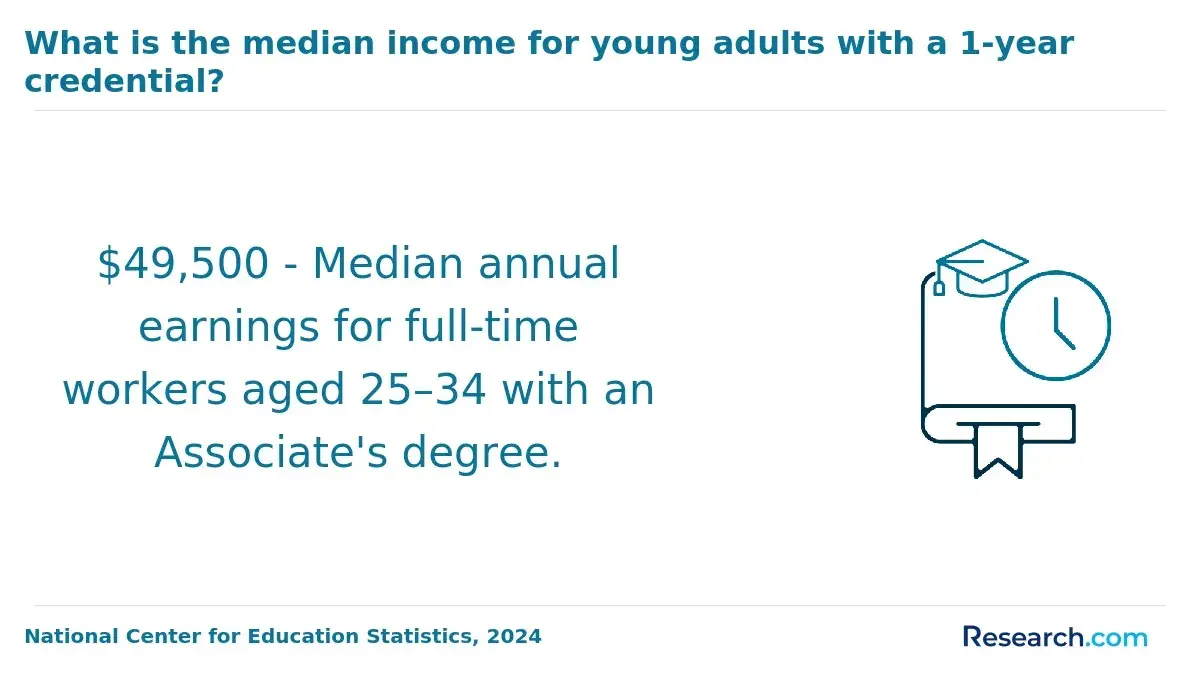
If you do not yet have enough credits, an associates degree can be a lower-cost stepping stone before entering a bachelor's completion pathway. The key is to choose transferable courses that match your intended bachelor's major, not just the fastest available classes.
How long does it take to finish a self-paced bachelor's completion program and how is progress measured?
Completion time depends on four variables: accepted transfer credits, required major credits, weekly study time, and the school's pacing rules. A student transferring 90 applicable credits may need only upper-division major and capstone work, while a student with 45 mixed credits may still need general education, prerequisites, and electives.
Progress is usually measured through credit hours, competencies, modules, assessments, or subscription-term completions. In competency-based programs, finishing faster often means passing assessments sooner, not skipping required learning outcomes.
Use these steps to estimate your realistic timeline before enrolling:
- Request an official or preliminary transfer evaluation before committing financially.
- Ask how many credits must be completed at the institution to meet residency requirements.
- Identify courses that must be taken in sequence, especially in accounting, computer science, nursing, education, and engineering technology.
- Estimate weekly study hours based on your work schedule, not your best-case week.
- Ask what happens if you do not finish a self-paced course or competency within the term.
The fastest program is not always the best choice. If you are changing fields, a slightly longer program with stronger projects, labs, advising, and internship options may produce better career value than a bare-minimum route.
How much do self-paced bachelor's completion programs cost and what financial aid can adult learners use?
Costs depend on tuition model, transfer credits, fees, books, technology, exam proctoring, subscriptions, and how many terms you need. College Board's 2024-25 figures put average published tuition and fees at $11,610 for in-state public four-year institutions and $43,350 for private nonprofit four-year institutions, which shows why adult learners should compare total completion cost rather than sticker price alone.
The main pricing models are easier to compare when you know what each one rewards. The table below explains how different tuition structures affect self-paced students.
| Tuition model | How it works | Best for | Main caution |
| Per-credit tuition | You pay for each credit attempted | Part-time students taking a steady course load | Slow progress can raise total cost if many credits remain |
| Flat-rate term tuition | You pay one rate for a term, sometimes with a credit minimum or maximum | Students who can take multiple courses at once | Overloading can hurt learning and grades |
| Subscription or competency term | You pay for a time period and complete as many competencies as allowed | Highly motivated students with prior knowledge | Low completion in a term reduces value |
| Employer-paid or partnership tuition | Tuition may be discounted or reimbursed through work | Employees in companies with education benefits | Reimbursement rules may require grades, service periods, or job relevance |
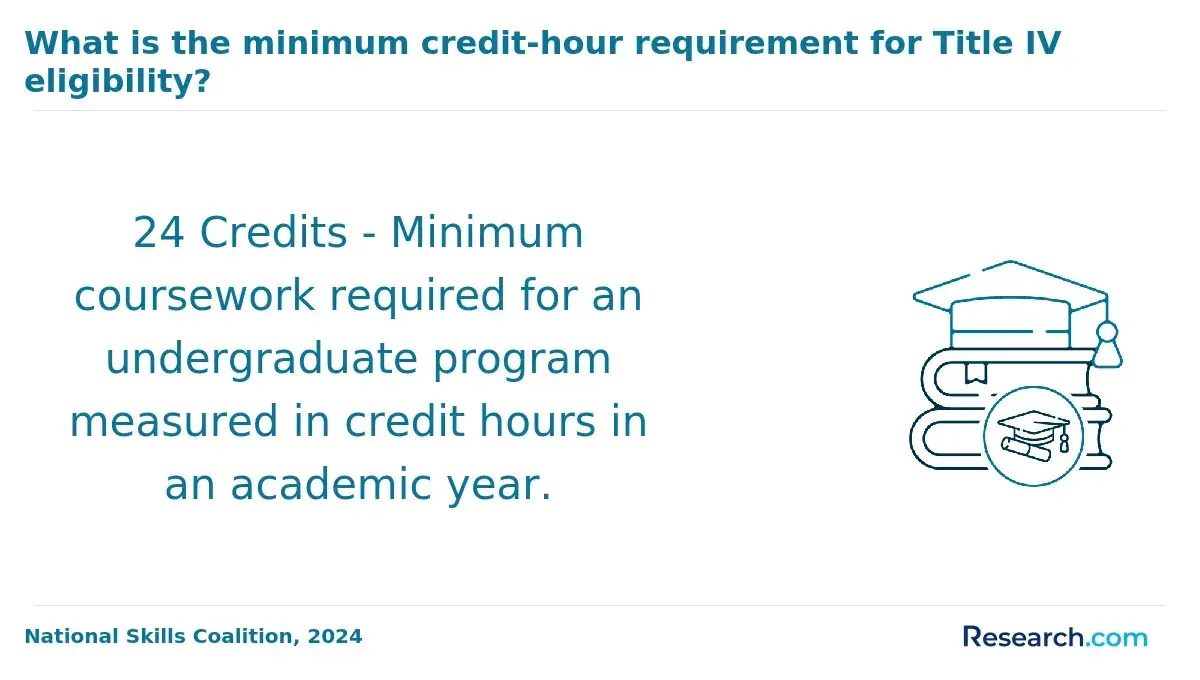
Financial aid may include the Pell Grant, federal student loans, state grants, employer tuition assistance, military education benefits, scholarships, and tax benefits. The maximum federal Pell Grant for the 2024-25 award year is $7,395, but eligibility depends on financial need, enrollment intensity, and program participation in federal aid.
Students comparing cost should also review the cheapest online university in USA options, but affordability should be balanced against accreditation, transfer acceptance, completion support, and career alignment.
What core curriculum, majors, and course formats are common in self-paced bachelor's completion programs?
Most self-paced bachelor's completion programs combine general education, major courses, electives, and a final capstone or portfolio. The exact mix depends on how many lower-division credits you transfer and whether your major has external standards, labs, fieldwork, or certification expectations.
The table below compares common curriculum elements so you can see which parts are flexible and which may slow down completion.
| Curriculum component | Common examples | Flexibility level |
| General education | Writing, math, science, humanities, social science | Often flexible if transfer credits are accepted |
| Major core | Upper-division courses required for the degree | Moderate; usually must be completed through approved courses |
| Concentration | Cybersecurity, HR, healthcare administration, analytics, public safety | Varies by school and faculty availability |
| Electives | Transfer credits, certificates, professional learning, or open electives | Often the most flexible category |
| Capstone | Research project, business plan, portfolio, practicum, or applied project | Usually required near the end of the program |
Course formats may include asynchronous modules, adaptive quizzes, proctored exams, instructor-graded papers, recorded lectures, discussion boards, simulations, virtual labs, and project-based assessments. For career-focused majors, prioritize programs that let you produce work samples, such as dashboards, policy briefs, security reports, lesson plans, care-improvement projects, or software applications.
What careers can you pursue with a completed bachelor's degree earned through a self-paced program?
A completed bachelor's degree can help adults qualify for roles that require a four-year credential, compete for internal promotions, move into supervisory work, or apply to graduate programs. The degree format usually matters less than accreditation, major relevance, experience, skills, and whether the school is recognized by employers or licensing bodies.
The table below links common completion majors to practical career directions. Use it as a starting point, then compare it with job postings in your local market.
| Major area | Common career directions | Best paired with |
| Business | Operations supervisor, project coordinator, HR specialist, business analyst, sales manager track | Leadership experience, Excel or analytics skills, industry knowledge |
| Healthcare administration | Clinic supervisor, care coordinator, revenue cycle manager, quality improvement analyst | Healthcare experience, compliance knowledge, EHR familiarity |
| Information technology | Systems administrator, network specialist, cloud support, IT project coordinator | Certifications, labs, help desk or infrastructure experience |
| Computer science | Software developer, QA engineer, data analyst, application support engineer | Portfolio, coding interviews, internships or freelance projects |
| Cybersecurity | SOC analyst, risk analyst, security compliance specialist, incident response support | Networking fundamentals, security labs, certifications |
| Psychology | Case management, HR, behavioral health administration, research support | Internships, statistics skills, graduate school planning |
| Nursing RN-to-BSN | Charge nurse track, public health nurse, nurse manager pathway, graduate nursing preparation | Active RN license, clinical experience, state requirements |
| Education | Teacher pathway, instructional support, childcare administration, corporate training | State licensure review, field experience, classroom or training practice |
Adult learners should read job descriptions before choosing a major. If target roles ask for certifications, portfolios, licenses, or specific software, build those requirements into your degree plan instead of assuming the diploma alone will be enough.
How do salaries, promotion potential, and job outlook compare for graduates of self-paced completion programs?
Salary and promotion potential vary by field, location, experience, employer, and credentials. The clearest broad pattern is that a bachelor's degree is associated with higher labor-market stability: BLS 2024 education data reported a 2.5% unemployment rate for workers with a bachelor's degree, compared with 3.9% for workers whose highest credential was a high school diploma.
For self-paced completion graduates, employers typically evaluate the same factors they would for other bachelor's graduates: accredited institution, major, relevant experience, skills, references, and interview performance. The self-paced format is unlikely to be a problem when the school is reputable and the student can demonstrate competence.
Use this decision sequence to evaluate ROI before enrolling:
- Choose three target job titles and collect real postings from your region or remote market.
- List required degrees, certifications, software, years of experience, and licenses from those postings.
- Ask each school how the curriculum maps to those requirements.
- Calculate total remaining cost after transfer credits, grants, employer benefits, and fees.
- Compare the cost with realistic salary ranges, promotion rules, and your expected time to completion.
If graduate education is part of your long-term plan, verify that the bachelor's program is accepted by the master's or doctoral programs you may later pursue. For example, students researching accelerated doctoral options may also compare 1 year PhD programs online no dissertation USA, but graduate admissions standards still depend on accreditation, prerequisites, and academic fit.
Other Things You Should Know About
They can be respected when offered by an accredited institution with a legitimate degree curriculum. Employers usually care more about accreditation, major relevance, experience, and skills than whether courses were self-paced.
Possibly, but only if you transfer a large number of applicable credits, meet all prerequisites, and can complete coursework quickly. Many students need longer because of work schedules, course sequencing, or remaining general education requirements.
Some do, but not all. The program must be eligible for federal aid, and your enrollment status, academic progress, and aid history can affect eligibility. Ask the school's financial aid office for written details.
The biggest mistake is enrolling before receiving a clear transfer credit evaluation and total cost estimate. Without those, you cannot accurately judge completion time, affordability, or whether the program fits your career goal.
References
- Online Bachelors Completion Programs That Fit https://thehorizonsunlimited.com/blog/online-bachelors-completion-programs-that-fit
- Per Scholas FAQs - Per Scholas https://perscholas.org/faqs/
- Course Completion Rate Benchmarks: Improve Yours (2026) | Ruzuku https://www.ruzuku.com/learn/articles/course-completion-rates
- New Data on Completion Rates | HESA https://higheredstrategy.com/new-data-on-completion-rates/
- Best Tuition Free Colleges - OnlineDegree.com https://www.onlinedegree.com/article/best-free-tuition-colleges/
- 2025 Most Affordable Online Bachelor's Degrees https://www.onlineu.com/most-affordable-colleges/bachelors-degrees