
2027 Best Associate Degree Programs With 5-Week Courses

Co-Founder and Chief Data Scientist
A five-week class can help you make progress sooner, but it does not make an entire associate degree a five-week program. That distinction matters if you are fitting college around work or hoping to enter a new field quickly. The College Board reports average published tuition and fees of $4,050 for in-district students at public two-year colleges in 2024-25, making both price and scheduling worth comparing.
This guide shows which degree fields may offer short courses, where labs or clinicals can slow the pace, and what to verify before enrolling.
Key Things You Should Know
- Business, IT, criminal justice, and transfer-oriented degrees may accommodate five-week classes more readily than programs with fixed clinical or lab sequences.
- An associate degree commonly requires around 60 semester credits; prerequisites, available course sections, and your course load determine when you finish.
- Confirm that required courses - not just electives - run in five-week terms, and verify accreditation, total cost, transfer rules, and any licensure requirements.
Top 10 Best Associate Degree Programs With 5-Week Courses
Business Programs
Business administration and accounting associate degrees are strong candidates for students seeking short, repeatable course blocks. An AA or AS may emphasize transferable general education; an AAS may focus on bookkeeping, office operations, or applied business skills. Five-week classes can work well for subjects such as management or business communication, but check the schedule for required accounting and math courses. Choose a transfer-focused curriculum if a bachelor's degree is the goal; choose applied coursework if near-term workplace skills matter more.
Healthcare Programs
Healthcare administration and health information programs may offer five-week online courses in terminology, records, and office procedures. They are different from clinical allied-health degrees: a short online medical terminology class does not eliminate laboratory, placement, or supervised-practice requirements in programs that have them. Compare the actual credential with your target job's requirements. An administrative degree may suit someone seeking healthcare operations work, while a clinical occupation may require a different, separately accredited pathway and certification or licensure.
Information Technology Programs
IT support, networking, and cybersecurity associate programs can pair short courses with hands-on projects and certification preparation. An AAS may prioritize practical troubleshooting; an AS may leave more room for transfer into a bachelor's program. Five-week terms can be demanding when a course includes substantial labs or programming assignments. Ask whether technical courses - not only general education - use the short format, what hardware or software you need, and whether advertised certifications require separate exams and fees.
Nursing / Pre-Nursing Programs
Pre-nursing AA or AS pathways may offer five-week general education courses, but anatomy, microbiology, and other prerequisites can have lab and sequencing requirements. An associate degree in nursing is different: admission may be selective, and clinical placements often follow a schedule that cannot be compressed into five-week blocks. To become a registered nurse, graduates must also meet state licensing requirements and pass the NCLEX-RN. Confirm whether a school advertises short courses for the nursing major itself or only for its prerequisites.
Criminal Justice Programs
Criminal justice AA, AS, and AAS programs may schedule courses in law, corrections, and public safety in five-week terms. A transfer-oriented degree makes sense if your intended position favors a bachelor's degree; an applied option may emphasize workplace knowledge. Neither format guarantees entry into law enforcement. Agencies can impose separate age, background, fitness, training, and academy requirements. Before choosing a program, compare its required-course calendar with the hiring rules for the occupation and location you have in mind.
Psychology / Counseling Programs
A psychology AA or AS can be a flexible transfer starting point, with introductory courses that may fit five-week terms. It does not qualify graduates to practice as licensed counselors or psychologists; those careers require further education and state-specific credentials. A human services AAS may instead emphasize entry-level support work and could include a practicum that follows an employer's schedule. Choose based on whether you need a bachelor's transfer pathway or preparation for a specific support role.
What Are Associate Degree Programs With Five-Week Courses?
Associate degree programs with five-week courses deliver some classes in intensive five-week blocks rather than a conventional semester. You still complete the degree's required credits and outcomes; shorter terms change the calendar, not necessarily the amount of work. A program can mix five-week, semester-length, lab, and clinical courses.
For a student balancing work and school, one subject at a time may be appealing. But concentrated weekly assignments and back-to-back terms can leave little room for delays. Ask for a term-by-term plan showing every required class, its actual length, and its next available start date before treating a program as accelerated.
Which Associate Degrees Can Be Completed Through Five-Week Courses?
The fields above can include five-week classes, but no degree field guarantees that every required course uses them. The most useful comparison is the specific school's required-course schedule, not a broad claim that its college offers short terms.
This table separates degree goals from scheduling obstacles so you can narrow your search without assuming that all courses in a field are accelerated.
| Degree path | Common goal | What to check in the five-week schedule |
| Business or criminal justice AA/AS | Bachelor's transfer | Whether required general education and major courses both run in short terms |
| IT or healthcare administration AAS | Workforce preparation | Whether technical courses, labs, and any practicum fit the term calendar |
| Psychology or pre-nursing AA/AS | Further education | Whether prerequisites run in the right order and satisfy the next program's rules |
| Associate degree in nursing | Preparation for RN licensure | Whether nursing courses and clinical placements actually use five-week blocks |
AA and AS degrees are often designed with transfer in mind, while AAS degrees commonly emphasize employment, but schools differ. Request a degree audit or sample plan showing how accepted transfer credits, prerequisites, and residency-credit requirements affect your finish date.
Are Five-Week Associate Degree Courses Accredited and Transferable?
Yes, a five-week course can be accredited and transferable when it is part of an appropriately accredited institution's degree. Its duration alone says nothing about academic quality or credit acceptance. Check the institution's accreditation status and, for fields such as nursing or certain allied-health specialties, whether relevant programmatic approval or accreditation meets your next school's or licensing board's rules.
Transfer involves two separate decisions: whether another college accepts the credit and whether it applies to your intended major. Before enrolling, ask the destination school to evaluate the exact course and confirm any articulation agreement in writing. An accelerated AAS course may count as elective credit without replacing a required bachelor's course.
How Do Online and Campus-Based Five-Week Programs Compare?
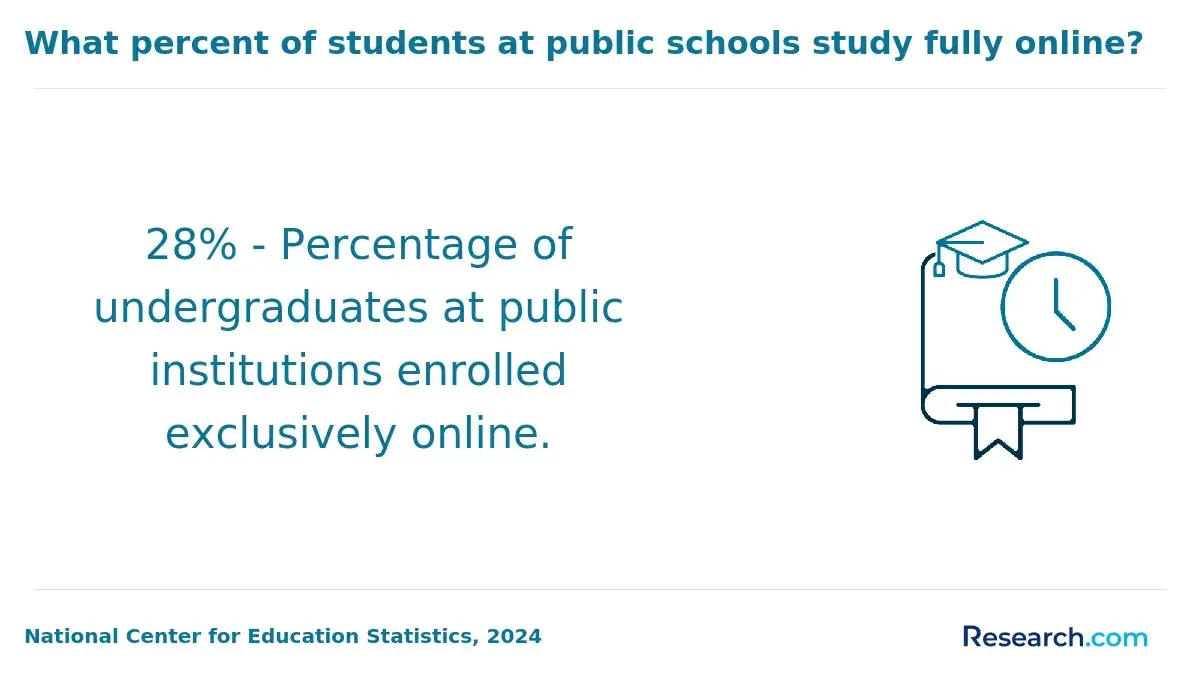
Online study can remove commuting, but it does not necessarily provide a self-paced schedule. Five-week online courses may have weekly deadlines or live meetings; hybrid and campus programs may offer easier access to equipment, labs, and in-person help. The right choice depends on the required courses, not the delivery label.
The comparison below highlights scheduling differences that can affect whether you can sustain a short-course workload.
| Format | Potential advantage | Constraint to verify |
| Asynchronous online | Access coursework around other commitments | Fixed weekly deadlines, proctored exams, or local placements |
| Scheduled online | Regular live contact with instructors | Required attendance at set times |
| Hybrid or campus | On-site labs and face-to-face support | Travel, campus hours, and clinical scheduling |
If control over study hours is your priority, compare published deadlines with options described as the cheapest self paced online college. Self-paced study and five-week terms solve different scheduling problems, so verify which model the actual degree uses.
What Do You Study in an Accelerated Associate Degree Program?
Most associate programs combine general education - such as writing and quantitative reasoning - with major courses. Transfer-oriented paths may emphasize courses intended to satisfy bachelor's prerequisites; career-oriented paths may add technical labs, projects, internships, or practicums. Nursing and other clinical fields can require science labs and supervised placements even when some classroom courses are short.
A five-week class generally covers its assigned course outcomes on a tighter schedule. If you are considering easy online college courses to balance a demanding term, confirm that they fulfill degree requirements: an appealing elective will not speed completion if it does not count toward the program.
What Are the Admission Requirements for Five-Week Courses?
Admission typically starts with a high school diploma or equivalent, an application, and transcripts. Colleges may use placement measures or previous coursework to determine where you begin; policies on tests and minimum grades vary. A short-course format usually does not waive ordinary degree requirements.
Admission to the college is not always admission to the major. Nursing and some allied-health programs may require prerequisite grades, a separate application, screening, or limited-seat admission. Ask whether you can begin the intended major immediately and when each prerequisite is offered. If you have previous college credit, obtain an evaluation before relying on an advertised completion timeline.
How Much Do Accelerated Associate Degree Programs Cost?
The price of an accelerated associate degree depends on tuition, mandatory fees, remaining credits, residency status, and required materials - not the number of weeks in a class. The College Board's 2024-25 average of $4,050 in published tuition and fees for an in-district, full-time year at public two-year colleges is a useful benchmark, not a quote for a particular degree or a student's final bill.
Request a written estimate covering all required terms, technology and lab fees, books, equipment, exams, and any clinical-related expenses. Compare that total after grants or scholarships, if eligible. Ask the financial aid office how the school defines payment periods and enrollment intensity for five-week courses; do not assume that stacking short classes automatically preserves the same aid eligibility.
If your goal is a specific entry-level skill rather than an associate degree or bachelor's transfer, compare the full cost and employer relevance of certificate programs that pay well. A shorter credential may cost less, but it may not replace required degree credits or professional licensure.
What Careers and Salaries Can Associate Degrees Lead To?
Career outcomes depend on the occupation and its requirements, not on five-week course length. Business and IT degrees can support applications for relevant entry-level roles; psychology is more often a foundation for further study. Clinical roles need particular care: an associate nursing degree can be one educational route toward RN licensure, but graduation alone is not a license.
For context, the U.S. Bureau of Labor Statistics reports a May 2024 median annual wage of $93,600 for registered nurses. That is an occupational median across employed RNs, not an expected salary for a new associate-degree graduate. Compare job postings in your area, required credentials, and likely entry-level duties before using any occupational wage to judge a program's value.
If your long-term target requires advanced education, map the steps in order: transferable associate coursework, a bachelor's degree, and then any required graduate credential. Options such as 1 year online masters programs are later-stage possibilities, not shortcuts around undergraduate or licensing requirements.
How Do You Choose a Reputable Five-Week Associate Degree Program?
The best five-week program is one whose required courses, calendar, cost, and credential fit your goal. A college-wide promise of accelerated classes is insufficient if the course that gates your next term is offered only once a year.
Use these checks when speaking with admissions, an academic advisor, and - if relevant - a transfer school or licensing board:
- Request a complete course-by-course plan showing term lengths, start dates, prerequisites, expected weekly workload, and a realistic graduation date for your enrollment pace.
- Confirm institutional accreditation, any necessary program approval, and in writing how transfer credits or prior learning apply to the degree.
- Compare the full remaining cost and ask about mandatory campus visits, labs, clinical placements, certification exams, and aid eligibility.
Watch for claims that imply a five-week degree rather than five-week courses, omit clinical requirements, or promise transfer or employment without conditions. If a school cannot show when you can take every required course, keep comparing.
Other Things You Should Know About
No. Five weeks describes an individual course term, not the time needed to complete the degree. Your timeline depends on remaining credits, course availability, prerequisites, and how many classes you take.
They can feel more intense because assignments and exams are concentrated into fewer weeks. Ask for a sample syllabus and estimate the weekly hours you can reliably devote to each course.
Possibly, but verify every required course. Labs, clinical placements, and infrequently scheduled prerequisites may use different formats or require in-person attendance.
They may, but course length does not guarantee transfer. Have the destination college confirm both that it accepts the credit and that the course fulfills your intended degree requirements.
References
- New Degree Program & Certificate Requests | Texas Higher Education Coordinating Board https://www.highered.texas.gov/new-program-development/new-program-requests/
- DAPIP | Homepage - Office of Postsecondary Education (OPE) https://ope.ed.gov/dapip/
- Tuition & Fees - Saint Paul College https://www.saintpaul.edu/admissions/tuition-fees/
- Regional vs. National Accreditation: Which is Better? | Drexel University Online https://www.online.drexel.edu/news/national-vs-regional-accreditation.aspx
- What is the time commitment for different degree options? | Penn State World Campus https://www.worldcampus.psu.edu/about-us/news-and-features/what-is-the-time-commitment-for-different-degree-options
- Accelerated Associate Degree (ASAP) - Ivy Tech Community College https://www.ivytech.edu/programs/signature-opportunities-for-students/accelerated-programs/accelerated-associate-degree-asap/
- Improving community college completion rates by addressing structural and motivational barriers | Brookings https://www.brookings.edu/articles/community-college-completion-rates-structural-and-motivational-barriers/
- Tuition and Financial Aid - Concordia University, St. Paul https://www.csp.edu/tuition-and-financial-aid/
- Considering Student Workload | CITT - University of Florida https://citt.it.ufl.edu/resources/course-design-basics/develop-and-implement/considering-student-workload/


