2027 Best Associate Degree Programs for Flexible Careers

Co-Founder and Chief Data Scientist
Choosing an associate degree means balancing two kinds of flexibility: fitting classes around your life and keeping career options open afterward. Cost matters, too. College Board reported average published tuition and fees of $4,050 for full-time, in-district students at public two-year colleges in 2024-25; books, transportation, and program fees can raise the bill. This guide compares six degree fields for working adults, career changers, and transfer-minded students. You'll see which paths offer adaptable coursework, which require in-person training, and what to check before committing.
Key Things You Should Know
- Business and information technology often offer the most scheduling flexibility; nursing and clinical healthcare programs usually require scheduled, in-person training.
- An associate degree commonly requires about 60 credits, but prerequisites, part-time enrollment, and clinical sequencing can extend completion beyond two years.
- Career outcomes differ sharply: the U.S. Bureau of Labor Statistics reports a May 2024 median wage of $93,600 for registered nurses, a licensed occupation that requires more than simply earning a degree.
Top 10 Best Associate Degree Programs for Flexible Careers
Business Programs
An AA or AS in business commonly combines accounting, communications, economics, and general education for transfer. An AAS may emphasize immediately usable office, bookkeeping, or operations skills. Business suits students who need online or evening coursework and want options across industries. It does not, by itself, qualify someone for management: experience and sometimes a bachelor's degree matter. If transfer is the goal, confirm that accounting and general education courses satisfy the intended bachelor's program rather than counting only as electives.
Healthcare Programs
Healthcare offers distinct paths, not one interchangeable degree. Health information programs may lead toward records or revenue-cycle work and can offer substantial online coursework. Diagnostic imaging and dental hygiene are more specialized, with labs and clinical placements that limit scheduling freedom. Compare each program's admission requirements, placement hours, and eligibility for any required certification or license. Choose a clinical AAS when you want that specific occupation; choose a broader transfer-oriented health sciences degree when you are still exploring, while recognizing it may not qualify you for clinical practice.
Information Technology Programs
IT associate programs may cover networking, cybersecurity fundamentals, programming, or technical support. Online labs and evening classes can make study adaptable, but scheduled team projects and technical assessments still require time. An AAS often emphasizes job-ready practice; an AS may better support transfer. Entry-level support roles are more realistic immediate targets than senior cybersecurity positions. Review which software and equipment students use, whether courses align with relevant certifications, and whether the curriculum teaches troubleshooting rather than relying on a credential name.
Nursing / Pre-Nursing Programs
An associate degree in nursing (ADN) can prepare students to seek registered nurse licensure, subject to state requirements and passing the NCLEX-RN. Nursing admission is often selective even at colleges with broad general admission. Labs, clinical shifts, and prerequisite sequences make this a less schedule-flexible path, though some schools offer evening or weekend components. Pre-nursing is different: it supplies prerequisites or transfer preparation but does not itself qualify someone to practice nursing. Confirm clinical scheduling and state-board approval before enrolling.
Criminal Justice Programs
Criminal justice AA and AS programs can provide a transfer foundation in law, courts, and public policy; an AAS may focus more on applied public-safety coursework. Online classes may suit shift workers, but career requirements vary. Police roles generally involve agency selection and academy training, while federal positions may require additional education or experience. Ask whether credits apply to a planned bachelor's degree, and avoid assuming that a criminal justice major is required - or sufficient - for a particular agency job.
Psychology / Counseling Programs
A psychology AA or AS is primarily a transfer pathway. It can build research, communication, and behavioral-science foundations while offering relatively adaptable online coursework. Human-services AAS programs may add supervised fieldwork for entry-level support roles, reducing scheduling flexibility. An associate degree does not qualify someone to practice independently as a counselor or psychologist; those careers require further education and state-specific licensure. Choose this path if the coursework interests you and you have a realistic plan for the next credential.
What Are the Best Associate Degrees for Flexible Careers?
The best associate degree depends on which flexibility you need. Business and IT are strong starting points for adaptable class schedules. Healthcare and nursing can offer clearer routes toward specific occupations, but required training is less movable. Psychology and criminal justice may preserve more academic options for students planning to transfer.
This comparison separates study flexibility from career direction. Formats vary by college, so use it to narrow your search - not as a claim that every program in a field has the same schedule.
| Field | Likely scheduling advantage | Main trade-off |
| Business | Many courses can be offered online or in the evening | Career target may need experience or further study |
| Healthcare | Health information may allow online coursework | Clinical specialties require fixed, in-person hours |
| IT | Online coursework and labs are often possible | Skills and projects need continual practice |
| Nursing | Some programs offer alternative class schedules | Clinical placements and licensure requirements constrain choice |
| Criminal justice | Academic courses may fit online study | Agency hiring has separate requirements |
| Psychology / counseling | Transfer coursework may be available online | Professional practice requires substantial further education |
Choose an AAS when its applied training matches a well-defined job goal; favor an AA or AS when a bachelor's degree is the next step. If you already know you need that bachelor's degree and have transferable credits, compare the full associate-to-bachelor's route with a best accelerated bachelor's degree online option. The shortest-looking route is not necessarily the one that accepts the most of your credits.
Which Associate Degree Programs Offer Online and Part-Time Options?
Business, IT, criminal justice, and transfer-oriented psychology are often easier to find in online or part-time formats because much of their coursework can be taught without clinical facilities. Health information may also be available online. Nursing and hands-on allied health programs generally combine classroom options with labs or clinical placements at fixed times.
Online does not mean self-paced. Ask whether classes are asynchronous, whether live sessions or proctored exams are required, how often required courses run, and whether part-time students can follow a published course sequence. Working students should also check when assignments are due and whether a required internship or clinical placement can accommodate their shifts.
How Long Do Associate Degree Programs Take and What Do They Cost?
Many associate programs require roughly 60 credits and can take about two years at a full-time pace. Part-time study takes longer; prerequisites, limited course availability, selective admission, and clinical sequencing can add time even for full-time students. Accepted transfer credits may shorten the remaining coursework, but only after the college evaluates them against the degree requirements.
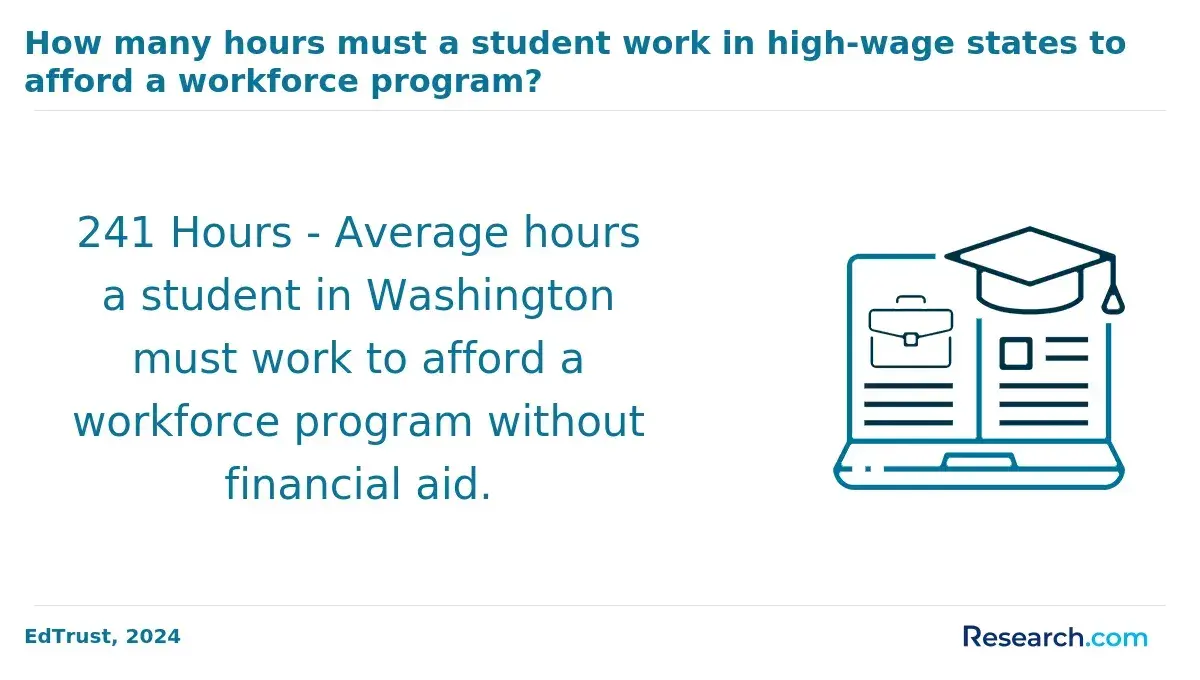
Published tuition is a starting point, not a completion price. The College Board's 2024-25 average of $4,050 covered annual tuition and fees for full-time, in-district students at public two-year colleges. Your total may also include program fees, books, technology, commuting, clinical supplies, and licensing exams. Compare an individualized estimate of remaining credits and required expenses at each school, then ask about grants, scholarships, federal aid eligibility, employer assistance, and payment plans.
What Do You Learn in Flexible Associate Degree Programs?
Most associate programs combine general education - such as writing and mathematics - with courses in the major. What makes a program flexible is not just where lessons are delivered, but how required activities fit into a repeatable weekly schedule.
Business students might practice accounting and spreadsheets; IT students might configure networks or build applications. Psychology and criminal justice students typically study research, institutions, and human behavior. Nursing and clinical healthcare students add laboratories and supervised patient-facing training. Before choosing between two programs with similar names, compare their course plans: an internship, practicum, or required lab can change both your timetable and the skills you gain.
What Are the Admission Requirements for Associate Degree Programs?
Colleges commonly ask for a high school diploma or equivalent and an application; placement measures or prerequisite courses may affect where you begin. A college's general admission policy does not establish eligibility for a selective nursing or allied-health major. Those programs may separately assess prerequisite grades, health documentation, background checks, or other requirements.
If you have prior college credit, request an official evaluation before relying on a completion estimate. Ask which credits satisfy major requirements, which count only as electives, and whether a minimum number must be earned at the new school. Students comparing application costs can also explore best online colleges with no application fee, while checking that a relevant associate program - and the format they need - is actually offered.
Which Careers Can You Pursue With an Associate Degree?
An associate degree may support entry into office administration, bookkeeping support, IT support, health information, or human-services support, depending on the courses and an employer's requirements. An eligible nursing graduate may pursue RN licensure. Clinical allied-health roles can require program-specific accreditation, examinations, or state licenses.
Start with the job description, then work backward to its required credential. A business degree is not a management credential, an IT degree does not automatically qualify someone for cybersecurity leadership, and a psychology degree does not confer counseling licensure. If your goal is a narrower skill rather than a broad degree, compare the time and cost with certificate jobs that pay well; verify whether local employers accept that credential before choosing the shorter route.
What Salaries Can Associate Degree Graduates Expect?
Occupational wages are not associate graduate starting salaries. Pay varies with role, location, experience, employer, and required credentials. For example, the U.S. Bureau of Labor Statistics reports a May 2024 median annual wage of $93,600 for registered nurses. That figure covers employed RNs across experience levels; it is not a prediction for a newly licensed ADN graduate.
For a useful return-on-investment comparison, identify the entry-level jobs you could realistically seek after each program, check their local advertised pay, and weigh that against your expected out-of-pocket cost and time away from work. Be cautious of school claims that imply all graduates earn an occupation-wide median.
Which Associate Degree Careers Have the Strongest Job Outlook?
Job outlook is strongest when measured for an occupation, not an associate degree title. The U.S. Bureau of Labor Statistics projects employment for medical assistants to grow 12% from 2024 to 2034. That signals demand for the occupation, but it does not mean every healthcare associate program prepares students for medical assisting or that every graduate will find a job.
Look beyond national growth figures. Check whether the occupation is hiring in your area, whether employers prefer a certificate, associate degree, or license, and whether the work hours match your idea of a flexible career. Healthcare may offer varied shifts without offering control over those shifts; an office or IT role may allow more predictable hours without guaranteeing remote work.
How Can You Choose an Accredited Associate Degree Program?
Accreditation is a first check, not a complete quality verdict. Confirm that the institution holds recognized accreditation, then check any program-level approval or accreditation needed for your intended license or certification. Also confirm that courses will apply to a planned transfer destination; acceptance of a credit does not guarantee it fulfills a major requirement.
Before enrolling, request the program's course sequence, total-cost estimate, part-time schedule, transfer evaluation, and recent career-outcome information, including how outcomes were measured. For nursing or clinical healthcare, confirm state eligibility and placement arrangements directly with the program and relevant licensing board. If your long-term goal is psychology practice, plan the full educational route: eventual graduate-program accreditation and cost - including comparisons of cheap doctoral programs - matter far more than an associate program's tuition alone.
Other Things You Should Know About
Sometimes. Business, IT, and transfer-focused programs may offer fully online coursework, but check for live sessions, exams, internships, and required campus activities. Clinical programs usually require in-person training.
An online or evening business, IT, or transfer-oriented program may be easier to schedule. The better choice is the one whose required courses run reliably at times you can attend and whose career or transfer outcome fits your goal.
It depends on the program. AA and AS pathways are often built for transfer; AAS programs often emphasize workforce skills. Verify the actual curriculum and transfer agreement rather than relying on the abbreviation.
Yes, in some fields. An approved ADN can form part of the route to RN licensure, for example, but graduates must also meet state requirements and pass the required exam. A degree alone is not a license.
References
- Understanding College Costs | Federal Student Aid https://studentaid.gov/resources/prepare-for-college/students/choosing-schools/consider-costs
- Cost of Attendance (Budget) | 2025-2026 Federal Student Aid Handbook https://fsapartners.ed.gov/knowledge-center/fsa-handbook/2025-2026/vol3/ch2-cost-attendance-budget
- Healthcare jobs you can get without a bachelor's degree | bls.gov https://www.bls.gov/opub/btn/volume-5/healthcare-jobs-you-can-get-no-bachelors-degree.htm
- Workforce Outcomes for Associate Degree Recipients in Utah | ushe.edu https://udrc.ushe.edu/research/RA12_AssociateDegree/index.html
- Ready for College? 6 Advantages of Articulation Agreements | Cleveland University-Kansas City https://www.cleveland.edu/articulation-agreement/
- Associate of Science vs. Associate of Arts Degree | Florida National University (FNU) https://www.fnu.edu/associate-science-vs-associate-arts-degree-difference/
- Tuition & cost of attendance | universityofcalifornia.edu https://admission.universityofcalifornia.edu/tuition-financial-aid/tuition-cost-of-attendance/
- Associate Degree vs. Bachelor's Degree | snhu.edu https://www.snhu.edu/about-us/newsroom/education/associate-degree-vs-bachelor-degree
- 4 Flexible Ways to Earn a College Degree on Your Schedule | stjohns.edu https://www.stjohns.edu/news-media/johnnies-blog/4-flexible-ways-earn-college-degree-your-schedule-0
- Prioritizing Time to Completion for Community College Students | Community College Research Center https://ccrc.tc.columbia.edu/easyblog/prioritizing-time-completion-community-college-students.html