2027 Best Adult Degree Programs for Career Advancement

Co-Founder and Chief Data Scientist
Returning to school while working means choosing a program that fits both your career goal and your schedule. The stakes are substantial: the U.S. Bureau of Labor Statistics (BLS) reports a 2024 median annual wage of $93,600 for registered nurses, but advancement into specialized nursing roles can require graduate education and additional credentials. This guide compares ten master's program families for adults, then explains how to assess flexibility, cost, accreditation, and career fit. You'll be able to narrow your options without assuming that a degree alone brings a promotion or a particular salary.
Key Things You Should Know
- The strongest choice depends on your target role: an MBA may support business leadership, while nursing, social work, education, and some healthcare roles have more specific credential or licensing rules.
- Compare the full path, not just tuition: remaining coursework, part-time scheduling, required placements, and time away from work can change both cost and feasibility.
- BLS reports a 2024 median wage of $133,080 for software developers, but that occupational figure is not a salary forecast for computer science graduates or proof that a master's degree is required.
Top 10 Best Adult Degree Programs for Career Advancement
Business Programs
An MBA is a broad professional degree for adults seeking management responsibilities; specialized master's programs in accounting, finance, or analytics suit narrower goals. Compare part-time course sequencing, team-project meeting times, employer tuition assistance, and whether your target jobs reward the credential.
Some programs admit applicants from many undergraduate majors but require foundation coursework. An MBA can strengthen financial and organizational decision-making, yet it does not substitute for experience when employers seek a manager. A focused certificate may be a better choice if you need one skill rather than a full graduate degree.
Healthcare Programs
Master's programs in healthcare administration, public health, and health informatics prepare adults for different work. Administration emphasizes operations and leadership; public health emphasizes population-level problems; informatics focuses on health data and systems.
Compare required experience, practicum hours, and whether classes accommodate shift work. These degrees do not, by themselves, qualify graduates to practice medicine or nursing. Adults already employed by a health system should ask which credential their desired department values and whether the employer offers tuition assistance or project-based learning.
Information Technology Programs
A master's in information technology, cybersecurity, or information systems can support advancement into technical operations, security, or systems leadership. Programs differ in coding depth: some emphasize infrastructure and governance, while others require substantial programming.
Working adults should inspect lab access, group-work schedules, and whether projects use relevant tools. A graduate degree may complement experience, but hiring can also depend on demonstrated technical skills and certifications. If you are changing fields, check prerequisites before choosing a program advertised to experienced IT professionals.
Computer Science Programs
A computer science master's typically goes deeper into algorithms, software systems, or artificial intelligence than a general IT degree. It fits adults pursuing specialized engineering or computing work, provided they have - or can complete - the required mathematics and programming preparation.
Compare prerequisite courses, project or thesis options, and access to advanced classes part-time. For someone seeking a first software job, a master's is not always the most direct route; a relevant portfolio and experience may matter more. Check whether the curriculum teaches foundational concepts alongside rapidly changing tools.
Nursing Programs
Master of Science in Nursing programs can prepare registered nurses for education, leadership, or certain advanced practice paths. Admission and clinical requirements depend on the track; an advanced practice program commonly requires an active RN license and supervised clinical training. An online classroom component does not remove placement obligations.
Adults should confirm who arranges clinical sites, whether local placements are possible, and whether the track meets licensing and certification requirements in their state. Nurses seeking nonclinical leadership may find an administration-focused track more practical than an advanced practice route.
Psychology Programs
A psychology master's may support research, organizational work, or preparation for further study, but its career value depends heavily on the concentration. Do not assume a general psychology master's qualifies you to practice independently as a psychologist; psychologist licensure generally requires doctoral-level preparation and additional state requirements.
Adults interested in therapy should compare explicitly licensure-oriented counseling or social work programs instead. Check whether the curriculum includes supervised experience, whether classes are available part-time, and which occupations graduates actually pursue.
Education Programs
A master's in education can serve experienced teachers pursuing curriculum, instructional leadership, or specialized teaching roles. Some programs are designed for licensed educators; others offer an initial-licensure pathway with student teaching. That distinction matters more than the degree title if you want to enter teaching.
Working adults should check school-day placement requirements, state approval, and whether a district recognizes the credential for advancement. If your goal is a principal role, verify the relevant experience and administrator-licensure requirements before enrolling.
Criminal Justice Programs
A criminal justice master's may suit professionals seeking policy, administration, or analytical responsibilities in public safety and related organizations. Concentrations can emphasize leadership, criminology, or emergency management.
Compare the degree with your agency's promotion rules: some roles prioritize service record, examinations, or specialized training over graduate study.
Adults should look for flexible project deadlines and opportunities to study problems relevant to their work. This credential does not itself confer law-enforcement authority or replace academy, background, and agency requirements.
Engineering Programs
An engineering master's can help practicing engineers deepen expertise in a discipline such as mechanical, electrical, or civil engineering. Admission usually calls for substantial technical preparation; applicants from other fields may need prerequisites.
Compare laboratory access, thesis versus project options, and whether required courses run predictably for part-time students.
For work that requires a professional engineer license, verify state board rules separately: graduate study alone does not grant licensure, and the accreditation of an applicant's earlier engineering degree can matter. An engineering management degree serves a different goal from technical specialization.
Social Work Programs
A Master of Social Work (MSW) prepares students for social work practice and can be a step toward clinical licensure. Field placements require scheduled hours even when coursework is online.
Some schools offer advanced standing to eligible graduates of accredited bachelor's social work programs; it is not a general shortcut for applicants with work experience.
Confirm Council on Social Work Education accreditation, placement support, and your state's supervised-practice and examination rules. An MSW may fit adults seeking direct client work better than a general psychology master's.
What Are the Best Degree Programs for Adults Seeking Career Advancement?
The best adult degree program is the one that meets a specific career requirement and remains feasible to finish while you work. The comparisons below are program families, not a ranking of schools. They show where a master's may offer a clear path - and where a different credential might be more efficient.
This table matches common advancement goals with a starting point. Use it to shortlist programs, then verify requirements with schools and employers.
| Career goal | Program to investigate | Key decision |
| Move into general management | MBA | Will your employer value the degree alongside your experience? |
| Advance in a licensed profession | Nursing, social work, or education master's | Does the specific track meet state requirements? |
| Deepen technical expertise | Computer science, IT, or engineering master's | Do you meet prerequisites, and is the curriculum aligned with the role? |
| Lead health services or programs | Healthcare administration or public health master's | Which credential fits the work you want to do? |
Salary potential matters, but it should not replace a realistic job match. Research on online degrees that pay well can help you explore possibilities; compare those possibilities against the qualifications in actual job postings before committing to a master's.
Are Online Degree Programs as Valuable as Campus-Based Programs for Adults?
Online and campus-based degrees can both be valuable when the institution is appropriately accredited, the curriculum fits the occupation, and any required in-person training can be completed. Delivery format alone does not establish academic quality or employer acceptance.
For working adults, the more useful distinction is how the week works. Online classes may still have live meetings and fixed deadlines. Hybrid and campus programs may offer easier access to laboratories or professional contacts but add commuting time.
Before enrolling, ask for a typical term schedule and written details about residencies, exams, group projects, and placements. If independent scheduling is essential, explore online self paced college courses, then verify whether the particular graduate program actually uses that format.
How Much Do Adult Degree Programs Cost and How Long Do They Take?
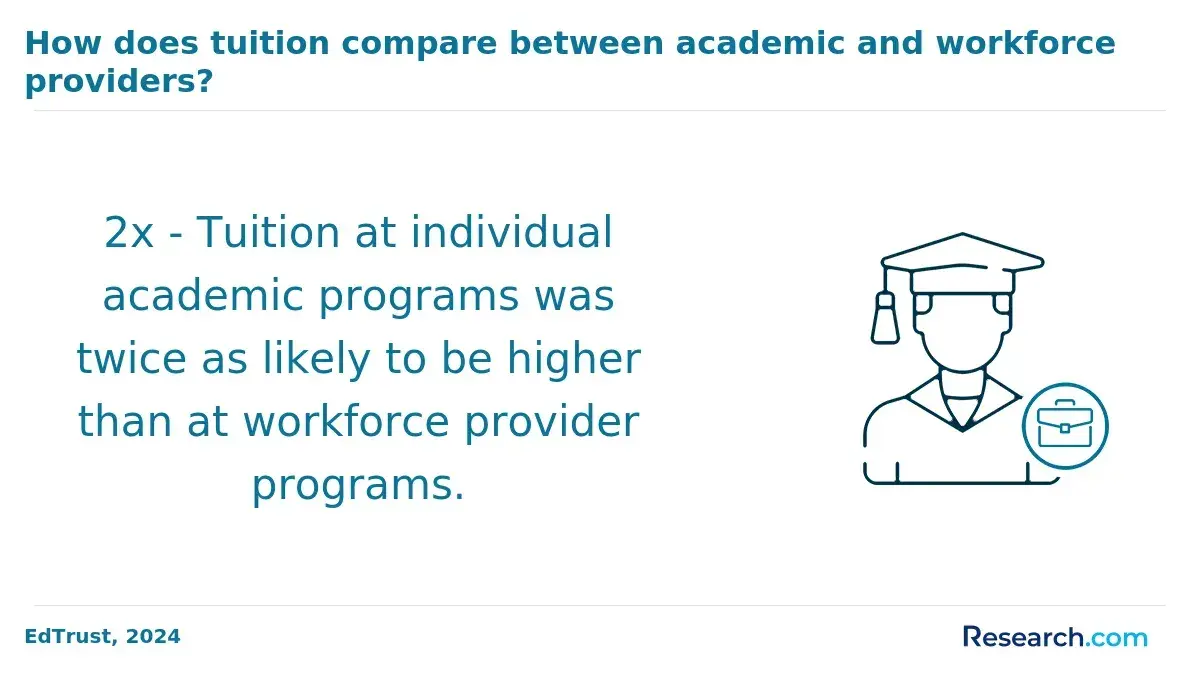
There is no reliable single price or completion time for an adult master's degree. Tuition may be charged by credit or term, and the amount you pay depends on required coursework, fees, enrollment pace, aid, and employer assistance. A part-time plan may preserve earnings but extend the time needed to finish; a faster plan may require reduced work hours.
These cost categories help explain why a quoted tuition rate is not a total-program estimate. Request a personalized estimate before comparing offers.
| Cost or time factor | Why it matters |
| Remaining credits and prerequisites | Foundation courses or prerequisites can add time and expense. |
| Mandatory and program fees | Technology, laboratory, and clinical charges may sit outside published tuition. |
| Required in-person work | Travel, placements, and reduced working hours can create indirect costs. |
| Course availability | Infrequently offered required classes can delay part-time completion. |
Ask whether federal financial aid is available for the specific program and enrollment load, and confirm employer reimbursement rules before assuming they will cover a course. At the graduate level, previous coursework is not automatically transferable; obtain a written evaluation showing exactly which requirements it satisfies.
Which Accreditation Should Adult Learners Look For in a Degree Program?
Start with institutional accreditation recognized by the U.S. Department of Education. Then check whether the profession calls for programmatic accreditation or state approval. For example, Council on Social Work Education accreditation matters for MSW pathways, while nursing and educator-preparation requirements depend on the program and state.
Accreditation is a threshold, not a complete quality rating. Check the accreditor's current status and the accreditation of the specific program, not just a related degree at the same school. If licensure is your goal, ask the relevant state board whether graduates of that track are eligible to pursue it. An accredited institution can still offer a program that does not meet your state's professional requirements.
What Do Adult Degree Programs Teach and Which Skills Do They Build?
Adult-oriented master's programs combine advanced subject knowledge with applied work, but the skills differ substantially. An MBA may develop budgeting and organizational analysis; an IT program may build systems-design skills; an MSW may develop assessment and practice skills through supervised fieldwork.
Capstones and workplace projects can make study immediately relevant, while a thesis may suit a research-oriented goal.
AI tools are changing work in technical and administrative fields, making it useful to examine how a curriculum teaches critical evaluation - not merely use of a particular tool. Ask to see required courses and a sample culminating project. A familiar program title is less informative than what you will actually practice and produce.
What Admission Requirements Apply to Adult Degree Programs?
Most master's applicants need a bachelor's degree, but additional requirements vary by program. Nursing tracks may require RN licensure; engineering and computer science may require technical prerequisites; some professional programs consider relevant work experience. A school's general graduate-admission policy does not necessarily govern every selective track.
Ask admissions to identify required prerequisites, any GPA or test policy, professional documentation, and whether an applicant can complete missing courses before or after admission.
Returning students should also request an evaluation of prior graduate coursework rather than assuming it will count. If admissions barriers are a concern, comparisons of easiest online degrees may offer context, but accessible admission is not a substitute for career fit or manageable graduation requirements.
Which Careers and Salaries Can Adult Degree Programs Lead To?
A master's can support a move into a specialty, a licensed practice path, or leadership consideration. It cannot guarantee any of them. BLS occupational wages describe people working in a role across backgrounds and experience levels; they are not graduate salary estimates.
The examples below separate career relevance from the additional qualifications an employer or regulator may expect. Use them alongside job postings in your area.
| Program family | Possible direction | Important qualification beyond the degree |
| Business | Operations or management | Relevant experience is often important for leadership roles. |
| Computer science | Software development or specialized computing | Employers assess technical skill; a master's is not universally required. |
| Nursing | Advanced practice or nursing leadership | Track-specific licensure, certification, or clinical requirements may apply. |
| Social work | Clinical or other social work practice | State rules may require supervised practice and an examination. |
For perspective, BLS reports a 2024 median annual wage of $133,080 for software developers. That is useful market context, not evidence that a computer science master's will produce that income. Compare the roles you can realistically enter after graduation with the full cost of getting there.
What Certifications or Licenses Do Adult Degree Graduates Need?
Licenses and certifications are separate from degrees. State licensure may be necessary for advanced nursing practice, clinical social work, teaching, or professional engineering work.
The required examination, supervised experience, and eligibility rules depend on the occupation and jurisdiction; a program's admissions office should be able to explain its intended pathway, but the regulator is the authority on licensing.
In less regulated fields, a targeted credential may be more efficient than another degree when you need a defined skill. Explore easy licenses and certifications to get online as potential alternatives, while checking each credential's prerequisites, employer recognition, and renewal requirements. Do not confuse a short course certificate with a professional license.
How Can Adults Choose a Reputable Degree Program for Their Career Goals?
Choose backward from the work you want to do, then test whether a program is credible and finishable. These steps help prevent common mistakes, including choosing by ranking alone, overlooking placement hours, and comparing tuition rates instead of total cost.
- Identify target job postings and, where applicable, state licensing rules; note which credentials are required versus preferred.
- Shortlist programs with appropriate institutional accreditation and any necessary program approval or accreditation.
- Request a written plan showing prerequisites, accepted prior coursework, required courses, part-time sequencing, and in-person obligations.
- Compare total estimated cost, aid, employer benefits, and the likely effect of study on your work hours.
- Ask how returning students receive advising, placement support, and access to required courses before making a deposit.
If a school cannot clearly explain how its program meets your career requirement - or will not clarify a mandatory placement or fee - keep looking. The best program is one you can complete and use for a realistic next step.
Other Things You Should Know About
Often, yes, but check live-class schedules, assignment deadlines, and required placements. Part-time enrollment may be more manageable, though it can lengthen completion time.
Not automatically. Some programs recognize specific prior coursework or offer defined pathways, but professional experience alone does not necessarily earn graduate credit. Request a written evaluation.
An MBA generally suits broad management goals; a specialized master's may fit a clearly defined technical or professional role. Compare job requirements and coursework rather than choosing by degree title.
Online delivery does not determine eligibility. The specific program, its required training, and the state where you intend to practice determine whether it meets the educational requirements.
References
- Professional Licensure Programs | New York State Education Department https://www.nysed.gov/college-university-evaluation/professional-licensure-programs
- General Schedule Qualification Policies | U.S. Office of Personnel Management https://www.opm.gov/policy-data-oversight/classification-qualifications/general-schedule-qualification-policies/
- Fast Facts: Tuition costs of colleges and universities (76) | ed.gov https://nces.ed.gov/fastfacts/display.asp
- Credit for Prior Learning - The City University of New York https://www.cuny.edu/academics/academic-policy/credit-prior-learning/
- Complying with Professional Licensure Requirements | wiche.edu https://wcetsan.wiche.edu/resources/complying-professional-licensure-requirements-beginners-checklist
- How does a college degree improve graduates' employment and earnings potential? - APLU https://www.aplu.org/our-work/publicuvalues/employment-earnings/