2027 Best Accredited Online Data Analytics Degree Programs: Compare Tuition, Admissions, and Career Outcomes

Co-Founder and Chief Data Scientist
Choosing an online data analytics degree is a high-stakes cost, time, and career decision. The field remains attractive because the U.S. Bureau of Labor Statistics reports a May 2024 median annual wage of $112,590 for data scientists, but not every online program offers the same value.
This guide is for first-time college students, transfer students, working adults, and career changers who want an accredited path into analytics. You will learn how to compare tuition, admissions, accreditation, flexibility, support, financial aid, and career outcomes before enrolling.
Key Things You Should Know
- The best accredited online data analytics degree programs combine institutional accreditation, transparent tuition, hands-on analytics tools, transfer-friendly policies, and career support rather than relying on name recognition alone.
- Published online tuition commonly ranges from about $330 per credit at some large private nonprofit universities to more than $600 per credit at nationally recognized public online campuses, so total program cost can vary by tens of thousands of $.
- BLS data shows strong pay for data scientist roles, but entry-level analyst jobs may require portfolios, SQL, Python, visualization skills, internships, or prior business experience in addition to the degree.
Which Accredited Online Data Analytics Degree Programs Offer the Best Overall Value?
The best overall value is usually not the cheapest program. For data analytics, value comes from the combination of accreditation, affordable net price, strong technical curriculum, flexible pacing, transfer credit, and career outcomes that match your goals.
A good accredited online data analytics degree should teach students how to collect, clean, analyze, visualize, and communicate data. Strong programs typically include statistics, databases, SQL, Python or R, business intelligence tools, machine learning foundations, ethics, and a capstone or portfolio project.
The table below compares examples of accredited online programs that are commonly considered by U.S. students. Use it as a decision framework, then verify the latest tuition, curriculum, and outcome data directly with each school before applying.
| School or online campus | Example online data program | Institutional accreditation status | Best-fit student | Value signal to check |
| Western Governors University | Bachelor's in Data Analytics or related IT analytics pathway | Institutionally accredited | Self-paced working adults who can move quickly through competency-based courses. | Flat-rate term pricing can lower cost for students who complete more credits per term. |
| Oregon State University Ecampus | Online data analytics, computer science, statistics, or business analytics-aligned options | Institutionally accredited | Students who want a public research university with structured online delivery. | Strong STEM reputation and online student support may justify a higher per-credit price. |
| Penn State World Campus | Data sciences, analytics, or business analytics-related online options | Institutionally accredited | Students who value national brand recognition and broad alumni networks. | Higher tuition should be weighed against employer recognition and career services. |
| Arizona State University Online | Data science, business data analytics, or analytics-related online degrees | Institutionally accredited | Students seeking a large public university with many online course options. | Broad program choice and employer visibility can matter for career changers. |
| Colorado State University Global | Online data analytics or data management-focused bachelor's and master's options | Institutionally accredited | Adults seeking predictable online scheduling and transfer-friendly policies. | Fixed online tuition and generous transfer review can improve net value. |
| Southern New Hampshire University | Online data analytics, data science, or business analytics-related degrees | Institutionally accredited | Students prioritizing admissions accessibility and frequent start dates. | Lower per-credit pricing can be attractive if the curriculum fits your target role. |
| University of Maryland Global Campus | Online data analytics or data science-related programs | Institutionally accredited | Military-affiliated students, transfer students, and working adults. | Military tuition rates, transfer credit, and prior learning credit can reduce total cost. |
For most students, the strongest value will come from a program that lets them graduate without excess debt while producing a job-ready portfolio. A lower-cost program makes sense if it has solid technical coursework and career support; a higher-cost program may be worth it if it offers stronger employer recognition, better networking, or a curriculum aligned with advanced analytics roles.
Common mistake: choosing a program because it appears on a ranking without checking the actual courses. If your goal is a data analyst job, a curriculum heavy on general business but light on SQL, statistics, and visualization may not give you the practical skill base employers expect.
What Accreditation Should Students Look for in an Online Data Analytics Degree Program?
Accreditation is the first filter. For a U.S. online data analytics degree, students should confirm that the institution is accredited by an agency recognized by the U.S. Department of Education or the Council for Higher Education Accreditation. This matters for federal financial aid, credit transfer, graduate school eligibility, and employer confidence.
Data analytics degrees usually do not require a single mandatory programmatic accreditation in the same way nursing, counseling, or engineering programs may. However, specialized accreditation can still signal quality when the degree sits inside a business school, computing department, or engineering unit.
Use the following accreditation checks before you submit an application or deposit. These steps help you avoid low-quality programs that advertise "accreditation" without offering recognized institutional oversight.
- Search the school in the U.S. Department of Education's Database of Accredited Postsecondary Institutions and Programs.
- Confirm that the exact institution offering the online degree is accredited, not only a parent system, partner, or unrelated campus.
- Check whether the program is housed in a business, computer science, information systems, statistics, or data science department and whether any specialized accreditation applies.
- Ask whether online students receive the same transcript designation as campus students if the school offers both formats.
- Verify whether credits will transfer to public universities or graduate programs you might attend later.
Red flag: a school that avoids naming its accreditor, pressures you to enroll immediately, or claims that credits "should transfer anywhere." Transfer decisions are made by receiving institutions, so legitimate schools avoid absolute promises.
How Do Tuition Costs Compare Across Accredited Online Data Analytics Degree Programs?
Tuition comparisons can be misleading because schools price online degrees differently. Some charge per credit, some charge by term, and some add technology, course, portfolio, assessment, or graduation fees. Your real comparison should be total estimated cost after transfer credits, grants, scholarships, employer assistance, and required materials.
The table below summarizes common pricing patterns for accredited online data analytics and closely related programs. Published tuition can change each academic year, so use these figures as a planning baseline, not as a final bill.
| Pricing model | Typical example | Approximate published tuition pattern | Who may benefit most | Cost risk to watch |
| Low per-credit online tuition | Large online nonprofit universities | About $330 to $375 per undergraduate credit in several commonly advertised online programs | Students taking a standard course load who want predictable pricing | Total cost rises if few transfer credits apply or if the program requires many electives. |
| Public online campus tuition | State university online programs | Often about $400 to more than $600 per undergraduate credit depending on school and residency policy | Students who value public university reputation and structured academic support | Out-of-state or online-specific rates may reduce the price advantage of a public institution. |
| Flat-rate term tuition | Competency-based online universities | One term price rather than a per-credit charge | Motivated students with prior experience who can complete courses quickly | Students who need more time may pay for additional terms, reducing savings. |
| Graduate per-credit tuition | Online master's in analytics, data science, or business analytics | Frequently higher than undergraduate rates and sometimes above $800 per credit at selective universities | Students targeting advanced analyst, data scientist, or leadership roles | Higher debt may not pay off if the student lacks technical preparation or relevant work experience. |
Lower tuition is important, but it should not be your only measure. A program that costs slightly more but accepts more transfer credits, includes career coaching, and requires an employer-facing capstone can produce a better value than a cheaper program that leaves you without a usable portfolio.
Before comparing offers, calculate your estimated total price. Include tuition, required fees, software or hardware needs, books, proctoring fees, prior learning assessment charges, and the opportunity cost of reducing work hours. The most common cost mistake is comparing the advertised per-credit rate while ignoring how many credits you actually have left to finish.
How Competitive Is Admission to Accredited Online Data Analytics Degree Programs?
Admissions competitiveness varies widely. Many online bachelor's programs in data analytics are designed for access and may use rolling admission, test-optional policies, and transfer-friendly review. Online master's programs are often more selective because they may require quantitative preparation, programming experience, a minimum GPA, or professional experience.
Students should not assume that flexible admission means weak academics. Some accessible programs are rigorous after enrollment, especially when courses require statistics, databases, programming, and applied projects.
The table below shows how admissions requirements commonly differ by degree level. This helps you identify whether you are ready to apply now or should strengthen your academic profile first.
| Program level | Common admissions requirements | Typical competitiveness | Best applicant profile |
| Online associate degree or transfer pathway | High school diploma or equivalent, placement assessment, basic math readiness. | Generally accessible | Students building a low-cost foundation before transferring into a bachelor's program. |
| Online bachelor's degree | High school transcript, transfer transcripts, possible minimum GPA, placement or prerequisite review. | Accessible to moderately selective | First-time students, transfer students, and working adults seeking entry-level analytics preparation. |
| Online bachelor's completion program | Prior college credits, minimum transferable credits, GPA threshold, prerequisite courses. | Moderately selective depending on transfer requirements | Students who already completed general education or technical credits. |
| Online master's degree | Bachelor's degree, transcripts, quantitative coursework, resume, statement of purpose, possible recommendations. | Moderately selective to selective | Career changers with math readiness or professionals seeking advancement. |
If you are comparing programs, ask admissions counselors for the requirements that affect time and cost, not just whether you can get in. Important details include prerequisite math, transfer limits, minimum grades for major courses, and whether remedial or bridge courses are required before you start analytics coursework.
A common mistake is applying only to the easiest program to enter. Admissions flexibility is useful, but if the curriculum does not match your career goal, easy entry can lead to poor fit, slow progress, or the need for another credential later.
Which Learning Formats Offer the Greatest Flexibility in Online Data Analytics Degree Programs?
The most flexible online data analytics programs are usually asynchronous, transfer-friendly, and available in multiple start dates. However, flexibility should not mean isolation. Analytics students often need timely help with math, coding, databases, and project design.
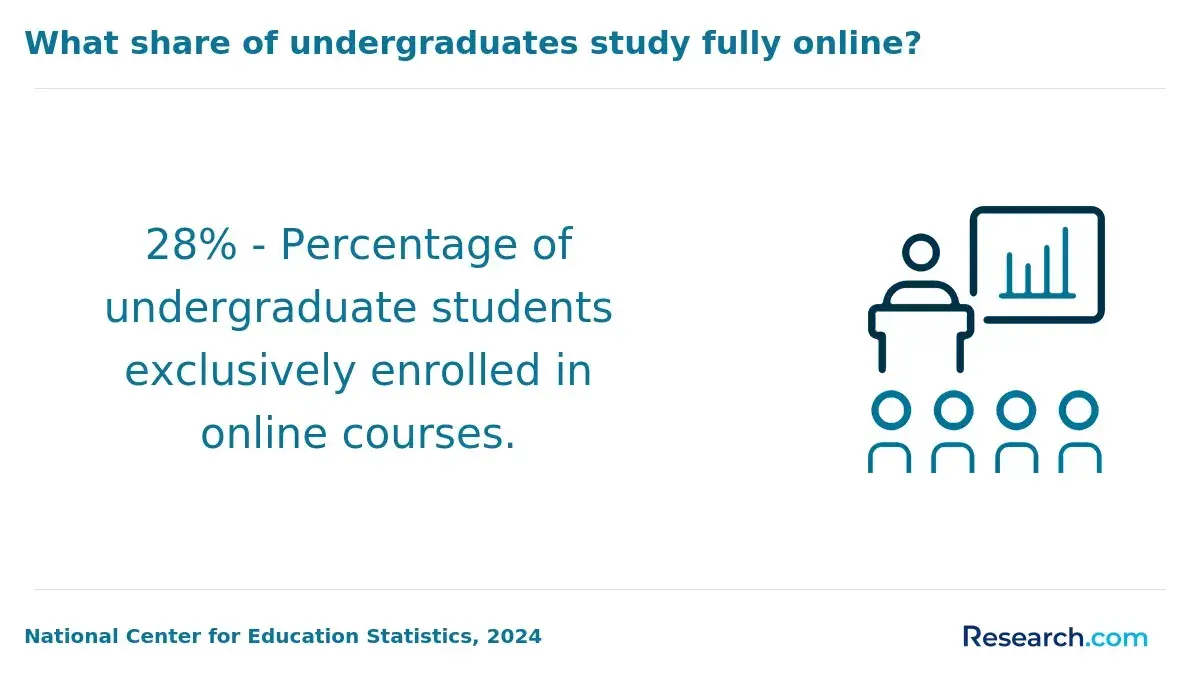
Online learning is now mainstream rather than unusual. NC-SARA's 2024 reporting shows millions of U.S. students continue to take distance education courses through participating institutions, which reflects the growing demand for flexible programs among working adults and students outside commuting range.
The table below compares the main online learning formats. Use it to match a program's structure to your schedule, learning style, and need for instructor interaction.
| Format | How it works | Flexibility level | Best for | Potential drawback |
| Asynchronous online | Students complete weekly modules without required live class meetings. | High | Working adults, parents, military students, and students across time zones. | Requires strong self-management and comfort asking for help online. |
| Synchronous online | Students attend live virtual classes at scheduled times. | Moderate | Students who want real-time discussion and instructor structure. | Less convenient for rotating work schedules. |
| Hybrid or low-residency | Most coursework is online with occasional campus or in-person requirements. | Moderate | Students who want networking, labs, or intensive project sessions. | Travel time and costs can reduce convenience. |
| Competency-based | Students progress by demonstrating mastery rather than following a traditional term pace. | Very high for prepared students | Experienced learners who can move quickly through familiar material. | Can be difficult for students who need frequent live instruction. |
| Accelerated terms | Courses run in shorter sessions, often 5 to 8 weeks. | High but intense | Students who want faster progress one or two courses at a time. | Heavy weekly workload can be challenging in technical courses. |
Accelerated formats can be useful, but students should be careful with technical subjects. Short courses work best when the program provides tutoring and when students can dedicate focused weekly time to coding, statistics, and assignments. Students exploring compressed schedules may also compare how 6 week college courses online handle workload, pacing, and credit transfer before choosing an accelerated analytics program.
Red flag: a program that promises maximum speed without explaining weekly time expectations. A data analytics course may require substantial practice beyond lectures, especially when learning SQL, Python, or statistical modeling for the first time.
What Student Support Services Improve Success in Online Data Analytics Degree Programs?
Student support matters more in data analytics than in many less technical majors because learners often hit difficult points in math, programming, and applied projects. The best online programs do not simply post lectures; they provide academic, technical, and career support that helps students persist.
Look for support services that connect directly to analytics coursework and job preparation. These services can reduce frustration, improve completion odds, and help students turn class assignments into portfolio evidence.
- Analytics-specific tutoring in statistics, Python, R, SQL, Excel, and visualization tools.
- Responsive faculty access through office hours, discussion boards, video appointments, or messaging.
- Academic advising that maps transfer credits, prerequisites, and graduation timelines before enrollment.
- Career coaching that includes resume feedback, LinkedIn review, mock interviews, and job-search strategy for analyst roles.
- Portfolio and capstone support that helps students produce projects suitable for employer review.
- Online library access, dataset resources, cloud tools, and technical help desk coverage outside standard business hours.
- Internship, practicum, employer project, or experiential learning options for students without analytics work experience.
Support quality can be hard to judge from a marketing page. Before enrolling, ask whether tutoring is included in tuition, whether online students can access the same career center as campus students, and how quickly faculty typically respond to questions in technical courses.
Common mistake: assuming a strong curriculum is enough. A program may list advanced topics such as machine learning or predictive analytics, but students are more likely to benefit when the school also provides structured help with the fundamentals that make those topics understandable.
Which Financial Aid Options Are Available for Accredited Online Data Analytics Degree Students?
Students in accredited online data analytics degree programs may qualify for many of the same financial aid options as campus students, provided the school and program meet federal eligibility rules. The main requirement is recognized accreditation and enrollment in an eligible degree program.
For federal aid, students typically start with the FAFSA. Dependent undergraduate students can borrow up to $5,500 to $7,500 annually in federal Direct Loans depending on year in school and dependency status, while eligible graduate students may borrow up to $20,500 annually in unsubsidized Direct Loans. These limits should be treated as maximum borrowing capacity, not a recommended borrowing target.
Compare aid offers by net price rather than headline scholarship amounts. The following options are worth reviewing because they can significantly change the real cost of an online analytics degree.
- Federal Pell Grants for eligible undergraduates with financial need.
- Federal Direct Subsidized and Unsubsidized Loans for eligible undergraduate students.
- Federal Direct Unsubsidized Loans and Grad PLUS Loans for eligible graduate students.
- Institutional scholarships for online, transfer, adult, STEM, military, or first-generation students.
- Employer tuition assistance or reimbursement, especially for students already working in business, IT, finance, healthcare, logistics, or government.
- Military and veterans education benefits, including GI Bill benefits and tuition assistance where applicable.
- State grants or workforce funding, depending on residency, school participation, and program eligibility.
- Credit for prior learning, certification credit, or transfer credit that reduces the number of courses needed.
Financial aid rules are not unique to analytics. Students comparing professional online programs in other fields, such as CACREP accredited online counseling programs, should use the same net-price approach: confirm accreditation, compare total aid packages, and avoid borrowing more than the credential reasonably supports.
Red flag: treating loans as "aid" without calculating repayment. Loans can make enrollment possible, but the better question is whether the expected career path can support the payment after graduation without relying on best-case salary assumptions.
Which Career Outcomes Are Associated With Accredited Online Data Analytics Degree Programs?
An accredited online data analytics degree can support entry into roles that use data to solve business, technical, or operational problems. Common job titles include data analyst, business intelligence analyst, operations analyst, marketing analyst, healthcare data analyst, financial analyst, database analyst, and junior data scientist.
Career outcomes depend on degree level, prior experience, technical skills, industry, geography, and portfolio quality. The degree can open doors, but employers often want evidence that candidates can use data tools to answer real questions.
The table below connects common analytics roles with the preparation students should look for in a degree program. It is designed to help you choose coursework and projects that match your target job.
| Career path | Typical responsibilities | Degree features that help | Skills employers often expect |
| Data analyst | Clean datasets, build reports, identify trends, and communicate insights. | Statistics, SQL, Excel, visualization, business communication, capstone project. | SQL, spreadsheets, Tableau or Power BI, basic Python, data storytelling. |
| Business intelligence analyst | Create dashboards, track KPIs, and support operational decisions. | Database management, reporting tools, business analytics, data warehousing. | Power BI, Tableau, SQL, dashboard design, stakeholder communication. |
| Data scientist | Build predictive models, test hypotheses, and analyze complex datasets. | Advanced statistics, machine learning, Python or R, experimental design. | Python, R, machine learning, statistics, model evaluation, cloud platforms. |
| Operations or supply chain analyst | Analyze workflow, demand, logistics, cost, and performance data. | Operations analytics, optimization, forecasting, business process analysis. | SQL, Excel, forecasting, visualization, process improvement. |
| Healthcare data analyst | Analyze patient, claims, quality, or operational healthcare data. | Healthcare analytics electives, privacy and ethics, database coursework. | SQL, healthcare terminology, HIPAA awareness, dashboards, statistical analysis. |
The strongest career preparation usually includes a portfolio. Students should try to graduate with several projects that show how they cleaned messy data, explained assumptions, built dashboards, analyzed results, and translated findings into recommendations.
AI is also changing analytics hiring. As automated tools make basic charting and code generation easier, employers increasingly value analysts who can validate outputs, spot bias, protect data privacy, explain findings to nontechnical audiences, and connect analytics to business decisions. Students interested in the AI side of analytics may compare degrees in AI online to decide whether they need a broader analytics degree or a more specialized AI path.
Common mistake: assuming the word "data" in a degree title is enough. Review actual assignments, software tools, internship options, and capstone requirements. A practical program should help you produce evidence of skill, not just complete theory-based exams.
How Do Online and Campus-Based Data Analytics Degree Programs Compare?
Online and campus-based data analytics degrees can lead to similar academic outcomes when they are accredited, rigorous, and taught by qualified faculty. The better choice depends on schedule, learning style, networking needs, cost, and access to local opportunities.
Online programs are often stronger for working adults and transfer students because they reduce commuting and may offer asynchronous coursework. Campus programs may be stronger for students who want in-person clubs, research labs, faculty relationships, and local internship pipelines.
The table below summarizes the practical differences that matter most when choosing between online and campus-based analytics programs.
| Comparison point | Online data analytics degree | Campus-based data analytics degree | Best choice when |
| Schedule | Often asynchronous or evening-friendly | Usually tied to campus class times. | Choose online if work or family obligations limit daytime availability. |
| Cost | May reduce commuting and housing costs, but tuition varies widely | May offer in-state tuition advantages but can include housing and transportation costs. | Compare total cost, not only tuition. |
| Networking | Requires intentional participation in virtual events, projects, and alumni groups | More spontaneous access to clubs, faculty, labs, and peer groups. | Choose campus if in-person networking is a priority. |
| Learning support | Depends heavily on online tutoring, faculty responsiveness, and help desk quality | May provide easier access to in-person tutoring and office hours. | Choose the format with support you will actually use. |
| Internships and projects | May use remote projects, employer partnerships, or student-arranged internships | May connect students to local employers and research opportunities. | Choose based on your target industry and location. |
Some students also compare analytics with business leadership programs. If your long-term goal is management, product leadership, or strategy rather than hands-on analytics work, reviewing top online MBA schools can help you decide whether an analytics degree, MBA, or dual business-analytics pathway fits better.
A common mistake is assuming online means easier. Strong online analytics courses can be just as demanding as campus courses, especially when assignments involve coding, database queries, statistical interpretation, and project presentations.
How Should Students Choose the Best Accredited Online Data Analytics Degree Program?
The best accredited online data analytics degree program is the one that fits your career goal, budget, schedule, and academic starting point. Instead of choosing based on a single ranking, compare programs using a structured process.
Use the following steps before applying. They are designed to help you avoid overpaying, choosing the wrong format, or enrolling in a program that does not prepare you for your target role.
- Define your goal first: entry-level data analyst, business intelligence analyst, data scientist, analytics manager, or graduate school preparation.
- Verify institutional accreditation through recognized accreditation databases before reviewing cost or curriculum.
- Map the curriculum against required skills such as SQL, statistics, Python or R, visualization, databases, ethics, and communication.
- Request a transfer credit evaluation before enrolling, especially if you have prior college credit, military training, certifications, or professional learning.
- Calculate total net cost after grants, scholarships, transfer credits, employer support, and fees.
- Ask about student outcomes, including graduation rates, retention rates, internship access, career services, and recent employer partnerships.
- Review the online format, course length, weekly workload, and availability of tutoring for math and programming courses.
- Compare at least three programs side by side before paying an application fee or enrollment deposit.
Students who plan to move into leadership, research, or teaching later should also think beyond the first degree. For example, professionals comparing long-term education pathways sometimes look at edd degrees after building experience in training, organizational analytics, or higher education administration.
In general, working adults and transfer students should prioritize flexibility, credit acceptance, and clear advising. First-time college students may need stronger academic support and structured pacing. Career changers should prioritize applied projects, career coaching, and a curriculum that builds technical skill from the ground up.
The biggest mistake is optimizing for only one factor. The cheapest program is not always the best value, the most selective program is not always the best fit, and the fastest program is not always realistic. A balanced choice considers affordability, accreditation, curriculum, support, flexibility, and credible career preparation together.
Other Things You Should Know About Data Analytics
Yes, but most entry-level data analytics programs build math gradually. Students should be ready for statistics, probability, algebra, and logical problem-solving. Advanced data science roles usually require deeper math than standard business analyst roles.
Excel or Google Sheets, SQL, and one visualization tool such as Tableau or Power BI are useful starting points. Python is also valuable, but beginners do not need to master it before enrolling if the program teaches programming from the basics.
Both matter. A resume shows education and experience, while a portfolio proves what you can do with data. For new analysts, a few well-explained projects can help employers evaluate practical skills even when work experience is limited.
It can, but remote work is not guaranteed. Many analytics tasks can be done remotely, yet employers may prefer hybrid or in-person arrangements for entry-level roles, onboarding, security, or collaboration. Strong communication skills improve remote-work readiness.
References
- 2025 Most Affordable Online Master's in Data Science Programs https://www.onlineu.com/most-affordable-colleges/data-science-masters-degrees
- Graduation Rates and Student Success https://aascu.org/resources/graduation-rates-and-student-success-squaring-means-and-ends/
- Data Analytics Master’s Programs: What Do They Want in Applicants? https://blog.accepted.com/data-analytics-masters-programs-what-do-they-want-in-applicants/
- Study Data Analytics Abroad: Top Colleges, Costs, & Careers https://www.aeccglobal.com/study-abroad/courses/data-analytics
- THE GLOBAL STANDARD IN DATA SCIENCE & AI EDUCATION https://www.dasca.org/data-science-accreditation-program
- Student Right to Know | ACE https://ace.edu/about/student-right-to-know/
- 50 Easiest Grad Schools to Get into by Acceptance Rate https://www.onlinemastersdegrees.org/features/grad-schools-acceptance-rates/
- Data Analyst Salaries https://www.mastersindatascience.org/careers/data-analyst/salary/
- Analytics Degree Accreditation: What to Look For - AnalyticsDegrees.org https://www.analyticsdegrees.org/faq/analytics-degree-accreditation/
- [Translate to Anglais:] Comment devenir data analyst ? | Université Paris Dauphine - PSL https://dauphine.psl.eu/en/training/career-opportunities/data-analyst