2027 Are Online Forensic Accounting Doctorate Degrees Respected by Employers? Hiring Trends and Career Outcomes

Co-Founder and Chief Data Scientist
An online forensic accounting doctorate can be a strong credential, but only if it matches the employer, industry, and career goal you are targeting. The U. S. Bureau of Labor Statistics projects 6% growth for accountants and auditors from 2023 to 2033, showing steady demand for advanced accounting expertise. This guide is for CPAs, auditors, fraud examiners, finance leaders, and educators comparing doctoral options. You will learn when employers respect online doctorates, which careers may reward them, and how to judge whether the investment is worth it.
Key Things You Should Know
- Employers are most likely to respect an online forensic accounting doctorate when it comes from a regionally accredited institution, aligns with the role, and is supported by CPA, CFE, audit, litigation, analytics, or leadership experience.
- The degree does not automatically raise pay; BLS May 2024 data places accountants and auditors at a median annual wage of $81,680 and financial examiners at $90,400, so ROI depends on moving into higher-responsibility roles.
- The strongest returns usually appear in university teaching, consulting, expert-witness work, fraud leadership, compliance strategy, and executive-track roles rather than entry-level forensic accounting positions.
What Is the True ROI of an Online Forensic Accounting Doctorate?
The true ROI of an online forensic accounting doctorate is not just the difference between tuition and a future salary. It is the combined value of employer recognition, promotion potential, consulting credibility, teaching eligibility, research output, professional network, and the time you give up while studying.
Forensic accounting is the use of accounting, auditing, investigation, data analysis, and legal knowledge to detect fraud, trace assets, support litigation, evaluate internal controls, and explain financial evidence. A doctorate in this field is usually offered as a PhD, DBA, or specialized business, accounting, finance, or criminal justice doctorate with research or applied coursework in fraud examination, auditing, compliance, financial crime, or litigation support.
Employers generally do not evaluate online doctorates as one category. They look at the institution, accreditation, curriculum, faculty quality, dissertation or capstone rigor, professional experience, and whether the degree helps solve the employer's problem.
The table below summarizes the factors that most often influence whether an online forensic accounting doctorate is viewed as credible in hiring, promotion, consulting, and academic settings.
| Recognition factor | Why it matters to employers | What a strong signal looks like |
| Institutional accreditation | Accreditation is often the first legitimacy screen for HR, universities, government employers, and professional licensing boards. | The school is accredited by an agency recognized by the U.S. Department of Education or CHEA. |
| Program relevance | A doctorate must connect directly to fraud, audit, accounting, finance, compliance, litigation, or financial crime work. | Coursework includes forensic accounting, fraud analytics, audit research, valuation, ethics, governance, and legal evidence. |
| Doctorate type | Different employers value research and applied doctorates differently. | A PhD fits research and tenure-track goals; a DBA often fits executive, consulting, and practitioner leadership goals. |
| Professional credentials | Doctoral study rarely replaces credentials employers already expect. | CPA, CFE, CFF, CIA, CAMS, or similar credentials support the doctorate. |
| Work history | Forensic accounting is evidence-based and experience-heavy. | The candidate has audit, investigations, fraud examination, expert reporting, regulatory, or litigation support experience. |
| Research or applied output | Employers value proof that doctoral work produced usable expertise. | Dissertation, publications, conference presentations, fraud models, case studies, or analytics projects relate to employer needs. |
The main mistake is assuming "online" is the deciding factor. In many professional environments, the delivery format matters less than whether the degree is accredited, rigorous, relevant, and paired with a record of performance. However, a poorly chosen online program can weaken ROI if it lacks employer visibility, networking, research support, faculty depth, or credible career outcomes.
How Much Does an Online Forensic Accounting Doctorate Increase Earning Potential?
An online forensic accounting doctorate can increase earning potential when it helps you move from technical execution into leadership, expert advisory, consulting, research, or teaching. It is less likely to produce a large salary change if you remain in the same role with the same employer and the doctorate is not tied to a promotion pathway.
BLS May 2024 wage data provides useful context, but it does not isolate the salary effect of a doctorate. Use the figures below as labor-market benchmarks, not promises of what a doctoral graduate will earn.
| Career area | Relevant BLS occupation | May 2024 median annual wage | How a doctorate may affect earning potential |
| Forensic accounting, audit, and fraud investigation | Accountants and auditors | $81,680 | May support movement into senior forensic accounting, audit leadership, technical advisory, or complex investigations. |
| Banking, insurance, and regulatory compliance | Financial examiners | $90,400 | May strengthen credibility for financial crime, compliance strategy, risk review, and supervisory roles. |
| Fraud risk and advisory consulting | Management analysts | $101,190 | May improve positioning for specialized consulting, internal controls advisory, and expert analysis projects. |
| College instruction and academic administration | Postsecondary teachers | $83,980 | May be required or strongly preferred for full-time faculty, research, program director, or curriculum leadership roles. |
The practical salary question is whether the doctorate changes the level at which you compete. For example, an experienced CPA/CFE who uses the doctorate to publish fraud research, teach graduate courses, lead investigations, or provide expert testimony may see more career value than someone who earns the credential before building a professional record.
AI and analytics are also changing the salary equation. Employers increasingly expect forensic accounting professionals to work with large datasets, anomaly detection, digital evidence, and automated transaction monitoring. A doctorate that includes quantitative methods, data analytics, governance, and applied fraud research is more marketable than one focused only on general accounting theory.
Which Careers Provide the Best Financial Return With an Online Forensic Accounting Doctorate?
The best financial return usually comes from careers where a doctorate improves authority, eligibility, or differentiation. A doctoral credential is rarely necessary for entry-level forensic accounting jobs, but it can matter in roles where employers need advanced judgment, research ability, teaching credentials, or expert credibility.
The table below compares career paths by the likely value of an online forensic accounting doctorate and the employer expectations commonly attached to each path.
| Career path | Doctorate value | Employer expectations | Best-fit doctorate type |
| University faculty or accounting program leadership | High | Research ability, teaching experience, publications, accreditation-aligned credentials, and subject expertise. | PhD for research-heavy roles; DBA may fit teaching-focused or practitioner programs. |
| Forensic accounting consulting | High for experienced professionals | CPA or CFE credibility, expert reports, litigation support experience, client-facing communication, and specialized expertise. | DBA or PhD with applied fraud, audit, or financial crime research. |
| Fraud risk, compliance, or internal audit leadership | Moderate to high | Leadership record, regulatory knowledge, internal controls expertise, analytics skills, and credentials such as CPA, CIA, or CFE. | DBA or applied doctorate. |
| Government investigations or regulatory enforcement | Moderate | Experience, security clearance where applicable, investigative ability, financial analysis, testimony skills, and agency-specific requirements. | Applied doctorate, PhD, or DBA depending on role. |
| Corporate accounting or controllership | Low to moderate | CPA, financial reporting expertise, leadership, systems knowledge, and operational accounting experience. | Doctorate may help for executive credibility but is often optional. |
| Entry-level forensic accountant | Low | Accounting degree, internships, CPA eligibility, Excel and analytics skills, and fraud investigation interest. | Usually a bachelor's, master's, CPA path, or CFE preparation is more practical. |
The highest-return path is often not "get a doctorate, then find a job." It is "identify the senior role first, then choose the doctoral program that fills a specific credibility, research, teaching, or leadership gap."
How Does an Online Forensic Accounting Doctorate Affect Career Advancement?
An online forensic accounting doctorate can affect career advancement by signaling advanced expertise, persistence, research ability, and readiness for complex judgment-based work. Employers may view it favorably for promotion when it connects to a clear business need such as fraud prevention, litigation strategy, compliance leadership, or graduate-level instruction.
At the senior level, forensic accounting roles often involve more than finding irregularities. Professionals may supervise investigations, design fraud risk programs, prepare expert reports, testify in legal proceedings, advise boards, evaluate internal controls, mentor audit teams, and translate complex evidence for non-accountants.
To turn the degree into advancement rather than just another credential, students should use the program strategically. The following steps help make the doctorate visible and relevant to decision-makers.
- Choose dissertation or capstone topics connected to your target employer's problems, such as procurement fraud, cryptocurrency tracing, revenue recognition manipulation, anti-money laundering controls, or AI-assisted audit analytics.
- Keep professional credentials current, especially CPA, CFE, CFF, CIA, or compliance credentials that employers already recognize in forensic accounting and fraud examination.
- Document measurable work outcomes, such as investigation recoveries, control improvements, audit findings, training programs, expert reports, or litigation support projects.
- Build a public professional profile through conference presentations, practitioner articles, guest lectures, webinars, or internal fraud-risk training.
- Ask your employer before enrolling whether a doctorate affects promotion, pay bands, teaching eligibility, consulting rates, or leadership consideration.
A common mistake is assuming the doctorate alone will overcome limited experience. In forensic accounting, employers usually respect doctoral education most when it builds on a strong base of accounting, audit, investigation, data, and communication skills.
How Does the Cost of an Online Forensic Accounting Doctorate Affect Its Overall Value?
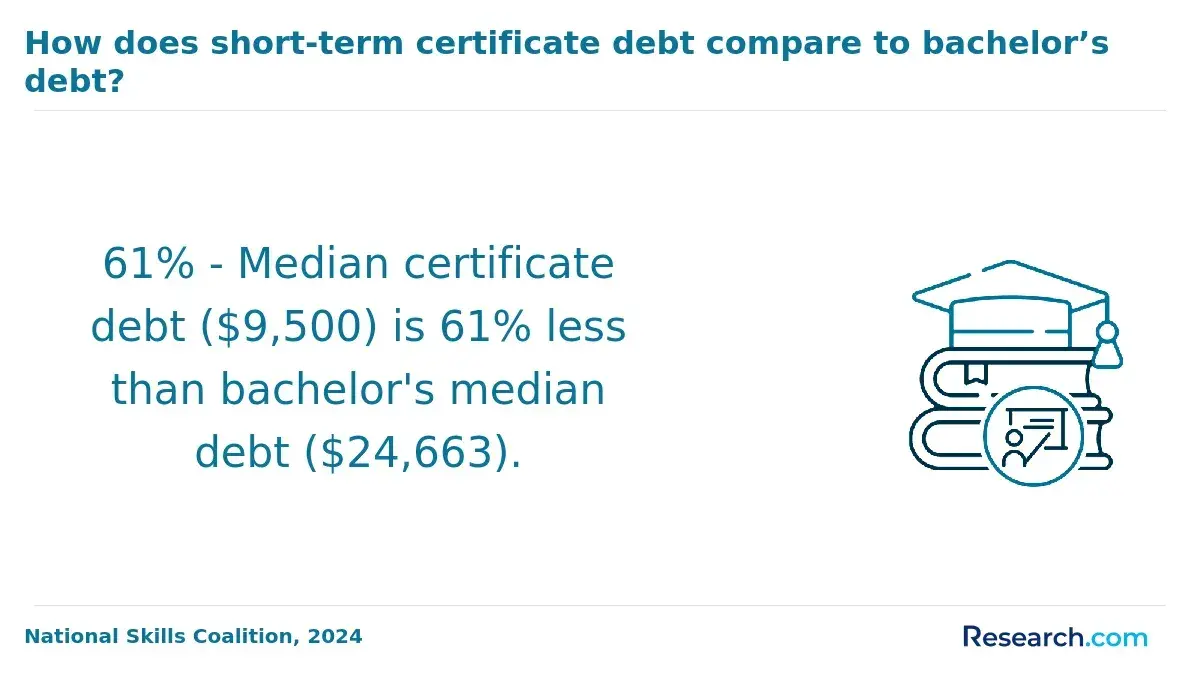
Cost has a direct effect on ROI because doctoral benefits often appear gradually. A lower-cost accredited program may produce stronger net value than a more expensive program if both are respected by your target employers and the lower-cost option lets you avoid excessive debt.
Students comparing doctorate programs should look beyond tuition per credit. Total cost can include doctoral fees, research courses, software, residencies, travel, books, dissertation continuation credits, professional association dues, and reduced work hours. If you are still building accounting prerequisites, an affordable online accounting degree may be a more appropriate earlier step before doctoral study.
Current federal aid limits are important because many doctoral students fund at least part of the degree with loans. These figures help you understand borrowing capacity, but they should not be treated as a recommendation to borrow the maximum.
- Direct Unsubsidized Loan for graduate and professional students: up to $20,500 per academic year.
- Graduate PLUS Loan: up to the school-certified cost of attendance after other aid is applied, subject to credit requirements.
- Lifetime aggregate Direct Loan limit for most graduate and professional students: $138,500, including undergraduate borrowing.
Before choosing a higher-priced program, ask what the added cost buys. Strong reasons may include respected faculty in forensic accounting, AACSB-accredited business programs, employer partnerships, teaching opportunities, research support, alumni working in your target industry, or a dissertation structure that supports publication. Weak reasons include vague prestige claims, aggressive enrollment pressure, or testimonials without broader outcome data.
How Does the Time Commitment of an Online Forensic Accounting Doctorate Affect Its ROI?
Time commitment affects ROI because doctoral study competes with billable hours, promotions, family responsibilities, credential preparation, and leadership opportunities. Online delivery can reduce relocation and commuting costs, but it does not remove the workload of doctoral research, quantitative methods, writing, and dissertation completion.
Most working professionals should evaluate the time cost in practical terms, not just calendar length. A program that takes longer but allows you to keep a senior job may produce better ROI than a faster program that forces you to reduce income or pause career momentum.
The main time-related trade-offs are easiest to evaluate by looking at how the program structure fits your work life and career stage.
- Part-time formats may protect income and employer relationships, but they can extend the period before you see promotion, consulting, or teaching benefits.
- Accelerated formats can reduce calendar time, but they may create heavier weekly workloads and less room for publishing, networking, or applied research.
- Dissertation-heavy programs can be valuable for academic or expert careers, but they require sustained independent research and strong faculty support.
- Cohort programs can improve accountability and networking, but fixed schedules may be difficult for professionals with travel-heavy audit, investigation, or consulting roles.
Ask each school for completion data, average dissertation time, leave policies, residency requirements, and whether students commonly continue full-time employment. If a program cannot explain how working professionals finish, that is a red flag for ROI.
Does an Online Forensic Accounting Doctorate Have the Same Career Value as a Campus-Based Degree?
An online forensic accounting doctorate can have the same career value as a campus-based degree when the school is properly accredited, the curriculum is rigorous, and the credential is accepted by your target employer. Many employers do not list delivery format as a hiring criterion, especially for experienced professionals, but some academic departments, elite consulting firms, or traditional institutions may still place more weight on school reputation, faculty research, and in-person networks.
The table below compares the career-value factors that typically matter more than whether the degree was earned online or on campus.
| Factor | Online doctorate | Campus-based doctorate | Career value takeaway |
| Employer recognition | Strong when accredited and from a credible institution. | Strong when accredited and institutionally respected. | Accreditation and employer familiarity usually matter more than format. |
| Networking | Depends on cohort design, residencies, faculty access, and alumni engagement. | Often easier through in-person seminars, research groups, and campus events. | Online students should actively build professional and faculty relationships. |
| Flexibility | Usually better for working professionals who need to maintain income. | May require relocation, fixed schedules, or reduced employment. | Flexibility can improve ROI if it prevents lost earnings. |
| Research visibility | Varies widely by faculty involvement and dissertation support. | May offer more direct access to research centers and faculty teams. | Students targeting academia should compare publication and placement outcomes carefully. |
| Practical application | Often strong for practitioner-focused DBA or applied doctorate programs. | Can be strong, especially in research universities or professional schools. | The best format depends on whether your goal is research, teaching, consulting, or leadership. |
The safest approach is to avoid hiding the online format but also avoid overemphasizing it. On a résumé or LinkedIn profile, list the institution, degree, field, dissertation topic, credentials, and relevant outcomes. Employers usually care more about what you can do with the doctorate than where you logged into class.
How Does an Online Forensic Accounting Doctorate Compare With Other Career Advancement Options?
An online forensic accounting doctorate is only one advancement option. Depending on your goal, a master's degree, CPA eligibility, CFE certification, analytics training, law-related coursework, or an employer-sponsored leadership program may offer a faster or more cost-effective return.
If your main goal is to move into finance leadership or deepen financial analysis rather than teach, research, or specialize in forensic accounting, a lower-cost graduate finance pathway such as the cheapest online master's in finance may be more practical before considering a doctorate.
The table below compares common advancement paths against the online forensic accounting doctorate so you can match the credential to the outcome you actually want.
| Option | Best for | Typical employer value | When it may be better than a doctorate |
| Online forensic accounting doctorate | Experienced professionals seeking faculty, expert, consulting, research, or senior fraud leadership roles. | Signals advanced expertise and can strengthen authority in complex matters. | Best when a doctoral credential is preferred or clearly differentiating. |
| Master's in accounting, finance, or forensic accounting | Professionals seeking promotion, CPA eligibility, or specialized technical skills. | Often valued for mid-career advancement and technical depth. | Better when the target role does not require doctoral-level research or teaching credentials. |
| CPA | Accounting, audit, reporting, controllership, and many forensic accounting roles. | One of the most recognized accounting credentials in the U.S. | Usually more important than a doctorate for roles requiring licensed accounting authority. |
| CFE | Fraud examination, investigations, internal controls, and anti-fraud roles. | Highly relevant to forensic accounting and fraud work. | Often faster and more directly tied to fraud roles than doctoral study. |
| Data analytics or financial crime certification | Professionals working with transaction monitoring, AI tools, AML, cyber-enabled fraud, or large datasets. | Shows practical technical capability. | Better when employers emphasize tools, systems, and applied analytics over research credentials. |
The most common red flag is pursuing a doctorate because it sounds more prestigious than a credential the employer actually requires. If job postings in your target market repeatedly ask for CPA, CFE, audit management, litigation support, or analytics experience but never mention a doctorate, prioritize the requirements employers name first.
Which Professionals Benefit Most From an Online Forensic Accounting Doctorate?
The professionals who benefit most are usually those already working in accounting, audit, fraud, compliance, law enforcement finance, litigation support, risk management, or higher education. For them, the doctorate can add authority to an existing professional identity rather than trying to create one from scratch.
Professionals who are still choosing a broad business path may not need a doctorate yet. In some cases, an online business degree can provide a more flexible foundation before specializing in accounting, finance, fraud examination, or doctoral research.
The degree tends to fit best when at least one of the following situations applies.
- You are a CPA, CFE, auditor, investigator, or compliance professional seeking senior fraud, risk, or forensic accounting leadership.
- You want to teach accounting, auditing, fraud examination, or forensic accounting at the college level and need a terminal degree.
- You plan to build a consulting or expert-witness practice where advanced research credentials can strengthen credibility.
- You work in government, banking, insurance, healthcare, or corporate compliance and want to lead complex financial investigations or anti-fraud strategy.
- You have a clear dissertation topic connected to your professional niche and can turn the research into publications, presentations, training, or advisory work.
The degree may be a poor fit if you are seeking your first accounting job, still need core accounting credits, have not researched CPA or licensing rules, expect a guaranteed pay increase, or are choosing a program mainly because it is fast or heavily advertised. In those cases, a targeted master's degree, CPA pathway, CFE preparation, or analytics credential may produce a stronger near-term outcome.
How Can Students Decide Whether an Online Forensic Accounting Doctorate Is Worth It?
The best decision starts with your target career, not the degree title. A respected online forensic accounting doctorate can be worth it when it connects to a specific outcome: faculty eligibility, senior fraud leadership, expert consulting, research authority, or executive credibility in compliance and risk.
If speed is your main concern and your goal is broader financial management rather than doctoral research, compare the doctorate against alternatives such as an accelerated finance degree before committing to a longer program.
Use the following decision process to evaluate whether an online forensic accounting doctorate is likely to be respected and useful for your goals.
- Define your target role, industry, and employer type before comparing schools.
- Review job postings, faculty ads, consulting profiles, and promotion criteria to see whether a doctorate is required, preferred, or simply optional.
- Verify institutional accreditation through official accreditor or federal databases, not only the school's marketing pages.
- Check whether business or accounting accreditation, such as AACSB, ACBSP, or IACBE, matters in your target academic or employer market.
- Ask programs for doctoral completion rates, dissertation support, faculty expertise, alumni outcomes, and examples of student research in forensic accounting or fraud examination.
- Compare total cost, debt, time to completion, residency requirements, and the income you may give up while studying.
- Contact professionals in your target field and ask whether they would view the specific school and degree as credible.
- Plan how you will convert the doctorate into career evidence, such as publications, expert reports, teaching experience, fraud analytics projects, or leadership achievements.
Several warning signs should make you slow down before enrolling. These include unclear accreditation, no faculty with forensic accounting expertise, vague career claims, pressure to enroll quickly, limited dissertation support, no meaningful alumni information, and promises of salary growth that the school cannot substantiate.
The clearest answer is this: employers can respect an online forensic accounting doctorate, but they rarely respect the format alone. They respect accredited education, relevant research, professional credentials, strong experience, and evidence that you can apply doctoral-level expertise to real fraud, audit, compliance, litigation, or teaching problems.
Other Things You Should Know About Forensic Accounting
Forensic accounting applies accounting and financial analysis to legal, investigative, or dispute-related matters. Fraud examination focuses more directly on detecting, investigating, and preventing fraud. Many professionals work across both areas.
Not always. Some forensic accountants prepare analyses, trace funds, review controls, or support attorneys without testifying. Expert-witness work usually requires strong communication skills, defensible methods, and experience explaining financial evidence clearly.
A CPA is not required for every forensic accounting role, but it is strongly valued in many accounting, audit, litigation, and expert-witness settings. Requirements vary by employer, state, and the nature of the work.
Build a foundation in accounting, auditing, financial reporting, internal controls, Excel, data analytics, business law, interviewing, professional writing, and ethics. These skills make advanced study more useful and more credible to employers.
References
- Study Forensic Accounting: Master's Degree, PhD & Class Info https://learningpath.org/articles/Study_Forensic_Accounting_Masters_Degree_PhD_Class_Info.html
- CFAP Jobs and Salary: Career Scope After Forensic Accounting Certification https://riskprolearning.com/cfap-jobs-salary/
- How to Become a Forensic Accountant https://www.allbusinessschools.com/specialties/how-to-become-a-forensic-accountant/
- Forensic Accounting Career Overview | Accounting.com https://www.accounting.com/careers/forensic-accountant/
- Forensic Accounting Market Size, Global Report | 2035 https://www.marketresearchfuture.com/reports/forensic-accounting-market-8383
- Forensic Accountant Career And Salary Information https://www.criminaljusticedegreeschools.com/careers/forensic-accountant/
- Forensic Accounting: A Career Overview | DeVry University https://www.devry.edu/blog/forensic-accounting-a-career-overview.html
- Forensic Accountant Salary, Job Description & Career Outlook https://www.forensicscolleges.com/careers/forensic-accountant