2027 Admission Requirements for Online Forensic Accounting Doctorate Programs: GPA, Prerequisites, Experience, and Eligibility

Co-Founder and Chief Data Scientist
Figuring out whether you qualify for an online forensic accounting doctorate can be confusing because programs differ on GPA, prior degrees, prerequisites, and experience. The stakes are higher as doctoral study becomes more competitive; the National Center for Education Statistics reported in 2024 that US postbaccalaureate enrollment stood at about 3.2 million students.
This guide is for prospective doctoral applicants comparing pathways. You will learn what schools commonly require, where exceptions may exist, and how to prepare a stronger application before investing time and money.
Key Things You Should Know
- Most online forensic accounting doctorate programs expect a graduate GPA of at least 3.0, while stronger applicants often show a 3.25 to 3.5 GPA in accounting, finance, business, statistics, or research-heavy coursework.
- Eligibility usually depends on prior graduate study, accounting or business prerequisites, and a clear fit with forensic accounting topics such as fraud examination, audit analytics, litigation support, valuation, and financial crime investigation.
- Professional experience is often more important in DBA-style programs than in PhD-style programs; many applicants are strongest with 3 to 5+ years in accounting, auditing, compliance, finance, investigations, or teaching, plus evidence of doctoral-level writing and research readiness.
What Are the Basic Admission Requirements for an Online Forensic Accounting Doctorate Program?
Online forensic accounting doctorates are usually offered as a Doctor of Business Administration, PhD in Business Administration with an accounting concentration, or another applied business doctorate with room for forensic accounting research. Because fully online forensic accounting-specific doctorates are uncommon, applicants should read requirements for the accounting, business, or criminal justice concentration rather than relying only on the program title.
Most programs use a combination of minimum eligibility rules and holistic review. Meeting the minimum does not guarantee admission, especially if the program expects advanced accounting knowledge or a dissertation topic that fits available faculty expertise.
The table below summarizes common requirements and how applicants should interpret them. It is a starting point for comparing schools, not a substitute for checking each program's catalog and admissions page.
| Requirement Area | Common Expectation | Why It Matters |
| Prior degree | Usually a master's degree; some programs accept bachelor's-to-doctorate applicants | Shows whether you enter with graduate-level preparation or need additional bridge coursework |
| GPA | Often 3.0 minimum, with higher GPAs preferred for competitive review | Signals readiness for quantitative, research, and writing-intensive doctoral work |
| Prerequisites | Accounting, finance, statistics, business law, audit, tax, and research methods may be required | Determines whether you can move directly into doctoral seminars or need leveling courses |
| Experience | Professional accounting, auditing, fraud, compliance, finance, or research experience is often valued | Helps committees judge whether your goals match an applied or research doctorate |
| Testing | GRE or GMAT may be optional, waived, or required by some schools | Can strengthen borderline academic profiles when submitted strategically |
| Accreditation | Institutional accreditation is essential; business accreditation may add credibility | Affects transfer credit, financial aid eligibility, employer acceptance, and academic mobility |
Applicants who lack accounting preparation may need a stepping-stone credential before applying. For example, an online accounting degree can help career changers build the transcript evidence many doctoral admissions committees expect.
Do You Need a Master's Degree to Apply for an Online Forensic Accounting Doctorate?
Many online forensic accounting doctorate programs prefer or require a master's degree, especially if the doctorate is designed for working professionals. Common qualifying degrees include an MBA, MS in Accounting, Master of Accountancy, MS in Finance, MS in Fraud Examination, MS in Forensic Accounting, or a closely related graduate business degree.
However, a master's degree is not universal. Some business doctorates offer bachelor's-to-doctorate pathways, but these usually require more credits, additional research preparation, or embedded master's-level coursework before the student advances to doctoral candidacy.
The table below compares the most common entry pathways so you can estimate whether you are ready to apply now or should complete another credential first.
| Applicant Background | Typical Eligibility | Likely Admission Issue |
| Master's in accounting or forensic accounting | Often the strongest academic match | Must still show research fit, writing ability, and clear doctoral goals |
| MBA or business master's | Frequently eligible if accounting prerequisites are met | May need proof of accounting depth, audit knowledge, or fraud-related coursework |
| Master's in finance, economics, criminal justice, or data analytics | May be eligible for interdisciplinary programs | May need accounting, audit, tax, or business law leveling courses |
| Bachelor's only | Possible at some schools but less common | May require higher GPA, more credits, stronger experience, or bridge coursework |
| International degree | May be eligible after credential evaluation | Must document US equivalency, English proficiency, and prerequisite alignment |
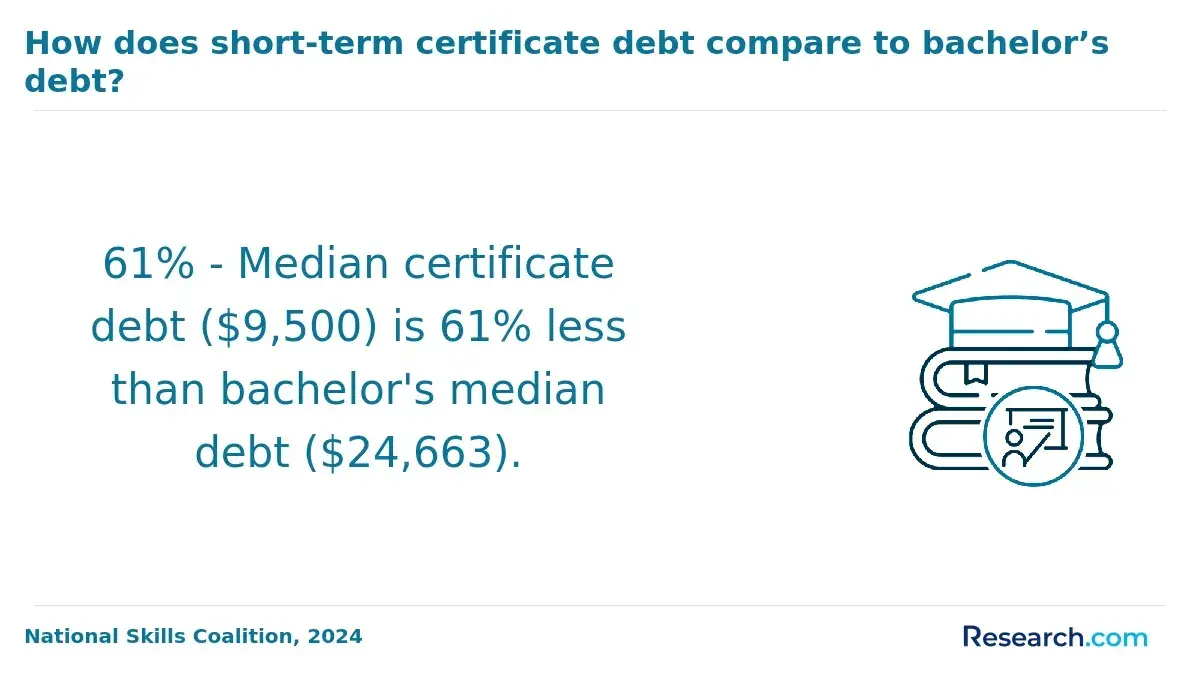
Cost and time should influence this decision. Federal Student Aid lists the annual Direct Unsubsidized Loan limit for graduate and professional students at $20,500 for the 2024-25 award year, so adding a master's or bridge sequence can affect borrowing before doctoral tuition begins.
What GPA Do You Need for an Online Forensic Accounting Doctorate Program?
A 3.0 GPA is the most common minimum threshold for graduate admission, but forensic accounting doctorate applicants should treat it as a floor, not a target. Doctoral committees are usually more interested in your performance in upper-level accounting, finance, statistics, law, analytics, and research courses than in a single cumulative number.
Programs may evaluate GPA in several ways. Understanding which GPA the school uses can prevent a mistaken self-assessment.
- Cumulative undergraduate GPA: Often used for bachelor's-to-doctorate applicants or when the applicant has limited graduate coursework.
- Graduate GPA: Often weighted heavily when applicants already hold a master's degree because it reflects more recent academic performance.
- Major GPA: May matter if your accounting, finance, or business coursework is stronger than your overall GPA.
- Last 60 credits GPA: Some schools use recent coursework to identify academic improvement.
- Prerequisite GPA: Important when the program requires prior accounting, statistics, or research methods courses.
The table below gives a practical reading of common GPA ranges. Use it to decide whether you are likely competitive, borderline, or in need of academic repair before applying.
| GPA Range | How Admissions Committees May View It | Best Next Step |
| 3.5 or higher | Academically strong, especially with relevant graduate coursework | Focus on research fit, recommendations, writing sample, and doctoral goals |
| 3.25 to 3.49 | Generally competitive for many applied doctorate programs | Highlight advanced coursework, professional achievements, and quantitative skills |
| 3.0 to 3.24 | Often eligible but not automatically competitive | Strengthen the file with recent A-level coursework, strong recommendations, or test scores if accepted |
| Below 3.0 | May require conditional admission, petition review, or additional coursework | Contact admissions before applying and ask how the program evaluates academic exceptions |
Can You Get Into an Online Forensic Accounting Doctorate Program With a GPA Below 3.0?
Yes, it may be possible to enter an online forensic accounting doctorate with a GPA below 3.0, but options are more limited. Schools that allow exceptions usually want clear evidence that the low GPA does not reflect your current ability to complete doctoral-level accounting research, statistics, and writing.
Applicants with a lower GPA should not submit the same application they would submit with a stronger academic record. The goal is to replace uncertainty with recent evidence of readiness.
- Ask whether the program offers conditional, provisional, or petition-based admission before paying an application fee.
- Complete recent graduate-level coursework in accounting, analytics, statistics, research methods, or business law and aim for A-level grades.
- Use the statement of purpose to explain academic improvement without making excuses or overemphasizing old circumstances.
- Choose recommenders who can speak directly to your analytical ability, writing skill, ethical judgment, and readiness for doctoral work.
- If the GRE or GMAT is optional, ask whether a strong score could help offset a low GPA.
- Consider applying first to a relevant master's, certificate, or nondegree graduate sequence if the doctorate will not consider exceptions.
A common mistake is assuming professional success automatically cancels out a weak transcript. Experience helps, but doctoral programs still need evidence that you can handle advanced theory, research design, quantitative analysis, and long-form scholarly writing.
What Prerequisite Courses Are Required for an Online Forensic Accounting Doctorate Program?
Prerequisites vary widely because forensic accounting sits at the intersection of accounting, auditing, finance, law, investigations, data analytics, and research. A program may not list every prerequisite as a formal admission requirement, but committees may still expect enough background to succeed in doctoral seminars.
The most common prerequisite areas are listed below. These are especially important for applicants whose degrees are in management, criminal justice, economics, information systems, or another non-accounting field.
- Financial accounting and managerial accounting: Core preparation for interpreting statements, internal controls, cost behavior, and business performance.
- Intermediate accounting: Often important for applicants pursuing accounting-focused doctoral research.
- Auditing and assurance: Closely tied to fraud risk, evidence evaluation, internal controls, and forensic engagements.
- Taxation: Useful for fraud, compliance, valuation, and dispute-related work.
- Business law or legal environment of business: Helpful for litigation support, expert testimony, ethics, contracts, and regulatory issues.
- Finance and valuation: Important for damages analysis, bankruptcy, corporate fraud, and financial investigations.
- Statistics or quantitative methods: Needed for doctoral research, audit analytics, fraud detection models, and empirical analysis.
- Research methods: Especially important for PhD applicants and for DBA applicants preparing a dissertation or applied research project.
If you have a general business background but not enough accounting depth, compare the missing courses against each school's plan of study. Some students use an online business degree or post-baccalaureate accounting coursework to document the business foundation that doctoral programs expect.
The table below shows how prerequisite gaps are commonly handled. It can help you ask more precise questions when contacting admissions advisors.
| Prerequisite Gap | Possible Program Response | What It Means for the Applicant |
| No prior accounting degree | May allow admission with leveling courses | You may need to complete accounting courses before doctoral accounting seminars |
| No audit coursework | May require an audit or assurance course | Important if your research interest involves fraud, controls, or assurance |
| No statistics or research methods | May require prerequisite quantitative coursework | Can affect your ability to begin dissertation-methods courses on time |
| No business law background | May recommend legal environment or fraud law coursework | Useful for litigation support and forensic accounting practice topics |
| Outdated coursework | May request recent coursework or professional certification evidence | Shows that your knowledge reflects current standards and technology |
Can You Apply for an Online Forensic Accounting Doctorate With a Degree in Another Field?
You can apply with a degree in another field if the program accepts interdisciplinary applicants and your background supports your doctoral goals. Forensic accounting programs may consider applicants from finance, criminal justice, economics, business analytics, information systems, law, public administration, or management when they can show enough accounting and research preparation.
The strongest career changers connect their prior field to a clear forensic accounting focus. For example, a data analytics applicant might study fraud detection models, while a criminal justice applicant might focus on financial crimes investigation or anti-money laundering controls.
Before applying from another field, take these steps to avoid eligibility surprises.
- Compare your transcript against the program's accounting, business, statistics, and research prerequisites.
- Ask whether prerequisite courses must be completed before admission, before enrollment, or before doctoral candidacy.
- Request a preliminary transcript review if the school offers one.
- Explain in your statement of purpose how your prior field supports a forensic accounting research problem.
- Consider bridge coursework in accounting, audit, finance, taxation, or analytics if the program says your background is too thin.
Applicants with finance-heavy backgrounds may be closer to eligibility than they assume, especially if they have valuation, corporate finance, or risk experience. If you need faster undergraduate-level finance preparation before graduate study, an accelerated finance degree can be one possible route, though doctoral programs may still require accounting-specific coursework.
How Much Professional or Research Experience Do Online Forensic Accounting Doctorate Programs Require?
Experience expectations depend heavily on doctorate type. Applied doctorates, especially DBA programs, often value professional experience because students are expected to investigate real business problems. Research doctorates may place more weight on scholarly writing, methodology, and faculty research fit.
The table below compares common experience expectations by program type. Use it to decide whether your profile fits an applied, research-oriented, or interdisciplinary doctoral pathway.
| Program Type | Typical Experience Emphasis | Examples of Strong Evidence |
| DBA in Accounting or Business Administration | Professional leadership or advanced practice experience is often important | Accounting management, audit leadership, fraud examination, compliance, financial investigation, consulting |
| PhD in Business or Accounting | Research potential and academic preparation are usually central | Research assistantship, thesis, published paper, strong methods coursework, teaching or academic writing |
| Doctorate with forensic accounting concentration | Professional relevance and research topic fit both matter | Fraud analytics, litigation support, internal controls, forensic audit, valuation, expert-report writing |
| Interdisciplinary doctorate | Experience must clearly connect to financial investigation or organizational risk | Financial crimes, public-sector auditing, cybersecurity investigations, anti-money laundering compliance |
For working professionals, the US labor market supports the value of advanced accounting expertise but does not make admission automatic. The Bureau of Labor Statistics reported a May 2024 median annual wage of $81,680 for accountants and auditors; doctoral study may support academic, consulting, leadership, or specialized forensic roles, but outcomes depend on experience, credentials, location, and employer needs.
Research experience is not always required for DBA applicants, but it is still useful. A writing sample, thesis, capstone, audit report, litigation support memo, or data analysis project can help prove that you can define a problem, evaluate evidence, and write at a doctoral level.
Are the GRE, GMAT, or English-Proficiency Tests Required for an Online Forensic Accounting Doctorate?
GRE and GMAT policies are increasingly program-specific. Many online business doctorates are test-optional or offer waivers for applicants with a graduate degree, strong GPA, professional certifications, or substantial work experience. Some research-focused PhD programs may still require or prefer standardized test scores, especially for applicants with limited quantitative coursework.
If tests are optional, the decision should be strategic. A strong score can help a borderline GPA or demonstrate quantitative readiness, but a weak optional score can distract from a better professional or academic record.
English-proficiency testing is different. International applicants whose prior education was not completed in English commonly need TOEFL, IELTS, Duolingo English Test, or another approved exam. Some schools waive this requirement for applicants who completed a degree at an institution where English was the language of instruction.
Before applying, confirm the following testing details directly with the program.
- Whether the GRE or GMAT is required, optional, waived by default, or waived only after review.
- Whether test scores must be current and how long the school considers them valid.
- Whether a strong score can strengthen a low-GPA petition.
- Whether professional certifications such as CPA, CFE, CIA, CMA, or CFA can support a test waiver.
- Which English-proficiency exams are accepted and whether minimum section scores apply.
What Application Documents Do Online Forensic Accounting Doctorate Programs Require?
Application documents do more than verify eligibility. In doctoral admissions, they also show whether you understand the field, can write clearly, and have a realistic research or practice agenda.
Most online forensic accounting doctorate applications require a combination of academic, professional, and goal-focused materials. Prepare these early because weak or generic documents are one of the easiest ways to lose competitiveness.
- Official transcripts: Submit every college transcript, including transfer, certificate, nondegree, and graduate coursework.
- Resume or CV: Emphasize forensic accounting, audit, finance, compliance, investigations, analytics, teaching, publications, presentations, and leadership.
- Statement of purpose: Explain why doctoral study is necessary, what problem you want to study, and why the program fits that goal.
- Letters of recommendation: Choose supervisors, faculty, or professional mentors who can assess doctoral readiness rather than personal character alone.
- Writing sample: Use a research paper, thesis excerpt, audit analysis, fraud investigation report, or analytical business document if allowed.
- Professional certifications: Include CPA, CFE, CIA, CMA, CFF, ABV, CFA, or related credentials if applicable.
- Test scores: Submit GRE, GMAT, or English-proficiency scores only when required or strategically useful.
- Research proposal or topic statement: Keep it focused, feasible, and connected to faculty or program strengths.
If the program tells you that a master's degree or additional graduate finance coursework would make you more competitive, compare time and cost before enrolling. A cheapest online master's in finance option may be relevant for applicants whose forensic accounting goals involve valuation, corporate fraud, or financial risk, but it should not replace required accounting prerequisites.
Common document mistakes include submitting a generic MBA-style personal statement, failing to explain a low GPA, choosing recommenders who cannot evaluate research ability, ignoring transcript gaps, and proposing a dissertation topic that is too broad to complete.
What Do Admissions Committees Look for in Online Forensic Accounting Doctorate Applicants?
Admissions committees look for evidence that you can finish the program, contribute to the field, and benefit from the school's particular curriculum and faculty expertise. In forensic accounting, that means more than being interested in fraud. Competitive applicants connect accounting knowledge, ethical judgment, evidence analysis, research ability, and career purpose.
The table below summarizes the difference between minimum eligibility and competitive strength. This distinction matters because many applicants meet the listed requirements but do not clearly show doctoral fit.
| Review Factor | Minimum Eligibility | Competitive Evidence |
| Academic readiness | Meets stated GPA and degree requirements | Strong recent graduate grades in accounting, methods, statistics, finance, or analytics |
| Forensic accounting fit | States interest in fraud or accounting | Identifies a focused problem such as audit analytics, occupational fraud, valuation disputes, or internal controls |
| Professional background | Has relevant employment history | Shows increasing responsibility, investigation work, leadership, certifications, or expert-level practice |
| Research readiness | Can write at graduate level | Provides a strong writing sample, methods preparation, publications, thesis, capstone, or analytical report |
| Program fit | Meets admission checklist | Explains why the curriculum, faculty expertise, format, and dissertation structure match the applicant's goals |
Current trends also shape how committees read applications. AI-assisted fraud detection, data analytics, cybersecurity-related financial crime, test-optional policies, and holistic GPA review all make it more important to show both technical skill and ethical judgment.
Before you apply, use this final checklist to reduce avoidable risk.
- Confirm whether the program is institutionally accredited and whether its business accreditation matters for your goals.
- Verify whether the doctorate is a DBA, PhD, or another format because admissions priorities can differ.
- Ask whether prerequisite gaps can be completed after admission or must be finished first.
- Check whether the program accepts transfer credits, doctoral credits, or prior graduate coursework, and whether time limits apply.
- Request clarification on residency, synchronous class, dissertation, and comprehensive exam requirements for online students.
- Make sure your statement of purpose names a realistic forensic accounting problem, not just a broad career interest.
- Contact admissions before applying if your GPA, prior degree, or experience does not match the published profile.
Other Things You Should Know About Forensic Accounting
Usually no. A CPA license is rarely a universal admission requirement, but it can strengthen an application for accounting-focused programs. Some applicants may also use credentials such as CFE, CIA, CMA, CFF, or ABV to demonstrate professional preparation.
Yes. Institutional accreditation is essential because it affects federal financial aid eligibility, transfer credit, employer recognition, and future teaching opportunities. Business accreditation may also matter if you plan to teach in business schools or pursue academic roles.
It may help, but teaching eligibility depends on the institution, rank, accreditation expectations, research record, and professional background. Community colleges, universities, and business schools may evaluate DBA and PhD credentials differently.
Some programs accept a limited number of doctoral or graduate transfer credits, but policies vary. Schools may restrict transfer credits by age, grade, accreditation, course level, and relevance to the doctoral curriculum.
References
- How to Become a Forensic Accountant https://freemannews.tulane.edu/2025/06/09/how-to-become-a-forensic-accountant
- How to Become a Certified Fraud Examiner (CFE) https://www.onlineeducation.com/business/faqs/how-to-become-a-cfe
- How to Become a Forensic Accountant | Accounting.com https://www.accounting.com/careers/forensic-accountant/how-to-become/
- Study Forensic Accounting: Master's Degree, PhD & Class Info https://learningpath.org/articles/Study_Forensic_Accounting_Masters_Degree_PhD_Class_Info.html
- Forensic Accountant https://www.acfe.com/career/career-paths/career-path-accounting/career-path-detail-forensic-accountant
- Doctorate in Forensic Accounting and Audit https://executive.swissuniversity.com/post/doctorate-in-forensic-accounting-and-audit
- Steps to Certification - American Board of Forensic Accounting https://abfa.us/steps-to-certification/
- How To Become a Forensic Accountant - Requirements & Steps https://www.forensicscolleges.com/blog/htb/how-to-become-forensic-accountant
- Forensic Accountant Career And Salary Information https://www.criminaljusticedegreeschools.com/careers/forensic-accountant/
- How to Become a Forensic Accountant https://www.allbusinessschools.com/specialties/how-to-become-a-forensic-accountant/