2027 Ambulatory Care vs Hospital Bedside Nursing: Daily Work, Schedules, and Career Fit
Audited and Verified:
Our Editorial and Data Verification Process
Research.com uses government datasets, official education statistics and primary institutional information to support its career and degree guides. Our review process checks factual accuracy, occupational definitions, source dates and the requirements associated with the credentials discussed.
How This Article Was Fact-Checked
Our editorial team verifies salary estimates, employment projections, education requirements and program information against original data providers and official organizations. Salary figures are checked against the relevant occupational definitions and reporting periods. Information about licensure, accreditation and required in-person training is reviewed separately.
Fact-checked and verified on:

Co-Founder and Chief Data Scientist
An RN moving from a hospital unit to a clinic may gain a more predictable schedule but exchange continuous bedside care for shorter visits, triage, and follow-up. A nursing student choosing a first job faces a different question: which setting will provide the supervision and experience needed to develop sound clinical judgment?
This guide compares the work, hours, preparation, and pay evidence behind both choices. It also shows what to ask employers and nursing programs before assuming either setting is a better fit.
Key Things You Should Know
- Hospital bedside RNs commonly work shifts that include nights, weekends, or holidays; many ambulatory jobs follow clinic hours, but urgent care, surgery centers, and after-hours triage can differ.
- Both paths generally require RN licensure. A new degree is not usually necessary for a licensed RN changing settings; employer orientation and demonstrated setting-specific competence matter more.
- The U.S. Bureau of Labor Statistics reported a $93,600 median annual wage for registered nurses in May 2024. That occupation-wide figure cannot establish which of these two settings will pay more.
What is the difference between ambulatory care and hospital bedside nursing?
Ambulatory care generally serves people who are not admitted for an overnight hospital stay. An ambulatory RN may assess symptoms, prepare patients for visits or procedures, administer treatments, provide education, and coordinate care across appointments. Hospital bedside nursing centers on patients admitted to a unit, where the RN repeatedly assesses changes, administers ordered care, monitors responses, and coordinates with the inpatient team throughout a shift.
The distinction is not simply "low acuity versus high acuity." An outpatient infusion center or urgent care clinic may encounter serious problems, while a hospital unit may care for relatively stable patients. What changes is the pattern of responsibility: ambulatory nurses often manage many brief encounters and follow-up tasks; bedside nurses maintain continuous responsibility for an assigned group of patients during a shift.
Both are RN roles, not nurse practitioner roles. If the intended job involves independent diagnosis and prescribing where authorized, that requires a separate advanced-practice pathway; online NP program affordability comparisons address a different decision from choosing between RN workplaces.
How do ambulatory care and hospital bedside nursing schedules compare?
Schedule labels describe a facility, not a guarantee. The comparison below shows common patterns to investigate in an actual offer, including whether work extends beyond posted patient-facing hours.
| Schedule factor | Ambulatory care RN | Hospital bedside RN |
| Typical coverage | Often aligned with appointments or procedure hours; some sites offer evenings, weekends, or on-call coverage | Continuous inpatient coverage, including nights, weekends, and holidays |
| Shift pattern | Often shorter weekday shifts, though hours vary by site | Often longer rotating or fixed shifts; arrangements vary by hospital and unit |
| Work beyond scheduled hours | Messages, documentation, delayed visits, or procedure recovery may extend the day | Late admissions, handoffs, staffing gaps, or patient deterioration may extend the shift |
| Potential trade-off | More predictable days may mean less flexibility to group work into fewer days | Grouped shifts may create full days off but disrupt sleep and family routines |
For a working parent or caregiver, ask for the actual rotation, start and end times, on-call frequency, holiday policy, and how often staff stay late. An outpatient job described as "Monday through Friday" may still require coverage before the first appointment or after the last patient leaves.
Do not compare an RN clinic schedule with an advanced-practice student's timetable. Comparing postgraduate FNP certificate schedules is relevant only if an already-qualified nurse is considering that separate credential and its required clinical training.
What education and licensure are required for each nursing pathway?
Most jobs described here are RN positions. An aspiring RN can pursue a state-eligible prelicensure associate degree in nursing or bachelor of science in nursing program, meet the state board's requirements, pass the NCLEX-RN, and obtain an RN license. Graduation, examination eligibility, passing the exam, and receiving a license are separate steps. Some employers prefer a BSN or require progress toward one; preferences vary by position.
A currently licensed RN ordinarily does not need another degree solely to move between hospital bedside and ambulatory care. The employer may instead require relevant experience, a background check, onboarding, and demonstrated skills such as telephone triage, infusion, or unit-specific monitoring. Specialty certification can support professional development but does not replace RN licensure or employer competency checks.
An ADN-prepared RN considering broader academic progression can investigate bridge programs from an ADN to an MSN. That is an optional educational decision, not the standard entry requirement for either RN setting; the exact degree and track determine what the program prepares graduates to do.
A typical ambulatory day may combine scheduled patient assessments with medication reconciliation, injections or infusions within the site's services, symptom calls, test-result follow-up, patient teaching, and referrals. The RN must recognize when a caller or visitor needs escalation rather than treating a brief encounter as a complete clinical picture. Message volume, documentation, and coordination can be substantial even when visits are short.
A bedside RN's shift commonly involves receiving handoff, assessing assigned patients, giving medications and treatments, monitoring changes, updating care plans, educating patients and families, coordinating with clinicians, and preparing admissions, transfers, or discharges. Interruptions and competing priorities are routine. In both settings, individual actions depend on RN scope, orders, organizational policy, and patient circumstances.
A practical way to compare jobs is to ask where clinical judgment is exercised most often: across encounters and follow-up decisions in many clinics, or through repeated assessment and prioritization over an inpatient shift. Nurses seeking the separate FNP role should evaluate supervised advanced-practice learning, including whether FNP programs with preceptor coordination meet their placement needs; RN work experience alone does not substitute for that preparation.
Prelicensure ADN and BSN programs build a generalist foundation in assessment, medications, clinical judgment, communication, and supervised patient care. Clinical placements and simulation can introduce inpatient and community-based workflows, but exposure varies by program. Completing a rotation does not establish independent competence in every bedside unit or ambulatory specialty.
For a new graduate, the first employer's orientation may be more decisive than a program's brief placement in the preferred setting. Ask whether the job includes a preceptor, a defined progression to a full assignment, documented competency evaluation, and a clear route for help when a patient deteriorates or a triage decision is uncertain. Some ambulatory employers welcome new graduates; others expect prior RN experience because telephone assessment and rapid escalation require practiced judgment.
A licensed RN considering degree completion can compare no-traditional-clinical RN-to-BSN options, while checking what projects or other practice-based requirements actually involve. An RN-to-BSN program advances academic preparation; it is not a substitute for workplace orientation in a new setting.
For someone entering nursing, prelicensure admission commonly involves prerequisite coursework, an application to the nursing program, and clinical-site eligibility requirements. Schools set their own prerequisite grades, science-course recency rules, selection criteria, and schedules. An ADN typically has a shorter nursing sequence than a traditional BSN, but prerequisites, waitlists, and clinical availability can change the total time to licensure. Accelerated BSN programs may suit applicants with a prior bachelor's degree, provided they meet the school's prerequisites and can accommodate an intensive schedule.
For an already licensed RN comparing these two workplaces, the relevant cost may be far smaller: time spent interviewing, orientation, possible changes in commuting or childcare, and any employer-required training. Before paying for another degree, establish whether the target job requires it.
When comparing programs, request a written estimate covering tuition and fees, books and equipment, screenings, travel to clinical sites, and exam and licensing expenses. Compare those costs with the hours you may be unable to work while studying. If a BSN-prepared RN independently wants a graduate credential, affordable master's progression for bachelor's-prepared RNs is a separate cost comparison - not a prerequisite for switching RN settings.
Some nursing coursework can be delivered online, but an initial RN pathway also requires supervised clinical learning and other in-person activities specified by the program and regulator. A campus program likewise may place students at clinical sites away from campus. Before enrolling, confirm where labs, simulation, clinical shifts, and any required visits occur - and who arranges placements.
Postlicensure RN-to-BSN study may offer more online coursework because students already hold an RN license. "Online" still does not promise self-paced classes, an absence of on-site requirements, or clinical placements near home. Working nurses should request a sample weekly timetable and ask whether required sessions conflict with their job rotation.
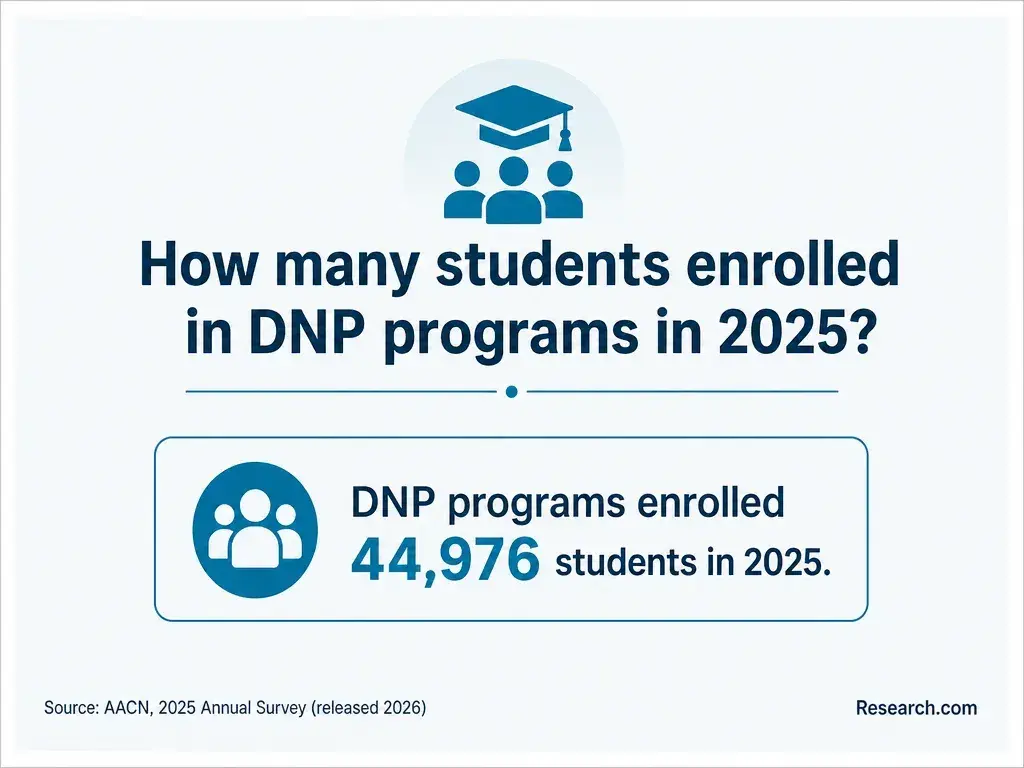
Graduate study is another decision entirely. Advertised online practice doctorates for MSN-prepared nurses should be evaluated for their actual practice, project, and attendance requirements; a DNP is not needed to practice as an ambulatory or hospital bedside RN.
Ambulatory RNs may work in primary care and specialty clinics, outpatient procedure and surgery centers, infusion services, urgent care, and other services that do not admit patients for an inpatient stay. Hospital bedside RNs work on inpatient units such as medical-surgical, cardiac, pediatric, or intensive care units. Job titles alone can obscure important differences: a hospital may operate an outpatient clinic, and a procedure center may require recovery skills and on-call coverage.
Choose a specific service line before judging either category. Ask which patients the site serves, what treatments occur there, whether emergencies are stabilized or transferred, and what support is available during a shift. These answers reveal more about the work than "clinic" or "hospital" on a job posting.
Outpatient behavioral health offers another distinction: an RN's coordination and patient-care duties differ from an advanced-practice psychiatric nurse practitioner's role. Short PMHNP certificate pathways for nurses concern eligible nurses pursuing that separate advanced-practice preparation, not routine ambulatory RN employment.
The U.S. Bureau of Labor Statistics reported a $93,600 median annual wage for registered nurses in May 2024 and projected 5% RN employment growth from 2024 to 2034. Those figures describe the RN occupation as a whole. They do not isolate ambulatory care from hospital bedside roles, predict a new graduate's offer, or account for a particular employer's shift differentials and benefits.
Compare written offers using base hourly pay, expected paid hours, night or weekend differentials, overtime rules, retirement and health benefits, commuting costs, and any loss of income during orientation. A clinic with fewer unscheduled hours can be financially preferable for one household even if its base pay is lower; a hospital offer with differentials may be preferable for another. Use local postings and employer quotes for the setting-specific comparison that occupation-wide data cannot provide.
Neither RN wage data nor a possible pay gap establishes a return on a graduate degree. Comparing accelerated DNP programs makes sense only for a nurse with a separate doctorate-level goal and a verified reason that the program fits it.
Which nursing career and accredited program best fit your goals?
Consider ambulatory care if you enjoy brief assessments, education, follow-up, and coordinating care over time - and a particular employer's hours fit your life. Consider hospital bedside nursing if you want sustained observation of admitted patients, hands-on inpatient care, and repeated prioritization during a shift, while accepting the unit's coverage requirements. Neither is inherently easier: one may bring a high volume of decisions and messages, the other continuous patient needs and shift-based demands.
For a licensed RN, evaluate the job before the degree. Ask to discuss a typical assignment, triage or patient-load expectations, staffing and escalation support, orientation length, competency checks, and the full schedule. A supported transition may meet your goal without additional formal education.
If you still need initial RN preparation, verify that the exact program is eligible under the relevant state board's rules for your intended licensure route. Check institutional accreditation and the nursing program's applicable accreditation separately; neither substitutes for confirming state eligibility. Compare supervised placements, completion and NCLEX results with their reporting years, total cost, and whether the program's timetable is workable. If your actual goal is psychiatric advanced practice rather than either RN setting, online psychiatric NP programs by cost address that distinct educational choice.
Other Things You Should Know About Nursing
Do not assume that a remote encounter is authorized just because the nurse works from a licensed clinic. Verify the patient's location, applicable state practice rules, the nurse's license or compact privilege, and the employer's telehealth policy before providing care.
Yes, if an employer hires the RN, but the return may require a longer orientation or refreshed competencies. Ask how the unit assesses recent inpatient experience rather than assuming prior bedside work remains sufficient indefinitely.
No. Physical demands depend on the site. Procedure, infusion, and high-volume clinics can involve prolonged standing, patient transfers, and repetitive tasks; compare the actual duties and available assistance.
Not necessarily. Procedure preparation, sedation-related monitoring, and recovery responsibilities may call for different experience and employer-validated competencies. Review the job description and orientation plan for the specific role.
- Nursing workload, nurse staffing methodologies and tools - PMC https://pmc.ncbi.nlm.nih.gov/articles/PMC7086229/
- The Health Care Industry and Calculating Overtime Pay | dol.gov https://www.dol.gov/agencies/whd/fact-sheets/54-healthcare-overtime
- Care Coordination | Agency for Healthcare Research and Quality https://www.ahrq.gov/ncepcr/care/coordination.html
- Nursing Shift Tips: Planning Your Effective Routine | denvercollegeofnursing.edu https://www.denvercollegeofnursing.edu/blog/nursing/creating-effective-routine-for-a-nursing-shift.html
- Development of nursing students' critical thinking and clinical decision-making skills - ScienceDirect https://www.sciencedirect.com/science/article/abs/pii/S1557308722000841
- Measuring nurse workload in ambulatory care | jefferson.edu https://jdc.jefferson.edu/cgi/viewcontent.cgi
- Differences Between the ED, the Office, and the Inpatient Setting | SAEM https://www.saem.org/about-saem/academies-interest-groups-affiliates2/cdem/for-students/online-education/m3-curriculum/emergency-medicine-in-the-us-healthcare-system/differences-between-the-emergency-department-the-office-and-the-inpatient-setting
- Initiative Focuses on Shift Changes as the 'Most Crucial Hours of the Day' | Cleveland Clinic https://consultqd.clevelandclinic.org/initiative-focuses-on-shift-changes-as-the-most-crucial-hours-of-the-day
- 510 minutes: A MNA RN Explains a typical shift https://mnnurses.org/510-minutes-a-mna-rn-explains-a-typical-shift/