2027 AI Agent Evaluation Capstones: What to Look for in a Data Science Master's

Co-Founder and Chief Data Scientist
An AI agent evaluation capstone can be a strong reason to choose a data science master's - but only if students can test more than whether a demo works. For applicants interested in evaluating tool-using or multi-step AI systems, the useful distinction is between a project that produces credible evidence about performance and failure, and one that merely showcases an application.
This guide explains what to look for in capstone requirements, coursework, supervision, and project access so you can compare programs before enrolling.
Key Things You Should Know
- Look for capstones that define tasks, establish baselines, test failures and safety risks, and report reproducible results - not just a working agent.
- Ask whether students can obtain suitable data, tools, computing access, and faculty feedback; a catalog mention of "AI projects" does not establish that support.
- Use career statistics as context, not a promised outcome: the U.S. Bureau of Labor Statistics reports a $120,230 median annual wage for data scientists in May 2025, not for AI agent evaluation capstone graduates specifically.
What is an AI agent evaluation capstone in a data science master's?
It is a culminating project that investigates how reliably an AI system completes tasks involving steps such as planning, retrieving information, or calling tools. The student defines the intended behavior, constructs or selects test cases, measures results, analyzes failures, and explains the limits of the findings. The deliverable may include code and a working agent, but the central contribution is evidence about how the agent behaves.
A manageable example is evaluating an agent that answers questions using an approved document collection. Rather than reporting only answer accuracy, the project could assess whether the agent cites the right documents, respects access boundaries, recovers from failed retrieval, and knows when to decline an unsupported answer. Its scope should match the program's time, data-access, and computing constraints.
Not every data science master's permits this topic. A program may require an approved sponsor, restrict project topics, or use a thesis or coursework instead of a capstone. Confirm the project rules rather than treating an AI course elective as proof that an agent evaluation capstone is available.
Which evaluation skills should a data science master's capstone demonstrate?
A strong project connects statistical reasoning to the distinctive problems of agents: variable paths through a task, tool errors, and failures that a single final-answer score can miss. The following components describe what a substantive capstone could demonstrate.
| Component | Evidence in a capstone | Why it matters |
| Task definition and baselines | Specified success criteria and comparison with a simpler workflow | Shows whether the agent adds value over a less complex approach |
| Test design | Documented case selection, difficult cases, and separation of development from final testing | Reduces the risk of reporting results tailored to familiar examples |
| Measurement | Appropriate quality, cost, latency, and uncertainty reporting | Reveals trade-offs hidden by one aggregate score |
| Failure and safety analysis | Review of incorrect actions, unsafe tool use, or mishandled sensitive information | Makes the evaluation useful for deployment decisions |
| Reproducibility | Versioned prompts, model settings, test data, code, and evaluation procedures | Lets another reviewer understand what was actually tested |
Graduate-level depth is visible in the choices behind these artifacts: why a baseline is fair, whether a metric represents the real task, and how sampling or reviewer disagreement affects a conclusion. A polished dashboard without those explanations is weaker evidence of evaluation skill.
How do you assess AI agent capstone quality when comparing master's programs?
Compare requirements and support, not promotional project titles. Request a capstone handbook or rubric, anonymized examples if available, and an explanation of how students secure data and supervision. These questions separate an accessible project pathway from a possibility that exists only in theory:
- Can students propose an AI agent evaluation topic, and who approves its scope and data use?
- Does the grading rubric assess experimental design, baselines, failure analysis, and limitations separately from the demo?
- Who advises projects involving statistics, machine learning systems, and security or privacy concerns?
- Are compute, relevant tools, and usable datasets available, or must students supply them?
- May students share a sanitized report or code sample with prospective employers?
Student and graduate access can matter when a project needs domain feedback or a sponsor; AI master's programs with strong alumni networks are worth examining for those connections. An alumni network is not, by itself, evidence of capstone mentorship. A red flag is a program that advertises industry projects but cannot explain topic approval, advisor availability, or what a completed evaluation must contain.
What should an AI agent evaluation capstone curriculum include?
The strongest preparation combines experimental design, statistics, machine learning evaluation, data engineering, and the practicalities of building and testing software. Coursework should give students enough depth to distinguish measurement error from model failure and to create a repeatable evaluation pipeline. A course title alone does not show whether students practice those skills.
Look for assignments that require students to construct test sets, justify metrics, compare systems under controlled conditions, inspect error categories, and document results. A dedicated course or substantial project is more persuasive than a single lecture mentioning agents. Instruction in privacy, security, and human oversight is particularly relevant when an agent can take actions or use external tools; AI master's curricula with ethical decision-making offer another curriculum feature to compare, but applicants should still inspect the actual assignments.
Choose a program with deeper systems coursework if you want to test tool execution or deployment behavior. A program emphasizing statistical methods may be a better fit if your intended contribution is benchmark design, human evaluation, or uncertainty analysis. The capstone should connect your chosen depth to a feasible question.
How do online and campus data science master's capstones differ?
The evaluation standard need not change with delivery format, but the logistics can. Online students may depend more on remote access to computing resources, approved data, advisor meetings, and collaborators. Campus students may have easier access to in-person meetings or institutional labs, though neither format guarantees a suitable sponsor or dataset.
If you work full time, ask how often capstone teams meet, whether attendance is synchronous, and whether sponsor meetings fall during business hours. If a project uses restricted data, ask whether remote access is permitted. Compare the full program cost and required travel as well as the project experience; cost comparisons for online AI degrees can provide a starting point, but confirm the current charges and capstone-related costs with each institution.
What admissions requirements apply to data science master's programs?
Requirements vary by institution and may include prior coursework, programming preparation, transcripts, recommendations, or a statement of purpose. For this capstone goal, preparation in coding and statistics is especially useful: students need to build or instrument a system and judge whether observed differences are meaningful. A professional background with domain knowledge can also help define realistic tasks, but it does not automatically satisfy a formal prerequisite.
Before applying, compare your record with each program's published requirements. If you lack a prerequisite, ask admissions whether additional coursework can fulfill it; self-study may improve readiness without counting toward admission. In your application, a small evaluation project that explains its test cases and limitations may communicate your interests more clearly than an unsupported claim that you want to "work in AI."
How long do data science master's programs take and cost?
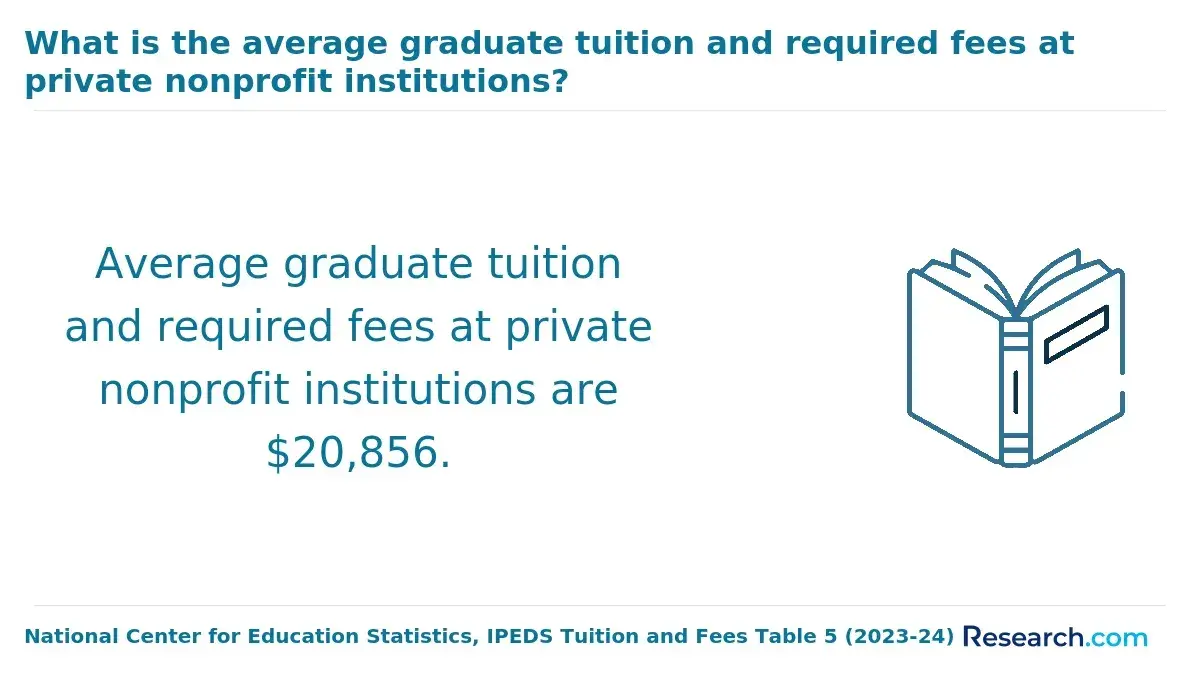
There is no reliable single duration or price for programs capable of supporting this capstone. Credit requirements, course load, residency status, fees, and capstone scheduling differ. A published tuition figure may also omit required fees, computing or software expenses, and travel. Ask whether capstone enrollment requires prior courses or a particular term; that rule can affect completion time more than the advertised minimum duration.
Build a like-for-like estimate from each school's current tuition schedule, mandatory fees, expected course load, and any project expenses you would personally incur. If your budget is tight, machine learning graduate programs on a $20,000 budget provide another set of options to investigate. Check each program's current total cost and whether its project rules permit agent evaluation before treating it as a substitute.
How do accreditation standards affect data science master's programs?
Institutional accreditation is a foundational check when comparing U.S. master's degrees, but it does not certify that a particular capstone teaches AI agent evaluation well. Verify the institution's current accreditation status through the accreditor or an official institutional source, then examine the program's curriculum, assessment rubric, and supervision separately.
Do not assume a specialized accreditation label is required for an AI agent evaluation career. Ask the program which accreditations apply to the institution or degree and what, if anything, they assess about this curriculum. If you plan to study online from another state, also confirm that the institution can enroll students where you live; authorization and accreditation answer different questions.
What careers and salaries can AI agent evaluation skills support?
A rigorous capstone can provide portfolio evidence for work involving machine learning evaluation, AI quality and safety testing, data science, or ML engineering. Job titles and expectations vary by employer. The strongest portfolio explanation identifies the decision the evaluation supported, the baseline, the tests, what failed, and what remained uncertain - not just the tools used.
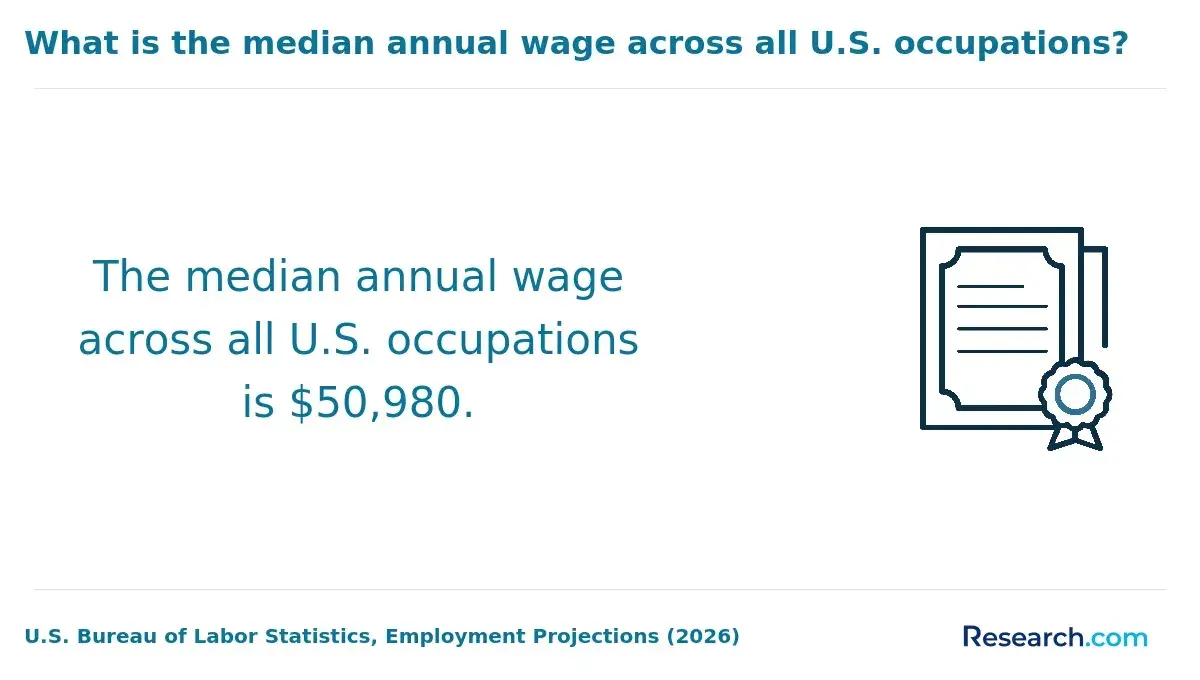
The U.S. Bureau of Labor Statistics projects 35% employment growth for data scientists from 2025 to 2035. That outlook describes a broad occupation, not a forecast for agent evaluator positions or a guarantee of employment after a master's. Likewise, the occupation's median wage is not a starting salary or a measure of the degree's effect on earnings. If cost and prospective earnings are central to your choice, comparisons of affordable online artificial intelligence master's degrees can inform your shortlist, provided you assess career outcomes against your own experience, location, and target roles.
What certifications and professional standards apply to AI agent evaluation?
No single certification establishes competence in AI agent evaluation across employers. A vendor credential may demonstrate familiarity with a tool, but it is not a substitute for designing valid tests or explaining failure modes. For most applicants, a well-documented capstone is more direct evidence of those abilities than a certificate alone.
Standards and organizational policies can still shape a project, particularly when it handles personal information or tests an agent that can act on behalf of users. Ask whether the program teaches students to document intended use, evaluation boundaries, risk controls, and human review. If you are targeting a regulated industry, check that industry's employer and legal requirements rather than assuming a general AI credential meets them.
Other Things You Should Know About Data Science
Often, if the program approves it. Explain how the data was generated and which real-world behaviors it may fail to represent; synthetic examples alone may not establish performance in production.
That depends on the sponsor agreement, data permissions, and university rules. Ask before starting whether you may publish code, a redacted report, or a description that omits confidential details.
Not unless the program requires one. A carefully scoped study that documents useful findings and limitations can demonstrate strong applied work without a novel research contribution.
Yes, if you can identify your contribution and the program permits you to discuss it. Keep records of the tests, code, analysis, or reporting you personally completed.
References
- Top 10 artificial intelligence security actions: A primer | Canadian Centre for Cyber Security https://www.cyber.gc.ca/en/guidance/top-10-artificial-intelligence-security-actions-primer-itsap10049
- 9. AI Research for Graduate Students | Towson University https://pressbooks.towson.edu/appliedai/chapter/ai-research-for-graduate-students/
- How We Broke Top AI Agent Benchmarks | berkeley.edu https://rdi.berkeley.edu/blog/trustworthy-benchmarks-cont/
- Responsible Agentic AI - Stanford University https://uit.stanford.edu/security/agenticai
- Data Science Capstone Experience - Purdue Online https://www.purdue.edu/online/data-science/data-science-capstone-experience/
- AI agent evaluation: frameworks, metrics & testing strategies | Algolia https://www.algolia.com/blog/ai/ai-agent-evaluation-frameworks-metrics-testing-strategies
- How to Evaluate AI Agents From Tool Calls to Task Completion | NVIDIA Technical Blog https://developer.nvidia.com/blog/how-to-evaluate-ai-agents-from-tool-calls-to-task-completion/
- AI agent evaluation: A practical framework for testing multi-step agents - Articles - Braintrust https://www.braintrust.dev/articles/ai-agent-evaluation-framework
- How do benchmarks use ground truth data? | Label Studio https://labelstud.io/learning-center/how-do-benchmarks-use-ground-truth-data/
- AI Agent Evaluation: Building Reliable Systems... - Comet ML https://www.comet.com/site/blog/ai-agent-evaluation/