2027 Addiction Treatment vs Inpatient Psychiatry Nursing: Daily Work, Schedules, and Career Fit
Audited and Verified:
Our Editorial and Data Verification Process
Research.com uses government datasets, official education statistics and primary institutional information to support its career and degree guides. Our review process checks factual accuracy, occupational definitions, source dates and the requirements associated with the credentials discussed.
How This Article Was Fact-Checked
Our editorial team verifies salary estimates, employment projections, education requirements and program information against original data providers and official organizations. Salary figures are checked against the relevant occupational definitions and reporting periods. Information about licensure, accreditation and required in-person training is reviewed separately.
Fact-checked and verified on:

Co-Founder and Chief Data Scientist
An addiction treatment job and an inpatient psychiatry job may both involve behavioral health care, but they can feel very different across a shift. This comparison is for nursing students, new graduates, and licensed nurses deciding where to apply or how to change specialties.
It explains the patient needs, daily responsibilities, schedules, preparation, and pay evidence behind each option. Use it to identify the setting that fits your clinical interests - and the questions to ask before accepting an offer.
Key Things You Should Know
- Choose addiction treatment if you want sustained work with substance use, withdrawal assessment, recovery planning, and relapse prevention; choose inpatient psychiatry if you prefer acute mental health assessment, stabilization, and unit-based safety work.
- Neither specialty has one standard schedule: residential addiction programs and psychiatric units operate around the clock, while some outpatient addiction services offer more daytime work.
- The U.S. Bureau of Labor Statistics reports a $93,600 median annual wage for registered nurses in May 2024 and projects 5% RN employment growth from 2024 to 2034; those figures cover all RN specialties, not these two settings separately.
What Is the Difference Between Addiction Treatment and Inpatient Psychiatry Nursing?
Addiction treatment nursing centers on people with substance use disorders. Jobs may be in medically managed withdrawal programs, residential treatment, outpatient clinics, or opioid treatment programs. Inpatient psychiatry nursing takes place on a hospital or other inpatient unit caring for people who need intensive mental health assessment, stabilization, and a supervised environment. Both settings may care for patients with co-occurring substance use and mental health conditions; the facility's admission criteria and resources determine where a particular patient receives care.
This comparison describes typical work, not a guarantee about every facility. In particular, a residential addiction program can resemble an inpatient unit more than it resembles an outpatient clinic.
| Decision factor | Addiction treatment nursing | Inpatient psychiatry nursing |
| Recurring clinical focus | Substance use, withdrawal risks, medication support, and recovery engagement | Acute psychiatric symptoms, behavioral changes, medication response, and unit safety |
| Typical care trajectory | May include repeated visits or a residential stay followed by continuing care | Usually focuses on stabilization and a safe discharge plan |
| Team relationships | Often works closely with counselors, prescribers, and community recovery services | Often works closely with psychiatrists, therapists, social workers, and unit staff |
For an RN choosing between staff jobs, another degree is usually not the first requirement; relevant orientation and demonstrated competence matter more. A later doctorate may support a different goal, but DNP pathways that do not add a new clinical specialty do not, by themselves, prepare a nurse for a new psychiatric advanced practice role.
What Does an Addiction Treatment Nurse Do Each Day?
An addiction nurse typically starts by reviewing handoff information, current orders, recent substance use history, medical conditions, and changes in withdrawal symptoms or safety status. During the shift, the nurse assesses patients, administers prescribed medications, monitors responses, documents findings, communicates concerns to the prescriber, and helps coordinate follow-up care. The exact mix depends heavily on whether the job is in withdrawal management, residential care, or an outpatient program.
The work calls for nonjudgmental communication as well as medical vigilance. Patients may have pain, infection, pregnancy-related needs, or other conditions alongside a substance use disorder. Nurses can support education and recovery goals without assuming that a patient is ready for the same intervention as someone else. Medication administration and escalation must follow orders, facility policy, and the nurse's scope - not a generic withdrawal checklist.
Ask prospective employers how often nurses assess new admissions, what medical coverage is available overnight, and how transfers to a higher level of care work. If your long-term goal is to diagnose and prescribe rather than practice as a staff RN, compare the distinct education and expense of that route through nurse practitioner education on a budget; an RN addiction job alone does not confer prescribing authority.
What Does an Inpatient Psychiatry Nurse Do Each Day?
On an inpatient psychiatric unit, an RN assesses mental and physical health, tracks changes in behavior and medication response, administers ordered treatment, documents care, and participates in interdisciplinary planning. A shift also involves therapeutic communication, patient education, admissions and discharges, and responding to escalating situations under the unit's safety procedures. Psychiatric nursing remains nursing: physical symptoms and medical deterioration require attention even when the reason for admission is behavioral health.
The pace may change quickly with an admission, a patient in crisis, or a change in observation needs. Before accepting a position, ask who responds to emergencies, how observation assignments affect the RN's other patients, what de-escalation training is provided, and how new hires progress to independent assignments. A supportive orientation is more informative than the unit's specialty label alone.
Inpatient RN practice is also distinct from the psychiatric-mental health nurse practitioner role. For an already-qualified APRN considering a specialty change, accelerated mental health NP certificate study is a separate pathway to investigate; its eligibility and clinical requirements cannot be replaced by inpatient RN experience.
Setting predicts the schedule better than specialty name. Inpatient psychiatric units and residential or withdrawal-management programs need coverage at night, on weekends, and on holidays. An outpatient addiction clinic may offer more regular daytime hours, although early openings, evening services, or on-call duties are possible. Shift length, rotation, and overtime depend on the employer.
For working parents and other nurses managing commitments outside work, compare the posted schedule with the schedule people actually work. Ask whether shifts rotate, how far ahead schedules are published, how often staff are reassigned or held late, and whether training initially requires different hours. If you plan to study while employed, check required live classes, campus visits, and clinical placements separately from your work schedule. Even accelerated Doctor of Nursing Practice programs can impose substantial fixed-time commitments; an online label does not make those obligations flexible.
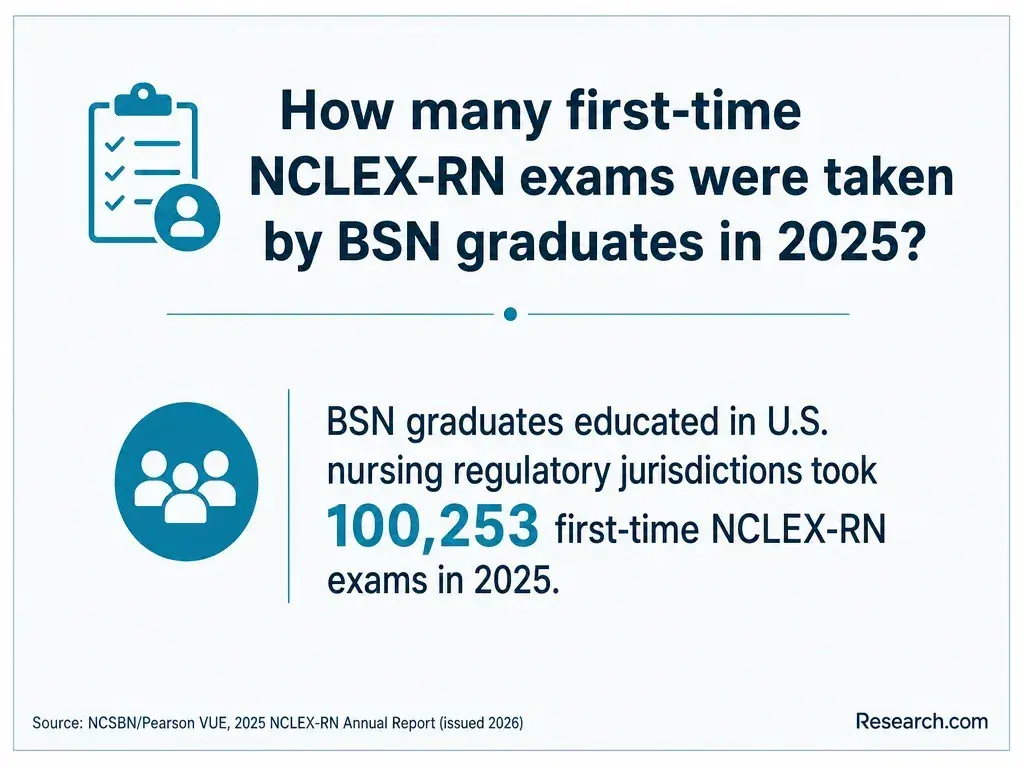
Staff RN roles generally require graduation from an eligible prelicensure nursing program, passage of the NCLEX-RN, and an active RN license issued by the relevant state board of nursing. An ADN or BSN can be an RN-entry route, but employers set their own degree and experience preferences. Some facilities also employ LPNs/LVNs within their state-defined scope; do not assume an LPN/LVN posting and an RN posting have interchangeable duties.
A nursing student should distinguish graduation from licensure and from readiness for independent specialty assignments. Look for behavioral health clinical exposure when available, then compare new-graduate orientation, precepting, and competency checks at prospective employers. An experienced practical nurse seeking RN-only positions can investigate LPN-to-RN pathway options for working practical nurses, while verifying the program's actual length, clinical attendance, state approval, and NCLEX-RN eligibility before enrolling.
Mental health nursing courses introduce psychiatric assessment, therapeutic communication, crisis response, and care planning. Pharmacology, health assessment, and medical-surgical nursing also matter: they help students recognize medication effects and physical problems that can accompany psychiatric illness or substance use. Population health and ethics coursework can strengthen understanding of stigma, access to care, and patient autonomy.
Coursework is a foundation, not proof of independent specialty competence. During clinical placements or simulation, seek feedback on assessment, documentation, communication, and when to escalate concerns. If you are still choosing a prelicensure program, admissions rules are a separate decision from curriculum quality: comparing alternatives to nursing entrance tests may help you find programs to evaluate, but you should also confirm clinical opportunities and state board eligibility.
Some nursing courses, continuing education, and postlicensure degree coursework are available online. Initial nursing education still includes supervised clinical learning and other required hands-on activities; online lectures do not make a prelicensure program entirely remote. Availability of psychiatric or addiction placements, simulation requirements, and required campus visits varies by school and location.
Ask a school for a term-by-term schedule showing in-person labs, clinical days, placement responsibilities, and any limits on where students may live. This is especially important if you work shifts or arrange childcare. The same distinction applies when considering online coursework formats in practical nursing programs: online theory does not eliminate on-site skills and clinical requirements.
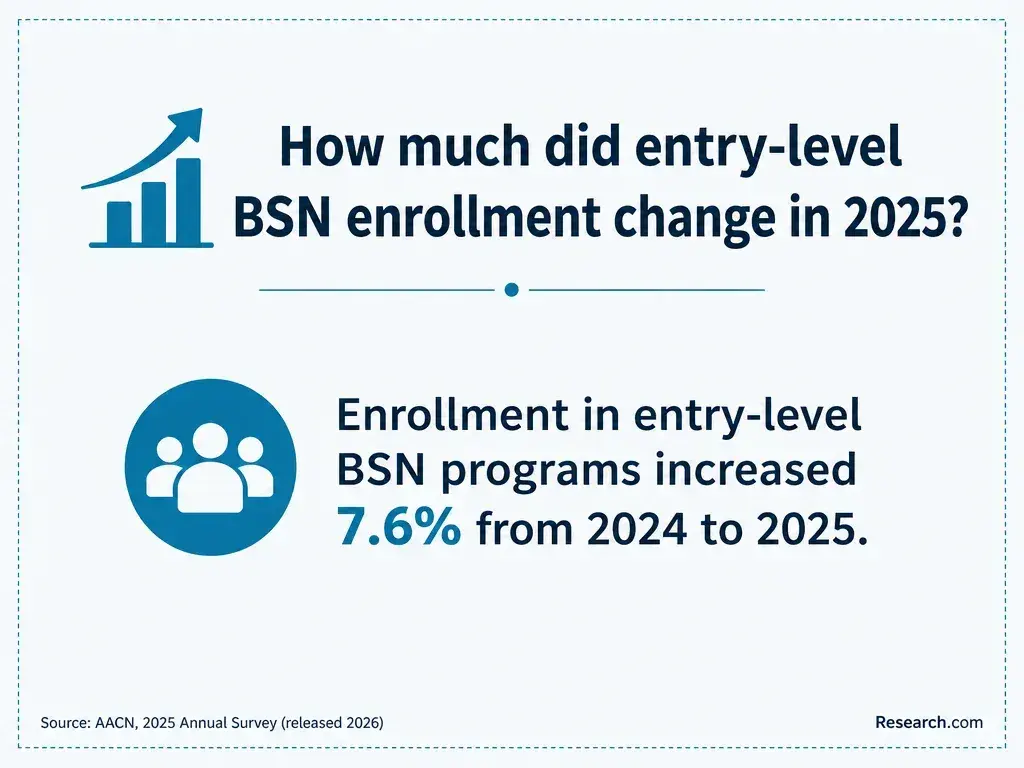
For someone entering nursing, an ADN commonly takes about two academic years of nursing study after any prerequisites, while a traditional BSN commonly takes about four years in total; prerequisites, course sequencing, and placement availability can change the timeline. An already-licensed RN usually does not need another degree solely to move between these two staff specialties. Employer orientation or targeted continuing education may be a more direct investment.
Compare costs using each school's published tuition and fees for your residency and enrollment status, then add books, equipment, screening requirements, clinical travel, examination and licensure fees, and earnings you may forgo. For an RN contemplating graduate study for a different role, BSN-to-MSN tuition and fee considerations can frame the budget - but first confirm that the specific track prepares you for the role you want. A lower advertised tuition figure is not necessarily a lower total cost.
Specialty certification can document experience and focused knowledge, but it does not replace an RN license, employer orientation, or a new advanced practice qualification. For addiction nursing, the Addictions Nursing Certification Board offers the Certified Addictions Registered Nurse credential. For psychiatric nursing, the American Nurses Credentialing Center offers Psychiatric-Mental Health Nursing Certification for eligible RNs. Check each certifying organization's current eligibility, examination, fee, and renewal rules before planning an application.
Choose a credential that matches the work you perform and the jobs you seek. Ask whether your employer values or helps pay for it, and keep records of qualifying practice and education. A nurse exploring online FNP certificate routes after an MSN should recognize a different objective: family nurse practitioner preparation is not psychiatric-mental health NP preparation or a substitute for an RN specialty certification.
How Do Salary and Job Outlook Compare for These Nursing Specialties?
There is no reliable national Bureau of Labor Statistics wage or growth series that cleanly separates addiction treatment RNs from inpatient psychiatry RNs. The closest broad benchmark is the RN occupation: the BLS reports a $93,600 median annual wage in May 2024 and projects 5% employment growth from 2024 to 2034. Neither figure predicts an offer in either specialty. Employer type, location, experience, shift differentials, and overtime can change actual compensation.
Compare written offers using base pay, expected hours, differentials, benefits, orientation pay, and commuting costs - not an occupation-wide median. Also weigh staffing, support during crises, and schedule sustainability. An ADN-to-MSN bridge program guide may be useful if you are considering a later role change, but graduate tuition should not be justified by assuming that either staff specialty automatically pays an MSN premium.
Other Things You Should Know About Nursing
Yes. Co-occurring conditions are common considerations in both settings. The appropriate placement depends on the patient's needs and the facility's ability to provide the required medical and psychiatric care.
Yes, when administration is within the nurse's scope and follows a valid order and the facility's procedures. Prescribing authority is a separate question governed by the clinician's license and applicable law.
Staff nurses use therapeutic communication and may provide education or participate in groups according to their role and training. Do not assume that an RN position includes independently providing psychotherapy.
Yes. Assessment, medication safety, de-escalation, and care coordination can transfer. Expect the new employer to assess gaps and provide orientation for its patient population, policies, and clinical risks.
- Fact Sheet #22: Hours Worked Under the Fair Labor Standards Act (FLSA) | U.S. Department of Labor https://www.dol.gov/agencies/whd/fact-sheets/22-flsa-hours-worked
- THERAPEUTIC COMMUNICATION AND THE NURSE... - NCBI https://www.ncbi.nlm.nih.gov/books/NBK617004/
- Nurses' Time Allocation and Multitasking of Nursing Activities | nih.gov https://pmc.ncbi.nlm.nih.gov/articles/PMC6371290/
- Discharge Planning and Transitions of Care | PSNet https://psnet.ahrq.gov/primer/discharge-planning-and-transitions-care
- Substance Use Disorder Graduate Certificate | UNT Health Fort Worth https://www.unthealth.edu/college-of-nursing/substance-use-disorder-graduate-certificate.html
- MODULE 18: PSYCHIATRIC EMERGENCIES | University of West Florida Pressbooks https://pressbooks.uwf.edu/uwfmentalhealthnursing/chapter/module-5-trauma-and-stressor-related-disorders-2/
- Nurse - Explore Healthcare Careers | Mayo Clinic College of Medicine and Science https://college.mayo.edu/academics/explore-health-care-careers/careers-a-z/nurse/
- "Tackling the Substance Use Disorder Crisis: The Role of Access to Treatment Facilities" - ScienceDirect https://www.sciencedirect.com/science/article/pii/S0167629621001648
- Understanding Levels of Care in Mental Health Treatment | adaa.org https://adaa.org/learn-from-us/from-the-experts/blog-posts/consumer-professional/understanding-levels-care-mental
- Inpatient vs Residential Treatment for Mental Health | pavilionhospital.com https://pavilionhospital.com/blog/inpatient-vs-residential-treatment/