2027 Accredited Online Public Relations Degree Programs With No GRE or GMAT Requirements

Co-Founder and Chief Data Scientist
Choosing an online public relations degree is easier when you can skip expensive standardized tests. However, admissions flexibility should not be your only filter. The U.S. Bureau of Labor Statistics reported a $69,780 median annual wage for public relations specialists in May 2024, making program quality, cost, and career alignment worth careful review.
This guide is for undergraduates, career changers, and working professionals comparing accredited online PR programs without GRE or GMAT requirements. You will learn how to verify accreditation, compare admissions standards, estimate costs, and decide whether a no-test pathway fits your goals.
Key Things You Should Know
- Many accredited online public relations, strategic communication, and mass communication programs are test-free or test-optional, but applicants still need strong writing samples, résumés, recommendations, and academic records.
- Skipping the GRE or GMAT can save test fees that commonly start around $220 for the GRE and $275 for the GMAT before preparation costs, but it does not reduce tuition or guarantee admission.
- The labor market supports careful program comparison: BLS projects 6% employment growth for public relations specialists from 2024 to 2034, so students should prioritize portfolio-building, analytics, writing, and internship access.
Which Accredited Online Public Relations Degree Programs Do Not Require the GRE or GMAT?
Accredited online public relations degree programs without GRE or GMAT requirements usually fall into three groups: bachelor's programs, master's programs in public relations, and broader strategic communication or mass communication programs with PR-focused electives. At the undergraduate level, GRE and GMAT scores are generally irrelevant; at the graduate level, the important distinction is whether a school is test-free, test-optional, or offers waivers.
The examples below show how no-GRE or no-GMAT options commonly appear in the market. Requirements can change by term, so confirm the current policy directly with the admissions office before applying.
| School or program type | Online PR-related degree example | Typical GRE or GMAT policy | Accreditation check | Best fit |
| University-based online communication school | Online master's in mass communication, public relations, or strategic communication | Often no GRE required or GRE optional | Verify institutional accreditation and whether the communication school has specialized accreditation where applicable | Working professionals seeking advancement into PR strategy, media relations, or communications leadership |
| Private nonprofit university | Online master's in public relations, corporate communication, or strategic communication | Frequently no GRE or GMAT required | Confirm regional or institutional accreditation recognized by the U.S. Department of Education | Applicants with professional writing, marketing, journalism, nonprofit, or corporate communications experience |
| Public university online campus | Online bachelor's in communication with public relations concentration | GRE and GMAT not used for undergraduate admission | Confirm institutional accreditation, transfer-credit rules, and state authorization | First-time degree seekers or transfer students who want a PR foundation |
| Career-focused online university | Online bachelor's in communication, marketing communication, or public relations | GRE and GMAT not used for undergraduate admission | Review institutional accreditation, graduation outcomes, and employer partnerships | Adult learners who need asynchronous classes and generous transfer-credit policies |
When comparing options, look beyond whether a school says "no GRE required." A strong PR program should teach media writing, campaign planning, crisis communication, research methods, social media strategy, analytics, ethics, and portfolio development. Students who are open to related fields may also compare PR with broader online programs that pay well, especially if salary growth or career switching is a major goal.
Why Have Accredited Online Public Relations Degree Programs Eliminated GRE and GMAT Requirements?
Public relations is a writing-heavy, portfolio-driven field, so many programs have shifted away from standardized tests that do not directly measure a candidate's ability to write press materials, analyze audiences, manage campaigns, or communicate under pressure. Schools can often learn more from an applicant's statement of purpose, résumé, writing sample, recommendation letters, and prior academic performance than from a general graduate exam.
There is also a practical access issue. GRE and GMAT exams add direct costs, preparation time, and scheduling barriers. For working adults, military students, parents, and applicants changing careers, removing a test requirement can shorten the application timeline without lowering classroom expectations.
The trend is also connected to online education. Universities competing for adult learners increasingly design admissions processes around professional readiness, not just test performance. This is similar to broader demand for flexible pathways such as accelerated online degrees, where students value speed, transfer credit, and clear career alignment.
What Admissions Criteria Matter Most Without GRE or GMAT Scores?
Without GRE or GMAT scores, admissions committees usually place more weight on evidence that the applicant can succeed in graduate-level or upper-division communication coursework. For PR programs, that evidence is often writing quality, strategic thinking, work experience, and academic consistency.
The table below explains the admissions factors that commonly matter most and how applicants can interpret them when deciding where to apply.
| Admissions factor | Why it matters in PR programs | What a strong applicant shows |
| Undergraduate GPA or prior college record | Signals academic readiness, especially for research, writing, and theory-heavy courses | Consistent performance, improvement over time, or strong grades in communication, English, journalism, marketing, or social science courses |
| Writing sample | PR coursework depends on clarity, audience awareness, persuasion, and editing | A polished press release, campaign memo, article, case analysis, or professional writing sample |
| Statement of purpose | Shows whether the applicant understands the field and has realistic goals | A focused explanation of career goals, relevant experience, and why the program fits |
| Résumé or professional experience | Helps schools evaluate practical readiness and leadership potential | Communications, marketing, media, nonprofit, social media, journalism, public affairs, or client-service experience |
| Recommendations | Provides outside evidence of writing ability, professionalism, and persistence | Letters from supervisors, faculty, or clients who can describe specific achievements |
Applicants who are not submitting test scores should make the rest of the application more specific and evidence-based. A practical sequence is to identify three target programs, map each program's required materials, and then tailor the résumé and statement to each curriculum rather than sending generic documents.
- Choose a writing sample that matches the program's focus, such as media relations, crisis communication, campaign strategy, or digital analytics.
- Use the statement of purpose to connect your background to specific courses, faculty strengths, capstone options, or portfolio outcomes.
- Ask recommenders to discuss concrete skills, such as deadline management, writing, audience research, leadership, or client communication.
- If your GPA is below the preferred range, explain improvement, professional growth, certifications, or recent coursework instead of ignoring the issue.
No-GRE and no-GMAT programs are not automatically easier to enter. They are easier to apply to because they remove one barrier, but they may still be selective if they receive many qualified applicants or require strong professional materials. The key question is not "Is there no test?" but "What replaces the test?"
This comparison helps clarify the difference between admissions flexibility and admissions difficulty.
| Admissions model | What it means | How applicants should respond |
| Test-free | The program does not consider GRE or GMAT scores | Focus completely on GPA, writing, résumé, recommendations, and fit |
| Test-optional | Scores are not required, but applicants may submit them | Submit scores only if they strengthen a weaker part of the application |
| Waiver-based | Scores may be waived for applicants meeting GPA, experience, or degree criteria | Ask whether you qualify before spending money on an exam |
| Test-required | GRE or GMAT scores are required for admission or full consideration | Plan extra preparation time and compare whether the program's value justifies the added step |
Students comparing admissions accessibility across disciplines should be careful not to assume that "high acceptance" and "low quality" are the same thing. For example, applicants researching MSW programs with high acceptance rate still need to check accreditation, field placement quality, and licensing alignment. PR applicants should take the same approach: flexible admissions can be positive, but only when the curriculum and outcomes are strong.
Skipping the GRE or GMAT does not weaken academic quality by itself. Accreditation and curriculum standards are separate from standardized testing policies. A properly accredited university can offer a rigorous online PR degree whether it requires exams, makes them optional, or eliminates them completely.
For public relations students, the most important baseline is institutional accreditation from an agency recognized by the U.S. Department of Education or the Council for Higher Education Accreditation. Specialized accreditation, such as communication or journalism accreditation, can add another quality signal, but it is not always available or required for legitimate PR programs.
Use accreditation as a non-negotiable screen before comparing tuition or admissions convenience. A no-test policy is helpful only if the credential is recognized for graduate school, employer tuition reimbursement, federal financial aid eligibility, and long-term résumé value.
- Confirm the institution's accreditation through official federal or accreditor sources, not only the program website.
- Check whether the online program is offered by the same accredited institution that grants the diploma.
- Ask whether online students have access to the same faculty, library resources, career services, and alumni network as campus students.
- Review curriculum depth in writing, research, ethics, digital communication, analytics, and campaign planning.
No-GRE and no-GMAT online PR programs are especially useful for students whose strengths are better demonstrated through writing, work experience, and professional accomplishments than through standardized testing. They can also be a good fit for applicants who want to move quickly from application to enrollment.
These students often benefit most from a test-free or test-optional pathway because the admissions process aligns with their real strengths.
- Working communication professionals who have strong résumés but limited time for test preparation.
- Career changers from journalism, marketing, business, nonprofit work, public affairs, or social media who can show transferable communication skills.
- Military-affiliated and adult learners who need asynchronous courses, multiple start dates, and predictable application timelines.
- Applicants with strong writing samples, portfolios, or campaign experience but average standardized-test performance.
- Transfer students pursuing an online bachelor's degree who want to apply prior credits toward a PR-related major.
A no-test PR program may be a poor fit if the student is choosing it only to avoid academic challenge. Public relations coursework can be demanding because it combines writing, research, strategy, technology, and ethical decision-making. Students who want the fastest possible route should compare pacing, credit load, and support services rather than assuming every online program is accelerated.
No-GRE admissions can reduce application costs, but tuition and total cost of attendance vary widely by institution, degree level, residency status, transfer credit, and program length. The main financial advantage is usually avoiding exam fees, test-prep expenses, and delayed enrollment rather than lowering tuition itself.
Federal aid rules also matter. For graduate students, the annual federal Direct Unsubsidized Loan limit is commonly $20,500, while remaining eligible costs may require other aid sources. That means applicants should compare total program cost before enrolling, not just monthly payment estimates or per-credit tuition.
The table below summarizes common cost factors that affect online PR students and why each one matters.
| Cost factor | Why it matters | What to ask the school |
| Per-credit tuition | Most online programs price tuition by credit hour, and total credits vary | What is the full tuition for the entire degree, not just one course? |
| Program fees | Technology, graduation, internship, or online learning fees can raise the final cost | Are fees mandatory, and are they charged every term? |
| Transfer credits | Accepted credits can shorten a bachelor's program and reduce cost | How many credits can transfer, and who evaluates them? |
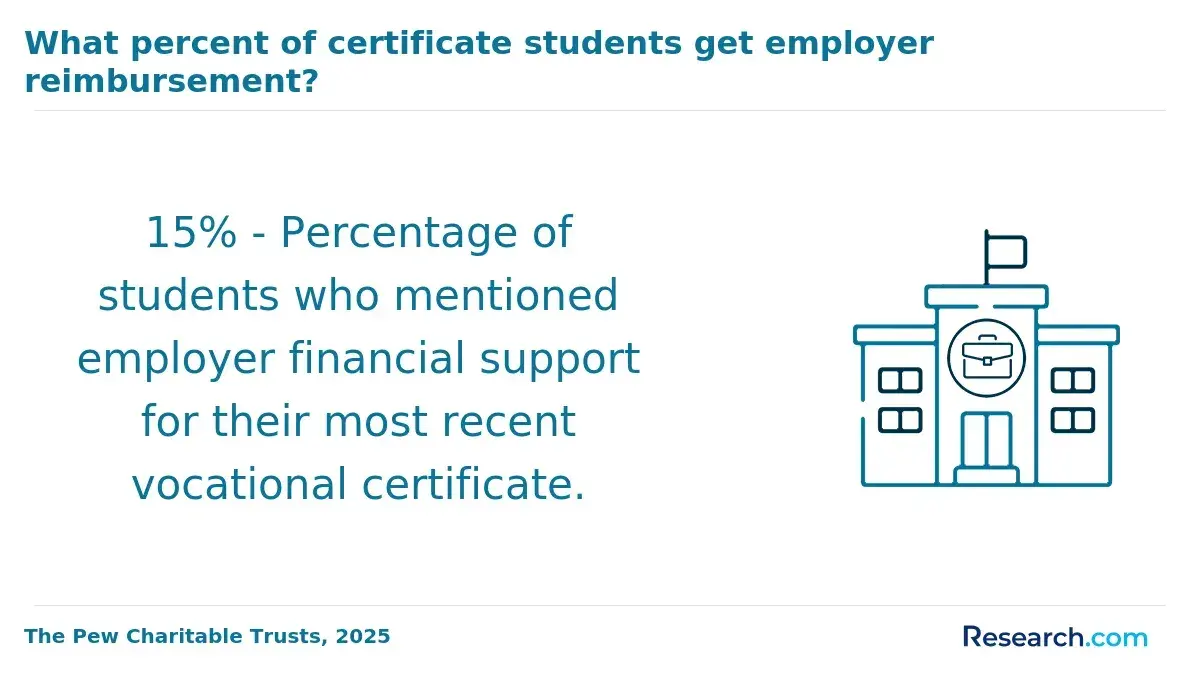
| Employer tuition benefits | PR, marketing, nonprofit, and corporate communication employees may qualify for reimbursement | Does the program meet employer reimbursement requirements? |
| Test savings | Skipping GRE or GMAT fees can reduce upfront application expenses | Is the program test-free, test-optional, or waiver-based? |
If affordability is a major concern, compare PR with related business and communication pathways. Students interested in corporate communication, investor relations, or financial communications may also review online finance degrees to see whether a finance-focused credential better matches their target roles.
Graduates of online public relations programs may pursue roles in media relations, corporate communication, nonprofit communication, public affairs, social media strategy, crisis communication, internal communication, and agency account management. A degree can help build credibility, but employers usually evaluate a combination of writing ability, portfolio quality, internships, campaign results, and industry knowledge.
The BLS reported a $69,780 median annual wage for public relations specialists in May 2024. This figure is useful as a national benchmark, but it does not predict an individual outcome; pay can vary by location, industry, experience, employer size, and whether the role is specialist-level or management-track.
Public relations programs are most valuable when they produce evidence of job-ready skills. Students should look for courses and projects that help them graduate with a portfolio, not just completed credits.
- Media writing samples, including press releases, pitches, backgrounders, and speeches.
- Campaign plans that show audience research, messaging, tactics, timelines, and evaluation methods.
- Digital analytics experience using social media, web, email, or campaign performance data.
- Crisis communication exercises that demonstrate judgment under reputational pressure.
- Internship, practicum, or client-based capstone work with measurable deliverables.
AI is also changing PR work. Employers increasingly expect communicators to use AI tools responsibly for drafting, monitoring, summarizing, and content planning while still applying human judgment, ethics, fact-checking, and brand strategy. A strong program should teach students how to evaluate outputs, protect privacy, avoid misinformation, and maintain a clear organizational voice.
Applicants often weaken their chances by treating "no GRE" as the main achievement instead of building a persuasive admissions file. In a test-free process, every other document matters more because the committee has fewer standardized inputs to compare.
The most common mistakes are avoidable if applicants slow down and treat each program as a distinct academic and professional fit.
- Choosing a program only because it does not require the GRE or GMAT, without checking accreditation, curriculum, faculty, or student support.
- Submitting a generic personal statement that does not explain why public relations, why online learning, and why that specific program.
- Using a weak writing sample, outdated college paper, or unedited professional document that does not show current communication skill.
- Ignoring GPA expectations, prerequisite coursework, or waiver conditions because the standardized test is not required.
- Assuming test-optional means test scores never matter; strong scores may still help if the rest of the file is uneven.
- Failing to compare total cost, transfer-credit policies, and graduation requirements before applying.
A useful rule is to ask whether your application still looks competitive if the admissions committee reads only your résumé, statement, transcript, and writing sample. If the answer is no, improve those materials before submitting.
How Should Students Compare Accredited Online Public Relations Degree Programs Without GRE or GMAT Requirements?
The best accredited online public relations degree program is not necessarily the one with the easiest application. It is the one that fits your career goal, academic background, schedule, budget, and preferred learning format while offering credible outcomes.
Use a structured comparison process before applying so that admissions flexibility does not distract from long-term value.
- Verify institutional accreditation and state authorization for online students in your state.
- Identify whether the program is bachelor's, master's, certificate-to-degree, or degree-completion, and confirm that level matches your goal.
- Compare curriculum depth in public relations writing, strategy, research, analytics, ethics, media relations, and crisis communication.
- Review online format, including synchronous class meetings, asynchronous coursework, course length, start dates, and part-time options.
- Ask how students build portfolios through capstones, practicums, internships, client projects, or simulations.
- Calculate total cost, including tuition, fees, books, transfer credits, employer aid, and any lost income from heavier course loads.
- Compare admissions standards beyond testing, including GPA expectations, writing samples, recommendations, and professional experience.
- Ask career services about internship access, employer relationships, alumni outcomes, and support for remote students.
Students comparing PR with other service-oriented communication careers should also consider whether licensure-based fields fit their interests better. For example, accelerated mental health counseling programs online can serve a very different goal, but they require careful review of accreditation, supervised hours, and state licensure rules. PR does not typically require state licensure, so program choice should focus more on portfolio, reputation, cost, and career fit.
Other Things You Should Know About Public Relations
Certification is not required for most PR jobs, but credentials such as the Accreditation in Public Relations can help experienced professionals demonstrate ethics, strategy, and industry knowledge. Students should usually prioritize degree completion, internships, and portfolio quality before pursuing optional certification.
Public relations is strongly writing-focused, but modern roles often overlap with marketing, social media, analytics, and brand strategy. Students who enjoy writing, audience research, and reputation management may find PR a better fit than purely sales-driven marketing roles.
Yes, but availability depends on the program and the student's location. Many online students complete local, remote, or employer-based internships. Before enrolling, ask whether the school helps online students find placements or requires students to secure their own opportunities.
A strong PR portfolio usually includes press releases, media pitches, campaign plans, social media content, analytics summaries, crisis communication materials, and writing samples. Quality matters more than quantity, so each item should show a clear audience, objective, and result when possible.
- Communications Degree Job Outlook 2026: Career Tips & Data https://www.mastersincommunications.org/communications-degree-job-outlook/
- 2025 Most Affordable Online Public Relations Degrees https://www.onlineu.com/most-affordable-colleges/public-relations-degrees
- Online Master’s in English Programs No GRE Required (Master of Arts) https://www.mastersincommunications.com/faqs/online-masters-in-english-gre-requirements
- Program Certification & Accreditation https://www.commissionpred.org/the-professional-bond/program-certification-accreditation/