2027 Accredited Online Economics Degree Programs That Accept the Most Transfer Credits

Co-Founder and Chief Data Scientist
If you already have college credits, the right online economics degree can turn unfinished coursework into a shorter, less expensive path to graduation. This matters because College Board's latest published pricing data shows average tuition and fees at public four-year colleges continue to rise, making transfer efficiency a major ROI factor.
This guide is for adults, community college graduates, military learners, and students returning after a break. You will learn which accredited online economics programs are most transfer-friendly, how evaluations work, and how to estimate your real remaining cost and timeline.
Key Things You Should Know
- Transfer-friendly online bachelor's programs commonly allow up to 90 credits toward a 120-credit economics degree, but the number that actually applies to your major, general education, and electives is what determines time and cost savings.
- Programs with a 30-credit residency requirement usually require at least one academic year of institution-based coursework, even when they advertise generous transfer-credit limits.
- BLS data published in 2024 reports a $115,730 median annual wage for economists and 5% projected job growth for economists from 2023 to 2033, but many bachelor's graduates use economics for business, data, policy, finance, and graduate-school pathways rather than economist roles alone.
Which Accredited Online Economics Degree Programs Accept the Most Transfer Credits?
The online economics programs that accept the most transfer credits are usually bachelor's completion programs, public online campuses with strong transfer pathways, and adult-focused universities that separate transfer evaluation from admissions.
A high maximum transfer limit is useful, but it should be read together with residency requirements, upper-division economics requirements, accreditation, and whether transferred courses satisfy the degree instead of counting only as electives.
The table below compares accredited online economics or economics-focused bachelor's programs with public-facing transfer policies that are especially relevant to students bringing previous college credit. Policies can change, so students should request an official degree audit before making an enrollment decision:
| Institution | Online economics degree option | Accreditation type | Transfer-credit potential | Best fit | Transfer caution |
| Thomas Edison State University | BA in Economics | Institutionally accredited | Very high; designed for extensive transfer and adult degree completion | Students with large amounts of prior college credit, exams, military learning, or mixed credit sources | Students must confirm current residency, upper-level economics, and liberal arts distribution requirements |
| Southern New Hampshire University | BS in Economics and Finance | Institutionally accredited | Up to 90 credits toward a 120-credit bachelor's degree | Students who want economics plus applied finance in a structured online format | Some prior economics courses may transfer as electives if they do not match SNHU's required outcomes |
| American Public University | BA in Economics | Institutionally accredited | Up to 90 credits toward many bachelor's programs | Military-affiliated students, working adults, and students with prior general education credits | Credits still need to align with program requirements and accepted source standards |
| Liberty University | Online economics-focused business bachelor's options | Institutionally accredited | Up to 75% of a bachelor's degree, commonly equivalent to 90 credits in a 120-credit program | Students seeking a business-oriented economics pathway with substantial transfer potential | Students should verify whether the degree is economics, business economics, or a business major with an economics focus |
| Oregon State University Ecampus | BA or BS in Economics | Institutionally accredited | Strong transfer pathway; bachelor's degree uses quarter credits and requires institutional coursework | Students who want a public university economics degree with online delivery | Quarter-credit conversion and upper-division requirements can affect how many credits remain |
| Penn State World Campus | BA in Economics | Institutionally accredited | Transfer-friendly, but final acceptance depends on Penn State evaluation and degree requirements | Students prioritizing institutional reputation and a broad economics curriculum | May not be the fastest option if many previous credits do not map cleanly to degree requirements |
| Florida International University Online | BA in Economics | Institutionally accredited | Strong option for transfer students, especially those entering with lower-division preparation | Students with community college coursework or an associate degree seeking an online public university path | Upper-division economics and university residency requirements still determine completion speed |
| Washington State University Global Campus | Economic Sciences bachelor's option | Institutionally accredited | Transfer-friendly for students who meet university and major requirements | Students interested in economics, quantitative analysis, and applied economic decision-making | Students should confirm how prior math, statistics, and economics courses are applied |
A practical ranking should not stop at the advertised maximum. A program that accepts 84 of your credits into degree requirements may be better than a program that accepts 90 credits but leaves you with more upper-division economics, math, or residency coursework than expected.
How Do Online Economics Degree Programs Evaluate Transfer Credits?
Online economics programs evaluate transfer credits by comparing your previous courses with the receiving school's curriculum, credit system, accreditation standards, grade rules, and degree requirements. The evaluation usually happens in two layers: first, whether the credit is acceptable at the institution; second, whether it applies to general education, the economics major, electives, or graduation requirements.
Students should understand the main evaluation factors before applying because these rules affect whether a high-transfer program actually saves time. Most schools review the following items:
- Institutional accreditation: Credits from institutionally accredited colleges usually transfer more easily than credits from unaccredited or non-collegiate providers.
- Course equivalency: Introductory microeconomics may fulfill a specific major requirement, while a specialized course may transfer only as an elective.
- Minimum grade: Many institutions require a C or higher for transfer, especially for major, math, statistics, or writing courses.
- Credit level: Lower-division community college credits may not replace upper-division economics courses required in the junior and senior years.
- Course age: Economics theory courses often age better than technology-heavy analytics courses, but schools may still review older credits carefully.
- Credit system: Quarter credits and semester credits convert differently, which can leave small credit gaps in degree audits.
The biggest mistake is assuming "accepted credit" means "useful credit." A school may accept a course on your transcript but apply it as free elective credit, which helps only if your degree plan has room for electives.
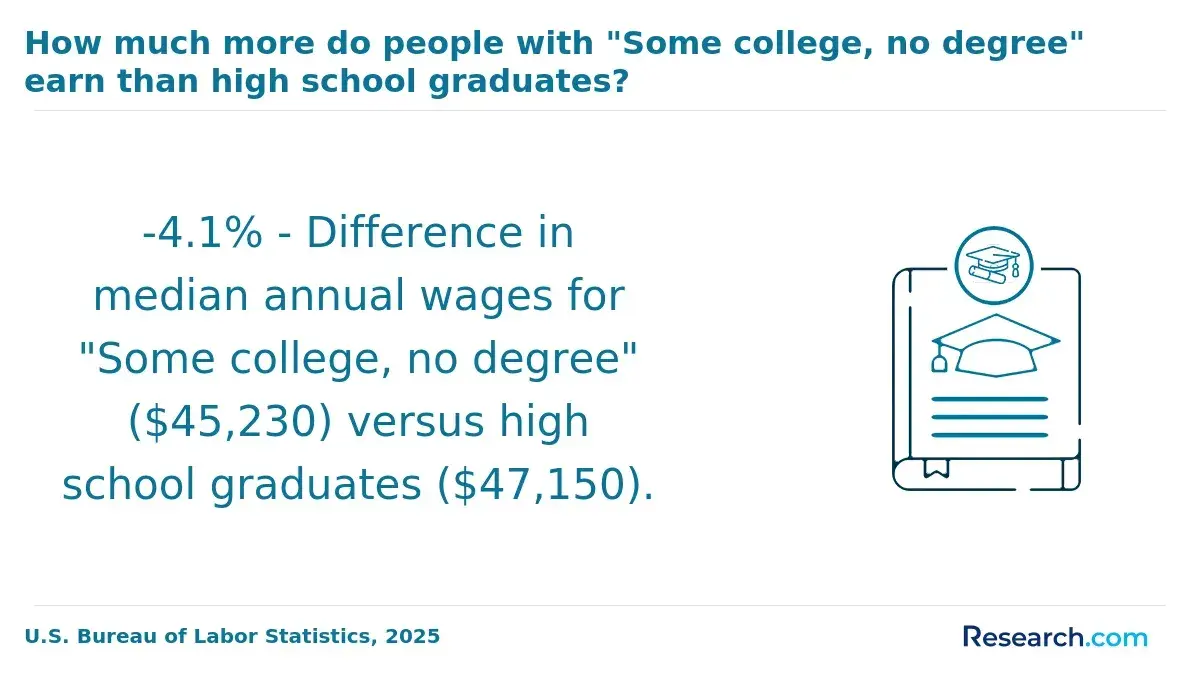
How Can Transfer Credits Shorten an Online Economics Degree?
Transfer credits shorten an online economics degree by reducing the number of courses you still need to complete. Since most U.S. bachelor's degrees require about 120 semester credits, a student who transfers 60 credits may be halfway to the degree on paper, while a student who transfers 90 credits may need only the school's remaining residency, upper-division, and major-specific courses.
The table below shows how transfer credits can affect a 120-credit online economics bachelor's degree. It is a planning example, not a guarantee, because official degree audits determine the actual remaining coursework:
| Credits accepted into the degree | Approximate credits remaining | Typical student profile | Likely completion impact |
| 30 credits | 90 credits | Student with one year of prior college | May save about one academic year if credits meet degree requirements |
| 60 credits | 60 credits | Associate degree holder or transfer student with strong general education | Often enters as an upper-division student but may still need major prerequisites |
| 75 credits | 45 credits | Returning student with mixed college coursework | Can be efficient if credits are not concentrated only in electives |
| 90 credits | 30 credits | Degree-completion student near senior standing | Usually reaches the minimum residency floor at many transfer-friendly schools |
Students comparing economics with other accelerated pathways may also want to review broader guides to fast degrees online, especially if their main goal is speed to a marketable credential rather than economics specifically.
Transfer credits shorten a degree most effectively when they clear prerequisites. For example, previously completed college algebra, calculus, statistics, microeconomics, macroeconomics, and writing courses can unlock upper-division economics classes sooner than unrelated electives.
How Much Can Transfer Credits Reduce the Cost of an Online Economics Degree?
Transfer credits can reduce cost by lowering the number of credits billed by the new school. The savings depend on per-credit tuition, fees, residency requirements, financial aid eligibility, and whether your transfer credits apply to required courses.
College Board's latest published data places average tuition and fees for public four-year in-state students above $11,000 for a single academic year, which makes every accepted course financially meaningful for many transfer students.
The table below uses a simple per-credit model to show why transfer efficiency matters. Students should replace the sample tuition rates with the exact per-credit tuition and fees from each school they are considering:
| Scenario | Credits remaining | Estimated cost at $350 per credit | Estimated cost at $500 per credit | What it means |
| No transfer credit | 120 | $42,000 | $60,000 | Full bachelor's cost before fees, books, or aid |
| 60 credits applied | 60 | $21,000 | $30,000 | Common associate-degree transfer scenario |
| 90 credits applied | 30 | $10,500 | $15,000 | Typical minimum remaining coursework at many transfer-friendly schools |
Cost comparisons should include more than tuition. Some programs charge technology fees, graduation fees, transcript fees, proctoring fees, or higher tuition for upper-division business courses. A cheaper per-credit school can become less efficient if it accepts fewer useful credits.
Students who are mainly comparing affordability across online degree fields may find it helpful to study how cost-focused rankings work in other disciplines, such as a psychology degree online cheap comparison, then apply the same logic to economics: total remaining cost matters more than sticker tuition alone.
Can Military, Professional, or Prior Learning Credits Transfer to an Online Economics Degree?
Yes, some accredited online economics programs consider military training, standardized exams, professional certifications, workplace learning, or prior learning assessment. These credits usually transfer best as electives or general education credits, though some may satisfy business, quantitative, leadership, or social science requirements depending on the school.
Students with nontraditional learning should ask how each source is reviewed because schools treat these credits differently. The most common sources include:
- Military credits: Schools may review Joint Services Transcript entries using ACE credit recommendations, but they still decide how credits apply to the economics degree.
- CLEP and DSST exams: These can sometimes satisfy general education, introductory economics, history, math, or social science requirements.
- AP or IB scores: High school exam credits may count if scores meet the university's current thresholds.
- Professional training: Employer training, financial services coursework, analytics certificates, or government training may be reviewed if the school recognizes the provider or uses prior learning assessment.
- Portfolio assessment: Some adult-focused schools let students document college-level learning through a faculty-reviewed portfolio, though fees and limits vary.
Career changers should be especially careful not to overvalue elective credit. For example, someone moving from education into economics, policy, or analytics may have many transferable general credits, while another career changer researching a path such as teacher to speech pathologist would face very different prerequisite and licensure constraints.
The key question is not "Will the school accept my experience?" but "Will it reduce the exact courses I need for this economics degree?" That distinction protects students from paying application fees only to discover that prior learning does not shorten the major sequence.
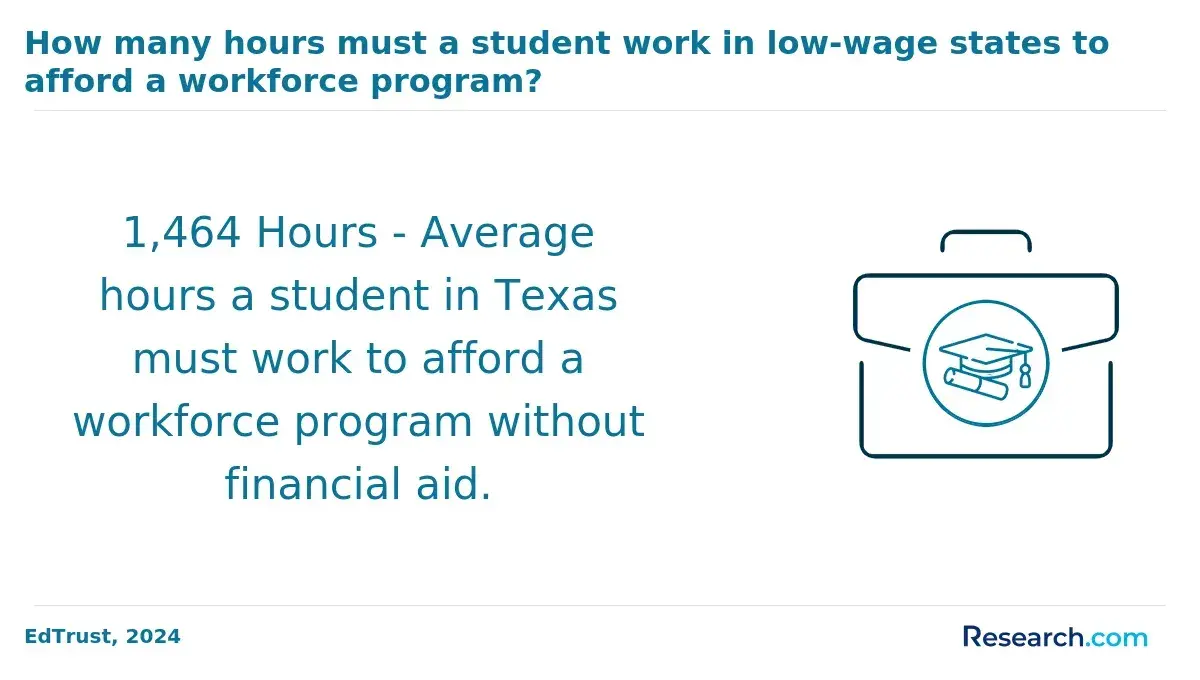
Which Types of Previous College Credits Transfer Best to Online Economics Degrees?
The credits that transfer best to online economics degrees are lower-division general education courses, introductory economics courses, college-level math, statistics, writing, and social science courses from accredited institutions. These courses map cleanly to common bachelor's requirements and are easier for evaluators to match against catalog descriptions.
The table below shows how common previous coursework typically applies to an online economics degree. Students should use it to identify which transcripts and course descriptions are most important to gather before requesting an evaluation:
| Previous credit type | Typical transfer strength | Common degree application | Possible issue |
| English composition and writing | High | General education or writing requirement | Developmental or remedial writing usually does not count toward a bachelor's degree |
| Microeconomics and macroeconomics | High | Major foundation or social science requirement | Duplicate credit may be limited if course content overlaps |
| College algebra, calculus, or statistics | High to moderate | Quantitative reasoning, prerequisites, or major support | Some economics programs require calculus or statistics at a specific level |
| Business, accounting, or finance | Moderate | Electives, business core, or applied economics support | May not replace economics theory or econometrics courses |
| History, sociology, political science, psychology | Moderate to high | General education, social science, or electives | May exceed elective space if the student has many similar credits |
| Technical, vocational, or occupational courses | Variable | Electives or prior learning credit | May not fit a liberal arts economics degree plan |
Students with an associate of arts or associate of science degree often have the strongest transfer position because their credits usually include general education, writing, math, and social science foundations. An associate of applied science can still help, but more courses may transfer as electives rather than degree requirements.
How Do Transfer Agreements Affect Online Economics Degree Completion?
Transfer agreements can make online economics degree completion faster and more predictable by spelling out which community college courses satisfy bachelor's requirements. These agreements may be called articulation agreements, transfer pathways, 2+2 plans, statewide transfer guarantees, or guaranteed admission pathways.
Students should look for transfer agreements because they reduce guesswork before credits are earned. A strong agreement usually clarifies the following details:
- Course-to-course equivalencies: The agreement shows which community college classes match the university's economics, math, writing, and general education requirements.
- Block transfer rules: Some agreements treat a completed associate degree as satisfying most or all lower-division general education requirements.
- Minimum grades and GPA: The agreement may require a minimum grade in each transferable course or a minimum cumulative GPA for admission.
- Major prerequisites: Economics pathways often identify required math, statistics, microeconomics, and macroeconomics courses before transfer.
- Remaining credits after transfer: Good agreements make it easier to estimate how many upper-division credits will remain after enrollment.
The main limitation is that transfer agreements are often institution-specific. A course plan that works perfectly for one online economics program may leave gaps at another school, especially if the second program has a different math sequence, business core, or upper-division economics structure.
What Transfer Policies Should Students Compare Before Choosing an Online Economics Degree?
Students should compare transfer policies that affect actual degree progress, not just the advertised credit cap. A school that accepts "up to 90 credits" may still require specific upper-division economics, econometrics, capstone, residency, and writing-intensive courses that limit how quickly a student can finish.
Before applying, students should ask each admissions or transfer-credit office specific questions. These questions help separate marketing claims from real degree-completion value:
- What is the maximum number of transfer credits allowed for this specific economics degree?
- How many credits must be completed through your institution to meet residency requirements?
- Will my associate degree satisfy general education requirements as a block, or will each course be evaluated separately?
- Which of my previous courses will satisfy economics major requirements rather than electives?
- Do you accept lower-division transfer credits for upper-division requirements?
- Are there age limits for math, statistics, business, economics, or technology-related courses?
- What minimum grade is required for transfer credit in the major?
- Can I receive an official degree audit before committing to enrollment?
- How are quarter credits converted to semester credits?
- Will transfer credits affect financial aid eligibility, scholarship eligibility, or satisfactory academic progress?
Red flags include schools that will not provide a clear degree audit, programs that advertise a large transfer maximum without explaining residency rules, and evaluations that accept many credits but leave most major requirements untouched.
Which Students Benefit Most From Transfer-Friendly Online Economics Degree Programs?
Transfer-friendly online economics degrees are best for students whose previous credits align with general education, social science, business, math, statistics, or introductory economics requirements. They are especially useful for adults who want a bachelor's credential without repeating courses they have already completed.
The students most likely to benefit share one or more of the following profiles:
- Associate degree graduates: Students with an AA or AS often enter with a strong block of lower-division requirements completed.
- Returning students with unfinished bachelor's credits: Learners who left college after two or three years may be close to completion if their credits are still applicable.
- Military-affiliated students: Military transcripts, CLEP or DSST exams, and prior college coursework can combine into a meaningful transfer package.
- Working adults in business or finance: Prior coursework in accounting, management, statistics, or finance may support an applied economics or economics-and-finance curriculum.
- Students planning graduate study: A transfer-friendly degree can help them complete the bachelor's credential faster while preserving time for calculus, statistics, research, or econometrics preparation.
Students should avoid choosing a program primarily for its transfer maximum if they need a highly quantitative path to graduate economics, a specific employer-recognized university, or a curriculum with stronger analytics, data, or policy training.
The BLS data published in 2024 notes that many economist roles require a master's degree or PhD, so bachelor's students should view the degree as either a direct path to entry-level business and analytical roles or as preparation for further study.
Students comparing different online fields may notice that transfer efficiency matters across disciplines. For instance, someone researching the fastest psychology degree should still ask the same core question economics students ask: how many credits apply to the actual degree requirements?
How Should Students Choose an Online Economics Degree Based on Transfer Efficiency?
Students should choose an online economics degree by calculating transfer efficiency: the share of prior credits that reduces required coursework, lowers total cost, and still supports the student's career or graduate-school goal. The best choice is not always the school with the highest transfer cap; it is the school that turns the most of your existing credits into useful progress toward a credible economics credential.
A practical decision process helps students compare programs consistently. Use these steps before enrolling:
- List every transcript, exam score, military record, certification, and prior learning source you want reviewed.
- Confirm that each school is institutionally accredited and that the online economics degree appears in the current academic catalog.
- Request an official or pre-enrollment transfer evaluation, not just an admissions estimate.
- Separate credits into four categories: general education, economics major, required support courses, and electives.
- Calculate remaining credits, required residency credits, and upper-division credits still needed.
- Multiply remaining credits by tuition and mandatory fees to estimate the actual completion cost.
- Compare curriculum strength, faculty support, analytics training, career services, and graduate-school preparation.
- Choose the program that offers the strongest mix of accepted credits, affordability, academic fit, and career value.
Transfer efficiency also depends on your alternatives. A student with many business credits may finish faster in business economics than in a traditional liberal arts economics program, while a student with strong math and statistics may prefer a more quantitative economics curriculum even if it accepts slightly fewer credits.
The same logic applies to shorter career-oriented programs. For example, a student considering an office administration course would still compare transferability, credential value, total cost, and time to completion before enrolling.
The strongest final choice is the program that answers three questions clearly: how many of your credits apply, what courses remain, and how the completed degree supports your next career or education step.
Other Things You Should Know About Economics
Employers generally focus on whether the institution is accredited, what skills the graduate can demonstrate, and whether the degree fits the role. The transcript usually does not need to say that the program was completed online, but students should verify how the credential is listed by the university.
It can be. Most economics degrees require statistics, quantitative reasoning, and intermediate economic theory, while more analytical programs may require calculus, econometrics, or data analysis. Students who have been away from math should ask about placement, tutoring, and prerequisite refreshers.
Yes, but students planning graduate study should choose courses carefully. Graduate economics programs often prefer applicants with strong preparation in calculus, statistics, econometrics, and research methods, so the fastest transfer path is not always the best academic preparation.
Applying to more than one program can be useful if each school offers a transcript review before enrollment. Comparing official evaluations side by side helps you see which program applies the most credits to real degree requirements, not just which school accepts the most credits overall.
References
- Best Online Universities With Generous Transfer Credit Policies https://www.collegetransitions.com/blog/best-online-universities-with-generous-transfer-credit-policies/
- Community college transfer processes discourage degree completion https://journalistsresource.org/education/community-college-transfer-bachelors-degree-barriers-research/
- Transfer Credit Evaluation Checklist with Timelines from Spark Admissions https://www.sparkadmissions.com/blog/credit-transfer-evaluation/
- Top Online Schools That Accept Transfer Credits https://www.edvisorly.com/student-guides/online-schools-that-accept-transfer-credits
- Findings (Beyond Transfer) - Public Agenda https://publicagenda.org/resource/beyond-transfer/findings/
- How to Confirm Credit Transfer with Your School (Step-by-Step Guide) https://www.straighterline.com/blog/transfer-how-to-confirm-credit-transfer-with-your-school-step-by-step-guide