2027 Accelerated Online Emergency Management Doctorate Programs: Faster Timelines, Credit Transfers, and Completion Paths

Co-Founder and Chief Data Scientist
Choosing an accelerated online emergency management doctorate is really a timing decision: how fast can you finish without weakening the value of the credential? The stakes are high for public safety, homeland security, healthcare preparedness, and continuity planning leaders. The U.S. Bureau of Labor Statistics reported a May 2024 median wage of $86,130 for emergency management directors, showing why advanced preparation can matter for leadership roles.
This guide explains faster completion models, credit transfer strategies, capstone versus dissertation choices, and program features that help working professionals graduate sooner.
Key Things You Should Know
- The fastest realistic online emergency management doctorate is usually a practitioner-focused program with generous graduate transfer credit, year-round enrollment, and a capstone or applied doctoral project rather than a traditional dissertation.
- Completion time is shaped less by the word "accelerated" and more by credit requirements, transfer limits, research sequence design, residency rules, and whether students can stay continuously enrolled.
- BLS May 2024 data places the median pay for emergency management directors at $86,130, but doctoral ROI depends on role type, employer sector, tuition, borrowing costs, and whether the degree supports advancement into executive, academic, consulting, or policy leadership.
Which Online Emergency Management Doctorate Programs Offer the Fastest Accelerated Pathways?
The fastest accelerated online emergency management doctorate programs are typically designed for experienced professionals who already hold a relevant master's degree and want to apply research to real-world disaster preparedness, crisis leadership, public safety, homeland security, healthcare resilience, or continuity planning. In practice, "accelerated" may mean shorter course terms, continuous enrollment, larger transfer allowances, or a completion project that begins early in the program.
Students should compare program models, not just marketing language. An online criminal justice, homeland security, public administration, or safety leadership doctorate may include emergency management concentrations, while some students first build related preparation through an online criminal justice degree before moving into graduate-level emergency management leadership.
The table below summarizes common online doctorate formats and how they usually affect speed. It is most useful for narrowing the type of program to research before comparing individual schools.
| Program format | Best fit | Typical speed advantage | Common trade-off |
| Professional doctorate in emergency management, homeland security, or public safety | Agency leaders, emergency managers, consultants, and executives | Often faster when it uses applied projects and accepts prior graduate coursework | May be less focused on academic research careers than a PhD |
| Doctor of Public Administration with emergency management or homeland security focus | Government, nonprofit, policy, and public-sector leaders | Can be efficient for students with an MPA, MPA-adjacent master's, or public safety background | May include broader public administration coursework beyond disaster management |
| PhD in emergency management, disaster science, public policy, or related field | Future researchers, faculty, policy analysts, and research-intensive leaders | May be accelerated only if coursework and dissertation milestones are tightly sequenced | Dissertation work can extend completion time if research approval or data collection is delayed |
| Doctorate in criminal justice, strategic security, or homeland security with emergency management coursework | Professionals in law enforcement, corrections, intelligence, and security operations | Can be faster when prior criminal justice or security graduate credits transfer cleanly | Emergency management may be one concentration rather than the full degree focus |
The fastest option for most working adults is not necessarily the shortest advertised program. It is the program that gives the student the most usable credit for prior graduate work, has predictable course rotation, and allows the final project to begin before all coursework is finished.
Which Completion Pathways Help Students Finish an Online Emergency Management Doctorate Sooner?
Completion pathway matters because the final doctoral requirement is often where students lose the most time. A dissertation, doctoral capstone, applied project, or portfolio-based completion model can all be rigorous, but they do not create the same scheduling demands.
The table below compares common completion models by speed, academic focus, and practical fit. Use it to decide whether a program's culminating requirement matches your career goal and your available time.
| Completion pathway | Usually fastest for | Why it can shorten or extend time | Best career alignment |
| Applied doctoral capstone | Professionals who can study a problem in their agency, community, or sector | It may move faster when the project is scoped around an existing workplace challenge and does not require long-term original theory development | Executive leadership, consulting, preparedness planning, and operational improvement |
| Dissertation | Students pursuing faculty roles, research leadership, or policy research | It can take longer if topic approval, research design, data access, or committee feedback is slow | Academia, research institutes, policy organizations, and evidence-based leadership roles |
| Doctoral project with embedded research courses | Students who want structure and frequent milestone checks | It can reduce delays because proposal development, literature review, and methods work are built into required courses | Practitioner leadership, agency planning, and applied research roles |
| ABD or dissertation-completion pathway | Students who completed doctoral coursework elsewhere but did not finish | It can be faster only if the new school accepts prior doctoral work and the student's research topic remains viable | Students returning to finish a previously interrupted doctorate |
Students trying to finish sooner should ask whether the final project begins during the first year, whether faculty mentors are assigned early, and how often doctoral committee reviews occur. A well-structured dissertation pathway may be faster than a poorly supported capstone pathway, so the format alone should not be the only deciding factor.
How Do Transfer Credits Affect Completion Time for an Online Emergency Management Doctorate?
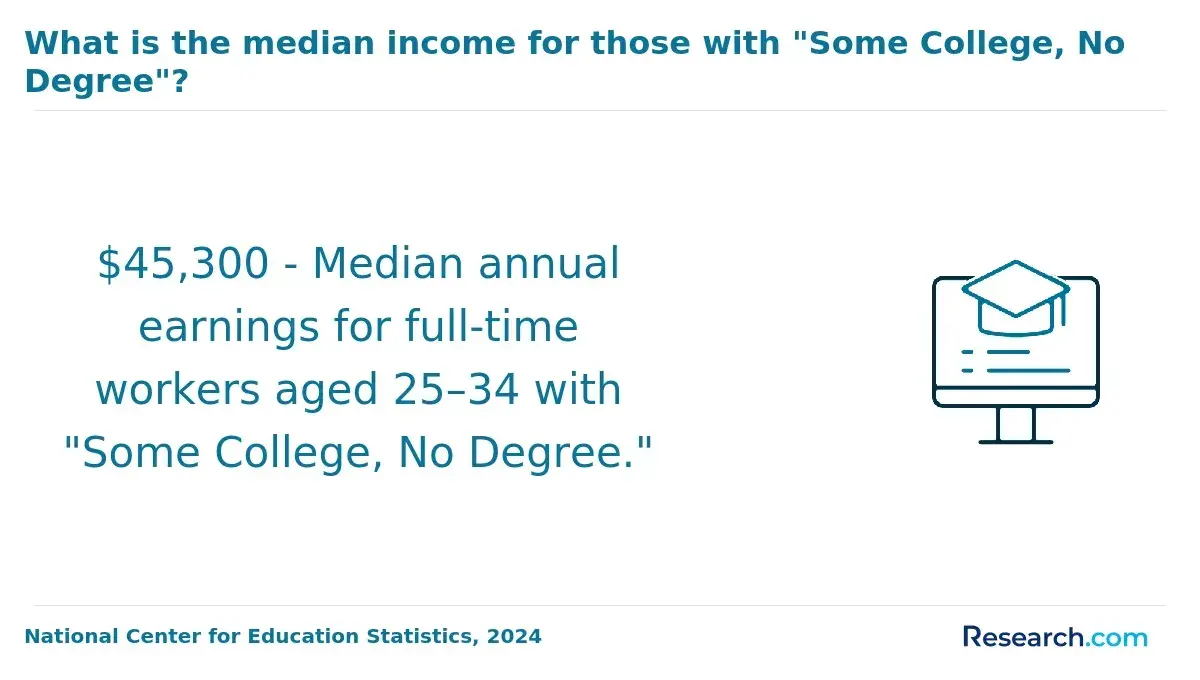
Transfer credits can be the biggest time-saver in an accelerated online emergency management doctorate, especially for students who already hold a master's degree in emergency management, homeland security, criminal justice, public administration, public health, environmental health and safety, or a related field. However, doctoral transfer rules vary widely, and schools rarely accept credits automatically.
Most programs evaluate transfer credits based on level, age, grade earned, institutional accreditation, course match, and whether the credits were already used toward another completed degree. To avoid surprises, students should complete a formal transfer review before enrolling rather than relying on a general admissions conversation.
These are the transfer questions that most directly affect completion speed:
- How many graduate or doctoral credits can be transferred into the program?
- Can master's-level emergency management, public administration, criminal justice, homeland security, or public health courses satisfy doctoral requirements?
- Are transfer credits applied to electives only, or can they replace core courses?
- Is there a time limit on older graduate coursework?
- Will professional training from FEMA, military education, law enforcement academies, or emergency services leadership programs be evaluated for credit or advanced standing?
- Can previously completed doctoral research, comprehensive exams, or dissertation milestones transfer into the new program?
The best transfer-credit strategy is to request a written degree plan showing exactly which credits apply, which requirements remain, and the earliest possible graduation term. Without that document, students may overestimate how much time they can save.
What Program Features Help Students Complete an Online Emergency Management Doctorate Faster?
Program design often matters more than student motivation. Even highly disciplined students can lose time if required courses are offered only once a year, if faculty advising is slow, or if the final project is not integrated into the curriculum.
Look for features that shorten the distance between admission and the final doctoral milestone. These elements are especially important for emergency management professionals whose work schedules may change during disasters, severe weather events, public health incidents, or major planned events.
- Short course terms that allow more start dates per year, such as 7-week or 8-week sessions.
- Year-round enrollment so students can continue during summer instead of waiting for fall or spring terms.
- Asynchronous coursework that lets working professionals complete assignments outside standard business hours.
- Embedded research milestones, including early topic selection, literature review development, methods preparation, and proposal writing.
- Dedicated doctoral advising with clear response timelines for faculty feedback and committee approvals.
- Transparent course rotation maps showing when every required course will be offered.
- Optional full-time and part-time pacing so students can accelerate when work is manageable and slow down during high-demand periods.
- Virtual residency options or clearly scheduled short residencies that do not create hidden travel delays.
Students comparing emergency management with adjacent safety fields may also review the best online environmental health and safety programs to understand how online programs structure applied risk, compliance, and safety leadership training. That comparison can be useful for professionals deciding whether their long-term path is disaster response leadership, occupational safety, environmental risk, or a blended resilience role.
What Factors Most Commonly Delay Graduation From an Accelerated Online Emergency Management Doctorate?
The most common delays usually come from planning gaps rather than lack of ability. Accelerated doctoral study compresses deadlines, so small mistakes early in the program can create long delays near the end.
Students should watch for red flags before enrolling and again before beginning the dissertation or capstone stage. The following issues are especially likely to slow an online emergency management doctorate:
- Assuming the advertised timeline applies to all students, even those studying part time or transferring fewer credits.
- Choosing a dissertation topic that requires difficult-to-access agency data, protected records, or approvals from multiple organizations.
- Overlooking in-person residency, internship, practicum, comprehensive exam, or defense requirements.
- Underestimating the weekly workload of accelerated courses while working full time.
- Waiting too long to identify a research topic, faculty mentor, or committee chair.
- Failing to confirm whether required courses are available every term.
- Changing topics after the proposal stage because the first topic was too broad, too sensitive, or not feasible.
- Focusing only on speed while ignoring accreditation, faculty expertise, student support, and employer recognition.
Cost surprises can also delay graduation if students pause enrollment to manage tuition. Before committing, compare the full emergency management doctorate budget the same way you would evaluate the criminal justice degree price: tuition, fees, books, technology costs, residency travel, graduation fees, and the cost of any required background checks or professional clearances.
Which Accelerated Online Emergency Management Doctorate Programs Are Best for Working Professionals?
The best accelerated online emergency management doctorate for working professionals is usually one that offers predictable pacing, asynchronous learning, responsive advising, and a final project that can connect to the student's current professional environment. For working adults, flexibility is not a convenience feature; it is a graduation strategy.
Students who began in public safety, law enforcement, corrections, firefighting, EMS, military service, or community preparedness may enter doctoral study through different academic routes. Those still building the foundation can compare the best online associate degree programs in criminal justice as an early pathway into public safety education before progressing to bachelor's, master's, and doctoral study.
Working professionals should prioritize programs that match their schedule reality. A program that looks slower on paper may be faster in practice if it reduces stop-outs and lets students maintain steady progress.
| Student profile | Best-fit accelerated format | Why it works |
| Full-time emergency manager or public safety administrator | Asynchronous professional doctorate with applied capstone | Assignments can connect to real agency problems, and online delivery reduces travel conflicts |
| Military or federal employee with rotating assignments | Program with multiple start dates and flexible enrollment intensity | Students can adjust course load during deployment, travel, or high-demand periods |
| Healthcare preparedness or continuity planning professional | Doctorate with policy, risk, and organizational resilience coursework | The curriculum aligns with planning, compliance, and interagency coordination responsibilities |
| Future faculty member or researcher | Online or low-residency PhD with strong dissertation support | The research pathway better supports scholarly publication, teaching, and academic hiring goals |
A good rule is to ask whether the program is designed around adult learners or simply delivered online. True working-professional programs publish clear term calendars, allow part-time continuation, and provide advising before registration mistakes turn into graduation delays.
Does Accelerating an Online Emergency Management Doctorate Affect Cost or Academic Quality?
Acceleration can reduce total cost when it shortens enrollment time, limits repeated fees, and helps students finish before tuition increases. It can also increase short-term financial pressure because students may take more credits per term while managing work and family responsibilities.
Financing matters because graduate borrowing is expensive. The federal Direct PLUS Loan interest rate for the 2024-25 award year was 9.08%, which means students who borrow heavily may see a meaningful difference between finishing in fewer terms and extending enrollment. This does not mean the fastest program is always the cheapest; it means students should compare total program cost rather than tuition per credit alone.
Academic quality depends on structure, accreditation, faculty qualifications, student support, and assessment standards. A rigorous accelerated program should compress scheduling, not remove essential doctoral learning outcomes.
| Comparison factor | Accelerated pathway | Standard-paced pathway | Decision point |
| Time to completion | May be shorter through transfer credits, continuous enrollment, or compressed terms | Usually allows a slower course load and more time between milestones | Choose accelerated only if you can sustain the workload |
| Cash flow | May require paying for more credits in a shorter period | May spread tuition over more terms | Compare term-by-term affordability and total cost |
| Academic depth | Can be strong if research milestones and faculty feedback are built in | Can provide more time for reading, reflection, and topic development | Review syllabi, dissertation support, and project expectations |
| Career fit | Works well for advancement, consulting, and applied leadership goals | May be better for students who need more time to build research skills | Match pace to your career target, not just your preferred graduation date |
The quality red flag is not acceleration itself. The red flag is a program that promises unusually fast completion without explaining admissions standards, doctoral faculty involvement, accreditation, research requirements, student services, or how prior credits are evaluated.
Which Careers Benefit Most From Completing an Accelerated Online Emergency Management Doctorate?
An accelerated online emergency management doctorate is most useful for professionals aiming for senior leadership, applied research, consulting, higher education, or policy roles where advanced expertise can strengthen credibility. It is not usually required for entry-level emergency management jobs, so students should have a clear career reason for pursuing the credential.
BLS May 2024 data reported a median annual wage of $86,130 for emergency management directors. This figure is a useful benchmark, but it includes professionals with different education levels, sectors, locations, and experience, so students should treat it as labor-market context rather than a salary promise.
Careers that may benefit from doctoral-level preparation include the following:
- Emergency management director overseeing preparedness, mitigation, response, recovery, training, and interagency coordination.
- Homeland security or public safety executive responsible for risk assessment, crisis planning, and multiagency operations.
- Continuity of operations or resilience leader helping organizations prepare for disruptions, disasters, cyber incidents, and infrastructure failures.
- Healthcare emergency preparedness administrator coordinating hospital readiness, surge planning, regulatory compliance, and public health response.
- Emergency management consultant advising governments, utilities, campuses, healthcare systems, and private employers.
- College instructor, program director, or researcher teaching emergency management, homeland security, public administration, or disaster policy.
- Policy analyst evaluating disaster recovery programs, hazard mitigation planning, community resilience, and emergency management governance.
The strongest ROI usually appears when the doctorate supports a realistic next step: promotion into executive leadership, movement into consulting, eligibility for faculty roles, or deeper authority in a specialized preparedness field. Students seeking technical safety or compliance roles may find that environmental health, occupational safety, or industrial hygiene pathways are a better fit than a doctorate focused mainly on emergency management leadership.
Which Students Are Most Likely to Succeed in an Accelerated Online Emergency Management Doctorate?
Students most likely to succeed are those who enter with relevant graduate preparation, professional experience, strong writing skills, and a realistic weekly study plan. Accelerated doctoral programs reward consistency more than last-minute intensity.
A strong applicant often has experience in emergency management, public safety, military operations, healthcare preparedness, public administration, environmental safety, critical infrastructure, law enforcement, fire services, EMS, nonprofit disaster response, or business continuity. Admissions requirements vary, but many programs look for a master's degree, graduate transcripts, professional resume, statement of purpose, references, and evidence that the student can handle doctoral research or applied inquiry.
Students should consider an accelerated pathway if they can meet these conditions:
- They can protect regular weekly study time even during busy work periods.
- They have a focused research or applied project interest before starting the program.
- They are comfortable writing long analytical papers and revising based on faculty feedback.
- They can communicate quickly with advisors, instructors, and committee members.
- They have employer, family, or financial support that reduces the risk of stopping out.
- They understand that online doctoral study still requires extensive independent reading, research, and project management.
Students should be cautious about accelerated enrollment if they are changing fields completely, have not taken graduate coursework recently, are unsure about their career goal, or need a very flexible pace because of unpredictable work demands. A standard-paced program may lead to faster actual graduation if it prevents burnout and repeated course withdrawals.
How Should Students Compare Accelerated Online Emergency Management Doctorate Programs?
The best comparison process starts with your target completion date, then tests whether each program can realistically get you there. Instead of asking, "How fast is the program?" ask, "How fast can a student with my credits, schedule, work obligations, and career goal finish?"
Use the following steps before applying or enrolling:
- Confirm institutional accreditation and whether the program's field, public administration, homeland security, or public safety focus is recognized by your employer or target sector.
- Request a written transfer-credit evaluation before committing to the program.
- Ask for the shortest, average, and common part-time completion timelines for students with similar backgrounds.
- Compare dissertation, capstone, doctoral project, residency, comprehensive exam, and defense requirements.
- Review course rotation to make sure required classes are offered often enough to support accelerated progress.
- Calculate total cost, including tuition, fees, books, residency travel, technology expenses, and borrowing costs.
- Ask how quickly faculty normally respond to dissertation or capstone drafts and committee approvals.
- Check whether the curriculum supports your intended role in agency leadership, consulting, policy, research, teaching, or emergency preparedness administration.
- Evaluate student support, including library access, methods tutoring, writing support, statistics help, and doctoral advising.
- Speak with admissions, faculty, and current students if possible to verify whether the advertised timeline matches the lived experience.
A practical shortlist should include one fastest option, one best-fit option, and one lower-risk option with strong support and manageable pacing. The right choice is the program that balances speed, credibility, cost, and your ability to complete the final doctoral project without unnecessary delays.
Other Things You Should Know About Emergency Management
Emergency management roles generally do not require a state license in the way nursing, teaching, or engineering roles might. Requirements vary by employer, and some positions may prefer certifications, security clearances, incident command training, or specialized experience.
Yes. FEMA Independent Study and Emergency Management Institute courses can help students understand incident command, preparedness, mitigation, and recovery concepts. Whether they count for academic credit depends entirely on the school's credit evaluation policy.
Common options include Certified Emergency Manager, Associate Emergency Manager, business continuity credentials, project management credentials, and sector-specific safety or healthcare preparedness certifications. The best choice depends on whether your goal is public-sector leadership, consulting, healthcare readiness, or organizational resilience.
It can support teaching opportunities, especially in emergency management, homeland security, public administration, or public safety programs. Full-time faculty roles may prefer or require a research doctorate, publications, teaching experience, and a dissertation aligned with the academic field.
References
- 2025 Most Affordable Online Emergency Management Degrees https://www.onlineu.com/most-affordable-colleges/emergency-management-degrees
- Accelerating Your Path to Graduation: A Guide to Transfer Credits and Prior Learning https://www.snu.edu/degrees/accelerating-your-path-to-graduation-a-guide-to-transfer-credits-and-prior-learning
- How Colleges Award Credits For Work Experience https://www.affordablecollegesonline.org/college-resource-center/college-credit-for-work-experience/
- Online Emergency Management Degrees: Review Top Programs https://www.degreesforgood.org/online-degrees/emergency-management-programs/
- Can you get a PhD in one year? - Swiss School of Business Research https://ssbr-edu.ch/can-you-get-a-phd-in-one-year/
- How Long Does It Take to Get a PhD? Complete Timeline Guide https://streamlinedai.app/blog/how-long-does-it-take-to-get-a-phd
- Common PhD Challenges Faced by Doctoral Students https://academicsupervision.com/phd-challenges-faced-by-students/
- Fast Track the Graduate School Experience: A Guide to Credit Transfer — Dr. Jena Pugh https://www.drjenapugh.com/blog/guide-to-credit-transfer
- Can You Transfer Credits From a Completed Degree? https://www.edvisorly.com/student-guides/can-you-transfer-credits-from-a-completed-degree
- How Long Does It Take to Complete an Online Doctorate? https://acacia.edu/blog/how-long-does-it-take-to-complete-an-online-doctorate-timeline-workload-and-expectations/