
Inside Fayetteville State University's Military-Connected Student Ecosystem: An HBCU Model for Access, Affordability, and Workforce Readiness

Co-Founder and Chief Data Scientist
Higher education leaders across the United States continue to grapple with a fundamental challenge: how to increase student access while improving workforce outcomes while keeping college affordable. Few institutions have addressed all three priorities as intentionally as Fayetteville State University (FSU), a historically Black university that has built a distinctive model centered on military-connected learners, adult students, and career readiness.
Located in Fayetteville, North Carolina, near Fort Bragg (formerly Fort Liberty), one of the largest military installations in the United States, FSU sits at the center of one of the nation's most significant military communities. Over time, the university has leveraged its location, mission, and partnerships to create an educational ecosystem that serves active-duty military personnel, veterans, military spouses, military dependents, and working adults seeking career advancement.
National recognition has increasingly followed. FSU has earned distinction as a leading destination for military-connected students and has emerged as a compelling example of how HBCUs can align affordability, workforce preparation, and student success. Combined with innovative affordability initiatives, military-focused student support systems, workforce partnerships, and a 158-year legacy of educational access, the university offers a noteworthy case study in how institutions can respond to the evolving needs of learners and employers alike.
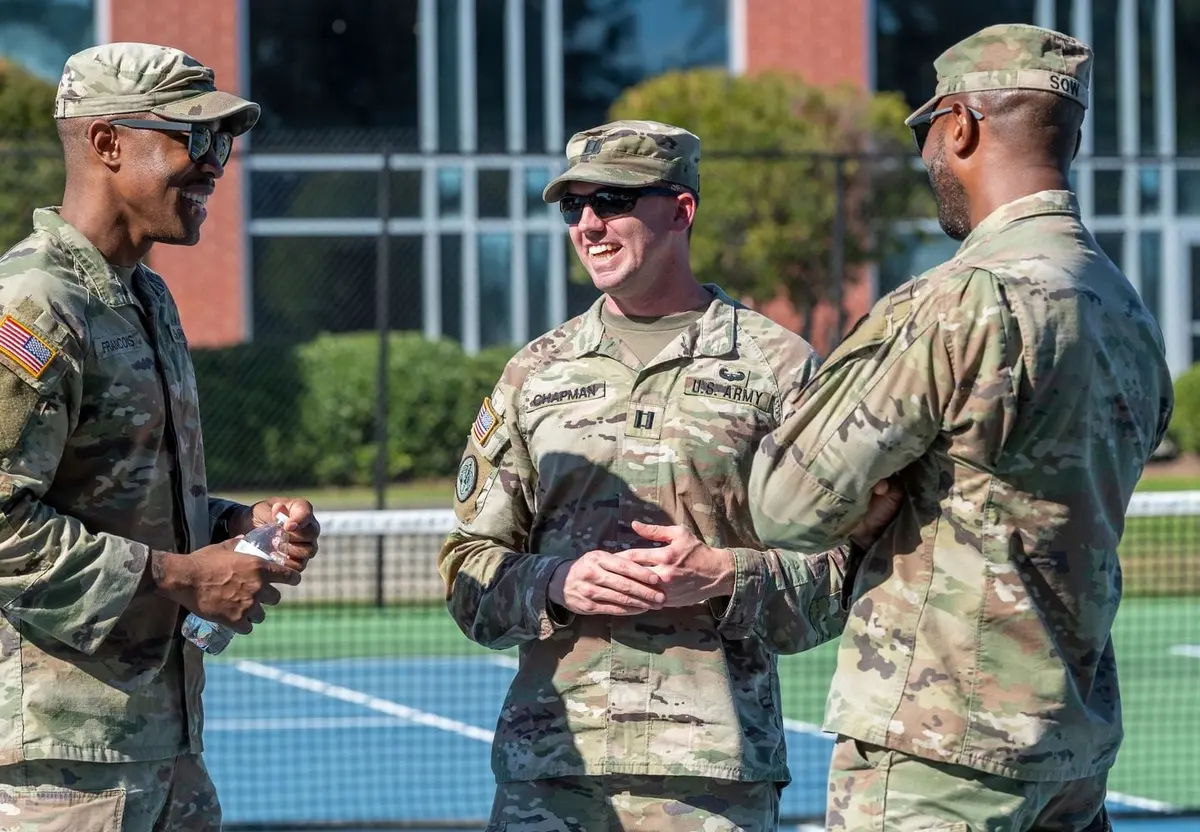
Today, roughly one-third of FSU's student population is military-affiliated, while approximately 60% are adult learners. Together, these demographics have shaped every aspect of the institution's approach to affordability, academic delivery, student support, and workforce preparation, creating an educational model designed around the realities of working adults and military-connected families.
An HBCU at the Heart of a Military Community
FSU's relationship with the military community extends far beyond proximity to Fort Bragg. Military-connected students are deeply embedded in the fabric of the institution, on and off base, influencing everything from student services and academic programming to scheduling flexibility and support resources.
For many military families, higher education presents unique challenges. Frequent relocations, deployments, evolving career responsibilities, and complex benefit structures can interrupt educational progress. Institutions that understand these realities are increasingly becoming destinations for military-connected learners.
At Fayetteville State University, this population is not treated as a niche audience. Instead, military-affiliated students represent a significant part of the university's mission and strategic focus. The result is an environment designed to support learners throughout every stage of military life, whether they are beginning their educational journey, transferring credits, completing a degree after military service, or preparing for civilian workforce opportunities.
The university's location adjacent to and on one of the nation's largest military communities has created a unique opportunity to develop expertise in serving a highly mobile student population. Over time, that expertise has become an institutional strength that differentiates FSU within both the HBCU and public university sectors.
Affordability as a Student Success Strategy
College affordability remains one of the most significant barriers to degree completion nationwide. Fayetteville State University has responded by combining low tuition with military-focused financial support strategies that reduce barriers to enrollment and persistence.
As one of only four institutions participating in the University of North Carolina System's NC Promise Tuition Plan, FSU offers dramatically reduced tuition rates. In-state students pay just $500 per semester in tuition, while out-of-state students benefit from significantly reduced rates compared with many public universities across the country.
For military-affiliated students, however, affordability extends well beyond published tuition rates.
Many FSU students strategically combine Department of Defense Tuition Assistance, GI Bill education benefits, and other military education funding programs as they progress toward degree completion. Recognizing that these benefits are finite and may eventually be exhausted, the university has expanded scholarship opportunities specifically designed to support military-connected students.
This layered support model enables students to maximize federal military education benefits first and then access institutional scholarship support as needed. Rather than relying on a single funding source, students can move through multiple funding pathways while maintaining momentum toward a degree.
FSU further advances affordability and on-time degree completion through its innovative 30-60-90 Graduate on Time Initiative, which encourages students to reach key academic milestones of 30, 60, and 90 credit hours on their way to graduation. A cornerstone of the initiative is the university's Free Summer School Program, which helps eligible students take summer courses at little or no cost, allowing them to stay on track, accelerate progress toward a degree, and reduce the need for additional borrowing. By treating summer enrollment as an integral part of the student success journey, FSU has expanded access to year-round learning while supporting timely graduation and workforce readiness.
By combining NC Promise affordability, military education benefits, institutional scholarships, and innovative completion initiatives, FSU has positioned affordability not simply as a recruitment tool, but as a comprehensive strategy for student persistence and completion.
Military Ready: An Institutional Framework for Student Success
One of Fayetteville State University's most distinctive approaches to serving military-affiliated students is its proactive use of the Military Ready model, a comprehensive framework that combines credit for prior learning with dedicated student-support services to create military-focused pathways that can reduce the traditional time and cost of degree completion by as much as 75 percent.
At its core, Military Ready is built around a clear institutional threshold: establishing military-related academic pathways that reduce the traditional time and cost of degree completion by at least 50 percent. By recognizing validated military learning and experience, the framework seeks to help students advance more efficiently toward educational and career goals while maximizing the value of benefits they have earned through service.
Through its Military Ready initiative, FSU helps students translate military experience into academic progress through comprehensive evaluation of military transcripts, occupational specialties, professional certifications, and prior coursework. Rather than requiring students to navigate complex processes independently, university personnel proactively identify opportunities for Credit for Prior Learning (CPL), transfer-credit application, and degree acceleration early in the enrollment process.
The initiative reflects a foundational principle: military service often produces substantial learning, leadership development, technical expertise, and professional competencies that deserve appropriate academic evaluation.
FSU's support for military-connected learners also extends beyond the classroom through the university's Veterans Business Outreach Center (VBOC), which serves transitioning service members, veterans, National Guard and Reserve members, and military spouses across North Carolina. Through business training, counseling, resource referrals, and entrepreneurship programs such as Boots to Business, the VBOC helps military-affiliated individuals translate leadership and technical skills developed during service into successful civilian careers and business ventures. The initiative reflects FSU's broader commitment to supporting military-affiliated students not only while they earn a degree, but also as they navigate the transition from military service to long-term economic and professional success.
By reducing unnecessary duplication of coursework, students are able to focus their time and educational benefits on acquiring new knowledge and skills that move them closer to graduation and career advancement.
The Military Ready framework extends beyond credit evaluation. It is designed to create a structured pathway from admission through graduation, helping military-connected students shorten time to degree, maximize educational benefits, and transition more efficiently from military service into civilian careers and leadership roles.
FSU pairs this framework with targeted support services for military-affiliated learners, including specialized admissions guidance, military and veteran benefits navigation, academic advising, transfer-credit evaluation, career planning, success coaching, and connections to military and veteran support resources. Together, these services form a professional support infrastructure designed to improve student persistence, degree completion, and workforce outcomes.
For service members, veterans, and military spouses balancing education with professional and family responsibilities, the Military Ready initiative reflects the university's commitment to meeting students where they are academically and professionally and helping them reach their goals as efficiently as possible.
Serving Adult Learners at Scale
The university's military focus aligns naturally with another defining characteristic of its student population: adult learners. According to an OECD 2025 report, adult learners in the U.S. have an above average rate of participation in formal learning.
In fact, approximately 60% of FSU students are adult learners, many of whom are pursuing higher education while working full time, supporting families, serving in the military, or managing multiple responsibilities simultaneously.
This demographic reality has shaped the institution's approach to academic delivery, student support, and workforce preparation. Rather than designing programs exclusively around traditional residential students, FSU has developed systems that accommodate learners seeking career advancement and professional mobility.
For military personnel preparing for civilian transitions, veterans entering new industries, and military spouses pursuing portable professional credentials, career-focused education represents both a personal and economic opportunity. FSU's experience serving these populations has helped position the university as a destination for learners whose educational pathways differ from traditional undergraduate models.
As employers increasingly seek workers with adaptable skills, leadership experience, and lifelong-learning capacity, adult learners are becoming an increasingly important component of the workforce. FSU's experience serving this population places the university at the center of broader conversations about workforce development and economic mobility.
Connecting Academic Success to Career Outcomes
Increasingly, students and employers alike are looking for evidence that higher education leads to meaningful workforce outcomes. Fayetteville State University has responded by developing partnerships that connect classroom learning to professional opportunities.
The university collaborates with organizations such as FedEx, PNC Bank, and Med Pro to expand career readiness initiatives and strengthen workforce pathways for students.
FSU has also partnered with Cape Fear Valley Health System, which invested $2 million to help expand the university's nursing program and strengthen the regional healthcare workforce pipeline. Through the partnership, FSU is positioned to significantly increase nursing enrollment and help meet growing healthcare workforce needs across southeastern North Carolina.
One notable example is the FedEx Student Ambassador Program, which provides students with opportunities to engage with company leadership and gain exposure to corporate environments, professional mentorship, and executive perspectives. These experiences help students build professional networks while developing workplace competencies that complement their academic preparation.
FSU also participates in broader workforce-development efforts designed to increase student completion and expand access to high-quality career pathways. Through initiatives such as New Skills at Work, the university continues to strengthen connections between academic achievement and employer needs.
These partnerships reflect a growing understanding that workforce readiness extends beyond technical skills alone. Exposure to professional environments, executive mentorship, networking opportunities, and experiential learning can help students convert academic success into career momentum.
For military-connected students in particular, such partnerships help bridge the gap between educational attainment and civilian employment opportunities, creating clearer pathways from degree completion to workforce success.
A Legacy of Opportunity and Transformation
Founded in 1867, Fayetteville State University is one of the oldest state-supported institutions in North Carolina. For more than 158 years, the university has provided educational opportunities to students seeking social and economic mobility through higher education.
That legacy remains central to the institution's identity today.
As a member of the University of North Carolina System, FSU benefits from participation in one of the nation's largest public higher education networks. The university is also a member of the Thurgood Marshall College Fund and participates in the HBCU Transformation Project through the UNCF Institute for Capacity Building.
These affiliations reflect a commitment to institutional excellence, student success, and innovation while preserving the historic mission of HBCUs as engines of educational opportunity and community advancement.
As higher education evolves, HBCUs continue to play an important role in expanding access, developing talent, and creating pathways to economic opportunity. Fayetteville State's military-connected student ecosystem represents one example of how that mission can be adapted to meet contemporary workforce and community needs.
A Model Worth Watching
As colleges and universities seek strategies to address affordability concerns, workforce demands, demographic shifts, and the needs of adult learners, Fayetteville State University offers an increasingly relevant example.
Its approach combines several elements rarely found together in a single institution: NC Promise affordability, a substantial military-affiliated student population, Military Ready prior-learning pathways, layered military funding support, the 30-60-90 Graduate on Time Initiative, free summer school opportunities, workforce-focused employer partnerships, adult-learner expertise, entrepreneurial support through the VBOC, and the mission-driven legacy of an HBCU.
Rather than addressing student success through a single initiative, Fayetteville State University has constructed an interconnected ecosystem in which affordability, military service, workforce preparation, entrepreneurship, and educational attainment reinforce one another.
The result is an institutional model that aligns educational access with workforce outcomes while responding to the unique needs of military-connected learners and working adults. As higher education leaders search for strategies that improve both student success and economic mobility, Fayetteville State University's experience offers valuable lessons on the power of intentional alignment between mission, affordability, community, and workforce development.
In a region shaped by military service, economic mobility, and educational opportunity, Fayetteville State University is demonstrating how an HBCU can leverage its history, location, and partnerships to build a forward-looking model for student success.


