21-Month ADN, 90.7% NCLEX Pass Rate, ACEN Accredited: How Rasmussen University's Professional Nursing Program Meets Multi-State Registered Nurse Workforce Shortages

Co-Founder and Chief Data Scientist
The United States healthcare system is currently navigating a sustained structural deficit in clinical personnel. As an aging population demands increasingly complex care, regional hospital systems and outpatient clinics are struggling to maintain adequate staffing ratios. For prospective nursing students, the demand creates strong opportunities to enter a field with substantial workforce needs.
However, capitalizing on that leverage requires navigating a historically bottlenecked educational system. Traditional community college programs often feature years-long waitlists and rigid prerequisite requirements that keep eager candidates out of the workforce. Rasmussen University’s Professional Nursing Associate’s Degree (ADN/RN) program is engineered as a direct structural response to these specific bottlenecks.
By reducing some of the enrollment barriers associated with traditional nursing programs, this program operates as an agile, multi-state pipeline. It is designed to transition adult learners from matriculation to licensure at an accelerated pace.
Key Findings
- Accelerated, Waitlist-Free Entry: By offering up to eight start dates per year and requiring zero prior prerequisite coursework, the program allows qualified applicants to bypass traditional community college bottlenecks and complete their ADN in as few as 21 months.
- Multi-State Accredited Footprint: The curriculum is programmatically accredited by ACEN and approved by State Boards of Nursing across four states (Florida, Kansas, Minnesota, and Wisconsin), ensuring graduates are fully eligible to sit for the NCLEX-RN and enter the clinical workforce.
- Strategic Career Continuation: Designed with adult learners in mind, the program provides a direct pathway to becoming a licensed Registered Nurse (RN), alongside a seamless bridge to a CCNE-accredited Bachelor of Science in Nursing (BSN) for future career advancement.
- The ACEN Credential and Multi-State Footprint ACEN Credential
- Structural Design: The Antidote to the Waitlist Program Structure
- The Hybrid Pedagogical Model: Theory Meets Practice Hybrid Format
- Signature Competencies and Curriculum Structure Competencies and Curriculum
- Licensure and State Board Approvals Licensure
- Benchmarking NCLEX Outcomes NCLEX Outcomes
- The CCNE-Accredited BSN Continuation Pathway RN-to-BSN
- Admissions Logistics and The ROI Equation Admissions
The ACEN Credential and Multi-State Footprint
Programmatic accreditation is an important quality and accountability measure in nursing education and can support students pursuing licensure and future academic progression. The associate Nursing programs at Rasmussen University, part of American Public University System, are accredited by the Accreditation Commission for Education in Nursing (ACEN). This credential ensures that the curriculum meets rigorous national standards for clinical safety and instructional quality.
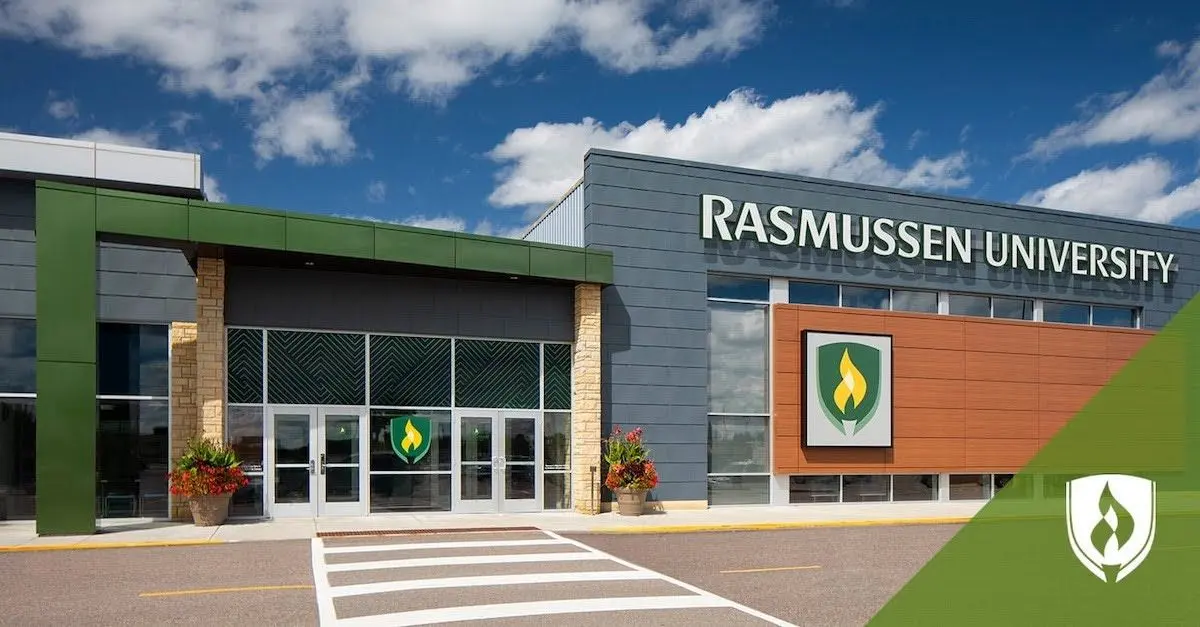
Rasmussen operates this ACEN-accredited framework across 15 campuses in a strategic four-state footprint. This includes established locations in Florida, Kansas, Minnesota, and Wisconsin. Crucially, the approvals support graduates' eligibility to pursue RN licensure in those states, subject to applicable state requirements.
Structural Design: The Antidote to the Waitlist
To understand the specific utility of this program, it is necessary to look at the macroeconomic data. The U.S. Bureau of Labor Statistics projects a 6% job growth for registered nurses nationwide. This translates to an estimated 193,100 openings per year due to labor force changes and industry expansion.
While public institutions struggle to scale their classroom capacities to meet this demand, Rasmussen's program structure is designed to reduce some of the delays associated with traditional nursing-program enrollment. The program delivers three distinct structural advantages:
- Completion in as Few as 21 Months: Depending on incoming transfer credits accepted and the number of courses completed each term, the 102-credit, 25-course curriculum can be completed efficiently, allowing students to transition into the workforce faster than traditional timelines.
- Eight Annual Start Dates: With up to eight start dates per year at most campuses, qualified applicants at many campuses can avoid traditional nursing-program wait lists. This micro-scheduling empowers adult learners who have complex family responsibilities to align their enrollment with their personal readiness.
- No Prerequisite Coursework for Admission: Students do not need to complete prerequisite courses before applying, although other admission requirements apply.
The Hybrid Pedagogical Model: Theory Meets Practice
Traditional nursing schools often require students to sit in a lecture hall five days a week. This rigid schedule is nearly impossible for working adults to manage while balancing family or current jobs. Rasmussen University addresses this physical bottleneck through a highly flexible hybrid curriculum architecture.
The online student experience handles the theoretical side of nursing education. Students learn complex topics like medication interactions, anatomy, and healthcare regulations from home during hours that fit their lives. By the time they arrive at the campus lab, they have already absorbed the necessary background information and are ready to apply it.
This setup makes in-person time highly productive and engaging. Instead of passively listening to a lecture, students spend their time practicing physical skills on lifelike medical mannequins. Later, they apply these well-rehearsed skills during supervised clinical shifts at local hospitals, ensuring they are confident before treating actual patients.
Signature Competencies and Curriculum Structure
The ADN program requires 102 credits spread across 25 focused courses. Because there are no outside prerequisites, classes focus entirely on the direct clinical skills that employers actually need. Here is how the core curriculum prepares candidates for the realities of the hospital floor:
- Professional Nursing Skills I: Students learn the physical basics of patient comfort and care in a safe lab environment. For example, candidates practice safely transferring a frail patient with a broken hip from a bed to a wheelchair without causing injury. This ensures the development of functional muscle memory before entering a real clinical setting.
- Nursing Care of the Older Adult: This course covers the specific safety, autonomy, and independence needs of senior patients. Students learn how to spot the early signs of cognitive decline during a routine checkup and adjust a care plan to prevent dangerous falls. Given the aging U.S. population, these geriatric-specific competencies are highly sought after by hiring managers.
- Mental and Behavioral Health Nursing: Candidates study how stress, trauma, and psychological conditions deeply impact a patient's overall physical health. This training prepares nurses to safely calm an anxious patient having a severe panic attack before a major surgery. Understanding this mind-body connection is essential for working in high-stress medical-surgical wards.
- Leadership & Professional Identity: This capstone-style course shifts the focus away from basic bedside tasks and toward ethical, big-picture decision-making. Students learn how to effectively advocate for a patient if a doctor's orders seem to conflict with standard hospital safety protocols. This empowers graduates to step onto the hospital floor not just as caregivers, but as confident healthcare professionals.
Licensure and State Board Approvals
Completing a degree is only the first step; the ultimate gatekeeper is passing the National Council Licensure Examination (NCLEX-RN). Rasmussen’s ADN program holds active approvals from the Boards of Nursing across its four-state footprint in Florida, Kansas, Minnesota, and Wisconsin. This multi-state regulatory footprint is a critical credential for aspiring nurses. For additional context on regional trends in nursing education, the growth of interest in nursing education degrees by state highlights how demand for nursing education varies across the country.
It means graduates from these campuses are legally cleared by the state to sit for the licensure exam immediately after graduation. Choosing a school without this direct state board approval can delay or permanently derail a graduate's ability to work. Conversely, graduates from a fully approved, ACEN-accredited program who later seek licensure in another state may apply through that state's licensing process, subject to its requirements.
Benchmarking NCLEX Outcomes
When evaluating a nursing program, first-time NCLEX pass rates can provide an important measure of licensure-exam performance and graduate preparedness. Recent data published by the National Council of State Boards of Nursing (NCSBN) highlights a challenging testing environment for nursing graduates nationally. According to the NCSBN, national first-time pass rates sat at 73.3% in 2024, dipped to 69.1% in 2025, and are currently trending at 74.3% for 2026.
Consistently eclipsing this volatile national average is a primary goal for competitive nursing programs and a definitive indicator of student preparedness. Rasmussen University has built a 125-year educational legacy in Minnesota, and its current nursing outcomes reflect the strength of that institutional experience. In 2024—the same year the national NCLEX pass rate was only 73.3%—Rasmussen’s Minnesota BSN students achieved a highly competitive 90.7% pass rate.
In 2024, Rasmussen's Minnesota BSN students achieved a 90.7% NCLEX-RN pass rate, an outcome that provides a positive data point when evaluating the university's nursing programs. The result applies specifically to the Minnesota BSN cohort and should not be interpreted as an ADN program pass rate.
The CCNE-Accredited BSN Continuation Pathway
An ADN can provide a relatively direct pathway to RN licensure and entry into the nursing workforce. However, the healthcare industry is shifting, and some healthcare employers prefer or require BSN preparation for certain nursing roles. Rasmussen recognizes this market reality and offers a structural bridge for this exact career progression.
For nurses evaluating their options for further education, this comparison of ADN-to-BSN and RN-to-BSN pathways explains the differences between these routes and how they can support career advancement.
ADN graduates can transition into the university's CCNE-accredited RN-to-BSN program. This pathway allows professionals to work full-time as an RN, gaining clinical experience and earning an income, while completing their bachelor's degree entirely online.
Furthermore, students can lean on Rasmussen's dedicated career services team to help navigate job placements. The team offers career services that can help students and graduates with career preparation and employer connections.
Admissions Logistics and The ROI Equation
While Rasmussen removes the traditional barriers of prior coursework, it maintains strict academic standards for entry. Rather than forcing applicants to spend a year completing standalone biology classes, the university evaluates baseline aptitude through a minimum required score on an accepted entrance exam (such as the HESI® A2, TEAS®, ACT, or SAT®). Alternatively, applicants can bypass the entrance exam entirely if they have an active and unencumbered LPN/LVN license or hold a conferred bachelor’s, master’s, or doctoral degree with a GPA of 2.25 or higher.
Earning a nursing degree is a significant financial investment. Rasmussen’s ADN program operates with a tuition rate of $464 per credit for all campuses (except Moorhead, MN, which is $415 per credit). To further support student success and offset technology costs, new students receive a brand-new laptop loaded with Microsoft software, alongside included access to academic advising, tutoring, and 24/7 technical support. While the overall investment is higher than a local public community college, prospective students must evaluate it through the lens of opportunity cost. For students who can begin their nursing education sooner, an accelerated pathway may reduce the time between enrollment and entry into the RN workforce.
By utilizing the program's accelerated timeline, students enter the workforce and begin generating a return on their investment years ahead of their peers. For some students, the hybrid format may reduce commuting or relocation requirements. regarding the daily cost of living. Because the theoretical coursework is handled online, students do not need to relocate, sign a new lease, or commute to a campus five days a week.
Meeting the Multi-State Workforce Demand
The national nursing shortage requires scalable educational solutions that respect the complex logistical realities of adult learners. Rasmussen University’s Professional Nursing (ADN/RN) program answers this call by dismantling the bottlenecks that have historically plagued nursing education. By eliminating rigid prerequisites and offering an agile, hybrid curriculum, the university provides a highly efficient pathway from initial enrollment to the hospital floor.
Supported by a robust ACEN-accredited framework across four states, the institution provides an accredited educational pathway designed to prepare graduates for entry into the nursing workforce. With competitive licensure pass rates and a structured bridge to a CCNE-accredited Bachelor of Science in Nursing, the institution offers far more than a basic associate degree. It provides a strategic career pipeline designed to elevate both the individual nurse and the broader healthcare networks they serve.
NCLEX-RN is a registered trademark of the National Council of State Boards of Nursing, Inc.
The baccalaureate degree program in nursing at Rasmussen University part of American Public University System is accredited by the Commission on Collegiate Nursing Education. 655 K Street NW, Suite 750 l Washington, DC 20001 l 202-887-6791
The associate nursing programs at Rasmussen University part of American Public University System are accredited by the Accreditation Commission for Education in Nursing (ACEN).
Accreditation Commission for Education in Nursing (ACEN)
3390 Peachtree Road, NE Suite 1400
Atlanta, GA 30326
404-975-5000
References:
- Accreditation Commission for Education in Nursing. (2026). Search programs: Rasmussen University. Retrieved October 15, 2026, from https://www.acenursing.org/search-programs
- Higher Learning Commission. (2026). Institutional accreditation. Retrieved October 15, 2026, from https://www.hlcommission.org
- National Council of State Boards of Nursing. (2026). NCLEX pass rates. Retrieved October 15, 2026, from https://www.ncsbn.org/exams/exam-statistics-and-publications/nclex-pass-rates.page