2027 Choosing an Online Data Science Master's for a Career in Agriculture

Co-Founder and Chief Data Scientist
An online data science master's can prepare you to analyze agricultural data, but the degree title alone will not tell you whether a program fits that goal. If you work in farming, agribusiness, food systems, or a related field - or want to enter one - the key decision is whether a program offers the technical depth and access to agricultural problems you need. This guide shows you how to assess curriculum, projects, online access, costs, and career relevance before enrolling.
Key Things You Should Know
- Choose for technical training plus agricultural application: look for statistics, programming, geospatial or time-series analysis, and a feasible field-specific project.
- A general online data science master's can fit agriculture if you can use agricultural datasets and work with a relevant adviser or industry partner; a specialized degree is not automatically better.
- The Bureau of Labor Statistics projects 35% growth in U.S. data scientist employment from 2025 to 2035, but that figure covers all industries - not agriculture-specific jobs.
What Is an Online Data Science Master's for Agriculture?
It is usually a graduate data science degree that you apply to agricultural questions, rather than a standardized credential called "agricultural data science." Programs may sit in computer science, statistics, engineering, or interdisciplinary departments. What matters is whether you can connect their methods to problems such as crop-yield estimation, irrigation decisions, livestock monitoring, or food-supply forecasting.
Start by identifying your intended work. For research on crops and soils, access to agronomy faculty or agricultural research partners may matter more than a broad selection of business electives. For an agritech software role, data engineering and deployable machine-learning projects may matter more. An agriculture-focused analytics or precision-agriculture degree can also be worth comparing if it teaches the methods your target roles require; do not assume it has the same statistical or computing depth as a data science master's.
Why Choose Data Science for an Agriculture Career?
Agricultural decisions draw on data that differ in scale and reliability: satellite imagery, weather histories, soil measurements, equipment records, field-trial results, and market transactions. Data science helps turn those inputs into estimates or forecasts that a grower, researcher, insurer, or supply-chain team can test and use.
The challenge is not merely building an accurate model. A yield forecast trained on fields from one region may perform poorly in another season or crop system. An irrigation recommendation also has to arrive in time to be useful and account for the cost of a wrong decision. Choose a program that teaches you to evaluate models across locations and growing seasons, explain uncertainty, and work with agricultural specialists who can judge whether a result is plausible.
Data science is a particularly good fit if you want to build or evaluate analytical systems. If your main goal is to give crop-management advice or conduct laboratory research, an agronomy or agricultural science graduate program with selected analytics courses may be a more direct route.
What Careers Can an Agriculture-Focused Data Science Master's Lead To?
Job titles vary by employer. This table connects potential roles to the work you would need to demonstrate; it is not a list of jobs guaranteed by the degree.
| Potential role | Example agricultural work | Especially relevant preparation |
| Agritech data scientist | Evaluate a crop-monitoring or decision-support model | Machine learning, geospatial data, model validation |
| Precision-agriculture analyst | Combine field, sensor, and equipment data to investigate variation | Spatial analysis, data cleaning, communication with growers |
| Agricultural research data analyst | Analyze field trials or longitudinal crop observations | Experimental design, statistics, reproducible research |
| Food-supply or agricultural risk analyst | Forecast demand or assess weather-related exposure | Time-series methods, uncertainty, business context |
Employers may place some of these jobs under analyst, research, engineering, or operations titles rather than "data scientist." Read postings for your target employer type before choosing electives: a field-research position and an agritech product position can require substantially different evidence of skill.
What Do Online Agriculture Data Science Programs Teach?
A suitable curriculum builds a foundation in programming, databases, statistical inference, machine learning, and communicating results. For agricultural work, look beyond course titles for substantial practice with spatial data, imagery, sensors, time series, or experiments. A passing mention of remote sensing is not equivalent to a dedicated course or a project using imagery.
Project access is the strongest test of fit. Ask whether you can study a question such as predicting irrigation demand, estimating crop conditions from imagery, or analyzing a field trial. A credible project should specify where the data comes from, how missing or biased observations will be handled, and how results will be checked against a useful baseline. For seasonal predictions, validation should account for differences between years or locations rather than relying only on a random split of observations.
AI coursework can be useful, but agricultural models can involve sensitive farm-location, production, or commercially valuable data. Check whether the curriculum covers data permissions, privacy, model limitations, and accountability. Students comparing this depth across AI-focused degrees can examine ethical AI study in artificial intelligence master's degrees; then verify how any prospective program applies those principles in projects.
How Do Online and Campus Data Science Programs Compare?
An online program may let you keep an agricultural job and use problems from that work as project material, subject to employer permission. A campus program may offer easier access to research groups, field facilities, and in-person collaborators. Neither format guarantees those opportunities: ask who can supervise your proposed project and whether online students can use the same datasets, research seminars, and career services as campus students.
Check how the program actually operates. Live classes across time zones, required campus visits, group work during planting or harvest periods, and fixed project deadlines can matter more than the label "online." If you need extensive field or laboratory experience, confirm that you can obtain it locally or through an approved partner before choosing a remote-only route.
If your target is primarily building AI products rather than analyzing agricultural systems, compare data science offerings with best online artificial intelligence programs. Evaluate both against the same target job and project requirements; an AI label alone does not establish agricultural relevance.
What Are the Admission Requirements for These Master's Programs?
Requirements vary by institution. Programs commonly assess prior quantitative and computing preparation, but the required courses, grades, tests, and professional experience must be checked on each program's current admissions page. An agriculture background can supply valuable domain knowledge without automatically satisfying calculus, statistics, or programming prerequisites.
If you are coming from agronomy or another non-computing field, map your transcript and work against each school's stated requirements. Where a gap exists, ask admissions whether a for-credit course is required or whether other evidence of readiness is accepted. Self-study may help you succeed, but it does not necessarily fulfill a formal prerequisite. Guidance on artificial intelligence graduate study for non-CS students can help you frame preparation questions when comparing technically intensive options.
How Long Do Online Data Science Master's Programs Take?
There is no single reliable completion time for an online data science master's. Your pace depends on required credits, course availability, prerequisite or foundation courses, project sequencing, and whether you enroll full time or part time. A program's advertised fastest route may not be workable alongside seasonal agricultural responsibilities.
Request a sample course sequence for the pace you expect to maintain. Confirm when essential electives run, whether a capstone can be completed with an agricultural partner, and what happens if work demands force you to skip a term. Compare the school's maximum completion period with your likely schedule, not just its shortest advertised timeline.
How Much Does an Online Data Science Master's Cost?
No single tuition figure applies across programs, and tuition alone is not the total cost. For each school, calculate required credits multiplied by the applicable tuition rate, then add mandatory fees and any required software, materials, or travel. Ask whether rates change by residency or enrollment status and whether taking fewer courses extends fee payments. Use the school's current tuition schedule for an actual estimate.
If your employer offers education assistance, confirm eligible programs, grade rules, payment timing, and any repayment obligation if you leave. Weigh the remaining expense against the work you want to do - not an assumed post-degree salary increase. Comparisons of AI master's tuition and career outcome comparisons can provide context for an AI alternative, but compare official, current totals on equivalent terms before deciding.
How Can You Evaluate Accreditation and Program Quality?
Verify that the university holds recognized institutional accreditation through the institution and an official U.S. Department of Education or accreditor listing. Then separately check whether the university can enroll online students in your state. Institutional accreditation does not by itself establish that a particular program offers strong agricultural training or is available where you live.
For program quality, examine current course descriptions, instructor expertise, agricultural collaborators, project rules, and examples of completed student work where available. Ask whether online students can obtain a qualified project adviser and whether they may use approved employer data. Treat vague claims of "industry connections" or "hands-on learning" as prompts for specific questions, not evidence of access. If completion or employment outcomes are not publicly reported, do not assume they are favorable; request the figures and how they were measured.
What Salary and Job Outlook Can Agriculture Data Scientists Expect?
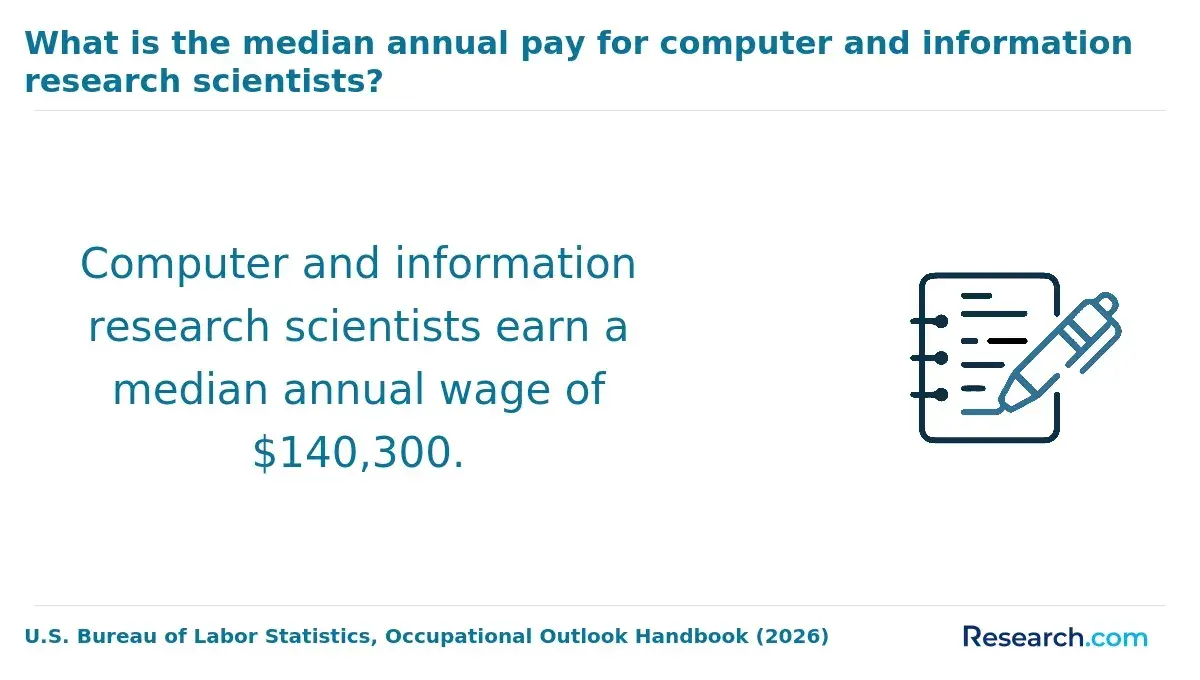
The U.S. Bureau of Labor Statistics reports a $120,230 median annual wage for data scientists in May 2025. That is a national figure across industries, not a salary prediction for agricultural employers or for new graduates. Your likely pay depends on the role, location, employer, and experience you bring before the master's.
BLS projects 35% employment growth for data scientists from 2025 to 2035. This indicates broad demand for the occupation, but it does not measure agriculture-specific openings. When assessing a program's return, compare actual postings for your target roles with the skills you will gain, and treat published graduate salaries cautiously unless the school identifies the sample, time period, and graduates' prior experience. For broader context, data science degree salary differences across fields can help you avoid applying an all-industry figure uncritically to agriculture.
Other Things You Should Know About Data Science
Not necessarily. Publicly available data may support a useful project, but confirm its coverage, permitted uses, and whether your program accepts the proposed question and methods. Direct farm access matters more when a project requires ground measurements or implementation testing.
Only if you have permission consistent with applicable agreements and data-use terms. When raw data cannot be shared, ask whether you can publish approved code, synthetic examples, or an explanation of methods without exposing sensitive information.
Data science work does not have one universal professional license. If a position includes regulated professional advice or services, requirements may depend on the work and state. Check the specific role and applicable state rules rather than assuming the degree confers authorization.
A thesis or substantial research project can provide evidence of research readiness, but doctoral programs set their own expectations. If research is a possible next step, ask prospective master's programs about faculty supervision, research methods training, and opportunities to produce work you can discuss in an application.
References
- What Financial Aid Offers Don't Tell You About the Cost of College | U.S. GAO https://www.gao.gov/blog/what-financial-aid-offers-dont-tell-you-about-cost-college
- Employment Outlook Remains Strong for Agriculture Graduates | NIFA https://www.nifa.usda.gov/about-nifa/blogs/employment-outlook-remains-strong-agriculture-graduates
- Satellite Remote Sensing for Agricultural Applications | NASA Earthdata https://www.earthdata.nasa.gov/learn/trainings/satellite-remote-sensing-agricultural-applications
- Syracuse Online Master's in Applied Data Science https://onlinegrad.syracuse.edu/information-science/applied-data-science/
- Master of Science (M.S.) in Applied Data Science - UGA Online https://online.uga.edu/degrees-certificates/master-of-science-in-applied-data-science/
- MS Admissions FAQ | Department of Statistics https://statistics.stanford.edu/msadmissions/ms-admissions-faq
- Industry Partners Program - Center for Digital Agriculture https://digitalag.illinois.edu/industry-partners-program/
- Data Science in Agriculture: Career Guide | University of San Diego Online Degrees https://onlinedegrees.sandiego.edu/data-science-in-agriculture/
- MS Data Science & Statistics: FAQ | Binghamton University https://www.binghamton.edu/math/graduate/statistics/faq.html
- Smart Sensors and Smart Data for Precision Agriculture | mdpi.com https://www.mdpi.com/1424-8220/24/8/2647