2027 AP World History Score Distribution: Score Ranges, Conversion, and What It Means

Co-Founder and Chief Data Scientist
AP World History scores matter because they can affect college credit, placement, and how students interpret their readiness for college-level reading and writing. The current AP World History: Modern exam still uses a weighted structure: multiple-choice questions count for 40%, short-answer questions for 20%, the DBQ for 25%, and the LEQ for 15%.
This guide is for students, parents, counselors, and teachers who want to understand score distribution, score conversion, and what a 1-5 score should mean when making academic planning decisions.
Key Things You Should Know
- AP World History final scores are reported on a 1-5 scale, but they come from a weighted composite score: 40% multiple choice, 20% short answer, 25% DBQ, and 15% LEQ.
- A score of 3 is generally considered "qualified," but many selective colleges require a 4 or 5 for credit, placement, or major requirements.
- Score distributions change each year because cut scores are set after exam administration; there is no permanent raw-score number that always equals a 3, 4, or 5.
What is the AP World History score distribution and how are scores typically spread?
The AP World History score distribution shows how test takers are spread across the five AP score levels: 5, 4, 3, 2, and 1. For students, it answers a practical question: "How hard is it to earn a college-credit-level score compared with other students?" For teachers and schools, it helps reveal whether students are consistently reaching the skills expected in a college-level world history course.
AP World History: Modern is not scored on a simple percentage-correct basis. The exam combines objective questions, short constructed responses, and essay-based historical writing. That means the distribution reflects both content knowledge and historical reasoning skills, including sourcing, contextualization, comparison, causation, continuity and change, and evidence-based argumentation.
The table below explains what the distribution categories mean. It does not replace the official annual score distribution, but it helps readers interpret the numbers when they review a current-year distribution from the College Board.
| AP Score | Common Label | What the Distribution Usually Tells You | How Students Should Interpret It |
| 5 | Extremely well qualified | The smallest or one of the smaller score groups in many years | Signals advanced command of content and writing skills; often the strongest score for credit consideration |
| 4 | Well qualified | Often a meaningful share of successful test takers | Usually strong enough for credit at many institutions, though policies vary |
| 3 | Qualified | Often the key cutoff group for "passing" or credit eligibility | May earn credit at some colleges, but less consistently than a 4 or 5 |
| 2 | Possibly qualified | Shows partial readiness but usually below credit thresholds | Useful for diagnosing skill gaps, especially essay and evidence use |
| 1 | No recommendation | Represents the lowest reported performance band | Usually indicates the student needs more support before college-level history coursework |
A common mistake is reading the distribution as a fixed curve where only a certain number of students can earn each score. AP scoring is not designed that way. Scores are linked to performance standards, and the annual distribution changes depending on how students perform and how the exam form is scaled.
How are AP World History raw scores converted into the final 1-5 exam scores?
AP World History raw scores are converted into final 1-5 scores through a weighted composite process. Students do not receive a public raw score report, and the College Board does not publish a universal conversion chart that applies every year. This matters because online calculators can be useful for practice, but they are only estimates.
The conversion process starts with the four exam components. Multiple-choice questions are scored objectively, while short-answer and essay responses are scored with rubrics. Each component is then weighted to match the official exam design.
The table below summarizes how each part contributes to the final composite score. These weights are important because they show why students cannot rely only on memorization or only on essay writing.
| Exam Component | Typical Format | Weight in Final Score | Why It Matters |
| Multiple-choice section | Stimulus-based questions | 40% | Tests interpretation of sources, maps, charts, claims, and historical context |
| Short-answer questions | Brief written responses | 20% | Rewards precise evidence and targeted historical reasoning |
| Document-based question | Essay using provided documents | 25% | Heavily tests sourcing, argumentation, outside evidence, and document use |
| Long essay question | Essay based on a prompt choice | 15% | Tests thesis writing, evidence, reasoning, and historical development |
Students should understand the conversion as a sequence rather than a single magic number. In simplified form, the process works like this:
- Earn raw points on each section based on correct answers or rubric points.
- Convert each section's raw performance into its weighted share of the composite score.
- Add the weighted section results into one composite score.
- Apply annual cut scores that translate the composite into an AP score from 1 to 5.
- Report only the final 1-5 score to students, unless a student separately reviews released scoring materials for practice purposes.
The biggest red flag is using an old raw-score chart as if it were guaranteed. A practice score estimate can guide preparation, but final AP scores depend on the specific exam form, rubric scoring, and annual standard-setting process.

What does each AP World History score range (1-5) mean for students and colleges?
Each AP World History score range has a different practical meaning. The score is not just a label; it can influence credit eligibility, placement decisions, confidence in college-level writing, and how a student presents academic rigor in an application.
The table below explains the 1-5 range in student-centered terms. Colleges set their own policies, so the "meaning" of a score depends partly on the institution, major, and department.
| Score | Student Meaning | College Meaning | Best Next Step |
| 5 | Exceptional performance across content and skills | Often the strongest case for credit or placement | Check whether the score can satisfy a history, humanities, or general education requirement |
| 4 | Strong college-level readiness | Frequently considered for credit, though not everywhere | Compare policies across target colleges before assuming credit |
| 3 | Baseline qualifying performance | May count at some colleges but may not satisfy selective department requirements | Use the score as evidence of readiness, but verify credit rules carefully |
| 2 | Partial understanding with notable gaps | Usually not credit-bearing | Review missed skill areas before taking advanced history or writing-heavy courses |
| 1 | Limited demonstrated readiness on the exam | Generally no credit or placement value | Focus on foundational reading, writing, and historical analysis before moving ahead |
A 3 should not be treated as a failure. It is the College Board's "qualified" level and can still show that a student completed a rigorous course. However, a 4 or 5 usually creates more options, especially at colleges with stricter credit rules.
Students should avoid one common mistake: assuming that a high AP score replaces the need for strong college writing skills. AP World History rewards concise historical argumentation, but college history courses often require longer research papers, deeper source analysis, and more independent reading.
How do AP World History scores impact college credit, placement, and degree planning?
AP World History scores can affect college planning in three main ways: credit, placement, and course sequencing. The financial value can be meaningful if a score allows a student to skip a required course, but the value depends entirely on the college's AP credit policy.
For degree planning, the key question is not simply "Did I pass?" It is "What requirement, if any, will this score satisfy at the colleges I am considering?" A student comparing majors should also think about whether history, international relations, political science, education, business, or pre-law paths require additional humanities and writing courses.
If AP credit opens room for electives, that flexibility can help students explore the best degree to get for their long-term goals.
The table below shows the main planning outcomes students should check before making enrollment decisions:
| Planning Area | How AP World History May Help | What to Verify |
| General education | May satisfy a humanities, history, global studies, or social science requirement | Minimum score and exact requirement category |
| Placement | May allow entry into a higher-level history or civilization course | Whether placement is automatic or department-approved |
| Major requirements | May count for an introductory course in some history-related programs | Whether AP credit applies to the major or only to electives |
| Graduation timeline | May reduce total credits needed if accepted as degree credit | Residency credit rules and minimum credits required at the institution |
| Cost management | May reduce the need to pay for an equivalent course | Whether the student will actually graduate earlier or simply take different courses |
The smartest approach is to compare AP credit policies before committing to a college. Students should search each college's AP credit chart, confirm the score threshold, and ask whether the credit applies to a requirement that matters for their intended degree plan.
What AP World History score is considered good, competitive, or average for admissions?
A "good" AP World History score depends on the purpose. For college credit, a good score is the score your target college accepts. For admissions context, a good score is one that supports the larger story of academic rigor, strong grades, and readiness for reading- and writing-heavy coursework.
In broad terms, a 3 is average-to-qualifying, a 4 is strong, and a 5 is highly competitive. However, AP scores usually matter less in admissions than course rigor, grades, essays, recommendations, and the overall transcript. A student who earns a B or A in AP World History but scores a 3 may still show meaningful academic challenge, especially if the rest of the application is strong.
Students considering flexible college pathways should also remember that AP credit is only one way to manage time and cost. Some students combine AP credit with dual enrollment, summer courses, transfer credits, or online degrees when they need a more flexible route to completing requirements.
Here is a practical way to interpret your score based on your goal:
- If your goal is college credit, check the exact AP credit chart for each college before assuming a 3, 4, or 5 will count.
- If your goal is selective admissions, treat the score as supporting evidence, not the centerpiece of your application.
- If your goal is a history-related major, use a 4 or 5 as a sign that you may be ready for more advanced reading and writing, but do not skip foundational courses if your writing still needs development.
- If your score is a 1 or 2, focus on what the exam revealed: pacing issues, weak evidence use, limited thesis writing, or gaps in world history content.
The biggest admissions mistake is overvaluing the AP score while ignoring the course grade. Colleges typically see the transcript as a stronger indicator of sustained performance than a single exam score.
How does AP World History scoring compare to other AP history and social science exams?
AP World History is best compared with other AP history and social science exams by looking at what it asks students to do, not just by comparing pass rates. AP U.S. History, AP European History, AP Human Geography, AP Psychology, AP U.S. Government and Politics, and AP Comparative Government and Politics all measure different combinations of content knowledge, source interpretation, memorization, and writing.
The table below compares AP World History with common alternatives. This helps students decide whether a lower or higher score reflects the exam's skill demands or their own preparation pattern.
| Exam | Primary Challenge | Writing Load | Best Fit for Students Who |
| AP World History: Modern | Large global scope and historical reasoning across regions | High | Can compare societies, interpret sources, and write evidence-based arguments |
| AP U.S. History | Detailed national chronology and document analysis | High | Prefer depth in one national context and can handle dense primary sources |
| AP European History | Regional depth, intellectual history, and political change | High | Enjoy argument-based essays and complex historical developments |
| AP Human Geography | Concept application, models, maps, and spatial reasoning | Moderate | Want an AP social science course that emphasizes patterns and concepts |
| AP Psychology | Terminology, research concepts, and application | Lower to moderate | Are strong at vocabulary, concepts, and scenario-based reasoning |
| AP Government exams | Institutions, political systems, documents, and concepts | Moderate | Prefer civics, policy, constitutional structures, or comparative politics |
AP World History can feel harder for students who memorize facts but struggle to explain historical relationships. The exam rewards knowing what happened, but it also expects students to explain why it mattered, how it changed over time, and how evidence supports an argument.
A practical takeaway is to match future AP choices to your skill profile. If AP World History felt difficult because of writing, another document-heavy history exam may require a writing improvement plan. If it felt difficult because of the broad global scope, a more focused social science AP course may be a better next step.
What factors influence AP World History score distributions, such as exam changes or scaling?
AP World History score distributions are influenced by more than student effort. Exam design, scoring rubrics, instructional time, school resources, digital testing familiarity, and annual scaling can all affect how scores are spread.
The most important factor is the standard-setting process. AP exams use annual cut scores to connect composite performance to the 1-5 scale. This helps account for differences in exam forms, but it also means that a practice-test raw score does not translate perfectly into the final AP score every year.
Several current trends can influence preparation and distribution patterns:
- Digital and hybrid testing preparation: As more AP testing experiences use digital tools, students need to practice reading sources, managing time, and composing responses in the format they will actually use.
- Writing-skill gaps: Students who can answer multiple-choice questions may still lose points on thesis, sourcing, complexity, or evidence requirements.
- Uneven access to AP support: Schools with more experienced AP teachers, practice exams, and feedback cycles may be better positioned to help students improve.
- Rubric familiarity: Students who understand DBQ and LEQ rubrics can often make more strategic choices under time pressure.
- Course pacing: AP World History covers a large span of content, so late-year rushing can weaken review and essay practice.
The red flag for students is preparing as if the exam is mainly a memorization test. Content knowledge is necessary, but score gains often come from practicing how to use evidence under timed conditions.
How can students estimate their AP World History score using practice tests and rubrics?
Students can estimate an AP World History score with practice tests, but the estimate should be treated as a planning tool rather than a prediction. The best estimate combines multiple-choice accuracy, rubric-based free-response scoring, and a realistic look at timing.
A strong self-estimation process should mirror the real exam as closely as possible. Students who need flexible study routines may benefit from structured pacing methods similar to those used by the best self-paced online college models: clear milestones, repeated feedback, and progress checks instead of last-minute review.
Use this step-by-step process to estimate your likely score more responsibly:
- Take a full-length practice exam under timed conditions, not in short untimed pieces.
- Score the multiple-choice section using the answer key and record the number correct.
- Score SAQs, the DBQ, and the LEQ with the official rubrics, ideally with teacher feedback or a peer review checklist.
- Convert each section into its weighted contribution instead of treating all points equally.
- Compare the composite estimate with several reputable practice-score ranges, but assume a margin of error.
- Identify the section where an additional few points are most realistic, such as DBQ sourcing, SAQ precision, or multiple-choice stimulus analysis.
- Retest after targeted practice rather than repeating the same exam immediately.
Students often make two estimation mistakes. First, they overestimate essay scores because their answers "sound good" without meeting rubric requirements. Second, they take untimed practice and then assume the result reflects exam-day performance. Timing is part of the skill being tested.
How should AP World History scores guide course selection for history majors and minors?
AP World History scores can help students choose future courses, especially if they are considering history, education, political science, international relations, anthropology, religious studies, area studies, or pre-law. The score should not be the only factor, but it can reveal whether a student is ready for more advanced reading, writing, and research.
For history majors and minors, a high AP score may justify moving into a more specialized survey, seminar, or regional history course. However, students should be careful about skipping too much foundational coursework if their college program expects strong historiography, research methods, or archival writing.
Students looking beyond the bachelor's level should also understand that graduate study has different cost and format considerations; some compare campus programs with the cheapest masters degree online options when planning long-term education costs.
The table below shows how students can use their AP score to choose sensible next courses without over- or underestimating readiness:
| AP Score | Course Selection Strategy | Best Fit |
| 5 | Consider advanced surveys, regional history, research-oriented electives, or interdisciplinary global studies | Students confident in reading, argument writing, and evidence analysis |
| 4 | Consider intermediate history courses while continuing to build research and writing skills | Students ready for college-level humanities work but still developing advanced writing |
| 3 | Use credit if it helps, but consider taking an introductory college history course if planning a history-heavy major | Students with basic readiness who want a stronger foundation |
| 1-2 | Start with foundational writing, reading, or introductory history before advanced coursework | Students who need more support before major-level humanities classes |
Students who love history but score lower than expected should not automatically avoid the field. Instead, they should look at what caused the score: weak timing, limited content review, unclear thesis writing, or difficulty interpreting sources. Those are fixable academic skills, not permanent indicators of ability.
How can teachers and schools use AP World History score data to improve programs?
Teachers and schools can use AP World History score data to improve instruction, but the most useful analysis goes beyond the percentage of students earning 3 or higher. Program improvement should look at section-level patterns, writing performance, access to support, and whether students are prepared before they enter the course.
Score data can also support broader academic advising. Not every student will pursue a four-year history-related degree, and some may need faster career-aligned credentials after high school.
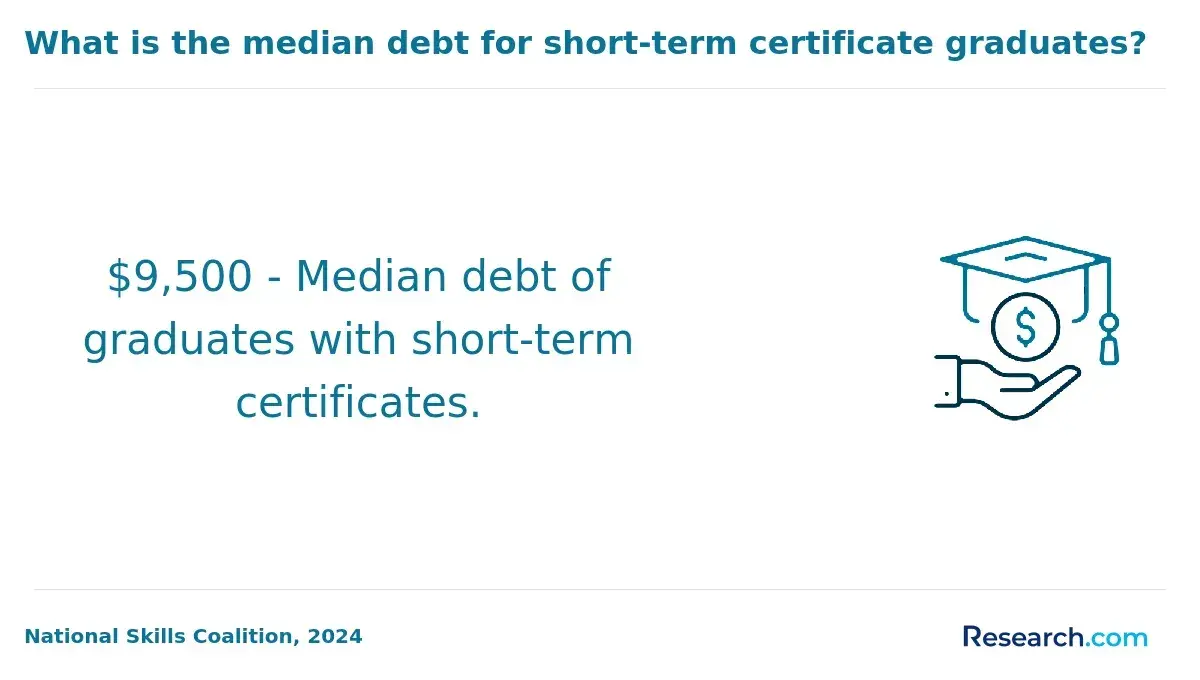
Counselors can use AP performance conversations to help students compare college pathways, transfer plans, and short term certificate programs when those options better match a student's goals.
Schools can use AP score data more effectively by following a structured improvement cycle:
- Review multi-year score trends rather than reacting to one unusually strong or weak year.
- Separate performance by skill area, especially multiple-choice stimulus reading, SAQ precision, DBQ rubric points, and LEQ argumentation.
- Identify where students lose the most attainable points, such as thesis clarity, document sourcing, or outside evidence.
- Build common writing rubrics across grade levels so students learn historical argumentation before the AP course.
- Schedule timed practice throughout the year instead of saving full essays for the final review period.
- Compare outcomes across student groups to identify access gaps in preparation, tutoring, or course placement.
- Use released questions and scoring guidelines for calibration so teachers score practice work consistently.
A major red flag is using the AP pass rate as the only measure of teacher or program quality. AP outcomes are affected by course access, prior preparation, student selection, scheduling, and school support. Better program evaluation combines score data with enrollment patterns, student work samples, and long-term college readiness indicators.
Other Things You Should Know About
Yes. Students can request score cancellation or withholding through the College Board's procedures. Cancellation permanently deletes the score, while withholding keeps it from being sent to selected colleges. Check deadlines carefully before choosing either option.
No, the AP exam score itself usually does not change your course grade or GPA. Your high school transcript grade is separate. However, your school's grading policy controls how the AP course grade is weighted.
AP scores are typically released in the summer after the exam administration. Students should check their College Board account for the official release window and any score-send settings.
Yes, but retaking usually means waiting for the next AP exam administration. Before retaking, compare the potential benefit with the time required and whether your target colleges would award credit for a higher score.
References
- AP World History Exam Score Calculator | Veritas https://veritasedu.net/exam-score-calculator/ap-world-history
- AP® World History Score Calculator 2026 https://num8ers.com/score-calculator/ap-world-history-score-calc/
- AP® World History Score Calculator 2026 https://test-ninjas.com/ap-world-history-score-calculator
- AP World History Score Calculator – 2025 https://www.collegetransitions.com/blog/ap-world-history-score-calculator/
- Average AP Scores for Every AP Exam · PrepScholar https://blog.prepscholar.com/average-ap-scores-for-every-ap-exam
- Ultimate AP World History: Modern Score Calculator for 2026 | Knowt https://knowt.com/exams/AP/AP-World-History_Modern/score-calculator
- Guide to the AP World History Exam https://www.princetonreview.com/college-advice/ap-world-history-exam
- AP World Grading Scale? https://empowerly.com/faq/ap-world-grading-scale/
- Approaching AP World History https://coffeehousehistorian.com/2023/03/15/approaching-ap-world-history/
- AP® World History Score Calculator | Albert Blog & Resources https://www.albert.io/blog/ap-world-history-score-calculator/