2027 Street Outreach in Social Work: Training, Team Support, and Career Preparation
Audited and Verified:
Our Editorial and Data Verification Process
Research.com uses government datasets, official education statistics and primary institutional information to support its career and degree guides. Our review process checks factual accuracy, occupational definitions, source dates and the requirements associated with the credentials discussed.
How This Article Was Fact-Checked
Our editorial team verifies salary estimates, employment projections, education requirements and program information against original data providers and official organizations. Salary figures are checked against the relevant occupational definitions and reporting periods. Information about licensure, accreditation and required in-person training is reviewed separately.
Fact-checked and verified on:

Co-Founder and Chief Data Scientist
Street outreach happens where people are, not where an agency expects them to appear. That makes relationship-building, practical service connections, team safety, and sound judgment as important as classroom preparation. For students, career changers, and human services workers, the key decision is whether to enter outreach directly or pursue a social work degree for the roles they want later.
This guide explains the work, the training and supervision to look for, how to evaluate field placements and programs, and what salary data can - and cannot - tell you.
Key Things You Should Know
- Many street outreach jobs do not require a social work license; qualifications depend on the duties, employer, and state rules governing professional titles and practice.
- Strong preparation pairs engagement and referral skills with field-based coaching, clear safety procedures, and access to a supervisor - not just a short training course.
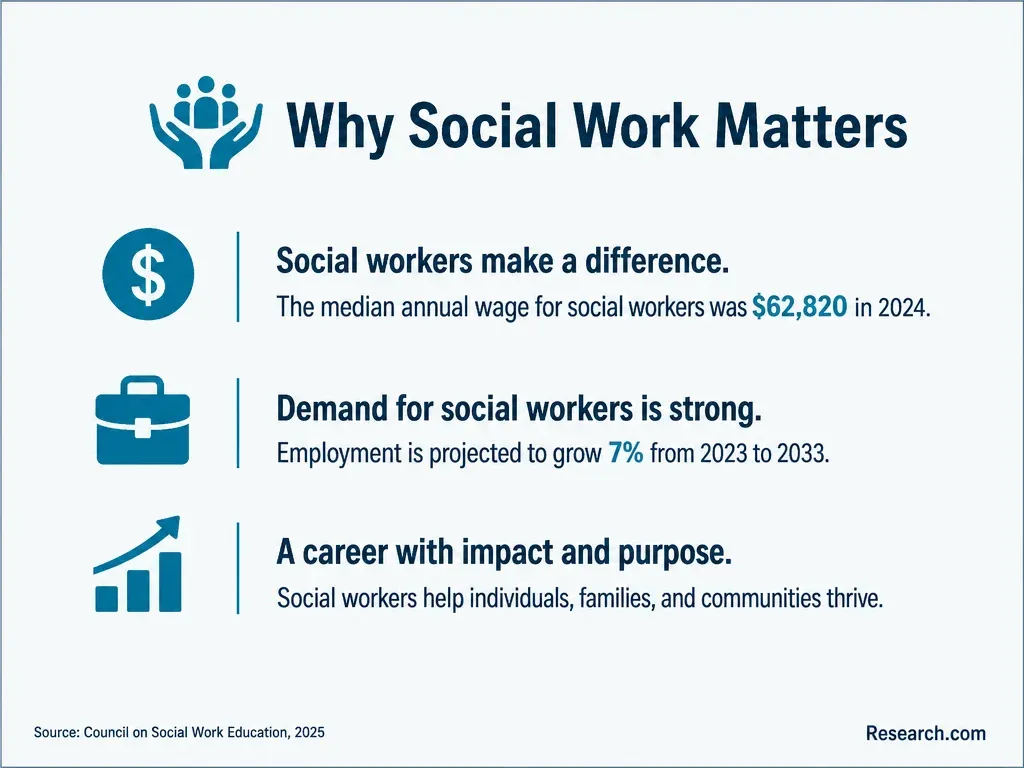
- The Bureau of Labor Statistics reports a May 2025 median annual wage of $61,780 for social workers overall and projects 6% employment growth from 2025 to 2035; neither figure describes street outreach jobs specifically.
What is street outreach in social work, and what do outreach workers do?
Street outreach is proactive contact with people in public spaces or other community locations who may not be using office-based services. Teams may work with people experiencing homelessness, young people, or others facing barriers to housing, healthcare, benefits, and safety. The immediate goal is often to establish a reliable connection, learn what the person wants, and offer a practical next step - not to secure agreement to every service in one encounter.
Depending on the program, a worker may distribute supplies, explain available services, help someone reach a shelter or clinic, coordinate with housing staff, document contacts, and follow up over time. Outreach workers must respect a person's choice to decline help while following agency procedures for urgent safety concerns and reporting obligations. For a wider view of how education connects with this work, see online social work qualifications and career directions.
What education do you need to become a street outreach worker?
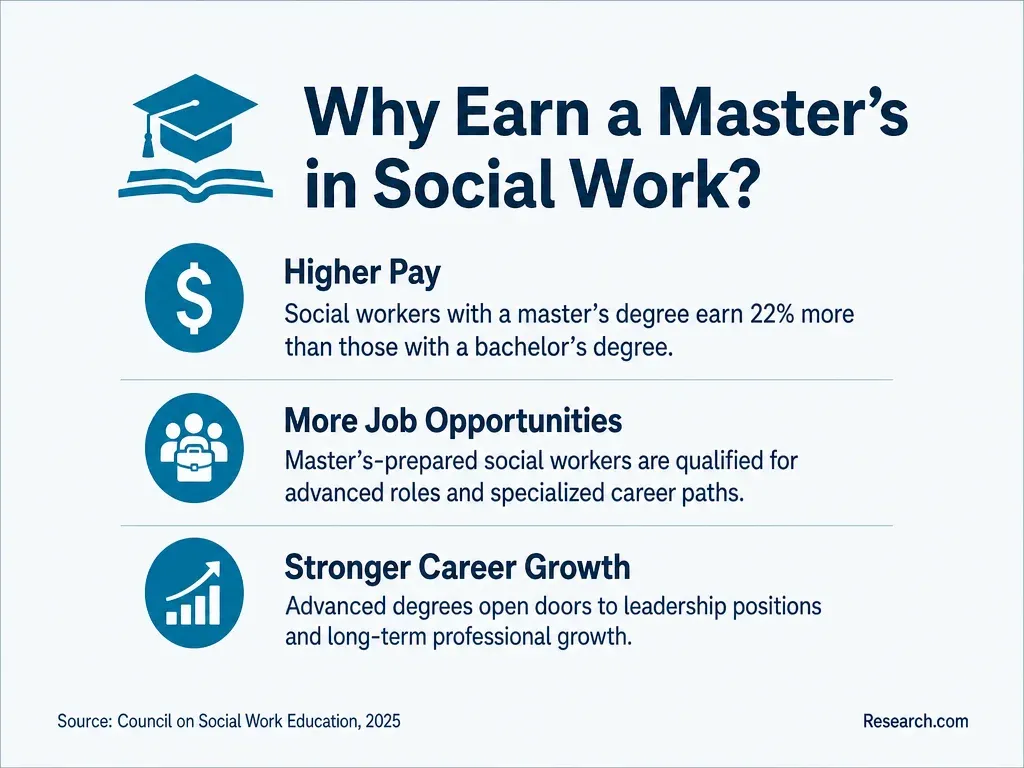
There is no single degree requirement for street outreach. Some employers hire for community experience, peer expertise, or human services preparation and provide substantial onboarding. Others prefer a BSW for generalist social work duties or an MSW for advanced assessment, program leadership, or positions tied to a specific license. Read the duties and minimum qualifications together: a job titled "outreach specialist" may differ considerably from one titled "social worker."
A BSW can provide structured study of ethics, policy, assessment, and field practice; readers comparing that route can review accredited social work bachelor's degrees. Someone who already has an unrelated bachelor's degree can usually investigate traditional or foundation MSW entry rather than start another bachelor's degree. Advanced-standing MSW admission generally requires a qualifying social work bachelor's degree and satisfaction of the program's additional criteria; unrelated human services experience alone does not establish eligibility.
If the target job accepts non-social-work applicants, relevant paid work, volunteering, and focused training may be a more direct first step than a degree. Pursue additional education when the positions you want actually require it or when its field learning and broader career options justify the time and cost.
Do street outreach workers need a social work license or certification?
Often, no social work license is required for a general outreach position. A license may be required for particular social work positions, protected titles, or regulated clinical duties. Employers may also set requirements beyond state law. Neither an MSW nor an employer-issued outreach certificate automatically authorizes independent psychotherapy or other activities reserved to a license category.
Before accepting a role, compare its actual duties with the state licensing board's rules and the employer's job classification. If graduate study is intended to support future licensure, checking online MSW alignment with licensing goals is more useful than assuming any online degree qualifies. Separately, ask which agency trainings - such as privacy, de-escalation, or overdose-response procedures - must be completed before fieldwork. Those trainings support job readiness but are not substitutes for a state license.
Effective preparation combines practice skills with knowledge of local systems. Workers need to introduce themselves without pressuring people, listen for immediate priorities, explain options plainly, make realistic referrals, and record only information their role and agency require. They also need cultural humility, accessible communication, boundaries, and an understanding of how housing shortages and service eligibility affect what a referral can accomplish.
Training should cover the agency's procedures for team check-ins, de-escalation, privacy in public settings, crisis escalation, and follow-up. Relevant health or safety training depends on the population and employer; it should never be mistaken for clinical authorization. Coursework can introduce these concepts, but observed practice and feedback reveal whether a new worker can apply them. Even when considering self-paced MSW program structures, check when live skills sessions and supervised field activities must occur.
A supportive team does more than tell workers to "use good judgment." It defines where and when outreach occurs, how partners stay in contact, when to leave an interaction, who responds to an urgent concern, and how staff report incidents. New workers should receive accompanied visits and feedback before being expected to navigate complex situations with less direct support.
Regular supervision provides space to review decisions, documentation, boundaries, unsuccessful referrals, and the emotional effects of repeated exposure to hardship. A supervisor should also be able to explain what is outside the worker's role and how to obtain clinical, legal, or emergency consultation when appropriate. For students exploring shorter online MSW degree options, placement pace is worth checking closely: a compressed academic calendar does not remove the need for agency orientation, available field instruction, or safe progression into outreach duties.
In an interview or placement meeting, ask who accompanies new staff, how often supervision occurs, what happens when a worker cannot safely complete a visit, and whether staffing levels make the stated procedures workable.
Outreach experience can support moves into housing navigation, case management, community health, youth services, program coordination, or team leadership. The strongest transition depends on what a worker can demonstrate: sustained engagement, sound referrals, reliable documentation, collaboration with partner agencies, and judgment within role boundaries. Advancement into licensed social work or clinical positions requires the applicable education, license, and supervised experience; outreach tenure alone does not confer them.
For experienced social workers interested in agency leadership or practice improvement, a doctorate may eventually be relevant, but it is rarely the next necessary step for doing outreach well. Consider shorter online DSW program pathways only after comparing their costs and requirements with the specific leadership role sought. For many workers, a stronger supervisor, targeted training, or responsibility for a well-supported program project is the more direct move.
What are the salary and job outlook for street outreach workers?
The Bureau of Labor Statistics does not report a single wage or growth rate for every job called "street outreach worker." Its social worker figures are useful only when a position fits that occupational category: the May 2025 median annual wage was $61,780 for social workers overall, with 6% projected employment growth from 2025 to 2035. Those figures combine different specialties and do not predict an entry-level outreach offer, a particular city's pay, or the return on an MSW.
Compare actual local postings by duties and required qualifications. A non-licensed outreach specialist position and an MSW-level social worker position may have different pay structures even at the same agency. Also check schedule, travel reimbursement, benefits, supervision, and promotion criteria. Readers weighing graduate-level alternatives can use comparisons of jobs that use a social work master's degree to assess whether the degree opens roles they genuinely want.
Other Things You Should Know About Social Work
Respect the person's decision, explain how to reconnect if appropriate, and follow agency procedures for documentation and any urgent safety concern. A refusal is not, by itself, proof that the contact failed.
It depends on agency policy, staffing, and conditions. Ask how the team weighs community need against travel and worker safety, and who can suspend or change a shift.
Ask about accompanied shifts, supervision frequency, team check-ins, geographic coverage, documentation expectations, and what happens when a referral resource is unavailable.
Yes. Describe your responsibilities and skills without identifying clients or disclosing protected agency information. Use only materials you are authorized to share.
- Improve Effectiveness of Homelessness Response Systems | United States Interagency Council on Homelessness https://www.usich.gov/federal-strategic-plan/improve-effectiveness-homelessness-response-systems
- Improving access to healthcare services for people... - PMC https://pmc.ncbi.nlm.nih.gov/articles/PMC12729248/
- Evidence-Based Practices Resource Center | samhsa.gov https://www.samhsa.gov/libraries/evidence-based-practices-resource-center
- Street-Based Outreach | LA County Homeless Services & Housing https://homeless.lacounty.gov/street-outreach/
- Key Elements of Effective Street Outreach | pdx.edu https://omeka.pdx.edu/exhibits/show/outreach/keyelements
- Assessing the Evidence: What We Know About Outreach and Engagement | Homeless Hub https://homelesshub.ca/resource/assessing-evidence-what-we-know-about-outreach-and-engagement/