2027 Social Work Service Access During Relocation Between Counties or States
Audited and Verified:
Our Editorial and Data Verification Process
Research.com uses government datasets, official education statistics and primary institutional information to support its career and degree guides. Our review process checks factual accuracy, occupational definitions, source dates and the requirements associated with the credentials discussed.
How This Article Was Fact-Checked
Our editorial team verifies salary estimates, employment projections, education requirements and program information against original data providers and official organizations. Salary figures are checked against the relevant occupational definitions and reporting periods. Information about licensure, accreditation and required in-person training is reviewed separately.
Fact-checked and verified on:

Co-Founder and Chief Data Scientist
A move can interrupt counseling, case management, benefits, or help with housing even when you still need the same services. The biggest distinction is whether you are changing counties within a state or establishing residence in a new state: local providers and eligibility systems may change in either case, while interstate practice adds licensing questions. This guide helps clients and families plan a handoff, and helps social workers and students understand the referral, privacy, and education decisions behind it. Use it to identify what must be confirmed before the move and who can help prevent a gap.
Key Things You Should Know
- A county move may change your assigned agency, provider network, or local program even if state-level eligibility continues; report the new address and ask for a direct handoff.
- A state move usually requires a new Medicaid eligibility determination and may require new applications for other benefits. Arrange referrals before departure rather than assuming coverage and services transfer.
- Continuing telehealth across state lines depends on the client's location, the social worker's authority to practice there, payer rules, and agency policy - not simply on whether both people agree.
How does moving to another county affect access to social work services?
Within the same state, a move may leave state-level eligibility intact while changing the office or organization that delivers a service. County-administered benefits, school services, protective-services cases, behavioral health providers, and transportation programs can follow different service areas. A provider covered by your insurance in the old county may also be outside your new plan network.
Tell your current worker the moving date and new address, then ask which services will stay open, which office will take responsibility, and whether you must request a transfer. If you have appointments or medication-related care scheduled, ask for a transition contact before the old case closes.
Students whose field placements are affected by a county move should ask their program whether a new site can meet the existing learning agreement; MSW practicum site coordination questions are especially relevant when the placement, not just the classroom, must change.
What happens to social work services when you move to another state?
A new state can mean a different eligibility agency, insurance arrangement, provider network, school district, and set of service rules. An open case does not necessarily become an open case in the destination state. The sending worker may refer you, but the receiving organization generally decides whether it can accept the referral and what assessment or application it requires.
Before leaving, request the name and contact details of a receiving agency, ask whether it accepts new clients, and confirm what you must do on arrival. For ongoing treatment or intensive support, discuss a written transition plan and interim options with your current team.
Social workers planning their own move should likewise check local job duties rather than assume a familiar title describes the same work everywhere; social work master's roles and employment settings can differ from the agency delivering your current services.
How do Medicaid and other benefits change when you relocate?
Medicaid is administered by states. An address change within a state may require a case update or managed-care plan change; a move to another state generally means applying under the new state's rules.
Medicaid coverage does not simply transfer between states. Ask both states' Medicaid agencies when to report the move, how the old case closes, when the new application can begin, and what coverage is available while the application is pending. Do not assume a particular overlap or start date.
Other benefits need separate checks. SNAP is administered through state agencies, so report the move and ask how to avoid duplicate benefits or a gap. Social Security benefits such as SSI or SSDI have different federal rules, but address, living-arrangement, and state-supplement changes can still matter.
If you use a housing voucher, contact the issuing housing authority before moving to ask whether and how portability applies. Medicare beneficiaries should check whether their plan's service area or provider network changes.
Keep copies of notices, application confirmations, identification, and proof of the new address. A social worker can help organize these tasks but cannot guarantee an approval date. If a move also changes a student's budget, compare the full cost of continuing school - including field-placement travel and lost work time - before looking at comparing affordable social work master's degrees.
A useful handoff identifies the receiving contact, the reason for referral, urgent needs, current services, relevant deadlines, and who will follow up. The sending worker should discuss the plan with the client, respect the client's choices, and confirm that the receiving organization can actually provide the service. Sending a phone number alone is not the same as confirming a handoff.
Records do not automatically follow a client. The worker should follow applicable privacy law and agency policy, explain what information is proposed for sharing, obtain any required authorization, and use an approved secure method.
Rules may differ for health records, substance use treatment records, schools, and protective-services cases. Share information needed for continuity without assuming the entire file is necessary. Document the referral, authorization or other lawful basis for disclosure, and any unresolved gap in service.
A relocating practitioner should keep client records separate from evidence of their own education or supervision. If the move affects a licensing application, social work clinical experience counting and verification is a different documentation question; client files should not be used as personal proof of hours.
What are the job outlook and salaries for social workers who coordinate services?
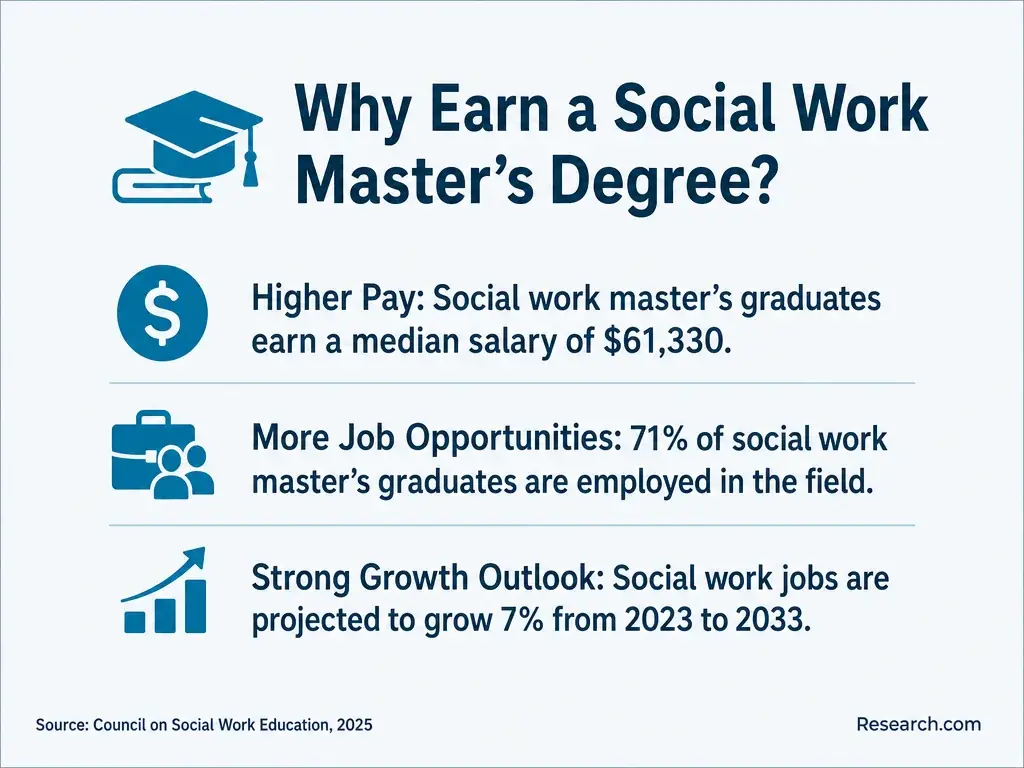
Service coordination appears in several occupations rather than one uniform job title. The following U.S. Bureau of Labor Statistics figures show how setting changes the salary context; they are occupation-wide medians, not promised earnings for a case coordinator or an MSW graduate.
| Occupation | May 2025 median annual pay | Projected employment growth, 2025-2035 |
| Child, family, and school social workers | $59,550 | 4% |
| Healthcare social workers | $67,880 | 8% |
| Mental health and substance abuse social workers | $60,280 | 10% |
These categories do not isolate relocation-related coordination, and actual pay depends on location, employer, duties, experience, and required license. When weighing a job move, compare compensation with caseload, supervision, benefits, travel, and the time needed to gain state practice authorization. Understanding location differences in MSW earnings can help frame a geographic comparison without treating a statewide figure as an individual offer.
Other Things You Should Know About Social Work
Ask your current worker about an interim plan, alternative agencies, and who to contact if your needs become urgent. Confirm whether a referral places you on the list automatically or requires your own intake call.
Often, yes. Ask local service agencies what documentation they accept and whether outreach or homeless-services staff can help you apply. Do not assume lack of a lease makes you ineligible for every service.
Yes. State your preferred language and ask how the agency arranges interpretation. Availability and applicable access requirements depend on the organization and service; you need not rely on a family member without first asking about professional options.
Keep appointment details, referral contacts, benefit notices, and any care summary you are entitled to receive in a secure place. Ask which documents the new provider needs, rather than carrying or emailing an entire file unnecessarily.
- Co-Occurring Disorders and Other Health Conditions | samhsa.gov https://www.samhsa.gov/substance-use/treatment/co-occurring-disorders
- Fact Sheet 42 CFR Part 2 Final Rule | hhs.gov https://www.hhs.gov/hipaa/for-professionals/regulatory-initiatives/fact-sheet-42-cfr-part-2-final-rule/index.html
- Overview of the Privacy Act: Disclosures to Third Parties | United States Department of Justice https://www.justice.gov/opcl/overview-privacy-act-1974-2020-edition/disclosures-third-parties
- How to Apply for NY Medicaid https://www.health.ny.gov/health_care/medicaid/how_do_i_apply.htm
- Adult Mental Health Community Services | georgia.gov https://dbhdd.georgia.gov/be-dbhdd/be-supported/mental-health-adults/adult-mental-health-community-services
- Barriers to Immigrants' Access to Health and Human Services Programs | ASPE https://aspe.hhs.gov/reports/barriers-immigrants-access-health-human-services-programs-0
- Foster Care: How We Can, and Should, Do More for... - PMC https://pmc.ncbi.nlm.nih.gov/articles/PMC8023222/
- Family or Child Moves from County - DSS Manuals - MO.gov https://dssmanuals.mo.gov/child-welfare-manual/section-4-chapter-11-administrative-activities-subsection-1-family-or-child-moves-from-county/
- HIPAA Privacy Rules for the Protection of Health and Mental Health Information | ny.gov https://omh.ny.gov/omhweb/hipaa/phi_protection.html
- Emergency Housing Voucher Program (EHV) | ny.gov https://hcr.ny.gov/ehv