2027 Social Work Nonprofit Board Service: Skills, Responsibilities, and Career Connections
Audited and Verified:
Our Editorial and Data Verification Process
Research.com uses government datasets, official education statistics and primary institutional information to support its career and degree guides. Our review process checks factual accuracy, occupational definitions, source dates and the requirements associated with the credentials discussed.
How This Article Was Fact-Checked
Our editorial team verifies salary estimates, employment projections, education requirements and program information against original data providers and official organizations. Salary figures are checked against the relevant occupational definitions and reporting periods. Information about licensure, accreditation and required in-person training is reviewed separately.
Fact-checked and verified on:

Co-Founder and Chief Data Scientist
A nonprofit board seat can give a social worker influence over services, budgets, and community priorities - but it also brings legal duties, time commitments, and potential conflicts with client work.
This guide is for social work students, practitioners, and human services professionals deciding whether to serve. It explains what board members actually do, which skills matter, how to examine an opportunity, and when coursework or a degree is useful. The goal is to help you choose a role where you can contribute without confusing governance with direct practice.
Key Things You Should Know
- Board members govern the organization; they generally do not supervise individual cases or direct day-to-day services.
- A social work degree or license is usually not required for a nonprofit board seat, but board service does not substitute for field education or clinical supervision.
- Before joining, review the mission, finances, conflicts policy, insurance, fundraising expectations, and actual monthly workload; most charitable board positions are unpaid.
What is nonprofit board service in social work?
Nonprofit board service means participating in the governing body of an organization, such as a housing agency, family services provider, food-security organization, or community health nonprofit. Board members collectively set strategic direction, oversee organizational finances and the chief executive, and monitor whether the organization is fulfilling its mission. Staff manage daily operations and individual services.
That distinction matters for social workers. A board member might ask whether language access is adequately funded across programs; they would not normally decide how a caseworker should handle a particular client. A committee assignment can offer a closer look at finance, programs, or community partnerships, but committee work remains subject to the board's authority and organizational policies.
Board service is one way to influence social services, not a requirement for a social work career. If your goal is direct practice or a particular job, compare the board opportunity with the preparation described in online social work qualifications and career directions before committing substantial volunteer time.
What are a nonprofit board member's responsibilities and ethical obligations?
Board members commonly have duties of care, loyalty, and obedience: they should make informed decisions, put the organization's interests ahead of personal interests, and support its lawful mission. The applicable state law and the organization's governing documents determine the precise obligations. Reading financial statements, attending meetings, questioning significant risks, and overseeing leadership are substantive duties - not ceremonial ones.
A social worker also needs to separate board authority from professional responsibilities. If you work for, refer clients to, contract with, or seek a placement at the organization, disclose that relationship under its conflicts policy and follow the required recusal process. Do not use board access to obtain client records or share confidential practice information to make a point. The NASW Code of Ethics may inform a social worker's conduct, while privacy law, licensing rules, and agency policy impose separate requirements.
Ask about fundraising and personal giving before accepting. Boards may expect introductions to donors, participation in events, or a contribution, but there is no universal donation amount. Nor does a board seat expand anyone's licensed scope of practice. If the organization expects you to provide clinical services as well, treat that as a separate role and check graduate social work education and license pathway planning against your state board's current rules.
What social work skills are valuable on nonprofit boards?
Social workers can help boards connect high-level decisions to the conditions people face when seeking services. Person-in-environment thinking, community engagement, policy analysis, and experience with referral systems can improve questions about access, eligibility, and unintended effects. Research literacy helps a board distinguish meaningful program measures from attractive but incomplete success stories.
Those contributions work best alongside - not in place of - finance, legal, fundraising, and lived-experience perspectives. For example, a social worker may identify that a proposed service reduction would increase transportation barriers, while a finance committee explains the budget constraint and community representatives describe how the change would affect them. Effective governance requires listening across those forms of expertise.
Coursework can strengthen policy and evaluation skills, but admission to a degree program is a separate decision from developing board competence. Someone considering a first social work degree can explore comparing entry barriers in social work bachelor's programs; an experienced nonprofit professional may get more immediate value from budget training, mentorship, or committee service.
Look first at organizations whose mission and population you understand, including community partners and local nonprofit networks. An initial committee or advisory role can reveal how the board works before you accept fiduciary responsibility. A recruitment conversation should be mutual: the organization assesses your contribution, and you assess whether it can govern responsibly.
Before accepting an invitation, request enough information to test the role's fit:
- Review the mission, current strategy, bylaws, recent financial statements, and publicly available Form 990 filings.
- Ask how the board monitors program quality, community input, financial risk, and the chief executive's performance.
- Clarify meeting frequency, preparation time, committee work, term length, fundraising and giving expectations, and any required travel.
- Read the conflicts-of-interest, confidentiality, and indemnification policies, and ask what directors-and-officers insurance is in place.
- Speak with a current board member about whether dissenting questions receive thoughtful answers.
Warning signs include financial information that leadership will not share with prospective members, unclear authority between board and staff, or pressure to promise client referrals. If you also hope to complete a student placement there, a board invitation is not placement approval; discuss boundaries and graduate social work placement coordination options with your field office before taking on both roles.
Are nonprofit board roles paid, and what do nonprofit social work careers pay?
Most charitable nonprofit board seats are volunteer positions. Some organizations reimburse approved expenses; compensation, if offered, should be examined for conflicts and compliance with applicable law and organizational policy. Ask directly about travel costs, required giving, and the time you would otherwise spend in paid work.
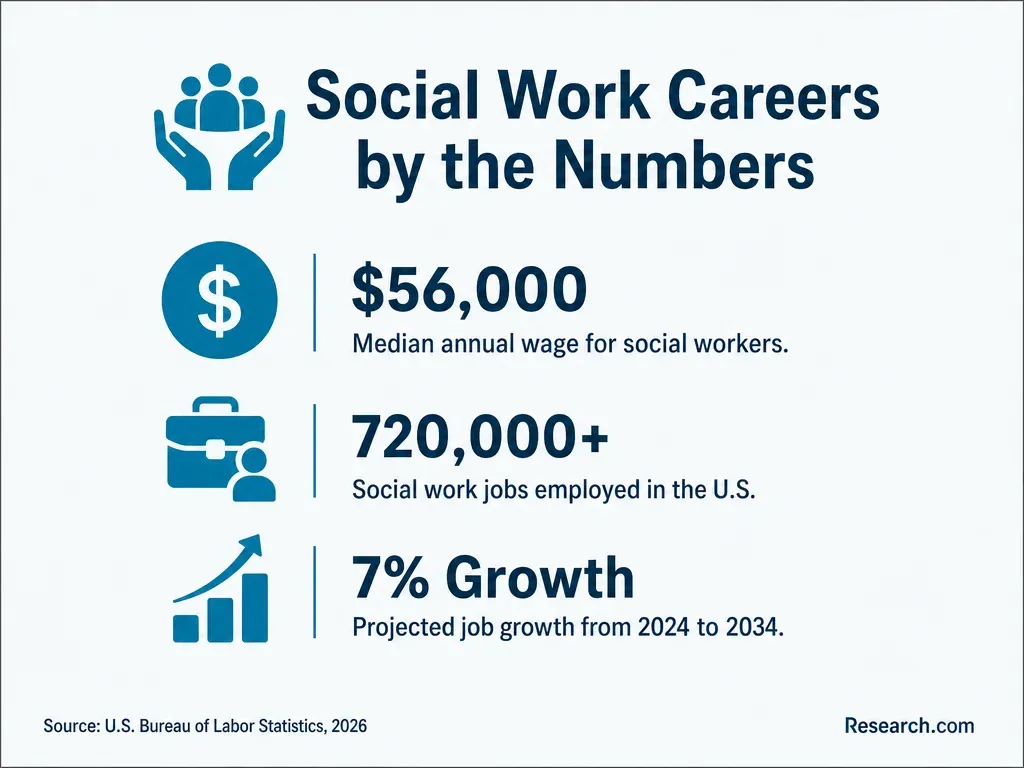
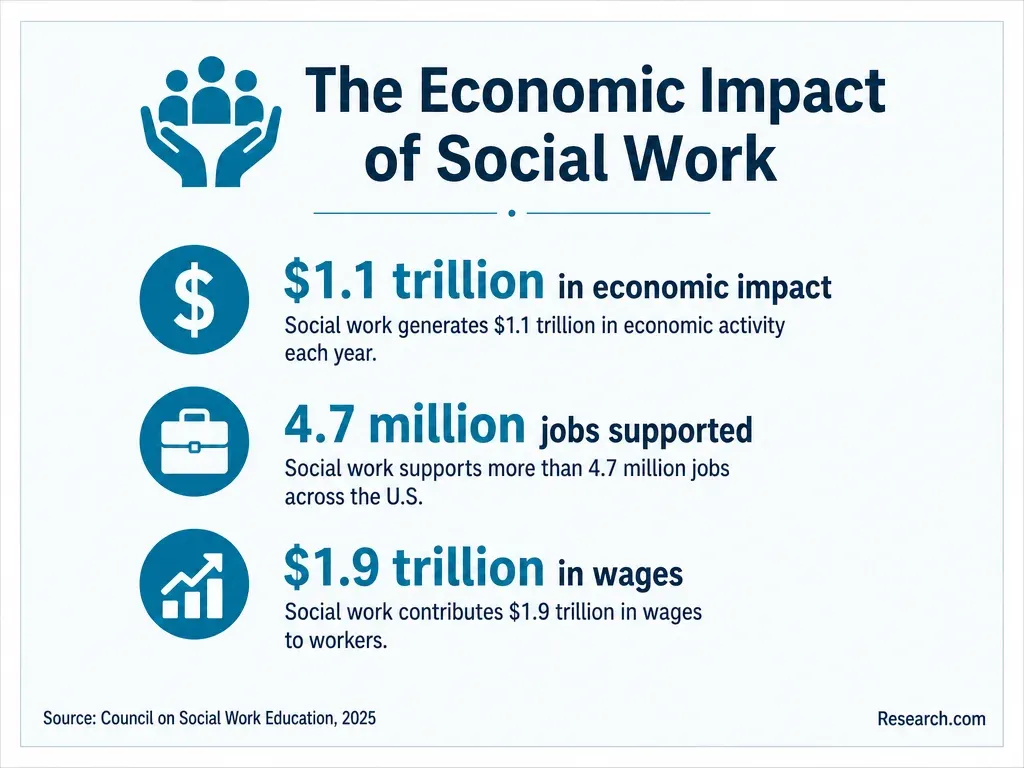
Paid nonprofit jobs are a different calculation. U.S. Bureau of Labor Statistics figures for May 2025 put the median annual wage for social workers across specialties at $61,780, with employment projected to grow 6% from 2025 to 2035. Those figures describe an occupation across employers, not board members, nonprofit managers, or the expected salary of an individual BSW or MSW graduate. Actual pay depends on duties, location, employer funding, experience, and required credentials.
For a job decision, compare a specific offer with local postings and benefits rather than treating the national median as a target salary. Social work master's salary geography offers additional context, but board service itself should be evaluated primarily for mission fit, workload, and governance experience - not an assumed pay return.
Other Things You Should Know About Social Work
Possibly. Check the bylaws, meeting practices, and applicable state law, then ask whether retreats, site visits, or committee work require in-person attendance.
Not automatically. Check your state board's approved continuing education rules before claiming credit for governance activities or training.
Usually, but follow the organization's resignation procedure and applicable law. Give appropriate notice and arrange a responsible handoff of committee work.
Ask questions, state your concerns through the board's process, and follow its procedures for recording dissent. Seek qualified guidance when a decision raises a serious legal or ethical concern.
- Board Governance Versus Management - ASU Lodestar https://lodestar.asu.edu/blog/2012/09/board-governance-versus-management-where-board-duties-end
- How to Properly Approach Nonprofit Board Service | Wharton Magazine https://magazine.wharton.upenn.edu/digital/how-to-properly-approach-nonprofit-board-service/
- Form and Manage a Nonprofit Board | harvard.edu https://innovationlabs.harvard.edu/how-to/social-impact-workshop-non-profit-board-101
- Board Member Legal Duties for Nonprofits | boardsource.org https://boardsource.org/resources/legal-duties-nonprofit-board-members/
- The Executive Director and Board Relationship | Minnesota Council of Nonprofits https://minnesotanonprofits.org/resources-tools/topics/leadership-governance/the-executive-director-and-board-relationship
- Board Roles and Responsibilities | councilofnonprofits.org https://www.councilofnonprofits.org/running-nonprofit/governance-leadership/board-roles-and-responsibilities
- Three Fundamental Duties of Nonprofit Boards | Commonfund https://www.commonfund.org/blog/three-fundamental-duties-of-nonprofit-boards