2027 Social Work Documentation Requests from Employers, Courts, and Insurers: Role Questions
Audited and Verified:
Our Editorial and Data Verification Process
Research.com uses government datasets, official education statistics and primary institutional information to support its career and degree guides. Our review process checks factual accuracy, occupational definitions, source dates and the requirements associated with the credentials discussed.
How This Article Was Fact-Checked
Our editorial team verifies salary estimates, employment projections, education requirements and program information against original data providers and official organizations. Salary figures are checked against the relevant occupational definitions and reporting periods. Information about licensure, accreditation and required in-person training is reviewed separately.
Fact-checked and verified on:

Co-Founder and Chief Data Scientist
An employer, attorney, or insurer may ask a social worker for records that seem routine to the requester but contain highly sensitive client information. The right response depends on who holds the record, why it is needed, the worker's role, and the law governing disclosure. This guide is for students, new practitioners, supervisors, and social-services staff who need to distinguish documentation duties from permission to release records. It explains the checks to make before responding - and when to involve a privacy officer, supervisor, or attorney.
Key Things You Should Know
- Documenting a service does not authorize its disclosure: identify the record holder, requester, legal basis, and permitted scope before sharing anything.
- A subpoena is not always a court order. Refer legal demands promptly for review rather than ignoring them or automatically sending a full chart.
- HIPAA rules differ by record and purpose; state law, psychotherapy-note protections, and agency obligations can impose additional limits.
What records do social workers document and share with third parties?
Social workers may create assessments, service plans, progress notes, referrals, discharge summaries, safety-related reports, and records of client consent. The contents vary by setting and role. A hospital clinician's treatment record, a school social worker's education record, and a housing case manager's file need not follow the same disclosure rules.
Separate what is documented from what may be released. A useful response may be a narrowly scoped attendance confirmation or approved summary rather than an entire file. Notes can also contain information about relatives, collateral contacts, or other clients that requires separate review.
Psychotherapy notes, as HIPAA defines them, receive protections distinct from ordinary progress notes; labeling a routine progress note "private" does not change its legal status.
Documentation responsibilities change across online degree routes into social work careers, but a degree route does not itself determine who can access or release an agency record. Before a placement or job begins, ask which system holds records, who approves releases, and how corrections and disclosures are logged.
What client documentation can employers request from social workers?
An agency that holds client records can generally require authorized staff to document services and allow appropriate internal review for treatment, supervision, compliance, or operations under applicable rules. That does not give every manager unrestricted access for any purpose. Access should follow assigned duties, agency policy, and the law governing the record.
A prospective employer is different from the agency holding the file. It may ask an applicant for a writing sample or evidence of documentation skills, but the applicant should not provide identifiable client notes without proper authorization and organizational approval.
Use an employer-approved, genuinely de-identified sample or a clearly labeled fictional exercise instead. Removing a name alone may leave a person identifiable through dates, locations, or unusual circumstances.
References and admissions letters evaluate an applicant; they are not permission to disclose client cases. Someone comparing alternatives to MSW recommendation letters should keep that application question separate from whether a supervisor may share workplace records. For current workers, the practical question is who owns the record and whether the requester has an authorized work-related need.
How should social workers respond to subpoenas and court orders?
Do not assume that a subpoena, an attorney's letter, and a judge's order have identical force. A subpoena may require a response without necessarily authorizing immediate disclosure of protected health information. HIPAA provides specific pathways for some judicial proceedings, including a court order or a subpoena accompanied by required assurances; privilege and state law may impose further limits.
When a legal demand arrives, use this sequence to protect the client's interests without missing a deadline:
- Record when and how the demand was received, its deadline, the issuing authority, and the records or testimony requested.
- Send it promptly to the organization's designated legal or privacy contact; do not promise the requester a release.
- Have the appropriate authority check validity, jurisdiction, privilege, notice or authorization requirements, and whether an objection or protective order is warranted.
- Preserve responsive records, then release only what the approved process requires through an approved channel.
Do not alter or delete notes after receiving a demand. Likewise, a worker's separate log of post-degree clinical supervision is not automatically part of a client chart; social work clinical hour requirements and completion planning concern licensing evidence, not blanket access to client records. A lawyer or agency counsel should resolve a specific legal demand.
HIPAA applies to covered entities and their business associates, not automatically to every social-services organization. Where it applies, HIPAA generally permits certain uses and disclosures for treatment, payment, and health care operations without a separate patient authorization, subject to its conditions.
Its minimum necessary standard generally applies to payment and operations disclosures but has important exceptions, including disclosures to a provider for treatment. HIPAA gives psychotherapy notes additional protection, with limited exceptions.
Other rules may control the same file. State confidentiality or privilege law can provide stronger protection; substance use disorder treatment records may be subject to 42 CFR Part 2; and education records may fall under FERPA rather than HIPAA. Mandatory-reporting duties are separate from a general request for records. A client's consent also needs to meet the requirements applicable to the particular disclosure - it is not a universal waiver.
Licensing requirements and privacy laws answer different questions. A guide to online social work master's programs and state board requirements can help a student investigate practice eligibility, but the record holder's privacy officer and current governing law determine how a particular disclosure is handled.
Which social work careers involve documentation, and what do they pay?
Documentation is substantial in child and family services, healthcare discharge planning, behavioral health, school services, and community case management. The records differ: a child welfare worker may document service coordination and safety-related actions, while a healthcare social worker may document assessments and discharge plans.
When comparing jobs, ask about caseload, time allotted for notes, review support, system training, and who handles legal or payer requests.
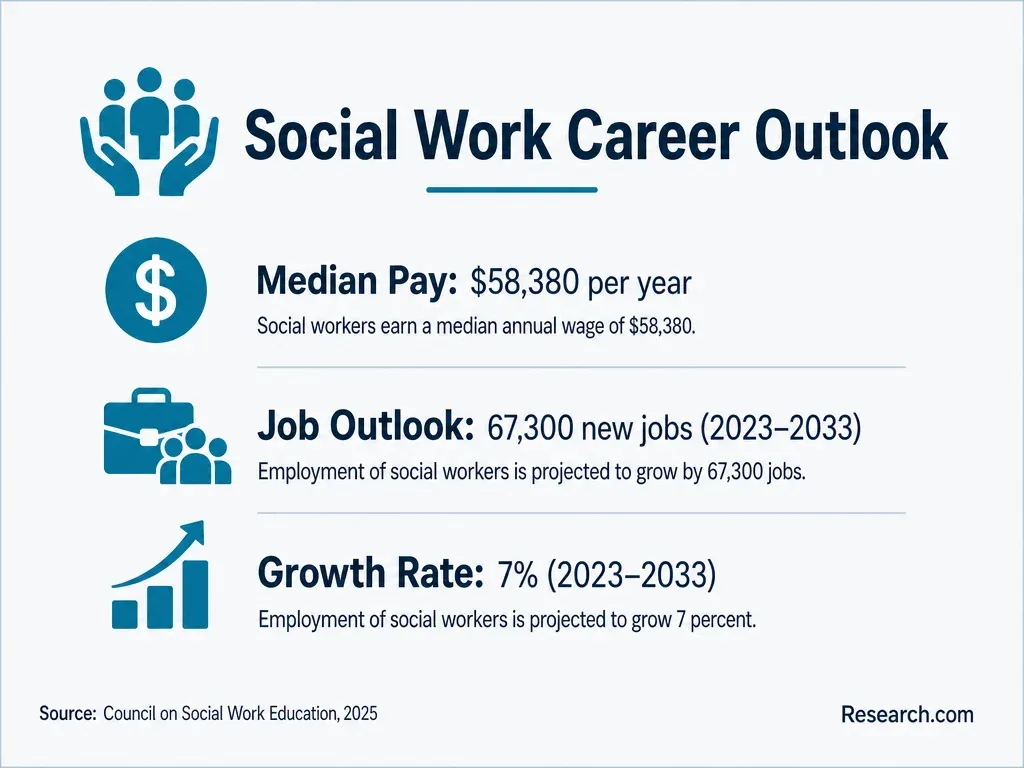
The following U.S. Bureau of Labor Statistics figures are occupation-wide May 2025 median annual wages and projected employment changes for 2025-2035. They are not salaries for a particular degree, license, employer, or documentation specialty.
| Occupation | Median annual wage | Projected growth |
| Child, family, and school social workers | $59,550 | 4% |
| Healthcare social workers | $67,880 | 8% |
| Mental health and substance abuse social workers | $60,280 | 10% |
Use the figures to compare broad occupational contexts, then check local postings for the required credential and actual pay. A state-level social work pay comparison guide can add geographic context, but higher pay does not by itself indicate lighter documentation demands or better supervision.
Other Things You Should Know About Social Work
Not without the record holder's approval and a valid basis for using it. Other details may identify the client. Ask for an approved sample or write a clearly fictional example.
Follow the record holder's correction or amendment process. Do not silently overwrite, backdate, or delete an entry; systems often require an attributable addendum or other documented correction.
Often, but the applicable access rights, exceptions, and process depend on the record and governing law. Direct the request to the organization's designated records or privacy contact.
No, unless the agency expressly approves a lawful, appropriately protected use. A fictional exercise or approved non-identifying description is usually safer evidence of writing skill.
- Minimum Necessary Requirement | hhs.gov https://www.hhs.gov/hipaa/for-professionals/privacy/guidance/minimum-necessary-requirement/index.html
- Overview of the Privacy Act: Disclosures to Third Parties | United States Department of Justice https://www.justice.gov/opcl/overview-privacy-act-1974-2020-edition/disclosures-third-parties
- Patient Confidentiality - StatPearls - NCBI Bookshelf - NIH https://www.ncbi.nlm.nih.gov/books/NBK519540/
- NASW Standards for Social Work Case Management | socialworkers.org https://www.socialworkers.org/Practice/NASW-Practice-Standards-Guidelines/NASW-Standards-for-Social-Work-Case-Management
- HIPAA | clinicalsocialworkassociation.org https://www.clinicalsocialworkassociation.org/HIPAA
- NSCSW | Guidelines for Social Work Documentation https://nscsw.org/practice/swguidelinesdocumentation/