2027 Post-MSW Clinical Supervision in Hawaii: Supervisor Approval, Records, and Work Settings
Audited and Verified:
Our Editorial and Data Verification Process
Research.com uses government datasets, official education statistics and primary institutional information to support its career and degree guides. Our review process checks factual accuracy, occupational definitions, source dates and the requirements associated with the credentials discussed.
How This Article Was Fact-Checked
Our editorial team verifies salary estimates, employment projections, education requirements and program information against original data providers and official organizations. Salary figures are checked against the relevant occupational definitions and reporting periods. Information about licensure, accreditation and required in-person training is reviewed separately.
Fact-checked and verified on:

Co-Founder and Chief Data Scientist
A post-MSW job can move you toward Hawaii's licensed clinical social worker (LCSW) credential—but only if the experience, supervision, and records meet state requirements. This guide is for graduates and early-career social workers choosing a clinical position or arranging supervision. It explains which hours to track, what to confirm about a supervisor and workplace, and how to prepare for the licensing application. Checking those details before accepting a role can prevent years of work from becoming difficult to verify.
Key Things You Should Know
- Hawaii's LCSW pathway calls for 3,000 hours of post-master's clinical experience, including at least 2,000 hours of specified clinical work, and 100 hours of face-to-face supervision; verify the current statutory wording and application instructions before starting.
- A qualifying MSW and clinical job title are not enough: confirm the supervisor's license, the duties you will perform, the supervision arrangement, and how each will be documented.
- Plan on at least two years of experience, then allow for application review and the required clinical examination; neither MSW field hours nor passing the exam alone grants independent clinical authority.
How many supervised clinical hours are required for Hawaii LCSW licensure?
Hawaii's LCSW experience standard is 3,000 hours of post-master's clinical social work experience, including at least 2,000 hours in assessment, clinical diagnosis, and psychotherapy, plus 100 hours of face-to-face supervision. The experience must span at least two years. These are distinct measures: 3,000 hours of employment do not establish that the clinical-duty minimum or supervision minimum has been met.
Before relying on a proposed schedule, check the Hawaii Department of Commerce and Consumer Affairs (DCCA) Professional and Vocational Licensing Division's current social worker application and Hawaii Revised Statutes chapter 467E for the applicable time window and exact category definitions. A broader guide to social work experience requirements and professional milestones can help you understand why hours accepted elsewhere may not satisfy Hawaii's rules.
Who can supervise post-MSW clinical work in Hawaii, and is prior approval required?
Do not assume that a manager, MSW field instructor, or any independently licensed clinician can sign off on Hawaii LCSW experience. Hawaii's rules specify acceptable supervision and require a substantial portion of the face-to-face hours to be provided by a licensed clinical social worker. Check the current DCCA supervision-verification form for the permitted license types, required allocation of hours, and information each supervisor must attest to—especially if you will use more than one supervisor.
Do not treat an employer's approval of your supervisor as state approval. Before hours begin, ask DCCA whether your particular arrangement requires advance review or approval, and retain its written response. If a supervisor practices under another state's license, confirm that license meets Hawaii's requirements rather than assuming equivalent titles are interchangeable. For a graduate still assessing an employer's supervision capacity, comparing faculty and agency support for MSW fieldwork is useful background, but academic field instruction is separate from post-degree LCSW supervision.
How do you document and verify supervised clinical experience in Hawaii?
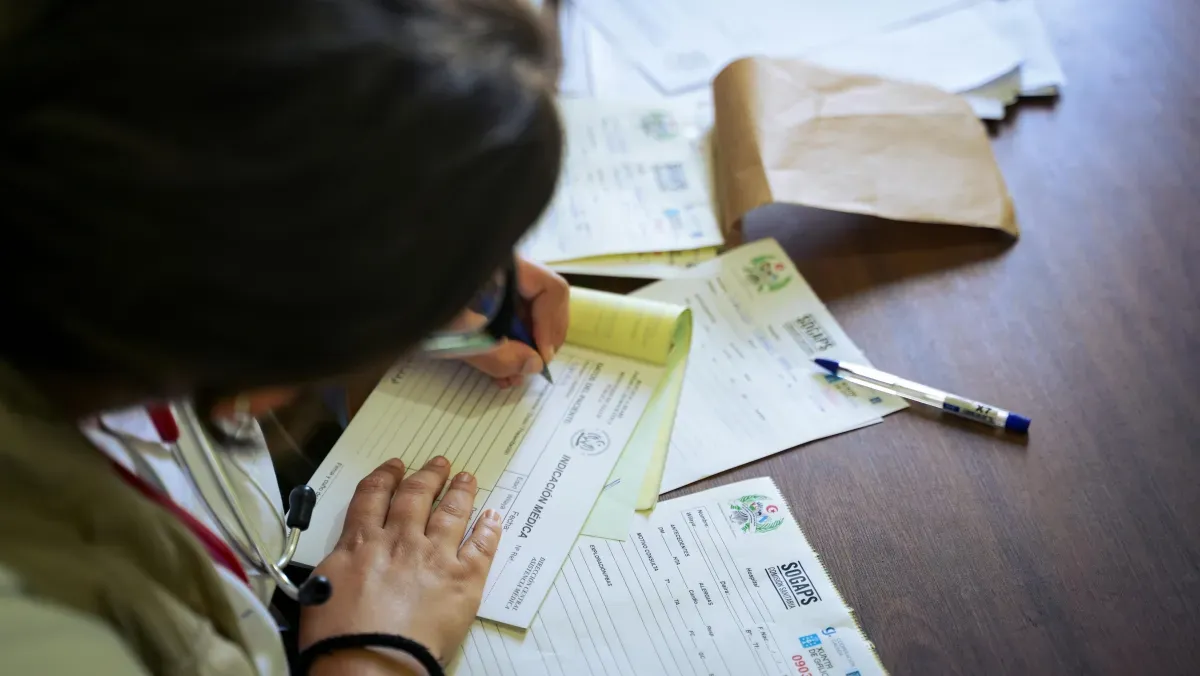
Use DCCA's current LCSW application and experience-verification forms as the final checklist. Maintain a contemporaneous, de-identified record of work dates, total hours, qualifying clinical activities, supervision dates and duration, format, supervisor name, license type, and license jurisdiction. Keep employment records and any written supervision agreement. Do not put client names or identifiable case details in a personal licensing log.
Reconcile the log with your supervisor regularly, particularly before a job change or supervisor departure. At application time, follow DCCA's instructions for who completes, signs, and submits each verification; a personal spreadsheet is supporting evidence, not a substitute for an official attestation. MSW professional licensure disclosure comparisons may help explain an education pathway, but only Hawaii's licensing authority determines whether documented experience satisfies its LCSW standard.
The crucial distinction is between total clinical social work experience and the narrower hours Hawaii requires in assessment, clinical diagnosis, and psychotherapy. A position may include valuable intake, crisis, care coordination, outreach, documentation, or team activities without every hour meeting that narrower clinical-duty definition. Record what you actually did within your authorized role rather than labeling an entire shift "psychotherapy."
Ask a prospective employer to describe the typical caseload, direct clinical duties, and access to appropriate supervision. Then compare those duties with the current Hawaii statute and DCCA verification form; request clarification from DCCA if a category is unclear. A social work program selection guide can inform educational preparation, but a program's clinical emphasis cannot convert nonqualifying job tasks into post-degree clinical hours.
Setting alone does not determine eligibility. A community mental health clinic, hospital behavioral health service, substance use treatment program, or group practice may provide qualifying duties and supervision. The same setting may also employ social workers in positions dominated by discharge planning, benefits navigation, or administration. Compare the specific position, not just the agency name.
The table highlights what each setting may offer and what an applicant still needs to establish. It does not imply that all positions in a listed setting qualify.
| Potential setting | Potential clinical work | Common limitation |
| Behavioral health clinic | Assessment and psychotherapy within the employee's authorized role | Supervisor qualifications or protected supervision time may be unclear |
| Hospital or integrated-care service | Behavioral health assessment and intervention | Much of the caseload may involve discharge or resource coordination |
| Substance use treatment program | Clinical assessment and treatment services | Job duties and supervisor credentials vary by program |
| Private or group practice | Potential access to sustained clinical caseloads | Licensing status, billing, supervision, and employment arrangements need close review |
A pre-graduation campus job is a different proposition: university-funded assistant roles for MSW students do not become post-MSW experience simply because they involve behavioral health research or services.
Hawaii's clinical pathway requires a qualifying master's degree in social work; confirm the state's education and accreditation criteria for your particular degree and graduation date. Undergraduate or MSW field-placement hours are educational training, not post-master's LCSW experience. A social work degree also does not, by itself, authorize independent clinical practice.
Before accepting a post-MSW role, check the current DCCA rules for any license category or other authorization required to perform its proposed duties while under supervision. Have the employer identify what you may do, who carries clinical responsibility, and how services will be represented to clients and payers.
If you have not yet selected an MSW, online MSW programs without recommendation letters may simplify one application step, but admissions convenience says nothing by itself about Hawaii licensure eligibility.
Do not equate face-to-face supervision with automatic approval of videoconferencing, or assume that group meetings fulfill an individual-supervision requirement. The answer depends on the current Hawaii statute, DCCA rules and interpretations, and the way the sessions are recorded. Confirm the allowed format, any individual-versus-group allocation, and any location or licensing conditions with DCCA before building a supervision plan around remote meetings.
Employer telehealth policies and client-service rules are separate questions from whether a supervision meeting earns LCSW credit. Likewise, online DSW timelines for working professionals describe an educational option; a doctorate does not replace Hawaii's post-MSW experience or settle its remote-supervision rules.
The two-year minimum is a floor, not a promised completion date. At a steady 30 qualifying hours per week, 3,000 hours would take 100 working weeks before accounting for leave, changes in duties, gaps in supervision, or the separate 2,000-hour clinical-duty minimum. Ask an employer how much of a typical week is spent on potentially qualifying work, not merely whether the position is full-time.
Costs depend heavily on whether supervision is included in paid employment. An outside supervisor may charge for sessions; candidates may also face reduced work hours, examination and application fees, and time spent collecting records. Obtain written fee and scheduling terms before committing, and check current DCCA and examination-provider charges rather than relying on an old estimate.
If you are still budgeting for the degree itself, affordable online Master of Social Work options address a separate cost decision: lower tuition does not guarantee an employer will fund post-degree supervision.
The pathway has separate checkpoints: qualifying education, documented post-MSW experience and supervision, application review, the required clinical examination, and license issuance. Follow DCCA's current instructions on when to apply, how examination eligibility is established, which ASWB Clinical Examination results it accepts, and whether any earlier license category is needed for your circumstances. Passing an exam or finishing hours does not itself create an active LCSW license.
For someone still at the education stage, planning applications to accessible MSW programs is an earlier decision; confirm a chosen program's Hawaii licensing relevance before enrollment. Once licensed, check the scope and authorization rules for each jurisdiction where you intend to serve clients, including by telehealth.
What are the salaries and job prospects for clinical social workers in Hawaii?
A defensible Hawaii LCSW salary comparison starts with local postings for the same duties and license status. Employer type, island, collective bargaining agreement, caseload, and whether supervision is supplied can matter as much as the advertised salary. No Hawaii-specific LCSW wage or growth figure is established here, so do not use a national occupation-wide figure as a local offer.
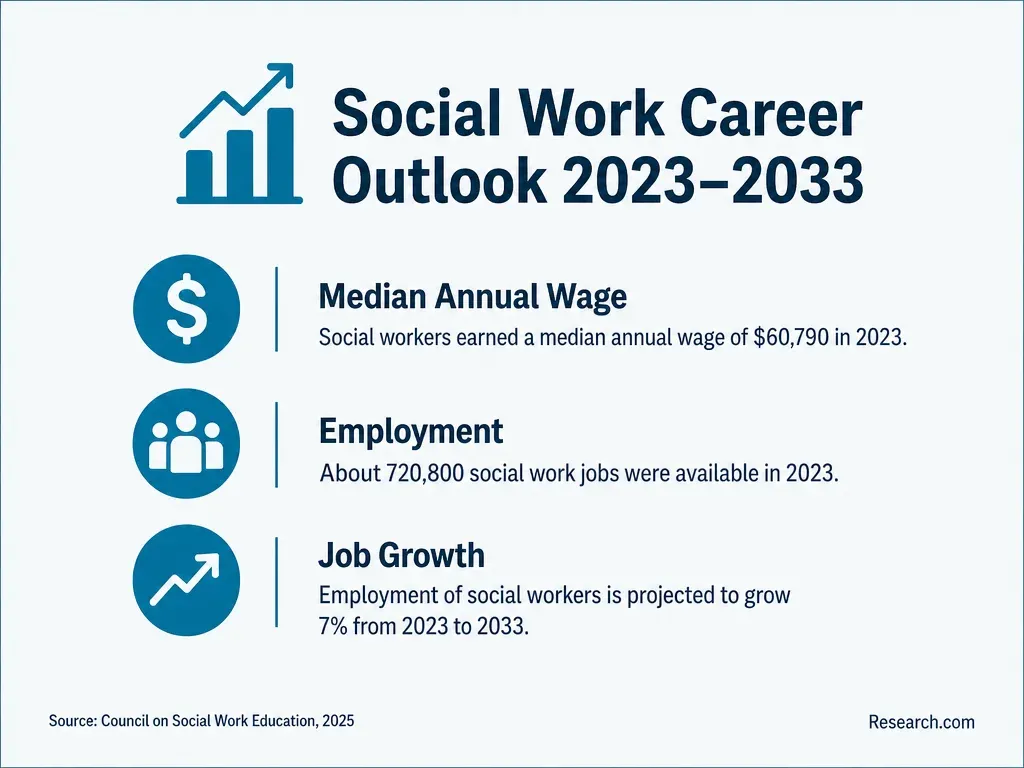
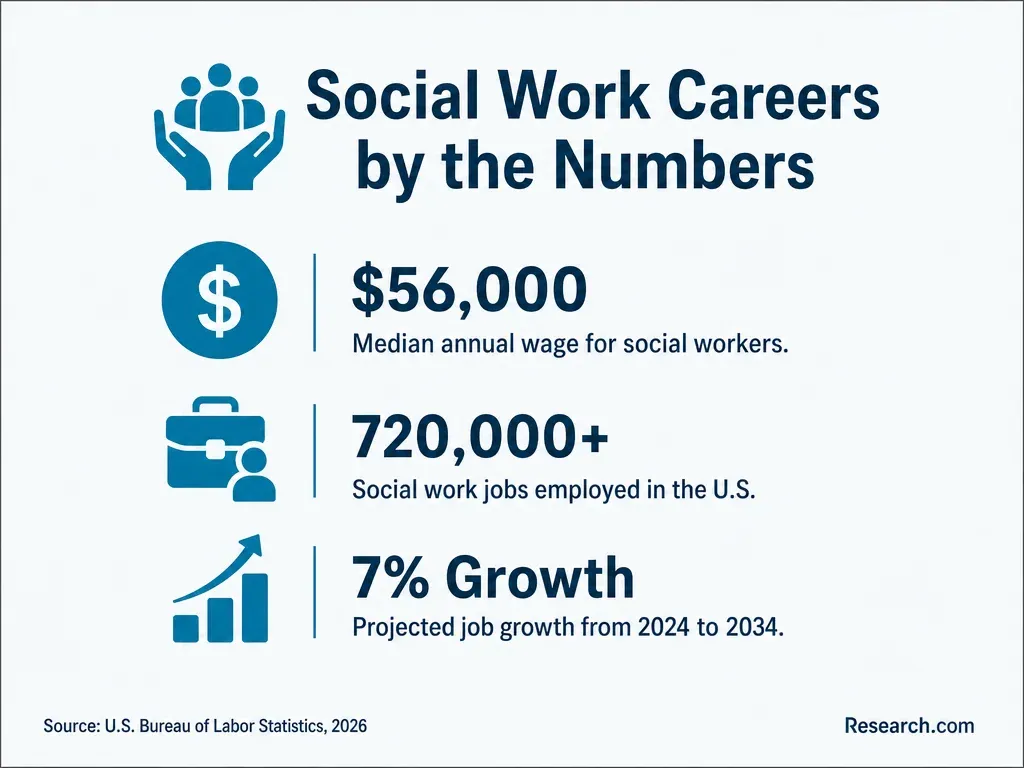
For broader context, the U.S. Bureau of Labor Statistics reports a $60,280 national median annual wage in May 2025 and 10% projected employment growth from 2025 to 2035 for mental health and substance abuse social workers. That occupation includes workers with different credentials and does not isolate Hawaii LCSWs. When weighing an offer, compare pay against paid supervision, benefits, clinical caseload access, and the time needed to qualify. A guide to evaluating MSW degree value can inform the earlier education investment, but it cannot predict your Hawaii wages.
Other Things You Should Know About Social Work
No automatic recognition should be assumed. Keep the original supervisor verifications and ask DCCA to assess the experience against Hawaii's requirements before relying on it.
Yes, potentially. Obtain each departing supervisor's verification promptly and check that the new role preserves qualifying duties and supervision.
No. Insurers and employers have separate enrollment, contracting, and billing requirements.
Not automatically. Check the law and licensing requirements where the client is located, as well as Hawaii's rules and your employer's policies.
- Application Forms for Licensed Clinical Social Worker | nysed.gov https://www.op.nysed.gov/professions/licensed-clinical-social-worker/application-forms
- Social Worker Program - DCCA Hawaii https://cca.hawaii.gov/pvl/programs/socialworker/
- Social Work Workforce, Licensing, and Hawai'i: An Overview | nih.gov https://pmc.ncbi.nlm.nih.gov/articles/PMC12403241/
- Hawaii LCSW Requirements (2026) | Hours, Exams & Timeline | License Trail https://www.licensetrail.com/licenses/hawaii/licensed-clinical-social-worker
- LCSW Supervision - Hawaii - NASW https://naswhi.socialworkers.org/Professional-Development/Licensing/LCSW-Supervision
- How to Become an LCSW in Hawaii (2026 Guide) | socialworktestprep.com https://socialworktestprep.com/path/how-to-become-lcsw-in-hawaii
- Clinical Supervision Requirements in Hawaii - Guidara https://www.guidara.com/resources/state-requirements/hawaii