2027 Employee Assistance vs Private Practice Social Work: Comparing Professional Settings
Audited and Verified:
Our Editorial and Data Verification Process
Research.com uses government datasets, official education statistics and primary institutional information to support its career and degree guides. Our review process checks factual accuracy, occupational definitions, source dates and the requirements associated with the credentials discussed.
How This Article Was Fact-Checked
Our editorial team verifies salary estimates, employment projections, education requirements and program information against original data providers and official organizations. Salary figures are checked against the relevant occupational definitions and reporting periods. Information about licensure, accreditation and required in-person training is reviewed separately.
Fact-checked and verified on:

Co-Founder and Chief Data Scientist
Employee assistance programs and private practices can both employ social workers, but they offer different kinds of client relationships, workplace support, and professional autonomy. The distinction matters if you are choosing a field placement, evaluating a job offer, or planning a move toward independent clinical work.
This comparison explains what each setting actually involves, which qualifications to verify, and how pay, schedules, and ethical obligations affect the choice. Use it to identify the role that fits your current credentials and the career you want to build.
Key Things You Should Know
- Employee assistance program (EAP) roles often emphasize brief assessment, short-term support, and referrals; private practice usually centers on ongoing services that the clinician is licensed to provide.
- Independent psychotherapy generally requires a state-specific clinical license, not just an MSW or clinical concentration. EAP qualifications depend on the actual duties and employer.
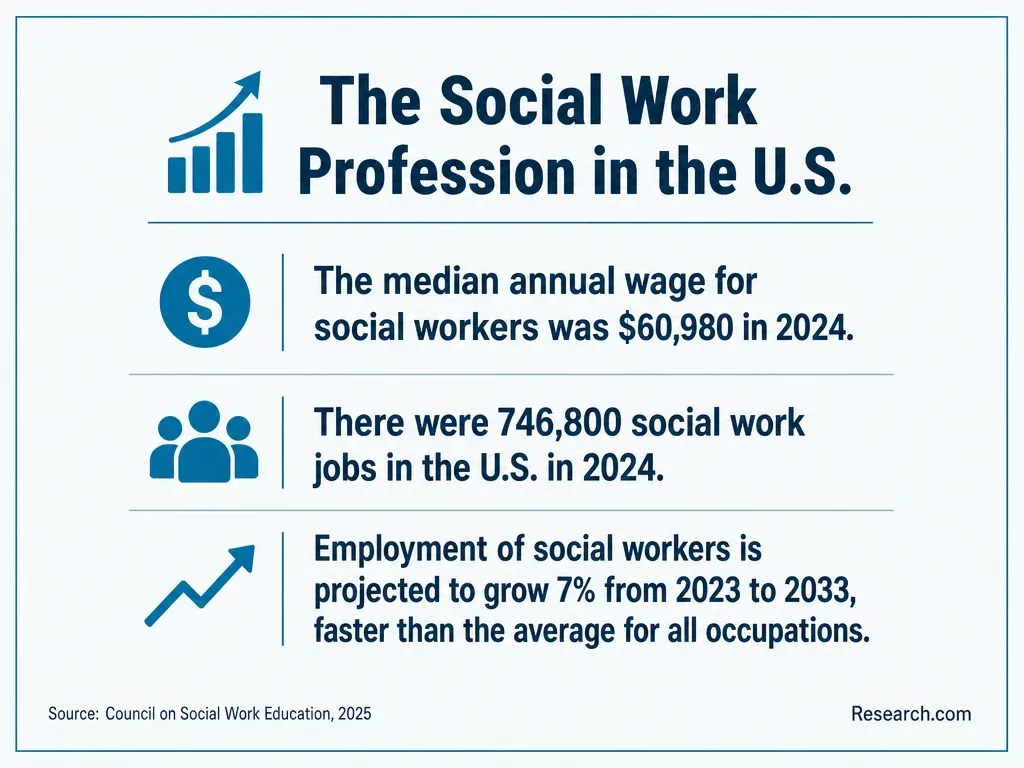
- The U.S. Bureau of Labor Statistics reports a May 2025 median annual wage of $61,780 for social workers overall and projects 6% employment growth from 2025 to 2035; neither figure predicts earnings in either setting.
What is the difference between employee assistance and private practice social work?
An employee assistance program is an employer-sponsored service that helps eligible workers, and sometimes household members, address personal or work-related concerns. An EAP social worker may assess needs, provide brief counseling within the program's terms, respond to workplace incidents, or connect someone with longer-term care. The worker might be employed by an EAP vendor, a health system, or an employer.
In private practice, a social worker operates or joins a practice that serves clients directly. Depending on the clinician's license and the practice model, work may include psychotherapy, assessment, consultation, or other permitted services. Private practice does not always mean solo ownership: group practices may provide administrative support and supervision.
The comparison below focuses on the role as performed, not the job title. EAP contractors may also operate private practices, so the settings can overlap.
| Decision factor | Employee assistance | Private practice |
| Typical service model | Brief support, assessment, and referral within an employer-funded benefit | Services arranged with individual clients, often including longer-term treatment |
| Operational control | Program rules and employer or vendor contracts shape the role | More control over services and operations, subject to law, contracts, and ethics |
| Business responsibilities | Often handled largely by the employing organization | May include billing, records, marketing, and practice expenses |
| Best fit | Clinicians who value brief intervention and organizational resources | Clinicians who want sustained client work and can manage business uncertainty |
These are different career designs rather than a simple step from one to the other. For a broader view of MSW job families and professional development, compare the duties behind a job posting before treating either setting as a single occupation.
What licenses are required for employee assistance and private practice social workers?
Licensure follows duties and state law, not the setting's name. An EAP may employ licensed clinicians for counseling and assessment while also employing staff in referral, coordination, training, or administrative roles with different qualifications. A posting labeled "EAP counselor" may accept several behavioral health professions; a social work degree is not necessarily the only route.
A social worker providing psychotherapy independently in private practice generally needs the applicable state's independent clinical social work license. An MSW, a clinical field placement, an exam result, or employment under supervision does not by itself grant that authority. State boards determine qualifying education, examination rules where applicable, post-degree supervised experience, license issuance, and permitted practice. Check the board in the state where the client receives services, including for telehealth.
If you need an MSW before pursuing clinical licensure, admissions logistics are a separate decision: online MSW programs with alternative reference policies may offer another application route, but an easier application does not change state licensing requirements. Before accepting either job, ask which license category it requires, whether supervision is provided, and whether your proposed duties fall within your current authority.
How do salaries compare between employee assistance and private practice social workers?
There is no reliable national wage figure that cleanly separates EAP social workers from private-practice social workers. EAP positions may pay a salary or hourly wage with benefits; practice owners and contractors receive revenue from which they must cover expenses and unpaid work. A higher session fee is therefore not the same as higher take-home pay.
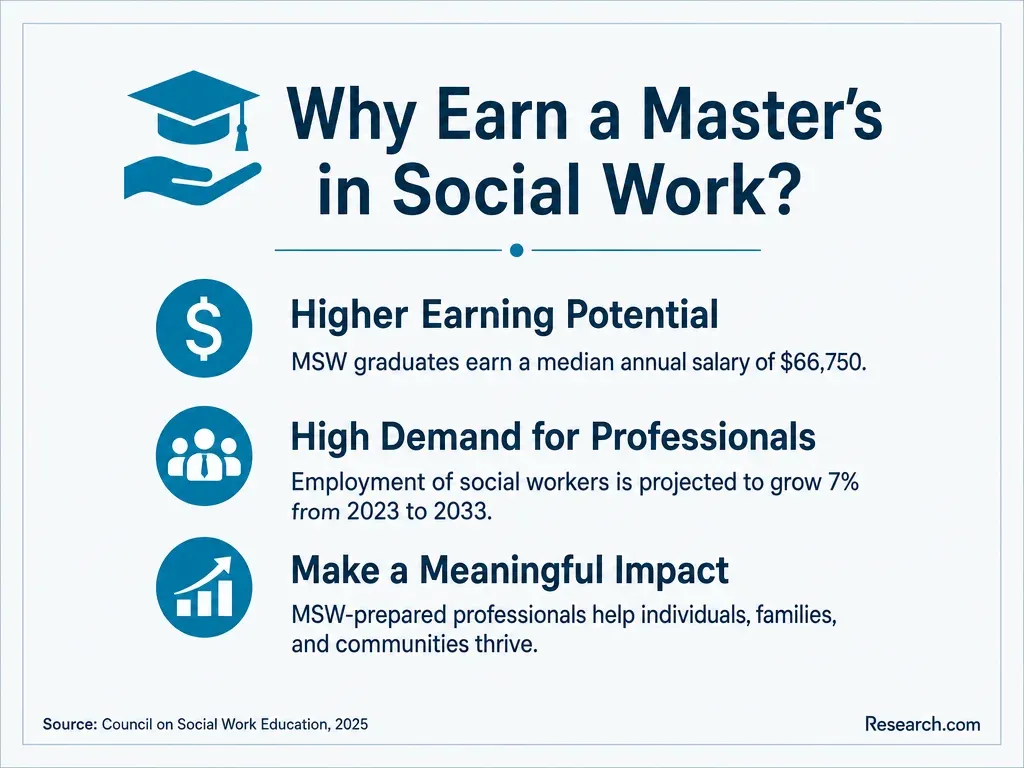
For context, the Bureau of Labor Statistics reports a May 2025 median annual wage of $61,780 for social workers overall, $60,280 for mental health and substance abuse social workers, and $67,880 for healthcare social workers. These occupational categories are not EAP-versus-private-practice categories, and their medians are not offers to new MSW graduates or estimates of a practice owner's profit.
Compare an EAP offer's salary, benefits, caseload expectations, and paid administrative time with a practice's expected collected fees - not posted rates. Subtract billing costs, insurance, office or telehealth expenses, taxes, unpaid cancellations, and time spent finding clients. Regional wages also matter; planning an MSW career with regional salary context can help frame a local comparison without substituting for actual offers or a practice budget.
EAP clients usually enter through an employment benefit and may arrive with concerns involving stress, family circumstances, substance use, or workplace conflict. The program may limit the number or type of sessions before a referral. Some EAP roles also include manager consultation or workplace training, which requires clear boundaries between organizational services and confidential individual care.
Private-practice clients generally select or are referred to a clinician for services that may continue beyond a brief EAP benefit. The clinician must judge whether a client's needs fit the practice's competence, availability, and referral resources. A solo practitioner may have greater control over appointments but must also accommodate clients, maintain records, and arrange coverage. An EAP employee may have a steadier schedule, though crisis coverage, evening appointments, or workplace events can change it.
If you are still studying, compare these work patterns with the actual demands of field education. Reviewing social work degree options and program formats can help you assess coursework flexibility, but online classes do not eliminate placement hours, live skills activities, or agency scheduling requirements.
Both settings require informed consent, appropriate records, professional boundaries, and compliance with applicable privacy, reporting, and licensing rules. The distinctive EAP challenge is that the employer pays for a benefit used by its workers. Clinicians should explain at the outset what information, if any, may go to an employer or referring manager, under what authority, and what remains confidential. An employer-funded service is not an invitation to share session details.
Private practice brings a different set of information flows: clients may authorize coordination with other providers, while insurers or other payers may require information for payment. The clinician also controls - or must closely evaluate - the practice's recordkeeping, telehealth tools, and access policies. In either setting, exceptions to confidentiality depend on applicable law and the circumstances; do not promise absolute secrecy.
For students comparing programs, ethics instruction should be paired with supervised opportunities to practice consent, documentation, and boundary decisions. Comparing online BSW program structures can help identify where that learning and its field-based assessment occur; program format alone does not demonstrate readiness for either workplace.
How can social workers advance or transition between these career paths?
An early-career social worker interested in either setting should first identify roles available under their current degree and license, then seek supervision that develops the relevant skills. EAP experience can build brief assessment, referral, and organizational consultation skills. Agency-based clinical work may provide experience with ongoing treatment and the documented supervision needed for a clinical-license application, if the state board accepts the arrangement.
Moving from EAP work to private practice requires more than an established referral network: verify independent practice authority, competence with the services you plan to offer, insurance and recordkeeping obligations, and a realistic budget. Moving from private practice to an EAP may require adapting to brief-service limits, vendor documentation, and consultation with organizations without compromising client confidentiality. A social worker can also choose a salaried agency or group-practice role instead of either extreme.
For experienced clinicians, targeted training or supervision may be more useful than another degree. Doctoral study is a separate investment; doctoral social work education on a budget is relevant if your objective is advanced practice leadership or another doctoral-level goal, not simply permission to open a practice. Before changing jobs, compare actual duties, supervisory support, benefits, and your state board's rules in writing.
Other Things You Should Know About Social Work
Often, yes. Check employment or contractor agreements for conflicts, referral restrictions, and recordkeeping requirements, and keep the two roles' consent and payment arrangements clear to clients.
No. Employers may make formal referrals under workplace policies, although receiving counseling is distinct from an employer's employment decisions. Ask the program to explain the referral terms and what information can be reported back.
Not universally. A job posting may prefer an EAP specialty credential, but its value and eligibility are separate from state licensure. Check the employer's requirements before paying for additional training or certification.
The program may offer referrals for continued services. Coverage, costs, and whether the person can continue with the same clinician depend on the EAP benefit, the clinician's arrangements, and any other available coverage.
- A Study of the Roles and Use of Licensed Social Workers in the United States | ASPE https://aspe.hhs.gov/study-roles-use-licensed-social-workers-united-states
- Levels and Eligibility Requirements | North Carolina Social Work Certification and Licensure Board https://www.ncswboard.gov/levels-and-eligibility-requirements/
- Confidentiality - Privacy Protections of LLNL EAP https://eap.llnl.gov/confidentiality
- Integrated Employee Assistance Program/Managed... - PMC https://pmc.ncbi.nlm.nih.gov/articles/PMC2794127/
- Social Work Licensure & Practice (LCSW) | nysed.gov https://www.op.nysed.gov/professions/licensed-clinical-social-worker/faq-licensure-practice
- Clinical Social Worker vs Therapist | Palo Alto University https://paloaltou.edu/resources/blog/clinical-social-worker-vs-therapist
- Social Work Salaries: Career Paths & Earning Potential | Virginia Commonwealth University https://onlinesocialwork.vcu.edu/blog/social-work-careers-salary-earning-potential/
- Becoming a licensed social worker | Association of Social Work Boards https://www.aswb.org/students/
- An Introduction to Employee Assistance Programs | NetCE https://www.netce.com/course/study-points/an-introduction-to-employee-assistance-programs/76254/3152
- Guide to Private Practice Social Work for Prospective LCSWs | Online MSW Programs https://www.onlinemswprograms.com/careers/private-practice-social-work/