2027 Bereavement Groups in Social Work: Facilitation Training and Social Work Roles
Audited and Verified:
Our Editorial and Data Verification Process
Research.com uses government datasets, official education statistics and primary institutional information to support its career and degree guides. Our review process checks factual accuracy, occupational definitions, source dates and the requirements associated with the credentials discussed.
How This Article Was Fact-Checked
Our editorial team verifies salary estimates, employment projections, education requirements and program information against original data providers and official organizations. Salary figures are checked against the relevant occupational definitions and reporting periods. Information about licensure, accreditation and required in-person training is reviewed separately.
Fact-checked and verified on:

Co-Founder and Chief Data Scientist
Leading a bereavement group takes more than being comfortable talking about grief. A facilitator must support people with different losses, manage group dynamics, recognize when someone needs individual care, and work within the agency's safety and confidentiality rules.
This guide is for social work students, early-career practitioners, and human services professionals deciding whether to pursue facilitator training, a social work degree, or clinical licensure. It explains what each pathway prepares you to do and how to choose one that fits the group you hope to lead.
Key Things You Should Know
- A bereavement support group is not automatically group psychotherapy: the group's purpose, facilitator duties, and employer requirements determine the preparation needed.
- A BSW or MSW does not itself grant independent clinical authority; state licensure rules govern clinical practice, while agencies may train qualified staff or volunteers to lead nonclinical groups.
- For career comparisons, the U.S. Bureau of Labor Statistics reports May 2025 median pay of $67,880 for healthcare social workers and $60,280 for mental health and substance abuse social workers, not salaries specific to bereavement facilitators.
What are bereavement groups, and how do social workers support them?
Bereavement groups bring people together after a death to share experiences, reduce isolation, and learn ways to navigate daily life. Some are open-ended peer-support groups; others meet for a set number of sessions or focus on a particular loss, such as the death of a spouse or child.
Support and therapy are different services: a group designed to offer mutual support should not be advertised or run as clinical treatment without the appropriate qualifications and safeguards.
Social workers may assess whether a group fits a participant's needs, explain its limits, facilitate discussion, connect members with practical resources, and arrange referrals when individual assessment or treatment is indicated.
In hospice or hospital settings, they may also coordinate with chaplains, nurses, and bereavement staff. Group access matters: timing, transportation, language, disability accommodations, and whether members can participate remotely can all shape who benefits.
If you are considering online degree routes into social work careers, start by identifying the service you want to provide. Facilitating a community support group and independently providing clinical group therapy call for different preparation.
How do you become a bereavement group facilitator?
Begin with the setting and the proposed group, not a certificate advertisement. A hospice volunteer coordinator, nonprofit program director, and behavioral health employer may set different entry requirements. Existing experience in healthcare, community outreach, education, or peer support can help, but it does not substitute for clinical authorization where that is required.
A practical route moves from a defined role to observed practice:
- Choose the population and format you hope to serve, then ask local employers whether the group is peer support, psychoeducation, or clinical treatment.
- Check the employer's degree, license, background-screening, and training requirements before paying for a course.
- Seek training with live facilitation practice, feedback, referral procedures, and clear guidance on the limits of the role.
- Observe or co-facilitate with an experienced leader, and arrange ongoing supervision or consultation appropriate to the service.
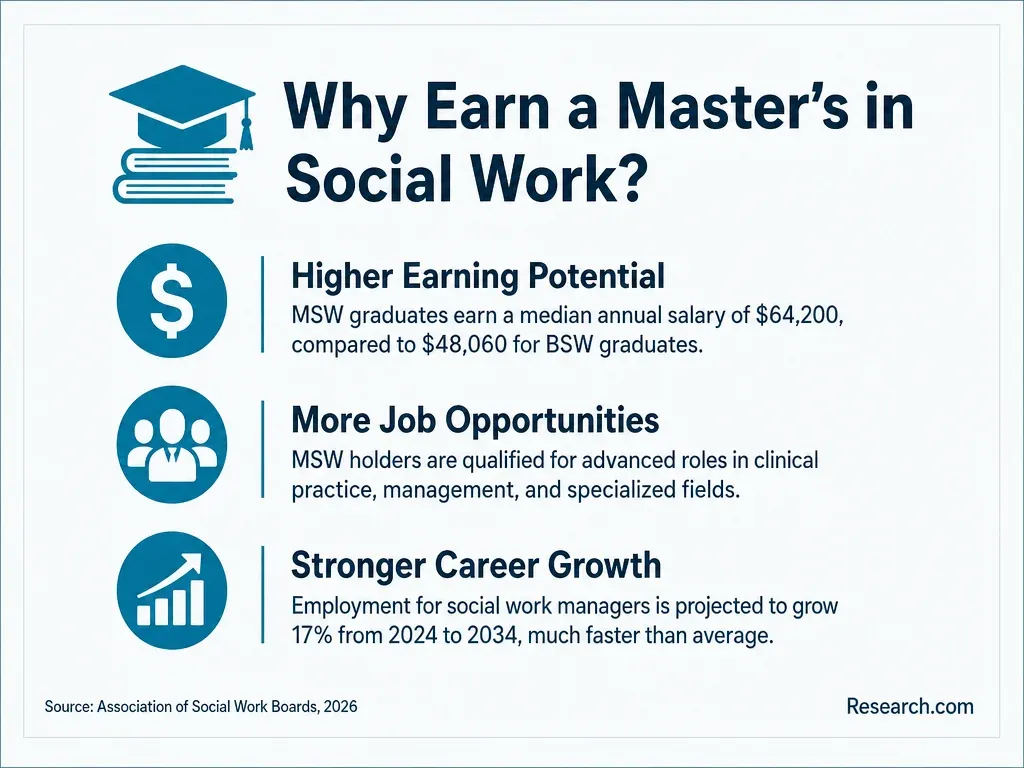
A BSW can prepare someone for generalist social work roles; an MSW may be the better route when the target job requires graduate-level practice. A non-BSW graduate can generally investigate traditional MSW admission, while advanced-standing routes have qualifying prior social work education requirements set by each program.
If an MSW is necessary for your target role, planning a shorter MSW pathway is useful only after checking eligibility and field-placement feasibility.

What licenses or certifications do bereavement group facilitators need?
There is no single U.S. license for every bereavement group facilitator. An agency may allow trained staff or volunteers to lead a nonclinical support group. A role involving clinical assessment or psychotherapy can require an applicable state license and, for independent practice, whatever post-degree supervised experience and other conditions that state imposes. An MSW, clinical concentration, or course-completion certificate does not by itself confer those privileges.
Grief-related certificates and continuing education can strengthen skills, but they are not substitutes for a state license. Before enrolling, ask who issues the credential, whether employers recognize it, what prior qualifications it requires, and whether it includes assessed facilitation practice.
For a clinical career, prioritize planning social work study for an intended licensing jurisdiction; confirm the applicable rules with that state's licensing board rather than relying on a course provider's description.
Online and campus-based programs can both prepare students for group work, but delivery format does not tell you how much live practice you will get. For this goal, compare opportunities to rehearse facilitation, receive feedback, and complete an approved placement with relevant group experience. An online MSW may still require scheduled live sessions, skills activities, and in-person field education.
Online study can reduce commuting and expand program choice; campus study may make local agency relationships and face-to-face skills practice easier to access. Neither advantage is automatic.
If work or caregiving limits your schedule, ask for the actual weekly timetable, placement hours, campus-visit requirements, and who secures a suitable site. Self-paced online MSW study options may offer flexibility in coursework, but "self-paced" should not be taken to include field placements or every live training activity.
A standalone facilitation workshop may take substantially less time than a degree, but its price and usefulness depend on the provider, practice component, and employer recognition.
A BSW commonly follows a four-year undergraduate plan, while a traditional MSW often takes about two years of full-time study; advanced-standing MSW timelines vary by program. Part-time enrollment and placement scheduling can extend any pathway.
Compare total cost for the role you want: tuition and fees, materials, required travel, placement-related expenses, and earnings you may give up during field education. Request a written estimate for your actual enrollment plan. If your aim is group facilitation rather than advanced practice leadership, neither a DSW nor a PhD is a routine prerequisite.
Even lower-cost online DSW programs should be judged against a specific leadership or practice-improvement objective, not as a default bereavement credential.
How can you evaluate accreditation and quality in social work programs?
For a BSW or MSW, verify the institution's accreditation and the exact social work program's Council on Social Work Education accreditation status, including whether it applies to your intended entry term. Then check the licensing board's educational requirements in the state where you plan to practice. Institutional accreditation, program accreditation, and state licensure approval answer different questions.
For bereavement work, quality also means relevant, supervised learning. Ask whether students can pursue hospice, hospital, or community placements; who develops and approves sites; whether group facilitation is a permitted learning activity; and what happens if a placement changes.
The school, not a student's independently arranged volunteer hours, decides what meets its field requirements. Review online MSW placement responsibilities before enrollment, and get the program's answers in writing before committing.
Other Things You Should Know About Social Work Programs
Usually not. A nonclinical bereavement support group is generally organized around a shared experience of loss. The program should explain its participation criteria and how it handles requests for care beyond the group's purpose.
Either a time-limited or ongoing format can work. A fixed series offers a predictable sequence; an ongoing group may be easier to enter after a recent loss. Choose based on participant needs and the agency's capacity to maintain consistent facilitation.
Follow the group's stated contact and privacy practices rather than assuming why the person left. A brief, appropriate check-in may offer information about future meetings or other resources without pressuring them to return.
It can gather voluntary feedback on accessibility, sense of support, and unmet needs, while protecting privacy. Attendance alone does not establish that a group improved participants' well-being.
- Coping with Bereavement and Grief | samhsa.gov https://www.samhsa.gov/communities/coping-bereavement-grief
- 6 Group Leadership, Concepts, and Techniques - NCBI - NIH https://www.ncbi.nlm.nih.gov/books/NBK64211/
- .07 Responsibilities of a Supervisor. | Library of Maryland Regulations https://regs.maryland.gov/us/md/exec/comar/10.42.08.07
- A rapid review of the evidence for online interventions... - PMC https://pmc.ncbi.nlm.nih.gov/articles/PMC11673319/
- Social Work Supervision | Counselor and Social Worker Board https://cswmft.ohio.gov/for-professionals/resources-for-professionals/social-work-supervision
- 14.2 Ethical Principles in Group Counseling | Guidelines for Online Teaching and Design https://open.lib.umn.edu/ethicalpractice/chapter/14-2-ethical-principles-in-group-counseling/
- Chapter 21., Section 2. Creating and Facilitating Peer Support Groups | ku.edu https://ctb.ku.edu/en/table-of-contents/implement/enhancing-support/peer-support-groups/main
- Full article: Effects of bereavement groups-a systematic review and meta-analysis | tandfonline.com https://www.tandfonline.com/doi/full/10.1080/07481187.2020.1772410
- Prolonged Grief Disorder | psychiatry.org https://www.psychiatry.org/patients-families/prolonged-grief-disorder/