# 1 position
Best Welding Training Programs & Trade Schools in Centralia for 2027
Audited and Verified:
Our Editorial and Data Verification Process
Research.com uses government datasets, official education statistics and primary institutional information to support its career and degree guides. Our review process checks factual accuracy, occupational definitions, source dates and the requirements associated with the credentials discussed.
How This Article Was Fact-Checked
Our editorial team verifies salary estimates, employment projections, education requirements and program information against original data providers and official organizations. Salary figures are checked against the relevant occupational definitions and reporting periods. Information about licensure, accreditation and required in-person training is reviewed separately.
Fact-checked and verified on:

Co-Founder and Chief Data Scientist

Reviewed by Karolina Broda
Fact-Checker and Data Verification
Choosing welding training in Centralia, Illinois, means deciding how much shop practice you need - and whether a school program or paid training is the better investment. The U.S. Bureau of Labor Statistics projects 2.4% national employment growth for welders, cutters, solderers, and brazers from 2025 to 2035, making preparation for specific jobs more useful than a broad promise of demand. This guide compares credentials, costs, hands-on training, and career entry. It also accompanies a Best Welder Trade Schools in Centralia for 2027 ranking created by the Research.com team of data scientists to help students identify programs worth considering.
Key findings about welder degrees in Centralia
- For a Centralia applicant, the decisive comparison is supervised shop time and weld-test preparation, not whether two programs award similarly named certificates; ask Kaskaskia College for its current welding curriculum and shop schedule.
- The national median annual wage for welders, cutters, solderers, and brazers was $53,750 in May 2025 (U.S. Bureau of Labor Statistics). It is not a Centralia starting-wage estimate; compare local job postings before borrowing for training.
- Illinois does not generally require a statewide occupational license simply to work as a welder, but employers or projects may require demonstrated weld qualifications. Compare school costs with paid apprenticeship or employer training, including tools, travel, and earnings forgone.
Table of Contents
- Best Welding Training Programs & Trade Schools in Centralia for 2027
- What can I expect from a welder trade school program in Centralia?
- Where can I work with a welder trade school training in Centralia?
What can I expect from a welder trade school program in Centralia?
Expect instruction in welding safety, reading fabrication drawings, preparing and fitting metal, and producing welds that an instructor can inspect and test. The practical question is whether you can practice the processes, positions, and materials used in the jobs you want. For someone considering work around Centralia and nearby southern Illinois communities, that may mean comparing fabrication-shop skills with the different requirements of structural, maintenance, or pipe work - not assuming one introductory course covers all three.
Kaskaskia College is a local school option to investigate. Ask for the current course sequence, actual supervised shop hours, equipment available to each student, and whether the program includes work-based experience. A shorter certificate can suit someone seeking entry-level production work; a longer program may make sense if its additional practice matches a target employer's tests. Paid employer training may be a better fit for someone who already has access to an entry-level position. Readers comparing career certifications that pay well should check what each credential verifies: completing a course is different from passing a welding performance test.
Where can I work with a welder trade school training in Centralia?
Potential settings include metal fabrication, manufacturing, equipment repair, construction, and maintenance. The U.S. Bureau of Labor Statistics describes welding work across manufacturing and construction, but openings for a particular process can vary sharply by employer. Centralia applicants should search commuting-distance postings toward surrounding southern Illinois employment centers and note whether employers request MIG/GMAW production welding, stick/SMAW field work, TIG/GTAW, blueprint reading, or a site-specific test.
A school credential can help you obtain an interview; it does not substitute for an employer's demonstration of safe, accurate work. If local postings concentrate on a process your preferred program barely teaches, request a course outline before committing - or consider an employer willing to train on its equipment.
The U.S. Bureau of Labor Statistics reports a $53,750 national median annual wage in May 2025 for welders, cutters, solderers, and brazers. That figure covers experienced workers as well as newer workers and is not a Centralia wage, an entry-level offer, or a promised outcome. Pay can differ with process, shift, overtime, travel, and the difficulty of the welds an employer requires.
Before using wages to justify tuition or debt, compare current local job postings with the skills taught and ask employers what they pay trainees versus welders who pass their qualification tests. For a commute beyond Centralia, include fuel and travel time in the comparison. The Illinois Department of Employment Security and U.S. Bureau of Labor Statistics occupational wage tools can provide broader-area context, but their published geography may not isolate the city.
There is no single required number of school hours for every Illinois welding job. Completion time depends on the credential's course requirements, whether you attend full time, and how much shop practice is scheduled. Ask Kaskaskia College for the current credit or clock hours, the share spent welding rather than in lectures, course availability by term, and the earliest realistic completion date for your schedule.
A short introductory course may get you ready to apply for trainee work but may not provide enough practice for a demanding pipe or structural test. A registered apprenticeship combines paid work and related instruction under its sponsor's standards; its schedule and entry requirements are not interchangeable with a school certificate (U.S. Department of Labor, Apprenticeship.gov). For working adults comparing fastest degree college options for working adults, welding requires a different time calculation: count access to supervised shop practice, not just the time until a credential is issued.
Online or hybrid instruction can cover welding theory, safety concepts, symbols, and some blueprint-reading exercises. It cannot replace striking an arc, adjusting a machine, positioning material, controlling a weld pool, or having a finished weld assessed in person. A program marketed as online should identify exactly where and when students use a supervised shop and who supplies equipment and consumables.
On-campus training is often the more direct choice if you need regular access to booths, instructor feedback, and practice before an employer test. Hybrid study may help someone balancing shifts, provided the required shop sessions and commute are workable. A purely remote course should be treated as supplemental knowledge, not proof of welding ability. Lists of online programs that pay well are therefore not evidence that an online-only welding credential will meet an employer's practical requirements.
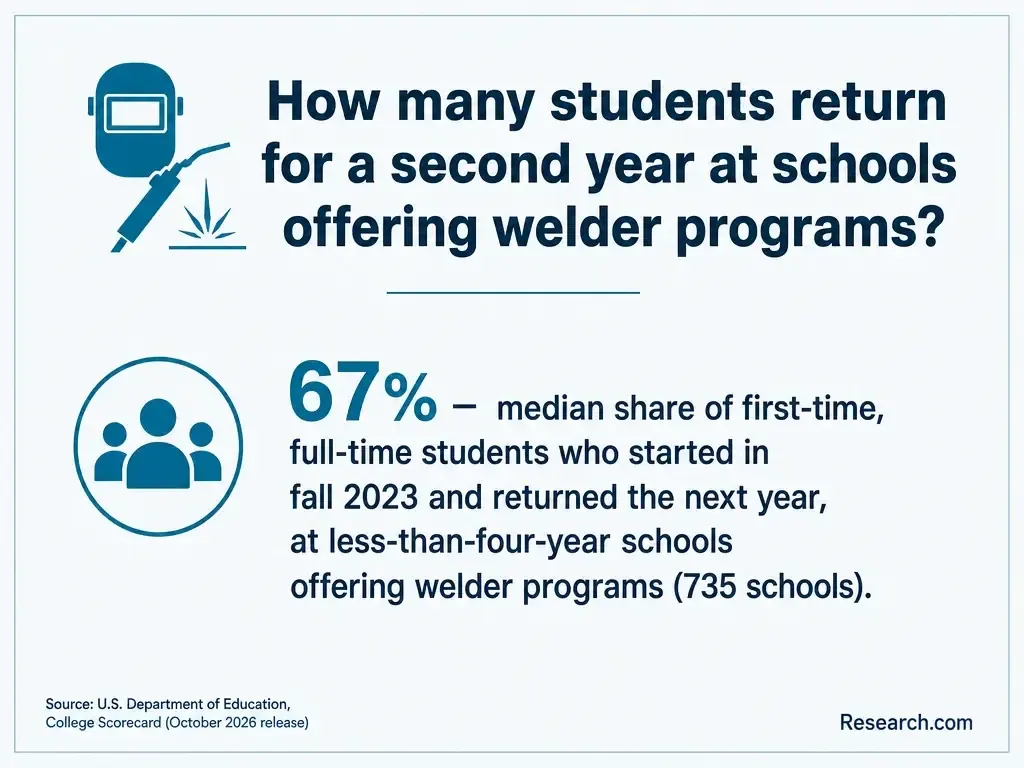
A reliable Centralia-wide average for welding training is not available from the cited sources: a public-college program, a short course, and paid workplace training have different cost structures. Request a current, program-specific total from Kaskaskia College rather than relying on a college-wide tuition figure. The comparison below identifies costs that can change which route is affordable.
| Pathway | Costs to verify | Possible offset |
| College welding program | Tuition, mandatory fees, books, consumables, PPE, tools, and travel to the shop | Eligible grants, scholarships, or other aid |
| Registered apprenticeship | Required tools, PPE, travel, and any sponsor-specified expenses | Wages earned during training |
| Employer-sponsored training | Unpaid preparation time, commuting, and items the employer does not supply | Employer-paid instruction or wages, if offered |
Ask whether the specific credential is eligible for federal student aid; institutional participation alone does not establish program eligibility (Federal Student Aid). Illinois residents can also ask about applicable state aid through the Illinois Student Assistance Commission and workforce assistance through the state's workforce system. To judge value, compare likely completion, aid, debt, time away from work, and plausible post-training pay over a realistic time horizon - not tuition alone. A search for phd no dissertation online addresses a different educational investment and should not be used as a cost benchmark for shop training.
The credential depends on the route: a school may award a welding certificate or, where offered, an associate degree; an apprenticeship provides the completion credential specified by its registered program; an employer may document training without awarding a college credential. Verify Kaskaskia College's current award and course requirements rather than assuming every welding option there leads to the same credential.
Keep three documents separate. A school award records completed study. An AWS welding certification, if pursued, is governed by the American Welding Society's testing requirements. An employer or project qualification demonstrates performance under a specified procedure or code and may need to be repeated for a new job. Ask which, if any, tests are included in tuition and whether completed courses can count toward a later credential or apprenticeship; obtain any advanced-standing agreement in writing.
Requirements vary by provider and credential. Ask Kaskaskia College about its current application process, placement or prerequisite requirements, minimum age rules for particular activities, and when required PPE must be purchased. Physical access to the shop and a schedule that allows regular attendance matter as much as admission: welding involves heat, fumes, eye hazards, and prolonged standing or positioning (U.S. Bureau of Labor Statistics; Occupational Safety and Health Administration).
An apprenticeship or employer-sponsored position has its own hiring or selection process; school admission does not reserve an apprenticeship slot. Before applying, confirm whether you need a high school credential, an aptitude assessment, a driver's license for travel between worksites, or a pre-employment test. Do not assume those conditions apply to every Centralia program or job.
A useful curriculum connects safe setup and operation to measurable weld quality. Look for supervised practice in processes relevant to your target work - commonly shielded metal arc welding, gas metal arc welding, flux-cored arc welding, or gas tungsten arc welding - along with cutting, fit-up, measurement, welding symbols, and visual inspection. Programs differ in how far students progress through weld positions, joint types, and materials; course names alone do not establish practical proficiency.
Ask to see the shop and a sample skills checklist. Find out whether students repeat unsuccessful welds, receive individual feedback, and practice an assessment comparable to local employers' tests. Those details matter more for job readiness than a long catalog of processes with little booth time. Safety instruction should address ventilation, fire prevention, and appropriate eye and skin protection (Occupational Safety and Health Administration).
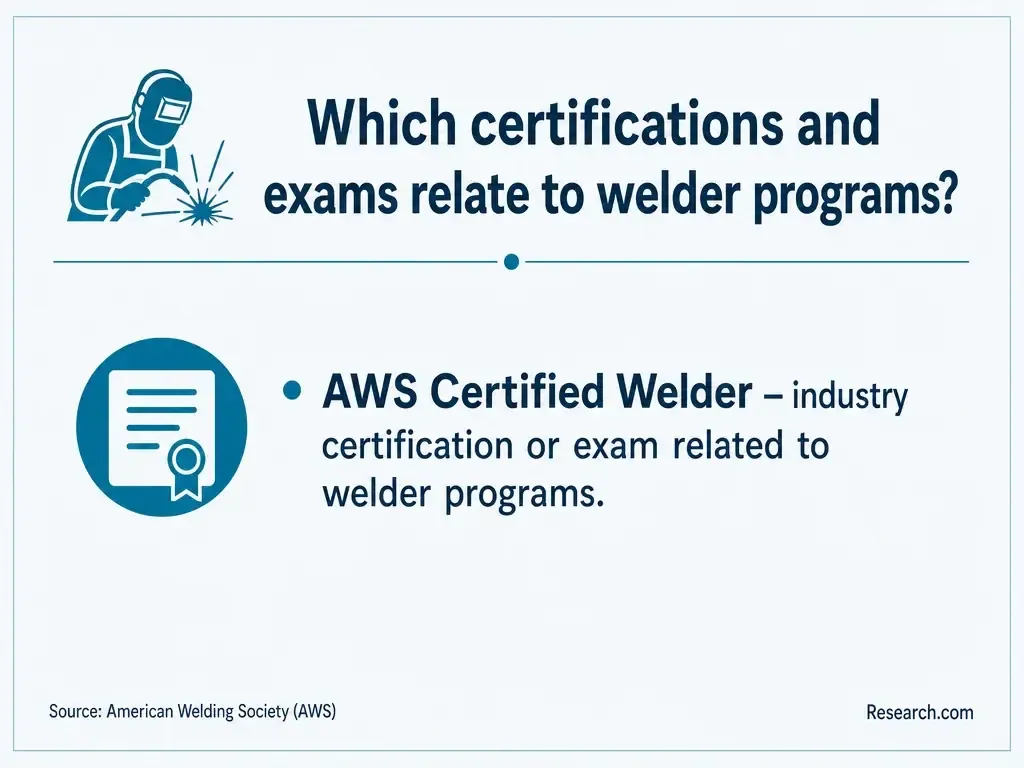
Illinois does not generally issue a statewide occupational license merely to work as a welder; welding is not listed as a general licensed profession by the Illinois Department of Financial and Professional Regulation. That does not mean every welding job is open without testing. An employer, contract, or applicable construction code can require qualification for a particular process, position, material, or procedure.
The American Welding Society offers voluntary credentials, including its Certified Welder program, but no school completion certificate automatically confers AWS certification. Before paying for an exam, ask a prospective employer which qualification it accepts and whether it conducts its own test. Institutional accreditation concerns the school; apprenticeship registration concerns a training sponsor; neither is an Illinois welding license or a substitute for a required performance test.
Start with the job you want, then work backward to the required processes and tests. Use the ranking to identify a school option, but compare it with a registered apprenticeship and entry-level employer training if either is available. A school program is most compelling when it gives you shop access and feedback you cannot obtain on the job at a reasonable total cost.
Use these checks before paying a deposit or declining paid training:
- Match the course outline and supervised shop practice to processes named in commuting-distance job postings.
- Request the exact credential, total program hours, shop schedule, current all-in costs, and any additional test fees in writing.
- Verify the institution's accreditation and the specific program's aid eligibility separately; ask whether an industry credential or employer test is actually included.
- Ask for welding-specific completion and employment information where available, and clarify whether reported earnings cover welders or all students.
- Compare likely debt and lost earnings with paid training, accounting for your chance of finishing and the time needed to pass an employer test.
A red flag is a claim that an online certificate alone makes you job-ready, or that a national median wage is your likely starting pay. Credential comparisons should stay occupation-specific: 1 year online doctorate programs do not answer whether a welding student gets enough supervised practice.
An initial route is trainee or entry-level production welding, followed by more independent fabrication, maintenance, or field work as skills and employer qualifications develop. Some welders specialize in a process or move into fitting, inspection, supervision, or shop ownership. Those later roles generally call for additional experience and, in some cases, separate credentials; an entry-level school certificate does not award them automatically (U.S. Bureau of Labor Statistics; American Welding Society).
Choose training around the next reachable step. Someone seeking a first shop job may value frequent practice and placement support; someone already employed in fabrication may benefit more from targeted training for a new process and an employer-recognized test. Ask whether a prospective employer will pay for that advanced training before funding it yourself.
The U.S. Bureau of Labor Statistics projects 2.4% growth nationally from 2025 to 2035 for welders, cutters, solderers, and brazers. This is a national occupational projection, not a forecast of openings in Centralia. It suggests that a training decision should rest less on growth headlines and more on whether you can meet the process and quality requirements of employers within a feasible commute.
Manufacturing methods and automated welding equipment can change the mix of tasks, making setup, fit-up, drawing interpretation, and inspection useful alongside manual welding skills (U.S. Bureau of Labor Statistics). Check recent local postings and speak with employers about their tests before choosing a specialty. If few suitable positions exist nearby, decide in advance whether commuting or relocating is acceptable; otherwise, even strong training may not match your employment goal.
Best Welding Training Programs & Trade Schools in Centralia for 2027
Education is a significant investment, so the Research.com team evaluates welding programs against other programs in the same occupation and location. The ranking is intended to help readers compare credible local options, not to replace a visit to the welding shop or a conversation with an employer. Only programs with completions reported to IPEDS are included; an apprenticeship or employer training program can be worthwhile without appearing in this college-oriented dataset.
Best-program rankings consider student outcomes; earnings and return on investment; costs and debt; and quality and recognition. Programmatic accreditation or relevant industry recognition receives 20% of the score, institutional accreditation 10%, and student support services 10%. The remaining 60% covers completion, full- and part-time retention, earnings one year after completion, earnings relative to annual attendance cost, tuition, attendance cost, debt - including debt held by students who withdrew - and federal loan default rates. An entropy-based method gives more weight to indicators that differ more across programs. Most-affordable rankings use only tuition, attendance cost, median debt, and default rates, with entropy-based weights; accreditation and other quality indicators do not enter that score.
The team uses the following data sources across its trade-program rankings. Some sources concern other occupations and should not be read as welding accreditors or welding certification authorities:
- IPEDS database - program completions and institutional reporting.
- National Center for Education Statistics - federal education data and definitions.
- College Scorecard database - available institutional costs, debt, and outcomes.
- Peterson's database - supplemental school and program information.
- Commission on Accreditation of Allied Health Education Programs - occupation-specific recognition information for applicable health programs, not welding.
- Accrediting Bureau of Health Education Schools - accreditation information for applicable health schools, not welding qualifications.
- Commission on Dental Accreditation - dental program information, not welding approval.
- Dental Assisting National Board - dental assisting credential information, not welding certification.
- National Center for Construction Education and Research - relevant construction-trade training and credential information where applicable.
- Apprenticeship.gov Partner Finder - registered-apprenticeship pathways to investigate alongside schools.
These measures can narrow a search, but institution-wide figures may not describe a particular welding cohort, and a ranking cannot verify the condition of every shop or an employer's hiring test. Readers can review the broader approach on Research.com's methodology page, then confirm current program details directly before enrolling.
# 2 position
Kaskaskia College - Welding Technology/Welder.
certificate or diplomaFrequently asked questions about welder programs in Centralia
No. It is a local school option to investigate, while employer-sponsored training and registered apprenticeships may also provide entry routes. Availability and selection requirements change, so check current openings with sponsors and employers.
You can study some theory online, but practical welding requires in-person equipment, supervised practice, and assessment. Ask where required shop sessions take place before enrolling in a hybrid program.
Not automatically. Employers may require a hands-on test for their process or project. Ask the program which tests students practice and compare those skills with local postings.
Choose based on access and fit. A certificate may offer structured shop practice before applying for work; an apprenticeship combines paid work with instruction but requires acceptance by a sponsor. Compare total cost, schedule, credential, and the work you will actually perform.
Illinois does not generally require a statewide occupational welding license. Particular employers or projects can still require a welding qualification test or recognized certification; confirm the requirement for your intended job.
- U.S. Bureau of Labor Statistics - Welders, Cutters, Solderers, and Brazers
Used to verify salary, employment outlook, and typical education requirements.
https://www.bls.gov/ooh/production/welders-cutters-solderers-and-brazers.htm - NCCER - Accredited Training
Used to verify programmatic accreditation or industry recognition of programs.
https://www.nccer.org/ - AWS - Certified Welder
Professional certification reference for graduates of this occupation.
https://www.aws.org/certification-and-education/professional-certification/certified-welder/ - Kaskaskia College - official website
Official school website (programs, tuition, admissions).
https://www.kaskaskia.edu/