
Most Affordable Veterinary Assistant Schools & Training - Budget-Friendly Veterinary Assistant Trade Programs in Dallas for 2026

Co-Founder and Chief Data Scientist
Choosing the right veterinary assistant trade school in Dallas can feel overwhelming, but this article is here to help. We've gathered a ranking of the most affordable and reputable programs created by the Research.com team of data scientists.
Whether you’re starting a new career or seeking a valuable certification, this guide will help you find programs that fit your budget and goals.
Discover opportunities to gain hands-on skills and open doors to a rewarding career in animal care. Your path to becoming a veterinary assistant starts here.
Key benefits of finishing veterinary assistant trade school in Dallas
- Graduates of veterinary assistant trade schools in Dallas can expect an average salary ranging from $33,537 to $33,971 per year, with hourly wages between $16 and $17, offering a strong start to a rewarding career.
- Career paths include working in animal hospitals, clinics, or specialty practices, with many graduates quickly advancing by gaining experience and specialized skills.
- Completing a veterinary assistant program online offers flexible scheduling and quicker entry into the workforce, as seen with successful online graduates from Dallas schools balancing study and personal commitments effectively.
What can I expect from veterinary assistant trade schools in Dallas?
Enrolling in a veterinary assistant trade school program in Dallas means expecting a mix of hands-on training and classroom learning tailored to real-world veterinary settings. Graduates from programs like Dallas College share how they gained practical skills in animal handling, basic patient evaluations, and assisting in surgeries, which built their confidence quickly. The experience of working with live animals-horses, cattle, and goats-at Dallas College's large teaching facility makes the learning tangible and rewarding.
Students also handle administrative duties such as appointment scheduling and billing, preparing them for the full scope of veterinary assistant roles. The programs usually require several hundred hours, with Dallas programs offering certificates that qualify students to take the Texas Veterinary Medical Association's Certified Veterinary Assistant exam, a crucial step for local employment.
Many appreciate the program's accredited status, which assures a quality education that meets industry standards. Admission is straightforward but requires a high school diploma, English proficiency, and a clear background, making it accessible. Financial aid options further ease the path, allowing students to focus on their studies and career goals with peace of mind.
Where can I work after finishing veterinary assistant trade schools in Dallas?
After completing a veterinary assistant trade school program in Dallas, graduates find many practical job opportunities across the city's vibrant animal care industry. Graduates often secure roles in general veterinary clinics and animal hospitals, where they assist with animal restraint, prepare vaccines, and support veterinarians-tasks they practiced hands-on during their training at popular Dallas trade schools. One graduate shared how their experience working in a small animal clinic made the transition from school to work smooth and rewarding.
Specialty and emergency animal hospitals also seek veterinary assistants, offering chances to work alongside advanced medical teams in fast-paced environments. Many Dallas graduates appreciate the challenge and growth from these roles, recalling how their trade school training prepared them for high-pressure situations.
Other career paths include pet boarding facilities and animal shelters, where assistants care for animals daily. Some graduates find fulfillment in client-facing positions like veterinary reception, combining animal care knowledge with strong communication skills learned during their studies.
Employers such as Banfield Pet Hospital and VCA Animal Hospitals actively recruit locally trained assistants, often providing benefits and flexible schedules, making these roles both accessible and rewarding for recent trade school completers in Dallas.
How much can I make after finishing veterinary assistant trade schools in Dallas?
After completing a veterinary assistant trade school program in Dallas, graduates typically earn between $33,500 and $44,000 annually. For example, many who finish popular Dallas programs report starting salaries around $34,000, which aligns with Salary.com's average of $33,971 per year. Entry-level wages often fall between $15.00 and $18.80 an hour, translating to roughly $31,000 to $39,000 annually for full-time work.
Graduates from well-known trade schools in Dallas often share that their starting pay depends on the type of employer-private clinics may offer different rates than larger animal hospitals. Entry-level roles tend to hover near the lower end of the pay scale, but with experience and additional certifications, earnings can increase well beyond initial expectations.
Many recent graduates express satisfaction with these wages, especially considering the relatively short training period. They appreciate that working in Dallas offers competitive pay compared to other Texas regions, making the investment in a local trade school feel worthwhile.
Veterinary assistants who start in Dallas clinics earning around $16 to $19 an hour often find opportunities to advance into supervisory roles, which boosts income and job satisfaction. As one graduate put it, "The hands-on training at Dallas trade schools prepared me well, and my paycheck reflects that effort."
Most Affordable Veterinary Assistant Schools & Training - Budget-Friendly Veterinary Assistant Trade Programs in Dallas for 2026
# 1 position
Dallas College - Veterinary/Animal Health Technology/Technician and Veterinary Assistant.
associateDallas College offers a program in Veterinary/Animal Health Technology/Technician and Veterinary Assistant that prepares students to assist veterinarians and animal health professionals in patient care and clinical procedures. The curriculum covers animal nursing, health, nutrition, handling, clinical pathology, radiology, anesthesiology, surgical assisting, and office administration. The program's annual in-state tuition is $2,370 and it is accredited by the Southern Association of Colleges and Schools Commission on Colleges.
# 2 position
Dallas College - Veterinary/Animal Health Technology/Technician and Veterinary Assistant.
certificate or diplomaDallas College offers a program in Veterinary/Animal Health Technology/Technician and Veterinary Assistant that prepares students to assist veterinarians and animal health professionals. The curriculum covers animal nursing, clinical procedures, radiology, anesthesiology, surgical assisting, and office administration. The program is accredited by the Southern Association of Colleges and Schools Commission on Colleges. Annual in-state tuition is $2,370.
Key Findings
- Texas does not require formal certification to work as a veterinary assistant, but completing a trade school program improves job prospects and earning potential.
- Programs usually last less than a year, require a high school diploma or GED, and include practical skills training and externships.
- Tuition costs range from $1,200 to $3,500, with some schools offering financial aid or payment plans.
- Graduates can expect starting salaries between $29,000 and $33,000, increasing up to $40,000 with experience.
- The Approved Veterinary Assistant (AVA) certification is optional but recognized and must be renewed every two years with continuing education.
How long does it take to complete veterinary assistant trade schools in Dallas?
Completing a veterinary assistant trade school program in Dallas typically takes between 6 weeks and 6 months, depending on the school and the program's intensity. Graduates from popular Dallas trade schools often share that the shorter, focused courses allowed them to quickly gain hands-on skills and start working sooner than they expected. For example, many found that a 3-month program balanced classroom learning with practical experience well, helping them feel confident in real clinic settings.
Dallas trade schools emphasize practical training, so students often spend significant time shadowing veterinarians or assisting with animal care. This real-world exposure makes the learning process feel tangible and rewarding. Graduates frequently mention how this fast-paced schedule keeps motivation high and helps them stay engaged, even when juggling other responsibilities.
Overall, if you're planning your path in Dallas, expect a program length that fits a busy lifestyle while providing solid preparation for entry-level veterinary assistant roles.
What's the difference between online and on-campus veterinary assistant trade school programs?
The primary difference between online and on-campus veterinary assistant trade school programs in Dallas lies in how instruction and practical skills are delivered. Graduates from popular Dallas trade schools often describe online programs as flexible and convenient, allowing them to complete coursework at their own pace. For instance, students upload videos demonstrating skills like drawing blood, then receive detailed feedback from instructors remotely. This suits those balancing work or family, as they can schedule hands-on practice locally with a certified veterinary professional.
On the other hand, on-campus programs offer immediate, face-to-face interaction and direct access to campus labs and simulation rooms. Graduates frequently mention feeling more confident due to real-time guidance and hands-on training under close supervision. The structured environment of Dallas trade schools helps build practical skills quickly, appealing to students who thrive with routine and in-person support.
Both paths require internships at veterinary clinics, but online students coordinate these independently, while on-campus students usually have them integrated into their curriculum, making each option distinct yet effective for entering the field.
What is the average cost of veterinary assistant trade schools in Dallas?
The average cost of veterinary assistant programs in Dallas varies depending on the school and course format, but it typically falls around $3,214 for a 13-week class in the Dallas/Fort Worth area. Graduates from Dallas College share that their Certified Veterinary Assistant program costs $2,795, a price many find reasonable given the comprehensive curriculum and hands-on experience offered. Others who attended Collin College report paying individual tuition fees for each course, such as $549 for Introduction to Veterinary Assisting, $249 for Veterinary Front Office, and $449 for Practicum. There are also additional expenses like a $13 liability fee and textbook costs around $216.65.
Many students appreciate the option to choose between in-person and online programs, with Dallas College providing an online course at the same price. This flexibility helps those juggling work or family commitments while pursuing their training. Those who completed their courses often highlight how understanding the tuition fees for veterinary assistant schools in Dallas ahead of time made budgeting easier and reduced stress as they progressed through their program.
When planning for tuition, it's important to remember there may be extra costs beyond listed fees, including uniforms, equipment, and certification exam charges. For anyone weighing the numbers, exploring trade programs vs vocational school can offer further clarity on the best educational path and how costs compare across different formats and institutions.
What financial aid is available for veterinary assistant trade schools in Dallas?
Students pursuing veterinary assistant trade school programs in Dallas often find a variety of financial aid options to ease their tuition burden. At Dallas College's Cedar Valley campus, for example, graduates recall how federal financial aid-including Pell Grants, student loans, and work-study-made their education affordable and manageable. Many appreciated the ability to combine these with over 400 foundation scholarships offered by Dallas College, some targeted specifically to health sciences students, which helped reduce out-of-pocket costs significantly.
Veterinary assistant students attending programs like the Distance Education Veterinary Technology Program (DEVTP) also benefit from federal aid, whether studying on-campus or remotely. Graduates often share how this flexibility allowed them to work while studying without overwhelming debt. Veterans and military personnel frequently tap into specialized grants or tuition assistance tailored to their service, making training more accessible.
Several students mention that payment plans with no interest offered by some schools helped them manage finances more comfortably, avoiding large lump-sum payments. Applying early is key since aid is limited and distributed on a first-come, first-served basis, a practical tip many alumni stress for future students.
What are the prerequisites for enrolling in veterinary assistant trade schools in Dallas?
To enroll in a veterinary assistant trade school program in Dallas, you generally need a high school diploma or GED. This basic educational requirement ensures you have the foundational skills for the coursework ahead.
Many Dallas trade schools also ask for:
- Proof of immunizations, especially for tetanus and flu, to protect both you and the animals you'll work with
- A background check, since hands-on work with animals and clinical settings requires trustworthiness
- Basic computer skills, as record-keeping and scheduling are part of daily duties
Graduates from popular Dallas programs often mention that showing genuine passion and a willingness to learn can outweigh minor gaps in experience.
For example, one graduate shared how their trade school valued volunteer work at local animal shelters, which helped them stand out during admissions.
Another highlighted how readiness to handle physical tasks and communicate clearly with vets and pet owners was emphasized during orientation.
In essence, meeting these prerequisites opens doors to a hands-on, rewarding career path in veterinary assistance right here in Dallas.
What are the typical courses in veterinary assistant trade schools in Dallas?
Veterinary assistant trade school programs in Dallas focus on practical courses that prepare you for real veterinary clinic work. Graduates often highlight how core classes like basic animal care, veterinary medical terminology, and veterinary office management gave them confidence to handle everyday tasks smoothly. For example, Dallas College's curriculum includes hands-on subjects such as introduction to veterinary technology and canine and feline clinical management, which make learning animal anatomy and clinic procedures clear and applicable.
Students appreciate the emphasis on clinical skills, including:
- Basic patient evaluation to assess animal health during visits
- Techniques for managing veterinary patients to ensure safe and calm handling
- Assisting with surgical procedures for real-world exposure
Laboratory courses like veterinary clinical pathology and parasitology teach how to process samples and identify diseases, crucial for supporting vets effectively. Administrative training on appointment scheduling and client communication rounds out the program, so students graduate ready to manage both animal care and office duties in busy Dallas clinics.
What are the available specializations in veterinary assistant trade schools in Dallas?
Veterinary assistant trade school programs in Dallas typically offer several targeted specializations that prepare students to thrive in different areas of animal care. Many graduates from popular Dallas schools focus on clinical assistance, developing hands-on skills like preparing patients for exams, supporting veterinarians during procedures, and managing specimens. These practical experiences build confidence and ensure readiness for the Certified Veterinary Assistant (CVA) credential.
Programs also emphasize laboratory and diagnostic support, training students in tasks such as processing lab specimens and assisting with imaging techniques. These skills cater to the growing demand for veterinary assistants capable of handling advanced diagnostics, especially within Dallas veterinary assistant programs animal care focus.
- Clinical assistance: patient prep, medication support, surgical aid
- Laboratory support: specimen handling, pharmacology processing, diagnostic imaging
- Veterinary office management: scheduling, billing, medical records administration
Administrative specialization is another pathway, ideal for those who want to combine animal care with the business side of veterinary clinics. Graduates often highlight how this blend of skills opens diverse job opportunities. While advanced specializations like anesthesia and emergency care are mostly part of veterinary technician programs, some Dallas trade schools incorporate elective exposures, giving veterinary assistant students a broader perspective.
Choosing these specializations thoughtfully helps students align training with career ambitions while staying competitive in Texas's evolving veterinary field. For students aiming toward stability and growth, understanding the most highest paid in medical field roles can also guide long-term decisions.
How do you choose the best veterinary assistant trade school program in Dallas?
Flexibility in scheduling is another essential aspect. Working students appreciate programs with evening or weekend classes that fit personal commitments while allowing consistent progress. Career support also matters significantly; graduates note that schools with strong job placement services improve their chances of launching successful veterinary assistant careers quickly. If you want to compare options broadly, consider checking out the best certificate and diploma programs online for additional insights into related educational paths.
What career paths are available for veterinary assistant trade school graduates in Dallas?
Veterinary assistant trade school graduates in Dallas often begin their careers in roles such as veterinary assistants, kennel technicians, or animal caretakers at clinics and animal hospitals. These positions provide hands-on experience with pet care, feeding, cleaning, and basic medical support. Many graduates from popular Dallas trade schools share how their training prepared them for these immediate job opportunities, highlighting a sense of accomplishment and readiness.
For those interested in client interaction, veterinary receptionist jobs are also common, managing scheduling, billing, and owner communication within busy practices. Graduates appreciate how these roles build organizational skills while staying close to animal health.
Career paths expand with certification through the Texas Veterinary Medical Association and potential advancement to veterinary technician positions, which require further education but offer increased responsibilities and better pay. Many Dallas employers encourage continuing education for staff, reflecting a supportive environment for career growth.
Graduates often explore affordable online veterinary technician programs to advance professionally.
What is the job market for veterinary assistant trade school graduates in Dallas?
The job market for veterinary assistant trade school graduates in Dallas is promising, with veterinary assistant job openings in Dallas exceeding 200 at mid-2025. Graduates from well-known trade schools in Dallas report feeling confident stepping into roles at general practice clinics, emergency animal hospitals, and specialty centers. Employers value candidates who have completed hands-on, accredited certificate programs, especially those recognized by NAVTA, ensuring practical readiness.
Many graduates share that their training prepared them well for essential duties, such as animal handling, lab procedures, and client communication, which employers actively seek. The demand for compassionate, dependable assistants remains strong as the Dallas-Fort Worth area's growing pet population supports stable employment.
- Hourly wages typically range from $15 to $20 for entry-level positions
- Higher salaries are possible in specialty and emergency clinics
- Some employers provide educational assistance for advancement into veterinary technician roles
Several graduates highlight how their trade school connections helped them secure full-time work quickly, with part-time and weekend shifts available for flexibility. Understanding the veterinary career path can also benefit from exploring what degree does a veterinarian need to further career options.
Overall, veterinary assistant salary trends Dallas show steady wages combined with growing opportunities, making trade school a practical step for those eager to enter the veterinary field locally.
Frequently Asked Questions about veterinary assistant
After completing a veterinary assistant trade school in Dallas, preparing for the job market involves several key steps. First, obtaining certification from the National Association of Veterinary Technicians in America (NAVTA) can improve employment prospects, though it is not mandatory. Texas requires veterinary assistants to work under licensed veterinarians or technicians, so understanding state regulations is crucial. Networking through local veterinary clinics and attending job fairs in Dallas can help connect graduates with employers. According to the Texas Workforce Commission, the demand for veterinary assistants in Dallas is expected to grow by 15% through 2030, making timely job preparation important.
Building a strong resume that highlights hands-on clinical experience gained during training is essential. Many Dallas employers value practical skills such as animal handling, laboratory procedures, and client communication. Additionally, continuing education through workshops or online courses can keep skills current and enhance employability. Joining professional groups like the Texas Veterinary Medical Association also offers access to job listings and career resources specific to the Dallas area.
Employers in Dallas seek veterinary assistant graduates who demonstrate strong technical skills and compassionate animal care. Key abilities include knowledge of animal anatomy, proper handling techniques, and familiarity with medical terminology. According to the Texas Workforce Commission, practical skills like administering medications and assisting in procedures are highly valued.
Communication skills are also critical since veterinary assistants must explain care instructions clearly to pet owners. Additionally, employers prefer candidates proficient in maintaining clean and safe work environments to prevent infections.
Time management and teamwork are essential as veterinary clinics often operate under fast-paced conditions. Local job listings emphasize reliability and the ability to follow veterinary professionals' directions accurately.
Finding internships in Dallas relevant to veterinary assistant trade school programs involves several strategic steps. Start by contacting local veterinary clinics and animal hospitals, as many offer internship opportunities to students. The Texas Workforce Commission reports that healthcare internships, including veterinary roles, have grown by 8% in the Dallas area over recent years, indicating increasing availability.
Additionally, trade schools often have partnerships with local veterinary practices. Students should inquire directly with their school's career services for internship listings or assistance. Networking through professional organizations like the Texas Veterinary Medical Association can also provide leads.
Online platforms such as Handshake and Indeed frequently list internships specific to veterinary assisting in Dallas. Applying early and tailoring your resume to highlight relevant skills improves chances of placement.
Obtaining a veterinary assistant trade school diploma in Dallas can significantly impact career mobility and advancement within the local job market. This credential demonstrates practical skills and knowledge valued by veterinary clinics and animal hospitals, often leading to higher starting wages compared to candidates without formal training. According to the Texas Workforce Commission, Dallas experiences steady demand for veterinary assistants, with opportunities for promotion to supervisory roles or specialized positions.
Trade school programs typically include hands-on training and certification preparation, which improve employability. Graduates also benefit from connections to local employers through school partnerships. As a result, diploma holders in Dallas report better job stability and potential for wage growth over time.
Students enrolled in veterinary assistant trade schools in Dallas often seek part-time jobs that enhance their practical skills. Common opportunities include working as kennel assistants, animal care attendants, or veterinary receptionists. These roles provide hands-on experience with animal handling and client communication, complementing classroom learning.
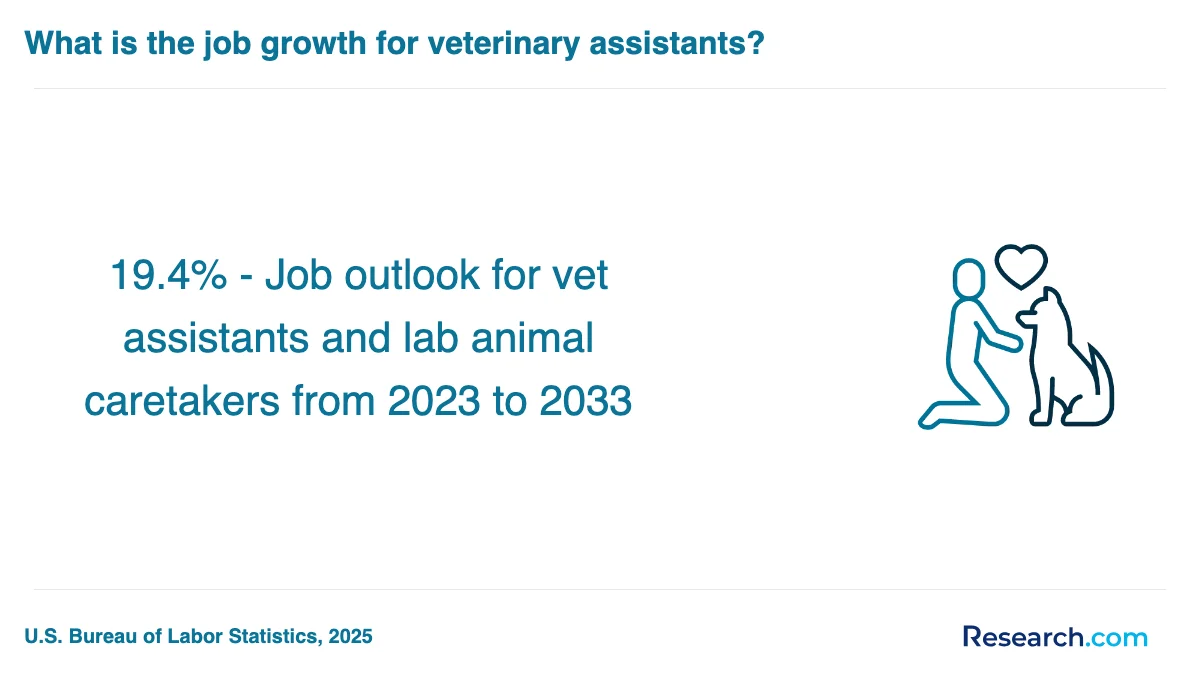
According to the U.S. Bureau of Labor Statistics, Dallas has a growing demand for veterinary support roles, with a median hourly wage of around $14.50 for veterinary assistants as of 2023. Local animal shelters and veterinary clinics frequently offer flexible schedules, ideal for students balancing education and work.
Such part-time positions not only build relevant skills but also improve employability after graduation, making them valuable for aspiring veterinary assistants.
Finding affordable Veterinary Assistant programs near me can significantly depend on your specific location, but Dallas, TX, offers several options. Community colleges and vocational schools near Dallas, TX, often provide cost-effective certificate or associate degree programs in veterinary technology. Research.com is a helpful resource to explore and compare programs and universities near your area to find one that fits your budget and educational needs.
Related Veterinary Assistant Rankings for Nearby Cities
Top Trending Rankings
References
- How Much Do Vet Assistants Make? Vet Assistant Salary in 2025 https://www.theacademyofpetcareers.com/blog/how-much-do-vet-assistants-make/
- Your Veterinary Assistant Career Guide (Salary, Job Duties, & Requirements) | Penn Foster https://www.pennfoster.edu/blog/your-veterinary-assistant-career-guide-salary-job-duties-requirements
- How to Become a Veterinary Assistant | Salary & Requirements https://nurse.org/healthcare/veterinary-assistant/
- What is the Difference Between a Vet Tech and a Vet Assistant? https://www.roo.vet/roo4you/what-is-the-difference-between-a-vet-tech-and-a-vet-assistant
- Veterinary Assistant – Casper College https://www.caspercollege.edu/programs-courses/continuing-education/businesses/veterinary-assistant/
- Veterinary Assistants and Laboratory Animal Caretakers : Occupational Outlook Handbook: : U.S. Bureau of Labor Statistics https://www.bls.gov/ooh/healthcare/veterinary-assistants-and-laboratory-animal-caretakers.htm
- Veterinary Assistant or Vet Tech? | Veterinary Assistant https://www.animalbehaviorcollege.com/veterinary-assistant/veterinary-technicians-and-veterinary-assistants/
- Veterinary Clinical Assistant — TCC https://www.tccd.edu/academics/courses-and-programs/programs-a-z/non-credit/veterinary-clinical-assistant/
- Top Veterinary Assistant Schools in Texas | Learn How to Become https://vetcareerschools.com/near-you/veterinary-assistant/texas/
- Texas Veterinary Medical Association > Education/Opportunities > CVA https://www.tvma.org/Education-Opportunities/CVA


