# 1 position


Audited and Verified:
Our Editorial and Data Verification Process
Research.com uses government datasets, official education statistics and primary institutional information to support its career and degree guides. Our review process checks factual accuracy, occupational definitions, source dates and the requirements associated with the credentials discussed.
How This Article Was Fact-Checked
Our editorial team verifies salary estimates, employment projections, education requirements and program information against original data providers and official organizations. Salary figures are checked against the relevant occupational definitions and reporting periods. Information about licensure, accreditation and required in-person training is reviewed separately.
Fact-checked and verified on:

Co-Founder and Chief Data Scientist

Reviewed by Karolina Broda
Fact-Checker and Data Verification
Choosing plumbing training in Presque Isle means looking beyond the school name: you need a route to supervised experience and Maine licensure. The U.S. Bureau of Labor Statistics projects 6.8% national employment growth for plumbers, pipefitters, and steamfitters from 2025 to 2035, making the training decision timely. This guide compares school and apprenticeship routes, costs, credentials, and career prospects. It also accompanies the Best Plumber Trade Schools in Presque Isle for 2027 ranking, created by the Research.com team of data scientists to help students identify programs worth considering.
Expect a mix of plumbing theory and physical practice: measuring and laying out pipe, joining materials, reading plans, testing systems, and working safely under applicable codes. A school shop can build initial competence, but it is not the same as supervised work on occupied buildings or construction sites. Ask Northern Maine Community College what plumbing-related training is currently offered, which credential it awards, and how much scheduled instruction takes place in a shop versus a classroom.
The routes below solve different problems. Compare the credential and the work experience together, because either one alone may be insufficient for your intended Maine license.
| Route | What it generally provides | Best fit and main limitation |
| School certificate or diploma | Structured introductory coursework and shop practice; credential and length vary by offering | Useful for building skills before seeking a sponsor; confirm how instruction relates to Maine licensing requirements |
| Associate-level trade program, if offered | A longer curriculum that may combine plumbing, heating, and general technical study | Useful if the added coursework serves your goal; compare its extra time and cost with a shorter route |
| Registered apprenticeship | Paid, supervised work plus related instruction under a registered sponsor | Strong fit if you can obtain a position; admission and job-site access depend on sponsor openings |
| Employer-sponsored supervised entry | Workplace learning, potentially alongside separate classes | Can reduce upfront school cost; verify license status, supervision, and whether the experience counts toward advancement |
In a rural area, a program's job-site connections and the distance to its shop or work placements can matter as much as its course catalog. The U.S. Bureau of Labor Statistics describes apprenticeship as a common route into plumbing; Maine's Plumbers' Examining Board, not the school's credential name, determines licensing eligibility.
Potential settings include residential service companies, commercial contractors, building-maintenance teams, and employers that install or repair water, drainage, and heating-related piping. The work differs: service calls emphasize diagnosis and customer communication, while construction emphasizes layout, plans, and coordination with other trades (U.S. Bureau of Labor Statistics).
Presque Isle applicants should ask where a prospective employer's actual job sites are, not just where its office is. Travel around Aroostook County can affect commuting costs, winter scheduling, and whether a placement is practical. Also ask whether the position offers properly supervised plumbing experience toward the Maine license you want; a general maintenance job may not provide the same pathway (Maine Plumbers' Examining Board).
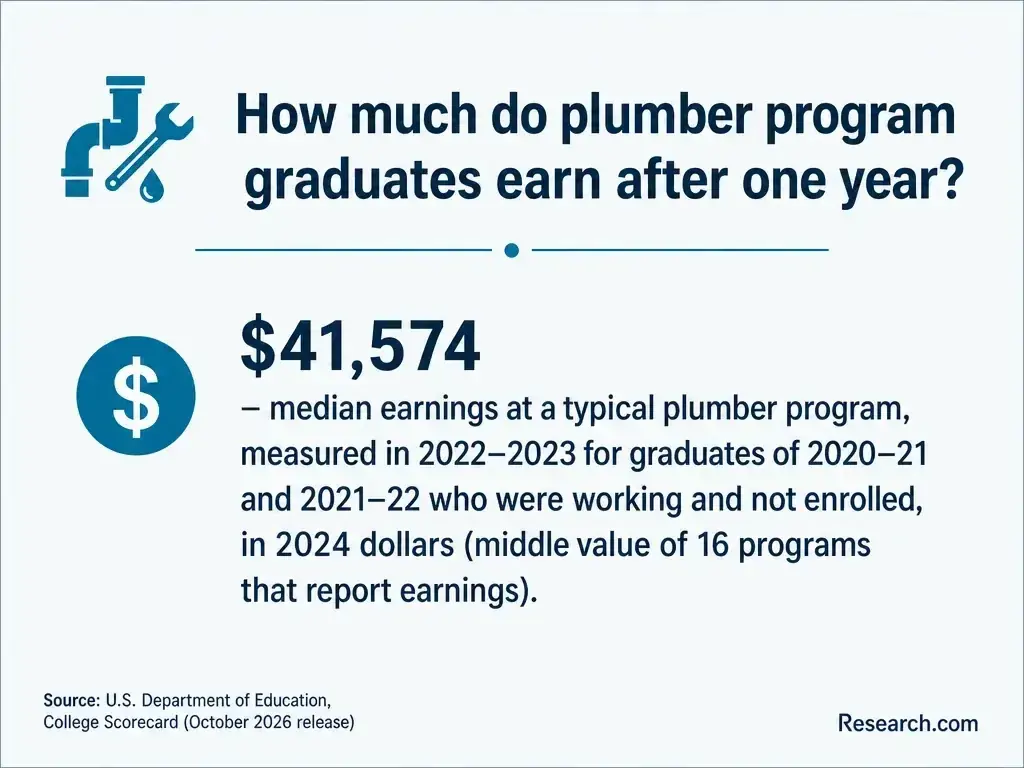
The U.S. Bureau of Labor Statistics reports a $63,800 national median annual wage in May 2025 for plumbers, pipefitters, and steamfitters combined. That figure includes experienced workers and related occupations. It is neither a Presque Isle-specific estimate nor a reasonable promise of starting pay to someone entering supervised training.
Before committing to a program, compare actual apprentice or trainee offers available within commuting range. Ask about starting hourly pay, progression, paid classroom time, benefits, and travel between job sites. Those terms will tell you more about your near-term finances than the national median. For a longer-term comparison, weigh expected earnings after licensing against training expenses, debt, time away from paid work, and the chance of completing each route.
There is no single Presque Isle program length. A short introductory credential may finish well before a longer trade program, while the U.S. Bureau of Labor Statistics describes plumbing apprenticeships as typically lasting four or five years. School completion and the time needed to qualify for independent work are therefore different timelines.
Request the current calendar, total classroom and shop contact hours, and any work-placement schedule in writing. Then ask Maine's Plumbers' Examining Board or a prospective sponsor whether that specific instruction or experience applies to the license you intend to pursue. A faster school schedule has limited value if it leaves you without a qualifying supervisor. Comparisons with one year masters programs online do not establish how quickly someone can enter licensed plumbing work.
Online instruction can cover terminology, calculations, plan reading, and code concepts. It cannot by itself demonstrate that you can assemble leak-free piping, operate tools safely, troubleshoot an installation, or perform supervised work. On-campus or worksite training provides opportunities to practice and have those skills evaluated (U.S. Bureau of Labor Statistics).
A hybrid option may help someone who lives far from a classroom, but only if its required shop sessions and worksite hours are reachable. Get a schedule showing exactly which activities are remote, where hands-on assessments occur, and who arranges supervision. Do not assume an online completion certificate meets Maine licensing requirements; confirm with the Maine Plumbers' Examining Board. Searches for are there phd programs without a dissertation address a different kind of study, not the practical assessment plumbing requires.
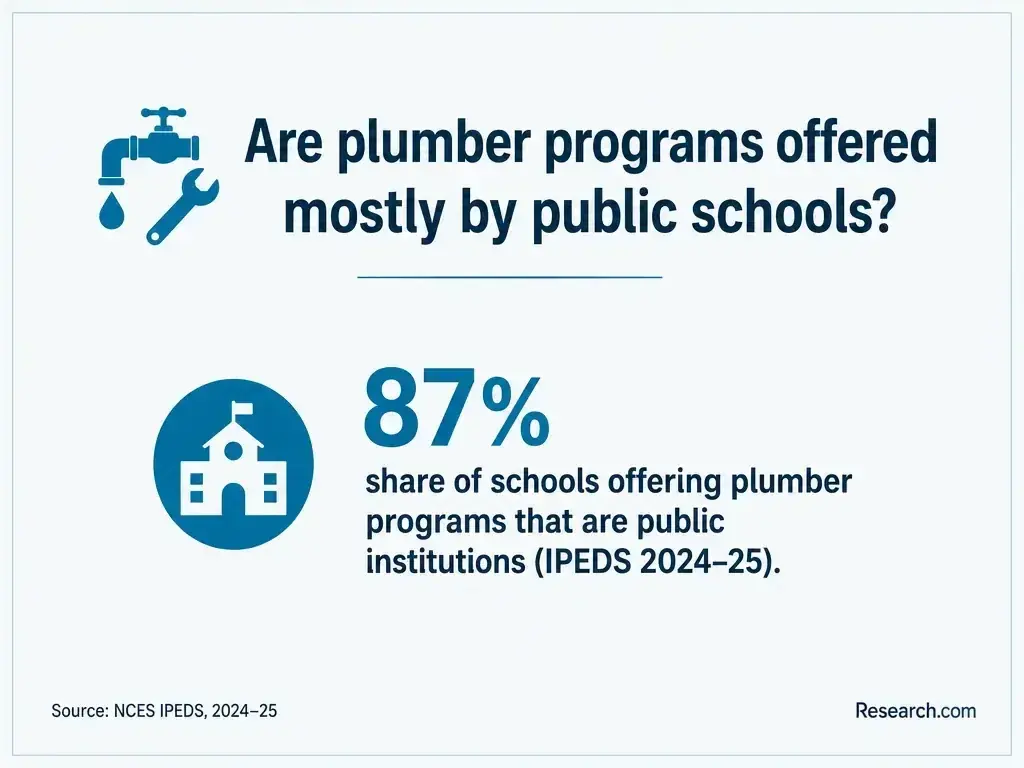
A defensible Presque Isle average cannot be given without current, comparable prices for the available programs. Tuition alone would understate the cost of becoming job-ready. Request an itemized estimate from Northern Maine Community College and any apprenticeship or employer sponsor you are considering, using the same intended start date and training period.
Compare mandatory tuition and fees, books, tools, safety equipment, consumable materials, application or examination charges, transportation, and earnings you would forgo while attending classes. Ask who supplies tools at a paid apprenticeship and whether classes are paid. Federal aid depends on the school and program's eligibility, not merely on a school's accreditation (Federal Student Aid). Maine CareerCenters can help applicants investigate workforce-training assistance; eligibility and available funding must be confirmed individually (Maine Department of Labor).
The cheapest advertised course is not necessarily the lowest-cost route if it requires substantial travel or cannot connect you to qualifying work. Likewise, comparisons with a cheapest bachelor degree online cannot substitute for a plumbing-specific, job-ready cost estimate.
The award depends on the particular offering: it could be a certificate, diploma, or associate-level trade credential. A registered apprenticeship instead combines employment and related instruction and leads to an apprenticeship completion credential when its requirements are met (U.S. Department of Labor). Ask the provider for the exact credential name rather than assuming that every "plumbing program" awards the same qualification.
Keep four distinctions clear. Institutional accreditation concerns the school; state school authorization concerns permission to operate; apprenticeship registration concerns the training arrangement; and Maine occupational licensure governs plumbing work. Industry credentials may document particular skills, but none of these labels automatically replaces the others (U.S. Department of Education; U.S. Department of Labor; Maine Plumbers' Examining Board). If you are comparing a one year online doctorate with trade credentials, the relevant plumbing question remains which supervised experience and license your chosen route can support.
Requirements vary by provider and route. Schools may ask for an application, prior schooling records, and placement information; apprenticeship sponsors also select applicants for employment and may assess math, readiness for physical work, and access to job sites (U.S. Bureau of Labor Statistics; U.S. Department of Labor). Do not assume that admission to a class also secures an apprenticeship position.
Before applying, ask for the current entry checklist and any tool or safety-gear requirements. For a paid position, ask who handles the applicable Maine trainee or apprentice licensing steps and when supervised work can begin. The Maine Plumbers' Examining Board is the authority for license categories and requirements; a provider's admissions decision is not a licensing decision.
Core training should connect calculations and drawings to work you can perform: measuring runs, selecting pipe and fittings, cutting and joining materials, installing supply and drainage components, checking for leaks, and diagnosing faults. Safety, code use, and communication with customers and other trades matter because plumbers work in both construction and existing buildings (U.S. Bureau of Labor Statistics).
Ask to see the current syllabus and shop inventory. A course centered mainly on reading and videos may help with terminology but offers a different preparation level from one that assesses assembled systems. If a program also covers heating, determine which activities are plumbing practice, which belong to another trade, and how any supervised fieldwork is documented for Maine licensing purposes.
Maine regulates plumbing work through its Plumbers' Examining Board. The license or supervised status needed depends on the work and your stage of training. Completing a school program does not itself make you a licensed journeyman or master plumber. The Board sets the applicable experience, education, examination, and supervision rules; confirm its current requirements before treating any course as a route to a particular license (Maine Plumbers' Examining Board).
Ask the Board and a prospective employer how your starting status will be handled, what records of hours you must keep, and when you could apply for the next license. A voluntary industry certificate can supplement evidence of skills, but it is not a substitute for Maine occupational licensure. This distinction is especially important if you expect to train or work across state lines, where licensing rules may differ.
Start with the job and Maine license you want, then work backward to the training and supervision they require. A ranking can help you find programs to investigate, but it cannot establish that a current offering fits your schedule, budget, or licensing pathway.
Use these checks when speaking with Northern Maine Community College, an apprenticeship sponsor, or an employer:
Be wary of a course promising independent practice on graduation, an "online-only" route with no practical assessment, or a price that excludes tools and travel. A shorter program may be worthwhile if it connects efficiently to supervised paid work; a longer one should justify its added cost with training that advances your specific goal.
A realistic progression begins with supervised plumbing work, continues through the experience and examination required for greater responsibility under Maine's licensing rules, and may later lead to service specialization, crew leadership, or operating a business (Maine Plumbers' Examining Board; U.S. Bureau of Labor Statistics). Plumbing, pipefitting, and steamfitting involve overlapping skills but are not identical jobs; choose training and supervision that match the work you actually want.
For someone who needs to earn while learning, an available paid apprenticeship or employer route may be preferable to paying for a longer school credential first. Someone who wants structured shop practice before applying to employers may value a school program more. Lists of quick online certifications that pay well are not evidence that a short online credential prepares a person for supervised plumbing work or Maine licensure.
The U.S. Bureau of Labor Statistics projects 6.8% growth nationally from 2025 to 2035 for the combined plumbers, pipefitters, and steamfitters occupation. That is a useful signal of broader demand, but it is not a forecast of openings in Presque Isle or a guarantee of local placement.
For a local decision, check current vacancies and apprenticeship openings across the area you can realistically travel, including whether employers need service work, construction work, or both. Compare the skills and license status requested with what a program actually provides. In a smaller labor market, securing a credible route to supervised employment can matter more than selecting a credential on the strength of a national projection alone.
Investing in training is a significant decision, so Research.com designed its ranking to help readers compare programs with other options in the same occupation and location. Only programs with completions reported to the Integrated Postsecondary Education Data System (IPEDS) are eligible. That boundary matters: an apprenticeship or employer program can be a strong option even if it does not appear in the ranking.
Best-program rankings assess student outcomes; earnings and return on investment; costs and debt; and quality and recognition. Relevant programmatic accreditation or industry recognition accounts for 20% of the score, institutional accreditation for 10%, and student support for 10%. The remaining 60% covers completion and retention, earnings one year after completion, earnings relative to annual attendance cost, tuition, attendance cost, student debt - including debt among students who withdrew - and federal loan default rates. An entropy-based method assigns more weight to indicators that vary more across programs. Most-affordable rankings instead score only tuition, attendance cost, debt, and default rates using that method; accreditation and other quality indicators are not part of their score.
The team uses multiple sources to check coverage and credibility. Some sources below concern occupations other than plumbing; their inclusion in the broader ranking methodology does not mean an allied-health accreditor approves plumbing training.
Use the ranking to narrow a shortlist, then confirm current program availability, Maine licensing alignment, hands-on training, and your own net cost. More detail on the approach appears in Research.com's methodology.
# 1 position
# 2 position
Not necessarily. School and supervised employment or apprenticeship can play different roles. Check the Maine Plumbers' Examining Board's current rules for the license you seek before choosing a route.
Do not assume so. Ask what plumbing-related offerings are currently available, whether work placements are arranged, and whether a placement is guaranteed or requires a separate employer application.
Online classes can teach theory, but plumbing also requires practical skills and supervised work. Confirm where a program conducts shop assessments and how its training relates to Maine licensing.
No school certificate alone establishes a right to independent plumbing work. Maine's Plumbers' Examining Board determines the applicable license, examination, and experience requirements.
It may be if you can obtain a suitable position and need income while training. School may be a better first step if you need structured practice before approaching employers. Compare both routes' supervision, schedule, total cost, and licensing alignment.