
Most Affordable HVAC Technician Schools & Training in Springfield for 2027
Audited and Verified:
Our Editorial and Data Verification Process
Research.com uses government datasets, official education statistics and primary institutional information to support its career and degree guides. Our review process checks factual accuracy, occupational definitions, source dates and the requirements associated with the credentials discussed.
How This Article Was Fact-Checked
Our editorial team verifies salary estimates, employment projections, education requirements and program information against original data providers and official organizations. Salary figures are checked against the relevant occupational definitions and reporting periods. Information about licensure, accreditation and required in-person training is reviewed separately.
Fact-checked and verified on:

Co-Founder and Chief Data Scientist

Reviewed by Karolina Broda
Fact-Checker and Data Verification
Choosing affordable HVAC training means comparing more than tuition: you need enough hands-on practice to become employable without taking on unnecessary debt. This guide to Springfield, Missouri, will help prospective students and career changers compare credentials, costs, apprenticeships, and entry requirements. The Research.com team of data scientists created the Most Affordable HVAC Technician Trade Schools in Springfield for 2027 ranking to help students identify programs worth considering. Nationally, HVAC mechanics and installers earned a median $61,010 in May 2025, according to the U.S. Bureau of Labor Statistics (BLS) - a useful benchmark, not a local starting-pay promise.
Key findings about HVAC technician degrees in Springfield
- Compare the job-ready cost, not just tuition. In Springfield, add fees, tools, safety gear, EPA Section 608 testing, and travel to labs or worksites; ask whether a paid apprenticeship would lower your net cost.
- Match training to the work. A short certificate can support entry-level service or installation work, while a longer diploma, associate degree, or apprenticeship may provide broader troubleshooting practice. Verify actual lab and field hours before enrolling.
- Use national pay as context, not a forecast. BLS reports a $61,010 national median for HVAC mechanics and installers in May 2025 and projects 10.9% national employment growth from 2025 to 2035. Neither figure establishes Springfield starting wages or guarantees a job.
Table of Contents
- Most Affordable HVAC Technician Schools & Training in Springfield for 2027
- What can I expect from an HVAC technician trade school program in Springfield?
- Where can I work with an HVAC technician trade school training in Springfield?
What can I expect from an HVAC technician trade school program in Springfield?
Expect instruction in heating, air conditioning, refrigeration, electrical controls, and safe installation and service. A useful program lets students test components, read wiring diagrams, measure airflow, diagnose faults, and work with real equipment - not just watch demonstrations. Ask how much scheduled time is spent in a shop and whether students troubleshoot systems individually or mostly observe.
Ozarks Technical Community College is one local public-college option to investigate. Compare its current HVAC offerings with registered apprenticeships and employer training available within your commuting range. A school program can provide structured preparation before a job search; an apprenticeship combines related instruction with paid, supervised work but depends on sponsor openings and may take longer to complete. Neither route makes someone independently qualified for every task on day one.
For a quick school comparison, request the current credential name, course sequence, scheduled contact and lab hours, equipment list, work-placement arrangements, and written total-cost estimate. Program titles alone do not reveal how much practical experience you will get.
Where can I work with an HVAC technician trade school training in Springfield?
Potential workplaces include residential installation and service firms, commercial mechanical contractors, facilities-maintenance departments, refrigeration-service companies, and employers maintaining their own buildings. The work setting changes the training you should seek: residential service emphasizes customer communication and varied household systems, while commercial work can require more experience with controls, larger equipment, and coordinated jobsite safety.
Springfield-area students should ask employers which entry roles they actually hire for - installer helper, maintenance trainee, or service apprentice - and whether travel across the surrounding service area is expected. A program with accessible local work-based training may be more useful than a lower-priced option that leaves you to arrange your own first supervised experience.
The latest national BLS Occupational Outlook Handbook figure supplied for this occupation is a $61,010 median annual wage in May 2025 for heating, air conditioning, and refrigeration mechanics and installers. A median describes workers at many experience levels across the United States; it is not a Springfield wage or a realistic guaranteed offer to a new trainee.
Before estimating your payback period, compare current Springfield metropolitan-area HVAC wage figures from BLS Occupational Employment and Wage Statistics with actual local entry-level job postings. Check whether quoted compensation depends on overtime, on-call work, commissions, a driving record, or prior experience. The broader trade school careers list and salaries can help you compare occupations, but use occupation- and location-matched figures for an HVAC decision.
Length depends on the credential and schedule. A focused certificate may take months, a broader diploma or associate degree generally requires a longer course sequence, and a registered apprenticeship spans multiple years of related instruction and paid on-the-job learning. These are pathway distinctions, not promises about any particular Springfield offering; obtain the provider's current calendar and required clock or credit hours.
Accelerated study may get you into an entry-level role sooner, but fewer weeks are valuable only if there is sufficient supervised troubleshooting time. Part-time study can preserve earnings while training, although it delays completion. If you are comparing short certificate programs, check whether the HVAC option covers the equipment and practical skills local employers request, rather than selecting it on duration alone.
Online coursework can cover theory, calculations, codes, and some diagnostic concepts. It cannot replace supervised practice connecting instruments, tracing electrical faults, evaluating airflow, or safely handling equipment. A hybrid option makes sense when its required shop sessions are reachable from Springfield and fit your work schedule; an entirely remote course is better treated as theory or refresher training unless it clearly arranges practical assessment.
The comparison below focuses on the training you can actually complete in each format. Confirm a provider's specific lab requirements before assuming that "online" means no travel.
| Format | Practical-training implication | Best fit |
| On campus | Scheduled access to equipment and instructor-supervised labs | Beginners who need structured hands-on practice |
| Hybrid | Remote theory plus required in-person labs or fieldwork | Working students who can reliably attend shop sessions |
| Fully online coursework | Practical skills must be developed and assessed separately | Workers supplementing existing hands-on experience |
Do not assume that completing online lessons qualifies you for refrigerant work. The U.S. Environmental Protection Agency (EPA) requires Section 608 technician certification for covered activities, regardless of where someone studied.
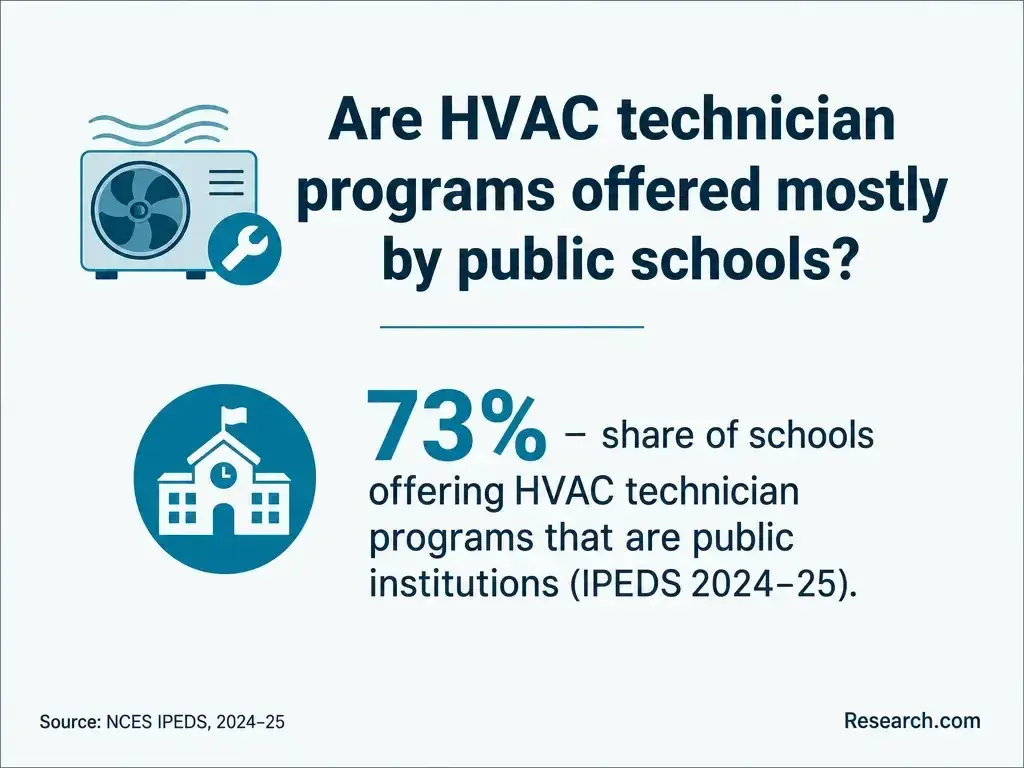
A defensible Springfield-wide average is not available from the information used here. Published tuition alone would also understate what many students pay: programs differ in length, included equipment, fees, and work-based training. Ask Ozarks Technical Community College and any other provider you are considering for an itemized, current quote tied to your residency and enrollment schedule.
Your comparison should include tuition and mandatory fees; books or software; tools, meters, consumables, and protective gear; certification-exam costs; and transportation to labs or worksites. Add earnings you may forgo while training. Then subtract grants or employer support you are actually eligible to receive, and account for wages from any paid apprenticeship. Federal Student Aid eligibility depends on the institution, program, and student - not simply on a school calling itself a trade school.
A lower sticker price is not necessarily the lower-cost route if you must buy substantial equipment separately or cannot complete the program around work. Conversely, a paid apprenticeship may reduce borrowing while requiring a longer commitment and an available sponsor.
The award depends on the pathway: a school may offer a certificate, diploma, or associate degree; a registered apprenticeship leads to a completion credential issued through its registered program. Employer training may document skills without awarding an academic credential. Request the exact credential name rather than assuming every "HVAC program" provides the same award or preparation.
These credentials are distinct from EPA Section 608 technician certification, which is tied to covered refrigerant work and requires passing the applicable exam under EPA rules. A school's institutional accreditation, a program's industry recognition, state authorization to operate, apprenticeship registration, and an individual's certification each answer different questions. None automatically substitutes for the others or establishes eligibility to perform every job independently.
Requirements vary by provider and route. Ask a school about its current application, placement, age, prior-schooling, and program-specific requirements; ask an apprenticeship sponsor separately about eligibility, selection, and available openings. Employers may also set conditions for driving, jobsite access, physical tasks, or safety training. Do not treat one provider's admissions rules as a Springfield-wide standard.
If you have prior mechanical experience, ask whether documented learning earns credit or advanced standing and whether those credits shorten the actual schedule and cost. For an apprenticeship, confirm how any prior experience would be evaluated by its sponsor; school credit does not automatically reduce registered on-the-job requirements.
Core instruction commonly covers the refrigeration cycle, heat transfer, electrical circuits, motors and controls, airflow, installation, diagnostics, and safety. The strongest entry-level preparation connects those topics in labs: students should practice taking measurements, interpreting what they mean, locating faults, and explaining repairs clearly to a supervisor or customer.
Ask whether the current equipment includes heat pumps and modern refrigerants, and how the curriculum addresses safe handling of mildly flammable refrigerants where relevant. Equipment and refrigerant practices change, so the practical question is whether students train on systems resembling those they will encounter - not whether a catalog lists a fashionable technology. EPA Section 608 exam preparation is useful, but passing an exam does not replace hands-on competence.
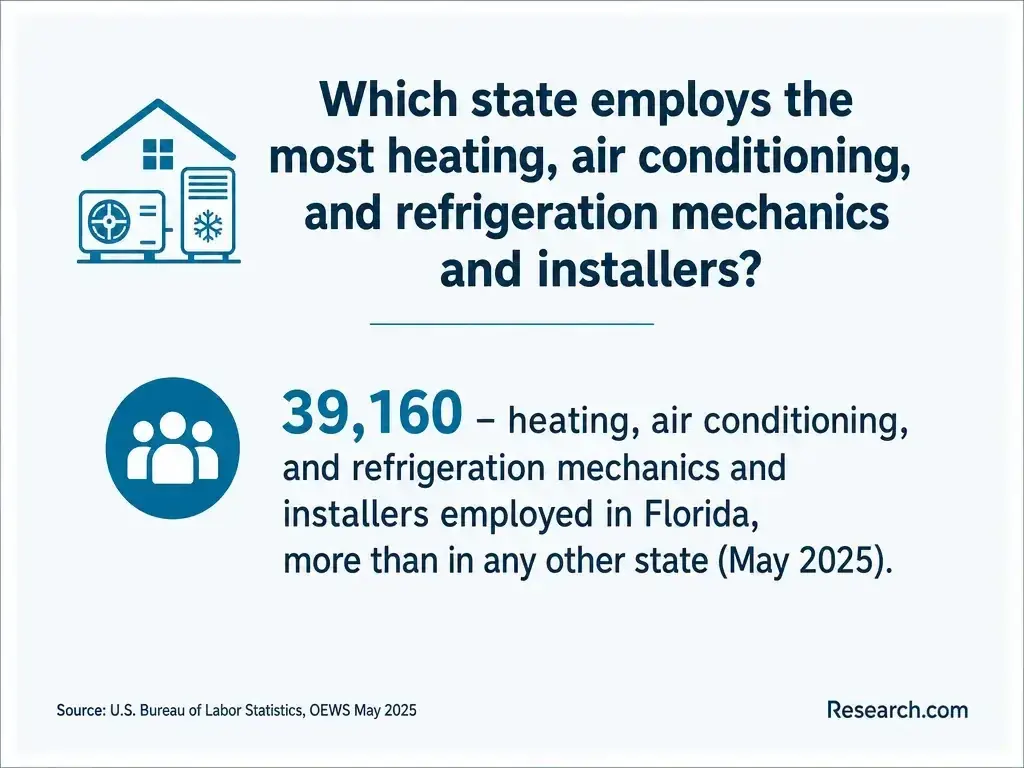
Refrigerant work has a federal certification requirement: EPA Section 608 certification applies to technicians performing covered activities that could release refrigerants from regulated appliances. Select the certification type appropriate to the equipment you intend to service; ask whether your program includes exam preparation and whether the exam fee is included. This requirement is separate from a school credential.
Missouri does not issue a general statewide HVAC technician occupational license through its Division of Professional Registration. That does not remove local contractor, permit, or inspection rules. If your goal is to contract for work independently in Springfield rather than work as an employee or trainee, check the City of Springfield's current contractor and mechanical-work requirements before choosing a program. Do not assume graduation or EPA certification alone authorizes you to operate a contracting business.
Start with your intended first job. An aspiring residential installer may value a short route into supervised employment; someone targeting commercial troubleshooting may benefit from broader controls training and more field exposure. The cheapest listed program is worth considering only if it offers the practice, credential, and access to work that your goal requires.
Use these checks before paying a deposit. They address the most expensive mistakes: comparing tuition instead of job-ready cost, assuming similarly named credentials are equivalent, and treating a ranking as an employment guarantee.
- Request the current curriculum, credential, calendar, total scheduled hours, and hours spent in supervised labs or at worksites.
- Verify institutional accreditation and state authorization through the relevant agencies; ask separately about any claimed HVAC industry recognition.
- Ask who provides tools, how EPA Section 608 testing is arranged, and which charges are excluded from the advertised price.
- Compare completion and placement information using the same cohort and definitions, then ask local employers what they expect from new hires.
- Compare the school route with available paid apprenticeships or employer training, including admission timing, wages, travel, and the time until you can work with less supervision.
For a realistic return-on-investment estimate, weigh your likely starting pay against your current earnings, aid, debt, completion prospects, lost work time, and the years you expect to remain in the trade. A longer program is not automatically better; a faster one is not automatically cheaper once missing practical experience is accounted for.
Many entrants begin as installation helpers, maintenance trainees, or supervised service apprentices. With experience, they may move into independent service, commercial refrigeration, building controls, facilities maintenance, lead-technician work, or supervision. Self-employment adds business responsibilities and requires checking applicable local contractor rules; it is not an automatic consequence of completing training.
Choose a first program for the work you can plausibly enter next, then build specialized skills through equipment training, supervised experience, and appropriate certifications. For example, someone interested in controls should look for electrical-diagnostics practice rather than assuming a general installation course teaches advanced automation.
BLS projects 10.9% national employment growth from 2025 to 2035 for heating, air conditioning, and refrigeration mechanics and installers. That supports considering the occupation, but a national projection cannot establish the number of openings a newly trained person will find in Springfield.
To judge the local market, review current Springfield-area postings and ask training providers which employers take their students for supervised work. Separate entry-level installation openings from service roles requiring substantial diagnostic experience. That distinction matters more to a first-job decision than a national growth figure alone.
Most Affordable HVAC Technician Schools & Training in Springfield for 2027
Investing in training is a consequential decision, so Research.com evaluates programs against others in the same occupation and location rather than treating every trade-school option as interchangeable. Only programs reporting completions to the Integrated Postsecondary Education Data System (IPEDS) qualify for the ranking. That means a missing apprenticeship, employer program, or school should not be mistaken for a judgment about its quality.
For most affordable rankings, the score uses tuition, cost of attendance, median student debt, and federal loan default rate. An entropy-based method assigns more weight to measures that distinguish programs more clearly. Accreditation and other quality indicators do not contribute to this affordability score; readers should check them separately. Research.com's broader best programs rankings use different criteria, including student outcomes, earnings, support, and relevant recognition. The team uses multiple sources to check the credibility and accuracy of its comparisons.
The following sources inform Research.com's trade-program ranking work. Some recognition sources cover other occupations and should not be interpreted as HVAC-specific accreditors.
- IPEDS database - program completions and institutional reporting.
- National Center for Education Statistics - federal education data and definitions.
- College Scorecard database - available cost, debt, and outcome measures.
- Peterson's database - supplementary institution and program information.
- Commission on Accreditation of Allied Health Education Programs (CAAHEP) - recognition information for relevant occupations outside HVAC.
- Accrediting Bureau of Health Education Schools (ABHES) - recognition information for relevant occupations outside HVAC.
- Commission on Dental Accreditation (CODA) - recognition information for relevant occupations outside HVAC.
- Dental Assisting National Board (DANB) - credential information for relevant occupations outside HVAC.
- National Center for Construction Education and Research (NCCER) - construction-training and industry-credential information.
- Apprenticeship.gov Partner Finder - apprenticeship pathways to investigate alongside schools.
The ranking can narrow a cost-conscious student's shortlist, but it cannot replace a current program quote or a check of lab access and employer connections. More detail about the approach appears on Research.com's methodology page.
# 2 position

Frequently asked questions about HVAC technician programs in Springfield
Is trade school necessary to become an HVAC technician?
No. A registered apprenticeship or employer training can also provide an entry route. Compare access to supervised work, instruction, cost, and the credential awarded before choosing.
What is the cheapest way to start HVAC training?
There is no universal cheapest route. Compare an itemized school quote with any available paid apprenticeship or employer-supported position, including tools, travel, aid, and wages while training.
Can I complete HVAC training entirely online?
You can study theory online, but practical installation and troubleshooting require hands-on training. Confirm where and how a hybrid program provides supervised labs or field experience.
Does an HVAC certificate include EPA certification?
Not necessarily. Ask whether EPA Section 608 exam preparation and testing are included; a school certificate and the federal technician certification are separate credentials.
Will the national HVAC median salary be my starting pay?
No. The BLS national median includes experienced workers and is not a Springfield entry-level offer. Compare local postings for jobs you could qualify for immediately after training.
- U.S. Bureau of Labor Statistics - Heating, Air Conditioning, and Refrigeration Mechanics and Installers
Used to verify salary, employment outlook, and typical education requirements.
https://www.bls.gov/ooh/installation-maintenance-and-repair/heating-air-conditioning-and-refrigeration-mechanics-and-installers.htm - NCCER - Accredited Training
Used to verify programmatic accreditation or industry recognition of programs.
https://www.nccer.org/ - EPA - Section 608 Technician Certification
Professional certification reference for graduates of this occupation.
https://www.epa.gov/section608/section-608-technician-certification - Ozarks Technical Community College - official website
Official school website (programs, tuition, admissions).
https://www.otc.edu/