
Most Affordable HVAC Technician Schools & Training in Decatur for 2027
Audited and Verified:
Our Editorial and Data Verification Process
Research.com uses government datasets, official education statistics and primary institutional information to support its career and degree guides. Our review process checks factual accuracy, occupational definitions, source dates and the requirements associated with the credentials discussed.
How This Article Was Fact-Checked
Our editorial team verifies salary estimates, employment projections, education requirements and program information against original data providers and official organizations. Salary figures are checked against the relevant occupational definitions and reporting periods. Information about licensure, accreditation and required in-person training is reviewed separately.
Fact-checked and verified on:

Co-Founder and Chief Data Scientist

Reviewed by Karolina Broda
Fact-Checker and Data Verification
Choosing an affordable HVAC program means comparing more than tuition: you need enough hands-on training to work safely and a realistic path to employment. In Mississippi, that decision also involves understanding federal refrigerant certification and state contractor rules. The Research.com team of data scientists created the Most Affordable HVAC Technician Trade Schools in Decatur for 2027 ranking to help students identify programs worth considering. This guide explains how to compare costs, credentials, practical training, and career prospects; nationally, HVAC employment is projected to grow 10.9% from 2025 to 2035 (U.S. Bureau of Labor Statistics).
Key findings about HVAC technician degrees in Decatur
- For Decatur, Mississippi, compare an HVAC credential at East Central Community College with paid apprenticeships or employer training; the lowest listed tuition may not be the lowest cost of becoming job-ready.
- Hands-on electrical, refrigeration, and diagnostic practice matters more than an online-only credential. Technicians who handle regulated refrigerants generally need EPA Section 608 certification (U.S. Environmental Protection Agency).
- The national median annual wage for heating, air conditioning, and refrigeration mechanics and installers was $61,010 in May 2025; it is not a Decatur starting-wage estimate (U.S. Bureau of Labor Statistics).
Table of Contents
- Most Affordable HVAC Technician Schools & Training in Decatur for 2027
- What can I expect from an HVAC technician trade school program in Decatur?
- Where can I work with an HVAC technician trade school training in Decatur?
What can I expect from an HVAC technician trade school program in Decatur?
Expect instruction in heating and cooling systems, electrical controls, airflow, refrigeration, troubleshooting, and safe tool use, followed by supervised practice on equipment. Before choosing East Central Community College, ask which HVAC credential is currently offered, where its labs meet, and whether the schedule accommodates travel from your home or job. A program title alone cannot establish how much equipment time you will receive.
A short certificate can fit someone seeking an entry-level helper position quickly. A longer diploma or associate degree may offer broader technical instruction, but takes more time away from paid work. An apprenticeship or employer-sponsored route can combine wages with jobsite learning, although entry, classroom schedules, and the credential earned depend on the sponsor. Treat fast track college courses as a scheduling comparison, not evidence that HVAC practical competencies can be skipped.
Where can I work with an HVAC technician trade school training in Decatur?
HVAC training can lead to work with residential service and installation contractors, commercial mechanical contractors, facilities-maintenance teams, and refrigeration service employers. Work may take place in homes, businesses, or equipment rooms, with travel between jobsites. In a smaller community such as Decatur, ask employers about their actual service territory before enrolling: a position described as local may require regular driving to surrounding communities.
Entry-level openings may emphasize installations or preventive maintenance rather than independent diagnosis. If commercial refrigeration is your goal, look for substantial refrigeration and controls practice rather than assuming a residential-air-conditioning curriculum covers it.
A reliable Decatur-specific HVAC wage figure is not established here, so the national figure is a benchmark, not a local pay quote. The U.S. Bureau of Labor Statistics reports a May 2025 national median annual wage of $61,010 for heating, air conditioning, and refrigeration mechanics and installers. That median includes experienced workers and should not be used as a newly trained technician's expected offer.
Ask prospective local employers for their starting range, paid travel policy, on-call expectations, and wage progression after demonstrated skills or certification. Compare those offers with the full cost of training and the income you would give up while attending.
There is no single HVAC training length or universal clock-hour requirement for entry-level technician jobs. A certificate, diploma, associate degree, and apprenticeship have different calendars and amounts of supervised practice. Request the current East Central Community College catalog and ask for total credits or clock hours, lab hours, term availability, and the time needed on a part-time schedule. These details matter more than an advertised "finish in" date.
An apprenticeship usually extends training over a longer period while allowing participants to earn wages and gain jobsite experience; school-based study may get a student into the job market sooner but may offer less paid field time. If comparing an associate credential with guides to the easiest associates degree to obtain, prioritize HVAC lab access and job relevance over perceived academic ease.
Online instruction can cover theory, calculations, codes, and preparation for written certification exams. It cannot by itself demonstrate that you can wire a control circuit, check a system safely, or diagnose a fault on working equipment. Campus labs and supervised jobsites provide those practical opportunities; a hybrid program combines remote coursework with scheduled in-person sessions.
When comparing online vocational schools, confirm the location, frequency, and cost of required HVAC labs before applying. An online course's certificate of completion is not the same thing as demonstrated field competency or EPA Section 608 certification.
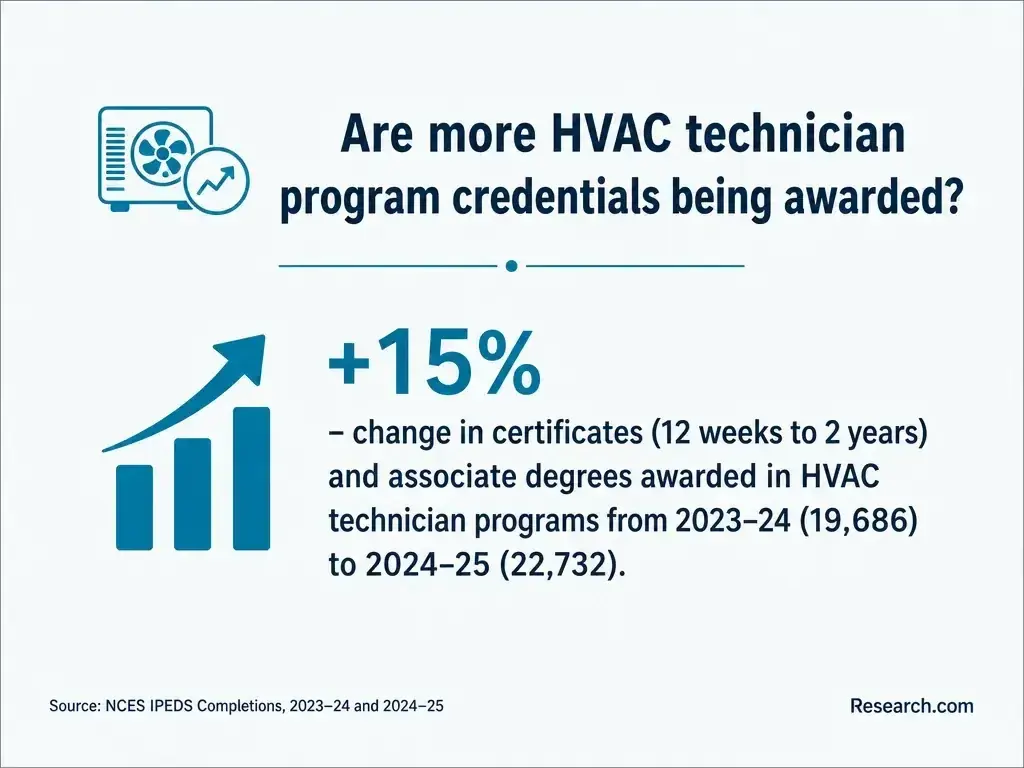
A defensible Decatur-wide average is not available from the information here. Published tuition also excludes costs that can change which route is actually most affordable. Ask for a written estimate covering tuition, mandatory fees, books, tools, safety gear, consumables, certification exams, and travel to labs or jobsites. Add lost earnings if attendance would reduce your working hours.
Check eligibility for federal aid where the specific program qualifies, and ask about Mississippi workforce assistance, scholarships, and employer-paid training; availability varies by student and program (Federal Student Aid; Mississippi Department of Employment Security). Paid apprenticeship wages can offset training costs, but compare the time until you can perform higher-skilled work as well. Unrelated affordability lists, including cheap online masters degrees, are not substitutes for an HVAC-specific cost estimate.
The credential depends on the specific pathway: school programs may award a certificate, diploma, or associate degree; a registered apprenticeship leads to its own completion credential; and an employer course may document only company training. Verify the current award in the provider's catalog or apprenticeship agreement before paying. Ask whether completed coursework can count toward another credential or whether prior learning can reduce repeated training; do not assume credit transfers automatically.
EPA Section 608 certification is separate from a school award. It concerns handling regulated refrigerants and requires passing the applicable exam (U.S. Environmental Protection Agency). Neither a diploma nor an institutional accreditation statement substitutes for it.
Requirements vary by provider and pathway. For East Central Community College, confirm the current program's application steps, academic prerequisites, placement rules, and any separate requirements for work-based learning. Apprenticeship sponsors and employers set their own selection criteria and may assess readiness for physical work, safe tool use, transportation, and reliable attendance.
Before accepting an offer, ask whether tools or protective equipment are required on the first day and whether any jobsite placement has additional conditions. Do not assume admission to a school guarantees an apprenticeship position or a job.
A useful HVAC curriculum connects electrical measurement, motors and controls, heat transfer, refrigerant-cycle principles, airflow, and preventive maintenance to repeated troubleshooting practice. Students should also learn to document findings, explain repairs to customers, and follow safety procedures. The U.S. Bureau of Labor Statistics identifies installation, maintenance, and repair as core duties of HVAC mechanics and installers.
Ask to see the equipment used in labs and how instructors assess individual hands-on work. If a program advertises refrigeration or commercial controls, request the actual course and lab coverage. That check is especially important when your intended employer works on systems unlike the equipment used for basic residential training.
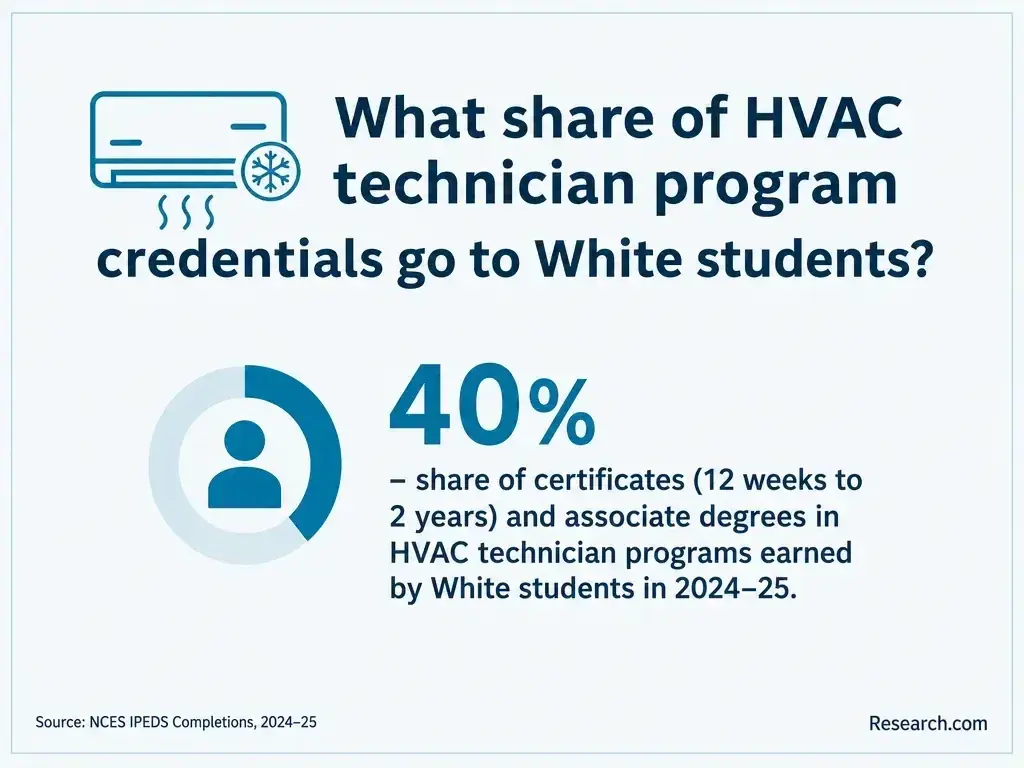
For Decatur, Mississippi, distinguish working as a technician from contracting independently. Technicians who maintain, service, repair, or dispose of equipment in ways covered by federal refrigerant rules generally need the appropriate EPA Section 608 certification (U.S. Environmental Protection Agency). Mississippi contractor licensing is a separate question for businesses taking on regulated work; review the proposed work and applicable licensing category with the Mississippi State Board of Contractors before planning to operate independently.
A school's accreditation concerns the institution or program, not your individual authority to handle refrigerants or contract for work. Likewise, registration of an apprenticeship describes the training arrangement; it is not an occupational license. Ask a prospective program how it prepares students for the EPA exam and what credential, if any, graduates must obtain separately.
Start with the job you want - residential installer, service technician, or refrigeration trainee - then compare programs against that goal. An affordability ranking can narrow the search, but it does not score lab quality, employer fit, or certification readiness. Use these checks before committing:
- Confirm the current credential, campus or lab location, schedule, and total classroom and hands-on hours directly with the provider.
- Request an itemized job-ready cost estimate and ask which aid, paid work, or employer reimbursements you actually qualify for.
- Ask how students practice diagnosis on equipment and prepare for the applicable EPA Section 608 exam.
- Verify institutional accreditation separately from any claimed industry recognition, and check whether apprenticeship training is registered when advertised as such.
- Ask for program-specific completion and placement information, including how the provider defines a placed graduate.
A red flag is a promise of immediate high pay based on a national median wage, or an "online HVAC certification" offer that does not explain practical training and the separate refrigerant exam. The best investment depends on your likely completion, debt, lost earnings, starting offer, and longer-term advancement - not tuition or institution type alone.
A common progression is helper or installation trainee, then technician with increasing diagnostic responsibility, followed by a specialty such as commercial refrigeration or controls. Experienced workers may move into supervision or consider contracting, subject to applicable Mississippi requirements (U.S. Bureau of Labor Statistics; Mississippi State Board of Contractors). Progress depends on field experience and demonstrated skill, not simply the name of the starting credential.
If speed to employment is your priority, compare entry-level openings and paid training against school schedules. Lists of quick degrees with high pay cannot tell you whether a particular HVAC program supplies the practical experience a local employer wants.
The U.S. Bureau of Labor Statistics projects 10.9% national employment growth from 2025 to 2035 for heating, air conditioning, and refrigeration mechanics and installers. That supports investigating the trade, but it does not predict openings in Decatur or guarantee a job after training. Replacement hiring, seasonal workloads, and the reach of a contractor's service area can matter more to an individual applicant than the national projection.
To test local demand, compare current openings within a commute you would accept and ask employers which entry-level skills they will train on the job. If nearby openings emphasize installation while your goal is advanced service diagnosis, choose training that builds a credible route from one to the other.
Most Affordable HVAC Technician Schools & Training in Decatur for 2027
Investing in training is a consequential decision, so Research.com evaluates programs against others in the same occupation and location rather than against unrelated schools. The most-affordable ranking considers tuition, cost of attendance, median student debt, and federal loan default rates. An entropy-based method assigns more weight to cost and debt indicators that vary more across included programs. Accreditation and other quality indicators do not contribute to this affordability score.
Only programs reporting completions to the Integrated Postsecondary Education Data System (IPEDS) are eligible. This supports consistent comparisons but means the ranking cannot capture every apprenticeship, employer training program, or nonreporting provider. The Research.com team uses the following sources to check program and institutional information; some cover occupations other than HVAC and should not be read as HVAC-specific endorsements:
- IPEDS database
- National Center for Education Statistics
- College Scorecard database
- Peterson's database
- Commission on Accreditation of Allied Health Education Programs (CAAHEP)
- Accrediting Bureau of Health Education Schools (ABHES)
- Commission on Dental Accreditation (CODA)
- Dental Assisting National Board (DANB)
- National Center for Construction Education and Research (NCCER)
- Apprenticeship.gov Partner Finder
The ranking is a starting point for finding lower-cost options, not a finding that the cheapest program has the strongest HVAC labs or employer connections. Compare its results with current program disclosures and local training alternatives before enrolling. Read more about how Research.com develops rankings on its methodology page.
# 2 position
Frequently asked questions about HVAC technician programs in Decatur
Is HVAC trade school worth it in Decatur?
It can be if the program provides useful lab practice, an affordable route to your intended job, and preparation for applicable certification. Compare its full cost and foregone wages with paid apprenticeship and employer-training options.
Can I become an HVAC technician without trade school?
Possibly. An employer may hire and train a helper, and an apprenticeship combines work with instruction. You still need the skills for your duties and the appropriate EPA certification when handling regulated refrigerants.
Is an online HVAC program enough to get hired?
Online theory can help, but ask how you will gain and demonstrate hands-on electrical, refrigeration, and diagnostic skills. Do not assume an online completion certificate replaces practical training or EPA certification.
Does East Central Community College offer the cheapest HVAC training?
Do not assume so from tuition alone. Obtain its current HVAC program costs, then compare tools, travel, aid, lost earnings, and any paid-training alternatives.
Do I need an HVAC contractor license to start as an employee?
Employee technician duties and independently contracting for work are different questions. Check refrigerant-certification requirements for your tasks and consult the Mississippi State Board of Contractors before offering contracting services.
- U.S. Bureau of Labor Statistics - Heating, Air Conditioning, and Refrigeration Mechanics and Installers
Used to verify salary, employment outlook, and typical education requirements.
https://www.bls.gov/ooh/installation-maintenance-and-repair/heating-air-conditioning-and-refrigeration-mechanics-and-installers.htm - NCCER - Accredited Training
Used to verify programmatic accreditation or industry recognition of programs.
https://www.nccer.org/ - NATE - Certification
Professional certification reference for graduates of this occupation.
https://natex.org/ - East Central Community College - official website
Official school website (programs, tuition, admissions).
https://www.eccc.edu/