Best Electrical Technician Training Programs & Trade Schools - Top Electrical Tech Schools in Temecula for 2026

Co-Founder and Chief Data Scientist
Picking an electrician trade school in Temecula is a cost, time, and licensing decision-not just a school choice. The right program should help you build job-ready wiring, safety, code, and troubleshooting skills while fitting your schedule and budget. It should also put you on a realistic path toward apprenticeship hours, state requirements, and long-term wage growth.
This Research.com guide reviews electrician trade school options in Temecula for students starting a new career, workers changing fields, and current tradespeople who want stronger credentials. It explains program lengths, costs, course expectations, financial aid, online versus campus formats, and career outcomes so you can compare programs with a clearer view of return on investment.
Use this guide to narrow your options, ask better admissions questions, and avoid common mistakes such as choosing a program without enough hands-on training, unclear licensing support, or limited career services.
Key benefits of finishing electrician trade school in Temecula
Finishing an electrician trade school program in Temecula can help you move from general interest to employable technical skill. A good program gives you structured training in electrical theory, job-site safety, wiring methods, blueprint reading, electrical codes, and troubleshooting before you enter an apprenticeship or entry-level role.
- Stronger earning potential: Graduates of electrician trade schools in Temecula can expect an average hourly wage between $27 and $39, with top earners making over $50 per hour. Pay depends on licensing status, experience, overtime, employer type, and specialization.
- Clear career direction: Career paths include residential, commercial, or industrial electrician work, with opportunities to move into supervisory, estimating, contracting, maintenance, solar, or other specialized electrical roles.
- Practical preparation: Trade school can make the first stage of field training less overwhelming because students practice tools, wiring procedures, code interpretation, and safety routines before working on live job sites.
- Flexible study options: Completing an electrician trade school online can offer flexibility and convenience for students balancing work or family responsibilities, although hands-on training and apprenticeship placement still matter for career readiness.
The main benefit is not simply earning a certificate. It is leaving with enough technical foundation, safety awareness, and confidence to compete for apprenticeship and entry-level electrical jobs.
- Best Electrical Technician Training Programs & Trade Schools - Top Electrical Tech Schools in Temecula for 2026
- What can I expect from electrician trade schools in Temecula?
- Where can I work after finishing electrician trade schools in Temecula?
What can I expect from electrician trade schools in Temecula?
Electrician trade schools in Temecula typically combine classroom instruction with applied technical training. Students learn the principles behind electrical systems and then practice tasks that mirror residential, commercial, and industrial job-site work.
You can expect coursework in electrical theory, wiring practices, blueprint reading, safety standards, tool use, conduit bending, troubleshooting, and electrical code compliance. Many programs also use labs or simulated work environments so students can practice installing and testing components before entering the field.
Common program formats
- Certificate or diploma programs: Shorter programs focused on core job skills and entry-level readiness.
- Associate degree programs: Longer programs that may include general education along with technical training.
- Apprenticeship-connected training: Programs that combine classroom instruction with paid, supervised field experience.
- Hybrid or online coursework: Formats that may allow students to complete theory-based lessons remotely while arranging hands-on practice separately or through scheduled labs.
Before enrolling, ask how much of the program is hands-on, whether the school helps with apprenticeship placement, what tools or supplies are included, and how the curriculum aligns with California licensing and certification expectations.
Where can I work after finishing electrician trade schools in Temecula?
After finishing electrician trade school in Temecula, many graduates start in apprentice electrician, electrical helper, or entry-level technician roles. These jobs allow new workers to build supervised experience while learning how electrical work is performed on active job sites.
Common employment settings include electrical contracting companies, construction firms, residential service companies, commercial building projects, industrial facilities, maintenance departments, school districts, retail warehouses, and renewable energy employers. Riverside County’s mix of housing, business, infrastructure, and clean energy work can create several possible entry points for trained electricians.
Typical early-career roles
- Apprentice electrician: Assists licensed electricians while accumulating field experience.
- Electrical helper: Supports installation, repair, material handling, and basic wiring tasks.
- Residential electrical trainee: Works on home wiring, lighting, panels, outlets, and service calls.
- Commercial electrical trainee: Supports larger projects in offices, schools, retail buildings, and other commercial sites.
- Solar installation support: Helps install and connect solar energy systems under supervision.
- Maintenance technician support: Assists with electrical upkeep in facilities, warehouses, or institutional settings.
With additional hours, experience, and credentials, graduates may pursue journeyperson, master electrician, foreman, estimator, or independent contractor roles. Advancement depends on licensing requirements, documented work experience, employer needs, and continued technical development.
After completing an electrician trade school program in Temecula, graduates typically start earning between $29.32 and $34.98 per hour. Entry-level pay is usually influenced by whether the worker is hired as a helper, apprentice, trainee, or newly licensed electrician, as well as the employer’s project type and overtime availability.
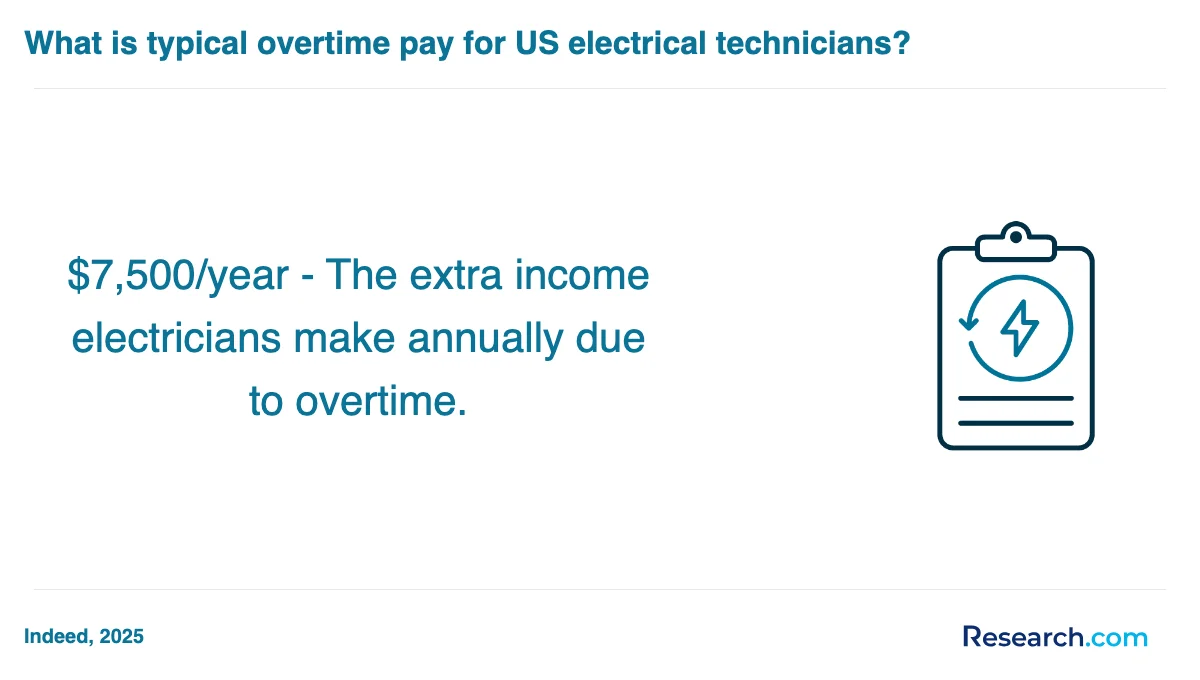
Licensed electricians in Temecula earn around $33.86 per hour, reflecting the added value of credentials and field experience. Some graduates begin around $30 per hour, and overtime can increase annual income when available. For those who pursue master electrician status, annual salaries near $55,975 are common.
What affects electrician pay?
- Licensing and certification: Additional credentials can improve access to higher-responsibility work.
- Experience level: Pay typically rises as electricians move from helper or apprentice work into more independent roles.
- Specialization: Industrial systems, solar, controls, fire/life safety, and estimating may offer different wage paths.
- Overtime and project demand: Construction schedules and service needs can affect take-home pay.
- Employer type: Contractors, public employers, maintenance departments, and industrial companies may structure wages and benefits differently.
Trade school alone does not guarantee a specific wage, but it can shorten the learning curve and help graduates qualify for roles that lead to steady wage progression.
- Electrician programs in Temecula include certificate, diploma, and associate degrees focused on electrical installation, maintenance, and repair.
- Certificate and diploma programs can take about 10 months, while apprenticeship programs last around 4.5 years with 8,000 hours of on-the-job training.
- Tuition costs range from $3,000 to $20,000 depending on the program length and type, with some financial aid options available.
- Starting salaries for newly licensed electricians are between $48,000 and $58,000 per year, with experienced electricians earning $70,000 to $90,000 annually.
- Programs cover blueprint reading, wiring, electrical codes, and hands-on troubleshooting to prepare students for residential, commercial, and industrial work.
The most important takeaway is that electrician training has multiple routes. A short certificate or diploma can help you enter the field faster, while an apprenticeship is the longer path that builds the supervised work hours needed for broader career advancement.
The typical completion time for an electrician trade school program in Temecula ranges from about 6 months to 12 months, depending on whether you enroll full time or part time. Intensive formats may move faster, while evening, weekend, or part-time options can make training more manageable for students who are working or caring for family.
Many students choose programs around 9 months because that timeline can provide a balance between speed and hands-on practice. Shorter programs may focus heavily on entry-level technical skills, while longer options may include more lab time, career preparation, or related coursework.
Program length by pathway
| Pathway | Typical time commitment | Best for |
| Certificate or diploma program | About 6 months to 12 months | Students who want focused preparation for entry-level work or apprenticeship applications |
| Program around 9 months | About 9 months | Students seeking a practical balance of classroom learning and hands-on skills |
| Apprenticeship program | Around 4.5 years with 8,000 hours of on-the-job training | Students pursuing the supervised work experience required for long-term electrician advancement |
When comparing timelines, look beyond the advertised completion date. Ask how many lab hours are included, whether the schedule fits your life, and whether the program supports the next step into apprenticeship or employment.
The main difference between online and on-campus electrician trade school programs is how they handle hands-on skill development. Electrical work is physical, technical, and safety-sensitive, so students need more than lectures. They must learn how to use tools, read job-site plans, install components, follow code, and troubleshoot systems safely.
Online programs can be useful for theory-based topics such as electrical principles, code study, math, and blueprint reading. They are typically more affordable, often costing under $2,000 total, and they can be easier to fit around work or family responsibilities. However, online-only programs may require students to find separate hands-on labs, apprenticeships, or employer-based training to build practical competence.
On-campus programs usually provide direct access to instructors, tools, labs, and simulated job-site environments. This can be especially valuable for students who learn best by doing and for those who want local networking and career support.
Online, on-campus, and hybrid comparison
| Format | Strengths | Trade-offs |
| Online | Flexible schedule, often lower cost, convenient for theory coursework | Limited hands-on practice unless labs or apprenticeships are arranged separately |
| On-campus | Direct tool use, instructor feedback, lab practice, peer interaction | Less flexible schedule and possible commuting requirements |
| Hybrid | Online theory with scheduled in-person labs | Requires careful planning to attend hands-on sessions |
For most electrician students, the best format is the one that combines flexible coursework with verified hands-on training and a clear path to field experience.
The average tuition fees for electrician programs in Temecula generally fall between $16,375 and $26,444. San Joaquin Valley College is one example where tuition is around $26,444. Program cost can vary by credential level, included materials, contact hours, school policies, and financial aid eligibility.
Some programs span approximately 254 contact hours and take about 9 months to complete. In addition to tuition, students should plan for books and supplies, which average roughly $1,031 in California. Other possible costs may include tools, uniforms, testing fees, transportation, and licensing-related expenses, depending on the program and career path.
How to evaluate total cost
- Ask for the full cost of attendance: Tuition alone may not include books, supplies, tools, fees, or transportation.
- Compare net price, not sticker price: Grants, scholarships, and employer support can reduce what you actually pay.
- Check what is included: A higher tuition program may include lab access, tools, career services, or stronger placement support.
- Confirm refund and withdrawal policies: This matters if your work schedule or personal situation changes.
- Match cost to outcomes: A program should show how it helps students move into apprenticeships, entry-level jobs, or licensing preparation.
If you're new to the field, reviewing electrical engineer college requirements can help you understand how electrician trade programs differ from broader engineering degree pathways.

Financial aid for electrician trade schools in Temecula may include federal aid, school-based scholarships or grants, veterans benefits, and apprenticeship-based earn-while-you-learn options. The aid available depends on the school’s eligibility, the program type, your financial situation, and whether you meet enrollment requirements.
Many students begin by completing the FAFSA to determine eligibility for federal student aid. This may include the Pell Grant, which does not have to be repaid, and federal student loans if needed. Schools may also offer institutional scholarships or grants based on financial need, academic performance, or other criteria.
Common aid options
- FAFSA-based federal aid: Can help students access grants and loans when the school and program qualify.
- Pell Grant: May cover part of tuition for eligible students and does not require repayment.
- Federal student loans: Can help cover remaining costs but must be repaid with interest.
- School scholarships and grants: Some Temecula-area schools provide aid through their financial aid offices.
- Net Price Calculator: Tools like this can help estimate out-of-pocket costs after aid.
- Apprenticeship programs: Groups such as the Associated Builders and Contractors Southern California Chapter may allow students to earn wages while gaining skills, with costs often focused on books and tools.
- GI Bill benefits: Veterans and active military personnel may qualify for support that covers tuition and related costs at eligible trade schools.
Before enrolling, ask the financial aid office which aid applies to your exact program, whether aid is available before classes begin, and what you would owe if you withdrew or changed schedules.
Prerequisites for electrician trade schools in Temecula are usually straightforward, but students should verify requirements with each school before applying. Admissions standards can vary by program length, credential level, hands-on training requirements, and apprenticeship connections.
- High school diploma or GED: Most programs expect proof of secondary education because electrical work requires reading comprehension, math, and technical reasoning.
- Basic math skills: Algebra and measurement skills are important for circuits, loads, conduit runs, and electrical calculations.
- Proof of age: Many programs require students to be 18 or older because of safety rules and job-site training expectations.
- Valid driver's license or reliable transportation: This can be important for labs, internships, apprenticeships, or job placements away from campus.
- Physical ability to perform manual work: Electrical training may involve lifting, bending, standing, climbing, using hand tools, and working in confined or elevated spaces.
Students who have been out of school for a while may benefit from reviewing basic algebra, fractions, measurements, and reading technical diagrams before classes begin. These skills can make the first weeks of training easier and reduce the chance of falling behind.
Also ask whether the program requires entrance testing, immunization records, background checks, drug screening, or specific tools and safety gear. Requirements can differ when a program includes external job-site placement.
Electrician trade schools in Temecula usually teach a blend of electrical theory, safety, code, installation, and troubleshooting. The goal is to help students understand both how electrical systems work and how to perform common tasks safely and correctly.
Common course topics
- Electrical theory: Covers current, voltage, resistance, circuits, power, and how electricity behaves in different systems.
- Blueprint reading: Teaches students to interpret wiring diagrams, schematics, symbols, and job-site plans.
- Wiring installation and repair: Includes practice with panels, receptacles, fixtures, conductors, boxes, and common wiring methods.
- Local and national electric codes: Helps students understand compliance expectations and California safety standards.
- Conduit bending and raceway systems: Builds practical skills used in residential, commercial, and industrial settings.
- Electrical safety: Covers PPE, hazard recognition, lockout/tagout concepts, safe tool use, and worksite procedures.
- Troubleshooting: Trains students to identify faults, test components, and solve electrical problems systematically.
The strongest programs connect these courses to hands-on labs. For example, students should not only read about circuits; they should practice assembling, testing, diagnosing, and correcting them under instructor supervision.
Electrician trade schools in Temecula may offer specialization options or elective focus areas that help students prepare for specific work environments. Specializations can matter because residential, commercial, industrial, low-voltage, and safety systems often use different equipment, codes, tools, and troubleshooting methods.
- Residential Wiring: Focuses on home wiring, lighting, panels, receptacles, circuits, and energy-efficient solutions for housing projects.
- Commercial Electrical Systems: Prepares students for offices, schools, retail spaces, and other business environments where larger systems and code compliance are central.
- Industrial Electrical Technology: Covers manufacturing and production environments, including advanced machinery troubleshooting and PLC programming.
- Voice, Data, and Video Technician: Focuses on low-voltage telecommunications, data cabling, security, smart building, and related systems.
- Fire/Life Safety Technician: Trains students on emergency lighting, alarms, and fire safety systems used in buildings and new construction.
When choosing a specialization, compare your interests with local employer demand. Residential work may offer a broad entry point, commercial and industrial tracks can lead to larger systems and project work, and low-voltage or fire/life safety training may fit students interested in technology-heavy installations.
Some programs connect electrical training with related clean energy fields. For students exploring adjacent technical careers, wind turbine technician training may provide useful context on renewable energy pathways.
To choose the best electrician trade school program in Temecula, start with outcomes and training quality. The program should have credible instruction, enough hands-on lab work, clear cost information, realistic scheduling, and support for the next step into apprenticeship or employment.
What to compare before enrolling
- Accreditation or institutional approval: Confirm the school is recognized appropriately and that the program meets relevant training expectations.
- Hands-on training: Ask how many lab hours are included and what electrical tasks students practice.
- Instructor experience: Look for instructors with real electrical field experience, not only classroom credentials.
- Licensing and apprenticeship support: Ask how the school helps students understand California requirements and connect with apprenticeships.
- Job placement services: Review employer partnerships, career coaching, resume help, and placement data if available.
- Schedule flexibility: Evening, weekend, part-time, or hybrid options may be important if you work while studying.
- Total cost: Compare tuition, fees, books, tools, supplies, transportation, and financial aid before committing.
- Student support: Tutoring, advising, lab access, and academic help can make a major difference in completion.
A common mistake is choosing the fastest or cheapest program without checking whether it includes enough hands-on training and career support. Another mistake is assuming that trade school completion alone equals licensure. Ask admissions staff to explain exactly what the program does and does not qualify you to do after graduation.
When weighing costs and timeline, consider exploring the cheapest accelerated wind turbine technician training programs online as a related option if you are also interested in renewable energy or technical fieldwork.
The best program is the one that fits your schedule and budget while giving you credible training, supervised practice, and a realistic route into the electrical workforce.
Electrician trade school graduates in Temecula can pursue several career paths, starting with supervised entry-level roles and progressing into licensed, specialized, supervisory, or self-employed positions. The path you choose depends on your training, work hours, licensing progress, and preferred work environment.
Common career paths
- Apprentice electrician: Builds supervised experience while learning installation, repair, code compliance, and job-site procedures.
- Journeyperson electrician: Performs more independent electrical work after meeting experience and licensing requirements.
- Residential electrician: Works on home wiring, service upgrades, lighting, panels, and repair calls.
- Commercial electrician: Installs and maintains systems in offices, schools, retail buildings, and other commercial properties.
- Industrial electrician: Maintains and troubleshoots electrical systems in manufacturing and production environments.
- Electrical estimator: Reviews plans, calculates materials, and helps price electrical projects.
- Foreman or supervisor: Leads crews, schedules work, coordinates with contractors, and monitors job-site quality.
- Solar energy technician: Works with renewable energy installations and related electrical components.
- Electrical contractor: Operates a business or works independently after meeting licensing and business requirements.
- Instructor or trainer: Teaches electrical skills after building substantial field experience.
Temecula's diverse job market and wages near $54,690 annually show that electrical training can lead to stable work, but advancement usually requires continued experience and credentials. For related information on electrical careers, check electrical lineman salary.
The electrician job market in Temecula is strong, with over 130 positions available as of early 2025. Openings can include apprentice, helper, journeyperson, maintenance, residential, commercial, and industrial roles. Many employers offer wages between $23 and $40 per hour, along with benefits such as health insurance and 401(k) matching.
Demand is supported by residential growth, commercial development, maintenance needs, and renewable energy projects such as solar installations. Graduates who combine trade school training with apprenticeship experience and licensing progress are typically more competitive than applicants with classroom training alone.
What improves your job prospects?
- Completing state-approved trade programs
- Gaining apprenticeship experience
- Obtaining licensing through the California Contractors State License Board
- Building strong safety habits and code knowledge
- Learning to read blueprints and troubleshoot systems
- Developing reliability, communication skills, and job-site professionalism
Students should ask schools for current placement support, employer connections, apprenticeship guidance, and recent graduate outcomes. For broader program comparisons, see the best trade schools to become an electrician.
Best Electrical Technician Training Programs & Trade Schools - Top Electrical Tech Schools in Temecula for 2026
# 1 position
San Joaquin Valley College-Temecula - Electrician.
associateThe Electrician program at San Joaquin Valley College-Temecula prepares students to install, operate, maintain, and repair electric apparatus and systems in residential, commercial, and industrial settings. It includes instruction in electronics, electrical systems, wiring, power transmission, safety, and applicable codes. The hybrid program offers some distance education options. Graduates have a median earning of $43,388 one year after completion. The program is accredited by the Western Association of Schools and Colleges Senior Colleges and University Commission.
# 2 position
San Joaquin Valley College-Temecula - Electrician.
certificate or diplomaSan Joaquin Valley College-Temecula offers a hybrid Electrician program that trains students in installing, operating, maintaining, and repairing electric systems, including residential, commercial, and industrial wiring. The curriculum covers electronics principles, wiring, power transmission, safety, electrical testing, and applicable codes. Graduates have a median earning of $43,388 one year after completion. The program is accredited by the Western Association of Schools and Colleges Senior Colleges and University Commission.
Frequently Asked Questions about electrician
After completing electrician trade school in Temecula, preparing for the job market involves several key steps. First, obtaining the required California electrician license is essential. This typically means passing the state certification exam, which validates your skills and knowledge. According to the California Department of Industrial Relations, licensed electricians often see higher employment rates and wages.
Next, gaining hands-on experience through apprenticeships or entry-level positions can improve your job prospects. Many local employers prefer candidates with practical work experience alongside formal education. Networking with industry professionals and joining trade associations, such as the International Brotherhood of Electrical Workers (IBEW) Local 440 in Southern California, can also open doors to opportunities.
Additionally, updating your resume to highlight your certifications, technical skills, and completed training is important. Online job portals and local workforce centers in Riverside County can provide current job listings and career resources tailored to electricians.
Employers in Temecula highly value electrician trade school graduates who possess strong technical skills, including knowledge of electrical systems, wiring methods, and safety protocols. According to the U.S. Bureau of Labor Statistics, proficiency in reading blueprints and electrical diagrams is critical for job performance. Practical experience with tools and equipment is also essential.
In addition to technical ability, employers seek candidates with problem-solving skills and attention to detail, as these ensure accurate installations and troubleshooting. Communication skills are important for working with clients and team members.
Local industry reports highlight that familiarity with California electrical codes and energy-efficient technologies increases employability in Temecula's growing construction market.
Finding internships relevant to electrician trade school programs in Temecula involves several practical steps. Start by contacting local trade schools directly, as many have partnerships with electrical contractors and companies offering hands-on experience. The California Department of Industrial Relations reports that apprenticeship programs in Southern California, including Temecula, are growing by approximately 5% annually, creating more internship opportunities.
Additionally, students should visit the websites of local unions such as the International Brotherhood of Electrical Workers (IBEW) Chapter 440, which offers registered apprenticeship programs combining paid work and classroom instruction.
Networking at local job fairs and trade events can also connect students with employers seeking interns. Online job platforms often list electrician internships specifically in Riverside County, where Temecula is located.
Obtaining a diploma from an electrician trade school in Temecula significantly enhances career mobility and advancement opportunities. According to the U.S. Bureau of Labor Statistics, electricians with formal training and certification tend to earn 20% more than those without. In Temecula's growing construction and maintenance sectors, a diploma signals to employers that candidates possess essential skills and knowledge, increasing their chances of securing apprenticeships or journeyman roles.
Additionally, trade schools often offer connections to local unions and contractors, facilitating quicker entry into the workforce. The Riverside County Workforce Development Board highlights that certified electricians in the region experience a lower unemployment rate, improving long-term job stability. This credential also supports advancement toward master electrician status, which can lead to supervisory roles and higher wages.
To write a successful application for an electrician trade school in Temecula, highlight relevant skills, prior experience, and your passion for learning about electrical systems. Include specific examples and tailor your statement to the program's values and goals. Research each school's unique offerings to align your application closely with their strengths.
After completing an electrician trade school program in Temecula, students can pursue several professional certifications to advance their careers. The most common certification is the Journeyman Electrician License, which requires passing an exam administered by the California Department of Industrial Relations. This license allows electricians to work independently on various electrical systems.
Many graduates also aim for the Electrical Contractor License, enabling them to operate their own businesses. Additionally, certifications like the National Electrical Code (NEC) Specialist and Certified Electrical Safety Compliance Professional (CESCP) are valuable for specialized roles.
These certifications improve job prospects and earning potential in the competitive Temecula market. According to the U.S. Bureau of Labor Statistics, electricians with certifications earn approximately 20% more than uncertified peers nationally.
In Temecula, students can explore part-time job opportunities such as electrician apprenticeships, assistant roles in local electrical companies, or positions at hardware stores. These roles offer practical experience that complements classroom learning, enhancing skills learned in trade schools.
- Electrical Technology Program for Future Electricians - San Joaquin Valley College https://www.sjvc.edu/program/electrical-technology/
- Electrician Trade Schools in Temecula, CA - Get Training! https://electricalcareernow.com/electrician-schools/temecula-ca
- List of Approved Schools - Division of Labor Standards Enforcement, ECU https://www.dir.ca.gov/dlse/ecu/listofapprovedschoolsdetail.html
- Apprenticeship Program - ABC Southern California https://abcsocal.org/education-training/apprenticeship-program/
- Electrician Trade Schools: 2025 Career Guide and Schools Near You https://www.trade-schools.net/trades/electrician
- How to Become an Electrician in California https://www.best-trade-schools.net/locations/california/electrician-in-ca/
- Riverside Trade School & Vocational Programs | UEI College https://www.uei.edu/trade-school/california/riverside/
- A Guide to Skilled Trades Apprenticeships and Internships | BestColleges https://www.bestcolleges.com/trades/guide-to-skilled-trades-apprenticeships-internships/
- Electrical Apprenticeships Near You | IECI https://ieci.org/apprenticeship/
- Opportunities For Students - O’Connell Electric https://www.oconnellelectric.com/careers/students/