
Best Electrical Technician Training Programs & Trade Schools - Top Electrical Tech Schools in Rockford for 2026

Co-Founder and Chief Data Scientist
The right electrician trade school in Rockford should do more than teach basic wiring. It should help you compare cost, training format, apprenticeship access, employer connections, licensing preparation, and likely return on investment before you commit time and money.
This guide ranks electrician trade school programs using an electrician trade school programs ranking developed by the Research.com team of data scientists. It is written for students starting after high school, working adults changing careers, and current trades workers who want a structured path into electrical work in Rockford.
Use this guide to understand what electrician training typically includes, how long programs take, what you may pay, which financial aid options may apply, and what kinds of jobs and wages graduates can pursue in the Rockford area.
Key benefits of finishing electrician trade school in Rockford
- Electrician trade school gives you a structured path into a skilled trade with clear wage growth. Graduates from electrician trade schools in Rockford can expect starting salaries around $29.54 per hour, with opportunities to earn up to $51.49 per hour as they gain experience and licenses.
- Training can lead to several work settings, including local electrical contractors, union positions, residential service work, commercial construction, industrial maintenance, and specialized installation roles.
- Programs can help students build job-ready skills in wiring, grounding, troubleshooting, blueprint reading, electrical safety, and code awareness before they enter full-time field work.
- Online electrician trade school options can add flexibility for students who are working or managing family responsibilities, though students should confirm how the program handles required hands-on labs, apprenticeships, and employer-recognized skills.
- Finishing a recognized program can make it easier to discuss your training with employers, qualify for apprenticeship opportunities, and plan the next steps toward licensing or advancement.
What can I expect from electrician trade schools in Rockford?
Electrician trade schools in Rockford typically combine classroom instruction with hands-on practice. The classroom side explains how electrical systems work; the lab or job-site side teaches you how to apply that knowledge safely with tools, materials, panels, and wiring systems.
Programs at places such as Rockford Career College are commonly described as balancing electrical theory with practical skills such as wiring, grounding, troubleshooting, safety procedures, and blueprint reading. Some coursework may also introduce areas such as renewable energy and advanced circuit design.
You should expect training in three broad areas:
- Technical foundations: voltage, current, circuits, conductors, grounding, transformers, motors, and electrical drawings.
- Field skills: installing wiring, identifying faults, using meters and tools, following safety procedures, and working from plans or schematics.
- Career preparation: workplace expectations, apprenticeship readiness, documentation, employer communication, and awareness of Illinois licensing requirements.
Many students value apprenticeship-connected training because it can combine paid work with supervised experience on real projects. That model helps students build confidence while learning how electrical work is actually performed in homes, commercial buildings, industrial facilities, or construction settings.
Program length can vary. Some on-campus diploma programs are usually around 10 months, while apprenticeship routes can take longer because they combine classroom learning with progressive paid work experience. Before enrolling, ask whether the program leads to a diploma, certificate, associate degree, apprenticeship eligibility, or another credential.
Admissions are usually direct but still require preparation. You may need a high school diploma, algebra background, identification, and other documentation such as a driver's license. Students who review math basics and gather documents early often move through the application process more smoothly.
Where can I work after finishing electrician trade schools in Rockford?
After electrician trade school in Rockford, graduates can pursue work in construction, maintenance, manufacturing, installation, and field service. The best fit depends on whether you prefer new construction, troubleshooting existing systems, industrial equipment, or customer-facing service work.
Common employment settings include:
- Residential electrical contractors: wiring homes, replacing panels, installing lighting, and troubleshooting household electrical issues.
- Commercial construction companies: installing systems in offices, retail buildings, schools, healthcare spaces, and other larger facilities.
- Manufacturing and industrial employers: maintaining machines, reading schematics, repairing controls, and supporting production equipment.
- Renewable energy and specialty installation firms: working on solar panels, generators, or related power systems.
- Field service employers: traveling to job sites to install, test, repair, or maintain electrical and related systems.
Many graduates begin in entry-level roles where supervision is expected. These roles can include electrical helper, apprentice electrician, maintenance electrician trainee, electrical assembler, or field technician. From there, experience, apprenticeship completion, licensing, and specialized skills can open more advanced positions.
Some Rockford employers value practical training because new hires who have worked with tools, diagrams, meters, and safety procedures may require less basic onboarding. Pay can vary by role and experience, and some employers offer competitive wages, sometimes up to $40 an hour, along with benefits such as health insurance and paid time off.
How much can I make after finishing electrician trade schools in Rockford?
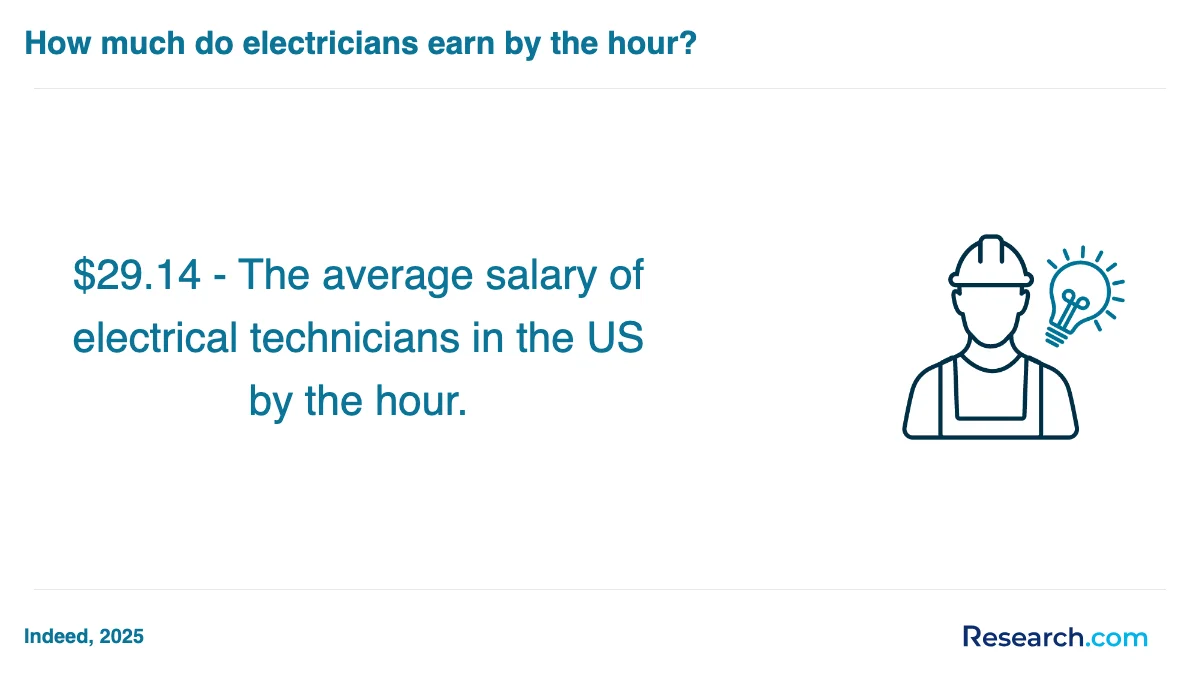
After finishing an electrician trade school program in Rockford, entry-level pay is commonly described as around $24 to $30 per hour. Some recent graduates report first jobs paying about $25 an hour, which can provide a practical starting point while they build supervised experience.
Pay can rise as you gain field hours, improve your troubleshooting skills, complete apprenticeship requirements, earn licenses, or move into maintenance and industrial roles. Maintenance electricians in Rockford earn about $37 per hour, which adds up to over $77,000 annually before overtime. Some workers who continue through apprenticeships and keep building skills may reach $47 an hour or more.
Several factors influence electrician pay in Rockford:
- Experience level: new graduates usually earn less than journey-level electricians or experienced maintenance electricians.
- Work setting: industrial maintenance, controls, or specialized systems may pay differently than entry-level construction support.
- Overtime availability: overtime can significantly increase annual earnings, but it may depend on employer demand and project schedules.
- Credentials and licensing: additional qualifications can improve your access to higher-responsibility roles.
- Union or nonunion path: wage structures, benefits, and advancement timelines can differ by pathway.
The strongest earning growth usually comes from treating trade school as the first step, not the finish line. Graduates who continue learning, document their hours, and pursue licensure or specialty skills tend to have better long-term income potential.
Best Electrical Technician Training Programs & Trade Schools - Top Electrical Tech Schools in Rockford for 2026
# 1 position
Rock Valley College - Electrician.
associateRock Valley College offers a hybrid Electrician program that prepares students to install, operate, maintain, and repair electric systems and apparatus. The curriculum covers electronics principles, wiring, power transmission, safety, job estimation, electrical testing, and applicable codes. The program includes instruction on residential, commercial, and industrial electric-power wiring, DC and AC motors, controls, and distribution panels. Accredited by the Higher Learning Commission, the annual in-state tuition is $4,274.
# 2 position
Rock Valley College - Electrician.
certificate or diplomaRock Valley College offers a Hybrid Electrician program preparing students to install, operate, maintain, and repair electric systems including residential, commercial, and industrial wiring. The curriculum covers electronics, wiring, power transmission, safety, job estimation, testing, inspection, and applicable codes. The program is accredited by the Higher Learning Commission. Annual in-state tuition is $4,274. This program combines technical knowledge with practical skills for various electrical apparatus and systems.
Key Findings
- Applicants must be at least 18 years old, have a high school diploma or GED, and completed one full year of high school algebra with a grade of C or better.
- Proof of Rockford residency for at least one year and official documents like a driver's license, birth certificate, and transcripts are required.
- Application involves a $25 fee and is done in person monthly at the Northern Illinois Electrical Apprenticeship & Training Center.
- Programs vary from about 10 months for a diploma to four-year apprenticeships combining paid work and classroom training.
- Tuition for diploma programs ranges from $10,000 to $18,000; apprenticeships offer paid on-the-job learning to reduce costs.
- Entry-level electricians in Rockford earn around $50,000 annually, with experienced workers making $70,000 or more.
How long does it take to complete electrician trade schools in Rockford?
Electrician trade school timelines in Rockford depend on the credential and training model. A diploma-focused program can often be completed in about 9 to 12 months, while apprenticeship pathways take longer because they combine classroom instruction with paid, supervised field experience.
For students who want to enter the workforce quickly, a shorter diploma program may be appealing because it can build foundational skills in under a year. This route can be useful if your goal is to qualify for entry-level work, prepare for apprenticeship applications, or test whether the electrical trade is the right long-term fit.
Four-year apprenticeships are a deeper commitment. They usually involve ongoing classroom learning while you work and earn wages in the field. This path can be better for students who want a structured route toward higher-level electrician roles and are ready for a longer training timeline.
Schedule flexibility can also affect completion time. Some Rockford programs may offer evening classes, accelerated schedules, or options that help working adults continue employment while training. Before enrolling, ask these questions:
- Is the program full time, part time, evening, hybrid, or campus-based?
- How many hours per week should students expect for class, lab, study, and commuting?
- Does the program include required job-site hours or apprenticeship placement?
- Can missed labs or required hands-on sessions delay graduation?
- Does completion lead directly to employment eligibility, or are additional apprenticeship or licensing steps required?
What's the difference between online and on-campus electrician trade school programs?
The main difference is how each format handles hands-on training. Online electrician programs can be useful for learning theory, code concepts, safety rules, wiring diagrams, and basic troubleshooting principles. On-campus programs usually provide more direct practice with tools, panels, circuits, and supervised lab work.
Students considering an online route, such as options associated with Rock Valley College, may appreciate the flexibility to study electrical theory, wiring, and safety on their own schedule. Online courses may use virtual simulations and 3D models, which can help students balance training with work or family responsibilities.
Students attending programs such as Rockford Career College in person typically get more immediate practice with real tools and electrical panels in supervised labs. That face-to-face environment can be especially valuable for students who learn best by doing and want instructor feedback while they practice installation and troubleshooting.
Hybrid programs can offer a practical middle ground. They may place lectures or theory online while requiring in-person labs for skills that cannot be fully learned through a screen. This can be a strong option if you need flexibility but still want hands-on training that supports Illinois licensing requirements.
When comparing formats, focus on these trade-offs:
- Online: more flexible, easier to fit around work, strong for theory, but may require separate labs or field experience.
- On-campus: more hands-on practice, easier access to instructors and equipment, but less flexible and may require commuting.
- Hybrid: balanced format, but students must confirm when and where required labs take place.
Do not choose based on convenience alone. For electrician training, employers and licensing pathways often care about whether you can safely perform physical tasks, not just whether you completed coursework.
What is the average cost of electrician trade schools in Rockford?
The average cost of electrician trade school in Rockford varies by institution, residency status, credential type, and whether you choose a diploma, community college, or apprenticeship pathway. At Rock Valley College, yearly tuition is about $3,764 for students who qualify for in-district rates. Out-of-district students from Illinois or outside pay significantly more, roughly $8,924 and $15,314 respectively.
Tuition is only one part of the budget. Students should also plan for books, tools, supplies, licensing-related costs, and other required materials. Additional supplies and equipment can add anywhere from $500 to $1,500, and toolkits alone may cost $200 to $1,000. Licensing fees and insurance might add a few hundred more dollars.
When comparing programs, ask for a full cost breakdown in writing. A lower tuition number may not include tools, lab fees, testing fees, application costs, transportation, uniforms, or required safety gear.
- Community college tuition: may be more affordable for in-district students.
- Diploma programs: may have a shorter completion timeline but should be compared carefully against total tuition and employment outcomes.
- Apprenticeships: may reduce out-of-pocket cost because they combine paid work with training.
- Online or hybrid options: may reduce commuting costs, but students should still confirm required in-person labs and tool expenses.
Many students use financial aid options such as Pell Grants, state grants such as the Monetary Award Program (MAP), scholarships, and employer sponsorships. If affordability is your top concern, it can also help to compare related training paths, including the cheapest maintenance technician training programs online, to understand alternative technical programs and funding options.
What financial aid is available for electrician trade schools in Rockford?
Financial aid for electrician trade schools in Rockford may include federal aid, state grants, scholarships, workforce funding, employer support, and apprenticeship-based earning opportunities. The best option depends on whether your program is credit-bearing, non-credit, apprenticeship-based, or offered through an institution eligible for federal aid.
Many students begin by completing the FAFSA. Federal and state aid can help reduce upfront costs for eligible students, especially at community colleges and other approved institutions. Graduates from local community colleges report that grants and loans helped make the roughly $8,000 yearly tuition much more manageable.
Apprenticeships can also reduce financial pressure because students may earn wages while learning. Programs such as the one from the Rockford Area Electricians JATC let students earn a paycheck while gaining supervised field experience. Some apprenticeships may cover tuition fully or partially.
For non-credit courses, including some options at Rock Valley College, federal aid may not be available. In those cases, students should ask about local workforce funds, vocational rehabilitation programs, payment plans, scholarships, or employer tuition assistance.
Before enrolling, ask the financial aid office or program coordinator:
- Is this specific program eligible for FAFSA-based aid?
- Can students use Pell Grants, MAP, scholarships, or loans?
- Are tools, books, and fees included in the aid package?
- Are there employer-sponsored or union-sponsored training options?
- Does the program offer payment plans or emergency grants?
- What happens financially if I withdraw or need to repeat a course?
What are the prerequisites for enrolling in electrician trade schools in Rockford?
Most electrician trade schools in Rockford require applicants to have a high school diploma or GED. This requirement matters because electrical training uses math, reading comprehension, measurement, technical diagrams, and safety documentation.
Common prerequisites include:
- Being at least 18 years old, especially for apprenticeship eligibility.
- Having a high school diploma or GED.
- Completing one full year of high school algebra with a grade of C or better for some apprenticeship pathways.
- Passing a basic aptitude test that may cover math and reading comprehension.
- Providing official documents such as a driver's license, birth certificate, and transcripts.
- Showing proof of Rockford residency for at least one year where required.
- Completing a background check if required by the school, apprenticeship sponsor, or employer partner.
- Having reliable transportation, since students may need to commute to campus, labs, or job sites.
For the Northern Illinois Electrical Apprenticeship & Training Center, the application involves a $25 fee and is done in person monthly. Applicants should confirm current requirements before visiting, gather documents in advance, and make sure transcripts show the required algebra coursework when applicable.
Students do not usually need professional electrical experience before enrolling. However, comfort with basic math, tools, safety instructions, and physical work can make the transition easier.
What are the typical courses in electrician trade schools in Rockford?
Electrician trade school courses in Rockford usually cover electrical theory, job-site safety, wiring methods, electrical code concepts, blueprint reading, motors, controls, and troubleshooting. The goal is to connect classroom knowledge with the physical work electricians perform in the field.
Common courses and training topics include:
- Electrical theory and code: voltage, current, resistance, circuits, grounding, conductors, and national or local electrical code concepts.
- Wiring methods: installing and troubleshooting wiring systems used in residential, commercial, or industrial settings.
- Blueprint reading: interpreting electrical drawings, symbols, diagrams, and project plans.
- Lighting and transformers: understanding how lighting systems operate and how transformers regulate power.
- Motors and wiring systems: working with single-phase and three-phase motors, along with wiring techniques used to diagnose common issues.
- Controls and panels: learning how control systems are installed, connected, and tested.
- Troubleshooting: using meters, diagrams, and systematic testing to locate faults.
- Safe work practices: learning how to reduce risk to yourself, coworkers, customers, and property.
Safety training is central, not optional. Courses such as ELC-125 Safe Work Practices are designed to help students understand hazards, protective procedures, and workplace expectations before they enter job sites.
Programs at Rockford Career College and Rock Valley College may differ in course sequencing, credential type, and hands-on requirements. Students should review the course catalog and ask which classes include labs, which prepare for apprenticeship expectations, and which are required for completion.
What are the available specializations in electrician trade schools in Rockford?
Electrician trade school students in Rockford can prepare for several specializations, depending on the program structure, apprenticeship access, and employer partnerships. Some programs are broad, while others introduce specific areas such as construction wiring, industrial maintenance, telecommunications, controls, or renewable energy.
Electrical technician diploma programs in Rockford, including programs at Rockford Career College, may emphasize hands-on skills such as wiring, blueprint reading, safety, and troubleshooting. This type of training can support paths toward roles such as Inside Wireman, Installer Technician, or entry-level electrical technician.
Electrician apprenticeship programs in Rockford, including options connected with Rock Valley College, combine classroom learning with on-the-job experience. These programs are often a strong fit for students who want a longer, work-based route into electrical construction and maintenance.
The Northern Illinois Electrical Apprenticeship can prepare students for work in both construction and telecommunications, which may open opportunities in residential, commercial, industrial, and communications-related electrical work.
Specialized skills can also matter for advancement. Students may encounter training in conduit bending, programmable logic controllers (PLCs), control panels, motors, or renewable energy technology. For students interested in renewable power careers beyond traditional electrical roles, learning how do you become a wind turbine technician can help clarify how electrical training may overlap with wind energy maintenance and related technical fields.
How do you choose the best electrician trade school program in Rockford?
To choose the best electrician trade school program in Rockford, compare programs by outcomes, cost, hands-on training, apprenticeship connections, employer relationships, schedule, and credential value. Do not rely only on the fastest timeline or the lowest advertised tuition.
Start with accreditation, approval, or recognized industry alignment. A program should be able to explain what credential you earn, how employers view it, and whether it supports apprenticeship or licensing preparation. Programs such as the Electrician Apprenticeship at Rock Valley College may appeal to students who want paid, on-the-job training combined with classroom instruction.
Use these criteria when comparing options:
- Training format: Does the program offer enough supervised hands-on practice, or is most learning online?
- Apprenticeship access: Does the school help connect students with apprenticeship sponsors or employers?
- Total cost: What are tuition, tools, books, fees, transportation, and testing costs?
- Admissions requirements: Do you meet age, diploma, algebra, residency, and document requirements?
- Schedule fit: Can you manage class, lab, work, commuting, and study time?
- Support services: Are tutoring, advising, job placement, and financial aid guidance available?
- Equipment and facilities: Will you train with tools and systems similar to what employers use?
- Graduate outcomes: Can the school discuss employment paths, wage expectations, and completion rates clearly?
A good program should help you understand the full path from enrollment to employment, not just the first class. If you are still comparing options, review information on trade schools to become an electrician so you can evaluate Rockford programs against broader electrician training standards.
What career paths are available for electrician trade school graduates in Rockford?
Electrician trade school graduates in Rockford can pursue several career paths, from apprenticeship and residential wiring to industrial maintenance and project leadership. The right path depends on your interests, tolerance for travel or physical labor, preferred work environment, and willingness to pursue additional credentials.
Common career paths include:
- Apprentice electrician: learning the trade through supervised work and classroom instruction.
- Journeyman electrician: handling more advanced installation, repair, troubleshooting, and code-related work after meeting required experience and licensing steps.
- Residential electrician: working on homes, service calls, lighting, panels, and renovations.
- Commercial electrician: installing and maintaining systems in business, institutional, and public buildings.
- Industrial electrical technician: maintaining equipment, reading schematics, troubleshooting controls, and supporting manufacturing operations.
- Renewable energy technician: working with solar panel installations, generator systems, or related power technologies.
- Electrical foreman or project manager: coordinating crews, schedules, materials, safety, and project completion after gaining experience.
- Electrical contractor or business owner: starting a contracting business after building the required experience, licensing, and customer base.
Some graduates expand their education later to move into design, engineering technology, or engineering-adjacent roles. If you want a longer-term academic path, comparing the cheapest online electrical engineering programs can help you understand flexible options beyond trade school.
What is the job market for electrician trade school graduates in Rockford?
The job market for electrician trade school graduates in Rockford includes opportunities in maintenance, construction, manufacturing, assembly, field service, and specialized systems. Graduates may find entry-level openings as apprentice electricians, maintenance electrician trainees, electrical assemblers, electrical technicians, or related technical workers.
Starting wages typically range between $19 and $43 per hour, depending on the employer, role, skills required, and experience level. More specialized jobs, including roles involving controls or fire alarm systems, often come with higher pay and greater responsibility.
Staffing agencies may also seek candidates with skills in areas such as audio-visual technology and cable installation. That can make broader electrical training useful, especially for students who want to keep multiple job options open after graduation.
Electricians in Rockford have an average annual salary near $72,977, with room to advance as they gain experience, licenses, certifications, and specialty skills. The strongest candidates are typically those who can show safety awareness, reliability, basic troubleshooting ability, comfort with tools, and readiness to keep learning on the job.
Students who want to understand adjacent technical opportunities may also explore electrical engineering jobs, since electrical trade experience can overlap with broader electrical systems, maintenance, design support, and engineering-related career interests.
Frequently Asked Questions about electrician
After completing electrician trade school in Rockford, preparing for the job market involves several key steps. First, obtaining an apprenticeship is essential; Illinois requires electricians to complete 8,000 hours of on-the-job training before licensure, which can take about four years. Local unions and electrical contractors in Rockford often offer apprenticeship programs that combine paid work with classroom instruction.
Networking is also important. Attending job fairs and joining industry groups such as the National Electrical Contractors Association (NECA) chapter in Rockford can connect graduates with employers. According to the U.S. Bureau of Labor Statistics, the demand for electricians in Illinois is expected to grow 7% through 2031, reflecting steady job prospects.
Finally, preparing for the state licensing exam by reviewing the National Electrical Code and local electrical codes improves chances of success and employment.
Employers in Rockford seeking electrician trade school graduates prioritize a mix of technical and soft skills. According to the U.S. Bureau of Labor Statistics and local industry reports, proficiency in electrical code compliance is essential. Graduates must understand the National Electrical Code (NEC) and apply it accurately in installations and repairs.
Practical skills such as blueprint reading, wiring techniques, and troubleshooting electrical systems are highly valued. Employers also look for safety awareness, given the risks involved in electrical work.
Communication skills and the ability to work in teams are important, as electricians often collaborate with contractors and clients.
Additionally, familiarity with emerging technologies, such as renewable energy systems, can enhance job prospects in Rockford's evolving job market.
Obtaining an electrician trade school diploma in Rockford significantly enhances career mobility and advancement opportunities. According to the U.S. Bureau of Labor Statistics, electricians with formal training are 15% more likely to secure apprenticeships and entry-level positions quickly compared to those without diplomas. In Rockford, local employers often prefer candidates who have completed accredited programs, as these diplomas demonstrate essential skills and safety knowledge.
Additionally, graduates report higher average starting wages, with Rockford electricians earning a median hourly wage of $24.50, compared to $18.75 for those without formal credentials, per Illinois Department of Employment Security data. This certification also opens doors to specialized roles and supervisory positions, fostering long-term career growth within the local electrical industry.
To choose the best electrician degree program in Rockford for 2026, consider factors like accreditation, curriculum quality, faculty expertise, hands-on training opportunities, and industry connections. Additionally, check alumni success rates and support services to ensure a comprehensive educational experience.
Related Electrician Rankings for Nearby Cities
Top Trending Rankings
References
- Electrician Salary in Rockford, Illinois | Salary.com https://www.salary.com/research/salary/general/electrician-salary/rockford-il
- Electrician | Explore Careers | National Careers Service https://nationalcareers.service.gov.uk/job-profiles/electrician
- Career Map: Electrician | Department of Energy https://www.energy.gov/eere/wind/career-map-electrician
- Electricians : Occupational Outlook Handbook: : U.S. Bureau of Labor Statistics https://www.bls.gov/ooh/construction-and-extraction/electricians.htm
- WorkBC Site Maintenance - Service Temporarily Unavailable https://www.workbc.ca/career-profiles/electricians-except-industrial-and-power-system
- 8 Career Options For Electricians | Skilled Trades College of Canada https://www.skilledtradescollege.ca/blog/what-are-the-types-of-electrician-specializations
- How To Become An Electrician (Career Path) https://www.goconstruct.org/construction-careers/what-jobs-are-right-for-me/electrician
- Alternative Careers for Electricians | Goodwin University https://www.goodwin.edu/enews/electrician-similar-professions/
- Should You Choose a Trade School or an Apprenticeship? Exploring the Electrical Training Path - InterCoast Colleges https://intercoast.edu/articles/trade-school-apprenticeship/
- Is Trade School Necessary If You Want to Be an Electrician? https://www.getservicebox.com/post/is-trade-school-necessary-if-you-want-to-be-an-electrician


