Best Electrical Technician Training Programs & Trade Schools - Top Electrical Tech Schools in Durham for 2026

Co-Founder and Chief Data Scientist
Choosing the right electrician trade school in Durham can be a game changer for your future career. This article introduces a carefully crafted electrician trade school programs ranking created by the Research.com team of data scientists to help you make an informed decision.
Discover programs that align with your goals and budget while gaining valuable skills that employers seek. Earning a diploma or certification opens doors to rewarding job opportunities and personal growth.
Read on to find the best options that can power up your success in the electrical trade industry.
Key benefits of finishing electrician trade school in Durham
- Graduates of electrician trade schools in Durham can expect competitive wages, with licensed electricians earning an average hourly rate of $32.93 and commercial journeyman electricians making around $57,955 annually.
- Career paths are diverse, ranging from residential wiring to commercial electrical work, offering graduates opportunities to grow into specialized and well-paying roles within the local industry.
- Completing an electrician trade school online provides flexibility and convenience, allowing students to balance work and study while gaining practical skills that lead to employment faster than traditional degrees.
- Best Electrical Technician Training Programs & Trade Schools - Top Electrical Tech Schools in Durham for 2026
- What can I expect from electrician trade schools in Durham?
- Where can I work after finishing electrician trade schools in Durham?
What can I expect from electrician trade schools in Durham?
Students enrolled in electrician trade school programs in Durham can expect a well-rounded education combining classroom theory with hands-on training. Graduates often mention how working directly with AC and DC motors, transformers, and programmable logic controllers made technical concepts click in real scenarios. For example, at Durham Technical Community College, students dive into residential and industrial electrical systems, practicing installations and maintenance that mirror actual job sites.
Many programs also emphasize electrical safety, blueprint reading, and fire alarm systems, helping students feel confident when facing real-world challenges. Apprenticeship opportunities, like those offered through the Raleigh-Durham Electrical Joint Apprenticeship Training Committee, allow students to earn wages while completing thousands of hours of on-the-job training, a rewarding experience that builds both skills and professional connections.
Graduates appreciate the focus on preparing for state and national certification exams, which are essential for becoming licensed Journeyman Electricians in North Carolina. This practical approach ensures students leave ready to enter the workforce with recognized credentials and valuable experience.
Where can I work after finishing electrician trade schools in Durham?
After finishing an electrician trade school program in Durham, graduates quickly find a variety of job opportunities across the city's booming sectors. Many start as apprentice electricians, gaining hands-on experience with local electrical contractors or construction companies working on new commercial buildings or residential projects. This practical work, often supported by popular Durham trade schools, helps students feel confident stepping into real-world roles.
Others find rewarding careers in industrial settings, maintaining and troubleshooting equipment in manufacturing plants, where safety and technical skills learned in school come into play daily. Some graduates are excited to specialize as solar electrical technicians, joining the growing renewable energy workforce in the Research Triangle area.
Many graduates appreciate the chance to grow into supervisory roles or even launch their own contracting businesses, offering flexible schedules and the pride of running a local company. With competitive wages and steady demand, Durham's electrician trade schools prepare students for fulfilling careers right where they live.
Graduates of electrician trade school programs in Durham can expect to start earning competitive wages shortly after completing their training. Many recent graduates report hourly pay beginning around $24.12, with full-time annual salaries close to $50,000. These figures come from local job postings and reflect real opportunities available to those stepping into the field.
For example, graduates from popular Durham trade schools often share how quickly their income increased once they obtained journeyman licenses, reaching about $28 per hour or roughly $58,000 annually. This jump is a game changer, allowing new electricians to confidently support themselves and their families.
Entry-level pay can vary, but many find that starting wages around $18 to $24 per hour grow rapidly as skills and certifications develop. Some city-employed electricians in Durham earn between $52,000 and $81,000 annually, showing clear career growth paths.
These earning potentials make electrician trade programs in Durham a smart investment for those eager to build a stable, rewarding career in a hands-on profession.
- Applicants must be at least 18 years old, have a high school diploma or GED, and complete high school algebra or have 4,000 hours of related work experience.
- Programs typically last four to five years and combine about 8,000 hours of supervised fieldwork with classroom instruction on electrical theory and local codes.
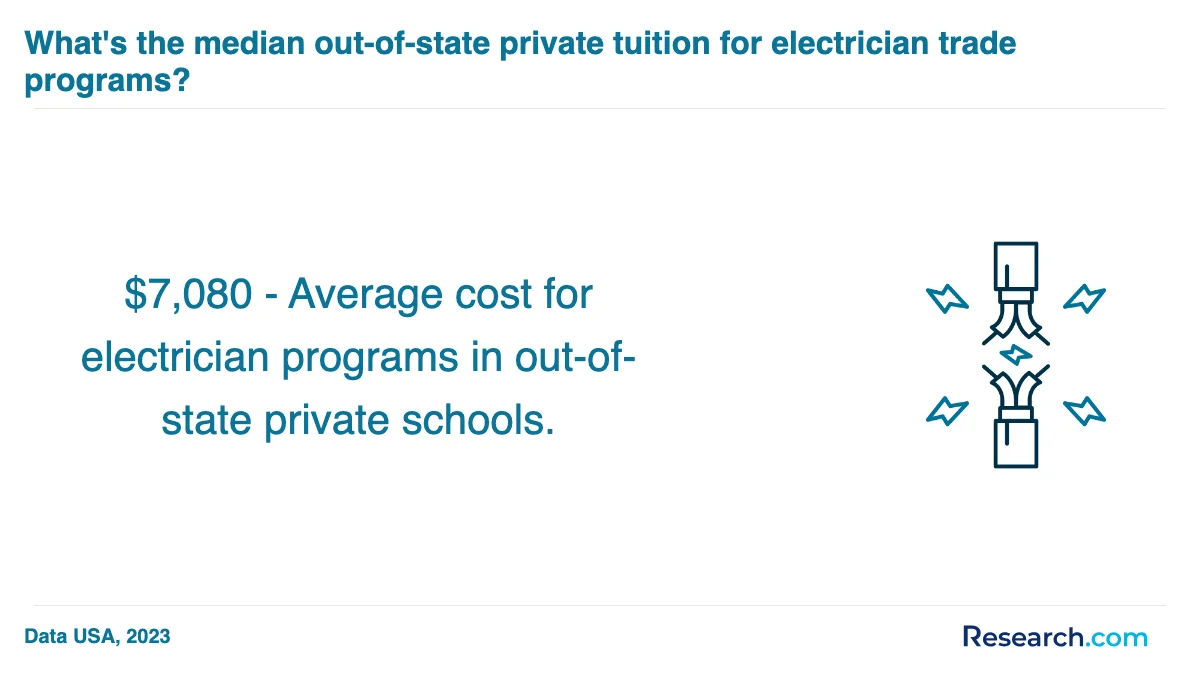
- The cost of training ranges from $3,000 to $15,000 depending on the institution, with some apprenticeship programs offering paid work during training.
- Starting salaries for new electricians in Durham are between $45,000 and $50,000 per year, rising to $60,000-$80,000 with experience and certifications.
- Licensing requires passing a state exam after training, with some local municipalities imposing additional journeyman requirements.
Completing an electrician trade school program in Durham typically takes between 9 months and 18 months, depending on the school and whether you choose full-time or part-time study. Many graduates from popular Durham trade schools share that a one-year full-time program allowed them to quickly gain hands-on skills and enter the workforce with confidence.
For example, students often describe balancing classroom theory with real-world practice as energizing and rewarding. One graduate mentioned how the structured curriculum helped them master electrical codes and safety standards without feeling overwhelmed, thanks to the practical labs embedded throughout the program.
Part-time options can extend the duration but offer flexibility for those working or managing other responsibilities. Graduates express satisfaction in being able to learn at their own pace while steadily progressing toward certification.
Trade schools in Durham focus on preparing students for immediate job readiness, with many reporting that their programs successfully combine technical training and problem-solving skills in under two years.
Online electrician trade school programs in Durham offer flexibility that appeals to students juggling work or family. Graduates often appreciate being able to study electrical codes and safety at their own pace from home. However, many find the lack of hands-on training challenging, as mastering practical skills requires working directly with tools and wiring.
On-campus programs at popular Durham trade schools provide structured, in-person labs where students can practice real-world electrical tasks. Graduates frequently highlight how working alongside instructors in workshops boosted their confidence and prepared them for actual job sites. This hands-on experience is crucial to meet North Carolina's licensing requirements and develop troubleshooting skills that online courses can't fully replicate.
Hybrid programs combine the best of both worlds, letting students complete theory online while attending campus labs once or twice a week. This approach is praised for balancing convenience with essential practical training, helping Durham students feel ready and supported as they move toward certification.
The average tuition fees for electrician programs in Durham vary depending on the chosen path. Many students aiming for quick entry into the field enroll in the Electrical Systems Technology diploma program at Durham Technical Community College, where tuition and fees total around $3,129 for 37 credit hours. Graduates of this program often share how the focused coursework and manageable cost relieved much financial stress, making their journey into the trade smoother.
For those pursuing a more comprehensive education, the associate degree option there requires 66 credit hours with estimated tuition fees around $6,054. These students appreciate the expanded knowledge base and credentials, which open more job opportunities despite the higher cost.
Another common route for learning while earning is through the Raleigh-Durham Electrical JATC apprenticeship program. This 4-year state-registered curriculum mixes on-the-job training with classroom hours and allows apprentices to receive wages during training. Though the cost is less upfront, the time invested may extend beyond typical programs, reflecting a different kind of cost and benefit that appeals to many practical learners.
Some Durham students find the accelerated programs at the School of Skilled Trades appealing due to scholarships and flexible payment plans, which reduce the overall cost of electrician trade school in Durham and help students finish faster without a financial burden.
Prospective students wanting to explore affordable educational options online can also consider a cheap electrical engineering degree online, which complements hands-on training. These options demonstrate how the range of costs and formats fits diverse financial and career goals.
Electrician trade school students in Durham often rely on a combination of financial aid options to manage costs effectively. Many accredited programs, including those at Durham Technical Community College, participate in federal and state aid systems. Graduates frequently recall how completing the FAFSA opened doors to Pell Grants and low-interest federal loans that made tuition more manageable.
Some students enroll in union apprenticeship programs like those affiliated with the International Brotherhood of Electrical Workers (IBEW), where tuition is often fully covered. These apprentices not only study without tuition worries but also earn hourly wages and benefits, creating a steady income stream during training. This practical support eases financial pressure and helps students focus on mastering their craft.
For those in non-credit or certificate courses, options like state workforce development funds and vocational rehabilitation offer alternative financial help. Scholarships such as the $600 Robert C. Massengill Scholarship from Cape Fear Community College provide crucial assistance for tools and supplies, sparking relief and gratitude among recipients striving to build their careers.
To enroll in an electrician trade school program in Durham, candidates typically need a high school diploma or GED. This foundational requirement ensures you have the basic math and reading skills essential for understanding electrical concepts.
Many trade schools in Durham also expect applicants to pass an entrance exam or a basic skills assessment. Graduates often recall how preparing for these tests helped them gain confidence before starting hands-on training.
Some schools require you to be at least 18 years old, reflecting safety regulations for working with electrical equipment. It's common for students to share that meeting this age requirement felt like a key milestone toward their career goals.
Having a valid driver's license is sometimes necessary, especially if the program includes off-site job training or apprenticeships. Students mention that this flexibility made balancing school and work easier.
Additional helpful prerequisites might include:
- Basic understanding of electrical theory or prior experience in construction trades
- Physical ability to handle tools and climb ladders safely
- Strong commitment to safety protocols
Durham's trade schools often provide orientation sessions that clarify these expectations, helping future electricians feel prepared and excited to start their training.
Electrician trade school programs in Durham focus on practical, hands-on courses that build confidence and skills needed for real-world electrical work. Graduates often highlight how starting with basic circuitry and wiring methods helped them quickly understand how to run wiring, read blueprints, and inspect components safely.
Students at popular schools like Durham Technical Community College experience detailed instruction on the National Electrical Code (NEC) and local codes, essential for meeting state licensing standards. Safety training is a core part, covering OSHA regulations and safe tool use, which many graduates credit for preparing them to handle job site hazards with ease.
Advanced courses include:
- AC and DC theory to understand different electrical currents
- Motors, motor control, and transformers that power industrial equipment
- Programmable logic controllers (PLCs) for automation tasks
- Fire alarm systems and structured cabling reflecting modern electrical demands
Hands-on labs and apprenticeships, such as the Raleigh-Durham Electrical JATC program, combine classroom theory with thousands of on-the-job hours, ensuring students graduate ready to tackle complex electrical projects confidently.
Electrician trade school programs in Durham typically offer specialized tracks to match varying career goals. At Durham Technical Community College, students can choose from Construction Electrician, Maintenance Electrician, and Control Electrician specializations. Graduates often reflect on how the Construction Electrician track prepared them for dynamic job sites, while others appreciate the Maintenance Electrician focus on troubleshooting electrical systems in real-world settings. The Control Electrician track is ideal for those interested in programmable logic and automated systems.
Many students also take advantage of Durham electrician apprenticeship opportunities, such as the four-year program offered by the Raleigh-Durham Electrical Joint Apprenticeship Training Committee (JATC). This hands-on training covers key topics like AC and DC Theory, National Electrical Code, and Industrial Motor Controls, combined with at least 900 hours of classroom work and 8,000 hours of paid work experience. Graduates express confidence entering the workforce, having balanced classroom knowledge with real on-the-job challenges.
For students curious about expanding their career options beyond traditional electrician roles, understanding wind turbine technician requirements offers insight into emerging fields that build on electrician training programs in Durham.
When considering the best electrician trade schools Durham has to offer, focus on programs that blend classroom theory with hands-on training. Graduates from Durham Technical Community College often share how labs preparing them for real electrical tasks built their confidence and skill. Flexibility also matters; many find part-time options or accelerated courses help balance work and study effectively.
Another important factor is the school's job placement support. Those who attended programs connected with the Raleigh-Durham Electrical Joint Apprenticeship Training Committee frequently mention how apprenticeships opened doors to steady employment right after graduation. Also, consider costs carefully alongside available financial aid to avoid unexpected burdens while learning.
Location plays a key role too. Students appreciate being close to home or having easy access via public transit, which reduces daily stress and travel costs. Finally, for those aiming at broader career goals, looking into electrical engineer college requirements can clarify the path forward, which you can explore in depth at electrical engineer college requirements.

Graduates of electrician trade school programs in Durham find diverse electrician career opportunities in Durham spanning residential, commercial, and industrial roles. Many begin as apprentices or entry-level electricians at places like Durham Technical Community College or the Raleigh-Durham Electrical Training Institute, where hands-on training prepares them to install and repair electrical systems efficiently. Typical career paths include becoming residential electricians handling home wiring, commercial electricians working on office or retail buildings, and industrial electricians maintaining heavy machinery.
As experience grows, graduates often advance to supervisory roles, estimating, or specialize in areas such as alarm system installation or automated control systems. Achieving credentials like the Unlimited License Electrician opens doors to large-scale projects requiring at least five years and 9,000 hours of experience.
Enrolling in electrical apprenticeship programs Durham NC offers lets students earn while they learn, gaining real-world skills quickly and increasing job prospects. Additionally, some pursue low cost online maintenance technician trade school programs to further boost their expertise and versatility in the field.
The electrician job opportunities in Durham NC are notably strong, especially for graduates from well-regarded local trade schools. Many recent graduates share experiences of quickly finding positions in both residential and commercial sectors, with companies actively seeking skilled electricians for ongoing construction and maintenance projects. Job openings range from entry-level roles to supervisory positions, offering diverse paths depending on your skills and ambitions.
Key advantages for graduates include:
- Access to over 390 active electrician job postings in Durham, encompassing industrial and commercial roles
- Competitive starting salaries between $39,882 and $43,911, with opportunities to earn up to $84,192 as experience grows
- Development opportunities in specialized commercial and industrial electrical work, including ongoing large-scale installations
- Potential for supervisory roles with higher hourly wages around $31.00 to $39.00
Graduates often highlight the practical training provided by popular electrician trade schools in Durham that prepares them for real-world challenges. For those researching options, exploring the cheapest online electrician training courses can also be a smart way to build skills before entering this thriving market.
The electrician employment outlook Durham remains positive, reflecting steady growth fueled by regional development and infrastructure projects. This ongoing demand creates clear advancement pathways for graduates ready to start a rewarding career in the field.
Best Electrical Technician Training Programs & Trade Schools - Top Electrical Tech Schools in Durham for 2026
# 1 position
Durham Technical Community College - Electrician.
associateDurham Technical Community College offers a hybrid Electrician program that prepares students to install, operate, maintain, and repair electric systems including residential, commercial, and industrial wiring. The curriculum covers electronics, wiring, power transmission, safety, testing, inspection, and applicable codes. Annual in-state tuition is $1,986. The program is accredited by the Southern Association of Colleges and Schools Commission on Colleges.
# 2 position
Durham Technical Community College - Electrician.
certificate or diplomaDurham Technical Community College offers a Hybrid Electrician program that prepares students to install, operate, maintain, and repair electric apparatus and systems, including residential, commercial, and industrial wiring. The curriculum covers electronics principles, wiring, power transmission, safety, and electrical codes. Annual in-state tuition is $1,986. The program is accredited by the Southern Association of Colleges and Schools Commission on Colleges.
Frequently Asked Questions about electrician
After completing electrician trade school in Durham, preparing for the job market involves several key steps. First, graduates should obtain necessary certifications and licenses required by North Carolina, such as the Electrical Contractor's License or Journeyman Electrician License. These credentials increase employability and demonstrate professional competence.
Networking is also essential; joining local trade unions or professional organizations like the International Brotherhood of Electrical Workers (IBEW) can provide valuable job leads and mentorship opportunities. Additionally, many employers in Durham value hands-on experience, so apprenticeships or internships often lead to better job prospects.
According to the U.S. Bureau of Labor Statistics, North Carolina's electrician employment is projected to grow by 8% through 2030, indicating a steady demand in the region.
Employers in Durham seek electrician trade school graduates who demonstrate strong technical skills and practical knowledge. Mastery of electrical codes and safety standards, particularly the National Electrical Code (NEC), is essential for compliance and job safety. According to the U.S. Bureau of Labor Statistics, attention to detail and problem-solving abilities are critical as electricians often diagnose complex electrical issues.
In Durham's competitive market, communication skills and teamwork are increasingly valued, reflecting the collaborative nature of construction and maintenance projects. Familiarity with modern tools and technology, including digital meters and conduit benders, also improves job readiness.
Trade schools in Durham emphasize hands-on training, aligning with employer expectations for real-world experience before entering the workforce.
Finding internships in Durham relevant to an electrician trade school program involves several practical steps. Start by consulting your school's career services office, which often maintains relationships with local contractors and electrical companies offering internships. The Durham Workforce Development Board provides resources and job listings that include apprenticeship and internship opportunities in the skilled trades.
Networking is also crucial. Joining local chapters of professional organizations like the International Brotherhood of Electrical Workers (IBEW) can connect students with mentors and potential internships. According to the U.S. Bureau of Labor Statistics, apprenticeship programs in electrical work have a completion rate of about 70%, highlighting their value.
Finally, explore online job platforms focused on Durham-area trades, such as the North Carolina Department of Commerce's job portal, which frequently updates listings for electrician internships and apprenticeships.
Obtaining an electrician trade school diploma in Durham significantly enhances career mobility and advancement opportunities. According to the U.S. Bureau of Labor Statistics, electricians with formal training and credentials often experience faster job placement and higher starting wages compared to those without. In Durham, where construction and manufacturing industries are growing, a diploma signals practical skills and knowledge that employers value.
Trade school graduates typically qualify for apprenticeships more easily, a crucial step for licensing in North Carolina. Licensed electricians in Durham earn a median annual wage of approximately $55,000, with experienced professionals advancing into supervisory or specialized technical roles.
Educational credentials also support career shifts within the electrical field, such as moving into renewable energy installation or industrial maintenance. Data from the Durham Workforce Development Board highlights that diploma holders have a 20% higher employment retention rate over five years, reflecting greater job stability and progression potential.
Students enrolled in electrician trade schools in Durham can benefit from part-time jobs that offer practical experience alongside their studies. Positions such as electrical apprenticeships or helper roles with local contractors provide hands-on learning in real work environments. According to the U.S. Bureau of Labor Statistics, apprenticeship programs are a common pathway for electricians to gain skills while earning wages.
Retail jobs at hardware stores like Home Depot or Lowe's also complement electrician education, allowing students to deepen their product knowledge. Additionally, facilities maintenance roles in Durham's growing healthcare and educational institutions offer exposure to electrical systems management. These opportunities help build relevant skills and improve employability after graduation.
Yes, there are electrician degree programs available near Durham, NC. Local community colleges and trade schools in the area offer programs focusing on electrical technology, which can lead to degrees or certificates needed to pursue a career as an electrician. To find the best options for electrician programs near you, consider consulting resources like Research.com to compare different schools and their offerings.
- A Guide to Skilled Trades Apprenticeships and Internships | BestColleges https://www.bestcolleges.com/trades/guide-to-skilled-trades-apprenticeships-internships/
- Your Guide to Electrical Engineering Internships | Handshake https://joinhandshake.com/blog/students/electrical-engineering-internships/
- Electrical Apprenticeships Near You | IECI https://ieci.org/apprenticeship/
- Should You Choose a Trade School or an Apprenticeship? Exploring the Electrical Training Path - InterCoast Colleges https://intercoast.edu/articles/trade-school-apprenticeship/
- Apprenticeship Finder | Apprenticeship.gov https://www.apprenticeship.gov/apprenticeship-job-finder
- Electrical Techniques - Durham College https://durhamcollege.ca/programs/electrical-techniques
- Electrical Installation https://www.newcollegedurham.ac.uk/courses/electrical-installation
- Electric Line Technician (Continuing Education) - Lineman Electrician School | Durham Technical Community College https://www.durhamtech.edu/continuing-education/electric-line-technician-continuing-education
- Apprenticeship Program – Raleigh-Durham Electrical Training Institute https://raldurjatc.org/apprenticeship/apprenticeship-program/
- How Long Does It Take To Become An Electrician? https://www.buildforce.com/resource/how-long-does-it-take-to-become-an-electrician