
2027 Most Popular Logistics Degree Programs Ranking in New York

Co-Founder and Chief Data Scientist
Choosing the right logistics degree program is an important step toward a rewarding career in New York's dynamic supply chain and transportation industries. This article introduces the 2027 Most Popular Logistics Degree Programs Ranking in New York, developed by the Research.com team of data scientists. It provides honest, data-driven insights to help you find programs that align with your goals.
By exploring this ranking, you'll gain clarity about your educational options and feel confident making decisions for a promising future. A logistics degree opens doors to exciting opportunities and growth-discover which programs are the best fit for you.
Key benefits of getting logistics degree in New York
- Graduates with a logistics degree in New York can earn competitive salaries, such as Logistics Coordinators and Specialists making around $84,640 annually, while Customs Brokers earn about $63,130 per year, offering strong financial rewards.
- Career paths for logistics graduates include roles like Transportation Planner or Supply Chain Coordinator, providing diverse opportunities in managing supply chains, transport, and customs for companies in dynamic markets.
- Completing a logistics degree online from a New York institution offers flexibility and convenience, enabling students to balance work and studies while gaining the same industry-relevant skills as traditional programs.
- Key benefits of getting logistics degree in New York
- What can I expect from logistics degree in New York?
- Where can I work with logistics degree in New York?
- How much can I make with logistics degree in New York?
- 2027 Most Popular Logistics Degree Programs Ranking in New York
- Key Findings
- How long does it take to complete logistics degree in New York?
- Professional Certifications and Continuing Education
- What's the difference between online and on-campus logistics degree?
- What is the average cost of logistics degree in New York?
- Affordability Comparison: New York vs. Southern Online Logistics Programs
- What financial aid is available to logistics degree students in New York?
- Expert Tips for Success in Your Logistics Degree Program
- What are the prerequisites for enrolling in logistics degree program in New York?
- What courses are typically in logistics degree programs in New York?
- What types of specializations are available in logistics degree programs in New York?
- How do you choose the best logistics degree in New York?
- What career paths are available for logistics degree students in New York?
- What is the job market for logistics degree in New York?
- Related Logistics Rankings for Nearby States
- Top Trending Logistics Rankings
What can I expect from logistics degree in New York?
The average cost of a logistics degree in New York varies depending on whether you attend a public or private institution. Public universities typically charge between $10,000 and $15,000 per year for in-state students, making them a cost-effective choice for many local students. For example, graduates from public colleges often mention that affordable tuition combined with internship opportunities within New York's busy ports allowed them to gain valuable real-world experience without overwhelming debt.
Private universities, known for specialized programs and strong industry connections, can cost upwards of $40,000 per year. Graduates from these schools report a strong network and access to cutting-edge technology, which helped them secure competitive positions immediately after finishing their degree.
Financial aid, scholarships, and work-study programs can significantly reduce out-of-pocket expenses. Students targeting logistics degrees in New York should explore these options early to ease their financial burden while taking full advantage of the practical, hands-on learning that local partnerships with prominent logistics firms provide.
Where can I work with logistics degree in New York?
Graduates from logistics programs at universities like SUNY Buffalo and St. John's University in New York often find themselves in dynamic roles across the state's bustling commercial sectors. Many secure positions within transportation firms managing large fleets or at major port operations such as the Port of New York and New Jersey, where handling millions of shipping containers requires expert coordination.
Others thrive in supply chain management roles for retailers and manufacturers, focusing on optimizing inventory and streamlining delivery routes. For example, a graduate's internship at a tech company warehouse in Westchester County provided hands-on experience with warehouse automation, a skill highly sought after in the growing e-commerce market.
Careers in air and rail logistics management are also promising, thanks to infrastructure hubs like JFK Airport and Long Island Rail Road. Several alumni have shared how their degree helped them land jobs overseeing freight movement or in consultancy roles improving sustainability and efficiency for local businesses.
Exploring government agencies or nonprofits involved in urban planning and emergency logistics is another practical path, enabling graduates to contribute meaningfully to community resilience and disaster response initiatives.
How much can I make with logistics degree in New York?
Graduates with a logistics degree in New York can expect starting salaries between $55,000 and $65,000, often landing roles like logistics coordinator or supply chain analyst. For example, coordinators in this field earn a mean annual wage of about $84,640, reflecting strong regional demand. Those attending schools such as the State University of New York or Fordham University often find internships turning into full-time positions with competitive pay.
With experience, professionals typically move into roles like logistics specialists or customs brokers, who earn around $63,130 to $84,640 annually. Mid-career logistics managers in New York commonly see salaries ranging from $80,000 to $100,000, boosted by the state's active economy and complex supply chain needs. Graduates benefit from additional certifications and skills in data analytics, which further enhance earning potential.
Personal stories from New York graduates often highlight the rewarding challenge of optimizing supply chains in industries such as e-commerce and port operations. The diverse job market across New York City and upstate opens pathways for substantial salary growth and career satisfaction.
2027 Most Popular Logistics Degree Programs Ranking in New York
How do we rank schools?
Investing in your education is a significant decision that can shape your future, and the Research.com team understands the importance of making informed choices. To assist prospective students, we have meticulously developed the "2027 Most Popular Logistics Degree Programs Ranking in New York." Our commitment to quality, credibility, and accuracy is reflected in the thorough research and analysis behind this ranking.
We utilized the following reputable data sources to ensure a comprehensive evaluation of logistics programs:
By exploring this ranking, readers will gain valuable insights into the most popular logistics degree programs available in New York, empowering them to make informed decisions about their educational and professional futures. For more information on our methodology, please visit our Research.com methodology page.


# 3 position
Rochester Institute of Technology
Master of Science in Global Supply Chain Management MS

# 4 position
State University of New York at Plattsburgh
Bachelor of Science in Global Supply Chain Management


Key Findings
- Public colleges in New York charge between $10,000 and $20,000 per year for undergraduate logistics degrees, while private schools can cost over $40,000 annually.
- Starting salaries for entry-level logistics roles average around $55,000 per year, with mid-career professionals earning upwards of $85,000 annually.
- New York's large infrastructure and international trade centers create high demand for logistics jobs in warehouse management, freight coordination, and supply chain roles.
- Certifications like Certified Supply Chain Professional (CSCP) and Certified Logistics Associate (CLA) can improve job prospects when combined with a logistics degree.
- Many programs include internships or cooperative education to help students gain practical experience and boost employability.
How long does it take to complete logistics degree in New York?
Completing a logistics degree in New York typically takes about four years for a full-time Bachelor of Science in Supply Chain Management or Logistics, as experienced by graduates from institutions like the State University of New York (SUNY) and private universities. This timeline fits well for students eager to dive into their careers with a solid foundation.
For those seeking a faster path, associate degrees offered through community colleges across New York usually require two years, making them ideal for students wanting to enter the workforce quickly or eventually transfer credits toward a bachelor's. Many students appreciate this flexibility, balancing studies with part-time jobs or internships.
Graduate degrees, such as a Master's in logistics or supply chain management, generally take one to two years full-time. Some New York schools offer accelerated master's programs that enable completion within a year, especially for those with relevant undergraduate experience. These options make it easier for working professionals to advance without lengthy breaks.
Professional Certifications and Continuing Education
Pursuing a logistics degree is only the first step in a rapidly evolving industry; combining your academic credentials with professional certifications can significantly elevate your expertise and marketability. Many graduates complement their degrees with certifications such as APICS Certified Supply Chain Professional (CSCP), Certified in Production and Inventory Management (CPIM), or the Council of Supply Chain Management Professionals’ (CSCMP) SCPro™ credential. These certifications demonstrate specialized knowledge in areas like inventory optimization, demand planning, and global trade compliance-skills highly valued by New York employers. When comparing the best online logistics degree programs, prioritize those that integrate certification exam preparation into their curriculum. Programs that partner with recognized bodies like APICS or the International Society of Logistics (SOLE) often provide discounted exam fees, dedicated study modules, and access to alumni mentors who have successfully passed certification tests. This synergy between degree and certification accelerates your path to roles such as Supply Chain Analyst or Transportation Manager. Continuing education doesn’t end after graduation or certification. Industry conferences (e.g., ProMat, MODEX) and micro-credential platforms (Coursera, edX) offer niche courses in areas like blockchain in supply chains, sustainable logistics, and AI-driven demand forecasting. Employers increasingly seek candidates who can demonstrate both hands-on project experience and up-to-date technical proficiencies. By combining your logistics degree with targeted certifications and ongoing coursework, you’ll position yourself at the forefront of innovation and ensure your skills remain in high demand.
What's the difference between online and on-campus logistics degree?
Choosing between online and on-campus logistics degrees in New York often hinges on your lifestyle and career goals. Graduates from well-known institutions like SUNY or CUNY often praise online programs for their flexibility, allowing them to balance work or family while studying supply chain management remotely. This option is ideal for those needing to keep a job or who live far from campus.
Conversely, on-campus students at these universities enjoy face-to-face interaction with professors and peers, which fosters valuable networking and hands-on internships, especially connected to New York's busy logistics hubs like the Port of New York and New Jersey. Many graduates highlight that these direct experiences helped them secure local industry positions.
Cost is another key factor. On-campus tuition averages around $10,000 yearly for in-state students, but extra expenses for housing and commuting add up. Online programs often reduce tuition by up to 25%, making them a practical choice for budget-conscious students.
Both formats cover similar core topics like inventory or transportation logistics, but delivery differs-online learners use digital simulations, while on-campus learners benefit from physical labs and projects.
What is the average cost of logistics degree in New York?
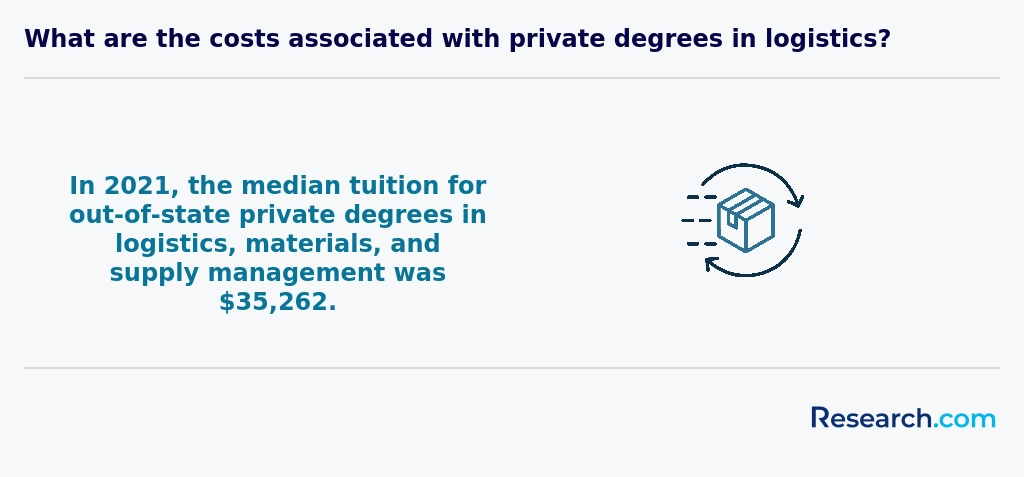
The average cost of obtaining a logistics degree in New York varies significantly based on the type of institution and residency status. Median total expenses for earning such a degree in the state amount to about $54,774, with in-state students typically paying around $39,345. Graduates from public universities within the SUNY system, for example, often share positive experiences emphasizing value, attributing their success to state-subsidized tuition rates near $8,000 annually. These savings can make pursuing logistics more accessible without sacrificing educational quality.
On the other hand, private colleges in New York, such as St. John's University or the New York Institute of Technology, present a higher financial commitment. While the tuition can reach up to $50,000 yearly, many students report feeling that the specialized logistics, supply chain management, and enterprise system programs justify the investment through networking opportunities and access to advanced resources. Considering the total expenses for logistics degrees in New York 2027, students often find that planning ahead for additional costs like books, technology fees, and mandatory internships is crucial.
Many successful logistics students encourage exploring financial aid options early and thoroughly. Scholarships, grants, and loans can greatly reduce out-of-pocket costs. Those looking for affordable logistics options can consult affordable logistics programs in new york to find suitable paths, making their educational journey more manageable and rewarding.
Affordability Comparison: New York vs. Southern Online Logistics Programs
When budgeting for your logistics education, it’s essential to weigh the high costs of New York’s top-ranked programs against more cost-effective online alternatives offered elsewhere. While New York institutions command annual tuition ranging from $10,000 to over $40,000, students seeking quality instruction without compromising affordability may explore nationally recognized online options. For instance, the Most Affordable Online Bachelor's in Logistics Degree Programs Ranking in the South highlights several universities that balance rigorous curricula with lower tuition rates, often between $7,000 and $15,000 per year. By comparing credit requirements, course delivery formats, and accreditation status, prospective students can identify programs that align with both their career goals and financial constraints. Many southern online logistics degrees offer the same core courses-such as Supply Chain Management, Inventory Control, and Transportation Logistics-delivered through interactive platforms and supported by virtual internships. Additionally, these programs frequently provide flexible scheduling, allowing you to maintain part-time work or family commitments while advancing your skills. Ultimately, assessing total cost of attendance-including technology fees, textbooks, and living expenses-ensures a realistic comparison. Whether you choose an on-campus logistics program in New York or an affordable online alternative, prioritizing accredited, industry-aligned curricula will maximize your return on investment and set the stage for a successful logistics career.
What financial aid is available to logistics degree students in New York?
Logistics students in New York can rely on various financial aid sources to ease tuition costs, especially at SUNY and CUNY schools known for their strong logistics and supply chain programs. Federal aid like Pell Grants provide up to $7,395 annually for eligible low-income students, while federal loans offer manageable repayment options. Many graduates recall how completing the FAFSA early unlocked these resources, making their education affordable without excessive debt.
State programs such as the Excelsior Scholarship play a vital role, covering full tuition for New York residents with household incomes up to $125,000. Others, like the Tuition Assistance Program (TAP), add extra support that students leveraged to reduce expenses significantly. Institutional scholarships at these colleges often reward merit or need, especially for students maintaining strong GPAs or engaging in internships, making the academic journey feel rewarding and attainable.
- Employer tuition assistance helps working students balance education with career growth in logistics.
- Industry scholarships from organizations such as CSCMP occasionally supplement student funds.
- Paid internships and co-op programs at New York universities not only build skills but also provide valuable income.
With this mix of federal, state, institutional, and private aid, students find practical pathways to fund their logistics degrees while staying motivated throughout their studies.
Expert Tips for Success in Your Logistics Degree Program
Embarking on a logistics degree can be both exciting and challenging. To excel, it's vital to build a strong foundation and develop the soft skills needed to thrive in a dynamic industry. First, embrace a proactive learning mindset by actively engaging in classroom discussions, seeking clarification when needed, and forming study groups with peers who share your passion for logistics. In addition to academic excellence, cultivating professional relationships through internships and networking events is crucial; these experiences can open doors to industry insights and future job opportunities. Stay updated on emerging trends, such as supply chain digitization and sustainable practices, by following reputable industry news and publications. Taking advantage of career services, such as resume workshops and mock interviews, can also boost your confidence and readiness for the job market. For those considering budget-friendly study options, explore the benefits of affordable logistics programs in new york that offer a balance between quality education and financial investment. By integrating these expert tips into your academic routine, you’ll not only excel in your coursework but also gain the practical know-how and professional network that pave the way for a successful career in logistics.
What are the prerequisites for enrolling in logistics degree program in New York?
To enroll in a logistics degree program in New York, most undergraduate programs require a high school diploma or GED, with a focus on solid academic performance in math, economics, and English. Graduates from well-known colleges like SUNY Buffalo often highlight how their early preparation in algebra and statistics helped them succeed in coursework. Strong problem-solving skills are essential, so taking advanced math classes before applying can boost your readiness and confidence.
For graduate programs in supply chain or logistics, having a bachelor's degree is mandatory, though it need not always be in business. Many students from schools such as New York Institute of Technology found that courses in management and engineering provided a valuable edge. Submitting GRE or GMAT scores is common, alongside recommendation letters showcasing analytical skills and relevant experience.
Work experience in areas like transportation or warehousing is also highly valued. Several alumni remember how internships in local New York companies made their applications stand out, making this practical step a great strategy for success.
What courses are typically in logistics degree programs in New York?
Typical logistics degree programs in New York equip students with courses essential for navigating the state's bustling supply chain environment. Graduates from well-known universities often highlight courses like Introduction to Logistics and Supply Chain Management, which lays the groundwork by explaining how goods flow through major New York ports and distribution centers.
Operations Management classes teach how to streamline production and delivery, a skill many students find invaluable when interning with local transportation companies.
Courses on Transportation and Distribution Systems focus on regional freight transport methods, helping students understand the complexity of moving goods across urban hubs like New York City and beyond. Learners appreciate Inventory Management for its practical strategies to minimize costs while meeting high demand in retail and wholesale industries popular in the state.
Finally, modules such as Warehouse Management and Logistics Information Systems prepare students for hands-on jobs by combining technology with day-to-day operations. Many graduates report these subjects as pivotal for securing roles in dynamic New York warehouses and distribution centers.
What types of specializations are available in logistics degree programs in New York?
Logistics degree specializations in New York reflect the state's dynamic role as a major hub, offering focused tracks like Supply Chain Management, which teaches graduates to efficiently coordinate production and distribution-essential skills in bustling environments such as the Port of New York and New Jersey. Transportation Management is popular among students who want to master freight and passenger systems, directly impacting daily transit operations in New York City. Warehouse and Inventory Management specializations prepare students for careers managing e-commerce fulfillment centers that are rapidly expanding across the state.
Many graduates from top New York colleges appreciate the practical training in Logistics Analytics, where data-driven approaches help optimize supply chains, making their skills highly sought after. Green Supply Chain Management is also increasingly emphasized, aligning with local sustainability efforts. For those weighing options, exploring the best online logistics degree programs can provide additional flexibility while maintaining access to New York's premium education and career opportunities.
New York logistics management concentration options let students tailor their studies to real-world challenges, helping them step confidently into the state's competitive logistics sector.
How do you choose the best logistics degree in New York?
Choosing the best logistics degree programs in New York means prioritizing accreditation and specialization to match your career goals. Graduates from well-known colleges appreciate how programs accredited by bodies like ACBSP or AACSB open doors to internships with major New York companies and ports. Many students find practical learning through partnerships offering internships in NYC's dynamic logistics sector invaluable, boosting their confidence and employability quickly.
Cost is another key factor. Affordable logistics colleges New York-based students often choose balance tuition with quality, as private schools can be expensive while public ones offer in-state rates near $10,000 annually. Students juggling work and study benefit from flexible schedules or online options, making education manageable alongside life commitments. For example, some graduates from prominent New York institutions highlight how such flexibility helped them gain experience while studying.
Finally, explore faculty expertise and research opportunities focused on supply chain innovation in New York. To compare affordability and options further, check out the Most Affordable Online Bachelor's in Logistics Degree Programs Ranking in the South, which some students use as a resource to broaden their choices effectively.
What career paths are available for logistics degree students in New York?
Graduates with a logistics degree in New York find a wide array of career paths ready for exploration, ranging from supply chain analyst and transportation manager to logistics coordinator and inventory control specialist. These roles focus on optimizing the movement of goods through ports like the Port of New York and New Jersey-an area where many New York universities prepare students with practical skills. Many alumni from prominent institutions in the SUNY system have shared how their hands-on projects with local businesses led to job offers in warehousing and retail logistics, showcasing the real-world value of their education. For those interested in more specialized roles, positions such as freight forwarding manager or procurement officer are particularly strong in New York's bustling trade environment, giving logistics degree career opportunities in New York a competitive edge.
New graduates often leverage this momentum by pursuing certifications like Certified Supply Chain Professional (CSCP), which many found helped them secure roles in technology firms innovating logistics software. Considering the diverse options, exploring the best programs for seniors online can be a strategic move for mature students balancing career shifts. Overall, job prospects with logistics degree New York continue to grow, fueled by the city's dynamic economy and strategic importance in supply chain management.
What is the job market for logistics degree in New York?
The job market for logistics degree graduates in New York is vibrant and full of opportunity due to the state's role as a central hub for transportation and commerce. Graduates from popular universities and colleges find themselves in high demand by multinational firms, shipping companies, and retail giants across New York City, Long Island, and upstate regions. Many have secured roles as supply chain analysts or transportation managers, quickly advancing thanks to the state's fast-paced logistics environment. Practical experience with real-world supply chain software and certifications often gives these graduates an edge.
For those weighing career growth and salary, New York offers a median wage significantly above the national average, reflecting the specialized skills required and the cost of living. Recent graduates report satisfaction with their starting salaries and career progression, often motivated by the tangible impact they have on optimizing delivery networks and warehousing operations.
Students considering this pathway should also evaluate investment vs. return; in-state tuition at public New York universities ranges from $10,000 to $30,000 annually, while private institutions exceed $50,000, often correlating with strong career placement. For those seeking advanced academic options, programs like a phd degree without dissertation can enhance expertise and open further career doors in the logistics field.
Overall, logistics degree job opportunities in New York remain strong and growing, supported by a dense economy and critical infrastructure that fuels demand for skilled professionals.
Frequently Asked Questions About logistics
Logistics degree students in New York can maximize their learning experience by engaging with the city's diverse transportation and supply chain networks. New York is a major hub for shipping and freight, offering numerous internship opportunities in companies such as FedEx, UPS, and the Port Authority of New York and New Jersey. Participating in internships provides practical experience that complements academic studies.
Networking is essential; students should attend industry conferences and join professional organizations like the Council of Supply Chain Management Professionals (CSCMP), which has an active New York chapter. Additionally, utilizing campus resources such as career services and workshops improves job readiness.
According to the New York State Department of Labor, logistics-related jobs are expected to grow by 8% through 2028, highlighting strong local demand that students can prepare for by staying informed about regional market trends and technological advances in supply chain management.
The logistics industry in New York is rapidly evolving, with several emerging niches shaping its future. One key area is sustainable logistics, which focuses on reducing environmental impact through green supply chain practices. New York's commitment to climate goals has increased demand for professionals skilled in eco-friendly transportation and packaging.
Another growing niche is e-commerce logistics. The surge in online shopping, especially in urban hubs like New York City, has created a need for expertise in last-mile delivery and warehouse automation. According to the New York State Department of Labor, logistics jobs related to e-commerce are expected to grow by over 10% by 2030.
Data analytics and supply chain technology also represent vital emerging fields. Logistics firms increasingly rely on data-driven decision-making and AI to optimize routes and inventories, demanding professionals trained in these technologies.
After completing a logistics degree in New York, preparing for the job market involves several strategic steps. Start by gaining practical experience through internships or cooperative education programs offered by many local universities. According to the Bureau of Labor Statistics, New York's logistics sector is growing rapidly, with a 5% increase in demand for supply chain professionals between 2020 and 2030.
Networking is vital; attending industry events held in New York City and connecting with organizations like the Council of Supply Chain Management Professionals can open doors. Additionally, acquiring certifications such as the Certified Logistics Associate (CLA) enhances employability.
Proficiency in data analytics and familiarity with software used in logistics management are increasingly important skills. Finally, tailoring resumes to highlight relevant New York market knowledge and skills ensures candidates stand out to employers in this competitive field.
Employers in New York's logistics sector prioritize graduates with strong analytical and problem-solving skills. According to the New York State Department of Labor, the ability to optimize supply chains and manage transportation efficiently is critical. Communication skills are also essential since logistics professionals must coordinate between suppliers, customers, and carriers effectively. Technical knowledge, including familiarity with industry software like warehouse management systems (WMS) and enterprise resource planning (ERP), is increasingly demanded. Additionally, understanding regulatory compliance and safety standards specific to New York's busy ports and transportation hubs is highly valued by employers in this competitive market.
Finding internships in New York relevant to a logistics degree involves targeted strategies within the city's robust supply chain industry. Students should utilize resources provided by their universities, including career centers and alumni networks, which often connect candidates with companies like UPS and FedEx, major employers in the region. New York's port activities and distribution hubs, noted by the Port Authority of New York and New Jersey as among the busiest in the nation, support numerous internship opportunities.
Online platforms such as Handshake, LinkedIn, and company websites are essential tools to explore internships specifically in logistics and supply chain fields. Additionally, participating in local industry events and joining organizations like the Council of Supply Chain Management Professionals (CSCMP) New York chapter can facilitate valuable networking.
A logistics degree significantly enhances career mobility and advancement opportunities in New York's competitive job market. This credential equips graduates with crucial skills in supply chain management, transportation, and inventory control, which are in high demand across the region's diverse industries.
The U.S. Bureau of Labor Statistics projects a 6% growth in logistics-related jobs nationally through 2032, with New York benefiting from growing e-commerce and international trade sectors. Employers in New York often prefer candidates holding degrees, as they demonstrate proven knowledge and leadership potential.
Moreover, a logistics degree facilitates access to higher-level roles such as operations manager or supply chain analyst, which offer competitive salaries and career growth. According to the National Association of Manufacturers, logistics professionals in New York enjoy median salaries exceeding $75,000, reflecting the degree's value.
Studying for a logistics degree in New York equips students with skills that cross traditional boundaries, preparing them for interdisciplinary roles in supply chain management, transportation, and technology integration. Programs often combine courses in business analytics, information technology, and urban planning to reflect the complex logistics network in New York, which is a major U.S. transportation hub.
New York's logistics sector supports over 600,000 jobs, demanding graduates who can navigate systems involving freight, warehousing, and regulatory compliance. Education here emphasizes practical experience through internships and collaboration with industries.
According to the New York State Department of Labor, employers seek graduates with abilities in data-driven decision-making and cross-functional communication, highlighting the interdisciplinary nature of logistics careers in this region.
When choosing between a thesis and a non-thesis logistics degree program in New York, consider your career goals and time commitment. Thesis programs typically require original research and a comprehensive paper, ideal for students aiming for academic or research positions. Non-thesis options focus more on practical skills and coursework, suited for those seeking immediate entry into logistics management roles.
According to the New York State Department of Labor, logistics employment is expected to grow by 8% by 2030, emphasizing practical experience. Thesis programs may take longer to complete, often 2-3 years, while non-thesis programs can be finished within 1-2 years.
Evaluate if you prefer research-intensive study or applied learning, as both approaches are well-regarded in New York's competitive logistics sector.
Students based in New York interested in studying logistics abroad have several pathways to consider. Many universities in New York maintain exchange agreements with international institutions, allowing logistics students to study part of their degree overseas while earning credits. Programs often focus on global supply chain management and international trade, reflecting the city's role as a major logistics hub. According to data from the New York State Department of Labor, the logistics sector employs over 250,000 people statewide, highlighting strong career prospects.
Several institutions offer dual-degree options or short-term study abroad programs focusing on logistics and supply chain. Popular destinations include Europe and Asia, where students can gain exposure to diverse logistics environments and technologies.
Part-time job opportunities in New York that complement logistics degree education often center around roles in warehouses, distribution centers, and supply chain operations. According to the New York State Department of Labor, logistics-related jobs account for over 150,000 positions statewide, many of which offer part-time schedules suitable for students.
Positions such as inventory clerks, shipping and receiving assistants, and transportation coordinators provide practical experience with the flow of goods and materials. These roles often involve using inventory management software and understanding shipping regulations, directly supporting logistics coursework.
Additionally, internships or part-time roles with third-party logistics providers (3PLs) in the New York metropolitan area allow students to gain hands-on knowledge of urban supply chains and last-mile delivery challenges.
Networking is a vital component of pursuing a logistics degree in New York. Many local universities partner with leading companies in the city, including those in supply chain management, transportation, and warehousing sectors. Students often have access to career fairs, workshops, and guest lectures featuring professionals from organizations such as the Port Authority of New York and New Jersey.
Additionally, professional associations like the Council of Supply Chain Management Professionals (CSCMP) New York Metro Roundtable host regular events. These provide excellent opportunities for students to build connections, learn industry trends, and explore internships. According to the New York State Department of Labor, the logistics sector employs over 250,000 people statewide, highlighting strong local industry presence.
Alumni networks play a significant role for logistics degree students in New York by connecting them with experienced professionals in a competitive industry. These networks often provide mentorship opportunities, helping students understand career paths and acquire industry insights.
New York's position as a major logistics hub-home to the Port of New York and New Jersey, which handles over 7 million shipping containers annually (Port Authority of NY & NJ, 2023)-makes these connections invaluable. Alumni can facilitate internships and job placements in local companies linked to freight forwarding, supply chain management, and warehousing.
Moreover, alumni events and online groups enhance professional networking, which is crucial given that 70% of U.S. jobs are obtained through connections (U.S. Bureau of Labor Statistics, 2022). For logistics students in New York, these relationships can accelerate career growth within a dynamic market.
Customizing a logistics degree in New York allows students to tailor their education to match specific career goals. Many institutions offer elective courses in supply chain management, transportation, and inventory control, providing flexibility to focus on areas like maritime logistics or urban freight systems.
Students can also choose internships and cooperative education positions with key local industries. New York's status as a major port and distribution hub offers abundant opportunities for practical experience.
Additionally, some programs enable specialization through certificates or dual degrees in business, technology, or sustainability, enhancing career prospects in a competitive market.
According to the New York State Department of Labor, logistics employment is expected to grow by 6% through 2030, underscoring the value of targeted skills development.
Logistics students in New York often face significant challenges related to the city's high cost of living. According to the Council for Community and Economic Research, New York's living expenses rank among the highest in the U.S., making it difficult for students to balance studies with part-time jobs.
Additionally, New York's intense transportation industry demands practical experience, yet securing internships can be competitive. The Port Authority of New York and New Jersey reported over 60 million tons of cargo handled annually, highlighting the sector's complexity.
Finally, adapting to rapidly evolving supply chain technologies presents a learning curve requiring continuous skill development throughout their academic journey.
Graduates with a logistics degree in New York can pursue several professional certifications to enhance their careers. One of the most recognized is the Certified Supply Chain Professional (CSCP) offered by APICS, which focuses on supply chain management skills. Another key credential is the Certified in Logistics, Transportation, and Distribution (CLTD), also from APICS, tailored for logistics professionals handling storage and transportation.
New York's extensive port facilities and transportation networks make certifications like the Six Sigma Green Belt valuable for improving operational efficiency. The American Society of Transportation and Logistics (ASTL) offers the Certified Logistics Technician (CLT), supporting entry-level logistics skills. Statistics from the New York State Department of Labor highlight that certified professionals often see salary increases of 10-20% compared to non-certified peers, emphasizing the value of these credentials.
Applying to a logistics program in New York requires clear and focused preparation. Start by researching programs thoroughly, focusing on those with strong industry connections and hands-on training. Many top New York logistics programs value prior experience or coursework in supply chain management, business, or operations.
Highlight your relevant skills such as analytical thinking, problem-solving, and communication in your personal statement. Use specific examples demonstrating your interest in logistics, referencing New York's role as a major U.S. logistics hub, processing over 1.4 million containers annually at the Port of New York and New Jersey, according to the Port Authority data from 2023.
Ensure that your application meets all deadlines and includes letters of recommendation from professionals familiar with your academic or work background. Finally, prepare for interviews by demonstrating knowledge of current logistics challenges in New York, such as urban freight congestion and sustainability efforts.
Logistics is a crucial field in the global economy, with increasing demand for skilled professionals in supply chain management, transportation, and distribution. A logistics degree from New York institutions offers students a pathway into a sector that supports international trade and commerce.
The Port of New York and New Jersey, one of the largest on the East Coast, plays a significant role in global shipping, making New York a strategic location for logistics education and careers. According to the New York State Department of Labor, employment in logistics-related occupations is expected to grow by 6% through 2030, reflecting strong demand.
Globally, companies seek professionals who can manage complex supply chains efficiently, emphasizing skills like data analysis and sustainability. U.S. logistics education increasingly integrates these global trends to prepare graduates for diverse international markets.
Gaining practical experience while pursuing a logistics degree in New York is essential to prepare for a competitive job market. Many local colleges encourage internships with prominent companies such as FedEx, UPS, and Amazon, which have large distribution centers in the region. According to the New York State Department of Labor, internships significantly increase employment chances after graduation.
Students also benefit from cooperative education (co-op) programs that combine classroom learning with paid work experience. These programs often last a semester or longer and provide real-world exposure to supply chain management and transportation logistics.
Additionally, New York offers numerous networking events and industry conferences that help students build connections and learn current logistics trends. Colleges often partner with the Council of Supply Chain Management Professionals (CSCMP) to create seminars and workshops specific to New York's transportation hubs.
Choosing the right concentration within a logistics degree program in New York depends on your career goals and interests. Common concentrations include supply chain management, transportation, and warehouse operations. New York's status as a major logistics hub-thanks to its ports, airports, and trucking networks-means specialties in freight management or urban logistics can be particularly valuable.
Research local industry trends and job openings using resources like the New York State Department of Labor, which reports growing demand for roles in supply chain analytics and distribution management. Aligning your concentration with these in-demand skills can improve employability.
Consider hands-on learning opportunities such as internships offered by New York-based logistics companies to gain practical experience.
Related Logistics Rankings for Nearby States
- 2027 Most Popular Logistics Degree Programs Ranking in New Jersey
- 2027 Most Popular Logistics Degree Programs Ranking in Pennsylvania
- 2027 Most Popular Logistics Degree Programs Ranking in Rhode Island
- 2027 Most Popular Logistics Degree Programs Ranking in Ohio
- 2027 Most Popular Logistics Degree Programs Ranking in West Virginia
- 2027 Most Popular Logistics Degree Programs Ranking in South Carolina
- 2027 Most Popular Logistics Degree Programs Ranking in Tennessee
- 2027 Most Popular Logistics Degree Programs Ranking in Michigan
- 2027 Most Popular Logistics Degree Programs Ranking in Georgia
- 2027 Most Popular Logistics Degree Programs Ranking in Illinois
Top Trending Logistics Rankings
References
- 5 Key Logistics Management Challenges - PLS Logistic Services https://www.plslogistics.com/blog/5-challenges-that-logistics-managers-face-every-day/
- Engaging Process for Supply Chain Learning | SCM Globe https://www.scmglobe.com/engaging-process-for-teaching-supply-chains/
- Answer: Logistics Degree Salary With A Bachelor vs. Master’s Degree? https://logisticsdegree.net/logistics-degree-salary-with-a-bachelor-vs-masters-degree/
- Top Skills Employers Look for In Supply Chain Students https://scmtalent.com/top-skills-employers-look-for-in-supply-chain-students/
- Traditional Supply Chain vs. Digital Supply Chain https://www.zengrc.com/blog/traditional-supply-chain-vs-digital-supply-chain/
- How to Find Supply Chain Management Internships | Elmhurst University https://www.elmhurst.edu/blog/supply-chain-management-internships/
- What are the key challenges in logistics management today? - Logitude World https://www.logitudeworld.com/what-are-the-key-challenges-in-logistics-management-today/
- Logistics and Transportation Management https://collegecatalog.ncc.edu/current/courses/LOG.html
- Global Logistics: The Top 5 Emerging Markets You Shouldn’t Ignore - Global 3PL Network https://www.global3plnetwork.com/global-logistics-the-top-5-emerging-markets-you-shouldnt-ignore/
- Know more about thesis vs non- thesis: what is the difference? https://studyfans.com/en/blogs/816


