2027 Real Estate Specializations for Multifamily Housing Careers

Co-Founder and Chief Data Scientist
Professionals navigating multifamily housing careers face a crucial barrier: selecting a specialization that aligns with both evolving market demands and personal career trajectories. Employers increasingly favor candidates with niche expertise in areas like affordable housing finance or property technology integration, yet many programs lag in offering flexible, targeted pathways to develop these skills. According to the National Center for Education Statistics, 42% of adult learners now favor programs that blend online and part-time formats, underscoring a shift toward adaptable education to accommodate working professionals' schedules and career pivots. This trend complicates decisions about timing and program selection for both newcomers and seasoned real estate professionals.
This article breaks down key multifamily housing specializations, analyzing their practical relevance, delivery models, and workforce demand to equip readers with actionable insights for strategic specialization choices.
Key Things You Should Know
- Multifamily housing finance specialization demands advanced proficiency in complex debt structures; U.S. Mortgage Bankers Association data shows 64% of hiring managers prioritize experience in CMBS and agency loans, impacting entry timing and credential investment.
- Integration of sustainability and energy-efficient retrofits is reshaping skill demand; 58% of employers in the National Multifamily Housing Council survey seek expertise in green building compliance, prompting a strategic workforce upskilling challenge.
- Development cycles now average 30% longer due to regulatory compliance layers per HUD and EPA reports, increasing training costs and extending pathways to leadership positions, a critical factor for career pivot timing.
What are the main real estate specializations for multifamily housing careers?
Multifamily housing careers segment into distinct specializations that require specific skills and carry unique operational responsibilities. Acquisitions professionals are judged by their ability to assess local market conditions and investment risks; failure here can diminish portfolio returns and capital preservation, a critical factor in multifamily housing real estate investment strategies. Asset management prioritizes maximizing net operating income and property value through rigorous financial oversight and tenant retention efforts-this role directly influences profitability, evidenced by a notable 62.6% operating income margin in recent data.
Property management demands daily operational expertise, including regulatory compliance and workforce coordination, which can become highly complex across diverse portfolios. Development specialists navigate regulatory environments and construction logistics; misjudgments in permitting or timelines tend to inflate costs and jeopardize feasibility. Finance roles focus on capital structuring and investor communications, needing fluency in tax credit mechanisms and market finance tools.
Career decisions in multifamily property management careers hinge on assessing one's analytical, operational, or interpersonal strengths versus the expected certification and mobility tradeoffs within real-world settings. For individuals seeking to combine pragmatic education pathways with career flexibility, exploring online business degree programs can provide foundational competencies relevant to these roles.
Which degrees and certificates best prepare you for multifamily real estate roles?
Degrees in multifamily real estate investment and development shape candidates by integrating analytical and regulatory expertise critical for advancing projects in a complex market. Practical knowledge in market analysis, property valuation, and understanding zoning impact are essential, as multifamily development reached a peak with 608,000 units completed in 2024, per the National Association of Home Builders. For instance, those with finance degrees contribute rigorous financial modeling skills needed to assess investment feasibility and negotiate funding, while urban planning credentials support compliance with evolving community requirements.
Professional certificates for multifamily housing management careers, such as those from the National Apartment Association or U.S. Green Building Council, provide targeted proficiency-especially valuable for mid-career professionals entering property management or leasing fields without committing to a full degree. These certificates focus sharply on industry best practices, green building standards, and operational nuances often overlooked in broader academic programs.
Employers expect familiarity not only with regulatory standards but also with financial modeling software and real-world project experience, which often distinguishes candidates. Practical internships or direct project involvement affirm theoretical knowledge while addressing sector growth complexities. Choosing between degrees and certificates hinges on career goals and time constraints; asset management roles generally prefer a bachelor's degree, while certificates offer an efficient route for specialty roles.
For professionals seeking advanced skills without leaving the workforce, exploring options like the best online masters in finance can complement foundational knowledge and enhance competitiveness in multifamily real estate investment and development.
How do online and campus real estate programs differ for multifamily specializations?
Multifamily specialization in real estate education reveals a stark contrast between online real estate education vs campus programs for multifamily specialization, notably in experiential learning and market engagement. Campus programs provide immersive exposure to transactions through site visits and live valuation exercises, closely mirroring employer expectations in acquisitions and capital markets. For instance, participants might attend investor pitch meetings preparing them for real-time deal environments supporting the $30.0 billion investment sales volume reported in Q1 2025 by Newmark's U.S. Multifamily Capital Markets Report.
Employers hiring acquisitions professionals prioritize candidates with demonstrated understanding of capital market dynamics, deal structuring, and regional multifamily trends-gained more readily in campus settings. Conversely, online programs often require students to independently secure internships or practical experience to achieve similar market readiness.
The differences between online and campus multifamily real estate courses also extend to accessibility and networking. Campus programs typically require fixed schedules and physical presence, a barrier for working professionals or those outside urban centers. Online offerings deliver flexibility and are suited for career changers who must balance other commitments but risk losing immediate access to local market insights and informal deal-making networks.
Prospective students weighing these pathways should consider that both demand proactive efforts beyond coursework to tap into the 35.5% year-over-year growth in multifamily transactions. Those seeking structured hands-on market engagement might benefit from campus-based curricula, whereas others valuing scheduling flexibility may explore online options. For related flexible degree choices, an online project management degree illustrates this balance between accessibility and practical application.
What courses and skills are most important in multifamily real estate curricula?
Multifamily real estate investment courses must deliver operational skills that reflect current market realities, notably the rent stagnation identified in Yardi Matrix's May 2026 National Multifamily Market Report. With average U.S. multifamily rent growth at a meager 0.2% annually, professionals are tasked with balancing revenue optimization against cost containment. Effective programs emphasize rent roll analysis, lease administration, and operating expense oversight, fostering competencies in data-driven financial modeling critical in this environment.
Technical proficiency with property management software such as Yardi, RealPage, or MRI is foundational for daily management tasks. Programs incorporating experiential training on these platforms improve readiness for immediate workforce contribution. Negotiation and conflict resolution remain vital for tenant retention, especially when incremental rent increases cannot be relied upon as primary revenue drivers.
Risk management education covering fair housing laws, compliance with local and federal regulations, and health and safety standards reduces costly legal and operational disruptions. Employers seek candidates adept in navigating these frameworks to mitigate risk and ensure consistent portfolio performance.
Adaptive leasing strategies combined with digital marketing tailored to multifamily portfolios support occupancy goals without solely relying on rent growth. For example, a property manager working in a stagnant rent market might sustain NOI growth through disciplined cost controls and enhanced resident services, underscoring the value of curriculum focused on operational analytics and tenant relations.
Those evaluating multifamily real estate investment courses should weigh the inclusion of these essential skills for multifamily housing careers, balancing technical, financial, and regulatory training. For professionals exploring broader management education pathways, options like a best online master degree in human resource management can supplement real estate expertise with workforce leadership skills.
What accreditation and program quality indicators matter for multifamily real estate education?
Choosing multifamily real estate education demands attention to accreditation and alignment with industry realities to ensure return on investment. Regional accreditation validates program quality to employers, but practical value comes from curriculum that reflects National Multifamily Housing Council (NMHC) competencies, especially those addressing affordable and workforce housing-critical given that over 11 million renter households allocate more than half their income to housing costs.
Students benefit most from programs that integrate hands-on internships or partnerships with established developers, as these experiences foster skill acquisition beyond theory. Employers favor candidates who master niche areas such as regulatory compliance and funding mechanisms like Low-Income Housing Tax Credits (LIHTC), which are essential for managing subsidized housing portfolios.
Transparency in graduate outcomes-employment rates within a year and average starting salaries-offers a realistic measure of program effectiveness. Tradeoffs exist: short certificate tracks can accelerate workforce entry but often exclude advanced risk management content needed for senior roles, while extended degree programs provide broader leadership training at higher tuition and time costs.
Curricula that adapt to legislative and economic shifts sustain long-term career viability. Programs refreshed frequently and connected to policy research resources provide an advantage in navigating the evolving multifamily housing landscape, aligning education closely with workforce and market demands.
What are typical admission requirements for multifamily real estate degree programs?
Admission into multifamily real estate degree programs demands a balance between academic credentials and relevant industry experience due to evolving employer expectations and market dynamics. Most programs require a bachelor's degree with a GPA between 2.5 and 3.0, alongside demonstrated proficiency in finance, economics, or business statistics to competently handle complex property valuation and market analytics. GRE or GMAT scores may be requested but often are optional for candidates with practical experience.
Working professionals typically present 1-3 years of real estate-related experience in areas such as finance or asset management. This hands-on background can offset lower academic performance and signals an applicant's readiness for specialized coursework addressing multifamily housing finance or development challenges. Letters of recommendation usually emphasize analytical abilities and alignment with career objectives in this sector.
Given projections like Fannie Mae's forecast of a 19% increase in multifamily mortgage originations to $459 billion, programs prioritize applicants familiar with debt and capital markets.Statements of purpose must clearly articulate career goals and capacity to navigate financial structuring in property investment.Some programs include assessments or interviews designed to differentiate candidates based on applied skills.Applicants juggling full-time roles face timing and documentation hurdles, so early submissions can secure prerequisite support.The admission process is shaped as much by market demand for debt-savvy professionals as by academic forms, making the choice to pursue these degrees a strategic decision informed by both workforce realities and personal capacity to engage with technical content.
How long do multifamily real estate programs take, and what do they cost?
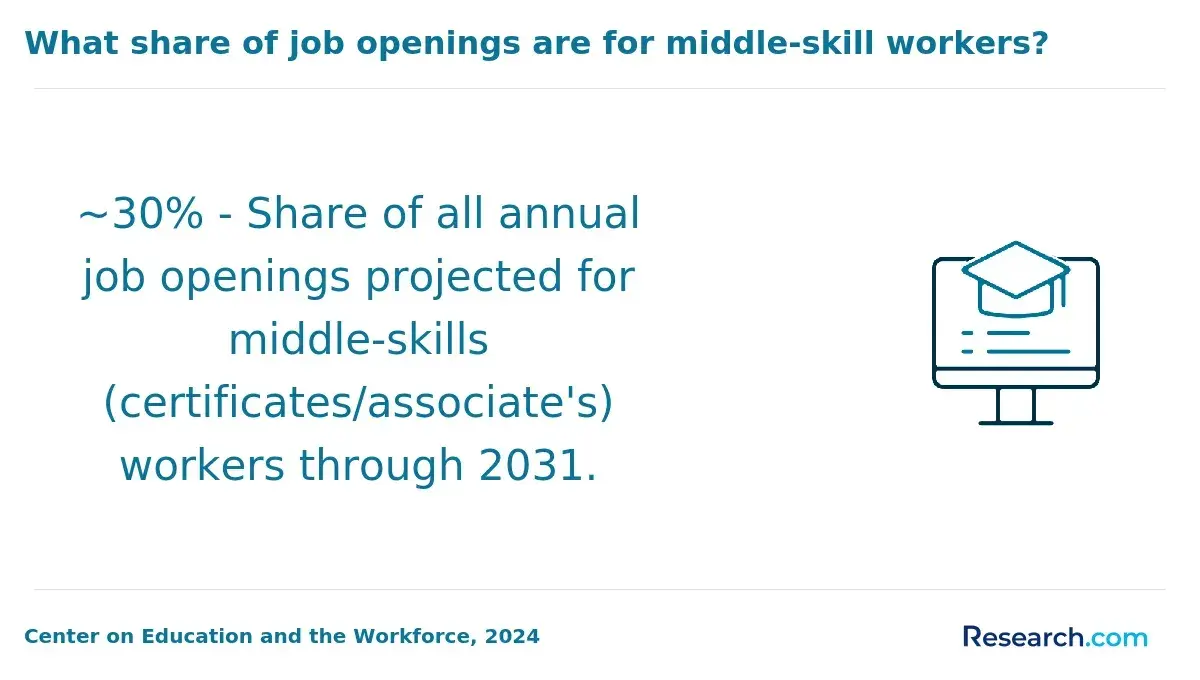
Choosing between short-term certificates and extended degree programs in multifamily real estate hinges on balancing immediate employability with long-term career positioning. Certificate programs, often lasting around six weeks and costing near $1,000, target essential skills like asset valuation and investment analysis, enabling professionals to pivot quickly or enhance existing knowledge. However, their scope limits access to senior roles demanding deeper market insight and credentials.
Conversely, associate and bachelor's degrees take 12 to 24 months and can exceed $20,000, but offer a broader foundation recognized by employers. These longer pathways develop combined technical and market expertise critical in today's fluid capital markets, where proficiency in financial modeling and investment strategy is increasingly non-negotiable. For example, CBRE's U.S. Real Estate Market Outlook 2025 showed multifamily cap rates shifting by 75-100 basis points from recent peaks, reflecting evolving risk assessments that require advanced analytical abilities.
Candidates working full-time must navigate additional challenges: online or part-time formats can reduce opportunity costs but often increase duration and overall expenses. Integrating certificates with practical experience-through internships or employer mentorship-can mitigate financial burden while improving skills relevant to value-add and opportunistic investment roles.
- Short courses offer rapid skill acquisition but constrain senior-level opportunities.
- Degree programs provide deeper knowledge and broader recognition at higher cost and time investment.
- Market demands now prioritize financial modeling and capital markets competency.
- Mixing credentials with experiential learning helps balance cost, time, and skill acquisition.
What multifamily housing job titles can you pursue with different specializations?
Choosing a multifamily housing career requires balancing specialization demands with practical workforce implications. Property management roles, such as property manager or leasing consultant, typically prioritize operational experience and tenant relations over formal education. These positions often demand certifications and nuanced understanding of compliance, reflecting a tradeoff between hands-on skills and credentialing.
By contrast, development and finance paths demand stronger analytical aptitude and often advanced degrees. Careers like multifamily development analyst or real estate analyst require expertise in feasibility studies, zoning, underwriting models, and fiscal structuring. Employer preference here leans toward candidates who can navigate complex regulatory frameworks and demonstrate project leadership rather than entry-level credentials.
Sustainability in multifamily housing is increasingly pivotal, reshaping hiring to favor candidates skilled in ESG metrics, environmental standards, and retrofit strategies. Roles such as ESG analyst or green building consultant demand certifications like LEED or WELL combined with data literacy to meet investor expectations that now embed sustainability into underwriting, as PwC/ULI's Emerging Trends in Real Estate 2025 highlights.
In practice, specializing affects educational choices: property management offers lower barriers but may restrict upward mobility, development and finance demand intense analytical training with longer educational pipelines, and sustainability specialists must continuously update expertise amid evolving regulation.
What salary ranges and earning potential exist in multifamily real estate careers?
Multifamily real estate careers in 2026 reveal a compensation spectrum tightly linked to hybrid skill sets and market complexity rather than experience alone. Entry-level roles like leasing agents hover near $50,000 annually, but advancing requires integration of technical competencies alongside traditional operational knowledge. Property managers and analysts typically earn between $70,000 and $120,000, yet those who adopt AI-driven tools and proptech solutions can command salaries well above this range.
For example, a property manager managing a large urban portfolio who leverages AI-based leasing software to optimize occupancy rates can justify higher salary tiers and performance bonuses. Similarly, finance analysts employing predictive analytics to enhance asset valuation influence investment strategies directly, capturing premium compensation.
This shift is underscored by the 2024 Apartment Technology survey from the National Multifamily Housing Council (NMHC), where 93% of large multifamily owners maintain or increase proptech budgets, prioritizing AI-driven analytics. This creates upward mobility for candidates proficient in big data, AI implementation, and system integration.
However, professionals without advanced tech skills face pragmatic tradeoffs: pursuing mid-to-high six-figure earnings demands certifications or education that balance finance, property management, and digital fluency. Navigating between on-site operational experience and competence in emerging technologies is a strategic necessity in multifamily real estate today.
Employers increasingly value applicants who combine practical real estate knowledge with digital expertise, since hybrid skill sets facilitate portfolio optimization and tenant engagement at scale. Aligning education with these evolving job requirements is essential for sustainable professional growth.
How is the job outlook and demand changing in the multifamily housing sector?
Job demand in multifamily real estate is rising sharply, driven by widespread zoning reforms and incentives that favor adaptive reuse and denser development. Over 70% of U.S. markets now emphasize these policies, creating strong demand for professionals fluent in interpreting complex local regulations and guiding redevelopment efforts.
Employers prioritize candidates who marry technical knowledge of multifamily housing codes with hands-on experience in sustainable design and policy compliance. For instance, a city permitting office increasing zoning flexibility requires specialists to advise developers on incentive utilization without jeopardizing code adherence.
Educational pathways must focus on multifamily housing regulations, adaptive reuse feasibility, and local government policies to improve employability; lacking this expertise often results in longer permitting times and missed incentives. Career tradeoffs exist: deep specialization in zoning policy boosts prospects in reform-active regions but may limit flexibility elsewhere.
Successful practitioners blend regulatory fluency with project management skills to deliver compliant, cost-effective projects. Prospective students should seek programs with applied learning in policy analysis and government relations that reflect operational workforce demands and real-world complexity.
- Emphasis on adaptive reuse and zoning reform policy interpretations
- Technical and practical skills integration preferred by employers
- Tradeoffs between zoning specialization and geographic flexibility
- Applied learning in regulatory environments essential for workforce readiness
Other Things You Should Know About Real Estate
Licenses and certifications often matter more than formal degrees for career progression in multifamily real estate, especially in asset and property management roles. Industry-recognized credentials like CCIM or CPM signal practical competence and commitment to employers and can significantly shorten the pathway to managerial positions. Prioritize certifications with strong practical components and recognized employer demand rather than broad academic qualifications alone.
Development roles often involve intense project timelines, substantial coordination with diverse stakeholders, and fluctuating workloads aligned with project phases, which can lead to high stress periods. Property management offers a steadier but constant operational pace with daily tenant and maintenance challenges, requiring strong conflict resolution skills under ongoing pressure. Candidates should evaluate their tolerance for episodic high-stress versus continuous operational demands when choosing between these pathways.
Early specialization helps build deep expertise and accelerates hiring into niche roles but can limit flexibility if market conditions shift or demand fluctuates. Broader skills across acquisition, financing, and operations increase adaptability and open more diverse career routes but may slow initial advancement. For career resilience, prioritize specialization once you have baseline multifamily fundamentals; explore generalist roles only if uncertain about long-term sector alignment or geographic mobility.
References
- Apartment Labor Market Dynamics Report: Q1 2025 https://naahq.org/apartment-labor-market-dynamics-report-q1-2025
- How to Become a Successful Multifamily Investor https://rodkhleif.com/how-to-educate-yourself-to-become-a-successful-multifamily-investor/
- Careers in Multifamily https://www.nmhc.org/about/careers-in-multifamily/
- The Definitive Guide to Multifamily Real Estate Investing https://northeastpcg.com/the-definitive-guide-to-multifamily-real-estate-investing/
- U.S. Multifamily CRE: Still Soft Fundamentals and an Uneven East Coast https://economics.td.com/us-cre-multifamily
- Real Estate Career Paths: What Are the Best Paying Jobs? https://www.360training.com/blog/real-estate-best-paying-jobs
- The Top Real Estate Classes You Need to Take for a Successful Career - AAOA https://american-apartment-owners-association.org/property-management/the-top-real-estate-classes-you-need-to-take-for-a-successful-career/
- Deep Dive: Careers in Commercial Real Estate (Updated Nov 2025) https://www.adventuresincre.com/careers-in-real-estate/
- Maximize Property Manager Pay https://thelibertygroup.com/maximize-property-manager-pay/
- Top Real Estate Education Courses to Boost Your Career https://www.midsouthacademy.com/post/top-real-estate-education-courses-to-boost-your-career