2027 Online Operations Management Degrees With Strong Operational Problem-Solving Training

Co-Founder and Chief Data Scientist
Facing a sudden supply chain disruption, a midlevel operations manager must swiftly diagnose bottlenecks while reallocating resources under tight deadlines-failure risks costly downtime and eroded client trust. This scenario increasingly demands professionals adept in operational problem-solving tailored to real-time constraints. Notably, the National Center for Education Statistics reported a 26% surge in adult enrollment in online management programs since 2023, reflecting shifting priorities toward flexible learning that accommodates working professionals aiming to upgrade skills without career interruption.
Choosing a degree with strong problem-solving rigor and adaptable scheduling is essential for navigating such complexities effectively. This article analyzes online operations management degrees focused on practical problem-solving training to help students make informed enrollment decisions aligned with workforce demands and career advancement goals.
Key Things You Should Know
- Programs emphasizing operational problem-solving increase job placement rates by up to 27%, per 2024 National Center for Education Statistics data, yet they often extend time-to-degree by an average of 6 months due to intensive hands-on projects.
- Employers prioritize graduates with advanced analytics and decision science skills, forcing candidates without specialized training to accept entry-level roles, according to a 2024 Deloitte workforce impact report.
- Costs rise sharply when predictive problem-solving modules rely on proprietary software licenses, limiting access for mid-career switchers balancing tuition with income as shown in the 2024 Georgetown Center on Education survey.
What is an online operations management degree and how does it develop problem-solving skills?
Online operations management degree programs with problem-solving training must balance theoretical rigor and applied skill development to meet employer expectations. Graduates face real challenges translating classroom concepts into workplace improvements, such as diagnosing production bottlenecks or optimizing supply chains. Programs that emphasize data-driven decision making, Lean Six Sigma methodologies, and risk assessment help students develop analytical problem-solving skills applicable to manufacturing, healthcare, and logistics.
For example, working professionals engaging in virtual team projects simulate cross-functional collaboration common in operations roles. This prepares them to tackle operational inefficiencies and implement technologies like just-in-time inventory systems immediately upon hiring. However, the value of such training depends heavily on exposure to current industry software and experiential components like internships or capstone projects, which reduce skill gaps employers often cite in online graduates.
Labor market data from Lightcast, referenced by the University of Kansas, indicates a median annual salary of $102,950 and about 2.8 million U.S. job openings annually in this field, along with a 6% projected growth. Nonetheless, prospective students should carefully assess program relevance and rigor rather than relying solely on brand or convenience.
Professionals considering cost-effective pathways might explore options such as the cheapest online MBA healthcare programs, which sometimes intersect with operations management curricula, particularly in healthcare operations. This crossover underscores the need to align educational choices with practical career objectives and market realities.
How do online operations management programs compare with campus-based options for learning quality?
Online operations management programs versus traditional campus learning quality present nuanced tradeoffs that impact practical skill acquisition and employability. Employers increasingly emphasize operational problem-solving competencies and data-driven decision making over physical attendance, which realigns value toward well-structured online curricula. For instance, the University of Arkansas' online Master of Science in Operations Analytics charges $570 per credit hour for fall 2025 enrollment, positioning itself amid mid-tier priced programs focused on quantitative skill development expected by industry.
Unlike traditional campus programs that provide direct access to networking and collaborative labs, online education uses interactive simulations and case-based exercises to replicate key experiential elements. Consider a manufacturing supervisor who leverages scenario-based learning software remotely to refine production scheduling-this approach maintains skill gains without the logistic disruptions of travel. Nevertheless, online learners must actively participate in virtual team environments to offset the absence of spontaneous, in-person peer collaboration essential in complex operations settings.
There are tradeoffs in receiving timely personalized feedback and limited access to physical facilities, which can affect roles requiring hands-on logistics or quality assurance experience. Employers prioritize candidates demonstrating applied operational results, prompting online students to integrate capstone projects or internships. Evaluating the effectiveness of online operations management education compared to on-campus options requires balancing flexibility with intentional engagement. For those considering related career shifts, exploring accredited online construction management degree options offers additional insight into cost-efficient pathways aligned with workforce demands.
What types of online operations management degrees are available and which is right for me?
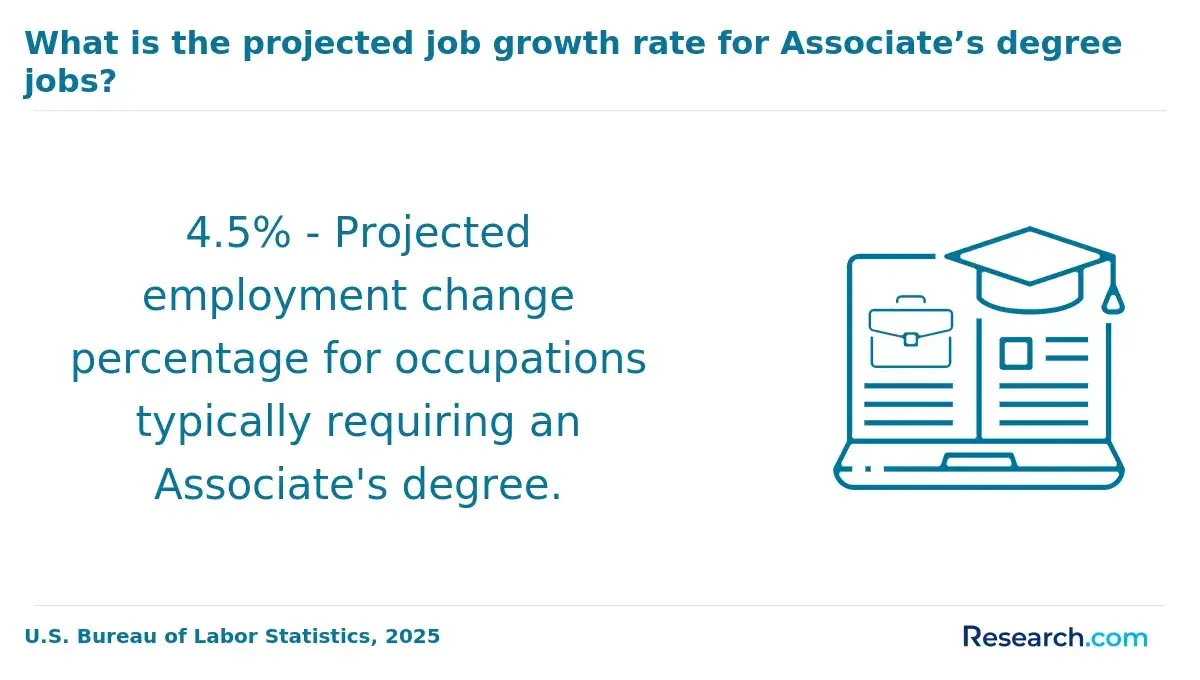
Choosing an online operations management degree program requires weighing practical outcomes against industry demands and one's career trajectory. Associate degrees target foundational roles in supply chain or production coordination but frequently restrict access to management tracks, serving better those needing swift entry at lower cost. Bachelor's programs add strategic decision-making and operational problem-solving, suited for mid-level professionals aiming for leadership roles in complex manufacturing or logistics settings.
Master's degrees deepen expertise, emphasizing quantitative analytics and advanced supply chain optimization required in sectors like aerospace and technology. These programs, comparable in commitment to rigorous degrees such as a masters degree in healthcare management, suit candidates targeting senior leadership or specialized analyst roles despite higher costs and longer study times.
The U.S. Bureau of Labor Statistics projects a 5.8% growth in employment for general and operations managers through 2030, signaling steady demand for candidates with strong operational and data-driven decision skills. Practical considerations include industry-specific needs; for instance, consumer goods professionals may benefit from bachelor's programs featuring flexible labs and simulations, while those managing complex manufacturing systems require master's-level technical tools and leadership training.
When evaluating the best online operations management degree options, students must consider current experience, employer recognition, and program length alongside cost. Selecting a program aligned with sector-specific challenges and realistic career entry points improves both employability and long-term career sustainability.
What core courses and projects build strong operational problem-solving abilities online?
Strong problem-solving skills in operations management hinge on mastering quantitative decision-making and resource allocation within realistic constraints. Core courses emphasizing operations research, supply chain analytics, and quality control develop proficiency in statistical and mathematical models needed to diagnose process inefficiencies and implement workflow improvements. For example, identifying waste through lean operations methods directly impacts cost reduction efforts in industries such as automotive manufacturing and healthcare.
Integration of project-based learning is essential for refining operational problem-solving skills in online degrees, especially through real-world scenarios like warehouse redesign using discrete event simulation tools. These practical assignments cultivate cross-functional teamwork and the use of relevant technologies, simulating the complexities of remote collaborative environments common in today's workforce.
Courses focused on project management and leadership sharpen abilities necessary to align operational activities with overall business objectives, particularly under resource and time constraints. Such training reflects conditions in sectors like retail or logistics, where operational decisions influence customer satisfaction and profitability.
Programs blending advanced data analytics-using software like Python or R-with operations concepts equip graduates to leverage insights that drive continuous process improvement. Southwestern College reports an average salary of $78,000 for operations management graduates, demonstrating the tangible market value of skills developed through such curricula.
Prospective students evaluating educational pathways should consider programs that couple theory with application and technological savvy. Those seeking options with flexible entry requirements might explore the MBA without GMAT or GRE as a viable alternative.
How long do online operations management degrees take and what do they typically cost?
Choosing between accelerated and traditional operations management degree timelines requires assessing immediate applicability against long-term depth. Accelerated master's programs compress 30 to 36 credits into 12-18 months, demanding stringent time management that may challenge professionals juggling work and family responsibilities. Such pathways suit those needing swift skill deployment in sectors like supply chain or manufacturing, where employer expectations focus on rapid ROI through operational problem-solving.
The University of Arkansas Online offers a critical pricing comparison with its fully online operations analytics master's degree charged at $570 per credit hour for fall 2025, significantly below typical on-campus rates surpassing $1,000 per credit hour. This represents tuition costs between approximately $17,100 and $20,520, versus $30,000 to $36,000 elsewhere. However, additional fees for technology and proctoring can moderate overall savings.
Longer programs provide broader conceptual grounding but increase opportunity costs and delay workforce impact, a tradeoff to consider especially in dynamic industries like healthcare logistics. Aligning program duration and cost with employer-driven skill demands and personal constraints is pivotal.
- Accelerated formats offer faster entry but less curricular breadth
- Cost-effective online tuition reduces financial barriers but may incur extra fees
- Industry sector influences ROI timing and skills emphasis
What accreditation should an online operations management program have and how do I verify it?
Regional accreditation by a U.S. Department of Education-recognized agency like the Higher Learning Commission (HLC) or Middle States Commission on Higher Education (MSCHE) remains the essential benchmark for online operations management programs. This accreditation ensures that credits transfer reliably, employers recognize credentials, and graduates qualify for professional certifications, unlike national or programmatic accreditations, which rarely sway employer preferences in this field.
Verifying accreditation requires consulting authoritative databases such as those maintained by the U.S. Department of Education or the Council for Higher Education Accreditation (CHEA). Relying solely on program websites risks encountering misleading claims from predatory institutions.
In practice, employers increasingly demand analytics-infused expertise, especially within sectors like manufacturing and healthcare logistics where operational complexity is high. For instance, programs that offer training in queueing theory and statistical process control better prepare students to reduce wait times and maintain quality standards. This trend aligns with labor market data showing a 50% increase since 2024 in operations roles emphasizing data-driven decision-making over traditional supervisory skills.
Applicants should scrutinize course content rigorously to confirm the integration of quantitative methods and practical tools in statistical analysis and process optimization. Without this, even regionally accredited credentials may provide limited relevance when assessed against workforce demands, thereby affecting employability and long-term growth.
What are the admission requirements for online operations management degrees at different levels?
The admission criteria for online operations management degrees reveal the practical contrast between academic preparation and workforce expectations. At the bachelor's level, candidates typically need a high school diploma and often a minimum GPA around 2.5 to 3.0, though some programs waive standardized tests like the SAT or ACT to accommodate diverse applicant profiles. The prerequisite coursework in math or introductory business reflects the field's foundational analytical demands, but real-world applicants often balance these academic hurdles with relevant professional experience, especially working adults seeking flexibility.
Master's admissions tighten standards, generally requiring a related bachelor's degree and a GPA minimum of 3.0, alongside GRE or GMAT scores emphasizing quantitative reasoning. Employers expect these graduates to manage AI-integrated supply chains and automation workflows, making analytical skills and demonstrated operational problem-solving essential. Personal statements and recommendations usually need to highlight applied management experience rather than purely academic achievements.
Doctoral candidates face the steepest requirements, including a master's degree with GPA above 3.5, GRE scores, and comprehensive research proposals directly tackling evolving challenges posed by AI and automation. The capacity for original scholarly contribution focuses on advancing operational analytics beyond routine management.
Given how operational roles now demand technical and strategic agility, prospective students should weigh these admission barriers against their career objectives and current experience. LinkedIn Learning's operations management topic hub shows thousands engaged in online courses, indicating strong employer-driven demand for upskills aligned with AI-enhanced operational processes.
What careers can you pursue with an online operations management degree and what do they involve?
Choosing an online operations management degree shapes career trajectories through the specificity of skills acquired and employer expectations for measurable impact. Roles such as operations analyst and supply chain manager demand not only technical proficiency but also the ability to integrate diverse data streams via tools like ERP systems. For example, supply chain managers must balance cost reduction against supplier reliability, often navigating competing priorities under time constraints. Meanwhile, operations analysts apply statistical models to surface inefficiencies, translating complex datasets into actionable operational improvements.
The practical value of these roles hinges on the depth of training in quantitative methods and scenario-based problem solving. Production supervisors require hands-on expertise with lean management to reduce waste and improve workflows - a tradeoff of theory against the immediacy of on-the-floor challenges. Logistics coordinators face similarly dynamic constraints, including fluctuating costs and compliance issues, substantiating the need for adaptable, real-world skills.
Financially, programs like the 2026 PG Diploma in operations management at MIT School of Distance Education offer targeted fee structures (₹105,000) with discounts for defense personnel and alumni, addressing mid-career affordability but posing questions about return on investment relative to sector-specific relevance. Prospective students must assess how curricula integrate applied tools-project management software, analytics, Six Sigma-and their alignment with industry workflows. Adaptability remains essential, given the varying operational complexities across sectors like healthcare and retail supply chains.
What salary ranges and job outlook can operations management graduates expect in the U.S.?
Entry-level salaries for operations management graduates in the U.S. typically range from $60,000 to $75,000 annually, but these figures vary significantly by industry and geography. For instance, positions in manufacturing hubs like Chicago or Dallas tend to offer higher pay to offset living costs and reflect competitive labor markets. In contrast, sectors such as healthcare or retail logistics present lower starting wages but often provide quicker upward mobility as organizations prioritize operational efficiency upgrades.
Mid-career professionals particularly in pharmaceuticals or technology fields-with additional certifications or specialized expertise-can command salaries above $100,000. This differentiation highlights the necessity of targeted skills acquisition in areas like Six Sigma or ERP systems to access higher-paying roles.
Employment growth projections for operations research analysts and related roles are strong, with an expected 19% increase through 2032 according to the U.S. Bureau of Labor Statistics. This demand stems from a need for professionals adept at optimizing supply chains and improving manufacturing efficiency.
However, the escalating number of online operations management programs intensifies competition among graduates. Practical experience gained via internships or cooperative education projects remains crucial for bridging theory and practice while enhancing employability. Geographic flexibility and specialization decisions are also key workforce considerations that influence job placement and salary trajectory.
- Starting salaries differ considerably based on industry and location.
- Specialized skills impact mid-career earnings and job access.
- Strong employment growth supports market demand for skilled operatives.
- Applied experience significantly affects hiring outcomes amid program proliferation.
How can I choose a reputable online operations management program that fits my career goals?
Selecting an online operations management program requires focusing on institutional accreditation and tangible workforce outcomes. Accreditation from bodies like the ACBSP or AACSB signals programs with rigorous curricula and employer-recognized credentials, which directly affect hiring decisions. For instance, professionals aiming for leadership in manufacturing should prioritize programs emphasizing lean operations and quality control over purely theoretical coursework, as practical applicability influences their readiness for real-world challenges.
Graduation rates and employment statistics provide a clearer indication of program value. Programs reporting employment above 80% within six months, verified by government or credible sources, show alignment with labor market demands. Additionally, offerings that integrate stackable credentials or microcredentials-such as short courses in data analytics or procurement-enhance adaptability and skill specialization, crucial for rapid pivots in operations roles.
Flexibility factors-like asynchronous classes and supportive services including career coaching-play a central role for working professionals balancing schedules. Corporate partnerships that provide internships or live projects grant hands-on experience, differentiating candidates in competitive sectors. Consider regional industry hubs when choosing a program, as networking opportunities in key locations can yield significant career leverage.
Evaluating programs through this practical lens helps discern how education translates into employability and skill mastery, rather than relying on generic promises of advancement or vague academic prestige.
Other Things You Should Know About Operations Management
Employers increasingly accept online operations management degrees, but scrutiny often depends on the program's reputation and accreditation. Strong operational problem-solving focus combined with measurable project outcomes carries more weight than delivery mode alone. Candidates should prioritize programs with integrated applied learning and recognized standards to improve competitiveness in hiring.
Balancing coursework with full-time employment commonly strains time management, especially when programs include intensive case studies and collaborative projects. Students must prioritize programs offering flexible deadlines and asynchronous content to reduce conflict with work duties. Underestimating workload intensity risks delayed completion and burnout, so realistic planning aligned with professional responsibilities is essential.
Choosing between specialization and generalist programs depends on your career goals. A narrow industry-focused curriculum offers targeted operational problem-solving skills aligned with specific employer needs, enhancing immediate job market relevance. Conversely, a broad generalist degree increases versatility but may require additional on-the-job learning. For strategic career pivots, prioritizing programs with adaptable frameworks and industry connections yields better long-term outcomes.
References
- Online MBA in Operations Management: Review Top Schools https://www.onlinemastersdegrees.org/best-programs/mba-programs/operations-management/
- How to become a business operations manager | edX https://www.edx.org/become/how-to-become-a-business-operations-manager
- Operations Manager https://www.randstadusa.com/job-seeker/career-advice/job-profiles/operations-manager/
- Master Operations Online: Your Guide to an MBA in Operations Management https://matchtocollege.com/blog/online-mba-operations-management-master-your-future
- Is Operations Management Your Best Career Move After an MBA? https://www.onlinecu.in/blog/cu/why-operations-management-could-be-your-best-career-move-after-an-online-mba.php
- Accredited Online Courses: How to Pick Programs That Actually Count https://www.upskillist.com/blog/accredited-online-courses-how-to-pick-programs-that-actually-count/
- Are Online Degrees Accredited? How to Identify Quality Distance Learning Programs https://www.umassglobal.edu/blog-news/online-degrees-accredited-identify-quality-distance-learning-programs
- Enhancing problem solving skills in IT | Strengthen efficiency with IT problem solving | Elevate ROI and speed to market | Lumenalta https://lumenalta.com/insights/enhancing-problem-solving-skills-in-it
- 14 Best Operations Management Courses Online With Certificates 2024 https://coggno.com/blog/operations-management-courses/
- Scaling Online Education for State University Systems https://changinghighered.com/scaling-online-education-for-state-university-systems/