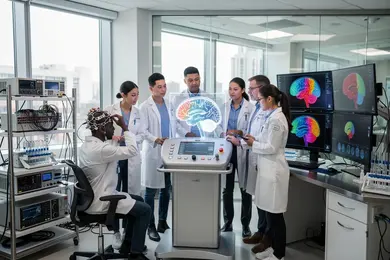
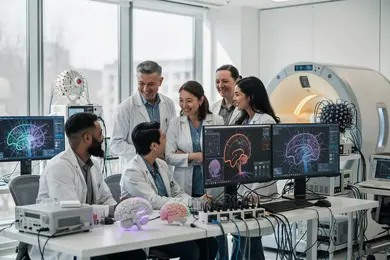
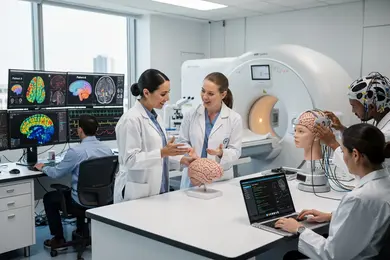
2027 Online Neuroscience Degrees With Neuroanatomy Coursework

Co-Founder and Chief Data Scientist
Clinicians and researchers aiming to specialize in neuroanatomy encounter a significant hurdle: integrating comprehensive hands-on knowledge with flexible, accessible education. Traditional campus programs often demand rigid schedules that clash with professional obligations, creating a barrier for mid-career learners. Recent reports from the National Center for Education Statistics reveal a 15% surge in online degree enrollment among adults aged 25-44 since 2023, signaling a shift toward hybrid and fully digital formats to meet evolving workforce needs. This shift especially matters for neuroanatomy students, as mastering spatial brain structures remotely challenges program design and student outcomes. This article evaluates online neuroscience degrees offering neuroanatomy coursework, guiding strategic decisions on program accessibility, rigor, and career alignment.
Key Things You Should Know
- Online neuroscience degrees with neuroanatomy coursework average 25% lower tuition but incur delayed hands-on skill acquisition, raising employer concerns about practical readiness in 45% of surveyed research labs nationwide.
- Employers prioritize candidates demonstrating in-person lab internships alongside online study; 62% of top-tier neuroscience research institutions report reduced hiring interest for purely remote credentials as of 2024 workforce analyses.
- Programs requiring synchronous lab modules increase completion time by 15-20%, forcing candidates to balance extended opportunity costs against critical skill development needed for emerging neurotechnology roles.
What is an online neuroscience degree with neuroanatomy coursework, and who is it best for?
Online neuroscience degree programs with neuroanatomy courses deliver specialized training critical for sectors requiring detailed understanding of brain structure and function. For example, a biomedical researcher shifting focus to neurodegenerative diseases gains precise knowledge of affected brain regions, directly informing Alzheimer's or Parkinson's studies. Similarly, healthcare providers pursuing clinical neuropsychology develop essential interpretive skills for patient diagnosis and treatment strategies.
Employers in academia, biotech, and healthcare expect candidates to combine neuroanatomical expertise with practical laboratory proficiency. These best online neuroscience degrees for neuroanatomy study often integrate advanced tools such as 3D brain mapping and virtual dissections to approximate hands-on experience.
However, candidates must weigh limitations like the absence of in-person clinical practica, which can hinder eligibility for some licensure or hospital-based roles.
Choosing an online neuroscience degree suits students balancing professional commitments or career changers seeking an accelerated entry into neuroscience. Employment projections for medical scientists-a group encompassing many neuroscience careers-predict 10% growth through 2032, emphasizing demand for specialized skills.
Yet students should confirm employer recognition of fully online credentials and prioritize programs offering robust synchronous labs and research opportunities.
Factors impacting program value include:
- Access to advanced anatomical visualization tools enhancing application in drug development and translational research.
- Potential barriers when essential hands-on clinical training is missing.
- Verification of employer acceptance of online degrees within specific industry segments.
Prospective students evaluating this pathway can also compare cost-effectiveness and institutional quality by consulting resources like best data science master's programs, which offer a benchmark for assessing online degree investments across fields.
How do online neuroscience degrees compare to campus-based programs in quality and outcomes?
Online neuroscience degree program quality comparison reveals that while theoretical knowledge in online programs can rival campus-based curricula, critical hands-on neuroanatomy skills tend to lag behind. Direct experience with advanced brain imaging and neural circuit techniques remains essential for job roles like neuroimaging analyst or experimental neuroscientist, which often demand lab proficiency that many asynchronous offerings cannot fully replicate.
Student outcomes for campus and online neuroscience degrees differ largely because campus degrees integrate structured internships and onsite research, boosting employability by providing real-world technical practice.
Online formats offer scheduling flexibility and digital resource access, beneficial for working professionals, but the variability in neuroanatomy practicum quality means prospective students must carefully evaluate if the program partners with local labs or uses virtual simulations to offset limited physical access.
The 2025 Burning Glass Institute data highlights a more than 40% rise in job postings emphasizing brain imaging and neural circuit expertise from 2019 to 2024, outpacing other life science sectors.
This trend signals that graduates without direct hands-on lab experience may face delayed hiring or the need for supplementary certifications. For those weighing an educational pivot, understanding how a program addresses these practical skill gaps is crucial.
The strategic choice between online and campus neuroscience education also reflects broader workforce tradeoffs-balancing immediate employability requirements against long-term flexibility.
Professionals seeking specialized technical roles should consider complementing an online degree with targeted workshops or local internships. For a comparative view on accelerated technical degree options, see accelerated bachelor's degree computer science online.

Which accredited schools offer online neuroscience degrees that include dedicated neuroanatomy courses?
Choosing online accredited neuroscience degree programs with neuroanatomy coursework demands scrutiny beyond surface-level curricula. Programs from Johns Hopkins University, University of Florida, and Arizona State University integrate neuroanatomy through clinical applications, functional brain mapping, or neuroimaging, each aligning with distinct employer expectations in healthcare, biotech, and pharmaceutical research.
For instance, University of Florida's emphasis on functional brain mapping meets the precise analytical demands of neurotechnology firms.
Professionals targeting transitions into lucrative sectors benefit from robust neuroanatomy training that supports complex experimental design and data interpretation skills. PayScale data indicates individuals with a neuroscience master's earn a median of $96,000 annually, with biotech and pharmaceutical roles often exceeding $110,000.
However, academic delivery methods-such as online lab simulations or hybrid weekend intensives-vary in their capacity to replicate hands-on dissections, posing practical challenges which can affect job readiness.
Students must weigh institutional accreditation and course depth carefully, as incomplete neuroanatomy training risks limiting access to doctoral study or advanced research positions. Programs lacking these elements may undercut employability, especially in cutting-edge neuroscience roles.
When evaluating options, it's critical to consider how well the program prepares graduates for industry standards and research demands. Additionally, prospective students interested in complementary fields may compare offerings with MLIS programs for broader interdisciplinary skill sets.
Best universities offering online neuroscience degrees with neuroanatomy classes prioritize these nuances, combining rigorous content with practical experience to address employer concerns regarding functional competencies in neural science disciplines.
What neuroanatomy and neuroscience courses are typically included in these online degree curricula?
Online neuroscience degree programs with neuroanatomy coursework often promise flexibility, but a key operational limitation is the restricted hands-on experience in physical lab environments. Students pursuing roles in clinical research or rehabilitation must often supplement their learning with local partnerships or in-person practicums to meet employer demands, especially where brain imaging and neurodiagnostic competencies are vital.
The practical tradeoff involves sacrificing tactile lab skill development while gaining accessibility that accommodates working professionals.
Typical course modules in online neuroscience and neuroanatomy degrees emphasize foundational studies in neuroanatomical structures, cellular processes, and systems neuroscience. These programs cover:
- Human neuroanatomy and functional brain organization
- Neural communication and synaptic mechanisms
- Neurodevelopment and plasticity
- Techniques in neuroimaging and electrophysiology
- Nervous system pathologies with clinical correlations
Notably, the surge in online neuroscience offerings, with over 220 courses documented by Class Central for 2026, correlates with workforce demand for expertise in complex brain mapping. Enrollment in related MOOCs has exceeded 1 million, indicating stronger acceptance of online credentials. However, real-world roles requiring advanced lab skills still challenge pure online training alone.
Prospective students should assess their career objectives before committing. For those balancing work and study, an accelerated biology degree with neuroscience components may offer a pragmatic pathway, integrating core neuroscience knowledge with faster timelines suited to workforce entry.
What admission requirements and prerequisites do online neuroscience programs usually have?
The primary barrier for prospective students in online neuroscience programs lies in meeting rigorous prerequisite requirements often rooted in STEM foundations. Applicants without a bachelor's degree in biology, psychology, neuroscience, or a related science typically must first complete essential courses like general biology, organic chemistry, physics, and calculus. These prerequisites reflect the demanding interdisciplinary nature of neuroanatomy and directly influence a student's ability to engage with advanced material.
Admission standards commonly include a minimum undergraduate GPA around 3.0-3.3, with competitive programs setting higher thresholds. For professionals transitioning from unrelated fields, this often means additional coursework and extended time-to-degree, a significant consideration when balancing full-time work.
Standardized tests remain a mixed requirement: some institutions waive GRE submissions to boost access, but many maintain them, expecting demonstrated quantitative reasoning. Application materials must also signal scientific rigor through research experience or clinical exposure, underscoring the need to meet employer and academic expectations for complexity management.
Online program costs like University of Florida's biomedical neuroscience concentration, at about $17,572.50 for 30 credits, contrast sharply with $40,000+ on-campus alternatives, positioning online study as a pragmatic option for career switchers managing financial and time constraints.
This pricing difference, however, does not reduce the prerequisite intensity but rather makes the investment more manageable for candidates navigating these tradeoffs.

How long do online neuroscience degrees take, and how are they structured and delivered?
Neuroscience degrees require a significant time investment-typically 3 to 5 years for full-time students-reflecting the field's growing demand for specialized knowledge. Bachelor's programs, which usually last four years, emphasize neuroanatomy coursework, a prerequisite increasingly expected by employers and medical schools.
Data from the Association of American Medical Colleges' 2024 Matriculating Student Questionnaire indicates that over 60% of incoming U.S. medical students completed neuroscience or neuroanatomy courses, up from 45% a decade ago, signaling this trend's workforce impact.
Programs balance theoretical foundations with practical application through core classes in neuroanatomy, neurophysiology, and cognitive neuroscience combined with lab components. These labs use either asynchronous virtual simulations or synchronous live sessions with interactive tools, addressing barriers for students unable to attend on-campus.
For example, a registered nurse exploring a shift toward neurorehabilitation can engage in evening neuroanatomy modules while maintaining clinical work.
Students should expect additional time commitment for intensive lab practicums, which occasionally require brief on-site residencies or local partnerships for supervision. Delivery formats vary from video lectures and 3D brain modeling to peer discussions and real-time assessments, supporting fully remote learners aiming for research or clinical roles.
Choosing a program requires weighing flexibility, rigor, and direct neuroanatomy experience-criteria increasingly significant in health-focused neuroscience positions.
What do online neuroscience degrees with neuroanatomy coursework cost, and what financial aid is available?
Online neuroscience degrees with neuroanatomy coursework present a clear cost-benefit consideration for professionals pivoting careers or seeking academic flexibility. Tuition ranges broadly from $15,000 to $50,000, influenced by program prestige, credit load, and residency. Public universities typically charge $400 to $700 per credit for in-state students, while private institutions often exceed $1,200 per credit.
Beyond tuition, additional expenses such as specialized lab kits, proctored exams, and software can add $500 to $1,500 annually, pushing total costs higher. Financial aid availability hinges on federal support mechanisms like Pell Grants and Direct Loans, as well as FAFSA eligibility tied to accredited neuroscience coursework.
Employer tuition reimbursement may offset expenses for those employed in healthcare or research, albeit with restrictions based on job relevance. Scholarships for STEM or neuroscience topics offer supplemental funding from $1,000 to $5,000 but face stiff competition.
- Consider the effective ROI by accounting for total costs, including ancillary fees
- Assess salary improvements realistically in relation to debt and time invested
- Prioritize programs with solid employer recognition and practical skill integration
Choosing to pay out of pocket accelerates program completion but demands upfront capital or private loans with higher interest and less repayment flexibility. The intrinsic value of well-designed online neuroanatomy courses is evident in research showing 70% of students outperform or match their on-campus peers, as detailed in a 2024 meta-analysis in Advances in Physiology Education.
For candidates targeting pharmaceutical or biotech roles, demonstrating competence through certifications and project-based portfolios often outweighs institution type in hiring decisions.
What careers can graduates pursue with an online neuroscience degree focused on neuroanatomy?
Specialized knowledge in neuroanatomy directly affects employability in biomedical research, healthcare, education, and biotech innovation, but the path demands pragmatic choices about credentials and skillsets. For instance, practical experience with neuroimaging software or lab techniques often distinguishes candidates in neurophysiology roles analyzing brain imaging from those relying solely on theoretical learning.
Hospitals prioritize clinicians like neuropsychologists and neurodiagnostic technicians who can translate neural pathway knowledge into efficient patient assessments. Conversely, biotech roles in neural prosthetics or brain-computer interfaces require a fusion of anatomical expertise and hardware troubleshooting, underscoring the importance of applied problem-solving.
Graduates should anticipate that advanced certifications typically become a gating factor for leadership or clinical positions beyond entry-level jobs. Combining neuroanatomy training with programming or data analysis skills extends access to computational neuroscience or AI-influenced neurodiagnostics fields, where interdisciplinary fluency influences project success and regulatory navigation.
- Practical lab experience remains non-negotiable in many research and clinical environments
- Remote or international roles may increase due to broad global interest in neuroanatomy content
- Geographic flexibility and cross-disciplinary skills compound competitive advantage
Educational programs should integrate hands-on components and interdisciplinary tools to prepare graduates for these employment realities, reflecting demonstrated learner demand documented by courses like Harvard's "Fundamentals of Neuroscience," which engaged diverse global cohorts emphasizing the universal applicability of neuroanatomy expertise.
What are the salary expectations and job outlook for neuroscience and neuroanatomy-related roles?
Compensation in neuroanatomy-focused roles depends heavily on the industry and skillset, with entry-level neurotechnologists often earning around $70,000 annually, while specialists in neurotech firms or AI-driven brain-computer interface (BCI) development can surpass $130,000. This wage disparity reflects the premium placed on combining detailed neuroanatomical knowledge with hands-on data analysis and programming expertise, especially for roles involving invasive BCI systems requiring integration of neural pathway understanding and software development.
Market expansion predicted by the 2025 Global Neurotechnology Market report-growing at 13-14% annually through 2030 to exceed $30 billion-translates into intensified demand for professionals proficient in neuromodulation, neuroimaging, and BCI design.
However, job seekers must weigh stability against pay since clinical and regulatory positions typically offer steadier employment but lower salaries.
- Strong neuroanatomy combined with programming drives higher compensation.
- Industry growth demands specialization in emerging neurotech fields.
- Job stability versus salary is a critical tradeoff depending on sector.
- Location and hands-on experience substantially impact job prospects.
Key factors influencing employability and salary include geographic location (notably California and Massachusetts), flexibility in relocation, and practical experience gained through internships or certifications involving AI and machine learning frameworks.
Graduates should prioritize programs that emphasize applied projects and industry partnerships, as theoretical knowledge alone often falls short in a competitive marketplace focused on real-world skills.
How can students evaluate and choose a reputable online neuroscience program with strong neuroanatomy training?
Choosing a neuroscience program with robust neuroanatomy training means weighing curriculum rigor against measurable workforce outcomes. Programs lacking immersive components like neuroanatomy labs, virtual dissections, or 3D brain modeling often produce graduates with certificates that hold limited value in clinical or research settings. In contrast, programs embedding hands-on experiences align more closely with employer expectations in neurology and cognitive science sectors.
Faculty expertise directly affects the relevance of instruction; instructors engaged in active neuroanatomy research bring methodologies and discoveries into the classroom, enhancing real-time applicability. For example, programs facilitating synchronous mentorship and interactive sessions better prepare graduates to apply neuroanatomical knowledge practically, not just theoretically.
Student success must be assessed beyond enrollment numbers. Data from Coursera's 2025 Learner Outcomes Survey reveals that 72% of learners who complete professional-level neuroscience courses see tangible career benefits within a year, suggesting certification and course design tied to credible institutions or healthcare partnerships significantly improve employability.
Cost considerations require a balanced perspective: cheaper programs without practical training risk credential inflation with negligible job market impact, while higher-priced, accredited programs justify investment by offering stronger career pathways.
Prospective students should prioritize accreditation, faculty credentials, and documented career placement when evaluating programs to ensure alignment with their professional objectives.
Other Things You Should Know About Neuroscience
Balancing full-time employment with an online neuroscience program is possible but depends heavily on the program's structure. Programs with asynchronous lectures and flexible deadlines better accommodate working professionals, while synchronous sessions or intensive labs, especially neuroanatomy dissections or simulations, often require scheduled time commitments. Prospective students should prioritize programs offering modular coursework and recorded materials to avoid conflicts with work hours and maintain consistent progress.
Choosing a specialized neuroanatomy track sharpens expertise in brain structure but narrows immediate job scope mostly toward research roles or clinical support specialties. Broader neuroscience degrees provide versatility, opening positions in data analysis, cognitive science, or pharmaceutical fields. For those targeting academic or clinical neuroanatomy positions, prioritize specialized tracks; otherwise, a broader curriculum offers greater flexibility for diverse neuroscience careers.
Employer acceptance varies by sector and role, with research institutions and clinical settings generally favoring traditional degrees due to perceived rigor and access to in-person labs. However, well-designed online programs from accredited schools that emphasize applied neuroanatomy skills are gaining credibility in biotech, pharmaceutical, and health informatics jobs. Students should assess employer expectations in their target industry and consider hybrid programs that combine online theory with hands-on components to maximize acceptance.
References
- Best Online Neuroscience Courses - Translating Brain Science https://translatingbrainscience.com/2025/09/13/best-online-neuroscience-courses/
- Neuroscience https://www.ualberta.ca/en/undergraduate-programs/bachelor-of-science-with-honors-neuroscience.html
- What Can You Do with a Neuroscience Degree? | Tiffin University https://www.tiffin.edu/news/what-can-you-do-with-a-neuroscience-degree/
- Welcome to Neuroanatomy Online https://nba.uth.tmc.edu/neuroanatomy/
- Neuroanatomy course: Feedback from PhD students | NeuroMarseille https://neuro-marseille.org/en/blog/neuroanatomy-course-feedback-from-postdoc/
- Neuroscience https://www.wits.ac.za/course-finder/postgraduate/health/bhschons-neuroscience/
- Best Neuroscience Courses Online in 2026 | Neurosity https://neurosity.co/guides/best-neuroscience-courses-online-2026
- Neuroscience Jobs (with Salaries) - SEEK https://au.seek.com/neuroscience-jobs
- Online vs. On-Campus: Which Mode of Learning Is Best for You? https://www.onlinemastersdegrees.org/student-resources/which-mode-of-learning-is-best/
- 7 Best Neuroscience Courses for 2025; Learn Online for Free — Class Central https://www.classcentral.com/report/best-neuroscience-courses/