2027 Best Online Bachelor's in Marketing for B2B Marketing Roles

Co-Founder and Chief Data Scientist
Transitioning into a B2B marketing role without a specialized bachelor's degree creates immediate barriers, especially as employers increasingly demand expertise in complex buyer journeys and digital ecosystems tailored to corporations. The US Bureau of Labor Statistics projects a 10% growth for marketing management roles through 2032, underscoring rising demand but also intensifying competition for candidates with relevant credentials.
Meanwhile, nearly 40% of undergraduate enrollments are now adults balancing work and study, reflecting a shift toward flexible online programs that accommodate nontraditional schedules while maintaining industry-relevant rigor. This article analyzes the top online bachelor's in marketing programs optimized for B2B career pathways, equipping readers to identify curricula, format, and support structures that align with professional ambitions and practical constraints.
Key Things You Should Know
- Graduates from online bachelor's in marketing programs with B2B focus often face a salary tradeoff, earning 12% less initially than traditional programs, according to 2024 National Center for Education Statistics, impacting short-term ROI.
- Employers prioritize digital analytics and CRM skills; programs lacking up-to-date B2B-specific tech training reduce job placement rates by 18%, per LinkedIn Workforce Report 2024.
- Programs with accelerated paths average 30% higher total tuition costs due to premium fees, requiring candidates to balance faster entry against increased debt burden in B2B marketing roles.
What is an online bachelor's in marketing and how does it prepare you for B2B roles?
B2B marketing operates on distinct principles that an online bachelor's in marketing for B2B career preparation rigorously addresses. Graduates emerge equipped not just with general marketing concepts but with practical skills tailored to extended sales cycles and stakeholder negotiation common to business-to-business environments. For instance, professionals in industrial procurement utilize these competencies to craft campaigns that synchronize with technically complex buyer demands and multifaceted purchasing processes.
Employers prioritize candidates who interpret technical product details into compelling value propositions for business clients, a nuance seldom emphasized in consumer-focused programs. Programs that integrate case studies on supply chain logistics, CRM platforms, and analytics foster the b2b marketing skills gained from online bachelor's degree curricula that are necessary to navigate enterprise sales funnels effectively. Content marketing aimed at lead generation for large-scale solutions also distinguishes this pathway.
Cost considerations significantly influence candidate decisions. Western Carolina University offers a notably affordable online marketing degree at $1,250 annually, reducing student debt risk. However, graduates from Utah Valley University report the highest early-career salary, approximately $81,525, reflecting how program network and quality impact financial outcomes. These tradeoffs highlight the need for students to balance affordability with potential return on investment.
Choosing an online degree requires assessing program alignment with targeted B2B sectors, curriculum relevance to long sales cycles, and post-graduation earning potential. Practical experience via internships or virtual industry projects remains critical to securing competitive employment. For those comparing financial education options relevant to evolving market demands, resources on a finance degree online offer complementary insight.
Which accredited online marketing bachelor's programs are best for B2B-focused students?
Effective B2B marketing bachelor's programs must bridge strategic theory with the distinct operational demands of business-to-business environments, a balance not every curriculum achieves. Arizona State University's structure-120 credits across 44 classes lasting 7.5 weeks each-exemplifies a workload designed for working professionals who need concentrated, modular learning without sacrificing depth. This pacing fosters skill acquisition in areas like market segmentation, sales funnel optimization, and buyer behavior specifically relevant to enterprise sales.
Choosing accredited online bachelor's in marketing programs for B2B careers involves weighing program flexibility against the intensity of a multi-year course load. Employers value graduates familiar with long sales cycles, complex supply chain interactions, and CRM systems tailored to B2B contexts. For instance, adeptness in launching LinkedIn outreach campaigns aimed at procurement officers or developing in-depth content marketing for SaaS providers often distinguishes candidates in tech and industrial sectors.
Programs excelling in B2B marketing emphasize data analytics and digital marketing platforms aligned with enterprise sales processes. The shorter class formats, as seen at ASU, create graduates capable of swiftly adapting to evolving sales strategies and tools. Students should prioritize programs offering realistic project work simulating B2B campaigns to translate academic knowledge into measurable job impact.
Cost considerations also shape decision-making, especially for working adults budgeting education expenses. Research into the cheapest online business degree options can provide essential financial context while evaluating program quality and outcomes.
How does an online marketing degree compare to an on-campus program for B2B careers?
Choosing an online marketing degree versus an on-campus program for B2B careers entails navigating distinct tradeoffs in networking, skill development, and market perception. Employers value proven competencies and tangible experience; traditional programs often provide more direct access to internships and face-to-face mentorship crucial for complex B2B sales and relationship management. Graduates from online formats may need to compensate by actively pursuing real-world internships and industry connections to match peers' readiness.
Cost factors notably influence decisions. Data highlights that average annual tuition for online marketing bachelor's programs stands at $10,473, significantly lower than the $16,941 required for in-person study. This price difference enables working professionals to balance ongoing employment with education, easing transitions or upskilling within B2B marketing roles efficiently. Such financial flexibility reflects a core advantage in the flexibility and outcomes of online marketing education in B2B marketing.
Online learning demands heightened self-discipline and proactive engagement, often lacking immediate practice in nuanced skills like negotiation simulations or live client presentations. To offset these limitations, students must strategically combine online instruction with real-world experience and networking through industry events or digital platforms.
Prospective students should consider a hybrid approach that harnesses affordability and flexibility while prioritizing experiential learning. For those evaluating degree options, exploring resources like the project management degree offerings can provide additional insights into affordable online programs aligned with career objectives.
What accreditation and quality standards should B2B-focused online marketing programs meet?
Accreditation by regional bodies recognized by the U.S. Department of Education remains a non-negotiable baseline for accredited online bachelor's in marketing programs for B2B roles, directly influencing credit transferability, access to federal aid, and employer trust. Agencies such as the Higher Learning Commission or Middle States Commission on Higher Education confirm that institutions maintain curriculum rigor and institutional stability.
Beyond this, accreditation from specialized business accreditors like AACSB or ACBSP signals an added layer of validation, ensuring the program's B2B marketing components reflect industry demands and ethical standards. Quality standards for B2B-focused online marketing degrees in the US must ensure practical coursework-embedding account-based marketing, CRM systems, and sales funnel optimization-to prepare students for managing complex sales processes typical in B2B sectors like technology or manufacturing.
Programs that prominently link learning outcomes to employer expectations tend to boost graduate job market readiness. Students should prioritize programs offering experiential learning through case studies, internships, or capstone projects tailored to real B2B contexts, as these correlate with higher employment rates in industrial markets and professional services.
Considering the average online tuition of $10,476 annually, cost-effectiveness relative to accreditation and program relevance becomes critical, particularly for working professionals balancing expenses against career objectives. For those assessing educational investments, reviewing program rigor alongside offers like the cheapest online MBA healthcare can provide comparative insight.
Neglecting accreditation or B2B-specific content risks enrolling in degrees undervalued by employers, limiting professional advancement or eligibility for specialized roles. Practical due diligence must include verifying accreditation, curriculum alignment with B2B competencies, and evidence of graduate success within sectors demanding these skills.
What B2B-oriented courses and specializations are typically included in these marketing degrees?
B2B-focused courses in online bachelor's marketing programs emphasize complex buyer dynamics and longer sales cycles seldom seen in B2C. Students engage deeply with business buyer behavior, account-based marketing, sales enablement, and industrial market research-skills critical in sectors like manufacturing or SaaS, where multiple stakeholders influence purchasing decisions.
Strong emphasis is placed on relationship management and client retention frameworks tailored to enterprise sales environments. Specializations cover pricing strategies for business products, contract negotiation, and channel partner marketing, preparing graduates to address intricate buying committees typical in healthcare equipment and business software procurement.
A significant workforce implication is that predictive analytics and customer lifetime value proficiency are essential but often missing competencies, causing gaps in effective campaign execution. Practical skillsets extend to integrated B2B marketing communications, blending content marketing, trade show planning, and brand positioning aimed at establishing thought leadership in industrial technology or consulting services.
Cost and program duration materially affect accessibility. For instance, Western Governors University's online marketing degree costs $3,575 per six-month term, typically completed in three years, contrasting sharply with traditional total program fees ranging $26,000 to $70,000. Working adults must weigh this pricing-to-speed ratio carefully to avoid extended career interruptions or disproportionate debt when pursuing B2B marketing roles.
An online social media marketing degree often emphasizes B2B marketing principles that demand mastery over multi-stakeholder decision processes and data-driven sales metrics. Programs frequently integrate practical training in CRM and marketing automation tools essential to enterprise client management. Graduates should expect employer requirements that favor applied analytics alongside strategic communication skills.
What are the typical admission requirements for online bachelor's in marketing programs?
Admission to online bachelor's in marketing programs heavily weighs academic preparedness and relevant skill indicators tied to B2B marketing demands. Most programs require a high school diploma or GED with a GPA above 2.5 and official transcripts showing proficiency in English, math, and social sciences-foundational for analytical thinking and communication. While standardized tests like the SAT or ACT have diminished in importance, they can still be requested for applicants lacking prior college credits.
Applicants with some college coursework or associate degrees often bypass these testing requirements, expediting transfer and lowering costs. Work experience or recommendations tied to marketing-internships, analytics, or digital campaigns-increase admission competitiveness, especially for career changers.
Personal statements focusing on strategic marketing goals and digital trends help distinguish candidates able to articulate clear, applied insights aligned with employer expectations in B2B environments. For non-native English speakers, proof of proficiency via TOEFL or IELTS remains standard.
Pragmatically, prospective students must weigh admission hurdles against tangible outcomes: a bachelor's in marketing from Penn State, for instance, has a lifetime ROI near $815,000, dramatically outpacing programs with less rigorous selection like West Texas A&M's, which reports around $55,000. This disparity reflects differences in program prestige, network effects, and employer recognition, highlighting that admissions and program quality intimately influence long-term financial returns.
How long do online marketing bachelor's programs take and how are they structured for adults?
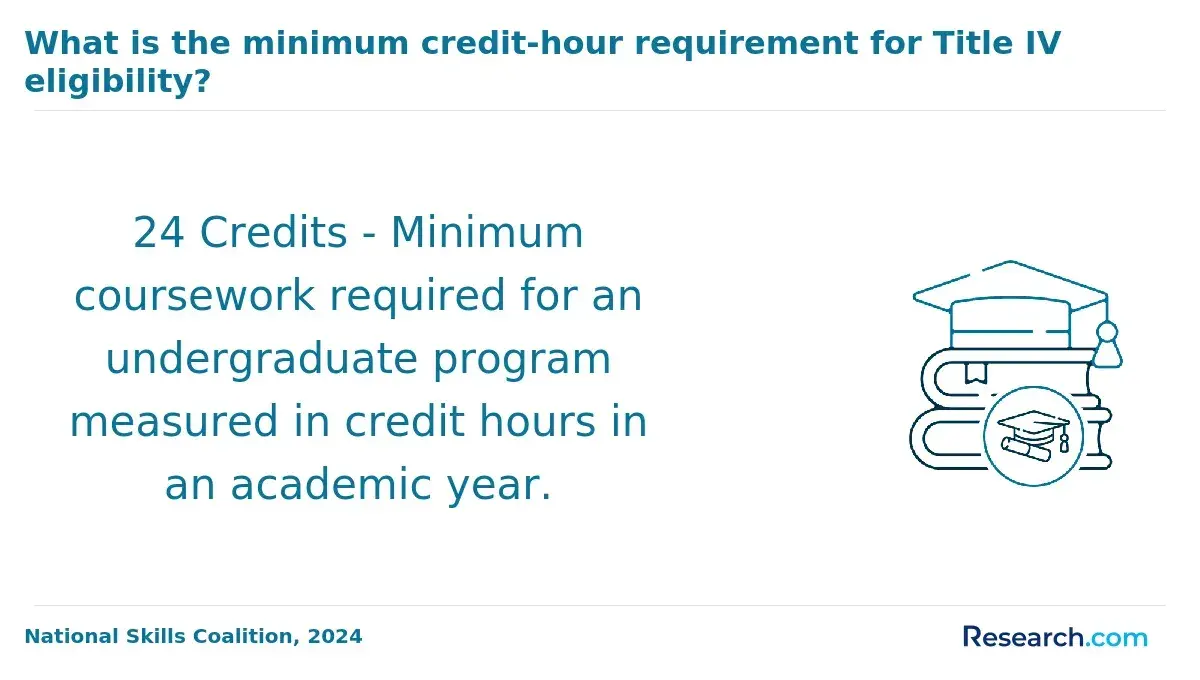
Bachelor's programs in marketing crafted for adult learners typically demand about 120 total credits, combining general education, business fundamentals, marketing specialization, and electives. While a full-time pace runs around four years, many working adults extend this to five or six years due to part-time enrollment, balancing study with professional duties.
Flexible delivery models are common, featuring asynchronous classes, competency-based learning, and accelerated options recognizing prior college credits or professional experience. For instance, a sales professional entering B2B marketing might complete marketing core courses within two years while pacing business and general education requirements over additional semesters to avoid overload.
Employers for B2B roles emphasize practical skills such as market analysis, digital strategy, and customer relationship management. Programs that integrate project-based learning or capstone projects tied to real-world challenges offer tangible advantages in employability.
Key factors influencing time-to-degree include transfer credit policies and required business core hours, which can cause unforeseen delays and impact financial returns. Proactive advising tailored for adult learners helps navigate these complexities by optimizing credit use and maintaining progress toward graduation.
How much does an online bachelor's in marketing cost and what financial aid is available?
The total cost for an online bachelor's in marketing typically falls between $20,000 and $60,000, influenced heavily by whether the institution is public or private and residency status. Public universities charge around $300 to $500 per credit hour for in-state students, while private institutions range from $400 to $1,200 per credit hour. This variance means prospective students must weigh program length and total credit requirements carefully, especially if balancing tuition against income or financial aid options.
Professional students often benefit from accelerated or competency-based pathways that shorten time-to-degree and reduce overall expenses. Federal aid, accessed through FAFSA, remains the primary funding source. Pell Grants cap at about $7,500 annually and do not require repayment but are income-restricted. Federal student loans have fixed interest rates near 5%, so borrowing strategically to avoid excessive long-term debt is vital.
Employer tuition assistance programs are increasingly prevalent in B2B marketing roles. For example, a sales professional transitioning to a marketing strategy position at a tech company might secure partial reimbursement, significantly lowering out-of-pocket costs. Veterans also have access to military benefits like the GI Bill. Considering remote marketing positions requiring a bachelor's degree report salaries around $75,000 to $90,000, financing decisions must balance upfront costs with anticipated returns.
What B2B marketing careers, salaries, and advancement paths can this degree support?
A bachelor's degree in marketing positions graduates for entry into roles such as B2B sales strategist, product marketing manager, demand generation specialist, or digital campaign analyst, where starting salaries generally range from $55,000 to $70,000. However, progression beyond mid-level roles-earning $90,000 to $130,000-depends heavily on acquiring specialized skills in technical domains like SEO, conversion rate optimization (CRO), and content marketing.
These competencies are increasingly vital for navigating complex B2B sales cycles and are frequently emphasized in professional communities such as Reddit's r/marketing. For example, a digital marketing coordinator focusing on B2B technology often advances to an analytics manager by mastering SEO and CRO tools, highlighting the practical tradeoff of continuing skill development versus salary stagnation.
Employers expect candidates to demonstrate measurable outcomes in lead generation and funnel management, so supplementing academic credentials with certifications or hands-on experience in CRM systems and digital advertising platforms is essential. Marketing graduates should recognize that their degree offers limited coverage of sales alignment and cross-department cooperation-critical areas for senior roles.
Ongoing training in these competencies and technical integrations is necessary to move toward leadership positions. Without strategic investment in continuous learning, salary growth often plateaus, restricting movement into director-level positions or niche roles like marketing automation specialist or customer experience lead.
How can you evaluate and choose the right online B2B marketing program for your goals?
Choosing an online B2B marketing bachelor's program demands careful attention to how well its curriculum and outcomes align with sector-specific employer needs rather than relying on generic marketing degrees. Since Bachelorsportal lists 261 such programs, standing out requires a focused approach-prioritize offerings that emphasize complex buyer journeys, extended sales cycles, and nuanced industry strategies characteristic of business-to-business contexts.
Key considerations include program accreditation, faculty experience rooted in industries like manufacturing, technology, or professional services, and explicit coverage of applied skills such as account-based marketing, CRM platforms, and data-driven lead generation.
Graduate success data, from institutional or governmental sources like the U.S. Department of Education's College Scorecard, offers insight into real-world employability. For example, a midcareer retail sales professional targeting B2B tech sales should seek programs with explicit digital marketing analytics and sales integration components to gain immediate sector traction.
Flexibility matters for working students balancing employment and study: asynchronous classes, capstone projects linked to relevant industries, and cohort networking opportunities create experiential value beyond self-paced formats. Finally, tuition cost must be weighed against measurable career benefits such as internships and embedded certifications, recognizing that higher cost can be an investment tied to tangible earnings growth and job resilience in B2B marketing roles.
Other Things You Should Know About Marketing
Experiential learning such as internships, live projects, or simulations significantly improves job readiness for B2B marketing roles by providing practical skills beyond theory. Programs lacking these may leave graduates underprepared for real-world client interactions and strategic problem-solving, which B2B roles demand. Prioritize programs offering integrated experiential opportunities to gain hands-on experience that employers value and that accelerates transitioning into complex B2B environments.
Yes, many 2027 online marketing bachelor's programs require a final capstone or applied project, often in the last term. Students usually complete a client-based B2B plan, market analysis, or campaign portfolio, and the project may count for 3 to 6 credit hours toward graduation.
In 2027, students should seek online bachelor's programs that emphasize strategic thinking, data analysis, and digital marketing skills tailored for B2B contexts. Look for courses covering B2B marketing strategies, client relationship management, and case studies on successful B2B campaigns.
Certifications in digital analytics, CRM software, or B2B sales methodologies can complement a bachelor's degree by validating specialized skills that employers demand. However, the return on investment depends on the certification's industry recognition and relevance to one's target roles. Prioritize certifications endorsed by leading marketing technology providers or B2B industry bodies to enhance employability and demonstrate up-to-date expertise while avoiding less recognized credentials with limited impact.
References
- Online Bachelor of Science in Marketing | Illinois College https://www.ic.edu/marketing-online
- Online Bachelor’s in Marketing & Digital Marketing Programs - Marketing Majors https://www.mastersincommunications.com/related-degrees/bachelors-in-marketing
- Top Online Bachelor's Degree in Marketing | Complete Guide https://tau.edu.zm/blog/top-online-bachelors-degree-in-marketing-guide/
- B2B Marketing 101: A 10-Step Growth Blueprint | beehiiv Blog https://www.beehiiv.com/blog/b2b-marketing-planning
- The 10 Fastest Online Bachelor's in Marketing Degree Programs - Best Marketing Degrees https://www.bestmarketingdegrees.org/the-fastest-online-bachelors-in-marketing-degree-programs/
- B2B Marketing Career Path: Essential B2B Skills and Growth Roadmap https://cxl.com/b2b-marketing-career-guide/b2b-marketing-career-guide/
- Best B2B Marketing Strategy? How to Pick the Right One https://alphap.tech/is-there-really-a-best-b2b-marketing-strategy-heres-how-to-pick-the-right-one/
- Marketing Major | Kozminski University https://www.kozminski.edu.pl/en/marketing-major
- B2B Marketer in 2026: Roles, Skills, Career Paths and How AI Is Changing Marketing https://www.omnibound.ai/blog/b2b-marketer
- What are the possible specializations of a Master's degree in marketing? - ESCE https://www.esce.fr/en/faq-all-the-answers-to-your-questions/what-are-the-possible-specializations-of-a-masters-degree-in-marketing/