2027 Online Marketing Degrees With Content Marketing Coursework

Co-Founder and Chief Data Scientist
Marketing professionals balancing work and study face a complex dilemma: how to secure relevant credentials without sacrificing current income or career momentum. With 70% of adult learners enrolling part-time or online, according to the National Center for Education Statistics, the preference for flexible, accessible programs that integrate practical skills is reshaping academic choices.
This shift reflects growing employer demand for candidates proficient in content marketing strategies alongside foundational marketing knowledge. Prospective students must therefore scrutinize online marketing degrees for curriculum depth and real-world applicability rather than convenience alone. This article evaluates degree programs blending marketing with content marketing coursework to guide efficient, strategic educational decisions.
Key Things You Should Know
- Only 22% of online marketing degrees in 2026 include substantial content marketing coursework, creating a supply gap that forces employers to prioritize candidates with proven digital storytelling portfolios over credentials alone, according to the National Center for Education Statistics.
- The 18-month average completion time for accredited online marketing degrees integrating content marketing trades depth for speed, often limiting practical client-based project exposure critical for mid-career role transitions, noted by the Lumina Foundation's 2024 workforce report.
- Tuition inflation exceeding 6% annually for accredited programs with specialized content marketing tracks shifts ROI calculations, pushing many professionals to weigh employer-sponsored certificates against costly degrees amid tightening marketing budgets highlighted by the 2024 U.S. Bureau of Labor Statistics.
What is an online marketing degree with a content marketing focus, and who is it best for?
An online marketing degree with content marketing specialization addresses the specific demand for professionals who can merge storytelling with data-driven techniques to create impactful digital campaigns. For instance, someone transitioning from general marketing to a digital communications role at a tech startup gains critical skills in content creation workflows, audience segmentation, and engagement analytics tailored to real-time market needs.
This specialization attracts individuals focused on measurable outcomes in brand awareness and customer acquisition, reflecting employers' rising preference for digital content expertise over traditional advertising methods. Candidates must navigate the dual challenge of mastering content management systems and analytics tools while maintaining creative agility across multiple platforms. This makes the best online marketing degrees for content marketing careers inherently interdisciplinary, requiring a sustained commitment to evolving digital proficiencies.
Financially, the 2024 BestColleges report shows average annual tuition costs of $9,938 at public institutions and $24,854 at private colleges for online bachelor's marketing degrees. Given that top-ranked programs fully integrate digital or content marketing elements, it is essential to evaluate these curricula against one's intended career path and readiness for continuous technological adoption.
Decision-makers should also consider whether this degree aligns with roles demanding specialized content marketing skills or if a broader marketing education suits their employment goals. For those comparing graduate pathways, programs such as masters in marketing may offer expanded strategic insights but often require prior digital marketing foundations to leverage content marketing effectively.
How do online marketing degrees compare with on-campus programs for content marketing training?
Online marketing degree vs on-campus content marketing training presents distinct operational tradeoffs tied to flexibility, immediacy of skill application, and industry alignment. Online programs accelerate adaptation to rapidly evolving digital tools and analytics, reflecting employer demand where over 70% of marketing manager job postings require such skills. This agility often surpasses that of traditional content marketing coursework in online and traditional marketing programs, which may lag in integrating emerging platforms.
Practitioners juggling professional responsibilities benefit from online formats that allow them to apply content marketing principles directly to their work, enhancing retention and practical competence. Conversely, on-campus programs offer structured face-to-face networking and access to physical internships, which can be critical for relationship-driven sectors or roles emphasizing brand storytelling and in-person campaign execution.
Sector-specific needs matter: e-commerce professionals thrive through online curricula emphasizing SEO and influencer collaboration, while B2B candidates might find campus programs better suited for developing nuanced, interpersonal marketing tactics. Prospective students should weigh employer recognition of the institution, access to current digital marketing environments, and opportunities for meaningful project work.
Those assessing alternatives should explore social media degree programs for additional pathways. The choice hinges on balancing time efficiency, skill relevance, and the level of immersive, hands-on experience obtainable within each delivery mode.
Which types of accredited colleges offer online marketing degrees that include content marketing coursework?
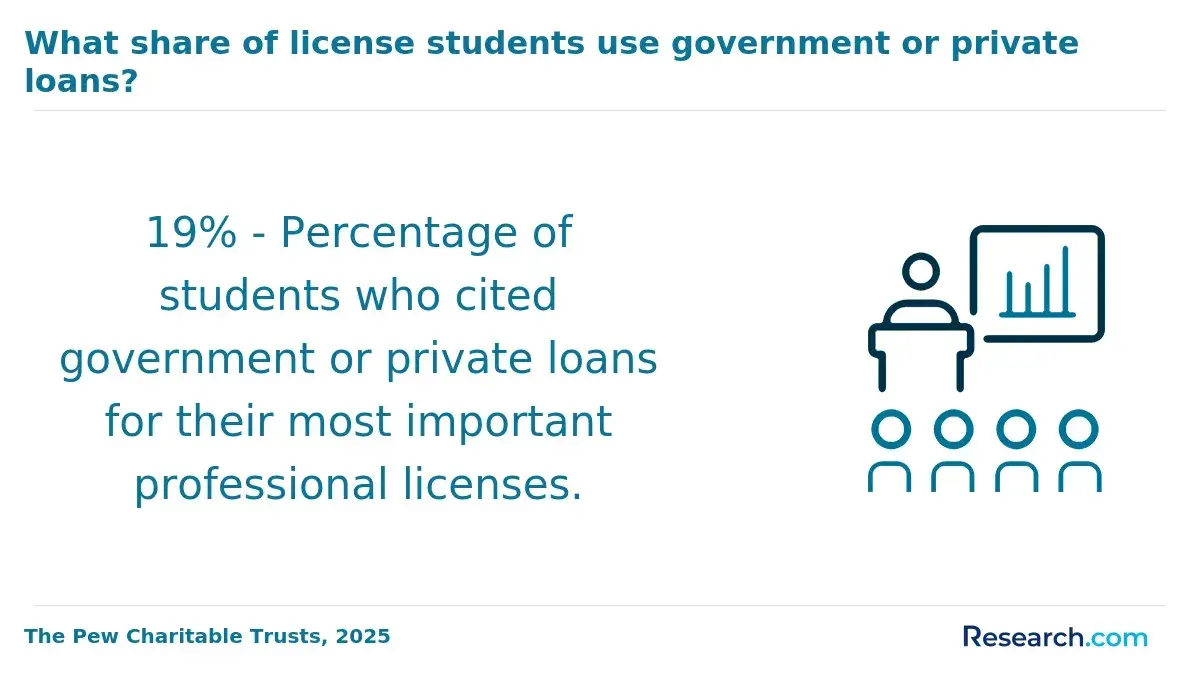
Colleges with online marketing programs including content marketing curriculum offer varying pathways influenced by institutional focus and program depth. Public universities tend to provide affordable tuition but may sacrifice specialized content marketing rigor found in private nonprofits or regionally accredited online institutions. Those seeking substantive skill mastery should prioritize bachelor's level programs at four-year schools, as community colleges often provide only foundational exposure that may fall short of mid-level content strategist job requirements.
Employers have notably increased demand for content marketing expertise, with job postings up 45% globally from 2021 to 2023, resulting in an average 28% salary premium for candidates possessing these skills. Content marketing proficiency embedded in accredited curricula offers tangible workforce leverage, particularly where practical application, such as SEO-driven content creation and analytics, is emphasized.
For experienced professionals pivoting into marketing, accelerated online bachelor's completion programs strike a practical balance-offering flexibility without compromising crucial content mastery. However, verifying course syllabi to confirm inclusion of storytelling frameworks and distribution strategies is essential. Certifications aside, curricular substance aligned with sector-specific ROI expectations, including fields like technology and healthcare, is what truly separates candidates.
Prospective students analyzing online accredited colleges offering marketing degrees with content marketing courses should also consider experiential components like capstone projects or industry collaboration that simulate evolving market realities. For detailed tuition and duration comparisons, the accelerated business degree online data can provide additional perspective.
What core courses and content marketing classes are typically included in these online marketing degrees?
Core curricula in 2026 online Marketing degrees prioritize applied business strategies alongside foundational concepts, but their value hinges on alignment with employer demands and outcome metrics. Essential coursework includes consumer behavior, marketing research, digital marketing, brand management, and marketing analytics to cultivate expertise in data-driven decision-making and audience segmentation.
Content marketing coursework in online Marketing programs emphasizes content strategy, SEO, digital copywriting, and multi-channel distribution, equipping students to design measurable campaigns tailored to industry-specific contexts. For example, healthcare marketers must navigate regulatory constraints influencing content tone and channels, while fashion marketers focus on trend-driven visuals and influencer collaborations, illustrating the real-world complexity beyond generic content creation.
Graduates' practical skills with content management systems, social media algorithms, and performance metrics remain decisive for employability. However, ROI varies significantly across institutions, underlining the importance of outcome-focused choices. The Foundation for Research on Equal Opportunity reports a lifetime ROI of $55,297 for a bachelor's in Marketing from West Texas A&M University versus $815,490 at Pennsylvania State University-a 14-fold difference that reflects program quality and market fit rather than mere curriculum presence.
Prospective students seeking a strategic shift should weigh these disparities carefully and consider comprehensive evaluations like those available through an online business administration degree ranking, which contextualize Marketing degree programs within broader business education outcomes.
What are the admission requirements and application materials for online marketing programs with content coursework?
Admission for online marketing programs with content marketing coursework demands more than basic eligibility; it requires strategic preparation that influences both acceptance and program efficiency. Typically, candidates must submit a high school diploma or equivalent, official transcripts, standardized test scores (unless waived for prior credits or relevant work), and a personal statement clarifying career focus. Letters of recommendation, while optional, provide tangible insight into candidates' communication skills, often weighted by admissions committees.
Work experience in marketing or related fields can shift program pacing, particularly in accelerated or graduate-entry tracks. Some programs also require foundational business or marketing prerequisites before advancing to specialized content marketing subjects. Additionally, international students must meet English language standards, adding complexity to their applications.
Balancing academic requirements with career realities is critical. For instance, a marketing professional pivoting into digital content must evaluate transfer credit policies to avoid redundant coursework and reduce costs. Institutions like Pennsylvania State University offer substantially lower online tuition rates than on-campus options, which can save thousands, but this demands early coordination of transcripts, essays, and work portfolios.
Effective admission management thus hinges on synchronizing documentation timelines with financial planning, directly affecting the feasibility of moving into marketing management, brand strategy, or specialist roles. Similar considerations apply when evaluating a construction management degree online, where admission schedules and tuition planning can significantly influence enrollment decisions.
How long do online marketing degrees with content marketing coursework take, and how are they structured?
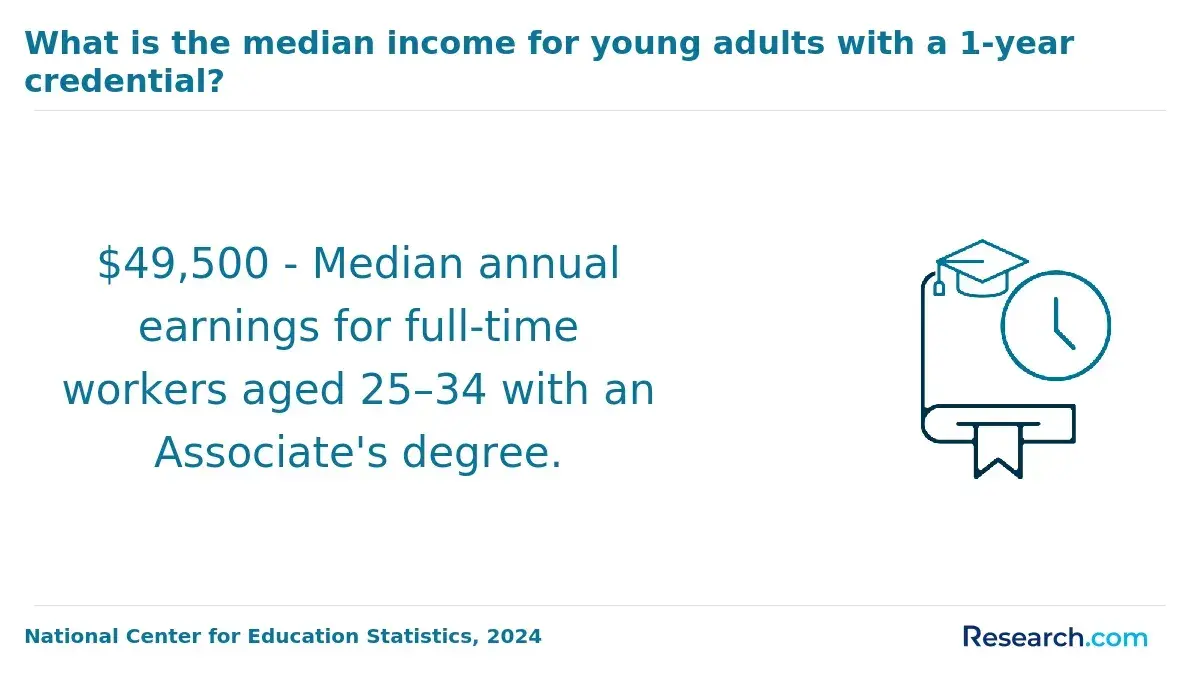
Online marketing degrees with content marketing coursework present varying timelines and outcomes that directly affect career trajectories. Associate programs, typically 60 credit hours, span 18-24 months full-time, suitable for individuals seeking faster entry but limited specialization. Bachelor's degrees require about 120 credit hours, translating to 3-4 years full-time; these programs often integrate internships, providing practical agency experience preferred by employers. Master's degrees compress into 1-2 years, emphasizing strategic data analytics and leadership skills essential for mid-career pivots.
Students managing full-time jobs often choose part-time or asynchronous formats, which double completion time but maintain flexibility-a tradeoff that influences earnings potential and relevance in a rapidly evolving digital marketing landscape. Employers expect demonstrated competencies in content planning, campaign execution, and outcome measurement, commonly attained through project-based learning or capstones embedded in curricula.
The sharp growth to 32 distinct content marketing degrees worldwide over five years signals increasing demand for specialized knowledge, requiring students to critically evaluate program depth versus duration. Decisions on degree level and format should consider:
- Time investment impact on opportunity costs.
- Balance between foundational marketing principles and applied content marketing skills like SEO and data analytics.
- Employability outcomes tied to real-world experience components.
Prospective students must weigh immediate workforce needs against long-term specialization benefits, ensuring that chosen programs align with both career goals and industry expectations for measurable deliverables.
How much do online marketing degrees with content marketing coursework cost, and what financial aid is available?
Choosing an online marketing degree demands weighing tuition costs against the flexibility needed to sustain income during study. Public universities typically charge $300 to $500 per credit hour, while private institutions often exceed $700, making total program costs range from $15,000 to $50,000. For part-time students balancing work-over 70% in top programs per Forbes Advisor's 2024 data-selecting asynchronous coursework reduces disruptions to employment and preserves income.
Financial aid forms a critical buffer, beginning with the FAFSA to access Pell Grants and federal loans with fixed rates and income-driven repayment options. State grants vary significantly, favoring in-state candidates. Although marketing scholarships exist, they usually range from $500 to $5,000 annually and remain competitive. Employer tuition assistance offers merit but requires continuous employment in related roles and often limits reimbursement amounts.
Professionals over 25, composing about 40% of enrollees, must consider potential lost wages if course demands increase. The tradeoff often involves choosing between faster completion with heavier workloads or longer durations preserving steady employment. This dynamic influences not only financing decisions but also practical career planning.
What entry-level and advanced careers can graduates pursue with a marketing degree focused on content?
Graduates holding a marketing degree with a content specialization face immediate challenges aligning content strategies with shifting algorithms and demonstrating concrete ROI through KPIs. Entry-level positions such as content marketing coordinator, SEO analyst, social media specialist, and digital marketing assistant demand proficiency in tools like Google Analytics and content management systems.
For instance, a content marketing coordinator must balance content creation with analytic reporting to justify budget allocations, an evolving skill set driven by platform-specific nuances. Progression into advanced roles-content marketing manager, brand strategist, digital campaign director, or chief content officer-requires a shift from execution to strategic leadership.
Consider a content marketing manager at an e-commerce company: they navigate the tension between creative storytelling and measurable sales funnel optimization, a balancing act distinct from a B2B brand strategist's focus on long-term audience segmentation and thought leadership development. Employers increasingly value industry-recognized certifications alongside traditional degrees.
Data reflecting a 50% surge in digital marketing certificate enrollments aligns with 76% of hiring managers rating such credentials as equal or superior to formal coursework. This dynamic implies that combining foundational academic knowledge with targeted certificate programs substantially improves employability and mobility, especially in a landscape where practical proof of skills and adaptability outweighs theoretical credentials.
What salary ranges and job outlook can content-focused marketing graduates expect in the United States?
Graduates focused on content marketing in the U.S. face a notably segmented salary landscape influenced heavily by their technical skill set and industry alignment. Entry-level salaries typically span $50,000 to $70,000 but can vary substantially with geography and sector. Mid-career professionals who marry content strategy with marketing analytics or AI competencies often command between $75,000 and $110,000.
This wage growth aligns with a Bureau of Labor Statistics projection of a 10% increase in marketing managerial roles through 2032, outpacing average occupational growth. In practice, industries like technology, healthcare, and finance seek marketers able to leverage data-driven insights. For instance, a healthcare marketing coordinator applying advanced analytics to optimize patient engagement content will outperform peers relying on traditional creative approaches, thereby accessing superior compensation and opportunities.
Employers increasingly prioritize quantitative fluency and AI-enabled content methods. ASU Online's 2024 marketing BS curriculum, where over one-third of upper-division courses embed AI and analytics projects, exemplifies the educational shift toward these competencies.
Candidates lacking such skills may encounter longer job searches or remain confined to lower-paying, creative-only roles. Students should carefully evaluate programs emphasizing analytics and AI integration while pursuing internships focused on measurable content impact to align with shifting market demands and improve job market readiness.
How can students evaluate and choose a reputable, accredited online marketing program emphasizing content marketing?
Institutional and regional accreditation significantly affect the labor market value of online content marketing programs. Employers and graduate schools often reject credentials from unaccredited institutions, limiting career mobility and advanced study options. Accreditation from recognized bodies, such as regional agencies like Middle States or WASC, ensures adherence to quality standards and increases credential legitimacy.
Program design should bridge theory and market realities by integrating content strategy with SEO, analytics, and digital marketing tools like CMS platforms. Programs featuring hands-on projects or client-based campaigns tend to better prepare graduates for content strategist roles, where median salaries range between $80,000 and $90,000, with senior positions exceeding $130,000 annually. Such practical emphasis distinguishes programs that align closely with workforce demands.
Evaluating job placement rates and alumni career progress provides concrete evidence of a program's effectiveness in workforce preparation. Faculty expertise with current industry experience is another critical factor, ensuring instruction reflects evolving algorithms and consumer behaviors instead of outdated theory.
Flexibility and modality should be matched to professional schedules; fully asynchronous programs benefit those needing time independence, while hybrid models may enhance networking opportunities. Consider technology requirements and available support to mitigate remote learning challenges.
Cost must be assessed against measurable employment outcomes-higher tuition does not necessarily correlate with superior job prospects. Programs focused on content marketing specialization with accredited status often deliver better ROI in terms of employability and salary potential.
Other Things You Should Know About Marketing
Specializing in content marketing can improve job prospects in roles that prioritize high-quality content creation and strategy, but it may narrow opportunities in broader marketing functions like analytics or media buying. For career flexibility, consider programs balancing content marketing with foundational marketing analytics, SEO, and digital advertising. Choose specialization only if targeting roles clearly aligned with content strategy.
Employers seeking content marketers expect candidates to display skills in storytelling, editorial planning, and content distribution within digital platforms. A general marketing degree may lack this depth, leading to longer onboarding times. However, larger firms with integrated teams might value broader marketing degrees if supplemented by certifications or experience in content marketing tools. Select the degree type based on target employer scale and role specificity.
Most programs require 3 to 6 portfolio pieces, such as blog posts, SEO content plans, email campaigns, or a capstone content strategy. Many schools also ask for analytics reports or a published campaign brief to show writing, research, and performance-tracking skills.
References
- Accredited Online Marketing Degree Programs https://www.accreditedonlinecolleges.org/marketing/
- How Much Do Digital Marketing Courses Cost? https://blog.nobledesktop.com/learn/digital-marketing/how-much-is-a-digital-marketing-course
- Digital Marketing Bachelor's https://www.fullsail.edu/degrees/digital-marketing-bachelor-degree-program
- CourseCareers https://coursecareers.com/blog-posts/how-to-choose-the-best-digital-marketing-course
- B.A. in Digital Marketing - Belmont Abbey College https://belmontabbeycollege.edu/academics/majors-degrees/digital-marketing/
- Online Bachelor’s in Marketing & Digital Marketing Programs - Marketing Majors https://www.mastersincommunications.com/related-degrees/bachelors-in-marketing
- What’s the Difference Between Online vs. On-Campus Digital Marketing Master’s Programs? | Digital Marketing Institute https://digitalmarketinginstitute.com/blog/whats-the-difference-between-online-vs-on-campus-digital-marketing-masters-programs
- Content marketing: Basic strategies and how to get started https://business.adobe.com/blog/basics/content-marketing
- How long does it take to learn Digital Marketing https://powerful-marketers.com/how-long-does-it-take-to-learn-digital-marketing/
- Certificate Course in Content Marketing - International Business School The Hague https://ibsthehague.com/programs/short-courses/certificate-course-in-content-marketing/