2027 Best Online Management Information Systems Degrees for Financial Services Technology Careers

Co-Founder and Chief Data Scientist
Balancing a full-time job, family responsibilities, and the need to pivot into financial services technology puts many aspiring management information systems professionals at a crossroads. With employers prioritizing candidates who combine technical acumen and sector-specific knowledge, securing a flexible yet rigorous education becomes essential.
According to the National Center for Education Statistics, over 40% of online higher education enrollees in recent years are adult learners juggling professional obligations, underscoring a shift toward programs accommodating irregular schedules and career mobility. This article evaluates the best online management information systems degrees tailored to financial services technology, guiding students through choices that optimize accessibility, practical skills, and workforce alignment.
Key Things You Should Know
- MSIS graduates face an 18% higher starting salary in fintech roles compared to general IT degrees, but programs emphasizing advanced analytics delay entry by 6-12 months, impacting mid-career pivot timing.
- Employers prioritize cybersecurity and regulatory compliance experience, with 72% of financial services tech recruiters in 2024 valuing MIS graduates' practical risk management skills over purely theoretical knowledge.
- Online MIS degrees with partnerships offering internships reduce job placement time by 30%, yet such programs remain limited, posing an access barrier for working professionals seeking rapid market reentry.
What is an online management information systems degree for financial services technology careers?
Online management information systems degrees for financial services careers must balance technical rigor with sector-specific knowledge, addressing the unique challenges finance professionals face when integrating IT and business functions. For instance, a systems analyst at a bank must not only optimize transaction processing systems for speed and accuracy but also ensure compliance with complex regulatory audits.
Employers explicitly seek graduates who understand financial data flows, risk management technology, and cybersecurity protocols within the context of banking, insurance, and fintech.
Program design matters: offering flexible online delivery for working professionals only serves its purpose if paired with hands-on projects, virtual labs, or internships that reflect financial industry standards. Without practical experience aligned with real-world financial tools and compliance requirements, graduates often find themselves underprepared for employer demands in financial services technology management information systems programs online.
The projected 17% growth for computer and information systems managers from 2023 to 2033 reflects sustained demand for leadership in technology-dependent finance sectors. Staying current through continuously updated curricula is critical, as regulatory and technological shifts happen rapidly. Students considering this path should also explore related options, such as blockchain degree programs, which increasingly intersect with financial systems technology.
How does an online MIS degree compare with on-campus options for financial services roles?
Online management information systems degree benefits for financial services hinge on nuanced employer preferences and real-world experience. Financial services hiring tends to favor on-campus graduates for roles emphasizing soft skills and teamwork, which are easier to demonstrate through in-person networking and collaborative projects.
Conversely, online students must offset limited face-to-face interaction by actively securing virtual internships and curating digital portfolios that highlight applied expertise.
The comparison of online vs on-campus management information systems programs for finance careers reveals key tradeoffs. Online options provide flexibility for working professionals to maintain continuous employment, preserving career momentum crucial in finance where ongoing practical exposure deepens regulatory and risk management competence. Yet, online cohorts often encounter skepticism without direct industry connections typically fostered by on-campus programs.
Financial services technology roles demand updated knowledge in compliance and data security, areas where curricula must align with current frameworks to ensure market relevance. Candidates should verify that online programs incorporate these evolving requirements alongside core cybersecurity and database skills.
Additionally, prospective students can explore targeted pathways through health information management programs online as a comparative reference for program flexibility and employer expectations in similarly regulated industries.
Strategies for online learners to counterbalance potential employer reservations include sustained industry engagement beyond coursework, underscoring how networking and demonstrable skills drive hiring outcomes in finance-related MIS roles.
Which accredited online MIS programs are best for breaking into financial technology careers?
Success in financial technology hinges on selecting accredited online management information systems programs that integrate technical MIS competencies with sector-specific fintech knowledge. With a projected 9% job growth for financial analysts between 2023 and 2033, candidates who combine data systems expertise with financial market insight stand out. Programs that offer specialized fintech electives or emphasize cybersecurity, blockchain, and data analytics provide a competitive advantage.
Employers increasingly value graduates who can demonstrate applied skills, such as Python programming for risk modeling or automated trading systems, gained through hands-on experiences like virtual labs and internships. Those restricted to traditional management information systems curricula without fintech applications may find their relevance diminished in fast-evolving financial environments.
Flexibility is another critical factor as many students balance work and study, requiring asynchronous coursework or accelerated pathways. Additionally, familiarity with regulatory compliance and adaptive capability for shifting financial instruments equips students to meet employer expectations. Candidates who supplement their degrees with portfolios or fintech-specific projects increase their marketability significantly.
Prospective students pursuing the best online MIS degrees for fintech career opportunities should weigh curriculum depth and technology integration against program prestige and cost. For broader educational planning, resources on affordable degree options such as a business administration degree can also inform decision-making.
What admissions requirements do online MIS programs in financial services technology typically have?
Admission to online MIS programs focused on financial services technology often requires applicants to have a bachelor's degree from an accredited institution, typically emphasizing business, information technology, or closely related fields.
A minimum GPA around 3.0 is a common baseline, but more importantly, demonstrated skills in data analysis, programming, or business intelligence are increasingly decisive given the sector's demand for technically proficient professionals who understand risk management.
Applicants without formal technical backgrounds frequently face prerequisites in database management or statistics, extending time to enrollment and creating upfront resource tradeoffs for working professionals.
These admission requirements reflect real-world employer expectations shaped by the steep costs of data breaches-IBM's Cost of a Data Breach Report highlighted an average $6.08 million loss in the financial industry-necessitating that candidates navigate regulatory compliance and secure sensitive information effectively.
Financial services technology online management information systems application criteria therefore favor experience with cybersecurity or finance, often requiring supplemental certifications or foundational courses when prior education is insufficient.
Application packages must align clearly with industry needs through resumes, references, and personal statements. Part-time students balancing work face particular challenges meeting rigorous security and analytics training. For those exploring foundational technical credentials alongside MIS studies, a fast cyber security degree pathway can offer valuable complementary skills and reduce timeline risks.
What courses and technical skills do online MIS degrees emphasize for fintech careers?
Fintech-focused Management Information Systems degrees demand a blend of technical skills and financial domain expertise that directly affect employability and earning potential. Graduates face the challenge of mastering programming languages like Python, SQL, and Java alongside specialized techniques such as blockchain integration, financial modeling, and risk analysis.
For example, fintech lending platforms require professionals who can efficiently manipulate large datasets for credit decisions while maintaining strict security protocols.
Incorporating hands-on projects in cloud computing and API integration is standard, aligning curricula with employer expectations for operational readiness. Practical experience in simulated business intelligence and enterprise resource planning settings supports the application of IT frameworks to financial workflows-essential for those entering either startups or established institutions.
This technical rigor responds to a documented 15% annual growth rate in fintech-related MIS positions, a critical factor for students weighing return on investment. However, with average annual tuition and fees for private nonprofit four-year colleges at $43,161, prospective students must evaluate program quality against costs and post-graduation placement services to ensure meaningful wage gains and job security.
Key tradeoffs include balancing deep technical training with financial risk and considering certifications or career supports that enhance market alignment. The practical readiness and domain-specific competencies embedded in these programs directly influence a graduate's capacity to address fintech's evolving operational challenges.
How long do online MIS programs take and what do they cost students?
Completing an online management information systems program requires strategic consideration of time, cost, and workforce impact. Bachelor's degrees often permit acceleration from the typical four-year timeline down to around 24 months through transfer credits or intensive scheduling, which can significantly reduce income disruption for full-time workers.
Master's programs vary more widely, from 12 to 24 months for full-time students, with some part-time or executive formats extending to three years, offering flexibility for professionals maintaining employment. For example, an IT analyst aiming to enter financial services might prioritize a 30-month part-time master's path to balance salary continuity with credential acquisition.
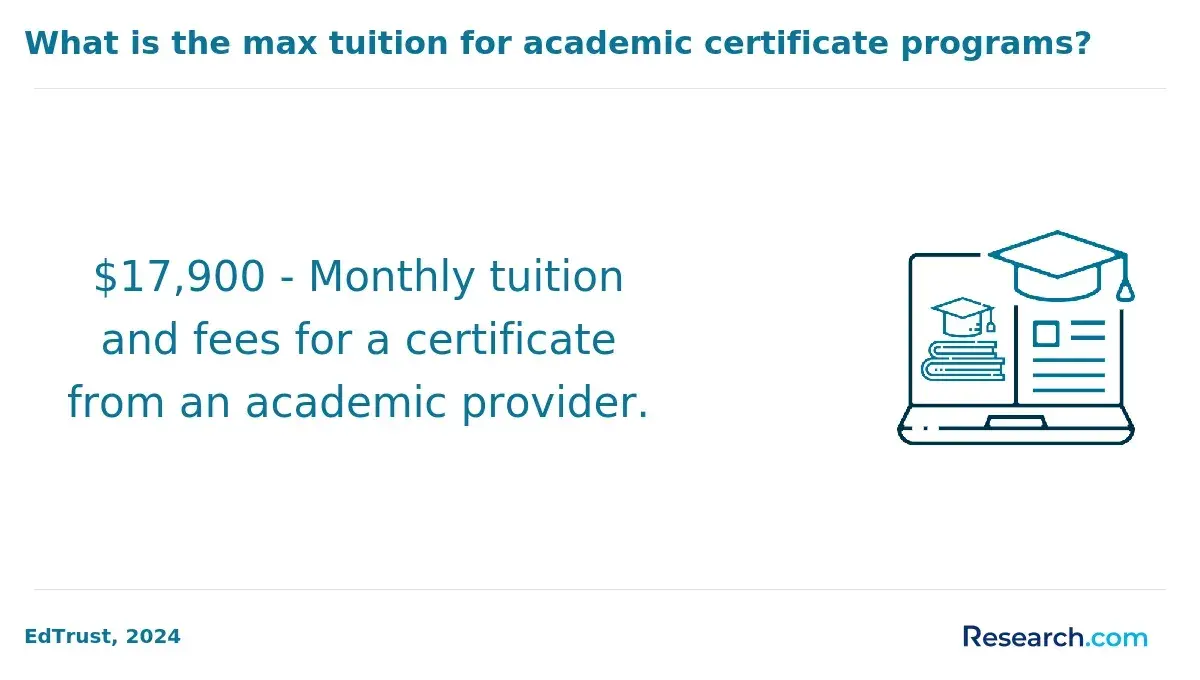
Tuition costs range broadly, reflecting institutional type and program intensity: bachelor's degrees can cost between $10,000 and $40,000 total, while master's programs generally span $15,000 to $60,000, with per-credit fees from $400 to over $1,500.
Additional expenses such as technology fees are often overlooked and can add to the financial outlay. Employer tuition assistance or professional certification pathways can mitigate costs but require careful vetting against the degree's demonstrated industry relevance.
Decision-makers must weigh how program length and price influence timely workforce reentry and the credibility of credentials with employers. Despite widespread adoption of online formats-with about 61% of postsecondary students taking distance courses in fall 2023-employer perception varies.
Investing in programs aligned to sector needs and validated by outcomes reduces risks of stalled career momentum and cost inefficiency, particularly when transitioning across fields within management information systems.
What jobs can you get with an online MIS degree in financial services technology?
The intersection of management information systems and financial services technology demands professionals who can navigate both complex data environments and stringent regulatory frameworks. Graduates prepared for roles such as financial data analyst or risk analyst must balance technical proficiency-spanning SQL, Python, cloud computing, and cybersecurity-with a deep understanding of financial products and compliance requirements like SOX and GDPR.
For example, a financial systems manager often confronts the challenge of integrating ERP and CRM software tailored to banks or insurers, where outdated legacy systems can impede efficiency. The tradeoff here involves investing time to master industry-specific tools versus pursuing broader IT competencies.
Practical employment outcomes hinge on the ability to leverage big data analytics techniques to automate fraud detection, identify investment trends, or build predictive risk models. The sector's rapid growth, reflected in the projected expansion of the global big data analytics market from $307.51 billion to $924.39 billion by 2032, creates demand but also pressures candidates to continuously update technical skills.
Distinct career tracks emerge within this space:
- Implementation-focused roles that require hands-on systems integration and cybersecurity expertise
- Analytics-driven positions blending financial insight with advanced data science
Choosing between these paths involves weighing individual strengths against evolving fintech demands, understanding that employers increasingly expect fluency not only in technology but the financial context where it applies.
What is the salary potential for MIS graduates working in financial technology and banking?
Management information systems graduates targeting financial technology and banking roles face a dynamic salary landscape closely tied to technical proficiency and relevant certifications. Median wages for computer systems analysts-typical MIS roles-stand at $103,800 annually, reflecting specialized skills in financial systems management and infrastructure. Salary potential diverges sharply based on role focus and experience.
Entry-level positions in fintech applications typically pay between $70,000 and $85,000, but professionals who pivot toward cybersecurity, data analytics, or complex enterprise integration commonly exceed $110,000. Large banking employers often offer a premium driven by regulatory compliance and operational complexity.
Technical currency remains critical. For example, an MIS graduate in a regional bank who gains cybersecurity credentials can expect a 10-15% salary increase within two years, whereas stagnant skills limit wage growth despite academic strengths.
Employers consistently value practical problem-solving within financial systems integration and risk management frameworks. Aspiring MIS professionals aiming for fintech success should consider this skill set and ongoing credential updates as essential considerations impacting earnings trajectory and sustainability in a swift, technology-driven marketplace.
How is the job outlook for MIS professionals in financial services and fintech industries?
The demand for management information systems professionals in financial services and fintech is propelled by rapid technology integration and regulatory complexity. Organizations increasingly seek candidates skilled in cybersecurity, cloud computing, and data analytics to secure and manage vast data flows while navigating fintech innovations.
Consider a bank implementing blockchain for secure transactions: MIS specialists must connect legacy core banking systems with novel distributed ledger platforms, requiring both technical acumen and financial domain expertise. This dual requirement diminishes the value of narrowly focused IT or finance backgrounds in isolation.
Employers prioritize practical experience with regulatory frameworks like SOX and PCI-DSS alongside agile project management. Graduates who combine hands-on exposure to financial software platforms with specialized certifications and industry networking secure placements 20-30% more effectively within six months. This advantage highlights the necessity of targeted experiential learning such as internships or capstone projects specific to financial technology.
Tradeoffs arise as professionals must maintain continually updated skills amid shifting regulations and fintech advancements, risking obsolescence without ongoing development. The workforce rewards adaptability and hybrid expertise that bridges technical innovation and compliance demands.
How can you evaluate and choose a reputable, well-accredited online MIS program?
Accreditation from recognized bodies such as ABET or regional agencies approved by the U.S. Department of Education is a fundamental standard for online management information systems programs, ensuring rigorous curriculum and credit transferability. This directly impacts employability and further education options.
Given the evolving demands in financial services technology, programs must reflect current industry standards-especially in cybersecurity, data analytics, and cloud computing-to prepare graduates for relevant roles.
Employers increasingly expect candidates to have hands-on experience; thus, evaluating whether a program offers internships, projects, or partnerships with fintech firms is critical. For instance, an applicant targeting financial risk analysis should select curricula emphasizing predictive modeling and data visualization over traditional database management to align with job market needs reported in the CompTIA State of the Tech Workforce.
Accessibility also affects outcomes: asynchronous options, technical support, and flexible deadlines benefit working professionals, but limited synchronous interaction can hinder networking essential in sectors relying on trust and industry connections. Additionally, career services like resume workshops and interview training enhance employment prospects.
Programs must balance technical foundations with regulatory compliance training relevant to financial systems. Prospective students should analyze tuition against alumni salary data to assess return on investment objectively.
Other Things You Should Know About Management Information Systems
Programs vary widely in their integration of regulatory content, with many emphasizing technical skills over financial compliance. For a career in financial services technology, prioritizing programs that incorporate current fintech regulations, data privacy laws, and cybersecurity standards is vital.
Graduates from MIS programs lacking this perspective may struggle to meet employer expectations in compliance-heavy roles that increasingly demand practical regulatory knowledge alongside IT expertise.
Look for programs that require or strongly support 150–300 internship hours, a supervised practicum, or a capstone with a financial technology employer. These experiences help students apply database, risk, and analytics skills in banking or fintech settings and can satisfy employer expectations for entry-level roles.
While a degree provides a broad foundation, employers in fintech increasingly prioritize specific certifications in areas like data analytics, cybersecurity, and cloud computing. Graduates should consider supplementing their MIS degree with targeted certifications aligned to their intended roles to enhance technical credibility and marketability.
Prioritizing certifications that offer practical, immediately applicable skills will yield a stronger return on educational investment and facilitate faster career progression.
References
- Best Fintech Jobs for the Future | Selby Jennings https://www.selbyjennings.com/en-us/industry-insights/career-advice/best-fintech-jobs-for-the-future-navigating-your-career-pathway
- The most in-demand roles in the financial services sector - Barrow Mount https://barrowmount.com/the-most-in-demand-roles-in-the-financial-services-sector/
- Banking Jobs vs Fintech Jobs: Decoding Skills for the Future of BFSI https://www.profinch.com/banking-jobs-vs-fintech-jobs-decoding-skills/
- How to Choose an Online Degree Program: A Comprehensive Guide https://www.usiu.ac.ke/usiuonline/how-to-choose-an-online-degree-program-a-comprehensive-guide/
- How to Check if an Online Degree Is Real | Find Trusted Courses https://dsuonline.com/resources/blogs/how-to-check-if-an-online-degree-is-real/
- Masters in Management Information System (MIS) - All You Need To Know about it in 2020 | CrackVerbal https://www.crackverbal.com/resources/ms-in-management-information-system/
- Online vs Campus Information Systems Degree Programs: Complete Comparison https://hakia.com/compare/information-systems-online-vs-campus/
- Online MIS Degrees | Accounting.com https://www.accounting.com/degrees/information-systems/masters/
- 2025's Best Online Master’s in Information Systems (MIS) Programs https://www.onlinemastersdegrees.org/best-programs/information-systems/
- Start Your FinTech Career: Jobs After Course Completion. https://www.tops-int.com/blog/start-your-fintech-career-jobs-after-course-completion