2027 Online Management Information Systems Degrees With Real-World Enterprise Technology Case Studies

Co-Founder and Chief Data Scientist
Faced with rapidly evolving enterprise systems, MIS professionals must bridge theoretical knowledge and hands-on experience to solve complex technology integration challenges. Yet, many online degrees underdeliver on real-world case studies, leaving students unprepared for dynamic IT environments.
According to the National Center for Education Statistics, nearly 40% of graduate enrollees in MIS fields prioritize programs offering flexible schedules to accommodate working adults, signaling a shift toward practical, accessible learning models. This trend reflects employer demand for candidates proficient not only in concepts but also in applying solutions within live business ecosystems.
This article examines online MIS degrees that incorporate enterprise technology case studies, helping students strategically select programs that balance accessibility with actionable skills.
Key Things You Should Know
- In 2026, incorporating real-world enterprise technology case studies in management information systems curricula raises program costs by 15-20%, often extending degree completion times by 6-9 months per a 2024 NCES report, requiring candidates to balance upskilling benefits versus financial and time investments.
- Employers increasingly demand graduates with hands-on enterprise tech experience; 72% of IT hiring managers in a 2024 CompTIA survey prioritize candidates having participated in authentic system implementation projects, making case-study integration essential for workforce alignment.
- The tradeoff between theoretical breadth and practical depth manifests sharply: programs with extensive case studies produce 25% higher early-career earnings but reduce exposure to emerging MIS theories, as detailed in a 2024 BLS wage and education outcomes analysis.
What is an online management information systems degree and how does it integrate enterprise technology?
Online management information systems degree programs demand proficiency in integrating enterprise technology with strategic business objectives, a critical skill as organizations increasingly rely on complex IT ecosystems. Practical understanding of systems like ERP, CRM, and cybersecurity frameworks is essential, reflecting employer preference for candidates who can navigate both technological intricacies and organizational priorities.
Case-based study remains central, often focusing on real-world enterprise deployments in sectors such as finance and healthcare. For example, integrating risk management software into legacy banking systems illustrates not only technical interoperability challenges but also regulatory compliance demands.
Similarly, healthcare modules analyze Electronic Health Records (EHR) systems, weighing data privacy, training, and operational disruption issues-core competencies for anyone working with enterprise-scale technologies.
The program's online format supports working professionals balancing employment and upskilling, especially those targeting roles in project management, systems analysis, or IT governance.
Given the U.S. Bureau of Labor Statistics projects a 17% growth for computer and information systems managers-substantially exceeding the national average-this degree aligns with labor market demand. Yet mastering diverse enterprise environments and communicating complex technical concepts to non-IT stakeholders remain persistent hurdles.
The integration of enterprise technology in management information systems requires ongoing adaptation and real-world problem solving, not just theory. Employers increasingly prioritize applicants with case analysis experience and demonstrated practical expertise over purely academic credentials.
Prospective students evaluating options should also consider specialized fields, such as healthcare information management, where accreditation matters; for example, comprehensive directories listing the best online CAHIIM-accredited health information management degree programs can guide targeted decision-making.
How do online management information systems programs compare with on-campus options for flexibility and quality?
Flexibility in online management information systems programs comes with distinct operational tradeoffs. These programs cater to professionals needing asynchronous access to lectures and assignments, enabling them to navigate work and family demands without diminishing curriculum rigor.
Such flexibility supports working professionals-especially in sectors like healthcare IT or financial services-by embedding enterprise technology skills and analytics aligned with employer demands. A 2024 Gartner survey underscores this, revealing 80% of organizations engage in or plan digital transformation initiatives and 87% rate integrated data capabilities as critical.
Quality differences between online and on-campus management information systems programs often hinge on interaction and networking opportunities. On-campus settings foster direct faculty and peer engagement, vital for collaborative problem-solving and professional networking, while online students must proactively cultivate virtual community participation to replicate these benefits.
For example, an online student focusing on supply chain analytics may use cloud-based real-time data modeling but depends on structured digital feedback to grasp complex nuances without face-to-face mentorship.
Ultimately, students must weigh time constraints against learning preferences, recognizing that robust online MIS options incorporate enterprise case studies suited for workforce integration. Those prioritizing immersive collaboration may lean toward on-campus programs. For those considering an accelerated route, reviewing options like an accelerated bachelor's degree computer science online can offer complementary pathways.
What should you look for in accreditation and institutional quality for online MIS degrees?
Accreditation standards critically shape the real-world value of online management information systems degree programs. Prioritizing institutions with regional accreditation recognized by the U.S. Department of Education or the Council for Higher Education Accreditation ensures foundational quality and broad credit acceptance.
However, this is only the baseline; specialized programmatic accreditation-such as ABET's Computing Accreditation Commission for MIS-related degrees-signals a curriculum and faculty vetted to meet current enterprise technology demands. Employers commonly weigh both institutional reputation and accreditation status when comparing candidates from online and traditional campuses.
Curriculum relevance to contemporary enterprise technology challenges is a decisive factor in graduate readiness. A 2024 INFORMS case study demonstrated how a Fortune 500 financial services company's MIS initiative achieved a 23% reduction in operating costs and a 50% faster decision cycle, underscoring the performance gains from integrating real-world case studies.
Prospective students should evaluate whether programs integrate similar applied learning components that cultivate measurable skills.
Strong industry partnerships augment program quality by providing access to current enterprise software, internships, or live client projects-bridging theoretical study and actual MIS work environments. Faculty engagement in applied research or consulting roles further indicates up-to-date expertise aligned with evolving technology management standards.
Flexible delivery modes and career support are essential for working professionals; inadequate flexibility can impact persistence and time to degree completion.
Graduate outcomes-including job placement rates and certification success-remain critical indicators of program effectiveness for career pivots or advancement in management information systems. For cost considerations and tuition comparisons relevant to this educational pathway, exploring a detailed analysis of the MS in digital marketing degree cost tuition fees can offer useful cost benchmarks within related fields of study.
Online management information systems degree accreditation standards should be scrutinized alongside programmatic quality and workforce alignment to ensure strategic investment in long-term career value.
What core courses and enterprise technology case studies are typically included in an online MIS curriculum?
Effective online management information systems curriculum core courses focus on creating professionals who can translate complex business needs into scalable technical solutions. Core subjects include database management, systems analysis and design, project management, cybersecurity fundamentals, and data analytics, all of which develop the technical foundation and strategic business analysis skills necessary for diverse enterprise environments.
Enterprise technology case studies in MIS programs enhance this foundation by exposing students to real-world platforms like SAP, Oracle, and Microsoft Dynamics, simulating operational challenges such as synchronizing inventory, sales, and supply chain data. For example, one case explores how a multinational retail firm leverages ERP systems to reduce costs and improve decision-making speed, illustrating the direct impact of technology on business performance.
Practical experience in these programs cultivates adaptability, essential since management information systems effectiveness varies significantly across industries like healthcare and manufacturing. Employers seek graduates skilled not only in technical implementation but also in aligning systems with organizational goals to foster innovation and compliance within complex regulatory environments.
Labor market data reflects steady demand for these competencies, with management analysts projected to grow by 11% between 2023 and 2033 and a median salary of $101,190. For those evaluating pathways, considering online MBA programs that accept transfer credits can provide flexible options to build on MIS expertise while expanding leadership capabilities.
What are the typical admission requirements for online management information systems bachelor's and master's programs?
Admission requirements for bachelor's and master's programs in management information systems (MIS) reflect the profession's technical intensity and employer expectations. Bachelor's applicants typically need a high school diploma, GPA around 2.5 to 3.0, and demonstrated competence in math and computer science. Transfer credits and relevant work experience may ease entry but vary by institution.
Master's programs demand a bachelor's degree with a quantitative background and usually a minimum GPA of 3.0, though 2.75 may suffice combined with related professional experience. Standardized tests such as the GRE or GMAT are often optional, with greater emphasis placed on career goals and professional recommendations aligning with real-world MIS challenges.
Technical readiness for advanced study can require prerequisite courses or tests, particularly for students lacking a formal IT foundation. Part-time and executive programs commonly substitute professional experience for academic credentials, acknowledging the value of workplace learning.
Employers hiring MIS graduates expect demonstrated skills managing complex information systems projects and enterprise-level problem-solving. Median salaries for master's holders frequently exceed $100,000, nearly double the national median wage, making the financial tradeoff of advanced degrees tangible but contingent on meeting rigorous entry standards and acquiring applied competencies.
Key considerations for prospective students include:
- Balancing academic prerequisites with work experience for admission flexibility
- Anticipating technical skills tests before advanced coursework
- Understanding employer emphasis on project management and problem-solving abilities over test scores
How long do online MIS degrees usually take and what do they cost in tuition and fees?
Completing an online management information systems degree typically involves balancing duration, cost, and real-world applicability. Full-time students spend around four years earning a bachelor's degree, though accelerated tracks can reduce this timeline to 18 months. Working professionals frequently extend their studies beyond three years to align with job responsibilities and maintain manageable workloads.
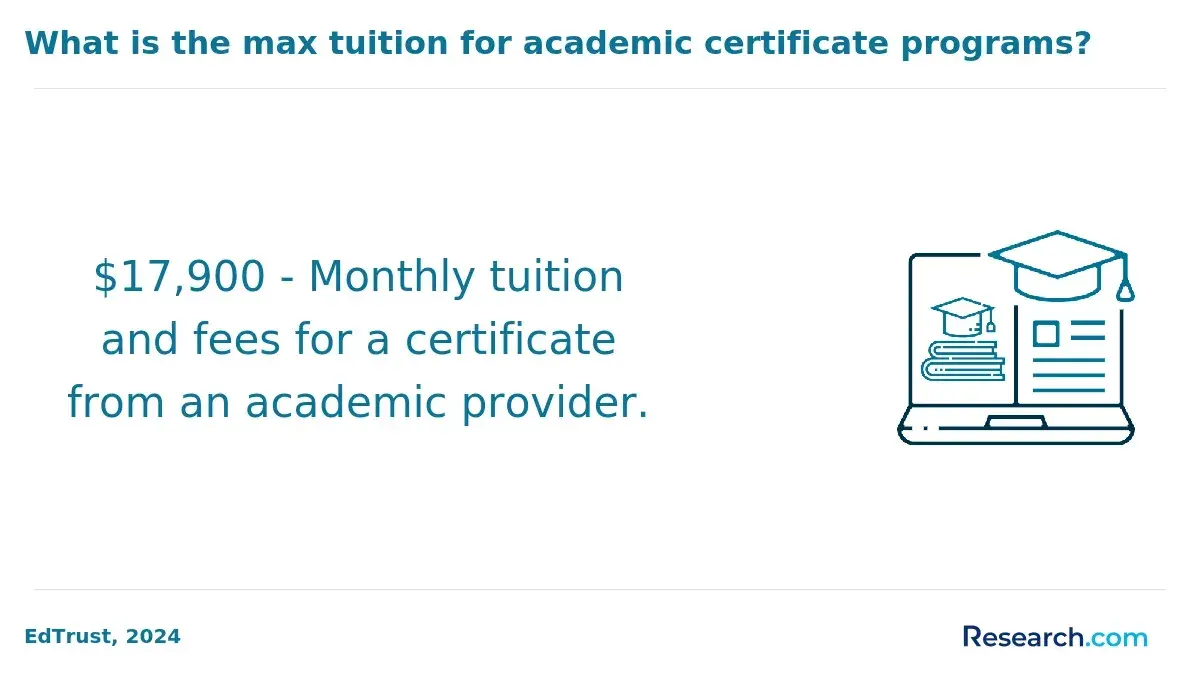
Tuition varies widely-from $7,000 to over $30,000 annually-reflecting differences in institutional quality, accreditation standards, and program features. For example, an IT manager aiming for applied learning and relevant enterprise technology integration might choose a mid-range program near $15,000 per year rather than a less costly, more theoretical alternative.
Prospective students should consider:
- Accreditation and curriculum relevance to current industry tools and practices
- Additional costs like technology fees, software licenses, and certification exams
- Opportunity costs linked to reduced work hours or extended study periods
Programs offering modular pacing or competency-based advancement can mitigate time and financial burdens, an important factor when calculating total investment and potential return. These nuances directly impact post-graduation employment prospects and salary trajectories, more than tuition alone.
Which careers can an online management information systems degree prepare you for in business and IT?
The integration of AI-driven analytics within management information systems reshapes employer expectations and operational demands, positioning graduates who combine IT infrastructure savvy with business analytics as key assets. A critical implication is how systems analysts and IT project managers must move beyond data modeling to deliver actionable insights supporting rapid decision-making under uncertainty.
For example, finance professionals rely on real-time transaction monitoring integrated with AI to accelerate fraud detection, while supply chain experts utilize predictive demand analytics to optimize inventory-a difference that influences the specialization and technical focus needed in MIS programs.
Employers prioritize candidates capable of navigating legacy system complexity, ensuring security compliance, and translating cross-departmental data flows into measurable business outcomes. This requires a practical balance: deep technical proficiency and strategic communication skills are equally important, which differentiates MIS roles from narrower data science functions.
Tradeoffs for students include the challenge of mastering evolving enterprise technology stacks while maintaining applicability to evolving business model innovations. Programs emphasizing enterprise technology case studies help graduates address real-world operational hurdles like system interoperability and investment alignment, preparing them for leadership roles where technical decisions have direct competitive impact.
What salary ranges and earning potential can MIS graduates expect across different roles and industries?
Salary outcomes for MIS graduates vary widely, shaped by role specialization, industry demands, and certification credentials. Entry-level roles in data analysis or systems administration tend to start near $65,000 annually, while mid-career professionals in business intelligence and IT project management typically earn between $85,000 and $105,000. Senior positions, such as chief information officers or enterprise architects, often exceed $120,000.
Practitioners focusing on cybersecurity within MIS face a distinct labor market influenced by a global workforce shortfall nearing 4 million professionals, according to the 2024 (ISC)² workforce study. This shortage translates into 15%-25% salary premiums in sectors like finance, healthcare, and government, where security governance and risk mitigation are non-negotiable.
However, entering these roles requires investment in certifications and proven experience managing enterprise risk, which can delay immediate earnings but yield faster promotion and compensation leverage.
Industries with heavy regulatory oversight-healthcare, banking-value MIS graduates adept in compliance, driving higher pay for governance expertise. In contrast, technology startups and retail sectors often emphasize flexible compensation structures, including bonuses and equity rather than fixed salary increments, demanding tolerance for income variability in exchange for growth potential.
Choosing an MIS path involves balancing steady salary trajectories against roles that require technical credentialing but offer accelerated income growth. Strategic skill acquisition aligned with sector-specific needs remains critical to maximizing long-term earning capacity in this evolving field.
How strong is the job outlook for management information systems professionals in the U.S. labor market?
Employers in the Management Information Systems field prioritize candidates with demonstrated, enterprise-scale problem-solving skills over purely theoretical knowledge. Industry-partnered capstone projects significantly improve job prospects, with graduates who complete them being 28% more likely to receive relevant job offers within six months of graduation.
This distinction reflects employers' preference for applicants who have applied technology solutions to complex real-world challenges rather than relying solely on classroom learning.
Fields like healthcare, finance, and manufacturing demand MIS professionals equipped with practical experience. For example, a healthcare organization may require expertise in integrating electronic health records with AI diagnostics, while finance firms seek candidates able to assess cybersecurity risks or verify blockchain processes directly. These scenarios show how hands-on project work aligns better with immediate employer needs than theoretical credentials alone.
For students and mid-career professionals evaluating MIS pathways, securing programs with authentic business partnerships and experiential learning components is key. Without these, candidates risk entering oversaturated markets where credentials are insufficient and demonstrable project outcomes become the critical hiring differentiators. Key considerations include:
- Choosing programs embedding capstone experiences with real companies
- Developing interview narratives centered on concrete project impact
- Focusing skill development on emerging domains such as cloud computing, data analytics, and cyber-defense frameworks
This pragmatic approach to MIS education maps directly onto documented hiring trends and labor forecasts, emphasizing the necessity of translating academic achievements into tangible, work-ready capabilities.
Are certifications like PMP, AWS, or CompTIA useful alongside an online MIS degree?
Certifications such as PMP, AWS, and CompTIA provide targeted practical skills that an online management information systems degree alone often does not fully develop, directly influencing employability and on-the-job effectiveness.
Employers increasingly expect documented capabilities beyond academic credentials, particularly for roles in enterprise architecture, project management, and cloud environments. For instance, having a PMP certification can decisively improve a candidate's ability to deliver complex MIS projects on schedule and within budget-skills crucial in industries like healthcare IT and finance.
As over 60% of online MIS programs have recently updated curricula in areas like cloud computing, data analytics, and AI, certifications serve to fill persistent gaps between theoretical knowledge and hands-on expertise.
AWS certifications concretely demonstrate cloud proficiency vital for organizations modernizing legacy systems, while CompTIA validates essential IT and cybersecurity skills often overlooked in many MIS degree programs. These credentials function as verifiable proof of specific technical competencies that complement broad MIS education.
The decision to pursue certifications must weigh trade-offs in time, cost, and alignment with career goals. For example, prioritizing AWS credentials may be optimal for an aspiring cloud architect, whereas PMP suits IT project management roles better.
Neglecting relevant certifications can delay advancement or restrict opportunities in positions demanding up-to-date technical and managerial abilities. Ultimately, pairing industry-recognized certifications with a comprehensive online MIS degree is a strategic move to meet evolving workforce standards effectively.
Other Things You Should Know About Management Information Systems
Online MIS degrees often carry a heavier workload due to the dual focus on technical competencies and business applications. Students must master software, data analysis, and system design alongside organizational behavior and project management, which requires consistent time management. Expect a steadier pace than purely business or IT degrees because case studies and real-world enterprise projects add complexity, demanding practical problem-solving rather than theoretical study alone.
Most programs require basic computer literacy, access to a laptop running Windows 11 or macOS, and familiarity with spreadsheets, databases, and presentation software. Some 2027 online MIS degrees also expect completed coursework in statistics, accounting, or introductory business information systems before enrollment.
Working professionals should prioritize asynchronous courses for maximum schedule flexibility, making it easier to balance job responsibilities and study. However, synchronous classes may benefit those who learn better through real-time interaction, group work, and immediate feedback-attributes valued by employers expecting teamwork and communication skills. The decision hinges on personal learning style and the degree's emphasis on collaborative versus independent assignments.
References
- How An Online Masters In Management Information Systems Can Advance Your Career - ReviewNPrep https://reviewnprep.com/blog/how-an-online-masters-in-management-information-systems-can-advance-your-career/
- Best Practices for Integrating Case Studies in Online Courses https://thecasehq.com/best-practices-for-integrating-case-studies-in-online-courses/
- Top Universities for Masters in Management Information Systems https://ultimatemanagementsystem.com/best-universities-for-masters-in-management-information-systems/
- Institutional vs Program Accreditation: What You Should Look For | Articles | Unimy https://www.unimy.com/article/institutional-vs-program-accreditation-what-you-should-look-for
- MIS - Career Options https://departments.fmarion.edu/business/mis-career-options.html
- Admission Requirements: Master Information Systems Management | FH Technikum Wien https://www.technikum-wien.at/en/requirements-master-information-systems-management/
- European Online University Accreditation Explained - MIA Digital University https://miauniversity.com/european-online-university-accreditation/
- Salary after MIS in USA | Top Industries and Job Roles https://mentr-me.com/blogs/mis-in-usa-salary
- The Cost vs. Value of Pursuing a Postgraduate Degree in Information Technology | CompTIA Blog https://www.comptia.org/en/blog/degree-vs-certifications/
- Integrating Management Information Systems into Modern Business Education | EdTech News — EdTech Innovation Hub https://www.edtechinnovationhub.com/news/integrating-management-information-systems-into-modern-business-education