2027 Best Online MIS Programs for Professionals Seeking Business Intelligence Careers

Co-Founder and Chief Data Scientist
Professionals aiming to pivot into business intelligence roles often confront a critical timing conflict: accelerating their skill set without pausing their careers. Traditional MIS programs rarely accommodate working adults' schedules, creating a bottleneck that can stall advancement. A recent National Center for Education Statistics report reveals a 22% surge in online enrollment in 2024, signaling growing demand for flexible, career-compatible pathways.
Yet, not all programs deliver practical, real-world BI competencies aligned with evolving employer expectations. This article evaluates the best online MIS programs designed specifically for professionals seeking to overcome these hurdles and strategically advance in business intelligence careers.
Key Things You Should Know
- Online MIS programs requiring 18-24 months to complete yield a 12% higher median wage uplift versus sub-year options but delay workforce reentry, a critical tradeoff per National Center for Education Statistics 2024 data.
- Employers prioritize candidates from programs with integrated real-world BI tool experience; 68% of recruiters in Gartner's 2024 CIO survey cite hands-on analytics proficiency as decisive for entry-level MIS hires.
- Programs priced above $30,000 show diminishing ROI after 3 years due to rising opportunity costs, confirmed by Bureau of Labor Statistics labor market outcomes comparing upfront tuition and wage premiums.
What is an online MIS degree and how does it prepare you for business intelligence careers?
Online management information systems degree programs for business intelligence careers equip professionals to bridge IT infrastructure with actionable analytics. This integration is increasingly demanded by employers seeking candidates fluent in database management, systems analysis, and business process modeling.
For example, a healthcare MIS professional might automate patient outcome tracking across platforms, while a retail analyst could focus on real-time consumer behavior using predictive analytics. The flexibility of an online format helps students balance ongoing employment with upskilling, but programs that lack applied projects risk leaving graduates without tangible experience. This presents a significant barrier since employers prioritize demonstrable skills over theoretical knowledge in hiring.
Career progress in this field hinges on dual mastery of technical tools and strategic business insight. Median pay for computer and information systems managers was $171,200 in May 2024, highlighting the economic value of this expertise. Evaluating programs that incorporate up-to-date BI software and certifications-such as Microsoft Power BI or Oracle BI-can decisively impact employability and salary trajectory.
Those considering an online management information systems degree should weigh the degree's relevance to their target industry and the extent to which curricula address evolving intersections like AI-enhanced business intelligence. Interested learners can also explore options through the fastest business degree online pathway.
What are the key differences between online and on-campus MIS programs for working professionals?
Choosing between online management information systems programs for working professionals and traditional on-campus degrees hinges on a careful weighing of flexibility against immersive experience. Online formats allow students to juggle coursework alongside full-time jobs, a necessity in industries like consulting where billable client hours are tightly scheduled. Yet, this convenience can diminish exposure to live collaboration and spontaneous problem.
On-campus programs provide direct access to university labs and enterprise software, accelerating proficiency with business intelligence tools highly valued in sectors such as finance and healthcare. In contrast, online MIS degrees rely on virtual labs and asynchronous learning, which often lack the nuanced training environments employers expect for complex analytical roles. This difference affects how graduates demonstrate readiness for demanding work.
Professional networking opportunities also diverge sharply. On-campus students benefit from immediate peer interaction and often better pathways to internships. Online students must actively seek virtual communities and localized meetups to build comparable networks.
Given the projected 11% growth in management analyst jobs through 2034, selecting a program that balances practical learning with networking is critical for employability. For individuals exploring technical degrees alongside MIS, programs such as the online CS degree offer complementary technical foundations applicable to business intelligence careers.
How can you identify accredited, high-quality online MIS programs in the United States?
Accreditation remains a critical filter when assessing top high-quality online MIS programs for business intelligence careers in the US, as employers consistently favor graduates from regionally accredited institutions or those recognized by the U.S. Department of Education. For instance, programs accredited by ABET or AACSB reflect alignment with industry expectations and academic rigor, making a decisive difference when employers evaluate candidates.
Curriculum depth is another decisive factor. Effective online management information systems programs in the United States must strike a balance between core MIS competencies and emergent technologies such as cloud computing, cybersecurity, and advanced analytics. These areas correspond directly to market demands where data scientists earned a median salary exceeding $112,000 annually, highlighting fields where graduates can expect competitive compensation.
Practical experience embedded in course design, such as internships, capstone projects, and use of tools like Power BI or Tableau, distinguishes programs oriented toward business intelligence careers. Without these elements, candidates risk graduating with theoretical skills that lack real-world applicability or networking channels, limiting employment prospects and delaying placement.
Outcome data-particularly graduation and employment rates linked to analytics or decision support roles-offer a meaningful gauge of program effectiveness. Applicants should scrutinize such metrics alongside program partnerships with industry to mitigate the friction often found in longer job searches or weaker alumni networks.
Those seeking additional cost analyses and program comparisons may benefit from exploring resources on master's in marketing to understand tuition and earnings tradeoffs across disciplines.
What admission requirements and prior experience do online MIS programs typically expect?
Professionals seeking admission to online management information systems programs in North America must navigate a selection landscape that balances academic readiness with relevant work experience. These programs commonly require a bachelor's degree in fields aligned with business intelligence, computer science, or information technology, emphasizing candidates with a minimum GPA around 3.0.
However, applicants without direct academic backgrounds in these areas often compensate through documented professional expertise, typically ranging from two to five years in data analysis, systems administration, or business analysis roles. Such prerequisites and work experience requirements for business intelligence careers in online MIS programs ensure students can manage complex topics like database design and enterprise resource planning.
For instance, a financial services analyst with three years of operational data experience may bypass technical prerequisites. Standardized tests like the GRE or GMAT are increasingly optional but remain strategic for candidates lacking direct experience or strong academic records. Additionally, admissions heavily weigh letters of recommendation and statements of purpose that demonstrate clear career intent and leadership potential.
Given median wages for computer systems analysts reach $103,800 annually, the practical decision to align one's background with the analytical demands of MIS education directly influences employability and job market readiness. Prospective students should also explore pathways such as an accelerated cybersecurity degree online for complementary technical skills.
What core courses and specializations do top online MIS programs offer in business intelligence?
Candidates aiming to transition into business intelligence roles through management information systems programs must prioritize curricula that directly equip them with actionable, industry-relevant skills. Core classes in database design, data warehousing, and data mining form the essential toolkit to handle large datasets and meet employer demands for insight generation rather than just data processing.
Programs typically offer specializations like predictive analytics, big data technologies, and visualization tools. For example, predictive analytics proves indispensable in healthcare and finance where trend forecasting informs decision-making. Conversely, mastering big data infrastructures is more critical for professionals entering technology sectors that rely on scalable cloud-based systems.
Visualization skills with platforms such as Tableau or Power BI enable effective communication of complex findings to non-technical stakeholders, a frequent organizational bottleneck. Graduates who complement MIS training with programming proficiency in Python, R, and SQL often achieve higher initial salaries and smoother integration into BI teams. However, the curriculum balance is key.
Students should avoid in-depth computer science tracks that offer diminishing returns for interpretative BI roles focused on strategic analysis over coding intensity. The median annual tuition of approximately $14,800 for online graduate business programs suggests a need for buyers to verify that course rosters align precisely with targeted industry tools and techniques. Mismatches can lead to costly retraining or persistent skill gaps post-graduation.
- Foundational skills must align with employer expectations for data-driven decision support.
- Specialization choices should reflect sector-specific BI demands to maximize employability.
- Programming knowledge enhances ROI but should be targeted to relevant BI applications.
- Cost-efficiency hinges on selecting programs with courses tailored to intended career pathways.
How long do online MIS programs take to complete and how are they structured for flexibility?
Online MIS programs commonly span 12 to 24 months, balancing flexibility with employer demands for current data analytics and business intelligence skills. According to Deloitte's 2025 Technology Trends report, 77% of employers are increasing investment in these areas, accelerating the need for updated competencies within tight timeframes.
Programs often segment coursework into 6- to 8-week modules, allowing working professionals to integrate learning alongside full-time roles. For instance, an IT manager transitioning to business intelligence can complete core analytics and database courses without pausing employment, reducing career disruption. Some curricula offer evening or weekend synchronous sessions for hands-on labs, providing critical team-based experience without sacrificing job responsibilities.
Choosing a faster track demands a significant weekly time commitment-up to 15 hours-potentially conflicting with work-life balance. Conversely, extended part-time paths may delay credential attainment by up to two years, risking outdated knowledge in a rapidly evolving field. Capstone projects tailored to industry needs reinforce applied skills, enhancing direct employer relevance.
Additional practical factors include programs with rolling admissions and credit-for-prior-learning policies, which can shorten completion time and reduce redundant coursework-key considerations for professionals seeking efficient, impactful MIS credentialing within competitive labor markets.
What tuition costs, financial aid options, and employer tuition benefits apply to online MIS degrees?
Cost variability in online Management Information Systems degrees often reflects institutional prestige and regional factors, with tuition ranging from about $15,000 to over $60,000. Public universities typically offer in-state tuition below $20,000, while private institutions frequently exceed $55,000. Accreditation is a decisive factor in credential utility, as regionally accredited programs maintain wider recognition across industries.
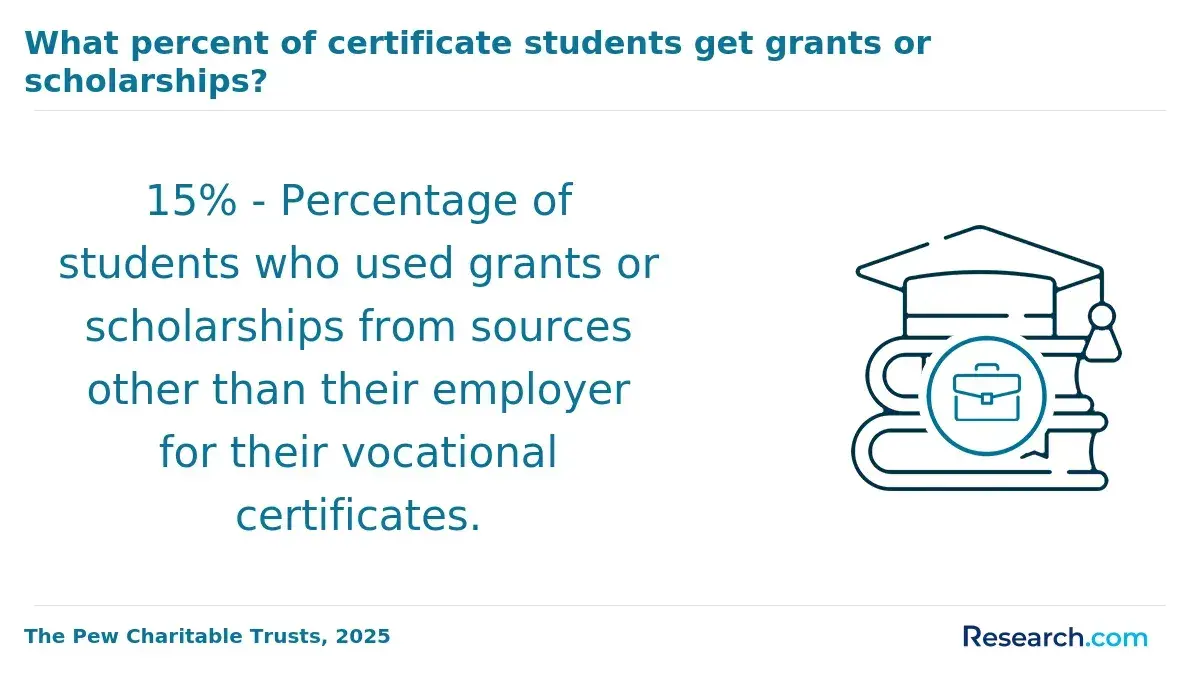
Financial aid availability-including federal loans, Pell Grants for qualified candidates, and merit-based scholarships requiring minimum GPAs-can reduce direct expenses but seldom cover full tuition. Employer tuition reimbursement plans can substantially offset costs, particularly for employees in sectors like finance, technology, or healthcare who receive $5,000 to $10,000 annually.
However, such benefits often demand stringent compliance with grade thresholds and payroll coordination, imposing a tacit operational tradeoff between work responsibilities and academic progress. For example, a data analyst transitioning to a business intelligence role within a Fortune 500 company might leverage combined employer tuition benefits with federal aid, covering upwards of 70% of expenses and minimizing loan dependency.
The business intelligence software market's significant growth-from $34.82 billion to a projected $63.76 billion by 2030-intensifies pressure on MIS programs to integrate practical BI tool training. Graduates from such curricula can avoid separate costly certifications, accelerating return on investment and aligning skillsets with employer demands.
What business intelligence roles can you pursue with an online MIS degree and what do they involve?
Choosing an online management information systems (MIS) degree signals readiness to engage with varied business intelligence (BI) roles that balance technical precision with strategic insight. Employers often seek candidates who not only interpret data but also build and manage its infrastructure-roles such as BI analysts, BI developers, data architects, and analytics managers reflect this spectrum.
For example, a BI analyst in healthcare might refine treatment protocols by analyzing patient outcomes, whereas a retail BI analyst focuses on inventory optimization using sales trends. Such roles demand proficiency in SQL, Python or R, and data visualization, alongside business acumen.
The practical differentiation lies in the technical-business tradeoff. BI developers and data architects require deep technical specialization to manage databases, ETL processes, and scalable infrastructures. Conversely, analytics managers must pair technical understanding with leadership skills to align BI initiatives with organizational goals under resource constraints.
Ongoing adaptation to evolving BI technologies is essential, especially when communicating findings to non-technical stakeholders-a frequent workplace necessity. Labor statistics reveal a median weekly wage of $2,657 for master's holders in computer and information systems management, indicating competitive financial returns linked to advanced MIS training.
- BI analysts convert complex data into actionable insights for diverse teams.
- BI developers focus on data collection and maintenance frameworks.
- Data architects design scalable data pipelines aligned with governance.
- Analytics managers integrate leadership with technical expertise.
What salary ranges and job outlook can online MIS graduates expect in business intelligence fields?
The salary range for online management information systems graduates focusing on business intelligence typically spans from $70,000 to $110,000 annually, with variations shaped by region, sector, and role specialization. Entry-level analysts, especially in healthcare or government, tend to earn near the lower spectrum. However, roles such as BI architects or analytics managers in finance or tech often command salaries exceeding $120,000.
Increased job postings mentioning business intelligence-up 21% year over year according to LinkedIn Economic Graph-highlight rising demand but also sharpen employer expectations for skills in advanced analytics, data visualization, and programming languages like SQL and Python. Graduates without direct IT experience, such as those pivoting from retail operations, may encounter initial salary compromises but can offset these through sector-specific knowledge married with targeted technical training.
- Real-world hiring favors candidates demonstrating applied project experience tied to their industry, not just theoretical study.
- Balancing work and upskilling is a common challenge in acquiring employer-valued credentials and building BI portfolios.
- Employment growth projections for data-related roles linked to business intelligence exceed average occupational trends by 15% through 2032.
Selection of an accredited online management information systems program that integrates practical BI applications and industry certifications is critical for navigating these tradeoffs and converting job growth into viable offers.
Which industry certifications complement an online MIS degree for advancing in business intelligence?
Employers across finance, healthcare, retail, and manufacturing increasingly demand verifiable expertise in business intelligence that extends beyond a Management Information Systems degree. Certifications such as Certified Business Intelligence Professional (CBIP), Certified Analytics Professional (CAP), and Microsoft Certified: Data Analyst Associate provide targeted skills in data modeling, analytics, and visualization that address documented talent shortages.
For instance, Gartner's 2025 survey reveals nearly half of organizations report insufficient in-house analytics capabilities, where certified professionals significantly differentiate themselves during hiring and promotion. CBIP emphasizes hands-on knowledge in data warehousing and compliance, fitting sectors managing complex regulated data systems.
CAP offers comprehensive analytics process training relevant to optimizing supply chains and predictive models. Microsoft's Data Analyst Associate certification targets users of Power BI and Azure, common tools in mid-sized enterprises focused on scalable reporting solutions. Each requires a 150+ hour study commitment, challenging candidates to balance preparation with career timing.
Salary premiums for certified professionals typically range from 15% to 25%, but candidates must consider that employers also value complementary skills in SQL, Python, and cloud platforms like AWS Certified Data Analytics. Pursuing multiple certifications aligned to specific industry BI toolchains can strategically address employer needs while bridging critical workforce gaps identified in government analytics workforce reports.
Other Things You Should Know About Management Information Systems
Yes, many 2027 online MIS programs require a capstone, practicum, or applied analytics project in the final term. These experiences often use real business data and may ask for 3 to 6 credit hours, plus a faculty supervisor or employer-approved project site.
Employers prioritize candidates who demonstrate applied skills over theoretical knowledge alone. Online MIS programs that integrate real-world case studies, current business intelligence tools, and capstone projects produce graduates who meet these expectations. When selecting a program, prioritize those with strong industry partnerships or internship opportunities, as many employers view these experiences as better indicators of readiness than coursework alone.
A business intelligence-centered program offers deep, specialized training in data analytics and decision support systems, which aligns well with technical roles in analytics. However, broader MIS programs provide wider exposure to IT management, systems analysis, and enterprise architecture, preparing graduates for supervisory or cross-functional roles. Professionals targeting strictly analytic roles should prioritize specialization, while those seeking versatility or leadership positions benefit more from a broad MIS curriculum.
The financial costs for enrolling in an online MIS program in 2027 vary widely. Tuition typically ranges from $15,000 to $40,000 depending on the university and program specifics. Prospective students should also consider additional expenses such as technology fees, textbooks, and other course materials that may increase overall costs.
References
- How Much Do Business Intelligence Analysts Earn? - Code Institute Global https://codeinstitute.net/global/blog/how-much-do-business-intelligence-analysts-earn/
- How Many Years Does a Master's Degree Take to Complete? https://www.scu.edu/business/blog/admissions/master-degree-years/
- Online vs. In-Person MBA: Benefits and Differences https://freemannews.tulane.edu/2025/11/04/online-vs-in-person-mba-benefits-and-differences
- Business Intelligence Jobs: Careers With A Data Degree | Walbrook https://www.walbrook.ac.uk/subjects/data-science/business-intelligence-jobs-career-path/
- Masters in Information Systems | Degree Information Systems | University of Phoenix https://www.phoenix.edu/online-information-technology-degrees/information-systems-masters-degree.html
- Online MIS Degrees | Accounting.com https://www.accounting.com/degrees/information-systems/masters/
- 2025's Best Online Master’s in Information Systems (MIS) Programs https://www.onlinemastersdegrees.org/best-programs/information-systems/
- MIS in USA: Top Universities, Eligibility, Cost, and Salaries | YMGrad https://ymgrad.com/article/mis-in-usa
- The Flexibility of an Online Masters - MSc/PhD Advice 19426 https://www.postgraduatestudentships.co.uk/advice/the-flexibility-of-an-online-masters/19426