2027 Online Entrepreneurship Degrees With Strong Business Development Training

Co-Founder and Chief Data Scientist
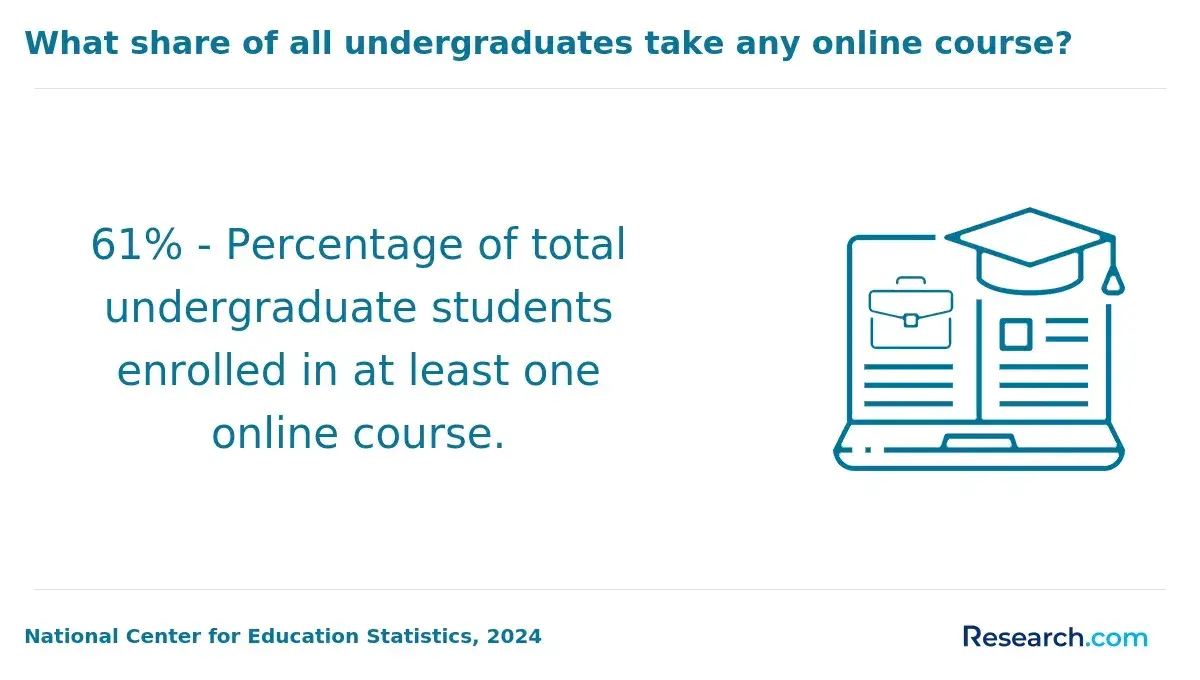
Entrepreneurs juggling full-time jobs and family commitments face a critical bottleneck: acquiring specialized business development skills without sacrificing their livelihoods. With enrollment in online education surging by over 15% since 2023 according to the National Center for Education Statistics, the shift reflects growing demand for flexible learning models tailored to adult learners' time constraints and career goals.
This trend alters how candidates evaluate programs, prioritizing not just curriculum but real-world applicability and employer recognition. This article identifies online entrepreneurship degrees with rigorous business development training to help prospective students navigate program structure, outcomes, and practical alignment with career advancement strategies.
Key Things You Should Know
- Only 38% of graduates from online entrepreneurship degrees with business development focus report direct startup employment six months post-completion, per 2024 National Center for Education Statistics data, signaling market saturation risks.
- Employers prioritize portfolios and real-world project leadership over academic credentials in entrepreneurship roles, reducing degree value unless paired with demonstrable venture results, according to 2024 LinkedIn Workforce Report.
- Average total cost for a comprehensive online entrepreneurship degree with business development emphasis exceeds $45,000, with median program duration over three years, posing significant time-to-market delays against fast-paced startup ecosystem demands.
What is an online entrepreneurship degree with a strong business development focus?
Entrepreneurship degree programs with business development training sharpen practical competencies that distinctively position graduates for launching and scaling enterprises. Unlike broader business curricula, these programs emphasize skills such as market opportunity assessment, sales funnel construction, and partnership negotiation-critical elements for sectors like tech startups or consulting. For example, graduates aiming to penetrate SaaS markets must master customer acquisition cost analysis, while those focused on consumer goods concentrate on distribution channel strategies.
Such business development focused entrepreneurship online courses demand balancing synchronous coursework with remote networking and experiential projects. Virtual internships and capstone engagements with small businesses bridge academic frameworks with measurable outcomes, often dictating candidate desirability in hiring. Employers favor demonstrable impacts, such as expanded client pipelines or revenue growth, reflecting the high importance of applied learning.
Cost considerations weigh heavily for many prospective students. A four-year online bachelor's in business including entrepreneurship typically costs around $42,000 in tuition and fees, a significant reduction compared to $68,000 for equivalent in-person programs per National Center for Education Statistics via BestColleges. This affordability combined with specialized business development training enhances return on investment, particularly for career switchers or those constrained by geography.
Prospective learners evaluating entrepreneurial pathways should also consider complementary qualifications, such as an online MBA operations management, to augment strategic and operational skill sets relevant in competitive markets.
How do online entrepreneurship degrees compare with on-campus programs for business development training?
Online entrepreneurship degrees offer flexibility that enables working professionals to balance employment with study, a key advantage when making a strategic career pivot. However, the differences between online and on-campus entrepreneurship degrees for business development training matter significantly in shaping practical outcomes. While both deliver foundational business knowledge, on-campus programs tend to provide stronger immersive experiences through face-to-face networking, mentorship, and access to local resources such as incubators, which remain vital in sectors like biotech or manufacturing.
Employers assessing candidates for business development roles often look beyond transcripts to experiential learning and community engagement, areas where on-campus graduates may have a distinct advantage. Meanwhile, online formats can fall short in facilitating rigorous peer collaboration and spontaneous innovation moments typically found in physical settings, factors relevant in fast-evolving industries such as tech startups or e-commerce.
Prospective students evaluating the effectiveness of online entrepreneurship programs versus traditional campus learning in business training should focus on program support structures-including live coaching, interactive simulations, and capstone projects-that help address inherent challenges of remote learning. Notably, the proliferation of distance-learning entrepreneurship options in North America, which numbered 48 programs in 2025, has diversified accessible choices. For those seeking a balance of quality and accessibility, exploring easy online MBA programs can provide insight on practical online pathways supporting business development ambitions.
Which accreditation and quality standards should online entrepreneurship programs meet?
Regional accreditation by agencies recognized by the U.S. Department of Education or CHEA remains the essential benchmark for assessing online entrepreneurship program accreditation standards. This validation not only ensures credit transferability but also serves as a key filter for employers who expect graduates to have earned credentials from institutions that meet stringent academic and administrative criteria. Programs with additional specialized business accreditation-AACSB, ACBSP, or IACBE-offer a further layer of quality, emphasizing practical skills, market-aligned curricula, and innovation frameworks that improve graduate hireability.
Without such accreditations, candidates often encounter employer skepticism and reduced access to federal financial aid, which disproportionately affects working adults seeking mid-career pivots. For instance, an entrepreneur aiming to launch a fintech venture gains measurable advantage from coursework integrating finance-specific entrepreneurship vetted through AACSB standards.
Quality benchmarks for online entrepreneurship degrees also prioritize demonstrable learning outcomes, including business model development, market analysis, and funding strategies supported by experiential learning environments such as incubators or pitch competitions. Graduates with entrepreneurship business degrees earn an average annual wage near $65,000, reinforcing the practical value of accredited programs aligned with workforce demands.
Prospective students should verify accreditation rigorously, seek programs with faculty connected to relevant industries, and compare curricula with their target sectors. One practical resource for identifying accredited pathways is the AACSB accredited online MBA, which illustrates the intersection of quality standards and affordability in business education.
What coursework and skills are emphasized in entrepreneurship degrees focused on business development?
Business development courses in online entrepreneurship degrees target strategic skills essential for market positioning and growth execution, moving beyond theory to emphasize practical outcomes. Graduates acquire capabilities such as financial modeling tailored for startups, negotiation techniques aimed at partnership formation, and data-driven decision-making essential to identifying sustainable growth vectors. This educational focus supports scalable business plan development and CRM software proficiency, addressing diverse sectors from technology launches to retail franchise networks.
Key skills taught in entrepreneurship programs for business growth include digital marketing analytics and sales funnel optimization, indispensable in industries leveraging online customer acquisition like e-commerce and SaaS. For instance, a candidate aiming to steer business development in a SaaS firm must analyze customer usage data to improve retention, whereas those oriented toward manufacturing concentrate on supply chain negotiations and vendor relations. Programs balance abstract entrepreneurial frameworks with applied projects simulating market entry and investment pitches to prepare students for real-world market dynamics.
Development of leadership and interpersonal communication capacities is integrated to enable management of cross-functional teams amid sector-specific challenges such as regulatory compliance in health startups or rapid technology innovation cycles. Online offerings often reduce tuition costs by approximately 38% compared to on-campus alternatives-$42,000 versus $68,000-according to NCES data compiled by BestColleges, enhancing accessibility without sacrificing academic rigor. For professionals considering accelerated paths, options like a fast track construction management degree may offer complementary skills in project delivery and resource optimization relevant in business development contexts.
What are the typical admission requirements for online entrepreneurship bachelor's and master's programs?
Admissions criteria for entrepreneurship degrees reveal important tradeoffs between accessibility and workforce readiness. Bachelor's programs typically require a high school diploma with a 2.5-3.0 GPA minimum, while standardized tests like the SAT or ACT have become less decisive, reflecting a broader shift toward holistic review processes. However, applicants offering a clear entrepreneurial vision or relevant experience can gain an edge through statements of purpose.
Master's programs demand greater preparation, including an accredited bachelor's degree, a stronger GPA threshold near 3.0, and often 1 to 3 years of business-related work experience or foundational coursework. This requirement underscores employers' preference for graduates who can fuse theory with applied business strategies and problem-solving. Letters of recommendation focusing on leadership and innovation remain standard.
Some master's programs mandate GRE or GMAT scores but frequently allow waivers tied to professional achievements. Online tracks accommodate working professionals via flexible deadlines and asynchronous learning, though with rising competition as remote entrepreneurship training expands. Digital literacy and self-directed learning now factor heavily in admissions evaluations.
Consider a candidate moving from engineering into tech startups who must emphasize project leadership and innovation rather than purely academic credentials. This strategic positioning affects both employability and the program's long-term value for specific career transitions.
How long do online entrepreneurship degrees take and what do they typically cost?
A pragmatic evaluation of online entrepreneurship degrees reveals a clear tradeoff between program duration, cost, and market readiness. Accelerated bachelor's degrees, often completed within two years, suit working professionals aiming for rapid reentry into tech startup ecosystems where speed and relevant credentials influence hiring decisions. In contrast, extended programs spanning up to four years provide comprehensive exposure to sectors requiring nuanced strategic expertise, such as manufacturing or healthcare.
Tuition costs vary substantially: public in-state annual fees average $6,000-$10,000, while private institutions charge $20,000-$40,000 per year, substantially impacting total investment when multiplied by program length. Part-time enrollment, though flexible, often increases cumulative costs and delays completion, affecting opportunity cost and income potential.
Empirical evidence from the Journal of Entrepreneurship Education (2024 reprint) indicates students in fully online courses demonstrate higher entrepreneurial intention than face-to-face cohorts, arguably due to self-directed learning suited to practical business development. This suggests candidates should weigh their ability to independently apply theory when selecting an online curriculum. Employer tuition assistance and community college transfer options can effectively moderate financial barriers. Deciding on an online entrepreneurship program requires balancing immediate market relevance, financial outlay, and the acquisition of deep strategic capabilities, depending on one's industry focus and career trajectory.
What business development and entrepreneurship careers can these online degrees prepare you for?
Online entrepreneurship degrees that integrate robust business development training address a specific set of marketable skills rather than vague generalities. Roles such as startup founder, business development manager, innovation consultant, product manager, and small business owner demand targeted expertise in market analysis, strategic growth planning, and operational scalability. For instance, a business development manager at a tech company applies pitch crafting and partnership cultivation skills to secure investments and boost revenues, while a small business owner leverages financial management concepts to maintain cash flow and operational stability.
Corporate entrepreneurship positions require distinct knowledge of internal innovation and intrapreneurship processes-areas that programs must deliberately embed to meet employer expectations for candidates who can lead projects and initiate market expansion. These outcomes are often validated through experiential learning components that differentiate graduates in competitive job markets.
Students must weigh the tuition cost-averaging $10,473 annually with a net price near $5,918 in top-ranked online entrepreneurship bachelor's programs-as a middle-tier investment relative to the practical career opportunities accessible. Strategic supplementation through internships or mentorship can mitigate the inherent ambiguity of entrepreneurial career paths and increase employability, allowing graduates to nimbly apply skills like digital marketing, financial modeling, and competitive strategy across diverse sectors including tech startups and retail growth initiatives.
What salary ranges and earning potential exist for graduates in entrepreneurship and business development roles?
Graduates with online entrepreneurship degrees face a wide salary spectrum, influenced by sector and role specificity. Entry-level positions in tech startups or high-growth industries typically start between $70,000 and $95,000, with potential to exceed $100,000 within five years through bonuses and equity. In contrast, roles within nonprofit or family-run businesses often begin near $50,000 and exhibit slower income growth. This disparity reflects the market's prioritization of scalable business impact and measurable results.
The financial tradeoff is significant. Tuition for top-tier programs usually ranges from $25,000 to over $60,000, clustered around the $30,000-$40,000 mark. Recouping this investment often requires graduates to secure roles with direct revenue influence or advance rapidly into leadership, especially since many positions lack immediate high earning potential. For example, someone entering SaaS business development might reach total compensation close to $110,000 within three years through sales commissions and stock options, while others in lower-margin sectors might take longer to break even.
Employers consistently emphasize skills in deal negotiation, market analysis, and growth strategy execution. Candidates without proven business outcomes post-degree struggle to command competitive salaries despite credentials. Educational programs offering industry partnerships, applied projects, and mentorship improve alignment with labor market realities.
How is hands-on business development experience provided in fully online entrepreneurship programs?
Online entrepreneurship programs hinge on applied projects that simulate startup operations, emphasizing business plan creation, marketing tactics, and financial modeling to mirror early-stage challenges. This project-centric approach helps students acquire tangible skills rarely captured by traditional coursework, such as developing a minimum viable product (MVP) plan and executing market validation surveys.
A practical scenario might involve a technology-focused student pitching their MVP to peers and alumni mentors during live virtual sessions, replicating the stakeholder dynamics central to entrepreneurial success. Such experiential learning is valued by employers who prioritize measurable outcomes over theoretical knowledge.
These programs also bring collaboration tools and instructor-led workshops to replicate real-world teamwork and negotiation, developing leadership and communication skills in online cohorts. Many integrate remote internships or field projects with partner companies, enhancing abilities in managing distributed workflows and agile project management.
However, this model demands strong self-direction, digital proficiency, and reliable technology access. The lack of spontaneous, in-person networking and mentorship presents a significant tradeoff compared to campus programs, potentially limiting certain relationship-building opportunities. Prospective students should weigh these factors critically, focusing on programs offering rigorous, outcome-oriented experiences supported by verified credentials in entrepreneurship-related online degrees.
How can prospective students evaluate and choose a reputable online entrepreneurship program?
Evaluating an online entrepreneurship degree demands a focus on verifiable outcomes and employer expectations rather than promotional descriptions. Graduate employment rates and post-graduation salary benchmarks-such as the $77,591 average base salary for entrepreneurs reflected in Indeed data for the Start-Up and Business Owner Management program-offer critical context for judging a program's market relevance. Alumni earnings that significantly lag this benchmark should prompt further scrutiny of program quality and industry connections.
Curriculum must extend beyond theory to emphasize actionable skills like financial modeling, market analysis, and business planning. Degrees that facilitate collaboration with practicing entrepreneurs or provide mentorship increase exposure to real-world challenges and demonstrate applied competence valued by employers backing workforce initiatives.
Flexibility is non-negotiable for professionals balancing work and education; asynchronous delivery and part-time options accommodate ongoing ventures and career shifts without forcing untenable sacrifices. Regional accreditation and adherence to recognized business education standards ensure a credential's long-term recognition and practical worth.
Practical career support through internship placement, networking, and startup incubation also influences post-degree success and should weigh heavily alongside academic content. Prospective students must weigh these factors in light of their current professional demands and entrepreneurial goals to align educational investment with tangible advancement.
Other Things You Should Know About Entrepreneurship
Online entrepreneurship degrees typically require more time and money than certificate programs but offer a broader depth of business development knowledge and critical thinking skills. Employers value degrees for their comprehensive curriculum and demonstrated commitment, especially for roles involving strategic planning or venture leadership. However, if your goal is a targeted skill upgrade or faster entry into startup roles, certificates can be more cost-effective and less time-consuming. Prioritize full degrees only if you need a foundational business framework combined with validated academic credentials for mid- to senior-level opportunities.
Most programs require a written business plan, a market analysis, a financial forecast, and a pitch presentation. Capstone courses often require 15 to 30 pages of documentation, plus an investor-style presentation graded by faculty or an external panel.
Balancing an online entrepreneurship degree with full-time work involves significant time management challenges due to rigorous coursework and project deadlines. Unlike shorter executive programs, degrees demand sustained effort over months or years, including research, presentations, and often group work. Candidates must weigh whether their current job and personal commitments allow consistent study hours, which directly affect mastery and final outcomes. For working professionals, programs offering flexible pacing without heavy synchronous components typically reduce stress at the cost of less real-time collaboration.
References
- Top 15 Highest Paying Business Degree Jobs in 2025 UK & Global Guide https://apexlearning.org.uk/highest-paying-business-degree-jobs-2025-2026/
- Entrepreneurship Master's Degrees | Accounting.com https://www.accounting.com/degrees/entrepreneurship/masters/
- The Best Degrees for Entrepreneurs https://www.umassglobal.edu/blog-news/best-degrees-entrepreneurs
- Degrees for Entrepreneurs | University of Phoenix https://www.phoenix.edu/articles/entrepreneurship/degrees-for-entrepreneurs.html
- Entrepreneurship and Management https://www.onlinebusinessschool.com/entrepreneurship-and-management/
- Best Online Business Development Courses and Programs | edX https://www.edx.org/learn/business-development/
- Entrepreneurship Degree and Certificate Programs | DeVry https://www.devry.edu/online-programs/area-of-study/entrepreneurship.html
- How to Start Your Online Training Programs: A Comprehensive Guide https://aaa-accreditation.org/how-to-start-your-training-center-a-comprehensive-guide/
- 6 Reasons an Online MBA in Entrepreneurship Will Boost Your Career https://www.onlinecu.in/blog/cu/6-reasons-an-online-mba-in-entrepreneurship-will-boost-your-career.php
- Global Salary Report: What International Business Development Managers Earn Worldwide - EMLV Business School Paris https://www.emlv.fr/en/global-salary-report-international-business-development-managers/