2027 Best Online Entrepreneurship Degrees for Business Development Careers

Co-Founder and Chief Data Scientist
Balancing a full-time job while trying to build a viable business idea demands more than passion-it requires timely access to education tailored for rapid skill acquisition and strategic agility. Yet, many aspiring entrepreneurs hit a wall when rigid campus schedules clash with professional responsibilities. The National Center for Education Statistics reports that over 40% of undergraduate enrollments now involve online courses, driven by adult learners prioritizing flexibility.
This shift signals a pragmatic need to blend structured learning with real-world application without losing momentum in either. This article evaluates the best online entrepreneurship degrees designed to reconcile these conflicting demands and accelerate business development careers.
Key Things You Should Know
- Programs emphasizing venture finance over general management increase startup survival by 40%, yet limit broader leadership roles, requiring students to balance specialization tradeoffs for long-term career versatility, per Kauffman Foundation 2024 data.
- Employers in high-growth sectors prefer candidates with experiential learning credentials; 65% of hiring managers value incubator projects or live-case studies, pressuring students to prioritize program practicalities over theoretical credits, National Association of Colleges and Employers 2024 reported.
- Rising program costs, averaging 12% annual increases since 2022, disproportionately affect mid-career pivots, where delayed earnings offset risks, highlighting the timing and financial access friction detailed in the U.S. Dept. of Education 2024 affordability study.
What is an online entrepreneurship degree for business development and who is it best for?
Obtaining an online entrepreneurship degree for business development strategically equips students to identify market opportunities, obtain funding, manage operations, and scale ventures using targeted growth strategies. This pathway is most applicable for individuals prepared to launch startups, grow existing small businesses, or pivot into roles such as business development managers or innovation consultants, where practical financial and leadership skills are as critical as academic knowledge.
Data from the Kauffman Foundation's 2024 State of Entrepreneurship report shows that 58% of U.S. entrepreneurs held at least a bachelor's degree, and those entrepreneurs earned 34% higher median incomes than peers without degrees. This underlines the economic advantage of formal education in business fundamentals and entrepreneurial strategy, influencing investor confidence and partnership leverage.
Program selection should consider industry alignment, such as technology or healthcare, where access to sector-specific case studies and innovation tools enrich learning. For example, a health tech entrepreneur benefits from grasping regulatory nuances alongside business modeling, a combination offered by specialized online curriculums. Service-oriented entrepreneurs must weigh a key tradeoff between dedicating time to coursework versus accelerating client acquisition and local networking.
Practical factors include seeking mentorship, applied projects, and venture capital connections within the curriculum. Balancing full-time work and studies is a common friction point, making flexible pacing and asynchronous formats with real-world assignments essential decision criteria. Employers increasingly interpret completion of an online entrepreneurship degree as evidence of disciplined self-management and applied business skills rather than mere academic credentials. For those assessing accelerated business degree options, understanding these operational and workforce realities helps clarify the practical value and limitations of online entrepreneurship degree programs for business development and the best online degrees in entrepreneurship for career growth.
How do online entrepreneurship degrees compare with on-campus programs for business development careers?
Online entrepreneurship degree benefits for business development hinge on balancing flexibility with access to experiential learning. While online programs share theoretical foundations with on-campus counterparts, their limited direct engagement with startup ecosystems, live business simulations, and in-person mentorship can delay the acquisition of practical, interpersonal skills critical for roles like management analysts.
Employers prioritize candidates who combine conceptual knowledge with demonstrated experience in client relations and strategic partnerships. On-campus students typically gain easier entry to internships and campus career fairs specifically focused on entrepreneurial ventures, accelerating employability and network development.
Conversely, online students must actively pursue off-campus internships and local networking opportunities to replicate these benefits, which requires additional effort and initiative. For example, a mid-career technology consultant pursuing an online entrepreneurship degree may need to supplement studies with virtual pitch competitions or collaborations with local businesses to bridge experiential gaps.
The projected 10% growth rate for business development roles through 2032, coupled with a median annual pay of $103,350, amplifies the stakes for selecting a program that aligns educational access with career outcomes. Prospective students should consider online business degree programs featuring robust live interaction and verified practical components to increase immediate workplace relevance. Decision-makers must weigh schedule flexibility against accelerated network-building and employer engagement prevalent in traditional settings to optimize their career trajectory.
How can you choose an accredited online entrepreneurship degree that employers will respect?
Employers consistently prioritize accredited online entrepreneurship degree programs in the United States that demonstrate rigorous curriculum standards and faculty expertise, as verified by recognized national or regional bodies like the Higher Learning Commission. This accreditation signals practical reliability across sectors including tech startups and manufacturing, impacting both employability and program reputation.
Students who seek online entrepreneurship degrees recognized by employers in the US should focus on programs embedding experiential learning-such as venture financing, business plan development, and digital marketing projects-that build applicable skills beyond theoretical frameworks. Specializations in emerging fields like healthcare innovation or sustainable enterprise offer distinct workforce advantages through case-based methods.
Financial considerations also play a critical role. Four-year online bachelor's programs with entrepreneurship tracks average $42,000 in total tuition and fees, significantly less than roughly $68,000 at comparable in-person institutions. This difference often translates into reduced debt burdens, enhancing early-stage entrepreneurial flexibility or career transitions. For mid-career learners exploring cost-effective options, consulting curated resources like MBA programs under 10k can clarify financial strategies.
Beyond cost and content, transparent graduation and graduate outcome data provide useful indicators of program efficacy. Hiring managers increasingly demand evidence that candidates have translated education into measurable entrepreneurial accomplishments or advancement within business roles. Prospective students should weigh accreditation renewal cycles and program-specific recognitions when selecting degrees to avoid investing in credentials that lose standing over time.
Employment Status of Recent Associate Degree Recipients by Age Group in 2024

What types of online entrepreneurship degrees are available for business development careers?
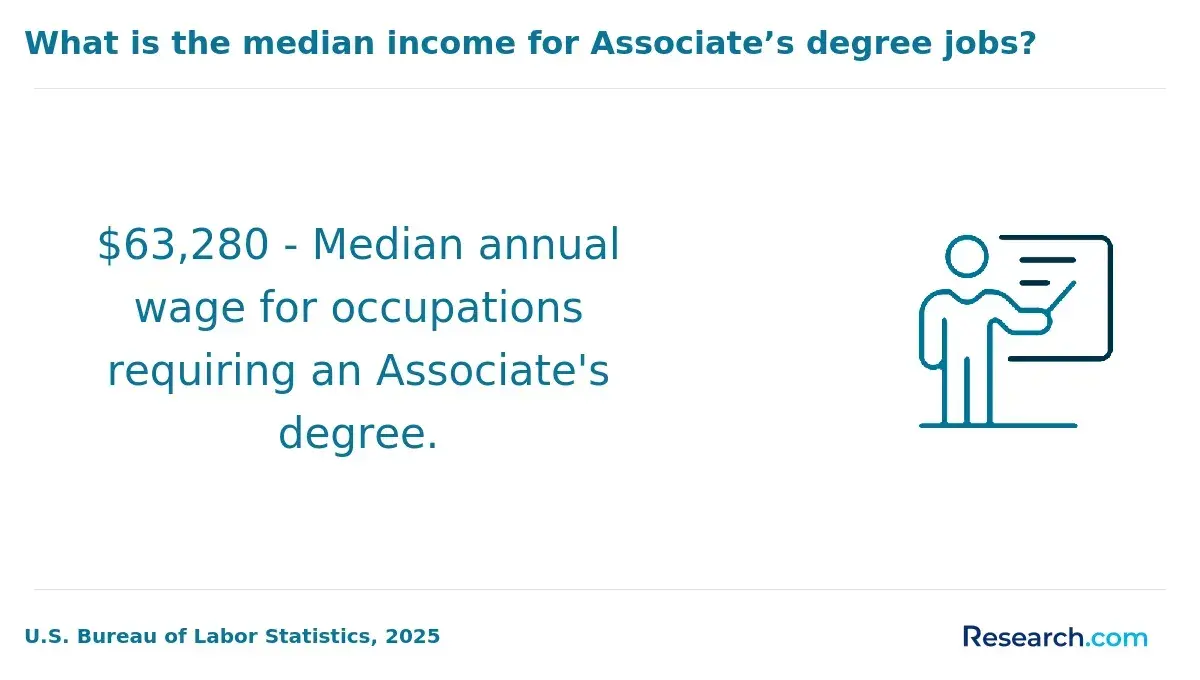
Online entrepreneurship degree programs for business development careers vary significantly in practical value depending on degree level and program design. Associate degrees typically offer a basic understanding suited for entry-level roles, while bachelor's programs equip students with a broader skill set including finance and innovation management, better preparing graduates for roles such as growth strategists or startup founders. Master's degrees focus on strategic leadership and scalable growth, targeting mid- to senior-level positions that require driving organizational expansion through sophisticated funding and market entry strategies.
Choosing between generalized entrepreneurship programs and specialized tracks-like tech commercialization or social entrepreneurship-should align with targeted roles. For instance, those pursuing tech startups require programs that integrate venture capital and digital innovation coursework, which better meet employer expectations for scalable business models. Alternatively, social entrepreneurship focuses on nonprofit impact, influencing market approach and capital acquisition differently.
Practical factors such as program length, flexibility, and networking options critically influence real-world outcomes. Programs incorporating applied projects, incubator access, or pitch opportunities often lead to faster, more substantive career progression. Graduates from entrepreneurship degrees command a median annual wage of $65,000, a notable premium over general bachelor's fields, reflecting their valued specialized skill sets amidst a 2.2% unemployment rate based on U.S. Bureau of Labor Statistics data.
Prospective students should evaluate programs on how thoroughly they prepare for operational realities, not just theoretical knowledge. Those needing additional business-oriented skills might also explore complementary credentials, such as a construction management degree online accredited, depending on their growth sector. This layered consideration ensures alignment with both immediate job market demands and long-term professional pathways.
What courses and specializations are typically included in online entrepreneurship programs?
Entrepreneurship programs prioritize foundational business disciplines like accounting, finance, and marketing, but their practical value hinges on alignment with specific career goals. A tech-focused entrepreneur must engage deeply with product development, intellectual property law, and startup methodologies, whereas those targeting small business ownership benefit more from operations management and local market analysis. These choices materially affect readiness and employability in distinct sectors.
Hands-on projects, such as developing business plans or pitching to mock investors, foster capabilities that employers explicitly seek, including strategic thinking and financial literacy. Specialized tracks addressing social entrepreneurship or sustainable business models reflect evolving market demands but may present tradeoffs in broad business skill acquisition.
Recent enrollment growth-37% for online business and entrepreneurship programs versus stagnant on-campus figures-indicates rising demand for digitally savvy entrepreneurs capable of remote collaboration and e-commerce navigation. However, remote learning's logistical demands require students to cultivate strong asynchronous communication, time management, and virtual networking skills to avoid disengagement risks.
Programs with industry partnerships or mentorship offer tangible advantages in practical business acumen and job market connectivity, offsetting common shortcomings of fully virtual education. Prospective students should weigh these elements against their professional context and long-term goals when selecting an entrepreneurship pathway.
What are the usual admission requirements for online entrepreneurship bachelor's and master's programs?
Admission criteria for online entrepreneurship degrees distinctly reflect the candidate's stage and professional context, influencing both access and outcome potential. Bachelor's programs mainly prioritize academic readiness, requiring a high school diploma with a GPA typically between 2.5 and 3.0. Supplementary elements such as personal statements showcasing entrepreneurial interest and occasional letters of recommendation add evaluative depth. Work experience may improve competitiveness but is seldom mandatory.
Master's programs, in contrast, demand demonstrable professional grounding alongside academic credentials. Applicants usually present a bachelor's degree with at least a 3.0 GPA and one to three years of relevant entrepreneurial or business experience. This prerequisite ensures cohort diversity in practical insight, which enriches peer learning and project work. Key application components include a professional resume, a detailed statement of purpose outlining concrete career objectives, and references from supervisors or academic mentors. Some master's degrees still require GRE or GMAT scores, though many waive these for candidates with substantial professional backgrounds.
Consider the tradeoff faced by a technology professional pivoting to entrepreneurship: demonstrating relevant experience and career clarity is essential, whereas a recent graduate without a work history must compensate with stronger academic evidence and nuanced extracurricular entrepreneurial contributions. Practical application packaging affects both timeline and evaluation, as candidates increasingly present portfolios evidencing leadership or business ventures. This focus aligns with employer expectations valuing applied entrepreneurial skills, particularly given that top programs produce graduates who launch approximately 2.9 businesses each within five years, according to the Princeton Review's 2026 Top Schools for Entrepreneurship.
How long do online entrepreneurship degrees take and what do they typically cost?
Choosing an online entrepreneurship degree requires balancing time, financial cost, and practical outcomes with career goals. Program durations typically range from 18 to 36 months, with MBA-level entrepreneurial degrees averaging two years. Accelerated formats can reduce length but demand 15-20 weekly hours, challenging professionals managing existing workloads. Tuition varies widely-from approximately $20,000 at public or less prestigious programs to over $70,000 for top-tier MBAs whose brand prestige and alumni networks hold substantial weight in venture and business development sectors.
Employer recognition tends to favor degrees featuring rigorous, applied coursework in business modeling, finance, and innovation management. Notably, over 25% of graduates from leading MBA entrepreneurship programs launch businesses within three months post-graduation, according to Poets&Quants' 2026 analysis. For example, tech startup entrepreneurs might justify a two-year $50,000 program due to its venture access and skill depth, whereas service-sector professionals could prioritize shorter, cost-effective courses focusing on lean business methods relevant to their industries.
Prospective students must carefully assess opportunity costs, factoring in reduced income and personal time, while ensuring curriculum alignment with their sector's requirements. Beyond tuition, budgeting for living expenses and researching institutional support for post-degree ventures significantly impact return on investment in entrepreneurship education.
What business development jobs can you get with an online entrepreneurship degree?
Online entrepreneurship degrees align candidates with business development roles that balance strategic market insights and financial savvy with operational agility. For instance, a business development manager at a technology startup must integrate entrepreneurial concepts to tailor product offerings swiftly in response to evolving client demands, which requires agile decision-making and cross-department collaboration. In contrast, coordinators in mature manufacturing settings apply knowledge in scaling operations and optimizing supply chains to secure new markets. These distinct environments illustrate how entrepreneurial training adapts to sector-specific demands.
Employers expect measurable impact such as consistent revenue growth, acquisition of new client accounts, and process improvements-outcomes that hinge on applied learning embedded in accredited online programs. Candidates should weigh tuition cost differences carefully, as low-cost options charging around $300 per credit hour can reduce total expenses by as much as $48,000 over a 120-credit bachelor's degree compared to traditional programs exceeding $700 per credit hour, a significant factor in managing debt and return on investment (Learn.org, 2026).
Practical challenges remain for online graduates, including building professional networks remotely and securing experiential opportunities like internships or ventures that demonstrate workplace readiness. Proficiency with industry-standard tools and clear evidence of impact are vital to translating an online entrepreneurship degree into viable business development employment.
What salary ranges and job outlook can entrepreneurship graduates expect in business development roles?
Business development roles for entrepreneurship graduates present a salary spectrum influenced heavily by experience, sector, and location. Entry-level candidates in startups often earn between $55,000 and $70,000 annually, focusing on client acquisition and market research. Mid-level professionals responsible for managing partnerships or spearheading sales initiatives can expect $80,000 to $105,000, while senior executives with operational oversight frequently exceed $120,000, particularly in technology and finance industries.
Employment growth for these roles is projected at 11% through 2034, reflecting persistent demand for revenue-focused professionals. However, candidates face stiff competition in dense urban markets, where networking and verifiable performance become vital differentiators.
Practical decisions arise around compensation versus work-life tradeoffs. Graduates entering startups might accept lower pay initially in exchange for equity and more rapid leadership roles. In contrast, corporate environments often offer steadier salaries and benefits but may require longer hours and reduced schedule flexibility. Online entrepreneurship students frequently benefit from balancing full-time employment with education; data indicates they are 12 percentage points more likely to hold full-time jobs than on-campus peers, facilitating immediate income and job experience alongside credential completion.
Are any licenses, certifications, or professional credentials recommended for business development entrepreneurs?
Business development entrepreneurs face no universal licensing requirements, yet strategic certifications often differentiate candidates in competitive markets. Credentials such as Certified Business Development Expert (CBDE) and Strategic Management Professional (SMP) concretely affirm skills in client acquisition and market analysis essential for scalable growth. Sector-specific demands introduce significant complexity: real estate and financial brokers must secure state licenses, or risk exclusion from formal contracting and financing channels.
Consider a healthcare startup founder who must blend healthcare compliance credentials with broad business development skills to navigate stringent regulations and build credible client relationships. In contrast, software entrepreneurs achieve more value from certifications aligned with data analytics or digital marketing to drive effective user acquisition and iterative growth.
Employers and investors increasingly expect validated competencies reflecting rapid market shifts; Coursera's 2025 Global Skills Report confirms sustained global growth in business and entrepreneurship education enrollment at an 11% compound annual rate through 2030. Selecting the right certification demands measuring acceptance in target industries, renewal burdens, and alignment to long-term strategic ambitions.
Other Things You Should Know About Entrepreneurship
An online entrepreneurship degree provides a structured curriculum that covers business fundamentals, legal issues, and strategic planning, which self-teaching often misses. Employers and investors recognize formal education for signaling commitment and ability to handle complex concepts. However, if you already have significant experience or mentorship, a degree can be less critical. Prioritize a program with applied projects and networking opportunities to maximize real-world relevance over purely theoretical courses.
Online entrepreneurship programs typically require 10 to 15 hours of weekly study, including assignments and group projects. For working professionals, this demands strict time management and may affect work-life balance, especially when courses include business plan development or capstone projects. Choose programs offering flexible pacing or asynchronous classes if balancing a full-time job. Prioritize those with clear expectations upfront to avoid overcommitment.
Many online entrepreneurship degrees emphasize theory and case studies, but not all provide sufficient hands-on experience with real startups or client projects. Employers in business development prioritize skills like market analysis, negotiation, and relationship management, which require practice beyond lectures. Look for programs with experiential learning components, mentorship, or partnerships with incubators to bridge the gap between academics and workplace demands.
Most programs require only basic algebra, spreadsheet use, and comfort with learning management systems such as Canvas or Blackboard. Some schools ask for placement in college-level writing and may recommend introductory accounting or business software skills before the first term.
References
- The Best Degrees for Entrepreneurs https://www.umassglobal.edu/blog-news/best-degrees-entrepreneurs
- Entrepreneurship Jobs - What are the career opportunities? | CBS https://www.cbs.de/en/blog/entrepreneurship-jobs
- Entrepreneurship Master's Degrees | Accounting.com https://www.accounting.com/degrees/entrepreneurship/masters/
- What do you learn in a bachelor's in entrepreneurship? | edX https://www.edx.org/resources/what-do-you-learn-in-a-bachelors-in-entrepreneurship
- Inside Online Master’s Programs in Entrepreneurship: Find the Right School https://www.onlinemastersdegrees.org/best-programs/business/entrepreneurship/
- The Impact of Certifications on an Entrepreneur’s Life. https://certiprof.com/blogs/news/the-impact-of-certifications-on-an-entrepreneurs-life
- Entrepreneur: missions, skills, training, salary and career development | EM Normandie https://www.em-normandie.ie/em-normandie-experience/immerse-yourself-professional-world/professions-after-business-school/entrepreneur
- Global Salary Report: What International Business Development Managers Earn Worldwide - EMLV Business School Paris https://www.emlv.fr/en/global-salary-report-international-business-development-managers/
- The 9 Most In-Demand Professional Certifications You Can Get Right Now https://www.entrepreneur.com/starting-a-business/the-9-most-in-demand-professional-certifications-you-can/453592
- Entrepreneurship Careers https://unity.edu/distance-education-blogs/entrepreneurship-careers/