2027 Best Online Bachelor's in Clinical Psychology With Rolling Start Options

Co-Founder and Chief Data Scientist
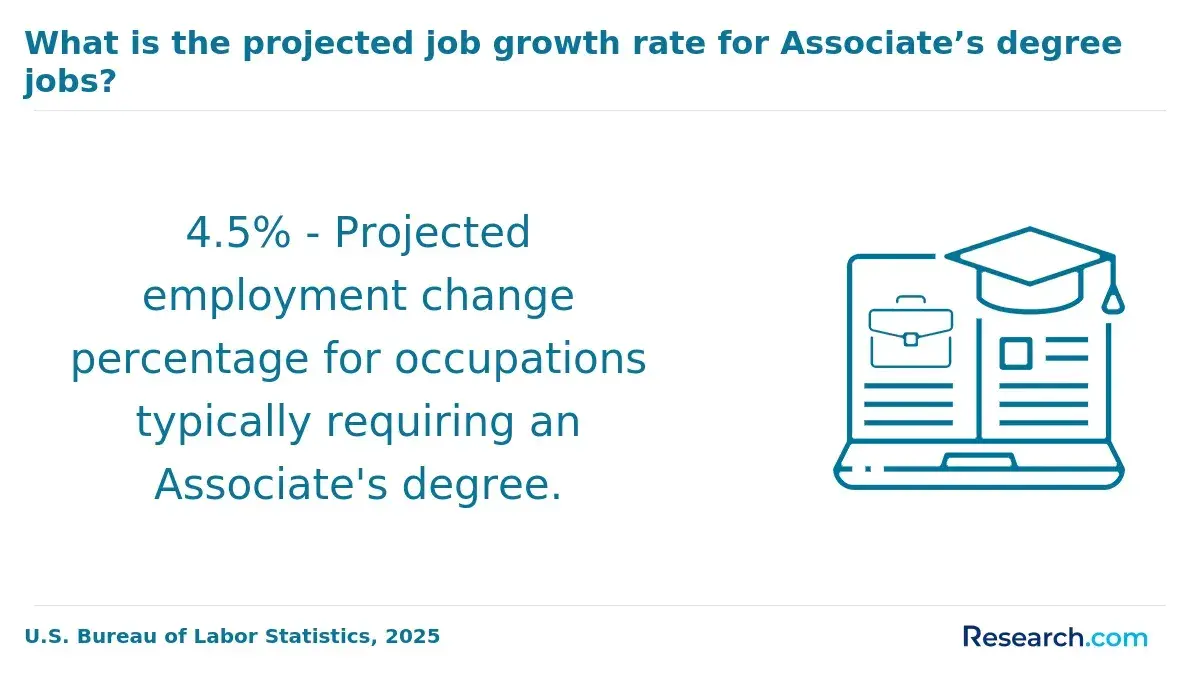
Choosing an online bachelor's in clinical psychology is a timing and career decision, not just a major choice. Demand for mental health support remains strong: the U. S. Bureau of Labor Statistics projects 19% growth for substance abuse, behavioral disorder, and mental health counselors from 2023 to 2033, much faster than average. This guide is for students who want flexible start dates, career-relevant psychology training, and a realistic view of what a bachelor's degree can and cannot do. You'll learn how to compare programs, avoid accreditation mistakes, estimate costs, and plan your next step.
Key Things You Should Know
- The best online bachelor's options with rolling starts are regionally accredited, accept transfer credits, publish total program costs clearly, and explain whether courses are asynchronous, synchronous, or mixed.
- A bachelor's in clinical psychology can prepare students for entry-level behavioral health, case management, research support, and human services roles, but independent clinical licensure usually requires graduate education.
- Cost and time vary most by transfer credits and enrollment pace; the 2024-25 federal undergraduate Direct Loan interest rate of 6.53% makes total borrowed cost as important as tuition rate.
What is an online bachelor's in clinical psychology and how does it prepare students?
An online bachelor's in clinical psychology is an undergraduate degree focused on human behavior, mental health, assessment, research methods, and the social factors that affect emotional well-being. At the bachelor's level, "clinical" usually means the curriculum introduces psychopathology, counseling concepts, crisis response, ethics, and lifespan development rather than preparing students to diagnose or treat clients independently.
The strongest programs help students build a foundation for two possible outcomes: entry-level work in behavioral health or preparation for graduate study. A good online program should therefore combine psychology theory with applied assignments, research literacy, communication practice, and exposure to real-world service settings.
This degree tends to fit students who want a mental health-focused major but are not yet ready for a master's or doctoral program. It may also fit working adults who need online coursework, parents who need flexible scheduling, or transfer students who want to finish a bachelor's without relocating.
The table below summarizes how common bachelor's-level psychology options differ. This matters because "clinical psychology" is not the only route into mental health-related work, and the best choice depends on whether your priority is broad psychology training, applied human services, or a future counseling license.
| Degree focus | Best fit | Typical emphasis | Important limitation |
| Clinical psychology | Students interested in mental health, assessment concepts, and graduate clinical pathways | Abnormal psychology, counseling theories, ethics, research, human development | Usually not enough for independent clinical practice |
| General psychology | Students who want broad flexibility across business, education, research, or social services | Cognition, personality, social psychology, statistics, research methods | May include fewer applied mental health courses |
| Counseling or human services | Students who want applied support roles soon after graduation | Case management, helping skills, community resources, crisis support | May be less research-intensive than psychology majors |
| Social work | Students interested in social services, advocacy, and potential MSW pathways | Policy, welfare systems, field education, client advocacy | Licensure rules differ from psychology and counseling |
How do rolling start dates work for online clinical psychology bachelor's programs?
Rolling start dates allow students to begin at multiple points during the year instead of waiting for a traditional fall or spring semester. For online clinical psychology programs, this can be especially helpful if you are transferring credits, returning after a break, changing careers, or trying to align school with work and family responsibilities.
Rolling starts are not all the same. Some schools use short terms every five to eight weeks, while others use monthly starts for selected courses but not every requirement. Before you enroll, confirm whether the psychology major courses, general education classes, and electives are all available on the schedule you need.
The table below explains the most common rolling-start models and how each affects pacing. Use it to identify whether a program's calendar truly supports your timeline or only offers limited start flexibility.
| Start model | How it usually works | Best for | Trade-off to check |
| Five- to eight-week terms | Courses open several times per year in accelerated sessions | Motivated students who want steady progress | Shorter terms can feel intense, especially with statistics or writing-heavy courses |
| Monthly starts | Selected online courses begin almost every month | Students who need to begin quickly | Upper-division clinical psychology courses may not be offered monthly |
| Multiple semester starts | Students can start in fall, spring, or summer | Students who prefer a familiar academic calendar | Less flexible than true rolling admission |
| Self-paced or competency-based terms | Students move through approved coursework at variable speed within a term | Experienced adult learners with strong time management | May not fit students who need frequent instructor deadlines |
When comparing programs, ask admissions advisors practical scheduling questions before submitting a deposit. The answers can reveal whether a program is flexible in name only or actually built for online learners.
- Ask how many start dates are available for the psychology major, not just for general admission.
- Confirm whether transfer credit evaluations are completed before the next start date.
- Ask whether required courses are offered every term or only once or twice per year.
- Check whether accelerated courses require synchronous meetings, proctored exams, or fixed weekly deadlines.
- Request a sample degree plan showing your expected graduation date based on your transfer credits and weekly availability.
Are online bachelor's in clinical psychology degrees respected and properly accredited?
Online clinical psychology bachelor's degrees can be respected when they come from properly accredited institutions and carry the same academic standards as campus programs. Employers and graduate schools generally care less about whether the coursework was online and more about institutional accreditation, curriculum quality, grades, field experience, recommendations, and readiness for advanced study.
For bachelor's degrees, the most important accreditation issue is institutional accreditation from an agency recognized by the U.S. Department of Education or the Council for Higher Education Accreditation. Programmatic accreditation is less common at the undergraduate psychology level than it is in counseling, social work, or doctoral psychology, so students should not assume that the absence of a psychology-specific accreditor automatically means a program is weak.
A common mistake is choosing an online psychology degree because it advertises mental health career outcomes without explaining licensure limits. Another mistake is confusing bachelor's psychology programs with graduate counseling programs. If your long-term goal is professional counseling, it is useful to understand how CACREP accredited schools fit into master's-level counseling pathways, because CACREP is not usually the accreditation standard for bachelor's clinical psychology degrees.
Use this accreditation checklist before applying. It focuses on the questions that affect transferability, graduate admission, financial aid eligibility, and employer confidence.
- Verify institutional accreditation through official U.S. Department of Education or CHEA-recognized sources, not only the school's marketing page.
- Confirm that the online degree transcript does not carry a different or less recognized credential than the campus version.
- Ask whether credits are likely to transfer to regionally accredited graduate programs.
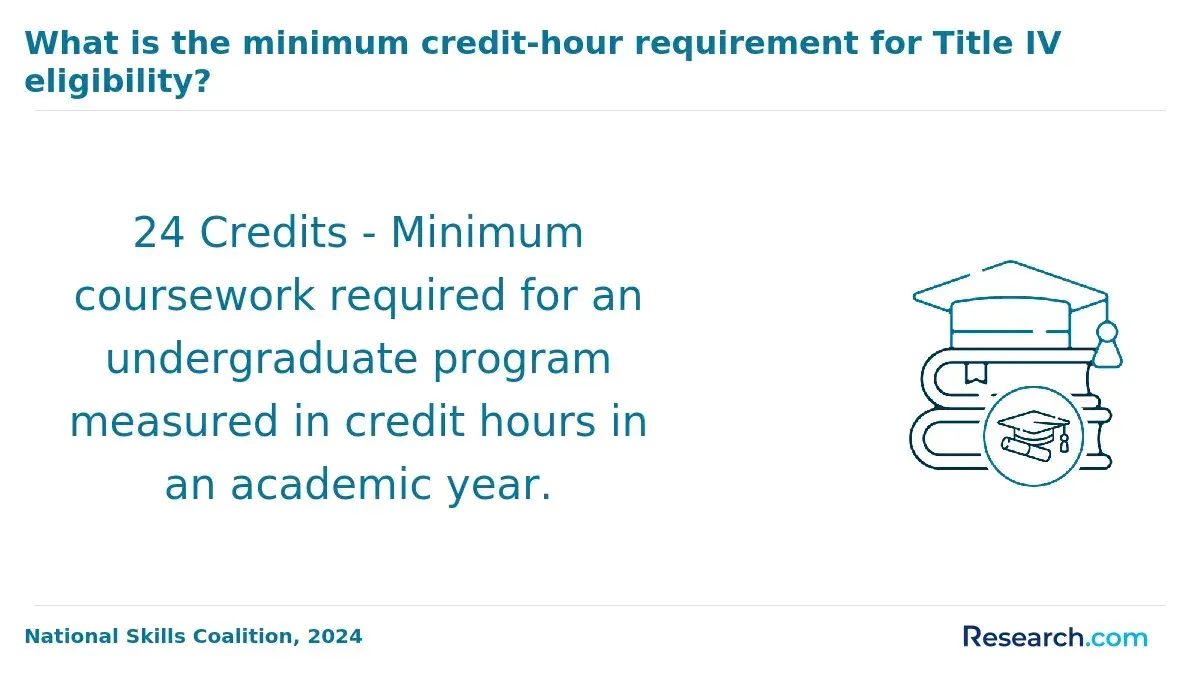
- Check whether federal financial aid is available for the program, if you plan to use aid.
- Review graduate school prerequisites if you plan to pursue counseling, social work, school psychology, or doctoral psychology later.
What admission requirements and prior education do online clinical psychology programs expect?
Admission requirements for online bachelor's in clinical psychology programs are usually accessible, especially for adult learners and transfer students. Most schools require a high school diploma or GED for first-year admission, while transfer applicants submit college transcripts from every institution attended. Selective programs may also ask for a minimum GPA, personal statement, or prerequisite coursework.
Rolling-start programs often move quickly, so the practical challenge is not always being admitted; it is getting all documents reviewed before the term begins. Transfer students should pay close attention to credit limits, grade requirements, and whether psychology courses taken elsewhere apply to the major or only count as electives.
The table below outlines typical applicant profiles and what each group should prioritize. This helps you avoid applying to a program that technically admits you but does not fit your academic standing or graduation timeline.
| Applicant type | Common requirements | What to check before enrolling |
| First-time college student | High school diploma or GED, application, transcripts, placement or readiness review | General education requirements, writing support, math or statistics preparation |
| Transfer student | Official college transcripts, minimum transferable GPA, course-by-course credit evaluation | How many credits apply to the major and how many become unused electives |
| Returning adult learner | Prior transcripts, possible readmission documents, résumé or work history at some schools | Credit for prior learning, schedule flexibility, academic support after time away |
| Associate degree graduate | Completed associate transcript, transfer articulation review | Whether the associate degree satisfies lower-division general education requirements |
Before you apply, prepare the documents and questions that influence both admission and cost. This sequence can help you compare programs on equal terms.
- Collect all prior transcripts, even from colleges where you completed only one course.
- Ask for an unofficial transfer estimate before paying enrollment fees, if the school offers one.
- Confirm whether a statistics course is required early in the major and whether tutoring is available.
- Check whether admission to the university automatically means admission to the psychology major.
- Ask whether any practicum, internship, or service-learning requirement can be completed near your home.
How long does an online clinical psychology bachelor's take, and what does it cost?
Most bachelor's degrees require about 120 semester credits, so the timeline depends heavily on how many credits you bring in and how many courses you can handle per term. A first-time full-time student may need about four years, while a transfer student with an associate degree may finish in about two years if major requirements line up well. Part-time students often take longer, but that may be the better choice if it prevents burnout or failed courses.
Cost is more than tuition. Students should compare technology fees, online course fees, books, proctoring charges, transfer credit acceptance, and whether summer enrollment changes financial aid eligibility. The 2024-25 federal undergraduate Direct Loan interest rate is 6.53%, which means borrowing more than necessary can raise the real cost of the degree over time.
The table below shows the major cost drivers to compare. It is more useful than looking at tuition alone because two programs with similar per-credit rates can produce very different total bills.
| Cost factor | Why it matters | Question to ask |
| Transfer credit policy | Accepted credits can reduce both time and tuition | How many credits will count toward the degree and the major? |
| Per-credit tuition | Online programs often charge by credit | Is tuition the same for in-state, out-of-state, and online students? |
| Fees | Technology, graduation, course, or proctoring fees can add up | Can the school provide a full cost sheet? |
| Enrollment pace | Full-time study may finish faster, while part-time study may be more sustainable | How many credits are realistic with my work schedule? |
| Books and materials | Psychology courses may use textbooks, assessment manuals, or digital platforms | Are open educational resources or inclusive-access materials used? |
| Financial aid and employer support | Grants, scholarships, and tuition benefits can reduce borrowing | What aid is available for online and part-time students? |
To estimate your real cost, ask each school for the same information and calculate a total completion price rather than comparing advertised tuition. Include these items in your estimate:
- Remaining credits after transfer evaluation
- Total tuition for those credits
- Mandatory online, technology, course, and graduation fees
- Estimated books and learning materials
- Expected grants, scholarships, tuition reimbursement, or military education benefits
- Amount you would need to borrow and the interest rate attached to that borrowing
What core courses and specialization options are included in clinical psychology curricula?
Clinical psychology curricula usually start with broad psychology foundations, then move into research, assessment concepts, abnormal behavior, counseling theories, ethics, and applied mental health topics. The strongest online programs do not simply offer interesting electives; they build a coherent sequence that prepares students to read research, communicate professionally, and understand the limits of bachelor's-level practice.
Core courses often include general psychology, developmental psychology, abnormal psychology, statistics, research methods, personality theory, social psychology, biological psychology, psychological testing, ethics, and multicultural psychology. Many programs also include a capstone, senior project, or internship-style experience, although online students should confirm how field-based requirements are arranged.
Specialization choices matter because they can influence internships, entry-level job applications, and graduate school readiness. For example, a student interested in couples and family systems may eventually compare a marriage and family counseling degree online, while a student interested in crisis work may prioritize trauma, addiction, or community mental health electives.
The table below connects common course areas to the skills they help develop. This can help you distinguish a rigorous clinical psychology curriculum from a general psychology program with only one or two mental health electives.
| Curriculum area | Examples of courses | Skill developed |
| Clinical foundations | Abnormal psychology, counseling theories, psychopathology | Understanding symptoms, treatment concepts, and referral boundaries |
| Research and data | Statistics, research methods, psychological measurement | Reading studies, evaluating evidence, and using data responsibly |
| Human development | Lifespan development, child psychology, aging | Recognizing how needs change across life stages |
| Social and cultural context | Multicultural psychology, social psychology, community psychology | Understanding identity, environment, stigma, and systems of care |
| Applied practice preparation | Ethics, crisis intervention, case management, capstone | Professional judgment, communication, and service coordination |
When reviewing electives, avoid choosing only the topics that sound interesting. Instead, align electives with a concrete next step:
- Choose addiction, crisis, and community mental health courses if you want entry-level behavioral health work.
- Choose statistics, research methods, and lab-based electives if you want research assistant or graduate research opportunities.
- Choose child, adolescent, and family-focused courses if you plan to work in youth services or pursue family counseling later.
- Choose forensic, trauma, or correctional psychology electives if you are considering justice-related mental health pathways.
- Choose multicultural counseling and ethics courses if you want stronger preparation for graduate clinical programs.
How do online clinical psychology programs compare to campus-based options for flexibility?
Online programs usually offer more scheduling flexibility than campus programs, but flexibility is not automatic. Some online bachelor's programs are fully asynchronous, while others require live class meetings, group projects, proctored exams, or fieldwork during business hours. The best format depends on your learning style, work schedule, location, and need for direct support.
Online learning can be a strong fit for students who are self-directed and need to keep working while studying. Campus learning may be better for students who want in-person research labs, local networking, structured routines, or easier access to faculty. Neither format is universally better; the right choice is the one you can complete successfully while meeting your career or graduate school goals.
The table below compares online and campus-based clinical psychology bachelor's programs across practical decision points. Use it to identify which format reduces friction for you rather than assuming online is always easier.
| Decision factor | Online program | Campus program |
| Schedule | Often asynchronous or evening-friendly, especially in rolling-start programs | More likely to require daytime attendance on a fixed semester schedule |
| Peer interaction | Discussion boards, video meetings, group projects, virtual advising | In-person classes, student organizations, labs, and campus events |
| Faculty access | Email, video office hours, learning platform messaging | Office visits, lab work, hallway conversations, campus advising |
| Field experience | May be completed locally if approved by the school | May use established campus-community placement networks |
| Best fit | Working adults, transfer students, caregivers, students far from campus | Students seeking face-to-face structure, residential life, or on-campus research |
Red flags are easier to spot when you look beyond delivery mode. Be cautious if a program cannot answer these questions clearly:
- Are courses asynchronous, synchronous, or a mix of both?
- How quickly do instructors respond to online students?
- What tutoring is available for statistics and research methods?
- How are internships, practicums, or capstones handled for out-of-state students?
- Are online students eligible for the same career services as campus students?
What entry-level careers can you pursue with a bachelor's in clinical psychology?
A bachelor's in clinical psychology can support several entry-level roles, especially in behavioral health, human services, community programs, research support, and social service settings. These roles usually involve support, coordination, observation, documentation, client intake, outreach, or supervised assistance rather than independent diagnosis or psychotherapy.
Graduates should read job descriptions carefully because titles vary by state, employer, and funding source. Some roles require additional training, background checks, supervised hours, or state-specific credentials even when they do not require a graduate degree.
The table below shows realistic bachelor's-level career directions and the kind of work they may involve. It is designed to help you evaluate fit, not to imply that every role is available in every location.
| Role or pathway | Typical responsibilities | Common settings | What can help you qualify |
| Behavioral health technician | Support treatment teams, observe client behavior, document progress, assist with daily routines | Residential programs, hospitals, crisis centers, addiction treatment facilities | Crisis training, de-escalation skills, internship experience |
| Case management assistant | Help clients access services, maintain records, coordinate referrals, support care plans | Community agencies, nonprofits, healthcare systems | Knowledge of community resources and strong documentation skills |
| Psychiatric technician or aide | Assist clinical staff, monitor safety, support patients in supervised settings | Psychiatric hospitals, residential treatment centers | Healthcare experience, safety training, emotional resilience |
| Research assistant | Collect data, recruit participants, maintain study records, support literature reviews | Universities, hospitals, research institutes | Statistics, research methods, data software exposure |
| Human services coordinator | Coordinate programs, track outcomes, communicate with clients and providers | Social service agencies, youth programs, advocacy organizations | Program management, communication, cultural competence |
Students who want higher clinical responsibility usually need graduate education. For example, justice-involved mental health work may begin with bachelor's-level support roles, but many advanced forensic roles require additional study; comparing jobs with a masters in forensic psychology can clarify what changes after graduate training.
To improve your employability while still in the bachelor's program, focus on experience and evidence of skill. Practical preparation often matters as much as the major title.
- Look for internships, volunteer roles, or part-time work in behavioral health, youth services, crisis lines, shelters, or community agencies.
- Build documentation skills because many entry-level roles require accurate notes, incident reports, or service records.
- Take statistics and research methods seriously if you may apply to graduate school or research jobs.
- Ask faculty for recommendation letters before graduation while your work is still recent.
- Save strong papers, capstone projects, and research assignments for graduate applications or interviews.
What salaries and job outlook can clinical psychology graduates expect in the U.S.?
Salary expectations should be realistic at the bachelor's level. A clinical psychology bachelor's can open doors to mental health-adjacent roles, but the highest-paying licensed clinical psychology positions generally require doctoral education, supervised experience, and state licensure. Location, employer type, shift requirements, and prior experience can also change compensation.
According to the U.S. Bureau of Labor Statistics' May 2024 wage data, social and human service assistants had a median annual wage of $44,240, while substance abuse, behavioral disorder, and mental health counselors had a median annual wage of $59,190. The second role often requires at least a bachelor's degree in some settings but may require a master's degree or state credential in others, so students should treat these numbers as labor-market context rather than guaranteed outcomes.
The table below compares salary context and education expectations for roles connected to clinical psychology training. It helps show why many students use the bachelor's degree as a stepping stone rather than a terminal clinical credential.
| Career category | Typical education level | Salary context | Decision takeaway |
| Human services support | High school to bachelor's, depending on employer | Often lower than licensed clinical roles | Good entry point for experience, but advancement may require credentials |
| Behavioral health support | Bachelor's preferred or required in many settings | Varies by facility, shift, risk level, and region | Useful for building supervised client-service experience |
| Mental health counseling | Bachelor's for some support roles; master's commonly required for licensure | BLS reported a May 2024 median of $59,190 for substance abuse, behavioral disorder, and mental health counselors | Check state and employer requirements before assuming eligibility |
| Clinical or counseling psychology | Doctoral degree and licensure commonly required | Typically higher than bachelor's-level support roles | Plan early for graduate prerequisites, research experience, and supervised training |
The job outlook is strongest for students who pair the degree with hands-on experience, data skills, and a clear graduate or credential plan. Current trends also matter: telehealth, electronic health records, measurement-based care, and AI-supported administrative tools are changing how behavioral health teams document, track outcomes, and coordinate services. Students who understand technology and privacy expectations may be more competitive for support and coordination roles.
How does a bachelor's in clinical psychology fit into licensure and graduate study pathways?
A bachelor's in clinical psychology is usually the beginning of a licensure pathway, not the endpoint. Independent practice as a clinical psychologist typically requires a doctoral degree, supervised clinical experience, exams, and state licensure. Licensed counseling, marriage and family therapy, school psychology, and clinical social work pathways usually require graduate degrees and state-specific requirements as well.
This does not mean the bachelor's degree lacks value. It can help you complete prerequisites, build research and writing skills, explore populations you may want to serve, and gain experience before committing to a graduate program. Students considering graduate study should compare prerequisites early because master's and doctoral programs may expect statistics, research methods, abnormal psychology, developmental psychology, or lab experience.
If you want a flexible next step after the bachelor's, comparing a masters in psychology online can help you understand how graduate psychology programs differ from counseling, social work, and doctoral psychology routes.
The table below shows common post-bachelor's pathways and what each is generally designed to support. Requirements vary by state and school, so always verify details with licensing boards and graduate admissions offices.
| Pathway after bachelor's | Common goal | Typical requirement level | Best fit |
| Master's in psychology | Research, applied psychology, preparation for doctoral study, or non-licensed roles | Graduate degree; licensure depends on program type and state | Students who want advanced psychology knowledge but are not sure about counseling licensure |
| Master's in counseling | Licensed professional counseling or related practice | Graduate degree, supervised hours, exam, state licensure | Students who want to provide counseling services |
| Master of social work | Clinical social work, case management, advocacy, community practice | Graduate degree, supervised hours, exam, state licensure for clinical roles | Students interested in systems, policy, and clinical service options |
| Doctorate in clinical psychology | Clinical assessment, therapy, research, teaching, and independent psychology practice | Doctoral degree, internship, supervised experience, exam, state licensure | Students committed to the longest and most intensive psychology pathway |
Before enrolling in a bachelor's program, work backward from your likely graduate or licensure goal. These steps can prevent expensive detours:
- Identify the state where you may want to practice and review that licensing board's education requirements.
- Compare graduate program prerequisites before choosing undergraduate electives.
- Ask whether the bachelor's program offers research opportunities, faculty mentoring, or capstone projects.
- Seek supervised experience with populations you may serve later, such as children, families, veterans, people in crisis, or people with substance use disorders.
- Avoid assuming that an online bachelor's degree alone qualifies you to provide therapy independently.
Other Things You Should Know About Clinical Psychology
Yes, many 2027 online clinical psychology bachelor's programs offer internships or practicum experiences to provide practical, hands-on learning opportunities. These are crucial for gaining real-world experience in clinical settings and enhance the theoretical knowledge gained during coursework.
Neither is automatically better. A BS may include more science, statistics, or research coursework, while a BA may include more liberal arts or social science electives. Choose the program with the prerequisites and experiences that match your graduate or career goals.
Choose a bachelor's program with strong advising, research methods, abnormal psychology, ethics, and human development. Those courses keep multiple graduate pathways open while you gain experience and decide which client population or professional role fits you best.
References
- Career Considerations for Clinical Psychology Psy.D. Students - Society for the Advancement of Psychotherapy https://societyforpsychotherapy.org/career-considerations-for-clinical-psychology-psy-d-students/
- How to Become a Licensed Clinical Psychologist | CIIS https://www.ciis.edu/news/how-become-licensed-clinical-psychologist
- How To Become A Clinical Psychologist (2025 Guide) https://www.psychology.org/careers/clinical-psychologist/
- Understanding the Differences Between Graduate Degrees in Clinical Psychology – IECA https://www.iecaonline.com/journal-article/understanding-the-differences-between-graduate-degrees-in-clinical-psychology/
- Clinical Psychology Salary Outlook https://mastersinpsychologyguide.com/articles/salary-outlook-clinical-psychology/
- PsyD Application Timeline: Month-by-Month Planning Guide https://psydprograms.org/psyd-application-timeline/
- Pros & Cons of an Online Master's in Psychology (2026) https://www.counselingpsychology.org/articles/pros-cons-masters-psychology/
- How To Become A Clinical Psychologist | Clinical Psychology Degrees And Careers https://www.learnhowtobecome.org/psychologist/clinical-psychologist/
- Most Popular Online Psychology Degrees 2025 https://www.onlineu.com/degrees/psychology
- How Long Does It Take to Become a Clinical Psychologist? Career Path Timeline https://www.scuhs.edu/psyd-article/how-long-does-it-take-to-become-a-clinical-psychologist-career-path-timeline/