2027 Online Accounting Degrees With Cross-Industry Accounting Mobility

Co-Founder and Chief Data Scientist
Many accounting professionals face a harrowing decision: committing to a traditional degree program risks losing job momentum, while delaying education can stall advancement. With online degree enrollments growing by over 15% between 2023 and 2024 according to the National Center for Education Statistics, flexibility has become a lifeline for working adults pursuing credentials.
Yet, the proliferation of online options complicates choosing programs that not only accommodate schedules but also facilitate career mobility across industries bound by diverse regulatory and reporting requirements. This article evaluates the best online accounting degrees designed to maximize cross-industry job access and practical career growth, guiding readers to navigate this complex educational landscape effectively.
Key Things You Should Know
- Online accounting degrees average 20% lower tuition than onsite programs, yet delayed accrual of practical auditing hours in virtual formats extends CPA eligibility timelines by 12-18 months, impacting early career progression.
- Employers in finance prioritize candidates with hybrid learning experiences; 62% of hiring managers in Deloitte's 2025 survey expressed reservations about fully remote graduates' readiness for cross-industry regulatory complexity.
- State-specific coursework mandates persistence in compliance-heavy regions like California and New York, constraining the transferability of online credits and increasing total degree costs by up to 15% compared to in-state programs.
What is an online accounting degree with cross-industry mobility, and who is it best for?
An online accounting degree with cross-industry career flexibility offers practical versatility by equipping graduates with core accounting competencies applicable across sectors such as healthcare, manufacturing, finance, and government. Unlike narrowly focused programs, these degrees train professionals in universal standards like GAAP and IFRS, alongside proficiency in widely used accounting software, enabling transitions between diverse roles without extensive retraining.
For working professionals considering a pivot, this flexibility addresses real-world labor market dynamics, especially as U.S. bachelor's and master's accounting graduates dropped 6.6% to 55,152 in 2023-2024, intensifying competition. Employers now favor candidates whose expertise spans regulatory environments and industry-specific compliance, with adaptable financial analysis skills relevant in sectors such as technology, retail, and non-profits.
Consider a financial analyst moving from a healthcare provider's budgeting team to a manufacturing cost accounting role. The shared foundation in financial reporting and auditing highlighted by this career flexibility can broaden long-term opportunities. Conversely, specialized degrees may limit such mobility and restrict growth to one sector.
Students must scrutinize curricula to confirm exposure to diverse industry regulations and practical case studies that validate applicability beyond a single focus. This rigor is critical given the need to keep pace with evolving accounting standards across industries. For an overview of programs emphasizing affordability alongside this cross-sector advantage, prospective students can reference the best online accounting degree options.
Such degrees also respond to the benefits of an online accounting degree for diverse industries, facilitating strategic adjustments in an uncertain job market where adaptable skill sets are increasingly decisive.
How do online accounting degrees compare with on-campus programs for quality and credibility?
Online accounting degree program credibility hinges on more than delivery mode; it depends on institutional rigor, accreditation, and alignment with employer expectations. For instance, a technology firm staffing financial compliance roles often favors candidates with hands-on experience-such as internships or capstone projects-that many online programs offer virtually but fewer provide in hybrid or in-person formats. This distinction matters because employers assess demonstrated skills and certifications over traditional campus attendance.
Since 2019, a sharp attrition of over 300,000 accountants amid broader business sector growth has intensified hiring competition, making verified skills and credentials essential. The quality comparison between online and on-campus accounting education reveals tradeoffs: on-campus programs excel in networking and alumni access critical to public accounting, while online degrees offer flexibility for geographically mobile professionals and those balancing work commitments.
Prospective candidates should seek programs offering:
- Comprehensive GAAP, taxation, auditing, and data analytics aligned with applied practice
- Virtual internships or partnerships enabling meaningful experiential learning
- Curriculums adaptable to CPA licensure goals and working professional schedules
Ultimately, deliberate evaluation of program outcomes and practical relevance supersedes format preference. Those considering specialized shifts may also explore pathways such as a construction management online degree, illustrating alternate routes responsive to evolving labor markets.
What accreditation should an online accounting program have to support flexible career options?
Regional accreditation recognized by the U.S. Department of Education or the Council for Higher Education Accreditation is essential for online accounting program accreditation for career flexibility. Without this, graduates may encounter significant obstacles in licensure or career mobility, particularly when shifting sectors such as moving from retail finance to healthcare accounting. Accredited programs guarantee that credits transfer reliably and meet state board requirements-factors critical for certifications like CPA or CMA which shape eligibility and employability across industries.
Beyond regional accreditation, specialized recognition from entities such as the Accreditation Council for Business Schools and Programs (ACBSP) or the Association to Advance Collegiate Schools of Business (AACSB) enhances program legitimacy by aligning curricula with industry standards valued by employers in competitive finance roles.
Prospective students should verify key aspects before choosing a program:
- Its regional accreditation status.
- Relevant specialized accounting or business accreditations.
- Transferability of credits and certification eligibility.
These considerations help avoid costly delays like repeating courses or failing licensure exams and facilitate responsive career pivots amid rising demand for qualified professionals, a trend reflected in a 15% salary increase for accountants between 2020 and 2023.
Additionally, students exploring program options may analyze other related fields by reviewing a sports management degree, offering insights into alternative online bachelor's degree structures that balance career timelines and educational investment.
What types of online accounting degrees exist, and which best support career mobility?
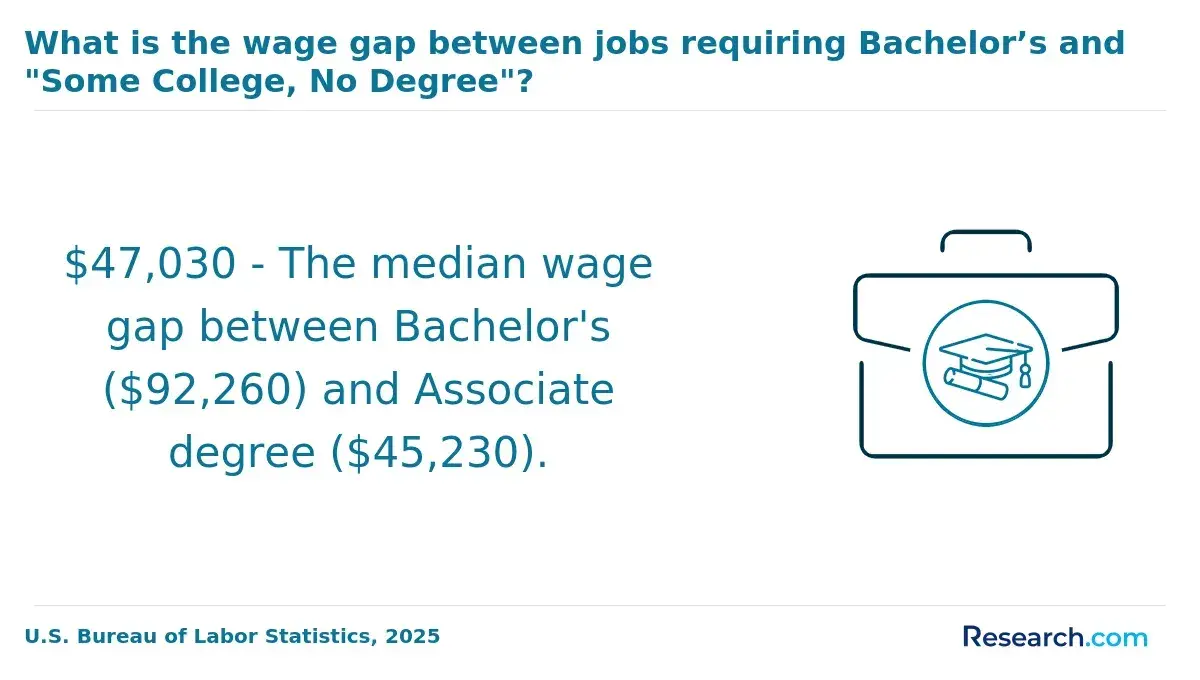
Choosing the appropriate online accounting degree substantially affects cross-industry career flexibility and mobility. Associate degrees deliver foundational skills suited to clerical bookkeeping or payroll roles but often restrict growth where professional licensing or strategic expertise is essential. In contrast, bachelor's programs provide comprehensive knowledge including auditing, taxation, and financial reporting, aligning strongly with employer preference for CPA eligibility-a critical factor for roles that span manufacturing, technology, or government sectors. Master's degrees further deepen expertise, emphasizing leadership and complex problem-solving, which facilitate advancement into specialized advisory or management tracks across industries.
The 68% earnings premium, with a median annual wage of $78,000 for accountants versus $46,310 across U.S. occupations (U.S. Bureau of Labor Statistics via Saint Mary's University of Minnesota), reflects real financial gains from higher credentials. For instance, a bachelor's graduate shifting from retail finance to healthcare auditing can expect both increased earning potential and industry versatility. Meanwhile, associate degree holders frequently encounter advancement ceilings in sectors demanding CPA licensure or strategic financial analysis.
Employers consistently value candidates holding a bachelor's or higher accounting degree coupled with CPA licensure, which signals preparedness for regulatory compliance and advisory roles. Online programs that integrate CPA exam preparation and offer practical internships or case studies respond directly to workforce needs. Prospective students assessing online accounting degree programs with cross-industry career flexibility should also consider program accreditation and tangible applied learning opportunities.
Those considering a broader business foundation might explore a business administration online degree to complement accounting specialization, thereby enhancing adaptability across functional areas.
What core courses and concentrations prepare accounting graduates to move across industries?
Accounting graduates aiming for cross-industry mobility must navigate a shifting employment landscape where core roles shrink but specialization expands. The 15.9% decline in U.S. accounting jobs from 2019 to 2023 signals tightening demand in traditional areas, pushing candidates toward skills valued in tech, consulting, and regulatory-heavy sectors. Competency in data analytics, risk assessment, and compliance frameworks often distinguishes candidates able to move fluidly between industries.
Real-world examples show that accountants with proficiency in IT audit, especially software auditing and cybersecurity accounting, encounter fewer hurdles when pivoting from public accounting to fintech consulting. This transition requires integrating ERP systems knowledge and advanced spreadsheet modeling with foundational expertise in GAAP and financial reporting.
Cross-disciplinary courses critical for reducing retraining and boosting employability include:
- Business law and ethics for diverse regulatory understanding
- Corporate finance focusing beyond bookkeeping to capital structuring
- Management information systems to connect finance with technology
- Strategic cost management tailored to industry specifics like healthcare and manufacturing
These academic choices directly impact workforce resilience by balancing traditional Accounting fundamentals against evolving demands. Without them, professionals risk confinement to contracting roles with limited long-term viability.
How long do online accounting degrees take, and what do they typically cost?
Online accounting degrees present a complex balance between duration, cost, and curricular relevance, with tangible implications for workforce entry and career shifts. Associate degrees generally require 18 to 24 months, while bachelor's programs span three to four years full-time, though accelerated and part-time options stretch timelines for working adults. For example, a manufacturing professional pivoting to cost analysis might opt for a two-year online bachelor's to combine efficiency with targeted skill acquisition.
Cost disparities are significant: associate degrees at community colleges may cost around $10,000, whereas private institutions' bachelor's degrees can exceed $60,000. Public universities often position online bachelor's tuition between $20,000 and $40,000 for in-state students. These figures exclude extra expenses such as CPA exam preparation, certification fees, and relevant technology training, which employers increasingly value.
Market demand emphasizes candidates who are proficient not only in accounting fundamentals but also in data analytics, automation, and cross-sector applications. Notably, CPA exam participation hit a low in recent years, signaling a shift toward broader, tech-savvy competencies. Students face tradeoffs: accelerated degrees reduce time and cost but may sacrifice depth in emerging software skills vital for fields like fintech or healthcare, while longer programs potentially delay employment but embed advanced tools and industry knowledge.
An informed choice hinges on aligning educational pathways with specific workforce expectations and personal capacity for investment in both time and money.
What admission requirements and prior experience help you get into a strong online accounting program?
Strong online accounting programs typically require applicants to have completed a bachelor's degree with about 120 credits, including core coursework in financial and managerial accounting, economics, and statistics. Preference is often given to candidates who have taken business law or taxation courses and who bring practical experience from roles in bookkeeping, auditing, or financial analysis. For instance, professionals moving into accounting from retail management benefit when their prior experience includes budget oversight or inventory costing, which align with industry-specific accounting demands.
Most programs maintain a competitive GPA threshold, commonly around 3.0, while standardized tests like the GRE or GMAT are optional but may enhance candidacy for selective programs. Letters of recommendation and personal statements should explicitly connect career goals with accounting outcomes to reflect the applicant's alignment with real-world employability requirements.
The accounting field faces a notable shortage of graduates, partially stemming from the high 150-credit requirement for CPA eligibility, which poses financial and time barriers. This shortage has prompted some schools to value relevant work experience alongside traditional academic records. Candidates should critically evaluate whether programs offer accelerated or flexible credit structures that align with CPA requirements to minimize unnecessary coursework.
- Prioritize programs that recognize professional experience from sectors like manufacturing or healthcare, where accounting practices differ.
- Assess how credit flexibility impacts time to credential and cost, especially related to CPA eligibility rules.
- Weigh the potential advantage of submitting GRE or GMAT scores against program competitiveness and your academic profile.
What accounting careers offer strong cross-industry mobility, and what roles can graduates pursue?
Careers in accounting that offer genuine cross-industry mobility rely on the integration of financial expertise with data analysis, technology, and strategic communication. Roles like management accountants and forensic accountants demonstrate this dynamic: a management accountant in manufacturing uses cost data to optimize production, while a forensic accountant in finance detects fraud through transactional data analytics. These roles contrast with specialized positions tied to narrow regulatory or software constraints that impede movement between sectors.
Employers increasingly prioritize candidates who complement core accounting skills with competencies in data analytics, digital tools, and client communication. According to research published in Heliyon, proficiency in SQL, Python, or ERP systems significantly expands employment opportunities beyond traditional bookkeeping roles.
Individuals face a critical tradeoff between specialization and versatility. Certifications such as CPA or CMA can deepen expertise valuable in public accounting and corporate finance but may restrict adaptability to particular regulatory environments. Conversely, building skills in data visualization and communications facilitates transitions into consulting and technology-driven finance functions.
For those targeting cross-industry roles, cultivating a portfolio that merges quantitative abilities with effective communication is essential. This dual skill set aligns with diverse organizational cultures and varying industry demands on compliance and innovation. Workforce data indicate that accounting graduates blending tech and finance skills achieve 20-30% higher hiring rates across sectors compared to peers with traditional backgrounds.
What are typical salaries and job outlooks for accountants who move between industries?
Shifting between industries in accounting presents distinct salary dynamics tied closely to sector-specific financial realities and regulatory frameworks. For instance, professionals moving from nonprofit to finance or technology sectors often see base salaries rise by 15% to 30%, with median wages increasing from about $75,000 to over $110,000 annually. However, these gains come with the challenge of quickly mastering new compliance requirements and reporting standards, which can temporarily depress earnings during transition.
Employer demand favors candidates who combine accredited credentials like CPA or CMA with tangible expertise in both universal accounting principles and specialized industry practices. Recruiters also prioritize demonstrable skills gained through rigorous assessment and connection to employer networks rather than the mode of education delivery-reflecting a preference for outcome-driven competency over program format.
For accounting professionals planning cross-sector moves, focus on these priorities:
- Acquiring certifications with cross-industry recognition
- Developing knowledge of niche regulatory environments alongside core accounting skills
- Engaging in programs offering real-world case assessments and employer-visible validation
Neglecting sector-specific expertise or accredited competence risks stagnating salary potential despite holding an online degree. Strategic upskilling and continuous professional development are essential to align qualifications with evolving employer expectations and optimize total compensation when navigating diverse industry landscapes.
Which licenses and certifications (like CPA, CMA, CIA) best support cross-industry accounting careers?
Choosing between the CPA, CMA, and CIA certifications hinges on industry focus and long-term flexibility rather than broad credential appeal alone. The CPA's extensive regulatory and audit scope remains unmatched for sectors like manufacturing, technology, and government, but its 150-semester-hour requirement often leads candidates toward online accounting degrees combining graduate coursework to meet credit thresholds efficiently.
In contrast, the CMA targets finance roles centered on cost management and strategic decision-making within healthcare, retail, and energy-emphasizing management accounting over audit compliance. The CIA suits professionals aiming for internal audit, risk, and compliance within banking or government, where internal controls and fraud prevention remain paramount.
Employers value experience alongside credentials, especially when candidates transition industries. For example, a CPA shifting from public accounting to manufacturing finance faces a steep learning curve on sector-specific regulations and software, which certifications alone don't address.
Key workforce implications include:
- CPAs retain high cross-sector mobility but require substantial upfront education.
- CMAs offer strong alignment with finance strategy functions but less regulatory breadth.
- CIAs command niche roles emphasizing governance, with varied audit environments demanding adaptability.
Strategic certification selection should prioritize industry fit and skill gaps beyond exam content, balancing credentials with practical experience to navigate workforce shortages and employer expectations documented by the AICPA 2025 Trends initiative.
Other Things You Should Know About Accounting
Employers increasingly accept online accounting degrees, but reputation and rigor of the program remain critical. Degrees from well-established, regionally accredited institutions with a strong curriculum aligned to industry standards carry more weight. For cross-industry roles, practical skills demonstrated through internships or projects often influence hiring decisions more than delivery mode. Candidates should prioritize programs offering experiential learning and networking opportunities to enhance employer perception.
Online accounting degrees in 2027 equip graduates for cross-industry roles by offering flexible, tech-integrated curricula that include core accounting principles, industry-specific electives, and current technology training. This approach enables students to gain relevant, transferrable skills applicable across several sectors while managing work and study effectively.
Specialized concentrations can enhance employability in certain sectors but may limit flexibility if too narrow. For broad cross-industry mobility, foundational accounting skills and general business knowledge should take precedence over highly specialized tracks. Students seeking to pivot across diverse industries should select programs with versatile curricula that emphasize adaptability and critical thinking. Concentrations are advisable only if aligned with a clearly defined sector target rather than as a default choice.
Proficiency in industry-standard tools like Excel, QuickBooks, and ERP systems directly impacts job readiness and mobility. Online programs lacking integrated software training risk graduates falling short of employer expectations. Students should prioritize degrees that embed practical technology use throughout the curriculum to ensure seamless transition into varied accounting roles. Exposure to data analytics and emerging digital platforms is increasingly a competitive advantage.
References
- MBA Concentrations: Types, Skills, and Career Paths https://www.scu.edu/business/blog/mba/mba-concentrations/
- Best Accounting Certifications -- Is There Anything Other than CPA?! https://www.big4bound.com/best-accounting-certifications-cma-cpa-cfa-ea-cia/
- Comparing self-study, online and in-person classes https://ohiocpa.com/for-the-public/news/2024/06/04/accounting-success-strategies-comparing-self-study-online-and-in-person-classes
- 15 Accounting Careers: Undergraduate & Graduate Paths https://www.baypath.edu/news/bay-path-university-blogs/post/15-accounting-careers-undergraduate-graduate-paths/
- Best Online Accounting Degrees of 2025 | Accounting.com https://www.accounting.com/degrees/accounting/bachelors/best-online-programs/
- What Jobs Can You Get with an Accounting Degree? https://www.mountunion.edu/academics/undergraduate-degrees/accounting/what-jobs-can-you-get-with-an-accounting-degree
- Explore types of accounting careers for 2026 success - ICMS https://www.icms.edu.au/degree-discovery/explore-types-of-accounting-careers-2026-success/
- Online Accounting Associate Degree | Affordable Accounting Degree https://www.uscareerinstitute.edu/online-accounting-associate-degree
- How to prepare accounting students for an evolving industry | MindBridge https://www.mindbridge.ai/blog/preparing-accounting-students-accounting-career/
- Online Bachelor's Degree in Accounting | CSU Global | Accredited https://csuglobal.edu/academic-programs/undergraduate-degrees/bachelors-degree-accounting