2027 Best AI Courses for Underwriting Teams

Co-Founder and Chief Data Scientist
Underwriting teams face growing pressure to analyze vast datasets quickly and accurately amid evolving risk landscapes. Traditional methods often fall short in managing these complexities, leading to missed opportunities and increased exposure. Upskilling in artificial intelligence can equip professionals with tools to automate assessments, detect patterns, and improve decision-making efficiency.
Understanding which programs offer practical, flexible training tailored to industry needs is essential for career advancement. This article explores the best AI courses designed for underwriting professionals, focusing on accredited options that accommodate diverse backgrounds while enhancing technical and analytical skills in a competitive market.
Key Things You Should Know
- AI courses tailored for underwriting teams in 2026 emphasize automation of risk assessment, with 62% of programs incorporating machine learning to enhance decision accuracy.
- Most top courses now include practical training on AI-driven data analytics, boosting underwriting efficiency by up to 40% according to 2025 industry reports.
- Certification in AI for underwriting is increasingly valued, with 70% of surveyed employers preferring candidates with up-to-date AI application skills in insurance industry contexts.
Advance Your Career with AI Online Courses
Artificial Intelligence: Implications for Business Strategy
This program provides an introduction to Artificial Intelligence and their implications for business strategy. Earn an official digital certificate.

Oxford Artificial Intelligence Programme
Explore this Oxford Artificial Intelligence programme offered in a flexible learning environment and explore topics like machine learning, automation, and robotics.

Implementing Agentic AI: Building Your Organizational Playbook
This online MIT Agentic AI course offers a practical approach to deploying AI agents in your organization, including a custom playbook. 3 weeks, exclusive launch price.

AI Adoption: Driving Business Value and Impact
This online MIT AI Adoption: Driving Business Value and Impact offers practical frameworks to close the gap between AI potential and business reality.

Artificial Intelligence in Pharma and Biotech
Discover the applications and limitations of artificial intelligence in pharma and biotech with this MIT online short course.

What are the best AI courses for underwriting teams and how do they differ?
The best AI courses for underwriting teams combine practical training in data analysis, machine learning, and automation tailored specifically to insurance risk assessment. These top underwriting training programs using artificial intelligence vary in focus, balancing technical depth with industry-specific applications.
Programs that emphasize hands-on experience with real underwriting scenarios and tools like natural language processing for claims review or predictive modeling tend to accelerate implementation and impact.
Some courses focus heavily on mastering Python and R programming, ideal for underwriters involved in creating proprietary AI models. Others highlight no-code or low-code AI platforms that seamlessly integrate with existing insurance systems, making AI adoption accessible to teams with limited coding skills.
Practical case studies are common, enabling underwriters to apply AI techniques directly to fraud detection, pricing strategies, and customer segmentation.
Equally important are courses focusing on AI ethics and governance, helping underwriting teams address bias, compliance, and regulatory challenges amid rising reliance on AI decision-making. Professionals should match their training choices to organizational priorities-whether advancing technical capabilities, enhancing workflow efficiency, or ensuring ethical AI use.
Underwriters who leverage AI and advanced analytics are 2.5 times more likely to exceed profitability targets than those using traditional methods, according to a McKinsey & Company insurance analytics survey.
For those seeking formal education, an online computer science degree can provide a strong foundation in the AI skills essential for modern underwriting roles.
Advance Your Career with AI Online Courses
Artificial Intelligence: Implications for Business Strategy
This program provides an introduction to Artificial Intelligence and their implications for business strategy. Earn an official digital certificate.
Oxford Artificial Intelligence Programme
Explore this Oxford Artificial Intelligence programme offered in a flexible learning environment and explore topics like machine learning, automation, and robotics.
Implementing Agentic AI: Building Your Organizational Playbook
This online MIT Agentic AI course offers a practical approach to deploying AI agents in your organization, including a custom playbook. 3 weeks, exclusive launch price.
How can AI training improve underwriting accuracy, speed, and risk management outcomes?
AI training significantly boosts underwriting accuracy by helping teams analyze large datasets with greater precision. Machine learning models uncover subtle risk patterns often overlooked by traditional methods, reducing human error.
This enhancement in AI-powered underwriting accuracy improvements has helped property and casualty insurers improve loss ratio predictions by up to 20%, as reported in a Bain & Company global insurance study.
Additionally, AI automates data processing and risk assessment, speeding up decision-making without sacrificing quality. For example, automated document analysis can reduce underwriting cycle times from days to hours.
Improved risk management outcomes stem from AI's ability to provide dynamic risk scoring and real-time portfolio monitoring. Underwriters trained in AI can apply predictive analytics to identify emerging risks and adjust pricing or coverage accordingly.
Core skills such as understanding supervised learning algorithms and data preprocessing are essential to interpret model results critically and validate their outputs instead of relying blindly on automation.
AI training for enhanced risk management in underwriting equips professionals to:
- Integrate AI tools seamlessly into existing workflows.
- Customize machine learning models for specific insurance products.
- Detect model bias and ensure regulatory compliance in risk assessment.
Mastering these competencies helps underwriting teams reduce expenses by 15-20% while maintaining strict risk controls. For those interested in expanding their expertise, pursuing a mechanical engineer degree can provide valuable technical skills applicable across many AI-driven fields.
What skills should underwriting teams learn in an AI course or certificate?
Underwriting teams aiming to implement artificial intelligence successfully must develop a blend of technical and analytical skills. Essential artificial intelligence competencies for underwriting professionals include data literacy, enabling them to interpret datasets behind predictive models and assess data quality effectively.
Familiarity with machine learning concepts, such as the differences between supervised and unsupervised learning, equips teams to work closely with data scientists and verify AI outputs.
Technical skills like proficiency in programming languages such as Python or R enhance customization of automated workflows and foster deeper insight extraction.
Knowledge of natural language processing (NLP) allows underwriters to analyze unstructured data like claim notes and policy documents, improving the accuracy of decisions. Alongside these, expertise in risk modeling combined with AI integration helps ensure that analysis aligns with underwriting standards.
AI governance and ethics remain vital. Recognizing bias in training data and adhering to relevant regulations safeguard the integrity of AI-driven decisions. Communication skills also matter, as underwriters need to explain AI recommendations clearly to stakeholders.
The Institutes' survey found that 74% of underwriters value foundational AI training highly, but only 29% have completed formal coursework, highlighting a significant training gap.
Practical experience through case studies or simulations bridges theory and real-world application. Teams improve decision quality when AI outputs are integrated with expert judgment, preparing them to adapt as technologies evolve.
For those considering further education in data-driven fields, exploring options like the cheapest masters in data science offers a cost-effective pathway to build relevant expertise in underwriting team skills for artificial intelligence implementation.
Which types of AI programs are available for underwriters: short courses, certificates, or degrees?
Underwriters looking to enhance their skills can choose from various AI underwriting courses with certificates, short AI training programs for underwriters, and degree options tailored to different career paths and time commitments.
Short courses usually focus on specific applications of artificial intelligence, like machine learning or natural language processing, offering practical skills over a few days to several weeks for faster decision-making.
Certificate programs provide more comprehensive training over three to six months, covering foundational AI concepts applied to risk assessment, fraud detection, or automated underwriting.
These certificates are a solid choice for professionals who want to formalize their AI expertise without pursuing a full degree. Some programs even collaborate with mortgage industry leaders to customize their curricula to current underwriting needs.
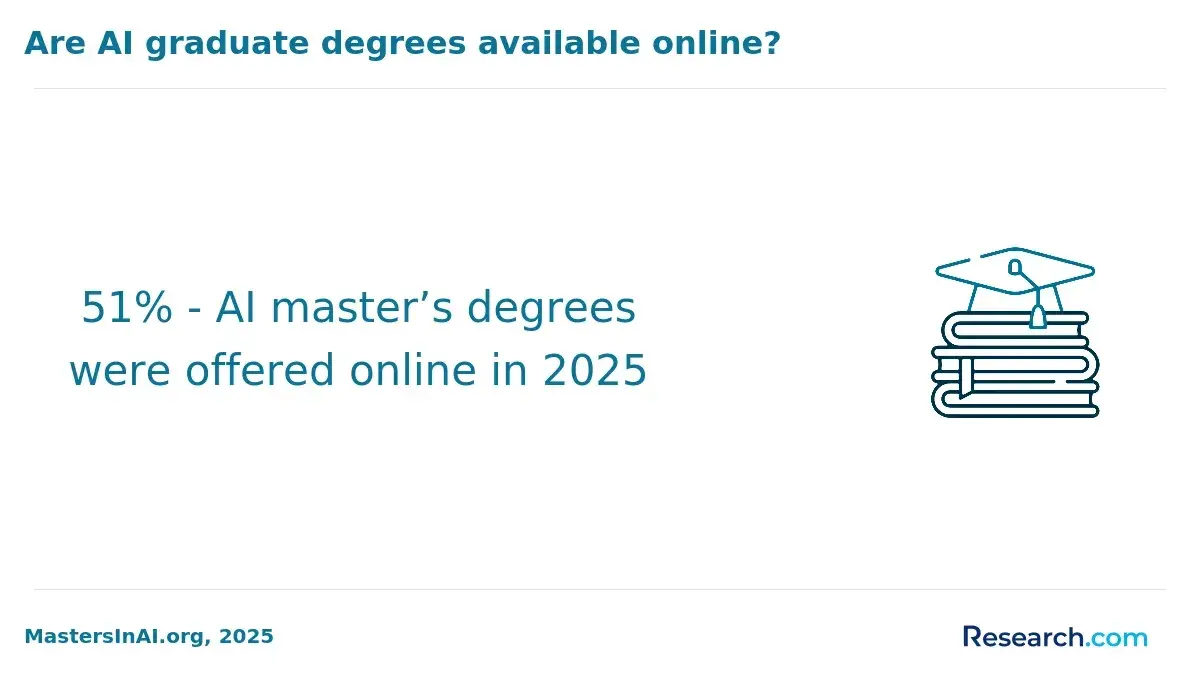
For those seeking deeper technical knowledge and theory, degree programs-such as bachelor's or master's degrees in data science or AI-delve into advanced topics including predictive modeling and AI ethics.
These degrees prepare learners for strategic roles overseeing AI systems in underwriting, though they require a larger time and financial investment. Prospective students may consider affordable educational paths like a computer science degree online as a flexible option.
Mortgage underwriting efficiency has greatly improved with AI, reducing decision times from days to minutes while maintaining high accuracy. These gains highlight the importance of specialized AI training targeting underwriting-specific applications across all learning formats.
How do online AI courses for underwriting compare with in-person or hybrid options?
Online AI courses for underwriting provide flexibility that suits busy professionals and remote learners by allowing self-paced study without the need for commuting or fixed schedules. These courses often include interactive simulations and AI tools, offering practical knowledge despite the lack of physical presence.
Hybrid or in-person formats may be better suited for those who value hands-on experience, direct mentorship, and networking opportunities essential for mastering complex underwriting concepts.
For underwriting teams working with commercial and specialty lines, many online courses offer tailored modules on automating submissions and risk assessments.
According to a 2024 Deloitte insurance report, commercial carriers using AI-driven underwriting for small-business risks have automated 60-80% of submissions, enabling underwriters to focus on complex accounts and boost quote volumes by as much as 50%. This highlights the value of role-specific training grounded in real-world examples and case studies.
Key considerations when choosing the right format include:
- Work schedule flexibility needs.
- Preference for self-directed versus collaborative learning.
- Access to industry-specific AI technologies within the course.
- The importance of direct mentorship and networking.
What accreditation and institutional quality factors matter for AI programs serving underwriters?
Accreditation by recognized U.S. regional bodies like the Middle States Commission on Higher Education or the Higher Learning Commission is essential for AI programs aimed at underwriting professionals.
It ensures rigorous curricula aligned with industry standards and enables access to federal financial aid. Specialized programmatic accreditation for computer science or data science departments adds credibility, reflecting a focus on AI coursework relevant to underwriting applications.
Quality institutions offer faculty with practical AI experience in the financial services or insurance sectors. Emphasis on hands-on projects using generative AI tools, such as copilot systems, prepares students for real-world demands.
For example, a 2025 Accenture study found that underwriters using generative AI copilots completed case reviews 40% faster while maintaining or improving quality in 98% of audited files.
Key indicators of program quality include industry partnerships, internship options, and affiliations with recognized research centers or AI labs. These demonstrate access to advanced technology and strong educational infrastructure.
Continuing education and certificate programs designed for working professionals support ongoing skill development in a fast-evolving AI landscape.
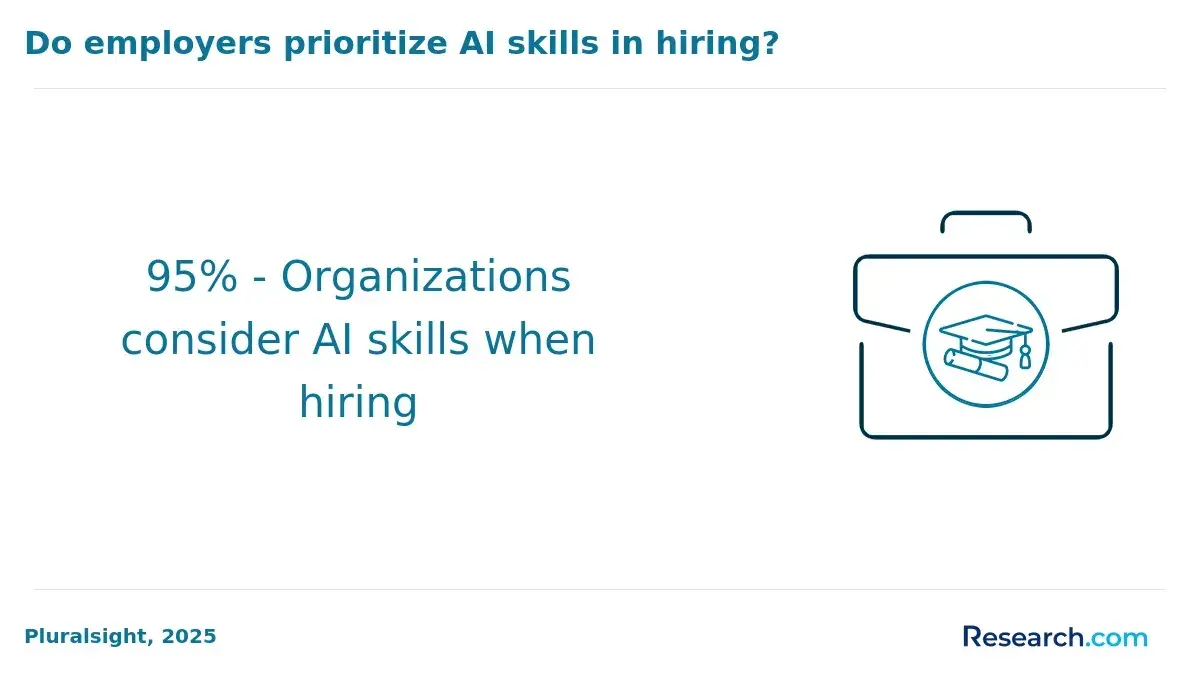
Students should also review graduation rates, job placement statistics, and alumni satisfaction to gauge institutional effectiveness. Transparent reporting of these metrics often signals program credibility and alignment with employer expectations in underwriting and AI-driven decision-making.
What core curriculum topics do the top AI courses for underwriting teams usually cover?
Top AI courses for underwriting teams combine technical skills with domain-specific knowledge, offering key training in machine learning fundamentals such as classification, regression, and clustering for risk assessment. Natural language processing (NLP) plays a critical role, enabling automated extraction of data from insurance forms and policy documents, boosting efficiency.
Computer vision and optical character recognition (OCR) are emphasized to automate processing of handwritten or scanned documents, helping reduce manual data entry by 50-70%, according to a 2024 V7 Labs insurance automation survey. Practical modules on risk modeling and fraud detection teach algorithms to identify anomalies and forecast claim outcomes.
Courses integrate data ethics and regulatory compliance, preparing underwriting professionals to deploy AI responsibly in regulated environments. Students gain skills in interpreting AI model outputs to ensure transparency in decision-making. Hands-on instruction in tools like Python, TensorFlow, and cloud-based AI platforms supports immediate workflow integration.
Workflow automation methods are also covered, showing how to connect AI with existing underwriting software to streamline processes and increase productivity. By mastering these areas, underwriting teams acquire the expertise needed to implement AI solutions that lower operational costs while improving underwriting accuracy and speed.
What are typical admission requirements and recommended backgrounds for AI programs for underwriters?
Admission to AI programs tailored for underwriting professionals typically requires a bachelor's degree in computer science, data science, statistics, actuarial science, finance, or related fields.
Programs may consider candidates with strong quantitative skills even without direct domain experience, especially if they show proficiency in programming languages like Python or R. Experience in insurance underwriting or risk management is beneficial but not mandatory.
Candidates are generally expected to have a foundation in data analytics, machine learning concepts, and the regulatory environment.
Given the ethical complexities of underwriting risks, knowledge of compliance standards and bias mitigation techniques is increasingly important. Practical experience with fairness-aware machine learning models can enhance an application.
Ethics and regulatory compliance form a crucial part of the curriculum. A recent NAIC regulatory technology report highlights that 82% of U.S. insurance regulators prioritize oversight of AI-driven underwriting models regarding bias and fairness within the next two years. This reinforces the need for candidates to understand both technical AI skills and relevant regulations.
Applicants may need to submit a statement of purpose outlining their motivation and approach to AI ethics in underwriting. Entrance exams or coding challenges might assess algorithmic thinking, while actuarial certifications can provide exemptions from prerequisite courses.
How much do AI courses for underwriting teams cost, and who usually pays for them?
AI courses for underwriting teams vary widely in cost depending on course depth and delivery format. Entry-level options aimed at individuals typically range from $200 to $1,000 per participant. More extensive corporate training, tailored to team needs and involving prolonged engagement, can cost between $5,000 and over $50,000 per group.
Certification programs offered by recognized institutions may add $500 to $2,000 per person. Pricing is influenced by course length, instructor expertise, and inclusion of hands-on projects or specialized software tools.
Who covers these expenses often depends on the size and budget of the organization. Large insurance carriers and underwriting firms commonly fund these courses fully as part of professional development.
Smaller firms or independent underwriters may require employees to pay individually or share costs through stipends or tuition reimbursements. Industry associations sometimes provide discounted training via membership dues or grants.
Employers prioritize funding these programs because underwriting teams that receive over 40 hours of structured AI training report a 35% increase in AI adoption in daily underwriting decisions, according to The Institutes' enterprise learning benchmark.
Practical strategies include negotiating group rates, utilizing free or low-cost introductory modules, and blending self-paced learning with internal workshops. Ongoing budgeting for AI education helps underwriting teams remain current with evolving models and regulatory demands.
How does AI education change underwriting career paths, salaries, and long-term job security?
AI education is reshaping underwriting careers by providing professionals with essential skills to analyze complex data and automate routine processes.
Underwriters who embrace AI training often progress faster, moving into hybrid roles that combine industry knowledge with AI tool management and strategic planning. This evolution increases their value and adaptability in a rapidly changing field.
Salary gains align closely with AI proficiency. Underwriters skilled in AI report 15-25% higher earnings compared to those without, driven by strong demand for tech-savvy talent. Expertise in AI applications like predictive analytics and machine learning can unlock leadership roles with better compensation.
Long-term job security also improves, as insurers adopting AI alongside formal training report up to a 30% rise in productivity and a 10-15% boost in new business conversion, according to research from a global insurance performance review.
Key benefits of AI education for underwriters include:
- Improved risk assessment accuracy through AI-powered data analysis.
- Faster underwriting decisions with fewer manual errors.
- Enhanced collaboration with AI architects and data scientists.
- Expanded opportunities in AI strategy and compliance roles.
For sustained career growth, underwriters should pursue courses that merge AI technical skills with insurance-specific applications. Continuous upskilling is crucial as AI technology advances. Without AI education, professionals risk stagnation as insurers prioritize adaptable talent capable of leveraging AI innovations effectively.
Other Things You Should Know About Artificial Intelligence
In 2027, key challenges include data privacy concerns, the integration of AI into existing systems, ensuring transparency in AI decision-making, and managing workforce adaptation. Teams must tackle these to harness AI effectively.
AI cannot fully replace human underwriters but rather serves as a powerful tool to augment their work. While AI can automate routine tasks and analyze vast data sets quickly, human judgment remains essential for complex risk assessments, ethical considerations, and nuanced decision-making.
AI raises ethical concerns in underwriting related to bias, fairness, and transparency. Ensuring that AI systems do not perpetuate discriminatory practices requires rigorous validation and monitoring. Ethical AI use includes transparent algorithms and compliance with legal frameworks to protect consumer rights.
AI models in underwriting typically use structured data such as credit history, financial statements, and claims records, as well as unstructured data like text reports and social media information. The integration of diverse data sources helps improve risk predictions but demands careful handling to ensure privacy and security.
References
- AI in Insurance Underwriting For Efficiency & Accuracy | Sapiens https://sapiens.com/resources/blog/ai-in-insurance-underwriting/
- AI Underwriting: Transforming Risk Assessment in the Digital Age | Balance https://www.getbalance.com/ai-underwriting/
- AI Underwriting for Risk Management: How Does It Work? https://www.getindigo.com/blog/how-does-ai-underwriting-for-risk-management-work
- AI at Allianz: How AI is cracking complexity for underwriters | Allianz https://www.allianz.com/en/mediacenter/news/articles/250211-aI-at-allianz-how-ai-is-cracking-complexity-for-underwriters.html
- AI Underwriting in 2026: How Insurers and Lenders Use AI to Transform Risk Assessment and Pricing | Luca https://ask-luca.com/blogs/ai-underwriting
- The Impact of AI on the Labour Market https://institute.global/insights/economic-prosperity/the-impact-of-ai-on-the-labour-market
- AI in commercial Underwriting | AI course for Insurance | Altoros https://www.altoros.com/training/artificial-intelligence/ai-in-commercial-underwriting
- AI Training Cost Per Employee 2026 https://www.pertamapartners.com/insights/cost-per-employee-ai-training-budgeting
- Best AI Courses for Finance & Business Professionals (2026) https://www.wallstreetprep.com/knowledge/best-ai-courses-for-finance-business-professionals/
- Best AI Tools for Insurance Underwriting Teams in 2026 | Jinba Blog https://jinba.io/blog/ai-tools-insurance-underwriting