2027 Best AI Courses for Business Students

Co-Founder and Chief Data Scientist
Business students often struggle to identify credible, flexible courses that teach practical skills in artificial intelligence, especially when shifting from unrelated undergraduate fields. Many programs lack clear accreditation or real-world application, causing confusion about where to invest time and resources. This gap hinders career transitions into the growing AI industry, delaying professional growth and market readiness.
The article explores top accredited courses designed specifically for business backgrounds seeking practical AI expertise. It aims to guide readers in choosing programs that combine flexibility with valuable industry-relevant knowledge to accelerate successful pivots into artificial intelligence roles.
Key Things You Should Know
- By 2026, over 65% of business roles will require proficiency in artificial intelligence concepts, emphasizing the demand for specialized AI business courses.
- Top programs blend AI technical skills with business strategy, enhancing decision-making and competitive advantage in industries like finance, marketing, and supply chain.
- Recent data shows interdisciplinary courses offering hands-on AI projects increase job placement rates by approximately 40% compared to traditional business curricula.
Advance Your Career with AI Online Courses
Artificial Intelligence: Implications for Business Strategy
This program provides an introduction to Artificial Intelligence and their implications for business strategy. Earn an official digital certificate.

Oxford Artificial Intelligence Programme
Explore this Oxford Artificial Intelligence programme offered in a flexible learning environment and explore topics like machine learning, automation, and robotics.

Implementing Agentic AI: Building Your Organizational Playbook
This online MIT Agentic AI course offers a practical approach to deploying AI agents in your organization, including a custom playbook. 3 weeks, exclusive launch price.

AI Adoption: Driving Business Value and Impact
This online MIT AI Adoption: Driving Business Value and Impact offers practical frameworks to close the gap between AI potential and business reality.

Artificial Intelligence in Pharma and Biotech
Discover the applications and limitations of artificial intelligence in pharma and biotech with this MIT online short course.

What are the best AI courses for business students?
Top AI courses tailored for business students in 2026 focus on blending practical skills with strategic AI applications. Leading programs emphasize machine learning fundamentals specific to business needs, addressing areas such as forecasting, customer analytics, and automating routine tasks.
Courses like "AI for Business Leaders" and "Machine Learning for Business Analytics" integrate technical instruction with real-world case studies from finance, marketing, and operations. Students benefit most from programs offering hands-on projects using Python, R, or popular AI platforms that demonstrate real-world business problem-solving.
Specialized courses often cover natural language processing for customer sentiment analysis, AI-driven decision-making frameworks, and ethical considerations in AI deployment. These areas equip learners with the ability to adapt AI responsibly within corporate environments, enhancing their competitive edge. Many top online artificial intelligence programs for business learners also provide certifications recognized by industry leaders, boosting employability.
According to Coursera's 2025 Global Skills Report, graduates with AI and machine-learning skills earn salaries averaging 21% higher than their peers without these capabilities, highlighting the career value of this expertise. When choosing courses, students should consider curriculum relevance, instructor credentials, and business-oriented AI model interpretation.
Programs combining AI theory with strategy, like "AI Strategy for Business Innovation," directly address how to integrate AI into organizational workflows. Additional advantages arise from coursework exploring cross-functional uses of AI, including supply chain optimization, financial risk assessment, and customer relationship management enhancements.
Access to projects or internships aligned with business applications of AI provides practical experience that distinguishes candidates in competitive job markets. For those interested in how AI skills translate to career opportunities beyond education, resources on what is applied AI engineering offer valuable insights.
Advance Your Career with AI Online Courses
Artificial Intelligence: Implications for Business Strategy
This program provides an introduction to Artificial Intelligence and their implications for business strategy. Earn an official digital certificate.
Oxford Artificial Intelligence Programme
Explore this Oxford Artificial Intelligence programme offered in a flexible learning environment and explore topics like machine learning, automation, and robotics.
Implementing Agentic AI: Building Your Organizational Playbook
This online MIT Agentic AI course offers a practical approach to deploying AI agents in your organization, including a custom playbook. 3 weeks, exclusive launch price.
Which AI course formats fit business students best?
Hybrid and online course formats best suit business students seeking AI education, offering the flexibility needed to manage internships, part-time jobs, or work commitments. Hybrid courses mix in-person sessions with remote learning, while many online courses are asynchronous, enabling learners to study AI concepts such as machine learning or data analytics at their own pace. These formats align well with the needs of business learners who value both applied AI skills and scheduling flexibility.
Full-time in-person programs may appeal to those wanting immersive environments, but they often lack the adaptability necessary for students balancing professional experience. Hybrid courses frequently incorporate live case studies, group projects, and networking, which are vital for mastering AI applications in business.
Interest in top undergraduate AI courses featuring data science or AI concentrations among business students has surged, with a 46% rise in applications as reported by the Graduate Management Admission Council's "Prospective Students Survey 2024." This emphasizes a growing demand for course formats that cater to diverse learning preferences.
Examples of effective course structures include:
- Modular online courses with targeted AI business analytics modules ideal for part-time study.
- Hybrid MBA tracks combining AI tool training and strategic management.
- Short-term AI bootcamps paired with business case simulations delivered online.
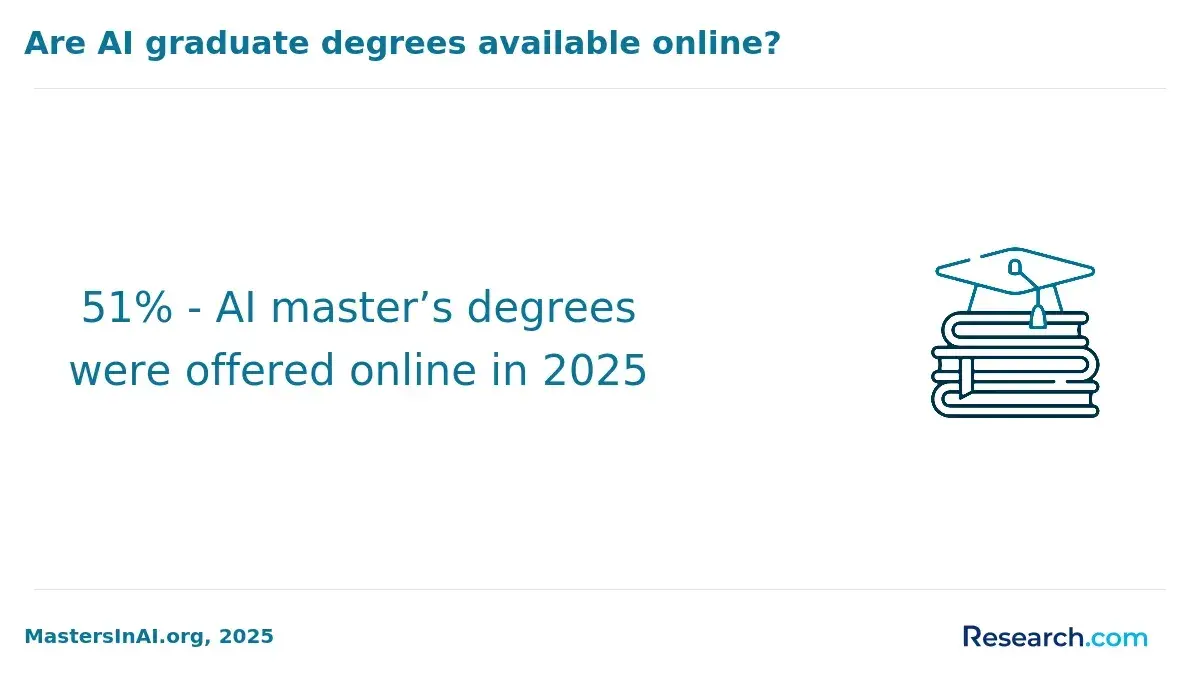
Business students exploring the best online artificial intelligence courses for business learners may consider a range of flexible programs, including online masters in AI. Prioritizing formats that integrate real-world challenges with AI expertise supports ongoing professional development.
What skills do business AI courses teach?
Business AI courses equip students with a blend of technical, analytical, and strategic skills essential for leveraging artificial intelligence in business. Learners gain hands-on experience with programming languages such as Python or R, data preprocessing, and model evaluation techniques to build machine learning models aimed at solving real-world problems like customer segmentation, demand forecasting, and risk management.
Developing business ai analytics skills also involves mastering data analytics and visualization, enabling students to translate AI outputs into actionable insights for non-technical stakeholders. This enhances ai-driven decision making techniques that bridge data science with business strategy, helping leaders make informed, evidence-based choices.
Strategic areas cover ethical use, AI governance, and regulatory compliance, preparing students to handle challenges related to bias mitigation and privacy. For example, evaluating AI's impact on operational efficiency and customer experience helps future managers implement scalable, responsible AI solutions.
The market demand reflects this shift; according to GMAC's "Corporate Recruiters Survey 2024," 63% of recruiters prefer MBA graduates with AI or advanced analytics coursework, up from 42% two years prior. Graduates with these competencies often pursue roles such as AI product managers, business analysts specializing in AI integration, or strategy consultants focused on digital transformation.
For those interested in complementary fields, an accelerated cyber security degree online can enhance career prospects in tech-driven industries.
What admissions requirements do AI business courses have?
Admissions requirements for AI business courses vary based on program type and institution but generally emphasize foundational skills and relevant experience. Many certificate and professional development programs expect applicants to have a basic understanding of business principles and some knowledge of data analysis or programming, often at a beginner to intermediate level.
Some courses require prior experience with statistics, Excel, or Python, while others provide preparatory modules to develop essential skills before enrollment. These nuances are crucial for meeting requirements for enrolling in AI business programs. Degree-level AI business programs typically require a bachelor's degree in business, economics, computer science, or related fields.
Admissions committees often review transcripts to verify quantitative coursework and may also value professional experience in business analytics or technology. Graduate programs frequently ask for letters of recommendation and a statement of purpose aligning career goals with AI applications in business.
Part-time and online offerings tailored for working professionals usually have more flexible admission criteria but expect critical thinking skills and familiarity with business data concepts. Some platforms use placement tests or assessments to match candidates with the appropriate course rigor. Prospective students with a military background may find relevant educational pathways such as an online cyber security degree for veterans.
According to Coursera's 2025 learner outcomes survey, 77% of learners completing a professional AI certificate focused on business reported positive career outcomes within 12 months. This highlights how fulfilling AI business course admission criteria and acquiring relevant skills can enhance career prospects.
Are online AI courses respected by employers?
Enrollment in online AI courses has surged, with MIT Sloan's executive education report revealing a 74% increase in short AI and analytics executive programs since 2021. More than 60% of participants come from non-technical business roles, highlighting strong employer recognition of AI skills across various industries.
Employers prioritize courses that deliver practical skills, updated content, and authoritative certification. This includes bootcamps, executive education, and programs linked with respected universities. Professionals who complete such programs often enhance their capacity to influence strategic decisions and improve operational efficiency, outcomes highly valued in today's competitive business environment.
To weigh the credibility of online AI education, look for programs with rigorous curricula aligned to industry standards. Features such as hands-on projects, case studies, and collaboration with industry experts add weight to credentials. Endorsements from recognized academic institutions or industry bodies further ensure meaningful and respected certification.
Business professionals should consider how course topics like data-driven decision-making, automation strategies, and ethical AI application align with their career goals.
- Strong employer demand for practical AI skills
- Growth in non-technical business participation
- Importance of credible certification and real-world projects
Overall, well-designed online AI courses that reflect industry needs can significantly enhance career prospects by equipping learners with relevant knowledge and recognized credentials.
How long do AI business courses usually take?
AI business courses vary widely in length, tailored to different learning goals and schedules. Short workshops or introductory courses typically last 4 to 12 hours, offering a concise foundation in AI concepts for busy professionals. More in-depth certificate programs span 3 to 6 months, integrating modules on AI applications in business strategy, data analytics, and machine learning basics.
Academic offerings geared toward professional certification or credit often extend through a full semester-about 12 to 16 weeks-featuring weekly classes that include practical projects and assessments. Executive-level courses for business leaders generally run 6 to 8 weeks but require several hours of weekly commitment.
Enrollment in free and low-cost AI courses on platforms such as Coursera and edX has surged by 80% in AI and machine learning business topics, according to Class Central's MOOC report. These courses provide flexible pacing, accommodating learners who want to complete programs in less than a month or spread study over multiple months.
When choosing a course, consider your professional objectives and available time. For instance, a working professional might prefer a flexible 10-20 hour program, while a graduate student could opt for semester-long courses with more technical depth and interaction. This approach helps maximize the value of your time invested in AI learning.
How much do AI business courses cost?
Costs for AI business courses vary significantly depending on the provider, course type, and specialization. Online platforms offer career-focused certificates ranging from $300 to $2,000, making them accessible for many. More comprehensive programs at universities and business schools, often part of MBA or specialized master's degrees, cost between $15,000 and $60,000, reflecting their depth and recognized credentials.
Workshops and bootcamps targeting domain-specific applications such as marketing, finance, or operations typically range from $500 to $5,000. Growing industry demand for domain-specific AI skills shapes pricing trends. The 2024 World Economic Forum "Future of Jobs" report highlights that 75% of companies in financial services and 68% in marketing plan to adopt generative AI by 2027, increasing the value of practical, targeted training.
Modular pricing options provide flexibility for working professionals, with individual classes costing between $200 and $1,000, allowing learners to tailor their education without committing to full programs. Additional fees, including exams and advanced tool access, can raise costs by several hundred dollars for credentialed courses.
- Financial aid, scholarships, and employer sponsorships are widely available, particularly for accredited degrees.
- Evaluating the return on investment should focus on course relevance to career goals and industry adoption rates, not just price.
Which careers can AI business students pursue?
AI business students develop a unique combination of analytical and technological skills suited for diverse career paths. Popular roles include AI product managers who oversee projects from development to deployment, and AI business analysts focused on leveraging data to enhance automation and operational efficiency. AI strategy consultants advise companies on integrating AI into core business functions.
Those with strong programming and statistical backgrounds may pursue data scientist positions, creating predictive models to support informed decisions. AI ethics specialists play a vital role by ensuring algorithms comply with regulations and ethical standards, reflecting growing industry priorities. AI marketing analysts use machine learning tools to optimize customer targeting and campaign results.
Project managers guide cross-functional teams to deliver AI solutions on time and within budget, while finance professionals apply AI techniques as quantitative analysts or risk modelers to refine trading and credit strategies. In operations, AI enables managers to improve supply chain and inventory processes.
The IBM "Global AI Adoption Index" highlights that companies with structured AI skills training see a 35% higher return on investment. This underscores the growing demand for professionals who bridge AI technology with strategic business needs across industries like healthcare, finance, retail, and manufacturing.
What salaries do AI-related business roles pay?
AI-related business roles offer competitive salaries that reflect the growing demand for specialized skills. Entry-level positions in business analytics or strategy with AI expertise typically earn between $75,000 and $90,000 annually. Mid-level roles, such as AI business analysts or product managers, command salaries ranging from $110,000 to $140,000. Senior roles-like AI strategy directors or data-driven business consultants-can exceed $160,000 per year.
LinkedIn's Future of Work Report shows that profiles featuring AI or machine-learning skills receive 1.7 times more recruiter InMails and enjoy a 38% higher likelihood of being hired for business analytics or strategy roles. This demonstrates the strong impact of AI knowledge on job opportunities and salary potential in the business sector.
Employers seek candidates who combine business acumen with AI to improve decision-making, optimize operations, and devise data-driven strategies. For instance, financial institutions offer $95,000 to $120,000 to AI-focused business analysts because of the role's strategic value in risk management and customer insight. Consulting firms often start salaries at $100,000 for business intelligence consultants with AI skills.
Practical AI experience-such as automation, predictive analytics, or natural language processing-further improves salary prospects. Business students investing in AI coursework position themselves to access higher-paying roles with greater responsibility and impact.
How do you choose an accredited AI course?
Choosing an accredited AI course means confirming recognition by reputable educational authorities like the Higher Learning Commission or other regional accreditors in the U.S. Such accreditation ensures the program meets high academic standards, allows credit transfer, and qualifies for federal financial aid.
Look for courses with updated content covering machine learning, natural language processing, and ethical AI applications. The best programs also highlight business-specific ai uses, such as predictive analytics in marketing or supply chain optimization. Since accreditation alone doesn't guarantee specialization, review syllabi carefully.
Faculty expertise and industry ties matter. Accredited courses taught by instructors with real-world business AI experience or strong corporate partnerships provide valuable insights and networking. Programs offering lab work or projects using current enterprise AI tools better prepare students for the workplace. Flexible delivery options like online or hybrid formats can accommodate working professionals.
Deloitte's "State of AI in the Enterprise" survey reports 79% of business leaders expect AI literacy to be essential for most roles soon. Students should also evaluate post-completion opportunities such as career services and pathways to certifications like the Certified Artificial Intelligence Practitioner, which enhance employability.
Other Things You Should Know About Artificial Intelligence
In 2027, "AI for Business Leaders" by Harvard Business School Online and "Data Science for Business Decision Making" by Coursera are crucial. These courses cover AI-driven insights and data-driven decision-making, equipping students with skills to make informed decisions using AI tools.
Business students should understand issues like bias in AI algorithms, data privacy, transparency, and accountability. Ethical AI practices ensure fairness and prevent harm, which is vital as companies implement AI systems that affect customers, employees, and stakeholders.
Yes, AI technologies can be integrated into current business software and platforms to enhance functionality. For example, AI-powered customer relationship management (CRM) tools or inventory management systems improve efficiency and customer experience without requiring a complete system overhaul.
AI drives business innovation by enabling new products, services, and business models that were previously impossible. It facilitates rapid experimentation through automation and advanced analytics, helping companies stay competitive and respond to market changes more effectively.
References
- Why Artificial Intelligence in Business is the Career to Pursue https://www.ucumberlands.edu/blog/why-artificial-intelligence-business-career-pursue
- AI Training & Certification for Employees: How HR Should Evaluate Providers | Sprad Blog https://sprad.io/blog/ai-training-certification-for-employees-how-hr-should-evaluate-providers
- AI certifications: What employers actually want in 2026 - Spiceworks https://www.spiceworks.com/it-careers/ai-certifications-what-employers-actually-want-in-2026/
- Top AI courses to supercharge your career | Jotform Blog https://www.jotform.com/ai/ai-courses/
- Best AI Courses for Business Teams 2026 — 10 Programs Compared https://iternal.ai/best-ai-courses-for-business
- Understanding AI: AI tools, training, and skills https://ai.google/learn-ai-skills/
- Best AI Courses for Finance & Business Professionals (2026) https://www.wallstreetprep.com/knowledge/best-ai-courses-for-finance-business-professionals/
- AI Certification: What Employers Really Look for in your CV in 2025 - The Case HQ Online https://thecasehq.com/ai-certification-what-employees-look-in-2025/
- AI - Artificial Intelligence | London Business School https://www.london.edu/executive-education/ai
- AI training and tools for small businesses | Grow with Google https://grow.google/ai-for-small-businesses/